Basum Tso Lake
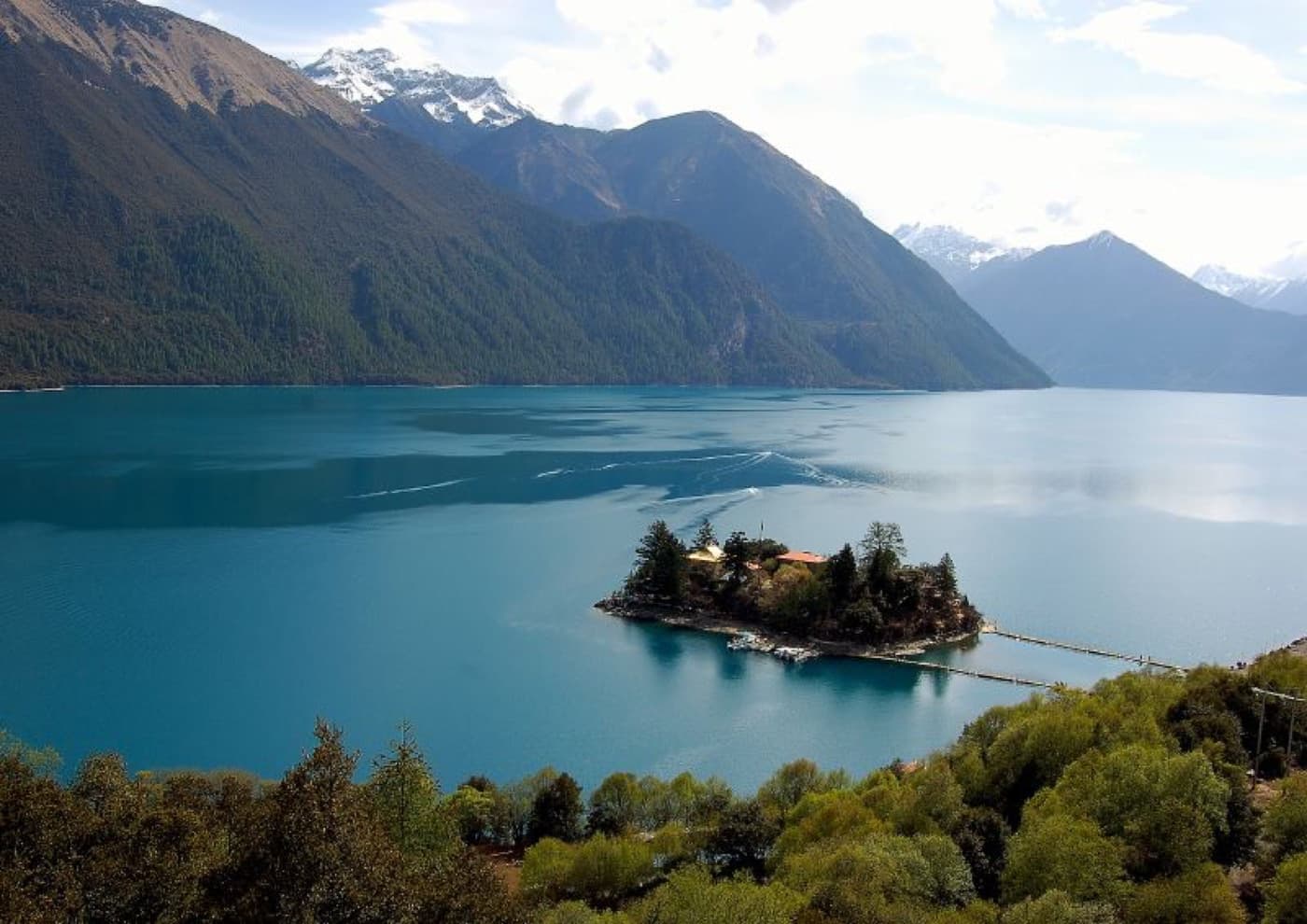
Basum Tso, also known as Cuogao Lake, means “Three Rocks, Three Lakes” in Tibetan. It is a famous sacred lake and pilgrimage site of the Nyingma school.…

Basum Tso Lake, Nyingchi · AI illustration for China Trip
Key facts
- Admission
- ¥120 (May–October), ¥60 (November–April)
- Opening hours
- 8:30–20:30 (May–October); 9:00–18:30 (November–April)
- Time needed
- 2–5 hours
- Getting there
- Long-distance buses run from both Lhasa and Bayi Town. Get off at the bridge in Bayi, and the ticket office for Basum Tso is right there. You can also hire a jeep from the post office in Bayi Town, which costs about ¥500 per vehicle for a round trip.
- Guidebook rating
- 5 / 5
From China Self Guided Travel 2025, page 582. Open in Google Maps
About Basum Tso Lake
Basum Tso, also known as Cuogao Lake, means “Three Rocks, Three Lakes” in Tibetan. It is a famous sacred lake and pilgrimage site of the Nyingma school. The water is so clear that you can see straight to the bottom. Snow-capped mountains surround the lake and are reflected in its surface, while birds such as ruddy shelducks, gulls, and cranes drift quietly across the water. About 100 metres from the shore lies a small island called Tashi Island. Legend says it is a “hollow island,” meaning that it is not connected to the lakebed but floats on the surface. Prayer flags flutter on Tashi Island, and the exquisite Cuozong Gongba Monastery (meaning “castle in the lake”) belongs to the Nyingma school of Tibetan Buddhism, known as the Red Sect. It enshrines Padmasambhava and has a history of 1,500 years.
According to local legend, on the 15th day of the fourth month of the Tibetan calendar (around 1 June each year), a long white band emerges from the centre of the lakebed beneath the deep blue water. Locals believe it is a giant white khata offered to King Gesar. On this day, local people also observe the custom of walking around the lake.
Frequently asked questions
How much does Basum Tso Lake cost?
Admission to Basum Tso Lake is ¥120 (May–October), ¥60 (November–April), as listed in the 2025 guidebook. Prices can change; check the official channel before you go.
What are the opening hours of Basum Tso Lake?
Basum Tso Lake is open 8:30–20:30 (May–October); 9:00–18:30 (November–April).
How do I get to Basum Tso Lake?
Long-distance buses run from both Lhasa and Bayi Town. Get off at the bridge in Bayi, and the ticket office for Basum Tso is right there. You can also hire a jeep from the post office in Bayi Town, which costs about ¥500 per vehicle for a round trip.
How long should I spend at Basum Tso Lake?
Plan on 2–5 hours for Basum Tso Lake.
Where is Basum Tso Lake?
Basum Tso Lake is in Nyingchi, Tibet Autonomous Region, in the Southwest of China. Xueka Township, Gongbo'gyamda County, Nyingchi
More places in Nyingchi

Namcha Barwa
Namcha Barwa Peak stands at the meeting point of the Himalayas and the Nyenchen Tanglha Mountains. It is the highest peak at the eastern end of the Himalayas, with an elevation of 7,756 metres. The main summit rises high into the clouds, and there are numerous hot springs at the foot of the mountain. The vegetation here is exceptionally lush, making it an ideal destination for adventurous mountaineering and recuperation.
¥150 (entrance ticket plus sightseeing bus) · 2–4 hours

Niyang River Scenic Belt
The Niyang River is the largest tributary on the north bank of the Yarlung Tsangpo and is likened to ‘the tears of a goddess’; locals affectionately call it the ‘Mother River’. The river’s colour is exceptionally beautiful, its water as green as jade. When in motion, it surges and churns, sending up white spray; when still, it is clear and bright, like a piece of jade set into the landscape. A huge boulder stands in the middle of the rapids, sending up a spray of foam as the current rushes past.

Zangbu Badong Waterfalls
The Badong Waterfalls of Zangbu are in fact two waterfall clusters. Two falls, 35 metres and 33 metres high, follow one another on the riverbed 600 metres apart. The cascades are powerful and spectacular, making them China's most primitive and mysterious waterfall group, known as “the hermit of the Grand Canyon” and “China's most beautiful waterfall.”
Free · 1–3 hours
Bonri Sacred Mountain
Bonri Sacred Mountain boasts beautiful scenery, as well as a variety of birds and trees. It is the source of many rivers, including the Yarlung Tsangpo and the Nyang River. Local people follow the Bon religion, and Ajiong Jiebo is revered as the hero who protects the sacred mountain. During the Saga Dawa Festival each year, Bon believers circumambulate the sacred mountain counterclockwise.
¥70 · 1 day
Midui Glacier
The main peak of the Midui Glacier rises to 6,800 metres, with a snow line at 4,600 metres and a terminus at only 2,400 metres, making it the glacier with the lowest snow line in the world. The Midui Glacier is formed by the confluence of two world-class ice falls. Each falls more than 800 metres high and over 1,000 metres wide, with a primeval forest between them. Alpine flowers bloom around the glacier, reflecting the snow-capped peaks, while forests stretch out as far as the eye can see, with silver snakes dancing in the mist. The Midui Glacier was named by China National Geography magazine as one of the six most beautiful glaciers in China.
¥50 (sightseeing shuttle bus ¥35) · 3–4 hours
Nanyigou Valley
Nanyigou Valley is an important birthplace of the mysterious Tibetan medicinal culture and is known as the ‘Valley of the Tibetan Medicine King’. Legend has it that the ancestor of Tibetan medicine once practised healing and taught disciples here. The valley is not only beautiful but also home to the little-known Lhoba culture. Its scenery and customs are unique, earning it the reputation of a mysterious ‘Shangri-La’.
Entrance ticket ¥110; sightseeing bus ¥90 · 2–3 hours