Nanjing travel guide
南京
Nanjing is known as the Ancient Capital of the Six Dynasties, but in fact ten dynasties in all established their capitals here, which is why it is also called the “Metropolis of Ten Dynasties.” No other city has endured…
12 places · In the guidebook: pages 993–1022

Nanjing, Jiangsu Province · AI illustration for China Trip
Quick itinerary
Nanjing in 3 days
- Day 1
- Nanjing Museum→
- Former Presidential Palace→
- Jiming Temple→
- Xuanwu Lake→
- Walk to Shizi Bridge Food Street (dinner)
- Day 2
- Zhongshan Scenic Area (Sun Yat-sen Mausoleum, Ming Xiaoling Mausoleum, Linggu Temple)→
- Qinhuai River Banks
- Day 3
The feel of the place
- Ancient Capital of the Six Dynasties
- Nanjing is known as the Ancient Capital of the Six Dynasties, but in fact ten dynasties in all established their capitals here, which is why it is also called the “Metropolis of Ten Dynasties.” No other city has endured such deep calamities, with dynasty after dynasty falling here. Now that its former glory and splendour have faded, the ancient city is like a weathered, serene elder, recounting the years of its history to all who listen.
- Ten-Li Qinhuai
- For centuries this was a place of gilded splendour, where countless scholars and poets vied with one another. While dynasty after dynasty staged its dramas of regime change, frustrated men of letters here dressed up their illusions of a peaceful age. Beneath the decadent glitter and rouge lay the anguish of a fallen kingdom and the clash of swords and horses, which drove the humble courtesan Li Xiangjun to stain her Peach Blossom Fan with blood. If you come to the Qinhuai River today, you won't find those romantic tales. The thriving commerce and bustling crowds may make you forget history for a while.
- Grief
- 13 December 1937. This is a day that brings grief to every Chinese person, and an eternal wound in the hearts of Nanjing's people. As you linger in Nanjing, the Ten-Li Qinhuai still echoes with the sound of oars and song, yet a faint trace of that sorrow can still be glimpsed. If a taxi driver learns you are from out of town, he will surely recommend the Memorial Hall of the Victims in the Nanjing Massacre by Japanese Invaders. Beyond the sorrow in our hearts lies the dignity of being Chinese: only by never forgetting national humiliation can a nation grow strong.
- French Plane Trees
- French plane trees are the main species lining Nanjing's streets. In summer, their tall trunks and interlacing branches high overhead shade the city's residents, and in autumn, when the leaves fall, they take on a special charm. In recent years, however, many have been felled to make way for urban redevelopment, especially along Zhongshan Road. A city can use money to make roads wider and buildings taller, but trees cannot be grown to whatever height one wishes. As the saying goes, good trees take a hundred years, and it takes time for a tree to grow lush and green. One can only imagine that a city without trees has lost its accumulated history.
- Nostalgia
- Stepping from Shanghai into Nanjing, you feel as though you have crossed from one region to another. From people's dress, language and behaviour to the city's architecture, the two seem to have little in common. If Shanghai is like a last-generation aristocrat, Nanjing is a conservative Jiangnan scholar, gentle and warm with a bookish air, and occasionally a touch sour. In short, Nanjing is a place that more easily stirs nostalgia.
- Academia
- Besides its many famous sites, Nanjing is also known for its concentration of prestigious universities. Nanjing University, Southeast University, Nanjing Normal University, Nanjing University of Science and Technology and Nanjing University of Aeronautics and Astronautics: a dozen or so can be named off the top of one's head. Perhaps this is why Nanjing, with the Ten-Li Qinhuai and its oars and lantern-lit reflections, is also so rich in scholarly air.
Jinling Lantern Festival
Held every year in the first lunar month around the Confucius Temple area of the Qinhuai River, lasting one month. Because the area is close to the water, it is rather damp in the rainy season, so visitors staying here should pack a few extra sets of dry clothing.
Preparation and Information
Language
Before the Northern and Southern Dynasties, the local dialect of Nanjing belonged to the Wu group of Chinese. As northern migrants kept moving to Nanjing across successive dynasties, the local speech gradually evolved into the Nanjing dialect, a sub-dialect of the Jianghuai group within the northern (Mandarin) branch. Today only some older residents in the south of the city still speak it, and experts predict that this authentic Nanjing dialect will disappear before long.
Nanjing's Plane Trees
What Nanjingers commonly call “French plane trees” is just one species of the plane genus. The genus has eight species, native to North America, Mexico, the Mediterranean and India. Their leaves resemble those of the Chinese parasol tree (梧桐), which is why they have often been mistaken for it.
Nanjing Transport Service Hotline
025-96196, for inquiries and complaints regarding air, rail and road transport.
Airport and Transport to Nearby Cities
Nanjing Lukou Airport also runs dedicated shuttle buses to nearby cities, including Wuxi, Yixing, Zhenjiang, Changzhou, Danyang, Jintan, Liyang, Yangzhou, Huai'an, Wuhu, Ma'anshan and Chuzhou.
From the Railway Station to Attractions
If you arrive at Nanjing Station, you can take the metro to Xinjiekou, Hunan Road, Gulou and Confucius Temple. The metro station is reached directly from the station exit.
Train Ticket Outlets
Gulou Ticket Office (ground-floor hall of the Gulou Post Building, 366 Zhongshan Road), Jianda Building (between Hongqiao and Shanxi Road), 33 Xikang Road (in the hall of the Provincial Committee Guesthouse), Blue Express (Room 102, 9 Jinxianghe Road), 283 Hongwu Road (inside the Provincial CTS Aviation Service Company), and 527 Xinhua Road, Dachang District (inside the Yangzi Petrochemical Ticketing Centre).
Climate and Best Time to Visit
Although Nanjing, together with Chongqing, Wuhan and Nanchang, is known as one of the “Four Furnaces” (四大火炉), Nanjingers do not think their clearly defined four seasons are a bad thing. Nanjing's annual average temperature is 15.6°C. Hence the sayings: spring for outings to “Niushou Mist” (牛首烟岚), summer for admiring “Zhongfu Clear Clouds” (钟阜晴云), autumn for climbing to “Qixia Scenic Splendour” (栖霞胜境), and winter for viewing “Shicheng Snow After Clearing” (石城霁雪). However, every June and July the city endures the endless drizzle of the plum rain season, and after the plum rains it often faces dry, sweltering spells. Autumn is the best season to visit; avoid summer unless you don't mind the heat.
Things to see
Originally a shrine to Confucius, Fuzimiao is surrounded by sites such as the Jiangnan Examination Hall (now the China Imperial Examination Museum), which was once the largest imperial examination venue in Jiangnan and has over 300 years of history.

Qinhuai River
History & Culture · Old Towns & Villages · Hiking & Outdoors · Photography · Waterfront
Qinhuai River → Confucius Temple → Dacheng Hall → Mingde Hall → Zunjing Pavilion → Jiangnan Imperial Examination Hall → Wuyi Lane → Former Residences of the Wang and Xie Families → Former Residence of Wu Jingzi → Taoye Ferry → Chaotian Palace → Zhonghua Gate. The five-kilometer-long Qinhuai River scenic belt, centered on Confucius Temple, is both Nanjing’s largest entertainment hub and a hugely popular sightseeing area. “Ten Li Qinhuai” refers to the prosperity of the Qinhuai River area in the past, when merchants gathered and culture flourished. Successive dynasties described it as “a district of wind, flowers, and moonlight, a gathering place of gold dust and elegance.” After renovation, the Qinhuai River still has painted boats, waterside pavilions, green windows, and vermilion doors, but the addition of many modern lighting technologies makes it somewhat noisy, and it retains little of the leisurely charm of earlier times.

Zhongshan National Scenic Area (Purple Mountain)
History & Culture · Architecture · Temples · Photography
Sun Yat-sen Mausoleum (Plaza of Universal Love, Tomb Road, Mausoleum Gate, Stele Pavilion, Memorial Hall, Tomb Chamber): free; Ming Xiaoling Mausoleum: ¥70; Music Terrace: ¥10; Linggu Scenic Area (including Linggu Temple): ¥35; Meiling Palace: ¥30; combined ticket for the entire scenic area: ¥100
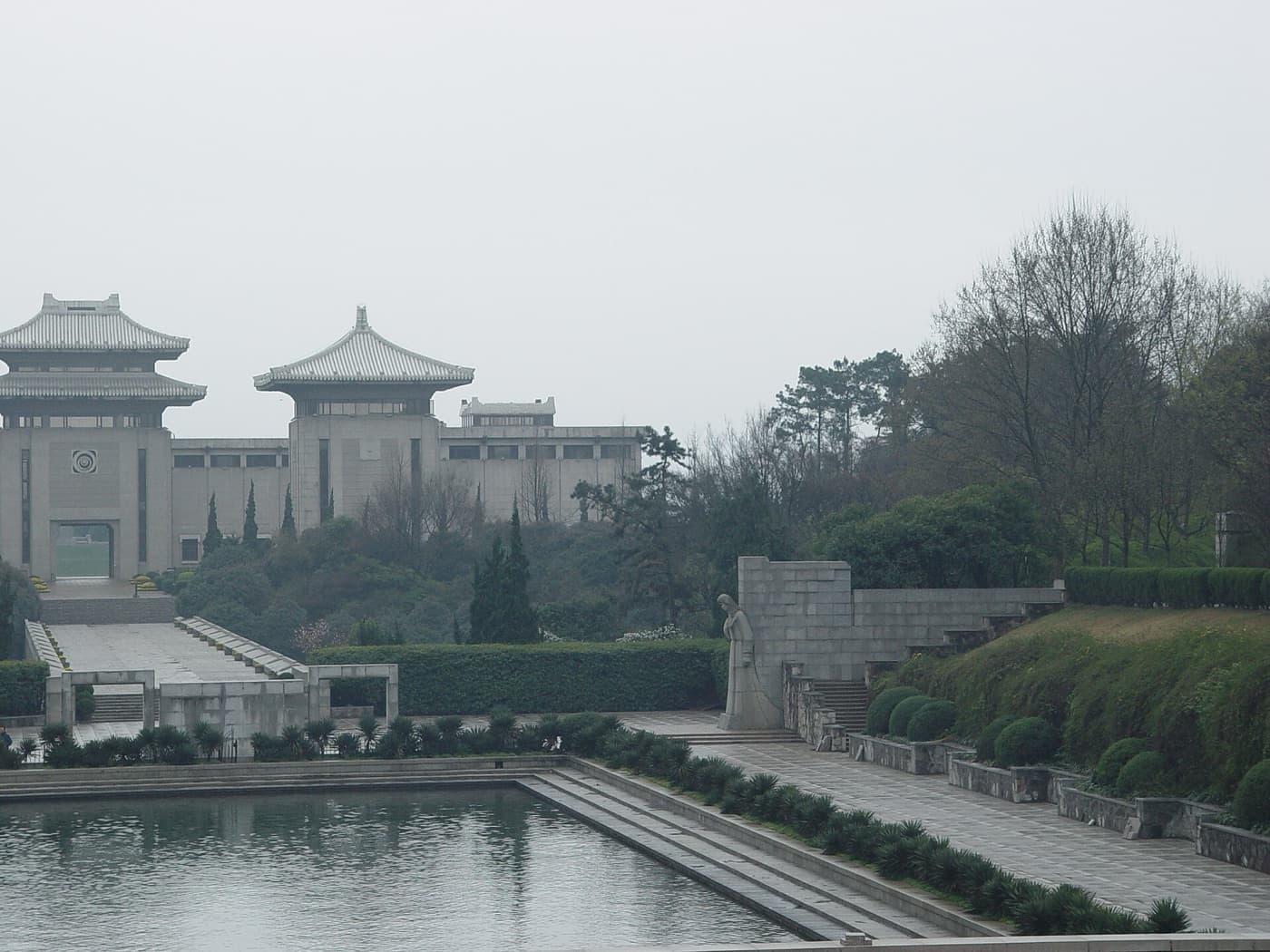
Yuhuatai
Yuhuatai is made up of three beautiful hills encircled by pines and cypresses. It has a history of more than 3,000 years and is praised with the saying, “Six dynasties of Yuhua condense the spirit of heaven and earth; a volume of history forges a sacred terrace for the ages.” It consists of six functional zones: the Historic Sites Area, the Martyrs’ Cemetery Area, the Yuhua Stone Culture Area, the Yuhua Tea Culture Area, the Recreation and Activity Area, and the Ecological Forest Area. It houses the largest martyrs’ memorial complex in China, historic sites with a long past, lush mountain forests, seasonal flowers and plants, and the world-famous Yuhua stones and the renowned Yuhua tea. In recent years, more than 20 historic sites, pavilions, towers, and halls have been newly rebuilt, including Yuhua Pavilion, Erzhong Temple, Muowei Pavilion, the Qianlong Imperial Stele Pavilion, Ganlu Well, Xiyuan Garden, Yiyuan Garden, and Meigang.
3 hours or more
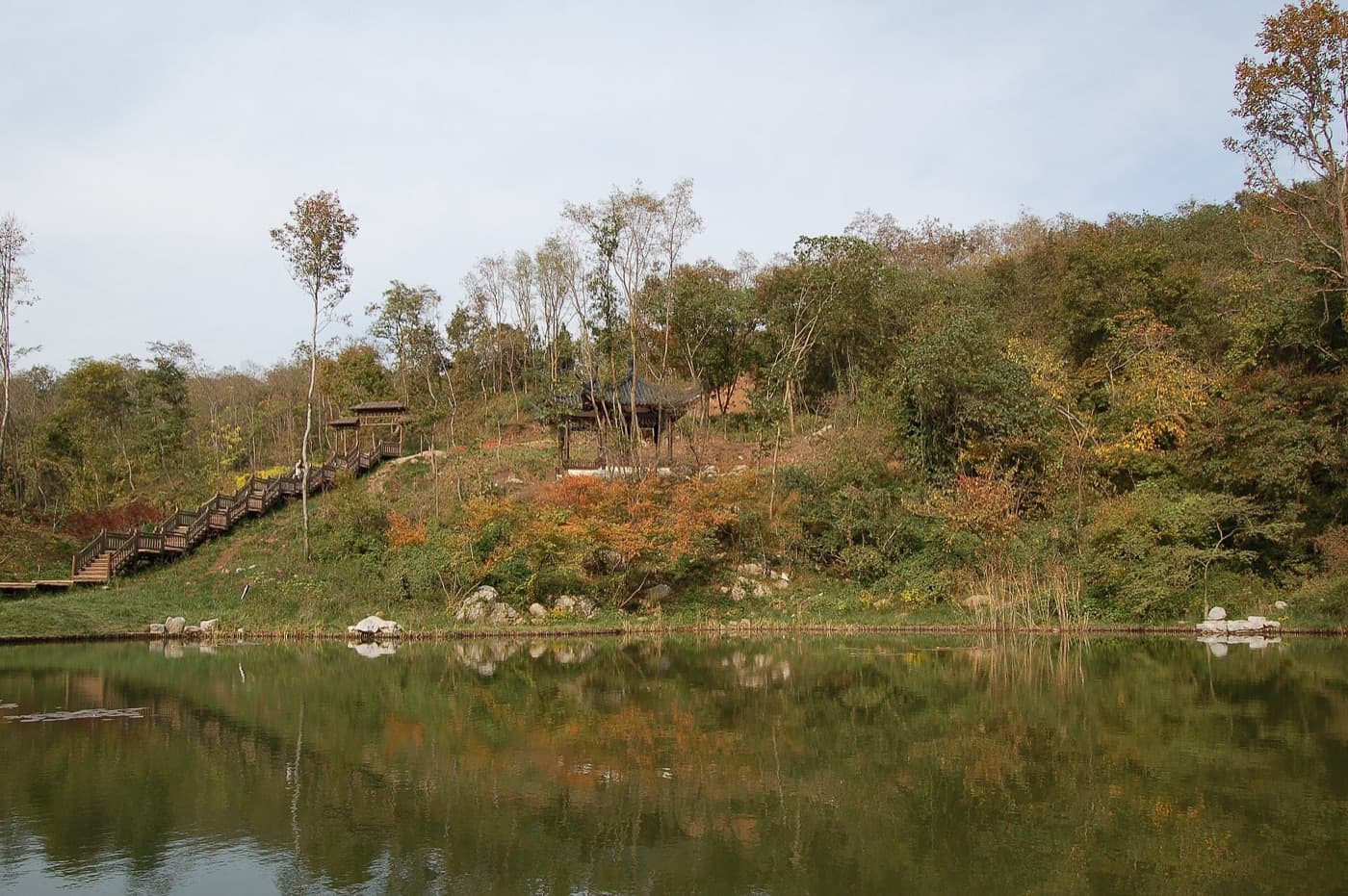
Qixia Mountain
Known as “the most beautiful mountain in Jinling,” Qixia Mountain is a national AAAA-level tourist attraction and one of China’s four top destinations for autumn foliage. In deep autumn, the mountain turns red all over, like the evening glow settling on the hills, a truly spectacular sight.
2–4 hours · ¥80
Yuejiang Tower Scenic Area
One of China’s Top Ten Cultural Pavilions and one of the Four Great Towers of the Jiangnan region, Yuejiang Tower is a national AAAA-level tourist attraction and one of the New Forty-Eight Scenes of Jinling. It is known as “the number one tower in Jiangnan.”
1–3 hours · ¥40
Niushou Mountain Cultural Tourism Zone
Also known as Tianque Mountain, Niushou Mountain takes its name from the twin peaks on its summit, which resemble the two horns of a bull’s head. It is one of the Four Great Scenic Spots of Jinling and is known as “the Spring Niushou.” Ancient Jinling scenes include the Niushou Mist and the Zutang Bell-Ringing. The mountain also preserves many historic sites, such as Yue Fei’s Anti-Jin Fortress and the Zheng He Cultural Park.
4–6 hours · ¥88
Memorial Hall of the Victims in the Nanjing Massacre by Japanese Invaders
This is a history that must never be forgotten. Through historical facts and artistic works, it records the suffering of a nation. The screening hall shows the historical documentary “The Japanese Invaders' Nanjing Massacre” (侵华日军南京大屠杀).
Free
Great Bao'en Temple Heritage Park
Great Bao’en Temple was the first Buddhist temple established in southern China. In 2008, an underground palace at the temple site yielded the Buddha’s finger bone relic, the Seven-Treasure Ashoka Stupa, and many other cultural relics that shocked the world and the Buddhist community. A museum was then built on the site to showcase Buddhist culture and the past and present of Great Bao’en Temple. In 2015, the Glazed Pagoda of Great Bao’en Temple was rebuilt. Although it uses a modern steel frame clad in glass, its glazed radiance can still be evoked through lighting, giving a dreamlike effect.
1–3 hours · ¥120
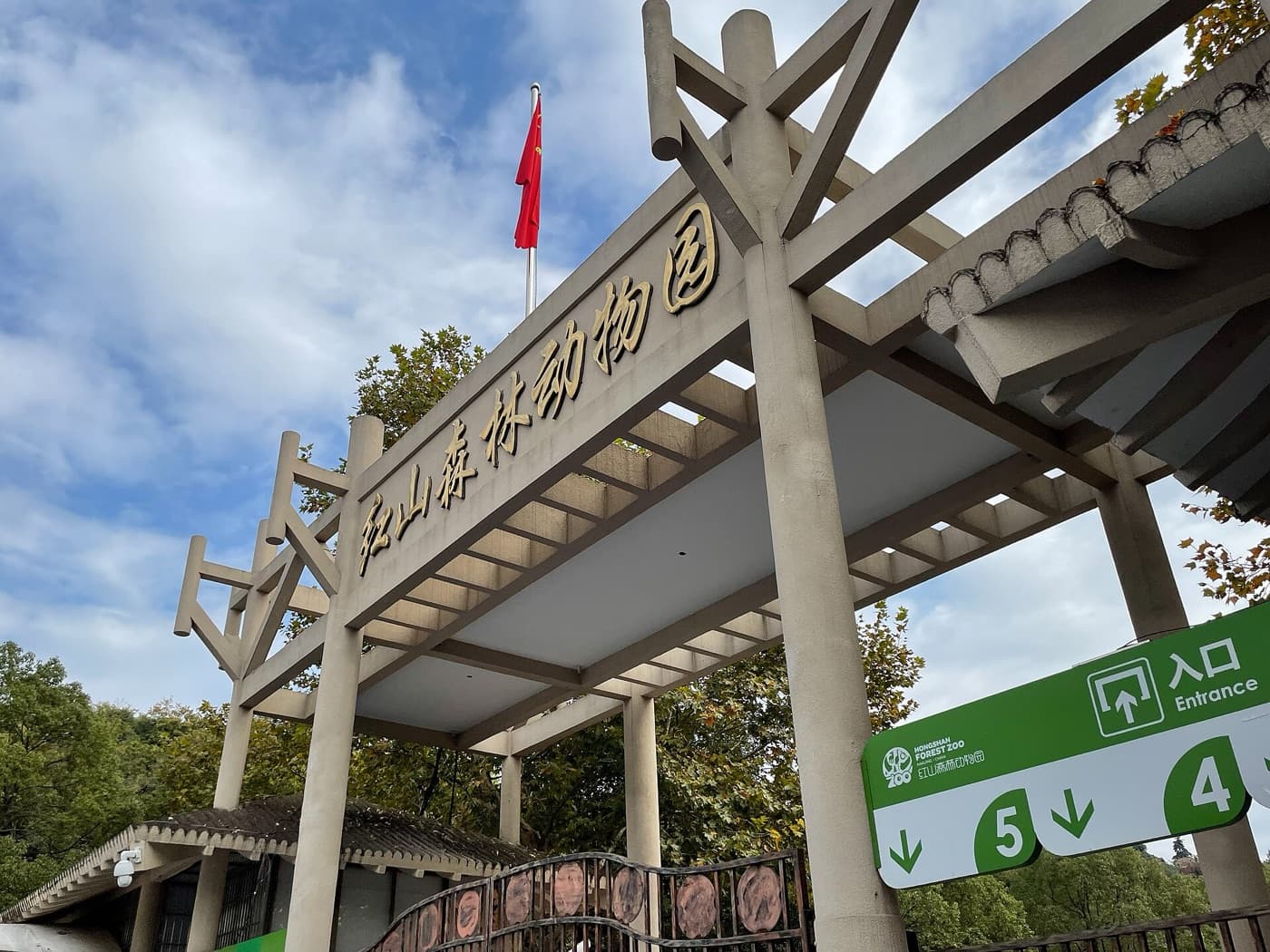
Hongshan Forest Zoo
Hongshan Forest Zoo is one of the most distinctive zoos in China, with unique forest landscapes, rich animal resources, and a variety of themes. It was also one of the first zoos in China to stop animal performances. Signs and information boards throughout the zoo use hand-drawn illustrations to introduce each animal’s name, personality, interests, habits, and stories, showing respect for life at every turn.
3–5 hours · ¥40
Nanjing Museum
Nanjing Museum is one of China's three major museums. It comprises the Art Gallery, History Gallery, Republic of China Gallery, Special Exhibition Hall, Digital Gallery and Intangible Cultural Heritage Hall. The museum holds more than 420,000 items, ranking among the top three collections in China. Its treasures span from the Paleolithic Era to the present day, including rare relics and masterpieces from every dynasty that have drawn attention at home and abroad.
2–4 hours · Free
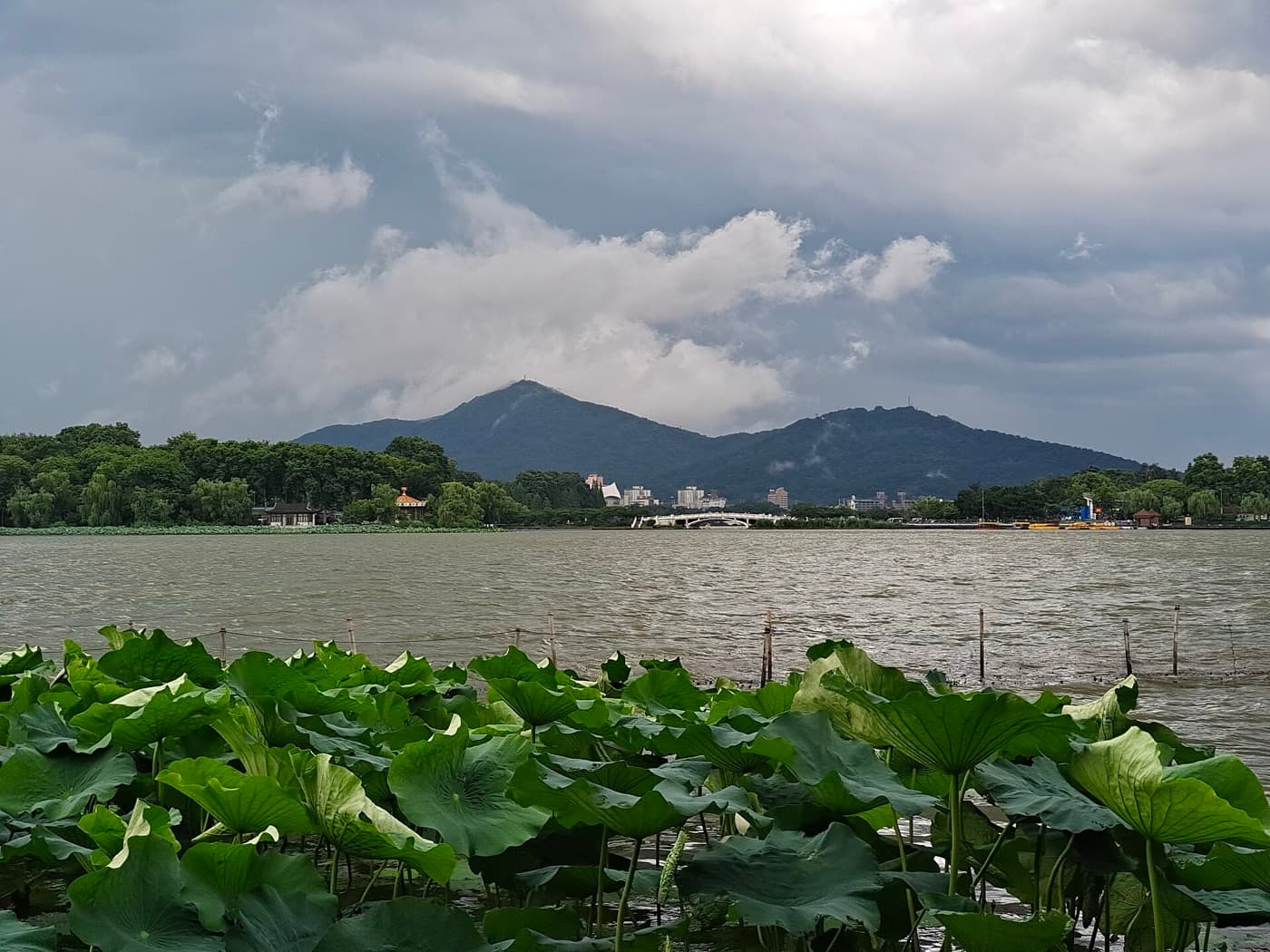
Xuanwu Lake
Xuanwu Lake, formerly known as Sangbo, is China's largest imperial garden lake and one of the Three Famous Lakes of Jiangnan. Celebrated as the “Pearl of Jinling,” it has a history of more than 1,500 years. Five green islets lie within it: Huanzhou, Yingzhou, Lingzhou, Liangzhou and Cuizhou. The majestic Ming City Wall, the graceful Jiuhua Hill and the simple Jiming Temple embrace it on its right side. In summer and autumn, the lake is covered with lotus blossoms whose fragrance fills the air, making it enchanting to behold.
History & Culture · Nature
Museum of Modern Chinese History Sites
Here you can see the environment in which Sun Yat-sen worked as Provisional President. Further inside, the Xi Garden reveals the extravagant, hedonistic lifestyle of the Taiping Heavenly Kingdom, the peasant uprising army that established its capital at Tianjing (Nanjing).
1–3 hours; 2 hours · ¥35; ¥10
Getting there & around
Getting In and Around
Describing Nanjing's transport as covering “land, sea and air” (海陆空) is no exaggeration. Its convenient connections make Nanjing a major transport hub in East China.
By Air
Nanjing Lukou International Airport is one of the few large airports in China. It is 35 km from the city centre. A shuttle bus costs ¥20 per person, and a taxi costs around ¥100.
By Rail
Nanjing has three passenger stations: Nanjing Railway Station (南京站), Nanjing South Railway Station (南京南站) and Zhongpingmen (中平门). Most trains departing from Nanjing leave from Nanjing Railway Station, and most trains passing through Nanjing stop there.
High-Speed Rail
The Shanghai–Nanjing Intercity High-Speed Railway officially opened on 1 July 2010. G-series high-speed trains run in both directions between Nanjing Railway Station and Shanghai Hongqiao Station, and intercity trains run between the two cities every day, so you can usually buy a ticket and board soon after. Nanjing South Railway Station mainly serves the Beijing–Shanghai, Shanghai–Wuhan–Chengdu, Yangtze River, Nanjing–Hangzhou, Nanjing–Anqing, Nanjing–Nantong, Nanjing–Hefei and Nanjing–Qidong Intercity lines.
By Road
Nanjing is the hub of 83 highways north and south of the Yangtze River, linking seven provinces and municipalities, including Shanghai, Zhejiang, Anhui, Shandong and Jiangxi. Among them, the Nanjing–Shanghai, Nanjing–Hefei and Nanjing–Lianyungang expressways make travel between Nanjing and other places faster.
Buses and taxis are the main means of getting around within Nanjing.
Metro
There are currently 12 lines: Lines 1, 2, 3, 4, 7 and 10, and S1, S3, S6, S7, S8 and S9. Line 1 serves Hongshan Forest Zoo, Xuanwu Lake, Confucius Temple (Fuzimiao) and Nanjing South Railway Station. Line 2 serves Sun Yat-sen Mausoleum, Mochou Lake and the Nanjing Massacre Memorial Hall. Line 3 serves the Presidential Palace, Zheng He Park and others. Line 4 serves Gulou, Jiuhua Mountain and others.
Nanjing Metro
Nanjing Metro uses unmanned ticket machines that accept banknotes and coins. The metro card works like an arcade token. Escalators in metro stations run downward. Nanjing's metro is very convenient and well managed.
Sightseeing Shuttle Buses
Nanjing's sightseeing shuttle buses start later and finish earlier. The first bus usually departs at 7:30, and the last bus usually departs at 17:30.
City Buses
Regular city bus fares in Nanjing are ¥2. D-prefix bus fares are ¥3, and K-prefix bus fares are ¥4.
Sightseeing Bus Lines
The city has five dedicated sightseeing buses that pass the main attractions, with staff providing commentary on each site. Attraction tickets purchased on board are also discounted.
Attraction Closing Times
Nanjing's attractions all close early. The Presidential Palace Site and Jiming Temple stop selling tickets at 17:00, so plan to visit before then.
Taxis
Nanjing taxis fall into three categories: standard cabs, mid-range cabs (including all-electric cars), and luxury cabs.
Nanjing Railway Station Information Desk
By Rail- Address:
- 111 Longpan Road, Xuanwu District, Nanjing
- Phone:
- 025-95105105
Flag-fall fares are ¥11 per
Taxis3 km, ¥11 per 2.5 km, ¥11 per 2 km; beyond the flag-fall fare
Thereafter, standard cabs charge ¥2.4 per
Taxiskm, while mid-range (including electric) cabs and luxury cabs charge ¥2.9
per
Taxiskm. A night service fee of 20% of the actual distance travelled is charged.
Eat & drink
Nanjing cuisine has long been known as Jing-Su cuisine, celebrated for its authentic flavours, careful ingredient selection, and delicate, refined presentation. When it comes to food in Nanjing, duck is a must. Besides salt-water duck, there are Jinling roast duck, dry-cured duck (banya), roast duck, Jinling soy-braised duck, crispy duck, eight-treasure pearl duck and salted duck gizzards.
Snack Set Meals
Nanjing snacks are sold as set meals, with the cheapest at ¥60 per set. Each set includes a dozen or so snacks, and sets are also available at ¥80, ¥100, ¥300 and other price points. As each snack is served, the waiter not only announces its name but also explains the story behind it.
Nanjing Specialties
If you want to bring snacks home for family and friends, Nanjing sausages, xiangdu (pork-belly sausage) and vacuum-packed osmanthus salt-water duck are essentials, but make sure to look for the Guihua (Osmanthus) brand for authenticity. Yuhua tea is another option, and spring's new tea is the finest. Specialty goods are best bought at large supermarkets, which offer a fuller range at reasonable prices.
Qinhuai Eight Delicacies
The Qinhuai Eight Delicacies are Nanjing's famous snacks: five-spice tea eggs, five-spice beans and Yuhua tea from Kuiguang Pavilion; shredded dried tofu with dried shrimp and crab-shell yellow flatbread from Yonghe Garden; sesame-oil shredded dried tofu and duck-fat flaky flatbread from Qifang Pavilion; tofu pudding and scallion pancakes from Liufengju; assorted vegetable buns and shredded chicken noodles from Qifang Pavilion; beef soup and beef potstickers from Jiang Youji; thin-skinned dumplings and fried-fish noodles in red broth from Zhanyuan Noodle House; and osmanthus-filled mini glutinous rice balls and five-colour rice cakes from Lianhu Dessert Shop.
Many restaurants around Confucius Temple offer snack set meals where you can sample all the Qinhuai Eight Delicacies in one go; these usually come in ¥20 and ¥40 versions. You can also try them at larger restaurants such as Qinhuai Renjia, Guibin Lou and Zhuangyuan Lou, which guarantee authentic flavours, but expect to spend over ¥100.
Nanjing Aquatic Produce
The 'Water Eight Delicacies' among aquatic produce are fish, water chestnuts, lotus root, wild rice stem (jiaobai), arrowhead (cigu), water celery, Gorgon nuts (jitougu) and lotus seed pods. All are at their best around the Mid-Autumn Festival.
Snack Streets
Nanjing has many snack streets. Besides Confucius Temple, areas such as Xinjiekou, Chaotian Palace, Shanxi Road and Matai Street have gradually developed their own concentrations of snack stalls and eateries.
Recommended Restaurants
Time-Honoured Establishments
Local Favourites
Specialty Shops
Nanjing Overview
Nanjing Confucius Temple Snacks
Snack StreetsConfucius Temple snacks are famous across the country. This is the birthplace of Jinling snacks, with a long history and more than 200 varieties.
Shizi Bridge Food Street (Hunan Road)
Snack StreetsFor truly good eats, head to Hunan Road. Confucius Temple is a tourist attraction, and its food falls short of Hunan Road in both taste and value for money. On the Shizi Bridge pedestrian street on Hunan Road, there is an icon of two lions contesting an embroidered ball, strikingly similar to the Premier League logo. You can spot the 'Lion King Mansion' rooftop sign from far off, and downstairs are open-air food stalls (dapaidang) with small workshops that specialise in snacks.
Special Recommendation
Snack StreetsToday, the place with the most snacks in Nanjing is the Xinjiekou snack street. Centred on Zhenghong Street Square, it stretches out to Shigu Road, Mingwa Lang, Fengfu Road and other stretches, where you'll find distinctive food shops everywhere. Online, someone has even compiled a 'Xinjiekou Snack Guide' listing every one of these snacks.
Halal Restaurants
Recommended RestaurantsMa Xiangxing Restaurant: This century-old establishment, founded in 1845, is known for four signature dishes it created: squirrel-style fish, egg shumai, phoenix-tail prawns and 'beauty liver'. The restaurant's sesame-oil assorted vegetable buns are also distinctive and nearly always sell out.
- Address:
- 32 North Yunnan Road
- Phone:
- 025-83286388
Lüliuju (Taiping South Road Branch)
Recommended RestaurantsFounded in the early 20th century, this longstanding restaurant specialises in vegetarian cuisine. Its standouts include vegetarian chicken, vegetarian roast goose, vegetarian fish slices, vegetarian Kung Pao 'chicken' and vegetarian 'sea cucumber' made from crispy chicken-style pastry.
- Address:
- 248 South Taiping Road
- Phone:
- 025-86643644
Liuhuachun
Time-Honoured EstablishmentsJing-Su cuisine is the speciality here. Founded in the late Qing or early Republican era, the name Liuhuachun nods to Nanjing's status as capital of the Six Dynasties. Signature dishes include smoked pork with pine nuts, Furong shrimp (egg-white shrimp), stewed caihe (菜核) and Jinling yuanzi (glutinous rice balls).
- Address:
- No. 3, Xinanli Commercial Block, 400 South Zhongshan Road
Jiang Youji (Old East Gate Branch)
Time-Honoured EstablishmentsHow could you visit Nanjing without trying the beef potstickers? As an old shop, the setting is basic, more of a humble 'hole-in-the-wall' eatery, but it wins on taste and fair prices.
- Address:
- 49 Santiaoying
Yonghe Garden
Time-Honoured EstablishmentsA time-honoured name in Confucius Temple, Yonghe Garden's crab-shell yellow sesame flatbread and shredded dried tofu with dried shrimp are among the Qinhuai Eight Delicacies. It is one of the better-preserved old establishments.
- Address:
- 68 Jiankang Road, Confucius Temple
- Phone:
- 025-86623863
Duck Blood Vermicelli Soup
Local FavouritesRestaurants serving duck blood soup dot the city. In Nanjing, duck blood vermicelli soup is what hotpot is to Chongqing: something out-of-towners must try. Huiwei Duck Blood Vermicelli
- Address:
- Corner of Hunan Road and Matai Street; there are chain branches in many locations
Yexin Snacks
Local FavouritesA popular little shop tucked away inside a residential compound, whose flavours live up to the long queues.
- Address:
- Room 101, No. 44, Laifeng Community, 44 Jinsu'an Road
Salt-Water Duck
Local SpecialtiesSalted duck is one of Nanjing's most famous specialties, with a history of over 1,000 years. During festivals, or when guests visit at home, buying a salted duck on the way over has become something of a Nanjing custom. The Guihua Duck specialty shop beside the Hunan Road shopping mall sells authentic vacuum-packed salted duck.
Century-Old Yin Soup Dumplings
Specialty ShopsA very popular snack shop whose signature is soup dumplings: small in size, but big on flavour. The duck blood and vermicelli soup is also good.
- Address:
- No. 2 Shizi Bridge, Hunan Road, Gulou District
- Phone:
- 025-83241696
Lianhu Pastry Shop
Specialty ShopsThe most down-to-earth, old-style snack shop beside Confucius Temple. The red bean yuanxiao, beef potstickers and beef wontons are all good.
- Address:
- No. 26 Gongyuan West Street, Confucius Temple, Qinhuai District
- Phone:
- 025-52251232
Where to stay
Nanjing has accommodation at every level, from star-rated hotels to ordinary guesthouses. Luxury hotels include Dingshan Shangri-La Hotel, Hilton International Hotel, Nanjing Centre Hotel and Jinling Hotel; mid-range options include Guorui Hotel and Tianjing Hotel.
For budget or mid-range stays, you can choose a work-unit guesthouse or an affordable ordinary hotel, where prices generally range from ¥100 to ¥200. Backpackers can stay at youth hostels; the rooms are basic, but the service is just as attentive.
Confucius Temple and Qinhuai River Area
Located in the south of the urban area, this is one of Nanjing's centres of folk culture, close to the Qinhuai River, with moderately priced accommodation.
Xinjiekou Area
Convenient transport and central location, close to various scenic spots. Accommodation prices here are relatively high.
Gulou and Xuanwu Area
Also in a busy district, close to the railway station and the famous Hunan Road food street.
Tangshan and Tangquan Town Area
The best place to stay for visitors keen on hot springs, with several scenic spots nearby, though prices are rather high.
Yishang Hot Spring Resort
Jiangsu Provincial Workers' Tangshan Sanatorium
Manshiguang Youth Hostel
Confucius Temple and Qinhuai River AreaExcellent location, with Confucius Temple right downstairs.
- Address:
- No. 3 Shengzhou Road
- Phone:
- 18051000087
Home Inn
Xinjiekou AreaHotel·neo (Xinjiekou Centre branch)
- Address:
- 3rd Floor, Jinhuaihai Business Centre, No. 36 Huaihai Road
- Phone:
- 025-84340101
Guorui Hotel
Guorui Hotel- Address:
- No. 55 Zhongshan North Road
- Phone:
- 025-83303888
Stay at the Most Luxurious: Yishang Hot Spring
Yishang Hot Spring ResortOffers a variety of hot spring experiences. The most eye-catching is the Turkish fish spa, where little fish nibble at your body in the pool.
- Address:
- No. 8 Hot Spring Road, Tangshan Town, Nanjing
- Phone:
- 025-51190666
- ¥
- Bath fee ¥219/person; standard room ¥728; king room ¥848
Stay Here
Jiangsu Provincial Workers' Tangshan SanatoriumFor a good-value option, soaking in the hot springs at Yishang again is a sensible choice.
- Address:
- No. 229 Tangquan East Road, Tangshan Town, Nanjing
- 1. Affordable hot springs: Tangshan has over a dozen hot spring spots of varying grades. Shengquan Hot Spring Bathhouse, Meiling Hot Spring Resort and Rongquan Bathing Centre are more mainstream, costing from a few dozen to around ¥100, but they do not offer accommodation. 2. Budget bathhouses: Cheaper, more basic bathhouses are tucked away, costing ¥5–10. You'll need to search in the alleys off the main streets, or ask passers-by. They are simple, but have their own charm.
Shopping
Nanjing's bustling commercial districts are mainly concentrated in Xinjiekou in the city centre, Hunan Road in the north, Taiping South Road in the south, and the Confucius Temple area. Young women can hunt for little treasures in these places. Zhujiang Road Electronics Street is also quite well known. In addition, Changmao Hand-Painted Shop, Xianfeng Bookstore, Liuxing Tongxin, Tanhua Life and Pufang are also well-known shopping spots among Nanjing locals.
Don't Buy Specialties at Confucius Temple
Specialty shops in the Confucius Temple commercial district are expensive and have no clearly marked prices. Around 10 pm, when shops are about to close, many specialty stores will negotiate on price.
Taiping South Road Brand-Name Street
Running from Daxinggong in the north to Jiankang Road in the south, this is a good stroll for visitors looking for gold and silver jewellery, jade, gemstones or department store counters.
Hunan Road Boutique Street
Boutique shops line the street in rows, so it's easy to get dazzled. Shizi Bridge Food Street is also here, so once you're tired of shopping, you can go and have a big meal.
Jinling Flower and Bird Market
On Jinling Road near Confucius Temple is a flower and bird market, the largest in Nanjing. It sells flowers, birds, calligraphy and paintings, Yuhua stones, and more.
Zhonghua Brocade Village
Among China's three famous brocades, Nanjing's yunjin (cloud brocade) ranks alongside Sichuan's Shu brocade and Suzhou's Song brocade. At Zhonghua Brocade Village you can not only learn about brocade craftsmanship and view various collections, but also buy brocade handicrafts.
Nightlife
Around Confucius Temple (Fuzimiao), you can see life along the Qinhuai River by day and sample Huaiyang snacks by night. Zhonghua Gate, meanwhile, is a favourite spot where locals go to cool off and relax.
Bar Street
When you think of bars, 1912 Street beside the Presidential Palace comes to mind straight away; it is as famous as Beijing's Sanlitun bar street. For a lively night, try SEVEN, RED and Gone With the Wind; for atmosphere, try BABYFACE or TOUCH; for taste, SoHo may suit you better.
Source: China Self-Guided Travel 2025 (《中国自助游》, Tianjin Science & Technology Press, Aug 2024), pp. 993–1022. Translated from the Chinese edition; names and prices follow the guidebook. · Plain text version