Museum of Modern Chinese History Sites
Here you can see the environment in which Sun Yat-sen worked as Provisional President. Further inside, the Xi Garden reveals the extravagant, hedonistic lifestyle of the Taiping Heavenly Kingdom,…
Museum of Modern Chinese History Sites, Nanjing
Key facts
- Admission
- ¥35; ¥10
- Opening hours
- 8:30–18:00 (March 1–October 14); 8:30–17:00 (October 15–end of February next year); 7:30–17:30
- Time needed
- 1–3 hours; 2 hours
- Getting there
- Near Zongtongfu (总统府) bus stop, Nanjing Library bus stop, Daxinggong (大行宫) metro station; accessible by self-driving or long-distance bus 1912 Block: As famous as Beijing's Sanlitun bar street, the 1912 Block is a must-visit for experiencing Nanjing's nightlife. This area was once the seat of the Nationalist government, and dozens of Republican-era buildings still stand here, lending it a distinctive charm. The block is known not only for its architecture and bars but also for its food, offering private-kitchen dishes, hotpot, Korean and Japanese cuisine that cater to international tastes.; Near Daxinggong North (大行宫北) bus stop, Zongtongfu (总统府) bus stop, Daxinggong (大行宫) metro station Yanziji: Known as the “First Cliff on the Ten-Thousand-Li Yangtze,” Yanziji is the best place to admire the river. Waves crash against the rocks below with tremendous force.; Near Yanziji bus stop, Badoushan (笆斗山) metro station; Near Changfujie (常府街) metro station Sifang Contemporary Art Museum: Located on the shore of Foshou Lake in Pukou District, Nanjing Sifang Contemporary Art Museum was designed by the renowned American architect Steven Holl. Alongside the works of 24 other master architects, it presents a one-of-a-kind art and cultural landscape in Asia and beyond.; Near Zhenzhuquan (珍珠泉) bus terminal stop
- Guidebook rating
- 3 / 5
From China Self Guided Travel 2025, page 1012. Open in Google Maps
About Museum of Modern Chinese History Sites
Here you can see the environment in which Sun Yat-sen worked as Provisional President. Further inside, the Xi Garden reveals the extravagant, hedonistic lifestyle of the Taiping Heavenly Kingdom, the peasant uprising army that established its capital at Tianjing (Nanjing).
More from the guidebook
One-line recommendation
Gaochun Old Street: Most of Nanjing's attractions have been modernly rebuilt, and truly antique sites are now few and far between. Gaochun Old Street is one of the sights with genuine character and history. Its bluestone slabs exude a rich sense of antiquity, and walking along them feels like stepping back in time. At night, the street takes on a different charm, bathed in dreamy, glowing lights.
Frequently asked questions
How much does Museum of Modern Chinese History Sites cost?
Admission to Museum of Modern Chinese History Sites is ¥35; ¥10, as listed in the 2025 guidebook. Prices can change; check the official channel before you go.
What are the opening hours of Museum of Modern Chinese History Sites?
Museum of Modern Chinese History Sites is open 8:30–18:00 (March 1–October 14); 8:30–17:00 (October 15–end of February next year); 7:30–17:30.
How do I get to Museum of Modern Chinese History Sites?
Near Zongtongfu (总统府) bus stop, Nanjing Library bus stop, Daxinggong (大行宫) metro station; accessible by self-driving or long-distance bus 1912 Block: As famous as Beijing's Sanlitun bar street, the 1912 Block is a must-visit for experiencing Nanjing's nightlife. This area was once the seat of the Nationalist government, and dozens of Republican-era buildings still stand here, lending it a distinctive charm. The block is known not only for its architecture and bars but also for its food, offering private-kitchen dishes, hotpot, Korean and Japanese cuisine that cater to international tastes.; Near Daxinggong North (大行宫北) bus stop, Zongtongfu (总统府) bus stop, Daxinggong (大行宫) metro station Yanziji: Known as the “First Cliff on the Ten-Thousand-Li Yangtze,” Yanziji is the best place to admire the river. Waves crash against the rocks below with tremendous force.; Near Yanziji bus stop, Badoushan (笆斗山) metro station; Near Changfujie (常府街) metro station Sifang Contemporary Art Museum: Located on the shore of Foshou Lake in Pukou District, Nanjing Sifang Contemporary Art Museum was designed by the renowned American architect Steven Holl. Alongside the works of 24 other master architects, it presents a one-of-a-kind art and cultural landscape in Asia and beyond.; Near Zhenzhuquan (珍珠泉) bus terminal stop
How long should I spend at Museum of Modern Chinese History Sites?
Plan on 1–3 hours; 2 hours for Museum of Modern Chinese History Sites.
Where is Museum of Modern Chinese History Sites?
Museum of Modern Chinese History Sites is in Nanjing, Jiangsu Province, in the East China of China. 388 Yingtian Avenue, Qinhuai District St. Paul's Church: Completed in 1923, St. Paul's Church is the church of the Chung Hua Sheng Kung Hui (Anglican Church of China) in Nanjing and the city's first formal Christian chapel. It is now a municipal cultural heritage site and the oldest surviving Christian building from the Republican era in Nanjing. Designed in the revivalist style popular in the West at the time, it is a modest, typical Western European village-style chapel.
More places in Nanjing

Zhongshan National Scenic Area (Purple Mountain)
Sun Yat-sen Mausoleum (Plaza of Universal Love, Tomb Road, Mausoleum Gate, Stele Pavilion, Memorial Hall, Tomb Chamber): free; Ming Xiaoling Mausoleum: ¥70; Music Terrace: ¥10; Linggu Scenic Area (including Linggu Temple): ¥35; Meiling Palace: ¥30; combined ticket for the entire scenic area: ¥100

Qinhuai River
Qinhuai River → Confucius Temple → Dacheng Hall → Mingde Hall → Zunjing Pavilion → Jiangnan Imperial Examination Hall → Wuyi Lane → Former Residences of the Wang and Xie Families → Former Residence of Wu Jingzi → Taoye Ferry → Chaotian Palace → Zhonghua Gate. The five-kilometer-long Qinhuai River scenic belt, centered on Confucius Temple, is both Nanjing’s largest entertainment hub and a hugely popular sightseeing area. “Ten Li Qinhuai” refers to the prosperity of the Qinhuai River area in the past, when merchants gathered and culture flourished. Successive dynasties described it as “a district of wind, flowers, and moonlight, a gathering place of gold dust and elegance.” After renovation, the Qinhuai River still has painted boats, waterside pavilions, green windows, and vermilion doors, but the addition of many modern lighting technologies makes it somewhat noisy, and it retains little of the leisurely charm of earlier times.
Memorial Hall of the Victims in the Nanjing Massacre by Japanese Invaders
This is a history that must never be forgotten. Through historical facts and artistic works, it records the suffering of a nation. The screening hall shows the historical documentary “The Japanese Invaders' Nanjing Massacre” (侵华日军南京大屠杀).
Free
Yuejiang Tower Scenic Area
One of China’s Top Ten Cultural Pavilions and one of the Four Great Towers of the Jiangnan region, Yuejiang Tower is a national AAAA-level tourist attraction and one of the New Forty-Eight Scenes of Jinling. It is known as “the number one tower in Jiangnan.”
¥40 · 1–3 hours
Niushou Mountain Cultural Tourism Zone
Also known as Tianque Mountain, Niushou Mountain takes its name from the twin peaks on its summit, which resemble the two horns of a bull’s head. It is one of the Four Great Scenic Spots of Jinling and is known as “the Spring Niushou.” Ancient Jinling scenes include the Niushou Mist and the Zutang Bell-Ringing. The mountain also preserves many historic sites, such as Yue Fei’s Anti-Jin Fortress and the Zheng He Cultural Park.
¥88 · 4–6 hours
Qixia Mountain
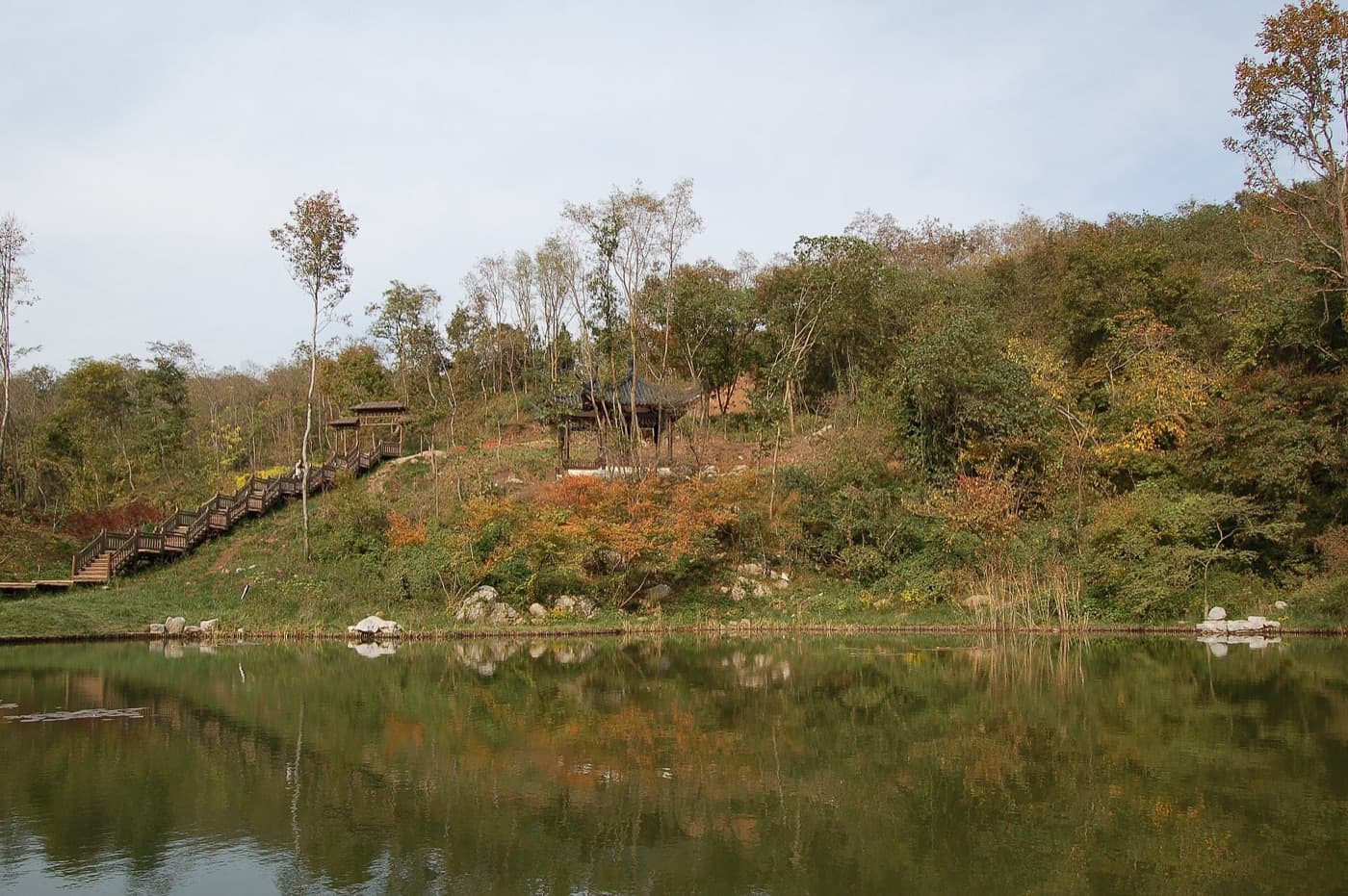
Known as “the most beautiful mountain in Jinling,” Qixia Mountain is a national AAAA-level tourist attraction and one of China’s four top destinations for autumn foliage. In deep autumn, the mountain turns red all over, like the evening glow settling on the hills, a truly spectacular sight.
¥80 · 2–4 hours