Yueyang Tower
Fan Zhongyan's famous essay “Record of Yueyang Tower” has given the tower a tremendous publicity boost. Yueyang Tower stands on the shores of Lake Dongting,…
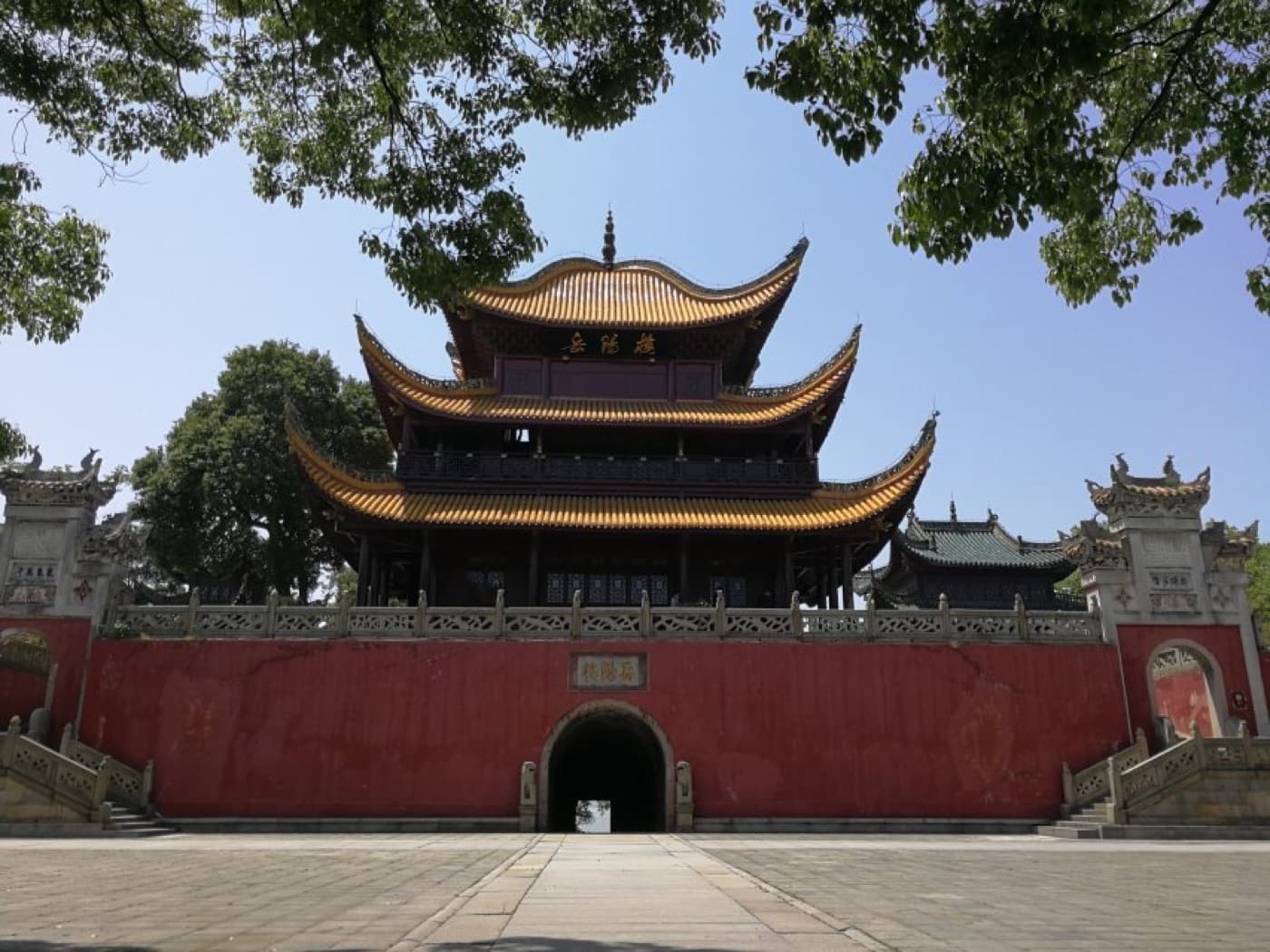
Yueyang Tower, Yueyang · Huangdan2060 · CC0 · Wikimedia Commons
Informazioni essenziali
- Ingresso
- ¥70
- Tempo necessario
- 2–3 hours
- Come arrivare
- Near the Yueyang Tower scenic area (bus stop)
- Valutazione della guida
- 4 / 5
Da China Self Guided Travel 2025, pagina 1951. Apri in Google Maps
Informazioni su Yueyang Tower
Fan Zhongyan's famous essay “Record of Yueyang Tower” has given the tower a tremendous publicity boost. Yueyang Tower stands on the shores of Lake Dongting, looking north over the flowing Yangtze and south toward the Three Xiang and Four Shui rivers. Surrounded by mountains and water, its broad vistas have earned it, together with Wuhan's Yellow Crane Tower and Nanchang's Tengwang Pavilion, the title of the “Three Great Towers of South China”.
Consigli dalla guida
- Best time to visit: Lake tour boats run from March to November and depart from the Yueyang Tower pier.
Domande frequenti
Quanto costa Yueyang Tower?
L'ingresso a Yueyang Tower costa ¥70, come indicato nella guida 2025. I prezzi possono cambiare: verifica il canale ufficiale prima di partire.
Come si arriva a Yueyang Tower?
Near the Yueyang Tower scenic area (bus stop)
Quanto tempo dedicare a Yueyang Tower?
Calcola 2–3 hours per Yueyang Tower.
Dove si trova Yueyang Tower?
Yueyang Tower si trova a Yueyang, Hunan Province, nella regione Cina centrale della Cina.
Altri luoghi a Yueyang
Dongting Lake and Junshan Island
The vast expanse of Lake Dongting, the “Eight-hundred-li Dongting”, is magnificent. For visitors who enjoy watching the rain and quiet reflection, the best time to visit Yueyang Tower is from mid-April to early June. This is the rainy season, and sitting quietly in the tower, listening to the wind and rain and watching the turbulent waves surge, while reading the “Record of Yueyang Tower” inside, creates a state of mind that words cannot fully express. Below Yueyang Tower, Lake Dongting has been known since ancient times as the “Eight-hundred-li Dongting”. Although its area is now about half of what it once was, it remains the second-largest freshwater lake in China, with misty waves stretching to the horizon where water and sky merge into one, truly matching the lines “It embraces distant mountains and swallows the Yangtze, vast and boundless, reaching the edge of the sky.” The most legendary sites on Junshan are the Tomb of the Two Consorts and the Liuyi Well. According to legend, Ehuang and Nüying shed their tears on the bamboo here, which is why the island is also famous for its many varieties of bamboo. The Liuyi Well is the entrance, in folk tales, through which Liu Yi travelled to the Dragon Palace of Lake Dongting to search for the Dragon Princess.
Junshan Island ¥78 · 2–4 hours
Shiniuzhai
The stronghold is named Shiniuzhai (Stone Ox Stockade) because a huge rock on its western side resembles a yellow ox. Shiniuzhai has steep terrain, with towering cliffs and strangely striking scenery. The attractions within the stockade are known for their danger and steepness, and can be summarized as “One Ox, Two Turtles, Three Passes, Four Bridges, Five Villages, Six Sky Lines, Seven Strange Rocks, Eight Temples, and a Hundred and Eight Cliff Views without end”. Particularly rare is the well-preserved ancient city wall, over 2,000 meters long. Shiniuzhai enjoys the reputation of “The First Stockade under Heaven”.
Packages ¥148–248 depending on the option · 3–5 hours
Quzi Temple
When Qu Yuan was exiled, he once lived on Yusi Mountain by the Miluo River. After Qu Yuan threw himself into the Miluo River, the local people built the Quzi Temple in his memory. The surviving temple was restored in the Qing dynasty and now largely reflects Qing-style architecture. It has three halls, with courtyards at the front, back, left and right, and a central Danchi (Red Pond) containing a large flower platform with a 300-year-old sweet osmanthus tree. The corridor walls are inlaid with many stone steles engraved with poems and prose written by later generations in tribute to Qu Yuan.
¥55 · 1–2 hours