Ningwu
A little-known destination tucked into the mountains of northern Shanxi, Ningwu combines forests, grasslands, a heavenly lake, deserts, glaciers, cave temples, hanging coffins,…
Ningwu, Taiyuan · Underbar dk · CC BY-SA 4.0 · Wikimedia Commons
Key facts
- Getting there
- About 3 hours by train from Taiyuan or Datong; you can also take a bus via the Datong–Yuncheng Highway (大运公路), with several daily services to Ningwu.
- Guidebook rating
- 4 / 5
From China Self Guided Travel 2025, page 1800. Open in Google Maps
About Ningwu
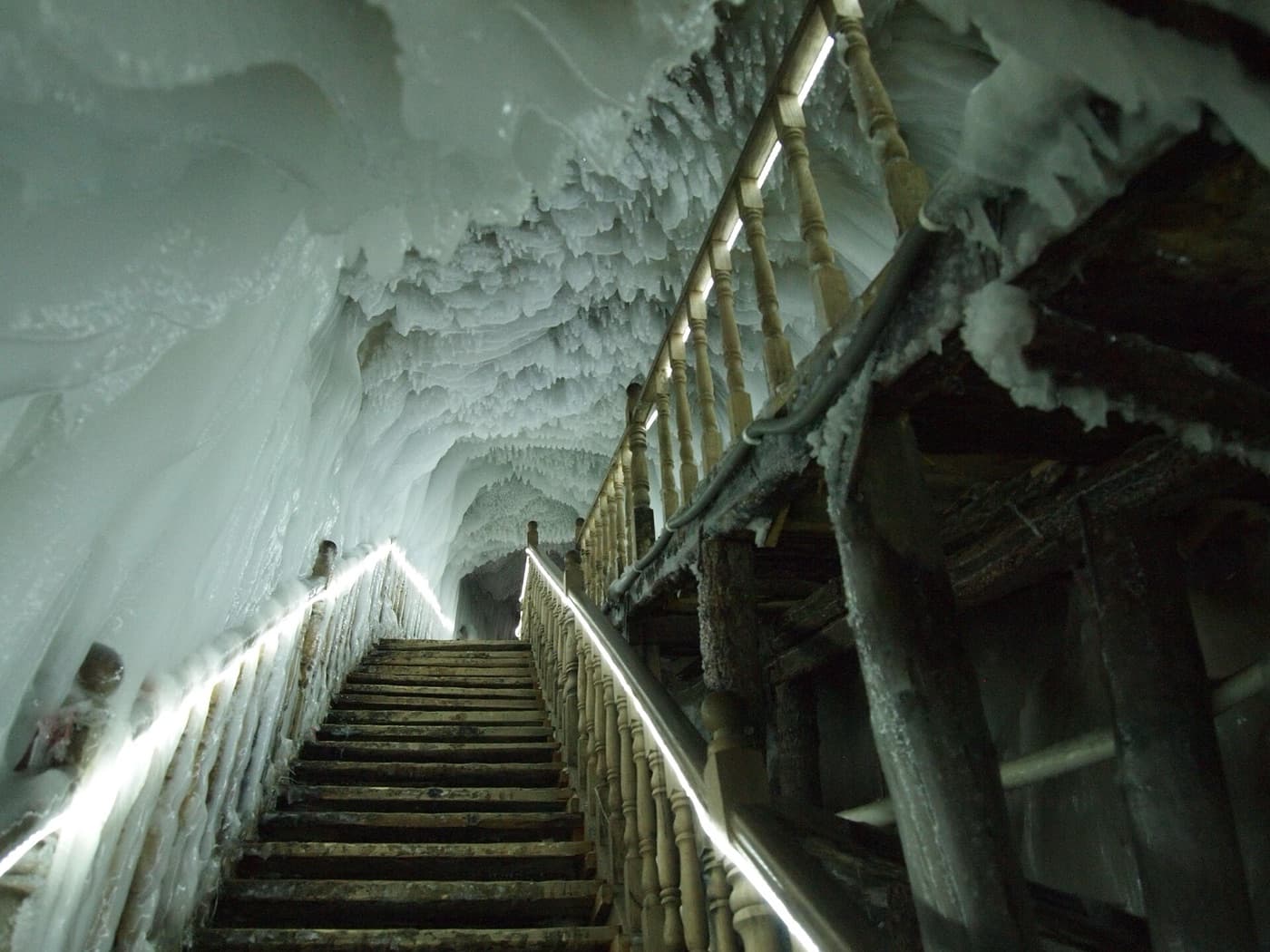
A little-known destination tucked into the mountains of northern Shanxi, Ningwu combines forests, grasslands, a heavenly lake, deserts, glaciers, cave temples, hanging coffins, the Hanging Temple and a thousand-year-old town. Almost every kind of scenery can be found here in concentrated form. Ningwu’s most distinctive attractions include Wannian Ice Cave, the Hanging Temple, Lovers’ Valley, the Cliffside Plank Road, Luya Mountain, Maluan Grassland and Ningwu Heavenly Lake.
Tips from the guidebook
- Food, clothing, accommodation and sightseeing in Ningwu: 1. Hiring a taxi for a full-day tour costs ¥150–200 per day.
- 2. If you plan to spend more than one day in Ningwu, consider staying in Dongzhai Town (东寨镇), 30 km from the county seat. It has convenient transport and a good range of food and lodging options.
- 3. The area is at high altitude and temperatures are low, so bring warm clothing even in summer.
Frequently asked questions
How do I get to Ningwu?
About 3 hours by train from Taiyuan or Datong; you can also take a bus via the Datong–Yuncheng Highway (大运公路), with several daily services to Ningwu.
Where is Ningwu?
Ningwu is in Taiyuan, Shanxi Province, in the North China of China.
More places in Taiyuan

Jinci Temple
Jinci Temple was first built during the Northern Wei dynasty and was once the ancestral shrine of Ji Yu, the founding ruler of the State of Jin. After many rounds of construction and expansion, it has become a scenic site where natural landscape and historical relics intertwine. Half-hidden among lush trees, clear spring water winds through its shrines and halls, drawing constant praise from visitors. There are three must-see highlights, known as the “Three Wonders of Jinci.” The first is the Ancient Cypresses of Zhou and the Tang Locust, planted during the Northern Zhou dynasty. More than 900 years ago, Ouyang Xiu praised them in verse: “The land's spirit nourishes the grasses and trees, and the ancient cypresses breathe a hazy green.” They still stand tall and vigorous today. The second is the Song-dynasty painted sculptures inside the Holy Mother Hall. The Holy Mother Hall is the main building of Jinci Temple, magnificent and grand, and it houses 43 painted clay sculptures. Their postures are natural and their craftsmanship is exquisite, making them masterpieces in the history of Chinese sculpture. The third is Nanlao Spring, the main source of the Jin River, which flows ceaselessly day and night. Also within Jinci is the stele bearing the “Inscription of Jinci Temple,” personally composed by Emperor Taizong of the Tang dynasty, Li Shimin. It is a particularly precious famous stele.
¥80 · 2–4 hours
Beiwudang Mountain
To distinguish it from Wudang Mountain in Hubei, it is called Beiwudang Mountain (North Wudang Mountain). It still preserves numerous Ming and Qing dynasty sites, as well as stone carvings and murals. Every year on the third day of the third lunar month, a traditional temple fair is held.
¥72 · 3–5 hours
Qikou National Scenic Area
Qikou is an ancient river crossing on the Yellow River. The water is deep and calm, making it a natural harbor and a golden waterway. Qikou rose to prominence in the Qianlong era of the Qing dynasty and for more than 200 years afterwards was a famous commercial hub in northern China, with a five-li (about 2.5 km) long street lined with shops and crowded with merchants. As the saying goes, “a bustling port the size of a small city, the first town on the winding Yellow River.” Qikou’s former prosperity radiated to a wide area and drove the rise of many surrounding villages. Its Ming and Qing architectural complex still survives in relatively good condition, and both its form and style and its artistry are highly refined.
1 day
Jinyang Lake Park
Jinyang Lake is equivalent to 17 Yingze Parks and is larger than West Lake. It is the largest water park in North China, covering nearly 17,000 mu in total, and is nicknamed the “Little Sanya.” Walking on fine sand, looking out over Jinyang Lake and feeling the gentle, refreshing breeze, you can stroll along the beach and enjoy a sensation much like being in Sanya.
1–2 hours
Shuangta Temple
A landmark of Taiyuan, first built during the Wanli era of the Ming dynasty. Shuangta Temple, also known as Yongzuo Temple, where “zuo” means blessing and protection. The Great Hall and the east and west side halls are built with blue-brick carvings imitating wooden structures. The twin pagodas, Xuanwen Pagoda and Wenfeng Pagoda, each with 13 stories, have an octagonal structure and stand about 54.7 metres tall. Their eaves are decorated with glazed ridge beasts, making a dazzling and spectacular sight.
Peak season ¥30; off-season ¥20 · 1–2 hours
Mengshan Giant Buddha
Mengshan Giant Buddha is located about 20 km southwest of Taiyuan. With a history of nearly 1,500 years, it is the earliest stone-carved Buddha statue in the world. The statue stands more than 60 metres tall, about 10 metres taller than the Bamiyan Buddhas in Afghanistan, once regarded as the “largest Buddha in the world,” and it is over 100 years older. Three legendary episodes make the Giant Buddha especially compelling. First, Empress Wu Zetian once ordered a huge kasaya robe made for the statue, decorated with gold, silver and jewels that lit up the cliffs and illuminated the mountains and rivers. Second, after Emperor Gaozu of the Tang dynasty, Li Yuan, paid respects to the Giant Buddha one day, he dreamed that night of Buddha light shining everywhere, which strengthened his resolve to raise an army and ultimately achieve his great cause. Third, the Mengshan Giant Buddha vanished from history for several centuries. At the end of the Yuan dynasty, the Buddha, which had flourished for more than 800 years, disappeared amid the wars. During a place-name survey in the 1980s, people discovered that a spot called Dadu Cliff, in Sidi Village, was the body of the Western Mountain Giant Buddha. After protective development and restoration, this Buddha, which had been lost for more than 600 years, once again appeared before the world.
¥35 · 2–4 hours