Taiyuan travel guide
太原
Thanks to its rich coal reserves, Shanxi served as an energy base for many years and made a great contribution to China’s development. At some point, this once-glorious Dragon City turned into a grey city,…
14 places · In the guidebook: pages 1782–1801

Taiyuan, Shanxi Province · AI illustration for China Trip
Quick itinerary
Taiyuan in 2 days
- Day 1
- Shanxi Museum→
- Beilin Park→
- Shuangta Temple→
- Chunyang Palace→
- Food Street (dinner; if time allows, enjoy the night views of the Fenhe Scenic Area after dinner)
- Day 2
The feel of the place
- Changing Environment
- Thanks to its rich coal reserves, Shanxi served as an energy base for many years and made a great contribution to China’s development. At some point, this once-glorious Dragon City turned into a grey city, its face covered in dust and its hair as grey as ash. Fortunately, after painful reflection, the local government made a firm decision and invested great effort to build green urban development into every aspect of city planning. As a result, Taiyuan won the “China Habitat Environment Model Award”. In recent years, the city has looked fresher and fresher.
- Vinegar
- No discussion of Shanxi is complete without aged vinegar. Shanxi has been making vinegar for some 3,000 years, and Shanxi aged vinegar is one of China’s four most famous vinegars. It is known worldwide for its unique flavour, which is smooth, tart, fragrant, sweet and mellow, as well as its long brewing history, and it is said to be “the finest vinegar under heaven”. Almost every table in Shanxi’s restaurants, big or small, has a pot of vinegar on it.
- Noodles
- If vinegar is Shanxi’s “blood”, then noodles are surely its “flesh”, and only together do they make up a complete Shanxi. Shanxi has hundreds of noodle dishes, and knife-shaved noodles are the most famous. In fact, there are plenty of tastier noodles in Shanxi than knife-shaved noodles, such as daobo noodles, bagu, helao, maoerduo and jiupian. Each is made differently and tastes different, but whether served with a rich sauce or stir-fried, they are all delicious.
- Shanxi Men
- The land shapes its people. The yellow earth of Shanxi has nurtured simple, down-to-earth men, in whom you can still faintly see the shadow of the Shanxi merchants of old. Shanxi men combine the delicacy and gentleness of southerners with the boldness and generosity of northerners, embodying more of a “Doctrine of the Mean” spirit. They value loyalty and keep their promises, and they have a strong sense of family. “A wife, children and a warm kang bed” is their greatest happiness.
Shanxi Gong and Drum
Hailed as “the number one drum under heaven”, legend has it that as early as the Yao and Shun era, local people were beating gongs and drums to express their joy. The style is simple, but the performances are varied. The lead drummer wears a drum on his head, one on his feet, one hanging from each ear and one on each shoulder, yet can still leap and tumble, striking from above and from the side with remarkable skill. The most spectacular scene is “drum-cart gong and drum”, where the horses pulling the drum cart number at least four and sometimes dozens or even hundreds. With people shouting and horses neighing, the sound carries for dozens of li, creating a magnificent and astonishing spectacle.
Airport Information Desk
phone: 0351-96566
Train Station Ticket Hotline
phone: 0351-95105105
Preparation and Information
Language
Shanxi dialect differs from Mandarin, but you will have no problem communicating with locals in Mandarin.
Climate and Best Time to Visit
Taiyuan has four distinct seasons. Spring warms up quickly, summer brings concentrated rainfall, autumn is cool and pleasant, and winter is dry and cold. The annual average temperature is 9.6℃. Visitors coming in summer or autumn should take sun protection measures, while in winter and spring, remember to keep hydrated and moisturised. The best seasons to visit Taiyuan are summer and autumn.
Things to see
1. The newly built Stele Corridor displays inscriptions by famous calligraphers such as Wang Xizhi, Zhang Xu, Yan Zhenqing, Liu Gongquan and Su Dongpo, making it an excellent place to appreciate Chinese calligraphy. Stairways inside the pagoda lead to the top floor, where you can look out of the windows and take in the views of Taiyuan.

Fenhe River Scenic Area
The Fen River is the second-largest tributary of the Yellow River and the largest river in Shanxi. Along its east and west banks are 14 distinctive scenic spots, including “Echoes of Jin and Fen,” “Five Rings Aglow,” “Evening Crossing on the Fen River” and “Seven Pavilions.” At night, more than 8,000 lanterns spread across the scenic areas lend the river a hazy, profound charm. The Fenhe River Scenic Area is a prime destination for leisure travel.
1–3 hours
Tianlongshan Grottoes
Located on the mountainside of Tianlong Mountain, 40 km southwest of Taiyuan, the grottoes were first carved during the Eastern Wei dynasty and contain 24 caves in total. The finest of them is the Tang-dynasty grotto in Cave 9, Manshan Pavilion, which houses a well-preserved seated statue of Maitreya Buddha, a supreme example of ancient sculptural art. A road near the Tianlongshan scenic area passes four bridges and one tunnel along the way. The so-called “Internet-famous Bridge” is the highest of them, a three-tier elevated bridge.
2–3 hours · ¥50
Shuangta Temple
A landmark of Taiyuan, first built during the Wanli era of the Ming dynasty. Shuangta Temple, also known as Yongzuo Temple, where “zuo” means blessing and protection. The Great Hall and the east and west side halls are built with blue-brick carvings imitating wooden structures. The twin pagodas, Xuanwen Pagoda and Wenfeng Pagoda, each with 13 stories, have an octagonal structure and stand about 54.7 metres tall. Their eaves are decorated with glazed ridge beasts, making a dazzling and spectacular sight.
1–2 hours · Peak season ¥30; off-season ¥20
Mengshan Giant Buddha
Mengshan Giant Buddha is located about 20 km southwest of Taiyuan. With a history of nearly 1,500 years, it is the earliest stone-carved Buddha statue in the world. The statue stands more than 60 metres tall, about 10 metres taller than the Bamiyan Buddhas in Afghanistan, once regarded as the “largest Buddha in the world,” and it is over 100 years older. Three legendary episodes make the Giant Buddha especially compelling. First, Empress Wu Zetian once ordered a huge kasaya robe made for the statue, decorated with gold, silver and jewels that lit up the cliffs and illuminated the mountains and rivers. Second, after Emperor Gaozu of the Tang dynasty, Li Yuan, paid respects to the Giant Buddha one day, he dreamed that night of Buddha light shining everywhere, which strengthened his resolve to raise an army and ultimately achieve his great cause. Third, the Mengshan Giant Buddha vanished from history for several centuries. At the end of the Yuan dynasty, the Buddha, which had flourished for more than 800 years, disappeared amid the wars. During a place-name survey in the 1980s, people discovered that a spot called Dadu Cliff, in Sidi Village, was the body of the Western Mountain Giant Buddha. After protective development and restoration, this Buddha, which had been lost for more than 600 years, once again appeared before the world.
2–4 hours · ¥35
Jinyang Lake Park
Jinyang Lake is equivalent to 17 Yingze Parks and is larger than West Lake. It is the largest water park in North China, covering nearly 17,000 mu in total, and is nicknamed the “Little Sanya.” Walking on fine sand, looking out over Jinyang Lake and feeling the gentle, refreshing breeze, you can stroll along the beach and enjoy a sensation much like being in Sanya.
1–2 hours
Chunyang Palace
Chunyang Palace was first built during the Yuan dynasty. Surrounded by red walls, with pavilions, terraces and towers arranged in an irregular yet harmonious layout, it is a five-courtyard complex that combines temple architecture with garden style. Visitors can climb the towering pavilion to look out over the city, feeling as though they have entered a jade palace in the clouds, and take in a panoramic view of the city centre below.
1–2 hours · ¥30
Shanxi Museum
Shanxi Museum sits on the western bank of the Fen River and is Shanxi's largest centre for the collection, conservation, research and display of cultural relics. It brings together the best of the province's cultural heritage, with a collection of about 200,000 precious items. The museum complex consists of a main hall flanked by four corner wings. The whole ensemble rises like a mountain and a gate tower, majestic and grand, and it is one of Taiyuan's key landmark cultural buildings.
2–3 hours · Free
Donghu Vinegar Garden
Shanxi's first company-run, factory-style museum to showcase both traditional and modern production processes for aged Shanxi vinegar and the history and culture behind it. Visitors can learn in depth about the cultural heritage of Shanxi aged vinegar, take part in some of the production steps themselves, and sample a variety of aged vinegars for free.
1–2 hours · Project A combo ticket ¥7; Project B combo ticket ¥30; Project C combo ticket ¥12
China Coal Museum
Shanxi is a major coal-producing province, famously known as the “Sea of Coal,” and perhaps that is why the China Coal Museum was built in Taiyuan. It serves not only as a national collection centre for historical relics, specimens, documents and materials from the coal industry, but also as a science education centre for coal. How coal forms, and how it is mined from the pitch-black underground, are all explained at the museum.
2–3 hours · ¥60
Taiyuan Ancient County Town
An ancient town with many surviving historic buildings, and a filming location for the movie *Full River Red*. The core of the old town is Shizi Street (十字街, the “Cross Street”), and around it are numerous museums, exhibition halls and folk-craft shops. The ancient city wall has a very long history: the Fengxuan plaque at the North Gate and the Wangcui plaque at the West Gate are more than 650 years old.
0.5–1 day; 1–2 hours · County Government Office ¥30; Ancient City Wall ¥20
Getting there & around
Getting In and Out
Taiyuan lies in central Shanxi Province on the Fen River. Transport is well developed, with convenient flights, trains and express coaches forming a three-dimensional transport network, though rail and road remain the main options.
By Air
Taiyuan Wusu Airport is located in Wusu, south of Taiyuan, about 18 km from the city centre. Taxis run between the airport and the city. The airport also has international routes to Japan, South Korea, Thailand, Singapore and other destinations.
Airport transport: Bus 201, fare ¥2.
Airport shuttle Line 1: Airport → May First Square (Train Station), 8:30 until the last flight of the day, departing every 30 minutes, fare ¥16.
Line 2: Airport → Xishan Building, 9:30–19:00, departing every 40 minutes, fare ¥16.
Line 3: Airport → Taiyuan South Station (express line), 7:40 until 2:00 the next morning, departing every 30 minutes, fare ¥10.
Line 4: Airport → East Passenger Station, 9:30–19:00, departs when full, fare ¥16.
Taiyuan is the terminus of the Jingyuan and Shitai railway lines and the starting point of the Taijiao Line. It connects Beijing, Shanghai, Xi’an, Chengdu, Baotou and dozens of other major cities, so rail travel to Taiyuan is very convenient.
The high-speed rail has made travel from Taiyuan to Shijiazhuang and Beijing even faster. Taiyuan to Shijiazhuang Station takes just 1.5 hours, and Taiyuan to Beijing takes as little as 2.5 hours.
By Road
The modern Taijiu (Taiyuan–Jiuguan) Expressway cuts through the formidable Taihang Mountains, making the journey from Beijing to Taiyuan smooth. Expressways link Yuncheng in southern Shanxi through Taiyuan to Datong in the north. Long-distance buses run from Taiyuan to counties and cities across Shanxi, as well as to Shijiazhuang, Baoding and Zhangjiakou in Hebei and Hohhot in Inner Mongolia. Tourist charter buses also run directly to Mount Wutai, Hanging Temple and the Yingxian Wooden Pagoda.
Taiyuan currently has five long-distance bus stations: Taiyuan Bus Station, East Passenger Station, West Passenger Station, Jiannan Bus Station and Yingbin Bus Station.
Long-distance bus stations and destinations
Getting Around
Taiyuan has more than 200 bus routes and nearly 10,000 taxis, so getting around the city is convenient. Taiyuan's buses are basically all self-service (no conductor), with fares ranging from ¥1 to ¥3.
Travelling by Coach
Taking a coach is a good way to tour Shanxi. It is flexible and convenient, but there are many uncertainties, so be sure to find out the details before boarding. It is best to board at a bus station, which is safer and more reliable.
Intercity Coaches
Taiyuan is located in central Shanxi, and its road network is well developed. Coach services cover a wide area both inside and outside the province. Destinations outside the province include Beijing, Tianjin, Henan and Hebei. Within Shanxi, there are many departures north to Datong and south to Yuncheng, so travel is very convenient.
Expressways
The Taiyuan–Jiuguan Expressway (Tai-Jiu Expressway) was the first expressway in Shanxi. It starts at Wusu in Taiyuan, passes through Yuci District, Shouyang County, Yangquan City and Pingding County, and runs all the way to Jiuguan, the border point between Shanxi and Hebei. After Jiuguan, it connects with the expressway from Shijiazhuang to Beijing.
Taxis
Flag fall is ¥8 for the first 3 km, then ¥1.6 per km beyond 3 km. The night flag fall is
¥8.6 for the first 3 km, then ¥1.8 per km beyond 3 km. Night hours are 9 pm to 5 am. For trips over 10 km, the base fare is increased by 50% as a surcharge to compensate for the empty return journey.
Metro
Taiyuan Metro Line 2 was the first metro line to open in Taiyuan, starting operation on 26 December 2020.
Taiyuan Railway Station
Air- Address:
- Located at the easternmost end of Yingze Street; the train ticket office is south of the railway station
Taiyuan South Railway Station
Air- Address:
- Beiying North Road, Xiaodian District
Taiyuan Bus Station
Taiyuan Bus Station- Address:
- 88 Yingze Street
- Getting there:
- Long-distance coaches to Beijing, Shijiazhuang and major cities across the province
Taiyuan Jiannan Bus Station
Taiyuan Jiannan Bus Station- Address:
- Jianshe South Road
- Phone:
- 0351-7071191
- Getting there:
- Long-distance buses to major cities in other provinces and to counties and towns within the province
Taiyuan East Bus Station
Taiyuan East Bus Station- Address:
- 165 Wulongkou Street, Naoma Village
- Phone:
- 0351-2389052
Taiyuan West Bus Station
Taiyuan West Bus Station- Address:
- 396 Yingze Street
- Phone:
- 0351-6552571
- Getting there:
- Buses to Lüliang Prefecture within the province
Eat & drink
Taiyuan is best known for its noodles, which come in many varieties, have long histories and are made in many different ways. Knife-shaved noodles, hand-pulled noodles, knife-flicked noodles, rolled noodles, tijian, maoerduo, helao and other noodles all have their own distinctive character.
Taiyuan Snacks
Taiyuan has a number of snacks with strong local character, such as Mengfeng cakes, pea cakes, lamb offal soup, guanchang, shaomai, you gao, boyu, and dried tofu cubes. They are well worth a try.
Sturdy Cave Dwellings
The cave dwellings are built from stone with mortared joints. After thousands of years of wind and rain, they remain fully intact to this day.
Taiyuan Vinegar
Vinegar is an indispensable seasoning in Shanxi cuisine. Qingxu's aged vinegar is the most famous, and the vinegar brewed by the century-old Yiyuanqing factory is also very authentic and sold in supermarkets across the country. Visitors interested in the process can visit Donghu Vinegar Garden to see how aged vinegar is made.
Grapes of Qingxu County
The grapes of Qingxu County are famous, with varieties including Baipinger, Zilongyan and Heijixin. They have a long history of cultivation, with large berries, sweet flavour and plenty of juice.
Local Snacks
Shanxi Dough Sculpture
Dough sculpture can be traced back to the Spring and Autumn period. Dough figures can serve as tokens for weddings or as gifts for birthdays and celebrations. Couples preparing to marry both make dough sculptures that convey good wishes for happiness: the 'double fish', symbolising harmony between husband and wife; the 'dragon and phoenix pairing', wishing the new couple mutual respect and love; and 'lotus bringing a noble son'. Birthday sculptures include 'tiger bringing a son', 'hoping your son becomes a dragon', and the twelve zodiac animals. These sculptures have an archaic, simple form and lively charm, expressing people's fond hopes and longings for the future.
Bustling Shopping Streets
Liuxiang Goods Street, Zhonggu Street and the Liunan Night Market Street are not only Taiyuan's newest shopping hotspots, but also new places to observe local folk customs and experience the city's character. However, on holidays these streets are often packed with people.
Paper-Cuttings
In Taiyuan you can buy a few handmade paper-cuts. The patterns are intricate and beautiful, and the prices are very low: a paper-cut one square metre in size costs only ¥15–20. Framed and hung on the wall, it is sure to stand out.
Taiyuan Toutao (Baozhen Tang)
Local SnacksThe most distinctively local food in Taiyuan, said to have been created by the scholar Fu Shan in the late Ming and early Qing dynasties. It is essentially a medicinal lamb offal soup that warms the stomach and nourishes the body, making it a winter favourite. Eating it with maohezi (a staple) makes it even more delicious.
Knife-Shaved Noodles
Local SnacksTopped with a cured smoked meat similar to bacon and served with a variety of vegetables.
Kaolaolao
Local SnacksA mixture of buckwheat, wheat and oat flour is rolled up, steamed, and eaten dipped in broth.
Tuoyeer
Local SnacksGreen beans and eggplant are wrapped in a flour coating, boiled, and eaten dipped in sauce.
Maoerduo,
Local SnacksTijian. Both of these snacks can be eaten in three ways: topped with tomato and egg sauce, with meat sauce, or stir-fried.
Gexianqian
Local SnacksThere are many ways to eat it. It can be a staple or a side dish, and it is usually braised or stewed.
Guanchang
Local SnacksA special noodle dish eaten cold with dressing. The Jia Ji Xugou Guanchang has the most authentic taste and seasoning.
Food Street
Recommended Places to EatOnce a great place to sample Taiyuan's local snacks, it rightly earned the name 'Food Street' thanks to the ancient-style buildings lining both sides and its many restaurants and taverns. Today it has faded somewhat and no longer has its former grandeur, but the many restaurants, taverns and snack stalls, big and small, still make it a hub for Taiyuan snacks.
Qinghe Yuan (Tongluowan Branch)
Recommended Places to EatA halal restaurant with more than 300 years of history. Its name was inscribed by Fu Shan, the thinker of the late Ming and early Qing. The restaurant mainly serves local traditional specialities such as toutao and zage. Its signature dishes include whole-lamb banquet, stir-fried sweet and sour fish, mushroom chicken, sweet and sour pearl meatballs, candied tangerines, sliced lamb hot pot and crispy pastry cakes.
- Address:
- Nan Xiaoqiang Baodi Community
- Phone:
- 0351-6635777
Where to stay
In this not-so-large city, most major buildings are concentrated in the zone radiating from Yingze Avenue. Yingze Avenue is a major east-west road; its eastern end is the railway station, and less than 400 metres west of the station is the long-distance bus station. Almost all of Taiyuan's star-rated hotels are located along this avenue.
At the railway station there is a hotel accommodation information desk. Nearby are many hotels, inns and guesthouses with local character. They are relatively inexpensive, offer reasonably attentive service, and make a good-value choice for visitors.
Huayuan Hotel
Recommended AccommodationRecently renovated, this hotel has good facilities. Buses stop right at the door, making it convenient to reach Jinci Temple. It is a walk to the railway station, and Chongshan Temple is also close by on foot.
- Address:
- No. 9 Yingze Avenue
- Phone:
- 0351-8828555
Gangxin Business Hotel
Recommended AccommodationLocated on the northern section of Jiefang Road in central Taiyuan, in Jiancaoping, it faces across the street the Shanxi small commodities wholesale market, small food wholesale market and general electronics market. Guests can also pick up some small commodities during their leisure time.
- Address:
- 88 North Jiefang Road
- Phone:
- 0351-5618777/5618700
Shopping
As the provincial capital, Taiyuan stocks local specialties from across Shanxi Province.
Shopping areas in the city are mainly concentrated along Yingze East Street, Wuyi Road, Jiefang Road, Jianshe South Road and Jiancaoping.
Recommended Shopping Streets
Shanxi Specialties
Among local specialties, Fenjiu and Zhuyeqing are the most famous. Other notable products include Wutai mountain mushrooms, Datong yellow flowers (daylilies), Hengshan astragalus, Jishan jujubes, Pinglu lilies, Puzhou green persimmons, Yuanqu kiwifruit, Qingxu grapes, Shangdang codonopsis, Jincheng red fruit, Hongdong soft-shell turtle, Yuncheng Yellow River carp, Wenshan Duanmu inkstone, Gaoping silk, Taiyuan glazed ware, Pingyang woodblock New Year prints, Datong art porcelain, bronzeware, Pingyao beef and Pingyao tuiguang lacquerware, all of which are counted among the region's famous products.
Zhonglou Street
Recommended Shopping StreetsA historic and bustling commercial street in Taiyuan.
Qiaotou Street
Recommended Shopping StreetsEast of Zhonglou Street, this street has many shops, specialising in opera costumes and theatre-related goods. Qinghe Yuan, a well-known restaurant in Taiyuan, is also on this street, so you can enjoy a meal while shopping.
Liuxiang
Recommended Shopping StreetsA newly emerging commercial district in Taiyuan. With several large shopping malls joining in recent years, the street has become increasingly lively and crowded.
Cuijia Lane
Recommended Shopping StreetsCuijia Lane is known as Taiyuan's most beautiful street. The shopfronts are full of design flair, and you'll find clothing shops, coffee shops, restaurants and every kind of store imaginable, making it a great place for a city stroll.
Nightlife
Taiyuan's night scene is not much different from that of other second-tier cities: rows of high-rises and neon lights. The most beautiful place to enjoy the night in Taiyuan is the Fen River, where the rippling water and the lights along both banks shine on each other, and people stroll along the banks enjoying the cool river breeze. The city has many entertainment venues. You might like to catch a performance of Jinju, Shanxi's representative opera, also known as Zhonglu Bangzi, in a local theatre or park. Its melodies are graceful, smooth and beautiful. There are also the varied styles of Nanlu Bangzi, Beilu Bangzi and Shangdang Bangzi, as well as Qitai Yangge, a lively folk style with a strong rustic flavour.
Recommended Night Walks
Liunan Night Market Street
Recommended Night ToursAs dusk falls, this, Taiyuan's largest night market street, opens for business, mainly selling clothing, household goods and small items. If you have a good eye, you can also find some interesting little trinkets.
Qingnian Road Night Market
Recommended Night ToursLocated in the city centre, this market specialises in small commodities, with snacks also on offer.
Day trips & beyond
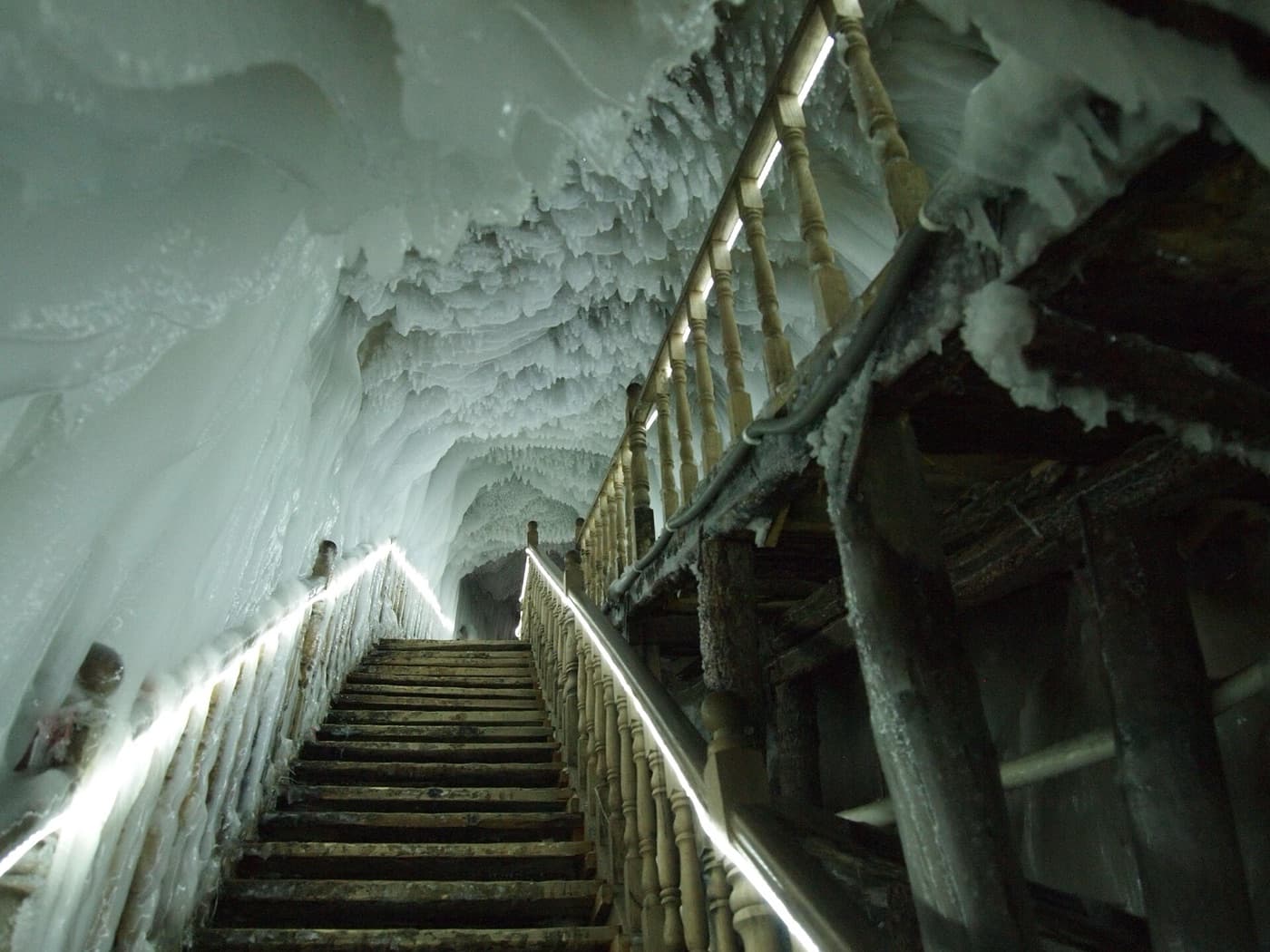
Ningwu
A little-known destination tucked into the mountains of northern Shanxi, Ningwu combines forests, grasslands, a heavenly lake, deserts, glaciers, cave temples, hanging coffins, the Hanging Temple and a thousand-year-old town. Almost every kind of scenery can be found here in concentrated form. Ningwu’s most distinctive attractions include Wannian Ice Cave, the Hanging Temple, Lovers’ Valley, the Cliffside Plank Road, Luya Mountain, Maluan Grassland and Ningwu Heavenly Lake.
History & Culture · Nature
Beiwudang Mountain
To distinguish it from Wudang Mountain in Hubei, it is called Beiwudang Mountain (North Wudang Mountain). It still preserves numerous Ming and Qing dynasty sites, as well as stone carvings and murals. Every year on the third day of the third lunar month, a traditional temple fair is held.
3–5 hours
Qikou National Scenic Area
Qikou is an ancient river crossing on the Yellow River. The water is deep and calm, making it a natural harbor and a golden waterway. Qikou rose to prominence in the Qianlong era of the Qing dynasty and for more than 200 years afterwards was a famous commercial hub in northern China, with a five-li (about 2.5 km) long street lined with shops and crowded with merchants. As the saying goes, “a bustling port the size of a small city, the first town on the winding Yellow River.” Qikou’s former prosperity radiated to a wide area and drove the rise of many surrounding villages. Its Ming and Qing architectural complex still survives in relatively good condition, and both its form and style and its artistry are highly refined.
1 day
Source: China Self-Guided Travel 2025 (《中国自助游》, Tianjin Science & Technology Press, Aug 2024), pp. 1782–1801. Translated from the Chinese edition; names and prices follow the guidebook. · Plain text version