Master of the Nets Garden
Master of the Nets Garden is one of the Four Great Gardens of Suzhou and an outstanding example of Suzhou garden art and cultural value.…
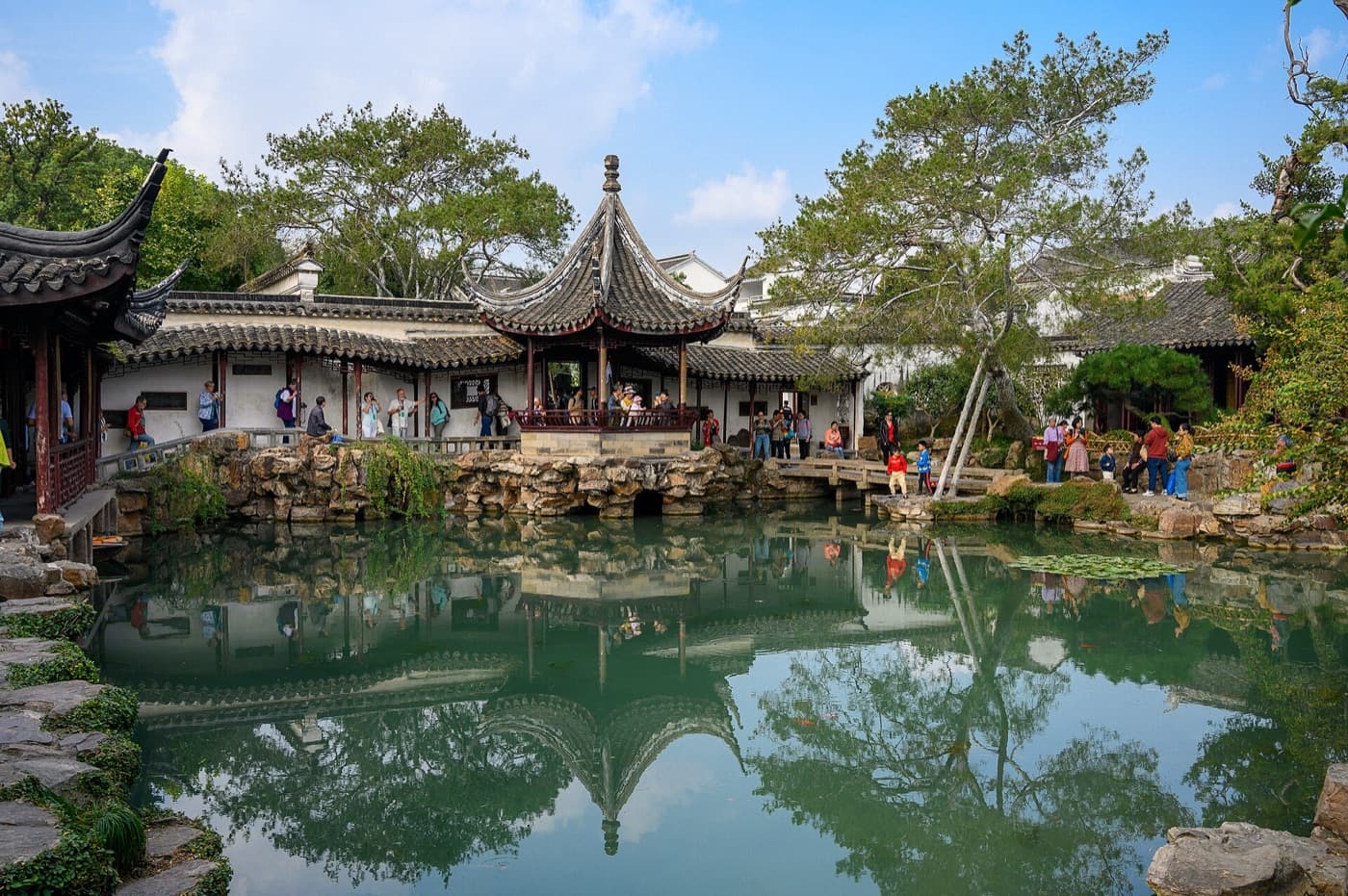
Master of the Nets Garden, Suzhou · xiquinhosilva · CC BY 2.0 · Wikimedia Commons
Key facts
- Admission
- Peak season ¥40; off-season ¥30. Night Garden ticket ¥100 (Night Garden hours: mid-March to mid-November, 19:30–22:00)
- Time needed
- 1–3 hours
- Getting there
- Near Master of the Nets Garden (bus stop) and Beisi Pagoda (metro station)
- Guidebook rating
- 4 / 5
From China Self Guided Travel 2025, page 1034. Open in Google Maps
About Master of the Nets Garden
Master of the Nets Garden is one of the Four Great Gardens of Suzhou and an outstanding example of Suzhou garden art and cultural value. It was first built in the early years of the Chunxi era (1174–1189) of the Southern Song dynasty. Its former owners were mostly scholars and literati, who left poems, inscriptions and stone tablets throughout the garden. Today these are treasured masterpieces within this classical garden.
Tips from the guidebook
- 1. Enter in the morning: Be sure to arrive in the morning. When you leave, the sun will be in the southeast, and the garden scenery shifts with the play of light and shadow, which is truly wonderful.
- 2. Suzhou pingtan: Master of the Nets Garden is one of the few Suzhou gardens open in the evening, and free Suzhou pingtan (storytelling ballad) performances are offered.
- 3. Local shops: The garden is located on Shiquan Street, which has many students from abroad and lots of distinctive small shops. Browse them at leisure after your visit and you are sure to find something special.
Frequently asked questions
How much does Master of the Nets Garden cost?
Admission to Master of the Nets Garden is Peak season ¥40; off-season ¥30. Night Garden ticket ¥100 (Night Garden hours: mid-March to mid-November, 19:30–22:00), as listed in the 2025 guidebook. Prices can change; check the official channel before you go.
How do I get to Master of the Nets Garden?
Near Master of the Nets Garden (bus stop) and Beisi Pagoda (metro station)
How long should I spend at Master of the Nets Garden?
Plan on 1–3 hours for Master of the Nets Garden.
Where is Master of the Nets Garden?
Master of the Nets Garden is in Suzhou, Jiangsu Province, in the East China of China.
More places in Suzhou

Lingering Garden
Known as “the No. 1 garden in Wuzhong,” and with good reason. Unlike other gardens, it combines landscaped courtyards with rural scenery and wild, forest-like charm. Few gardens can bring together such different atmospheres in one harmonious whole, and Lingering Garden is one of them. The garden is also home to the “Three Wonders of Lingering Garden”: the Guanyun Peak, the Nanmu Hall and the fish fossil.
Peak season ¥55; off-season ¥45; a “Wuyu Lanxun” performance is free during peak season · 1–2 hours

Tiger Hill Scenic Area
Legend has it that Tiger Hill is the burial site of King Helü of Wu. The poet Su Dongpo once sighed, “Not to visit Tiger Hill when in Suzhou is a true regret,” which shows the importance of Tiger Hill in Suzhou. Its many legends also add a rich humanistic character to this famous site. Sword Pond beside Tiger Hill is said to be the burial place of three thousand swords. Kings Goujian of Yue, Qin Shi Huang, Sun Ce and Sun Quan each dug there in turn, which is how it became a pond. Among the Eighteen Scenes of Tiger Hill, the Tiger Hill Pagoda stands out the most, and it can be ranked alongside the Leaning Tower of Pisa in Italy.
Peak season ¥70; off-season ¥60 · 1–3 hours

Humble Administrator's Garden
One of Suzhou's four famous classical gardens and its largest, the Humble Administrator's Garden is listed in the UNESCO World Heritage List and is considered a classic of Chinese private gardens. Its design is water-centred, natural and elegant, with staggered courtyards and abundant flowers and trees, full of poetic charm and the distinctive character of the Jiangnan water town. It perfectly showcases the depth and breadth of Chinese classical garden art.
¥70 off-season; ¥80 peak season · About 3 hours

City Gate
Gu Jiegang once said, “Suzhou is the oldest city in the nation, dating back to the Spring and Autumn period.” That is why you should set aside dedicated time for Suzhou's city gates. Though not as splendid as the imperial capital Beijing, nor as majestic as the Six Dynasties capital Nanjing, these gates have endured 2,500 years of change, witnessing both glory and disgrace. “The wind cannot move a city”: wars and disasters could not bring the ancient city of Suzhou to ruin, yet few of its gates remain today. Legendary Xumen Gate: According to legend, the gate got its name because “Wu Zixu's residence was beside it,” and it became famous across the land because Wu Zixu's head was once hung on it. In fact, however, Xumen Gate takes its name from the nearby Guxu Mountain. Prosperous Changmen Gate: A saying widely passed down in Suzhou, “Gold at Changmen, silver at Xumen,” speaks volumes about the bustling scenes beneath this gate. Lucky Pan Gate: In over 2,500 years, the eight city gates have seen countless openings and closings, yet Pan Gate has always stood open. It is the only surviving land-and-water gate in China and one of the symbols of ancient Suzhou. There is a saying: “Admire the grandeur of the Great Wall in the north, and the elegance of Pan Gate in the south.” It combines water-town charm, garden pavilions and lakeside scenery, letting you feel Suzhou's rustic antiquity and the deep heritage of Wu culture at every turn.

Tongli Ancient Town
Tongli produced many celebrated scholars and high-ranking officials, which is why several of its streets and lanes are named after official posts, such as Zhuangyuan Street (Top Scholar Street) and Tongzhi Yamen (Tongzhi Government Office). The first thing you notice on entering Tongli is the abundance of bridges, big and small: there are 24 in all. Siben Bridge, built during the Southern Song dynasty, is the oldest, while Fuguan Bridge from the Yuan dynasty is especially impressive. The town also holds a great many stone inscriptions from successive dynasties. In this water town of 'homes built along the river,' Ming and Qing architecture accounts for roughly 40 percent of the buildings. Three Bridges — To the people of Tongli, the Three Bridges symbolise good fortune and happiness. Whenever there is a wedding or other joyful occasion, families walk around the Three Bridges, chanting 'Peace, luck and prosperity forever!' Elders celebrating their 66th birthday also walk the Three Bridges after lunch for good luck. Retreat and Reflection Garden — A garden with a quiet, understated charm, like a gentle beauty of the household. Film and television productions including Family, Spring, Autumn, Dream of the Red Chamber and Qianlong Incognito have all been shot here. Pearl Tower — The Pearl Tower is not a single tower but an exquisite and opulent censor's residence, and also the setting for a beautiful love story with a happy ending. A model of the heirloom Pearl Tower, given by Cui'e in the tale, is displayed on the second floor for those who are interested. Luoxing Islet — Luoxing Islet is a temple built on the water, reached in just a few minutes by small boat. The journey offers lovely scenery, with misty waves stretching across the lake and fishing boats dotted about. Luoxing Islet is a sacred site where Buddhism, Daoism and Confucianism come together. It houses the City God Temple, Wenchang Pavilion, Doumu Pavilion, a zigzag bridge, Fish Pond and more. Its compact layout makes it both a temple and a garden.
Combined ticket ¥100 (covers ten attractions in all, including the old town area, Retreat and Reflection Garden, the exhibition hall, Luoxing Islet, Songshi Wuyuan Garden, Pearl Tower Garden, Chen Qubing's Former Residence and Gufeng Garden)
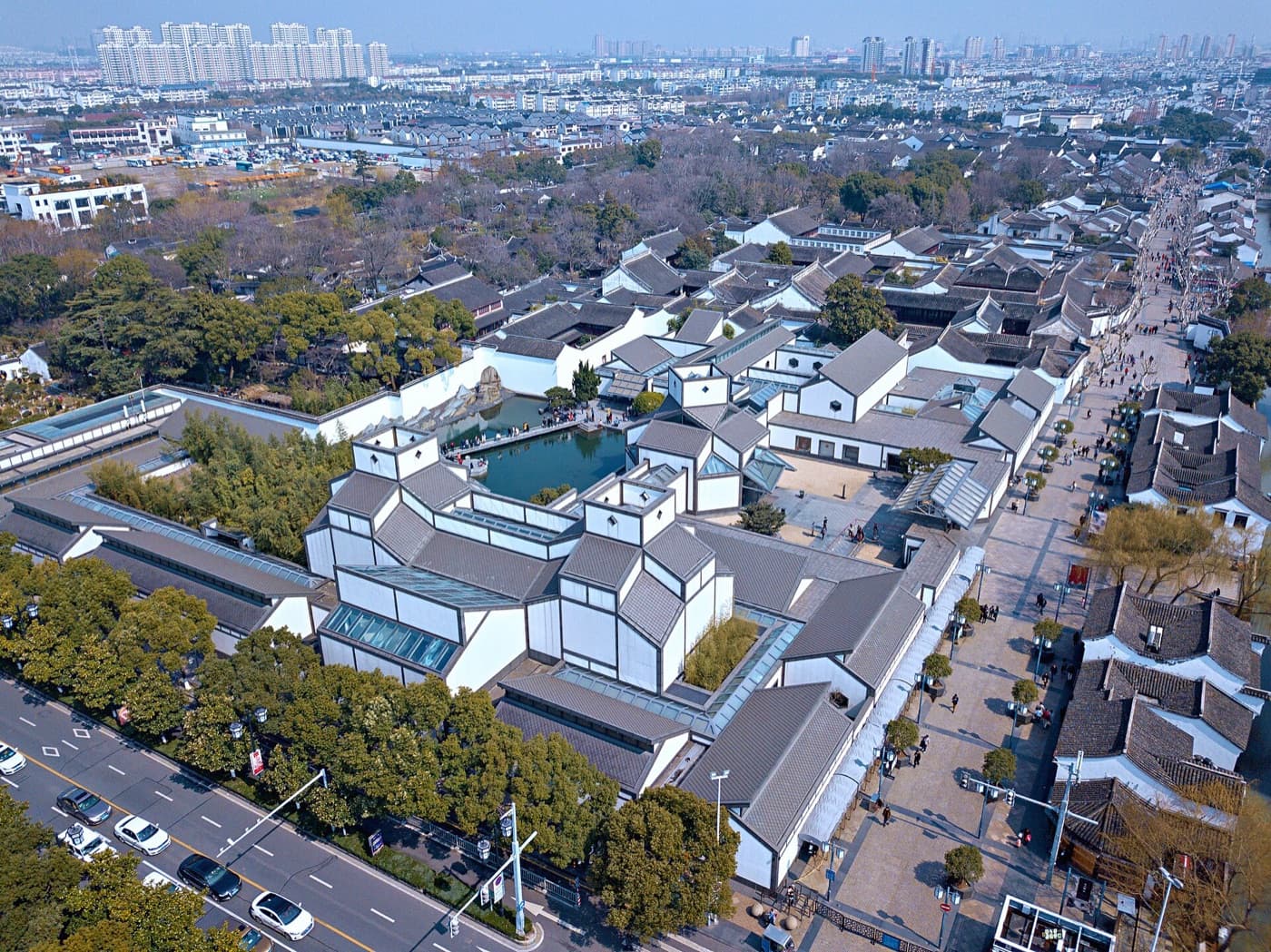
Suzhou Museum
The Suzhou Museum is the work of I. M. Pei, the world-renowned architect, and it is steeped in the spirit of Chinese ink painting. The building is subtly woven together with the exquisite Humble Administrator's Garden and the stately Prince Zhong's Mansion, giving the museum both modern creativity and a sense of classical elegance. Its refined architecture, clever design concept and landscaped gardens are highlights in their own right, and the museum's rich collection is sure to dazzle visitors.
Free (full advance reservation required; book online) · 2–3 hours