Suzhou travel guide
苏州
Mention Suzhou and you can't avoid phrases like 'water town', 'houses resting on rivers' or 'the Venice of the East', but none of these words can capture its one essence: serene elegance. Walking through Suzhou's city,…
22 places · In the guidebook: pages 1022–1054

Suzhou, Jiangsu Province · AI illustration for China Trip
Quick itinerary
Suzhou in 3 days
- Day 1
- Jinji Lake→
- Pingjiang Road (lunch)→
- Lion Grove Garden→
- Suzhou Museum→
- Humble Administrator's Garden
- Day 2
- Tiger Hill→
- Hanshan Temple→
- Lingering Garden→
- Qili Shantang
- Day 3
- Master of the Nets Garden→
- Canglang Pavilion (Surging Wave Pavilion)→
- Panmen Gate→
- Night Cruise on the Grand Canal
The feel of the place
- Serene Elegance
- Mention Suzhou and you can't avoid phrases like 'water town', 'houses resting on rivers' or 'the Venice of the East', but none of these words can capture its one essence: serene elegance. Walking through Suzhou's city, you must slow your pace. Narrow lanes, green trees, white walls, and branches quietly stretching out from behind a wall: stroll through such a streetscape and even the breeze you bring seems to stir everything around you. The old lanes of Suzhou, their bluestone slabs worn smooth, the faint scent of wood, and the stone lions with patches of moss at their doorways: these are Suzhou's deepest dream. Shantang Street, Taohuawu, Pingjiang Road... even the unhurried, peaceful feeling carried in the street names cannot be imitated. Although billboards, the emblem of modern life, have moved into the buildings of this old city, they have never destroyed this feeling, and that is what people envy most.
- Suzhou Pingtan
- Finding a teahouse, drinking a pot of fine Biluochun tea and listening to a witty piece of Suzhou Pingtan is many people's image of Suzhou. In fact, not every Suzhou person can sing Pingtan; this is somewhat a misunderstanding of Suzhou held by outsiders. Suzhou Pingtan is highly professional, comparable to bel canto or an aria in opera. Perhaps many Suzhou women can effortlessly sing Wu-dialect ditties such as 'Jasmine' or 'Beautiful Taihu', but these cannot rival Pingtan.
- Suzhou's Wells
- Suzhou's gardens are already dazzling, so many people overlook its most everyday feature: the well. Suzhou's wells come in endless shapes. Take a close look at these old objects that have vanished from urban life, then watch Suzhou people leisurely drawing water, and you can't help feeling a twinge of envy.
Suzhou Pingtan
Suzhou Pingtan is the collective term for Suzhou pinghua (storytelling) and tanci (ballad singing). It originated and became popular in the Jiangsu, Zhejiang and Shanghai region, and is performed in the Suzhou dialect. Pingtan has a long history: it was already quite popular in the Qianlong era of the Qing dynasty, and it has remained undiminished for over 200 years.
Suzhou pingtan combines speaking and singing and is generally performed in three formats: a solo act by one performer, a duo by two, or a trio by three. Each performer accompanies themselves on the xiaosanxian (a small three-stringed lute) or the pipa.
Preparation and Information
Language
Suzhou dialect sounds soft and lilting. It is pleasant to listen to but hard to follow, so Mandarin will still come in handy.
Climate and Travel Seasons
Early spring, in March, is when Suzhou looks its most beautiful. Suzhou also holds many traditional festivals throughout the year, and the folk performances held during them are well worth seeing. Special garden events are equally distinctive: the temple fair and chrysanthemum show at Tiger Hill, the lotus and bonsai exhibitions at the Humble Administrator's Garden, and the New Year's Eve bell-ringing at Hanshan Temple.
Festivals
April 14: Gashenxian (Ga Shenxian); June 6: Baoshu Fanjing (airing books and turning scriptures); June 24: Leizhai Su (vegetarian feast day); July 7: Qiqi Festival (Qiqi Jie); August 18: Shihu Chuanyue (Moon Reflections on Shihu Lake).
Things to see

City Gate
History & Culture · Hiking & Outdoors · Photography
Gu Jiegang once said, “Suzhou is the oldest city in the nation, dating back to the Spring and Autumn period.” That is why you should set aside dedicated time for Suzhou's city gates. Though not as splendid as the imperial capital Beijing, nor as majestic as the Six Dynasties capital Nanjing, these gates have endured 2,500 years of change, witnessing both glory and disgrace. “The wind cannot move a city”: wars and disasters could not bring the ancient city of Suzhou to ruin, yet few of its gates remain today. Legendary Xumen Gate: According to legend, the gate got its name because “Wu Zixu's residence was beside it,” and it became famous across the land because Wu Zixu's head was once hung on it. In fact, however, Xumen Gate takes its name from the nearby Guxu Mountain. Prosperous Changmen Gate: A saying widely passed down in Suzhou, “Gold at Changmen, silver at Xumen,” speaks volumes about the bustling scenes beneath this gate. Lucky Pan Gate: In over 2,500 years, the eight city gates have seen countless openings and closings, yet Pan Gate has always stood open. It is the only surviving land-and-water gate in China and one of the symbols of ancient Suzhou. There is a saying: “Admire the grandeur of the Great Wall in the north, and the elegance of Pan Gate in the south.” It combines water-town charm, garden pavilions and lakeside scenery, letting you feel Suzhou's rustic antiquity and the deep heritage of Wu culture at every turn.

Humble Administrator's Garden
About 3 hours · ¥70 off-season; ¥80 peak season
One of Suzhou's four famous classical gardens and its largest, the Humble Administrator's Garden is listed in the UNESCO World Heritage List and is considered a classic of Chinese private gardens. Its design is water-centred, natural and elegant, with staggered courtyards and abundant flowers and trees, full of poetic charm and the distinctive character of the Jiangnan water town. It perfectly showcases the depth and breadth of Chinese classical garden art.

Lingering Garden
Known as “the No. 1 garden in Wuzhong,” and with good reason. Unlike other gardens, it combines landscaped courtyards with rural scenery and wild, forest-like charm. Few gardens can bring together such different atmospheres in one harmonious whole, and Lingering Garden is one of them. The garden is also home to the “Three Wonders of Lingering Garden”: the Guanyun Peak, the Nanmu Hall and the fish fossil.
1–2 hours · Peak season ¥55; off-season ¥45; a “Wuyu Lanxun” performance is free during peak season

Tiger Hill Scenic Area
Legend has it that Tiger Hill is the burial site of King Helü of Wu. The poet Su Dongpo once sighed, “Not to visit Tiger Hill when in Suzhou is a true regret,” which shows the importance of Tiger Hill in Suzhou. Its many legends also add a rich humanistic character to this famous site. Sword Pond beside Tiger Hill is said to be the burial place of three thousand swords. Kings Goujian of Yue, Qin Shi Huang, Sun Ce and Sun Quan each dug there in turn, which is how it became a pond. Among the Eighteen Scenes of Tiger Hill, the Tiger Hill Pagoda stands out the most, and it can be ranked alongside the Leaning Tower of Pisa in Italy.
1–3 hours · Peak season ¥70; off-season ¥60
Pingjiang Historic District
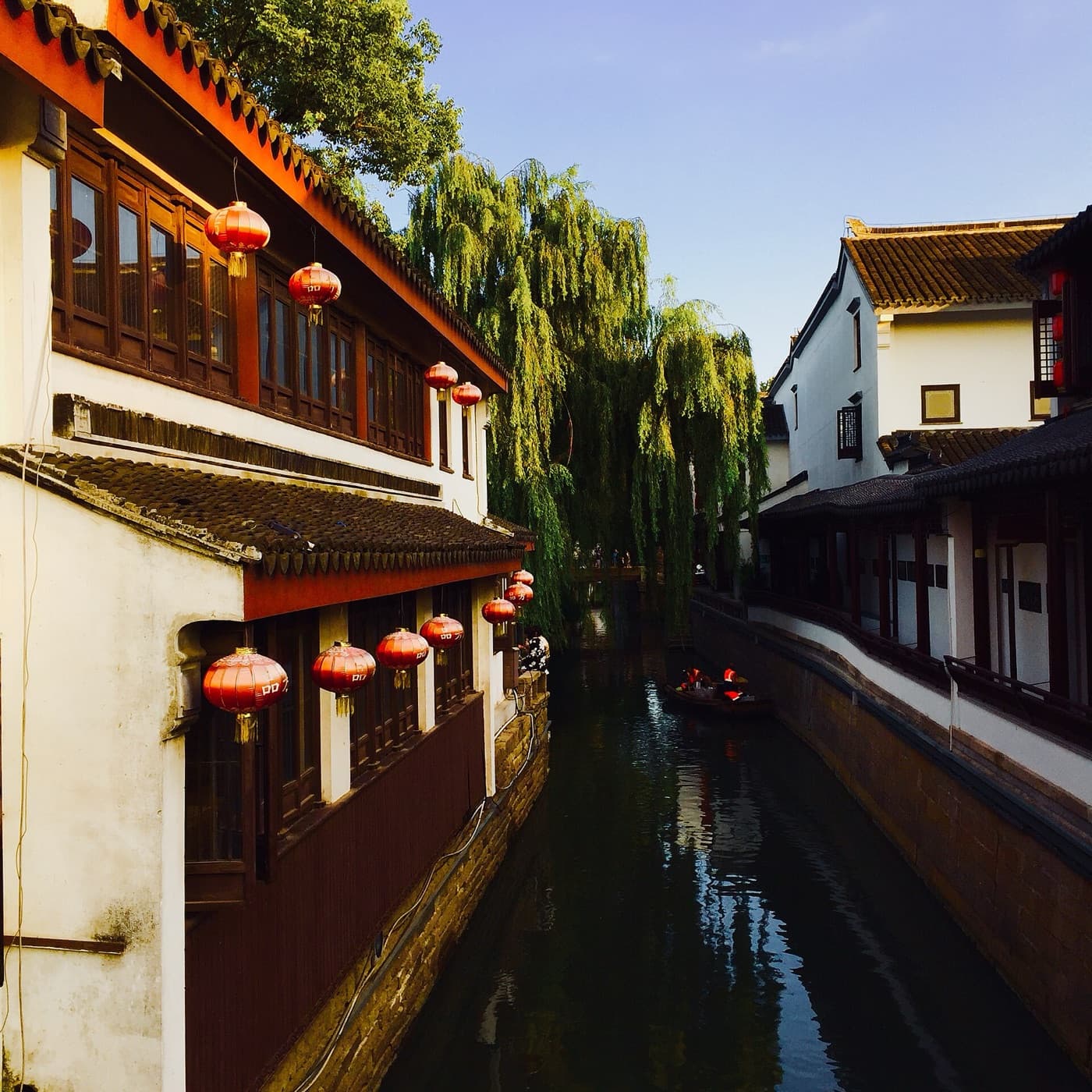
Pingjiang Road is a historic water lane in Suzhou, running north from the Humble Administrator's Garden and facing the Twin Pagodas to the south. It preserves the classic layout of “water and road running side by side, rivers and streets adjacent,” making it the best-preserved old street in Suzhou. Along the road stand traditional houses with white walls and grey tiles, exuding a serene, rustic everyday atmosphere. Sitting in a riverside teahouse, you can enjoy fragrant tea and the melodies of the guqin, an easy and leisurely pace of life. Local snacks such as osmanthus cake, fermented rice wine dumplings and begonia cake carry a distinctly Jiangnan flavor.
1–3 hours
Suzhou Museum
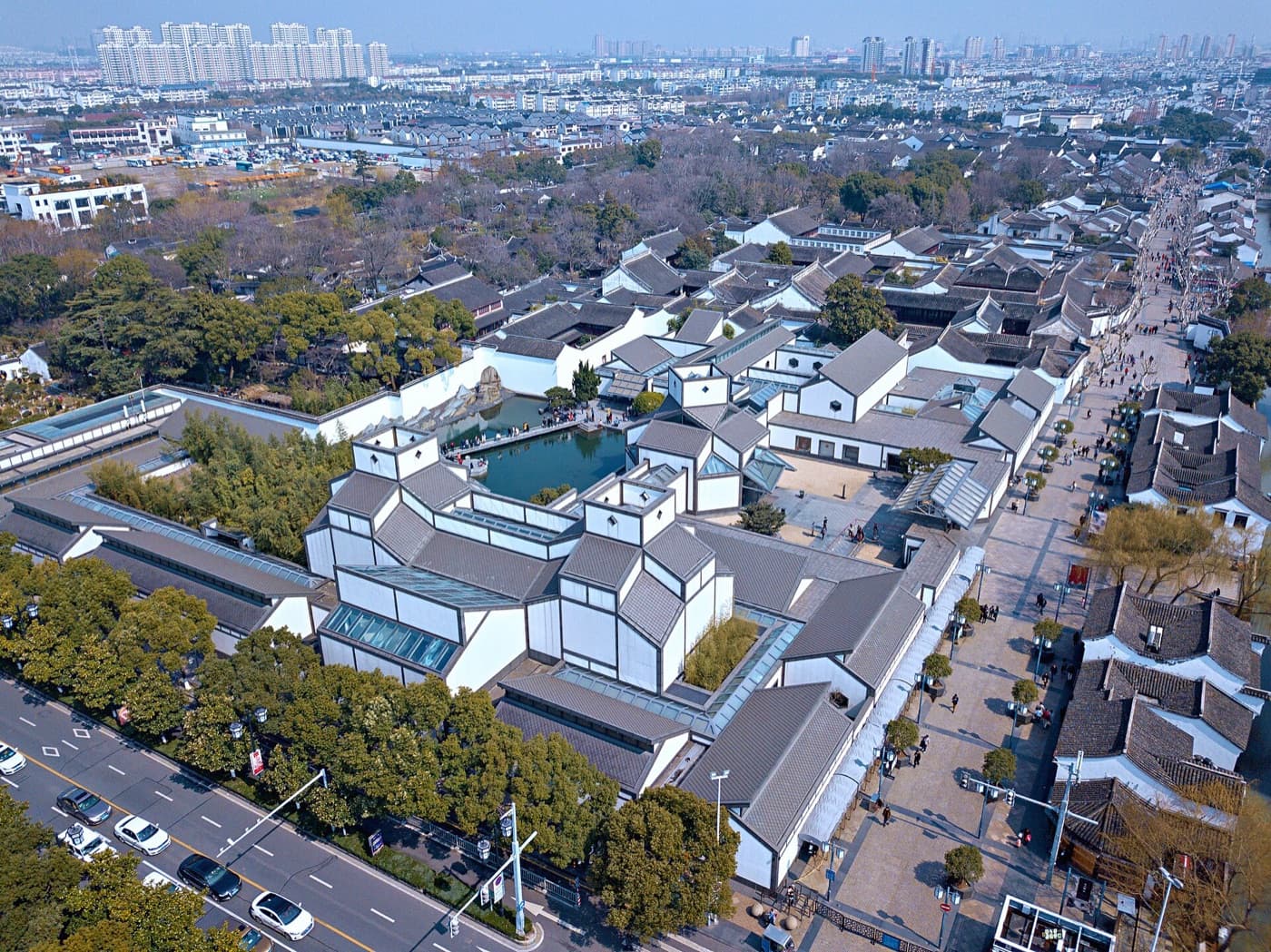
The Suzhou Museum is the work of I. M. Pei, the world-renowned architect, and it is steeped in the spirit of Chinese ink painting. The building is subtly woven together with the exquisite Humble Administrator's Garden and the stately Prince Zhong's Mansion, giving the museum both modern creativity and a sense of classical elegance. Its refined architecture, clever design concept and landscaped gardens are highlights in their own right, and the museum's rich collection is sure to dazzle visitors.
2–3 hours · Free (full advance reservation required; book online)
Master of the Nets Garden
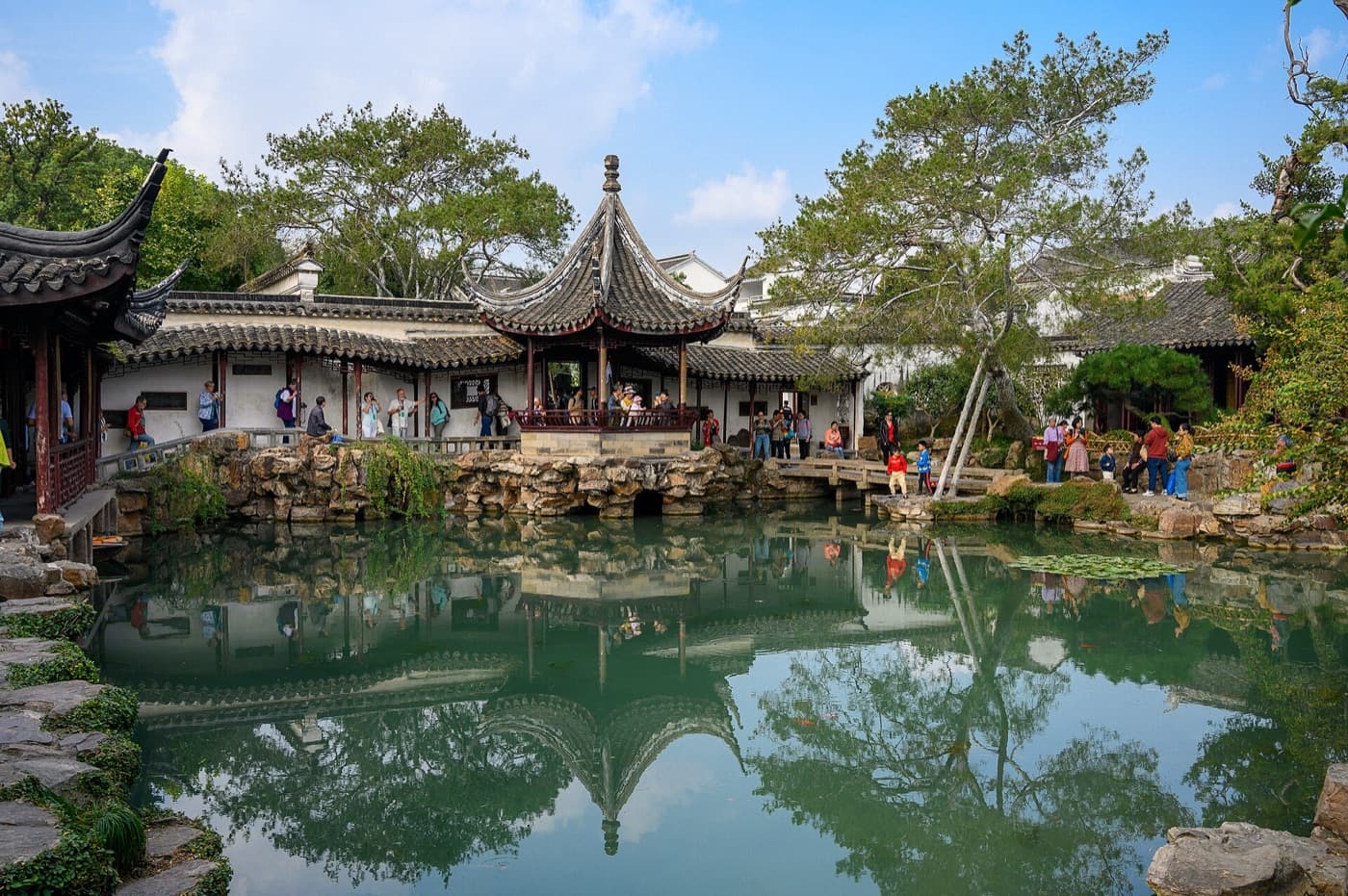
Master of the Nets Garden is one of the Four Great Gardens of Suzhou and an outstanding example of Suzhou garden art and cultural value. It was first built in the early years of the Chunxi era (1174–1189) of the Southern Song dynasty. Its former owners were mostly scholars and literati, who left poems, inscriptions and stone tablets throughout the garden. Today these are treasured masterpieces within this classical garden.
1–3 hours · Peak season ¥40; off-season ¥30. Night Garden ticket ¥100 (Night Garden hours: mid-March to mid-November, 19:30–22:00)
Suzhou Ancient Grand Canal
The ancient city of Suzhou became a paradise for merchants thanks to the Beijing–Hangzhou Grand Canal. Along the ancient canal you will find the Suzhou Ancient City Wall Ruins, Pan Gate, Guxu Gate, Midu Bridge and other beautiful sights. Modern skyscrapers rise on one bank, while traditional-style buildings line the other, and the old and new scenes complement each other in harmony. When the night falls and the lights come on, the scenery along the ancient canal becomes even more enchanting. Visitors feel as though they are standing in a water paradise of lights and reflections, experiencing the unique charm of this Eastern water city.
Photography · Waterfront · Nature
Fengqiao Bridge and Hanshan Temple
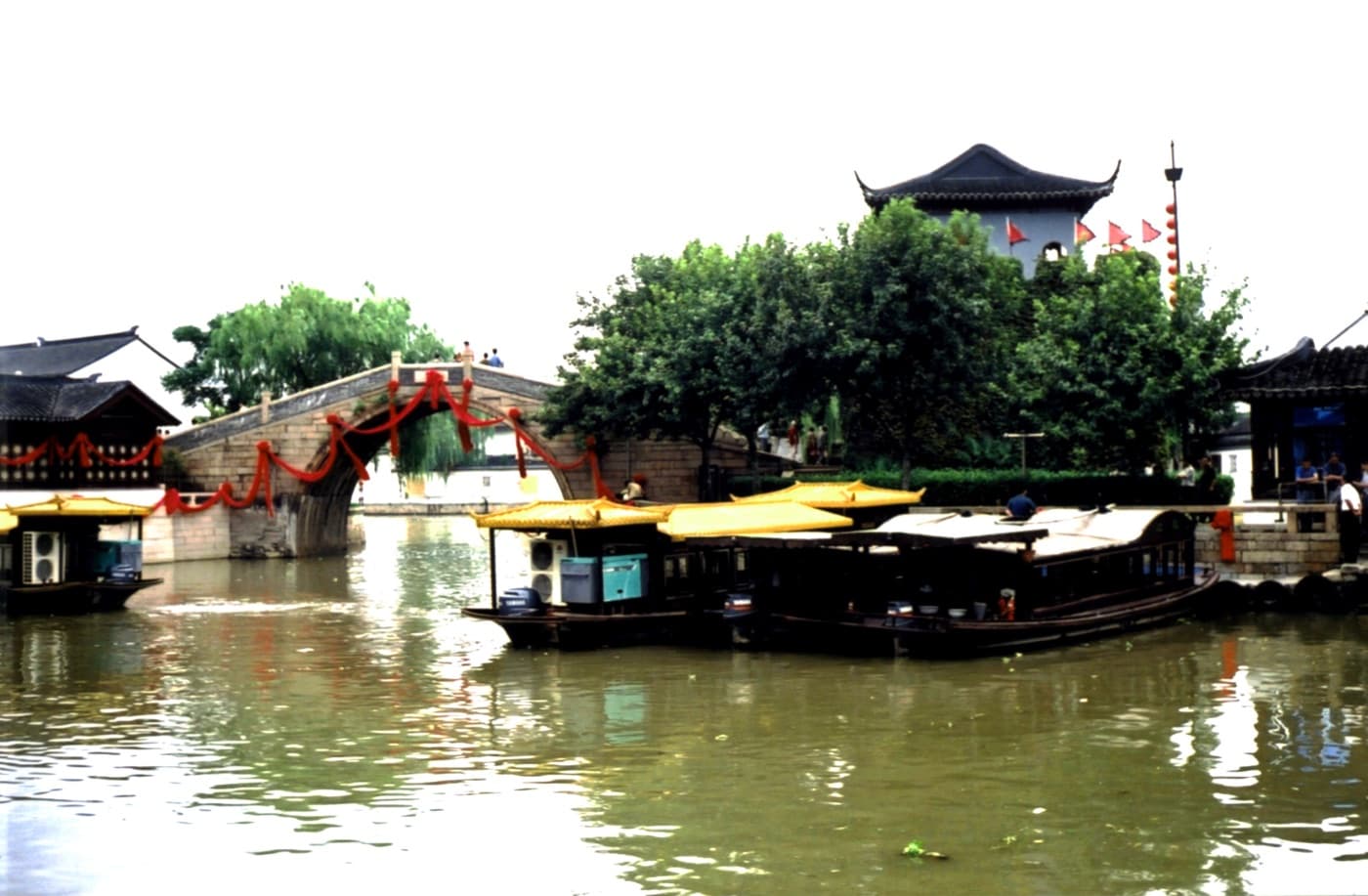
Hanshan Temple is located in the ancient town of Fengqiao, on the Ancient Grand Canal in Suzhou. Legend has it that Tang dynasty poet Zhang Ji, on his way home after failing the imperial examinations in Chang'an, moored his boat at Maple Bridge beside Hanshan Temple. Unable to sleep that night, he heard the bells ringing from the temple and was moved to write “Night Mooring at Maple Bridge.” Thanks to this poem, the bells of Hanshan Temple have become famous at home and abroad. Every Lunar New Year's Eve, many people hurry to Hanshan Temple to hear the bells ring in the new year.
古运河138元/人 · 3–5 hours · Admission to the Fengqiao scenic area is free; Hanshan Temple ¥20; Night Mooring at Maple Bridge water experience tour ¥30
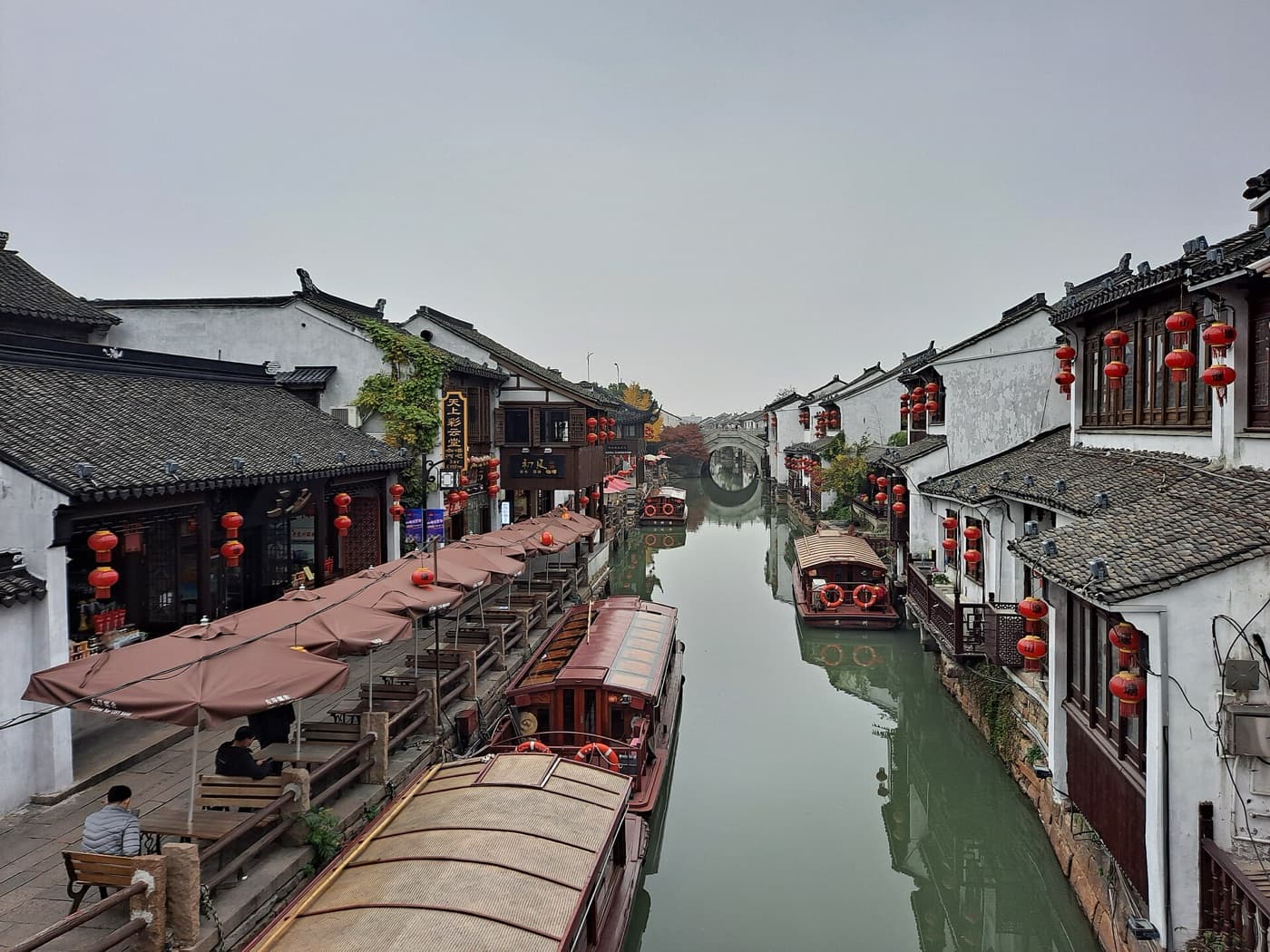
Shantang Street
Suzhou has many streets and lanes, but the most famous is Shantang Street, known as “the No. 1 famous street of Gusu.” In the classic tale “Three Smiles,” Tang Bohu meets Qiuxiang, and the “Chasing the Boat” episode, in which he hires a small boat to follow her all the way to Wuxi, takes place on the Shantang River. Shantang Street is a classic water lane. Boats travel back and forth on the river, houses have stone steps leading down to the water, and women wash clothes and vegetables by the riverbank. The street is lined with shops, including Suzhou time-honoured brands such as Caizhizhai, Huangtianyuan and Lüyang Wonton Shop, as well as traditional crafts such as embroidery, purple sandalwood carving and blue calico. Its front-shop, back-workshop layout makes it a true microcosm of old Suzhou.
古运河138元/人 · 3 hours · The street itself is free. A combined ticket for Yuhan Hall, Quanzhou Guild Hall, Shaoxing Guild Hall, the Ancient Opera Stage, Shantang Pavilion, Antai Firefighting Association, Jiangnan Tailor Shop, the pingtan tour boat and other sights costs ¥100. Electric boat ¥50 per boat (30-minute trip); hand-rowed boat ¥80 per boat
Canglang Pavilion (Surging Wave Pavilion)
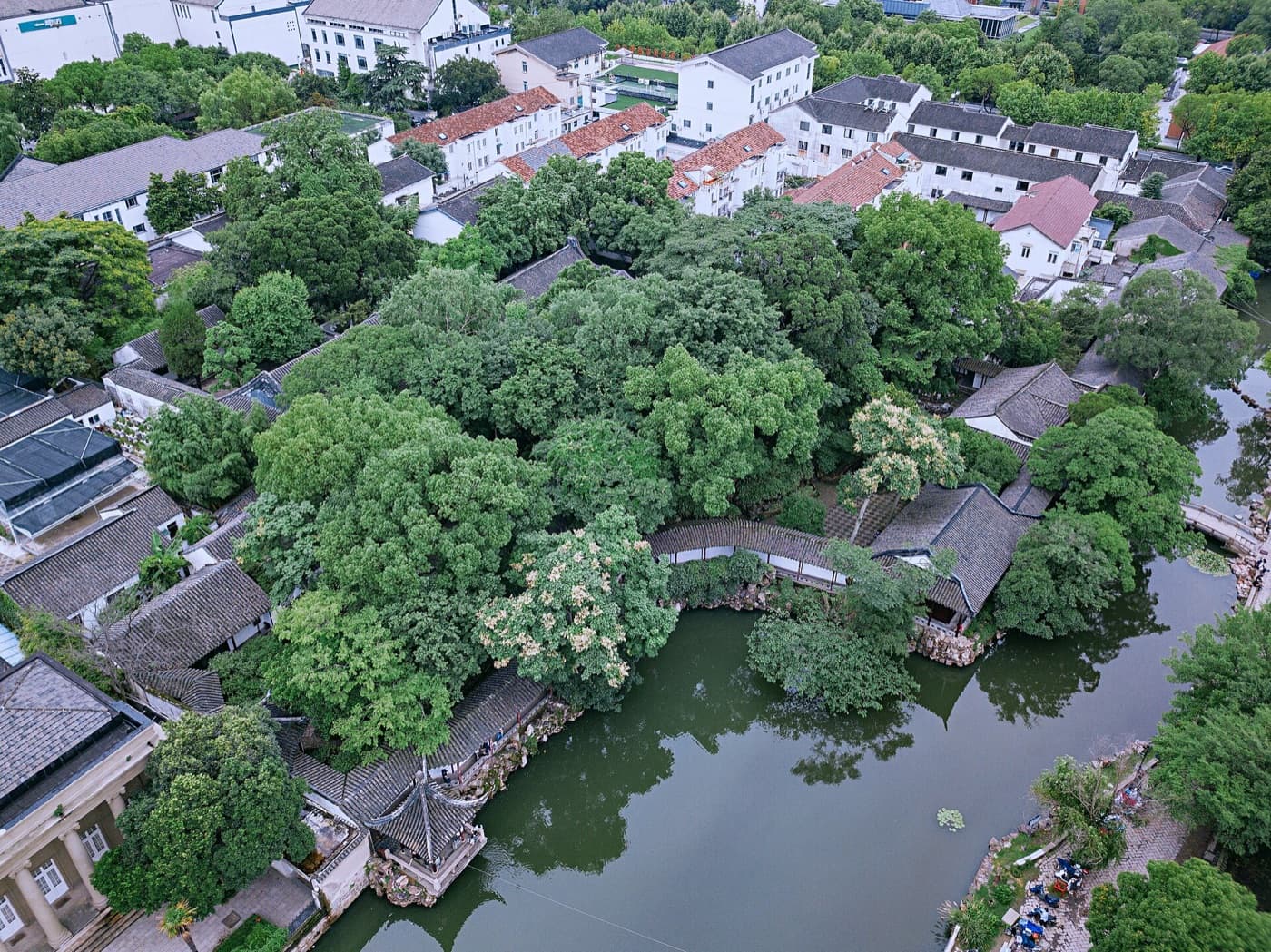
Built on a site bordered by water on three sides, the pavilion combines the secluded openness of hills with winding waterways. It is often described as the most open of Suzhou's gardens and is also the oldest surviving garden in the city. The garden is said to feature 108 styles of latticed windows, making it a typical showcase of Suzhou garden window design. Take your time to examine them, and you will find their charm is in the details.
1–2 hours · Peak season ¥20; off-season ¥15
Lion Grove Garden
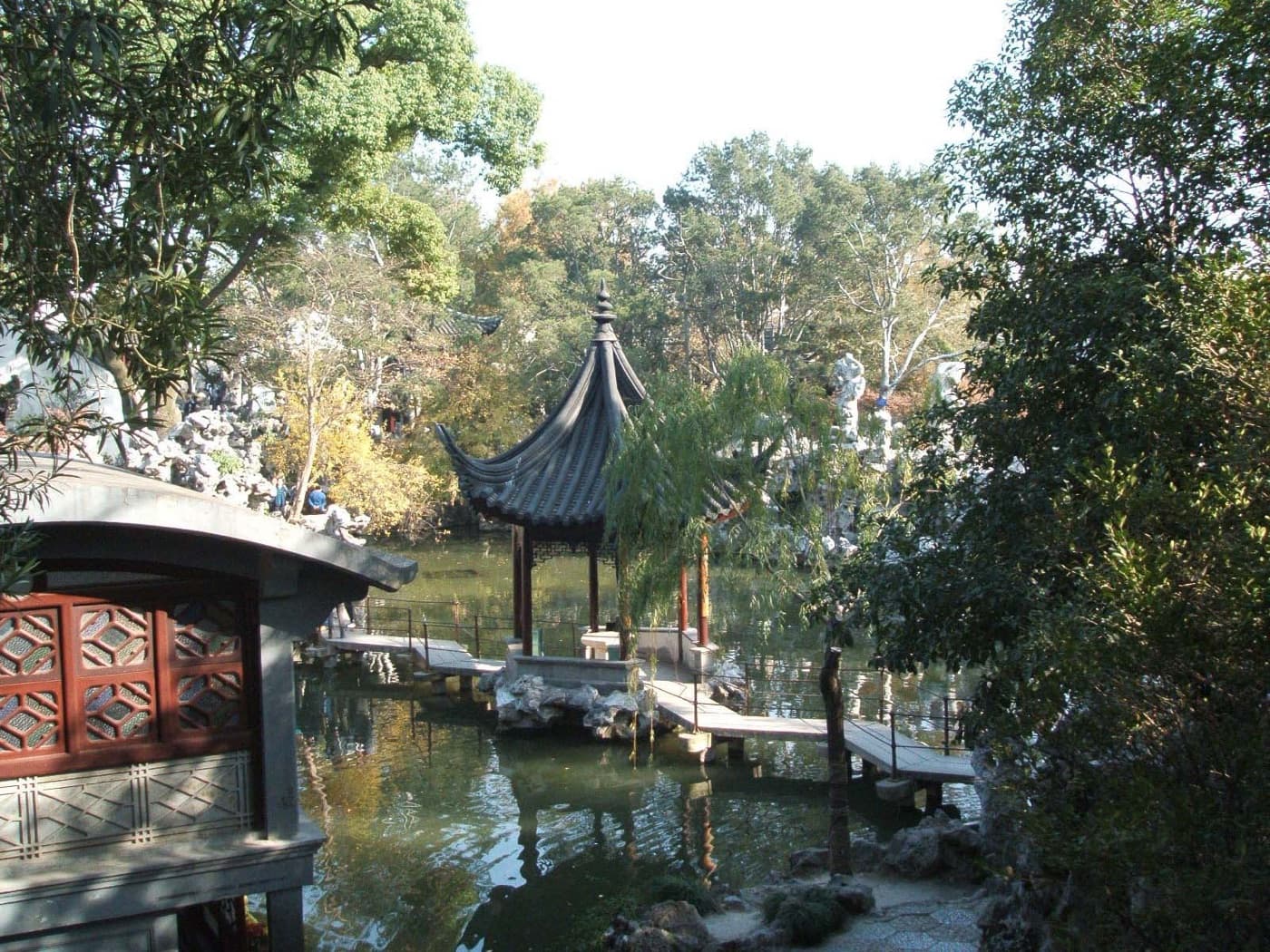
The most captivating feature of Lion Grove Garden is its unusual rocks, which reveal endless variations as you explore its labyrinth of passages. One of the most fun things to do here is play hide-and-seek among the rockeries. Without knowing the trick, it is easy to get completely lost. Lion Grove Garden is one of the Four Great Gardens of Suzhou. It has a history of more than 650 years and is listed on the UNESCO World Heritage List.
1–3 hours · Peak season ¥40; off-season ¥30
Jinji Lake
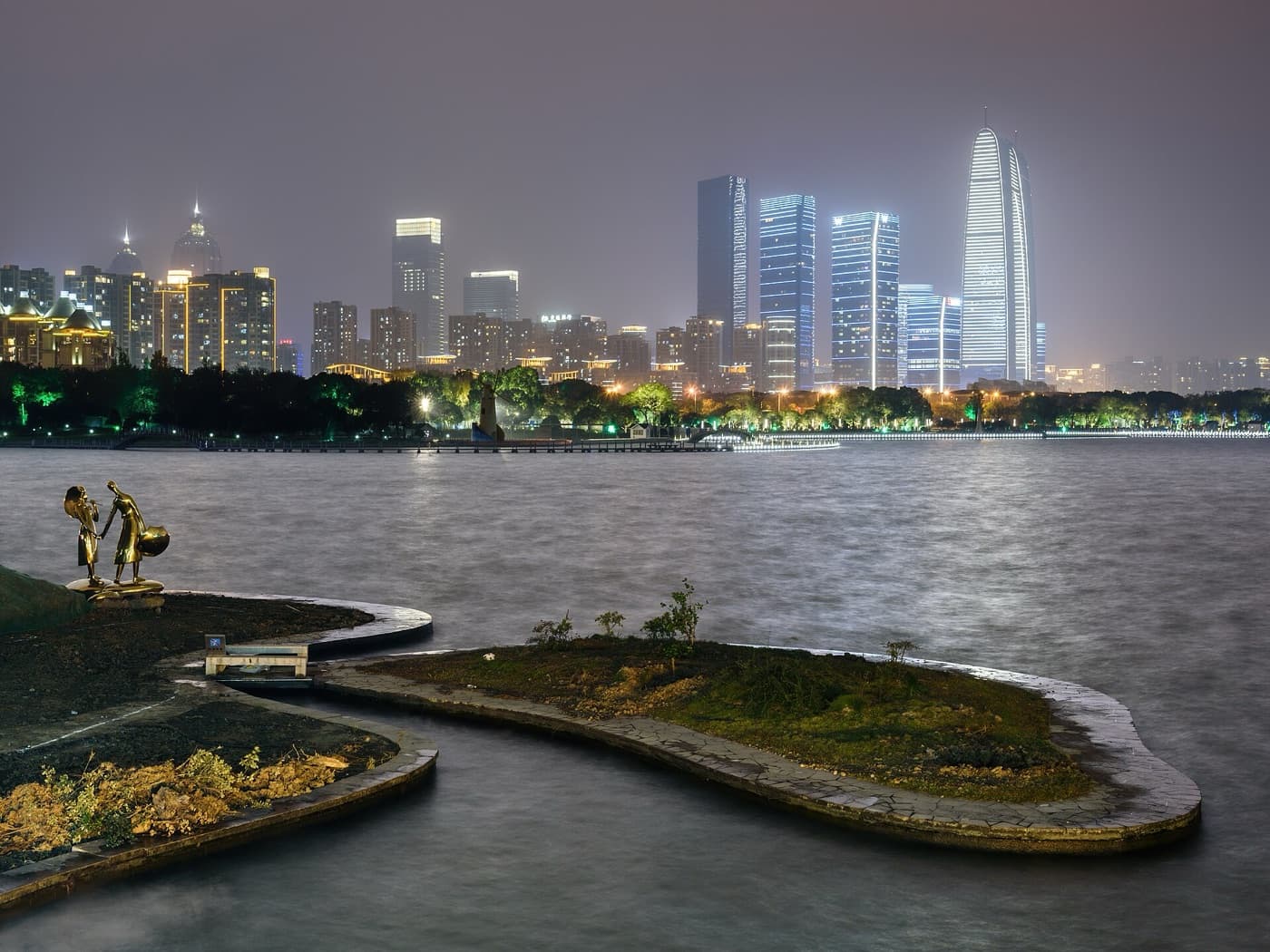
Visitors come every day to stroll by the lakeside, shop and sample local food. Do not miss the Jinji Lake Bridge at night, where colourful digital waterfalls, created with lighting and effects, cascade down from the bridge. The scene is spectacular.
古运河138元/人 · 2–4 hours · Free
Getting there & around
Getting In and Out
Suzhou is extremely well connected, with fast and convenient transport options in and out of the city.
By Air
Suzhou has no commercial airport. The nearest are Shanghai Hongqiao and Pudong airports, as well as Wuxi Shuofang Airport.
Buses run from both Shanghai airports to Suzhou. For timetables and fares, call the Shanghai passenger flight information hotline at 021-96990. Shanghai Hongqiao Airport is also integrated with the railway station, and multiple trains run to Suzhou every day. Buses to both Shanghai airports depart from Suzhou North Square Bus Station and Jinji Lake Square.
Buses run from Wuxi Shuofang Airport to Suzhou. Buses to Wuxi Airport depart from Suzhou North Square Bus Station and Suzhou West Bus Station.
By Train
Suzhou currently has five railway stations: Suzhou Station (苏州站), Suzhou North Station (苏州北站), Suzhou Industrial Park Station (苏州园区站), Suzhou New District Station (苏州新区站) and Weiting Station (唯亭站). Suzhou Station is the city's main railway station, 3 km from the Humble Administrator's Garden. If you plan to explore the old city, it is best to get off here. It is shared by the Beijing–Shanghai Railway and the Shanghai–Nanjing Intercity Railway, making onward travel to Shanghai, Hangzhou and Nanjing very convenient.
Suzhou North Station is far from the city centre and mainly serves high-speed and bullet trains, with connections to Beijing South and Shanghai Hongqiao, among others. To see the modern side of Suzhou around Jinji Lake, get off at Suzhou Industrial Park Station. Suzhou New District Station also mainly serves high-speed and bullet trains, with services to Nanjing, Shanghai and Wuxi.
High-Speed Rail
The Shanghai–Nanjing Intercity High-Speed Railway has three stops in Suzhou: Suzhou New District Station, Suzhou Station and Suzhou Industrial Park Station. The Beijing–Shanghai High-Speed Railway has only one stop in Suzhou, Suzhou North Station, on Fulin Road in Xiangcheng District.
By Road
Suzhou is the “southeastern gateway” to Jiangsu's road network.
Long-Distance Bus Stations and Destinations
By Water
Suzhou Nanmen Wharf is at No. 8 Renmin Road. Passenger services to Hangzhou have ceased; only regular sightseeing boats operate now.
Water transport ticket office:
Trains from Suzhou to Shanghai
The best options are Suzhou Station, Suzhou New District Station or Suzhou Industrial Park Station. Take the Shanghai–Nanjing Intercity Railway to Shanghai Hongqiao Station. The trip takes about 30 minutes and costs about ¥40. From Shanghai Hongqiao Station, you can transfer to the metro to reach any part of central Shanghai.
No Need to Book Ahead from Shanghai to Suzhou
There are three rail lines and numerous long-distance bus routes between Suzhou and Shanghai, so there is no need to book in advance. Just turn up and go.
Services at the Suzhou Tourist Transfer Centre
As one of the centre's services, tourist shuttle buses also operate from here, mainly for independent travellers. There are two lines, east and west, connecting Suzhou's major sights and shopping districts. Each line costs ¥10 and allows unlimited rides on that line for the day. Visitors can also buy attraction tickets on the shuttle buses and enjoy discounted admission.
Getting Around the City
City buses in urban Suzhou (excluding Wujiang District) serve all the major sights. Most are self-service, with no conductor. Routes of 18 km or less cost ¥2. Routes longer than 18 km use a flip-card fare system, meaning the fare is not a single flat rate: a sign by the front door shows the fare from the boarding stop, and the driver flips the card along the way.
Metro
Suzhou Metro currently has Lines 1, 2, 3, 4 (including its branch), 5 and 11 in operation. Line 1 runs between Mudu and Zhongnan Street, passing Jinji Lake, Pingjiang Road and Suzhou Amusement Park. Line 2 runs between Qihe and Sangtian Island, passing Tongjing Park and Yinshan Lake. Line 4 runs between Longdaobang and Tongli. Line 11 runs from Weiting Station in Suzhou Industrial Park east to Huaqiao Station in Kunshan, and connects with Shanghai Metro Line 11.
Unique Bus Fares
Some suburban bus routes in Suzhou use “flip-card fares”, meaning the fare varies depending on the boarding stop. A sign by the front door shows the fare for that stop, and the driver flips the card along the way, which gives the system its name.
Riding the Water Bus
A water bus ride is a great way to experience the character of Jiangnan's water towns, passing Xumen, Panmen, Midu Bridge and Loumen. The journey takes 80 minutes.
Agree on the Price Before Taking a Pedicab
Suzhou's pedicab trade has no well-established industry standards, so agree on a price with the driver before getting in to avoid being overcharged.
How to Get to the Water Towns
1. Water town tourist shuttles:
Nanmen Bus Station — Tongli
North Bus Station — Zhouzhuang
2. Railway stations have tourist shuttles to Zhouzhuang, Tongli and other water towns, which are convenient.
Peak and Off-Peak Seasons at Suzhou Sights
The Suzhou municipal government has introduced new peak and off-peak rules for seven garden scenic spots. Peak season runs from April 16 to October 31, and off-peak season from November 1 to April 15 of the following year. During Golden Week, all sites charge peak-season prices.
Taxis
Flag fall is ¥10 for the first 3 km, then ¥2 per km. After 5 km, a 50% empty-running surcharge applies. Waiting time over 5 minutes is charged as 1 km for every 5 minutes. After 23:00, fares (including the flag fall) rise by 30%.
Pedicabs
Most pedicab drivers today are not native Suzhou residents. Before setting off on a pedicab tour, be sure to agree on the fare. Also be wary of unscrupulous drivers who offer very low fares but take you to shops or venues where you are pressured to spend, and overcharge you.
Bicycle Rental
Suzhou's sights are fairly concentrated, so cycling through the old lanes is a great option. Public bikes can be rented on the city streets, and there are many rental shops around Pingmen Bridge, east of the railway station.
tip: Tip: Suzhou also has several other tourist routes, including holiday shuttles and Haoxing sightseeing buses. For up-to-date bus information, follow the “Jinri Suzhou Gongjiao” WeChat official account.
Suzhou North Square Bus Station
Long-Distance Bus Stations and Destinations- Address:
- 1455 Suzhan Road
- Phone:
- 0512-65776577
- Getting there:
- Coaches to Nantong, Changshu, Kunshan, Taicang, Huzhou and other destinations
Suzhou South Bus Station
Long-Distance Bus Stations and Destinations- Address:
- Junction of Nanhuan East Road and Yingchun Road (reachable by buses 29, 30, 31 and 101)
- Phone:
- 0512-87181605
- Getting there:
- Buses run to Shanghai, as well as to Hangzhou, Ningbo, Wenzhou, Huzhou and Jiaxing in Zhejiang, and to Nanjing, Yangzhou, Huai'an, Suqian and Lianyungang in Jiangsu.
Suzhou Passenger Ferry Terminal
By Water- Phone:
- 0512-65208484
Railway Station Youth Hostel Ticket Centre
By Water- Phone:
- 0512-67518660
Ferry Passenger Information Desk
By Water- Phone:
- 0512-65209076
Foreign Affairs Tourism Bus & Boat Company
By Water- Phone:
- 0512-65640890/69166666
- A water tour route of Suzhou is currently open. The trip takes 80 minutes and the ticket costs ¥30.
Eat & drink
Suzhou cuisine enjoys an excellent reputation across Jiangnan. It excels at stewing, braising, simmering and keeping food warm, and places particular emphasis on soup-making, preserving the soup's original flavour and keeping dishes light. Beyond being light, Suzhou dishes tend toward sweetness.
Suzhou snacks are distinguished by their exquisite craftsmanship. Date-paste sesame cakes and savoury lard cakes are the most popular, and other snacks include honey-glazed dried tofu, pine nut candy and rose melon seeds.
Signature Dishes
Signature dishes include Squirrel-Shaped Mandarin Fish, Barbel Lung Soup, Stir-Fried Crab Roe and Lotus-Leaf Baked Chicken. In addition, Yangcheng Lake hairy crabs are the iconic river delicacy, especially famous for stir-fried crab with rich roe, crab butter and crab roe shark's fin.
Locals in Suzhou often go to restaurants such as Xinjiayulou, Tianzhu, Xiangyun, Runji, Qinghua and Nankai. Compared with the famous old restaurants, they offer better service and environments.
Boat Cuisine
Signature Dishes“Boat cuisine” is an original Suzhou creation. Records show that the boat dishes of Suzhou cuisine originated in the Tang and Song dynasties, which also reflects the wealth and luxury of city life at the time. When Bai Juyi served as prefect of Suzhou, he built the Bai Causeway and dredged the rivers and ponds, further fostering the custom of boat banquets. Officials, literati, merchants and townspeople alike considered drinking and composing poetry on a boat an elegant pursuit.
Zangshu Town Mutton
Signature DishesZangshu Town mutton in Suzhou is a cross between Dongshan sheep and imported Australian meat sheep. It is extremely tender, and no matter how it is prepared, it has no gamey taste at all.
Lao Qingtai
Signature DishesSaid to be over 100 years old, this mutton restaurant is now run by the fifth generation of the family.
- Address:
- Inside Lao Qingtai Hotel, Zangshu, Wuzhong District
- Phone:
- 0512-66248158
Guanqian Street
Recommended EateriesGuanqian Pedestrian Street in Suzhou is comparable to Tiantiao in Beijing and the City God Temple in Shanghai, with a variety of acrobatic performances and a gathering of all kinds of snacks. Once you walk down Guanqian Street, you'll find everything for eating, drinking and having fun.
Fenghuang Street
Recommended EateriesLocated among Wangshi Garden, the Twin Pagodas, Dinghui Temple and Wanshou Palace, this street gathers dozens of restaurants serving various regional cuisines, all vying for attention. But the one that attracts visitors most is the Suzhou-style cuisine of the local hosts.
Songhelou Restaurant (Guanqian Street branch)
Recommended DiningEstablished in 1737, this is Suzhou's most representative authentic Suzhou-style restaurant and one of China's Four Great Time-Honoured Restaurants. Its signature dishes are Songshu Guiyu (Squirrel-Shaped Mandarin Fish) and Xiangyou Shanhu (Sizzling Eel with Soy Sauce).
- Address:
- No. 72 Taijian Lane, Pingjiang District
- Phone:
- 0512-67272285
Deyuelou Restaurant (Guanqian Branch)
Recommended DiningFounded during the Jiajing reign of the Ming dynasty, this century-old restaurant serves virtually every well-known Suzhou-style dish.
- Address:
- No. 43 Taijian Lane, Guanqian Street, Pingjiang District
- Phone:
- 0512-65222230
Xiehe Restaurant (Fenghuang Street Branch)
Recommended DiningThe storefront is plain and easy to walk past, but the flavours are remarkably authentic. Don't miss the stir-fried shrimp, honey-glazed ham and sizzling eel with soy sauce. This is a gem known only to true locals.
- Address:
- No. 15 Fenghuang Street, Canglang District
- Phone:
- 0512-65117830
Huangtianyuan (Guanqian Street Branch)
Recommended DiningHuangtianyuan is a century-old Suzhou institution producing a wide range of Suzhou-style pastries, with glutinous rice cakes being its most famous.
- Address:
- Nos. 86 and 88 Guanqian Street
Zhuhongxing Noodle House
Recommended DiningA “time-honoured” noodle house serving its signature Suzhou-style noodles. The noodles are thin and springy, with a great variety of toppings. Prices vary depending on the topping you choose.
- Address:
- No. 90 Bifeng Lane
Caizhizhai
Recommended DiningIn the early Qing dynasty, Caizhizhai was a herbal medicine shop. Its confectionery soon proved more popular than its medicines, and Suzhou's most famous Suzhou-style candy shop was born. Its pine nut candy, jujube paste cakes and dried tofu snacks are the most celebrated.
- Address:
- No. 150 Shantang Street
Wufangzhai (Liuyuan Branch)
Recommended DiningA long-standing Suzhou institution. The shop has kept the look of an old-style southern snack house, with a charming, antique atmosphere that feels like stepping back in time.
- Address:
- No. 41 Liuyuan Road
- ¥
- Average spend ¥25 per person
Where to stay
As a tourist city, Suzhou has convenient accommodation, and since the city is not large, the distance between sights and places to stay is not a major concern. The old town of Suzhou lacks the bustle of a metropolis, so staying there is very pleasant, but room rates are relatively high.
ibis Styles Hotel Suzhou Sanxiang
ibis Styles Hotel Suzhou Sanxiang- Address:
- No. 1158 Sanxiang Road
- Phone:
- 0512-81886777
Huxiangsi Youth Hostel
Huxiangsi Youth Hostel- Address:
- No. 52 Tangjia Lane
- Phone:
- 18251111723
Shopping
Suzhou embroidery is one of China's Four Great Embroideries, and Suzhou's double-sided embroidery is considered unrivalled. The Biluochun green tea from the East and West Dongting Mountains is one of China's Top Ten Famous Teas; the best quality is sold at Sanwanchang on Guanqian Street. Taohuawu woodblock New Year prints are also among Suzhou's most representative local specialties. All of these can be found on Guanqian Street. Most streets near the famous gardens have small shops selling Suzhou embroidery, and many have embroiderers working in the shop. Prices for a single piece are generally around ¥100, while more finely crafted works can sell for around ¥500.
Huqiu Wedding Dress Street
Eslite Bookstore
Combining reading, leisure and shopping, this lifestyle complex sells thoughtfully designed goods with exquisite packaging. It is a bookstore much loved by young artists and creatives.
Nearly 300 specialist wedding dress shops
Huqiu Wedding Dress StreetPrices are only half those found elsewhere, so anyone considering getting married can pick up a dress here.
- Address:
- South side of the Tiger Hill Scenic Area
Nightlife
hours: 9:00—16:30
Ringing the Bell on New Year's Eve
At midnight on New Year's Eve, after the monk at Hanshan Temple has rung the bell 108 times, visitors may ring the lucky New Year bell themselves. In Buddhist teaching, a person has 108 afflictions, and hearing 108 chimes is said to bring release from them layer by layer, wishing everyone happiness and good health in the year ahead.
Tuisi Garden
One-Line Recommendation
The History and Food of Pingjiang Road
Located near the Humble Administrator's Garden and the museum, Pingjiang Road is not only a historic old street with Jiangnan charm but also a famous food street. Must-try treats include the yogurt cheese at Huli Jia, the chicken feet at Jijiao Gala, and the handmade yogurt at Liushanmen.
Delicious Boat Cuisine
1. Due to practical constraints, boat cuisine is known for being “refined, clean, elegant and dainty”, and its cooking methods are mainly “stewing, braising, simmering and keeping warm”. Later, boat cuisine was absorbed into Suzhou cooking, which made Suzhou dishes even more exquisite and refined. The dishes mostly feature Lake Tai seafood, most famously the “three whites” of Lake Tai: silver fish, white shrimp and white fish. Their flesh is tender and their flavour distinctive, attracting many diners.
2. Today, a “boat dining” craze has spread across Jiangsu and Zhejiang. From an environmental standpoint, this is particularly harmful to the environment and water quality of the lakes.
Famous Snacks on Guanqian Street
Famous snack stalls on Guanqian Street include Wenkuizhai's pear paste candy, Guanzhenxing's noodles, Wangyuanxing's soy milk, Xiaoyoutian's lotus root starch, as well as Dafangzhai, Wufangzhai, Liufangzhai and Qifangzhai.
Sanwansi and Pinfang are two teahouses with a century of history.
Suzhou's Food Streets
Shiquan Street, Taijian Lane, Jiayu Fang, Gong Lane, Fenghuang Street and Ganjiang Road (near Renmin Road) are several well-known food streets in Suzhou.
Pearl Trading Hub
The “China Pearl City” in Hejiawan, Weitang Town, is a large pearl trading and distribution hub, with good quality at low prices. Take Bus 83 directly from Suzhou Railway Station, or Bus 12 or 84.
Bars
Suzhou is no longer the gentle, delicate town many outsiders imagine; fashion has long taken root here. Suzhou's long-established bar street is Shiquan Street, on the southeast side of the city moat, with classical street lamps and elegant whitewashed walls. Its bars have a relaxed mood. Most are quiet bars with small storefronts but strong themes, and Mr.Bartender, LA NUIT and Jellyfish all have a wonderful atmosphere. Younger Suzhou residents prefer the newer bar street on Panxu Road beside the Grand Canal, where the alluring night scene makes you forget the old Suzhou of deep courtyards. SOS Bar and Couple are very popular nightclubs.
18
00—21:00
- Address:
- 798 Panxu Road, Suzhou
- Getting there:
- To take a boat along the Grand Canal, head to Xinshiqiao Pier, which is near Xinshiqiao Tour Boat Pier (bus stop), Xinshiqiao West (bus stop) and Xinshiqiao (metro station).
“Tuisi” means “to make amends for past faults.” The garden
Tuisi GardenBegun in the Guangxu era of the Qing dynasty, it was built by Ren Lansheng, a Qing official who returned to his hometown after being dismissed from office. It is the only Qing-dynasty garden in the ancient water towns of Jiangnan to be listed as a UNESCO World Heritage Site. It has also served as a filming location for several TV series.
- Address:
- 234 Xintian Street, Tongli Town, Wujiang District
Xijing Bay
One-Line RecommendationXijing Bay is known as the “Hokkaido of Suzhou” and is the most beautiful spot on the northern shore of Lake Tai. Its geographical advantage offers views of Lake Tai, fishermen at work and birds soaring across the sky. Strolling along the lakeshore at sunset is especially relaxing.
- Address:
- Near Lüye Village (bus stop)
Ou Garden
One-Line RecommendationOu Garden is not very famous, but its scenery is no less impressive. It borders water on three sides and a street on one, and its private pier is a major highlight, perfectly capturing the Suzhou charm of “every home resting by the river”. Free from the bustle of the Humble Administrator's Garden and the Lion Grove Garden, it suits visitors who want to quietly savour Suzhou's gardens.
- Address:
- 6 Xiaoxinqiao Lane, Cang Street, Gusu District, Suzhou
Lake Tai
One-Line RecommendationLake Tai is one of China's five largest freshwater lakes. It is vast and boundless, and on clear days the water looks bluer than the sky, a sight described as “autumn waters and the vast sky in one colour”. Autumn is the best time to visit, when the sky is clear, the air is crisp, and the water is clearer and more beautiful than in spring.
- Opening hours:
- 8:30—16:30
- A folk song goes: “Above is heaven; below, Suzhou and Hangzhou. Hangzhou has West Lake; Suzhou has Shantang. Two wonderful places, boundless scenery.” This vividly describes Shantang Street.
Suzhou Pingtan
When in Suzhou, you should listen to Suzhou Pingtan (storytelling with music), which is performed authentically at the following venues. Evening performances are also held at Suzhou Amusement Park, another good place to pass the time. Meizhu Storytelling House
- Address:
- 30 Taiping Lane, Shilu
Yuanxin Storytelling Hall
- Address:
- 258 Minzhi Road, inside Suzhou Park
Huangdai Pingtan Park
- Address:
- Inside Huangdai Pingtan Park, Xiangcheng District
Wangting Storytelling Hall
- Address:
- West side of Yuting Legal Park, Wangting Town
Zhenze Storytelling Hall
- Address:
- Next to the Comprehensive Law Enforcement Bureau, Zhenze Town, Wujiang District
Day trips & beyond

Tongli Ancient Town
Tongli produced many celebrated scholars and high-ranking officials, which is why several of its streets and lanes are named after official posts, such as Zhuangyuan Street (Top Scholar Street) and Tongzhi Yamen (Tongzhi Government Office). The first thing you notice on entering Tongli is the abundance of bridges, big and small: there are 24 in all. Siben Bridge, built during the Southern Song dynasty, is the oldest, while Fuguan Bridge from the Yuan dynasty is especially impressive. The town also holds a great many stone inscriptions from successive dynasties. In this water town of 'homes built along the river,' Ming and Qing architecture accounts for roughly 40 percent of the buildings. Three Bridges — To the people of Tongli, the Three Bridges symbolise good fortune and happiness. Whenever there is a wedding or other joyful occasion, families walk around the Three Bridges, chanting 'Peace, luck and prosperity forever!' Elders celebrating their 66th birthday also walk the Three Bridges after lunch for good luck. Retreat and Reflection Garden — A garden with a quiet, understated charm, like a gentle beauty of the household. Film and television productions including Family, Spring, Autumn, Dream of the Red Chamber and Qianlong Incognito have all been shot here. Pearl Tower — The Pearl Tower is not a single tower but an exquisite and opulent censor's residence, and also the setting for a beautiful love story with a happy ending. A model of the heirloom Pearl Tower, given by Cui'e in the tale, is displayed on the second floor for those who are interested. Luoxing Islet — Luoxing Islet is a temple built on the water, reached in just a few minutes by small boat. The journey offers lovely scenery, with misty waves stretching across the lake and fishing boats dotted about. Luoxing Islet is a sacred site where Buddhism, Daoism and Confucianism come together. It houses the City God Temple, Wenchang Pavilion, Doumu Pavilion, a zigzag bridge, Fish Pond and more. Its compact layout makes it both a temple and a garden.
History & Culture · Old Towns & Villages · Photography · Waterfront
Dongshan
Dongshan is a culturally rich ancient water town on the shore of Lake Tai, also known as 'Dongting Dongshan'. It preserves many Ming and Qing architectural landmarks, with weathered flagstone streets and quiet, winding lanes that exude timeless charm. It is home to the world-renowned Carved Flower Building, Qi Garden, the ancient Zijin Hermitage cultural site and Luxiang Ancient Village, among others. Dongshan is famous for its Dongshan bayberries, Dongting tangerines, Baisha loquats and dark purple bayberries.
1 day
Xishan
Xishan is the largest island in Lake Tai. It is home to precious tree species, including cypresses 1,200 to 1,500 years old, camphor trees more than 1,000 years old and ginkgoes 400 to 500 years old. On the island, you can admire the misty expanse of Lake Tai and sample the distinctive Taihu Sanbai (Three Whites of Lake Tai). On the eastern side of Xishan Island, Linwu Cave, reputed as the 'Ninth Cavern Heaven under Heaven', is at its most spectacular in February and March, when plum blossoms outside the cave cover the hillside like snow.
1 day
Mudu Ancient Town
Known as 'the First Town of Wuzhong'. Its old streets crisscross the town, and gardens are everywhere. During the Ming and Qing dynasties, the town had more than 20 private gardens, and several classical gardens survive today, including Yan Family Garden, Bangyan Residence, Hongyin Mountain House and Gusong Garden. The town's history can be traced back to the Spring and Autumn period of the Wu and Yue kingdoms. The Xiang Creek and the Xu River meet in the town in a 'Y' shape, and the houses lining the waterways form ribbons along the banks, creating a distinctive townscape.
1 day
Jinxi Ancient Town
Known as the 'Hometown of China's Folk Museums'. It pioneered the country's only China Ancient Brick and Tile Museum, and has since opened the East China's First Antiques Museum, the China Pottery Capital Purple Clay Museum and the Chinese Dynastic Coin Collection Museum. Jinxi is a thousand-year-old town with the enchanting charm of Jiangnan water towns and numerous scenic spots and historic sites. Its main attractions include the Chen Consort's Water Tomb, which seems to appear and vanish in the mist; the Wenchang Ancient Pavilion, whose wind chimes ring melodiously; the Ten-Eye Long Bridge, which 'crouches like a dragon on the waves'; the Tongshen Imperial Hall, whose golden plaque was bestowed by Emperor Xiaozong of the Song dynasty; and the Luohan Ancient Pine in Gulian Temple. Local legend holds that these date back to the Southern Song dynasty.
1 day
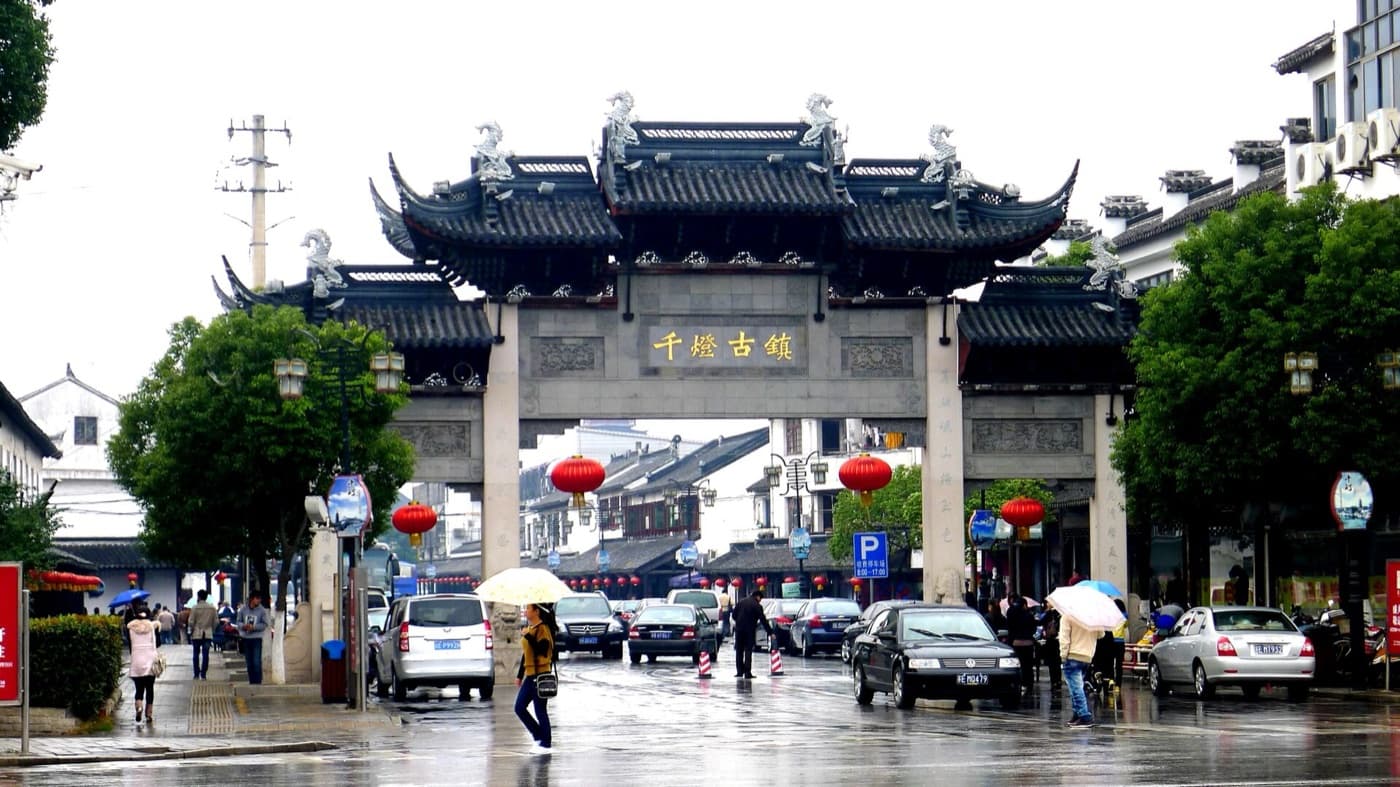
Qiandeng Ancient Town
With a history of more than 2,500 years, Qiandeng is the hometown of the renowned scholar Gu Yanwu and the birthplace of Kunqu opera and Jiangnan silk-and-bamboo music. The town preserves the Yu Family Pawnshop, known as 'China's First Pawnshop'; the longest and best-preserved Ming and Qing flagstone streets in Jiangsu Province; and the world's largest jade reclining Buddha, which is listed in the Guinness World Records. At the Gu Jian Memorial Hall, Jiangnan silk-and-bamboo music performances are staged from time to time.
1 day
Luzhi Ancient Town
Luzhi Town is a Jiangnan water town known for its Arhat sculptures and its historic commercial street. Its 72.5 bridges are also world-famous. Ye Shengtao, the modern writer, taught here in his early years and often called Luzhi his 'second hometown', a sign of his deep affection for the place. He is buried here. 'Many small bridges span the waterways, and every home is built along the river' is a true portrait of Luzhi's rich water-town atmosphere. Baosheng Temple — Luzhi's Baosheng Temple is a thousand-year-old monastery, reputed to be one of the Four Great Temples of Jiangnan. Its surviving buildings include the Second Mountain Gate, the Hall of Heavenly Kings and the Museum of Antiquities. The sculpted arhats in the museum are said to be the work of Yang Huizhi, the Tang-dynasty master sculptor. They are extremely precious and remain remarkably well preserved after a thousand years. Ye Shengtao Memorial Hall — This is where the writer, educator, publisher and social activist Ye Shengtao worked. To honour and remember him, the people of Luzhi rebuilt several of the sites where he taught and turned them into the Ye Shengtao Memorial Hall. Ye wrote a number of novels set in Luzhi, including The Song of the Cold Dawn Lute, More Grain Harvested Than Ever, and The Tall Ginkgo Tree.
History & Culture · Old Towns & Villages · Photography · Waterfront
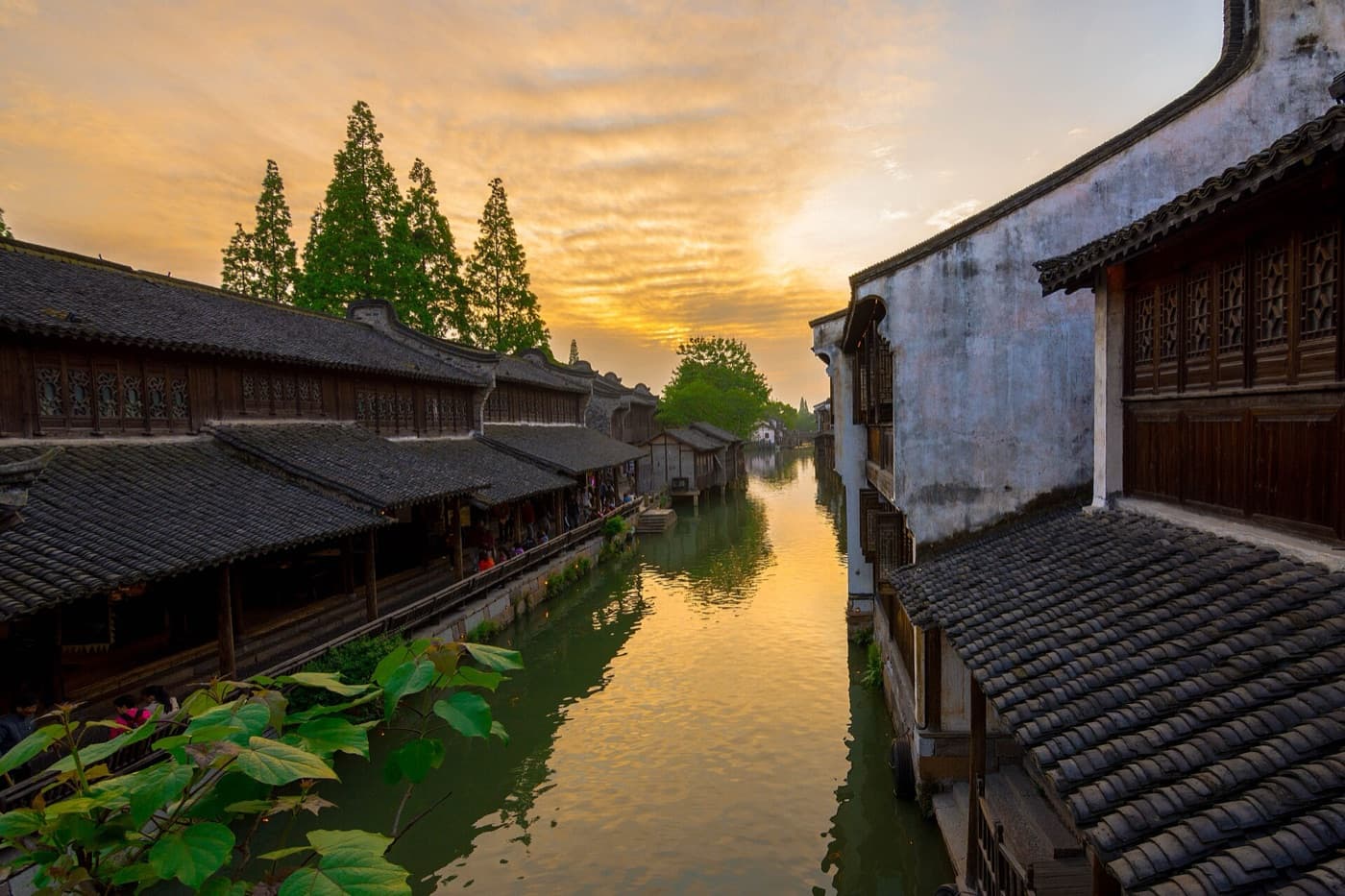
Kunshan
A 'central garden' between Shanghai and Suzhou. Because Zhouzhuang has become famous, attention has focused there. In fact, Jinxi and Qiandeng, also part of Kunshan, offer a more authentic taste of water-town life and remain 'undiscovered gems'. The Zhaoling Liangzhu Culture Site, known as 'China's earthen pyramid', is also located within Kunshan.
History & Culture · Photography · Waterfront · Nature
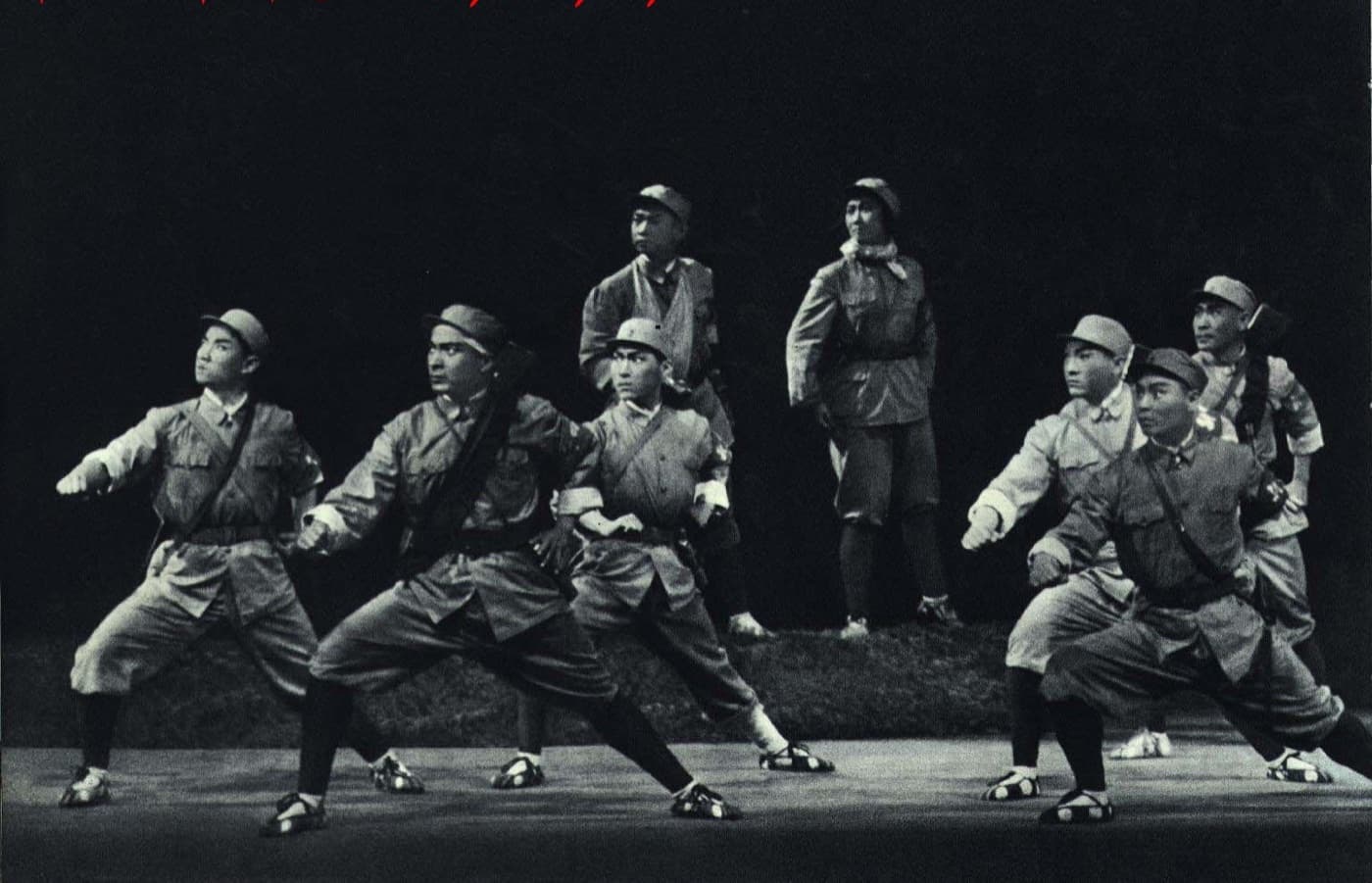
Shajiabang
Shajiabang Town enjoys a pleasant climate, fertile land, abundant waters, rich produce and simple, honest folk customs, earning it the reputation of a 'land of fish and rice' in Jiangnan. The Peking opera *Shajiabang*, known to every household and celebrated across China, has made the town famous far and wide.
History & Culture
Source: China Self-Guided Travel 2025 (《中国自助游》, Tianjin Science & Technology Press, Aug 2024), pp. 1022–1054. Translated from the Chinese edition; names and prices follow the guidebook. · Plain text version