Beichan Temple
From the top of Beichan Temple you can take in a bird's-eye view of the whole city of Xining. Commonly known as Beishan Temple,…
Beichan Temple, Xining
Key facts
- Admission
- Free
- Opening hours
- 8:00—18:00
- Time needed
- 1 hour
- Getting there
- Near Beishan Market Stop (bus stop)
- Guidebook rating
- 3 / 5
From China Self Guided Travel 2025, page 697. Open in Google Maps
About Beichan Temple
From the top of Beichan Temple you can take in a bird's-eye view of the whole city of Xining. Commonly known as Beishan Temple, it is one of the "Eight Scenic Views of Xining," with "Misty Rain at Beishan" ranked among them. The steep hillside is dotted with man-made caves, which is why the site is also known as "Nine Caves and Eighteen Grottoes." The restored Beishan Temple is a Taoist temple.
Frequently asked questions
How much does Beichan Temple cost?
Admission to Beichan Temple is Free, as listed in the 2025 guidebook. Prices can change; check the official channel before you go.
What are the opening hours of Beichan Temple?
Beichan Temple is open 8:00—18:00.
How do I get to Beichan Temple?
Near Beishan Market Stop (bus stop)
How long should I spend at Beichan Temple?
Plan on 1 hour for Beichan Temple.
Where is Beichan Temple?
Beichan Temple is in Xining, Qinghai Province, in the Northwest of China.
More places in Xining

Ta'er Monastery (Kumbum)
Known in Tibetan as Gonben Xianbalin, meaning “the image of the hundred thousand lion roars,” Kumbum Monastery (Ta’er Monastery) has a history of more than 600 years. From afar, a row of white stupas stands quietly before the temple beneath the blue sky. But as you draw near, the riot of colour is astonishing: set against the bluestone walls, it gleams with a dazzling sheen. This is one of China’s famous monasteries. It is the birthplace of Tsongkhapa, founder of the Gelug school of Tibetan Buddhism, one of the six great monasteries of the Gelug school, and the centre of Buddhist activity in the Northwest. Built into the slope of the mountain, Kumbum Monastery covers more than 400,000 square metres and contains over 10,000 rooms of halls, scripture colleges, stupas, residences of living Buddhas, monks’ quarters and other buildings. It is an ancient architectural complex that blends Han and Tibetan artistic styles. The butter sculptures, murals and duixiu (appliqué embroidery) are known as the “Three Artistic Marvels” of Kumbum Monastery. Butter sculpture is an art form in which sculptures are modelled from butter mixed with coloured pigments. According to legend, the art originated in Tibet. When Princess Wencheng married Songtsen Gampo, she brought a Buddha statue from Chang’an, which was enshrined in the Jokhang Temple in Lhasa. In the harsh winter, when no fresh flowers were available to offer to the Buddha, believers made flowers from butter to express their devotion. Every year on the Lantern Festival (the 15th day of the first lunar month), monk artists display their carefully crafted butter sculptures inside the monastery, making it an annual highlight of the temple’s calendar. Murals adorn the walls of the halls; most are painted on cloth hangings, while some are painted directly onto walls and beams. The pigments are mineral-based, bright in colour and long-lasting. The murals belong to the Tibetan Buddhist religious painting tradition and have a strong Indo-Tibetan flavour. Duixiu is one of the Tibetan art forms unique to Kumbum Monastery. Coloured silk is cut into shapes such as Buddhas, flowers, birds and animals, stuffed with wool or cotton, and then sewn onto cloth hangings. Its subjects are mostly drawn from Buddhist tales and religious life, and it is a traditional art unique to this monastery.
¥70 (April–October); ¥40 (November–March of the following year). Entry to the Butter Sculpture Hall, Sutra Printing Hall, Murals Hall and Thangka Hall requires a ticket. Other smaller halls are free to enter. · 3–5 hours

Qinghai Lake Scenic Area
For Qinghai Province, Qinghai Lake is what the Great Wall is for China, so it is a must-visit on any trip to Qinghai. Qinghai Lake is 105 km long and 63 km wide, with a surface elevation of 3,196 m. It is China’s largest inland lake and also its largest saltwater lake. It is surrounded by four towering mountains, rising 3,600–5,000 m, which stand like four high natural screens embracing the lake. The lake’s scenery changes with the seasons. In summer and autumn, the vast grassland looks like a green carpet, with countless cattle and sheep scattered across it like pearls. In winter, the lake freezes into a jade-like expanse that shines like a giant mirror in the sunlight. A trip to Qinghai Lake lets you appreciate nature’s masterpiece as well as the pastoral scenery of the plateau. You can ride horses or yaks, roam the grasslands, climb the sand dunes and, if you are keen, visit herders’ homes to experience Tibetan herding culture. The main sights include Riyue Mountain, Daotang River, Bird Island, Jinyintan Grassland, Erlangjian Scenic Area and the Menyuan rapeseed fields.
Erlangjian Scenic Area: ¥90 (peak season), ¥50 (off-season); Xiannüwan Scenic Area: ¥60 (peak season), ¥30 (off-season) · 1–3 days

Chaka Salt Lake Scenic Area
Chaka Salt Lake (茶卡盐湖) lies in Chaka Town, Ulan County, in the eastern Qaidam Basin. It was an important stop on the ancient Silk Road and a必经 gateway to Xinjiang and Tibet. The lake's shimmering waters and vivid scenery are especially striking at sunrise and sunset, when water and sky merge in a blaze of light. At night, the lake offers some of the most beautiful starry skies, clean and pure, where you can feel the vastness of the universe.
¥60 (May–October), ¥30 (November–April of the following year); single-trip small train ¥50, single-trip boat ¥90, observation tower ¥20 · 2–4 hours
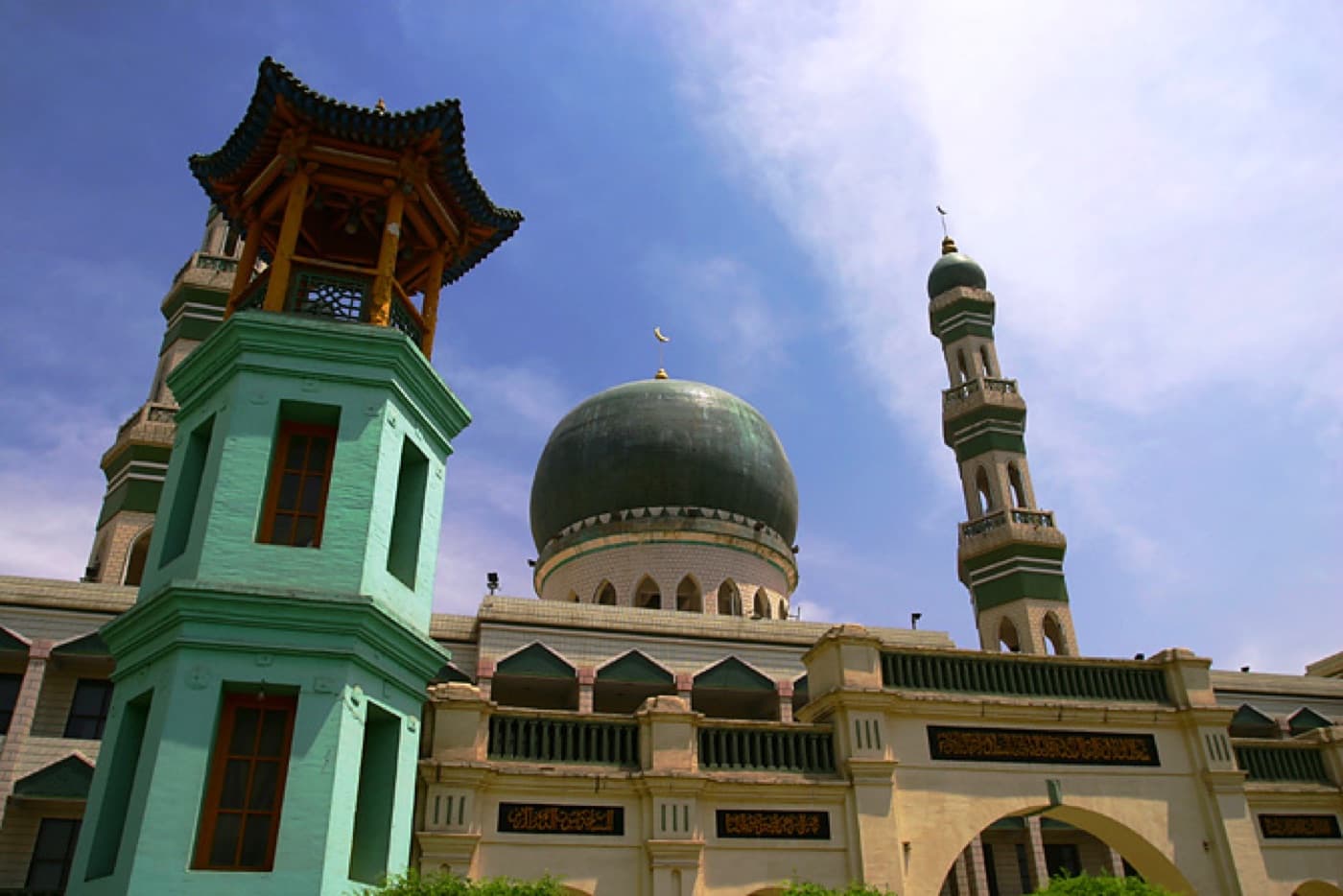
Dongguan Grand Mosque
One of the largest mosque complexes in Northwest China. The mosque faces east and combines classical Chinese architecture with Islamic design. Its main prayer hall is grand and imposing, capable of accommodating over 3,000 worshippers at once. On major Islamic festivals, tens of thousands of Muslims gather here for solemn and dignified religious ceremonies. It is also the highest seminary for the study of Islamic scripture.
No admission fee; free guided tours available · 1 hour
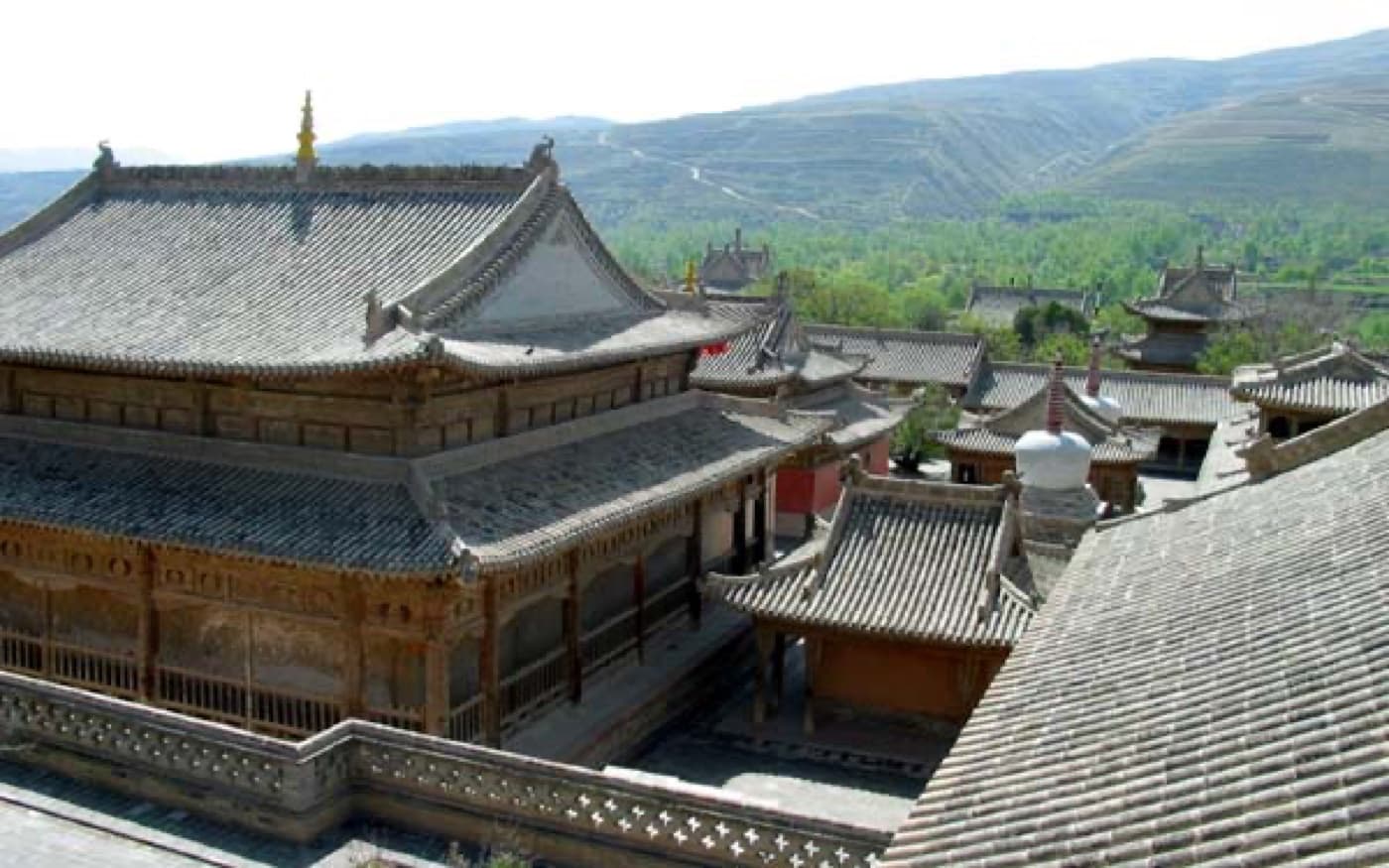
Qutan Monastery
A famous monastery with more than 600 years of history, known as the “Little Forbidden City of Ledu.” Qutan Monastery lies beside mountains and rivers. Its Ming-dynasty complex is made up of halls, stele pavilions, a bell tower and a drum tower. Inside, the Longguo Hall and Baoguang Hall have carved beams and painted rafters, simple yet elegant. Two nine-bend corridors run along the sides, decorated with exquisite and varied murals. “Qutan” comes from the Sanskrit “Gautama,” the family name of Shakyamuni, the founder of Buddhism.
¥50 · 1–2 hours
Zanpu Linka
The only royal monastery on the Qinghai-Tibet Plateau that brings together all eight major schools of Tibetan Buddhism under one roof. The main hall enshrines two jade statues, of Songtsen Gampo and Princess Wencheng. Inside the jade Buddhas are two smaller statues carved from Hotan jade, exquisitely crafted, lifelike and truly magnificent.
¥40 · 2 hours