Hangzhou travel guide
杭州
Whenever Hangzhou is mentioned, West Lake is inevitably part of the conversation. 'History at every turn, culture at every step': in Hangzhou, landscape and culture blend perfectly,…
27 places · In the guidebook: pages 1107–1159

Hangzhou, Zhejiang Province · AI illustration for China Trip
Quick itinerary
Hangzhou in 4 days
- Day 1
- West Lake North Route and part of the West Route: Broken Bridge in Snow→
- Bai Causeway→
- Solitary Hill (try authentic Dongpo pork at Louwailou)→
- Quyuan Lotus Garden→
- Spring Dawn at Su Causeway→
- Viewing Fish at Huagang→
- Maojiabu
- Day 2
- West Lake South Route: Willows Swaying, Orioles Singing→
- Leifeng Pagoda→
- Three Pools Mirroring the Moon→
- Wushan Square→
- West Lake Musical Fountain
- Day 3
- Feilai Peak→
- Lingyin Temple→
- Longjing Village (many farmhouse restaurants serve authentic Jiangsu and Zhejiang cuisine at affordable prices, a good place for lunch)→
- Jiuxi Misty Trees→
- Qiantang River Bridge
- Day 4
- Xixi National Wetland Park→
- Southern Song Imperial Street→
- Former Residence of Hu Xueyan→
- Qinghefang Street
The feel of the place
- History Everywhere
- Whenever Hangzhou is mentioned, West Lake is inevitably part of the conversation. 'History at every turn, culture at every step': in Hangzhou, landscape and culture blend perfectly, and this blend is almost always found around West Lake. Before coming to Hangzhou, it is well worth doing some background reading. Without a few Chinese history books under your belt, walking around West Lake may only show you asphalt roads and a large pond, and you will hardly sense the rich history and culture.
- Scholars and Beauties
- Countless tales of scholars and beauties have unfolded around West Lake. Even if you don't know the love story of Qian Qianyi and Liu Rushi from ancient times, or the stories of Yu Dafu and Wang Yingxia from the modern era, you will surely be able to retell the legend of Lady White and Xu Xian. Hangzhou is, truly, five parts West Lake scenery and five parts romantic story.
- Silk
- Silk is a symbol of ancient China. When the overland and maritime 'Silk Roads' were opened, Chinese silk and porcelain flowed steadily to Europe and Asia. Hangzhou silk has an especially long and rich history, and is exported to more than 100 countries and regions. Most visitors to Hangzhou bring back a few silk gifts for relatives and friends.
- A Place to Settle Down
- Compared with any other city in China, Hangzhou is arguably the most suitable place to settle down. Beijing is too big to make everyday life easy; Shanghai is too bustling, and its cosmopolitan noise can be irritating; Suzhou's long history can feel heavy and oppressive; Chengdu is a land of wealth and gentleness, but its easy life, filled with the clatter of mahjong, can be all too seductive. Throughout history, countless famous figures have stayed in Hangzhou, and the fact that Jin Yong also bought land and settled by West Lake is proof enough.
Friendly Hangzhou People
Hangzhou is a wonderful place, and its people are warm and welcoming. In particular, 'yimu' (middle-aged and elderly women) are very happy to suggest routes for visitors, and taxi drivers are also helpful.
tip: The Origin of the Name 'Hangzhou'
Legend has it that Yu the Great landed at Shehang (today's Hangzhou) when he travelled to Kuaiji (today's Shaoxing) for a gathering of feudal lords, and so the place was named 'Yuhang', which later evolved into 'Yuhang'. The name 'Hangzhou' first appeared in the Sui dynasty. Hangzhou was also known as Qiantang. Legend says that when ancient sea tides caused flooding, a local wealthy family raised funds to build an embankment, which was called 'Qiantang'. During the Tang dynasty, the name was changed to 'Qiantang' to avoid the personal name of an emperor.
Leisurely Hangzhou
Hangzhou, the 'Paradise on Earth', offers not only beautiful scenery but also endless leisure. Alone or with a few close friends, you might choose a corner of West Lake Tiandi with a view, sip a coffee and read a few pages of a book, or sit at a teahouse in Meijiawu, Longjing or any lakeside spot and enjoy the new tea while chatting. It is wonderfully relaxing.
Preparation and Information
Language
Mandarin is the common language.
Climate and Travel Seasons
Hangzhou has an average annual temperature of 16.3°C and distinct four seasons. Many travel guides say that Hangzhou offers different scenery all year round: in winter, see 'Lingering Snow on Broken Bridge'; in spring, enjoy 'Spring Dawn at Su Causeway'; in summer, admire 'Lotus Breeze at Quyuan Garden'; and in autumn, appreciate 'Autumn Moon over Calm Lake'. Spring is still the best time to visit the south of the Yangtze, especially after a spring rain, when the air around West Lake is fresh and the scenery is beautiful. However, in recent years Hangzhou's maximum temperatures have exceeded those of the 'Four Furnaces' of China.
Things to see
Su Causeway is now paved with asphalt, but its scenery remains as lovely as ever, especially on spring mornings. The name “Spring Dawn at Su Causeway” is well deserved.

Ten Scenes of West Lake
History & Culture · Hiking & Outdoors · Photography · Nature

Third Selection of Ten Scenes of West Lake
History & Culture · Hiking & Outdoors · Photography · Nature

Museums and Memorial Halls Tour
History & Culture
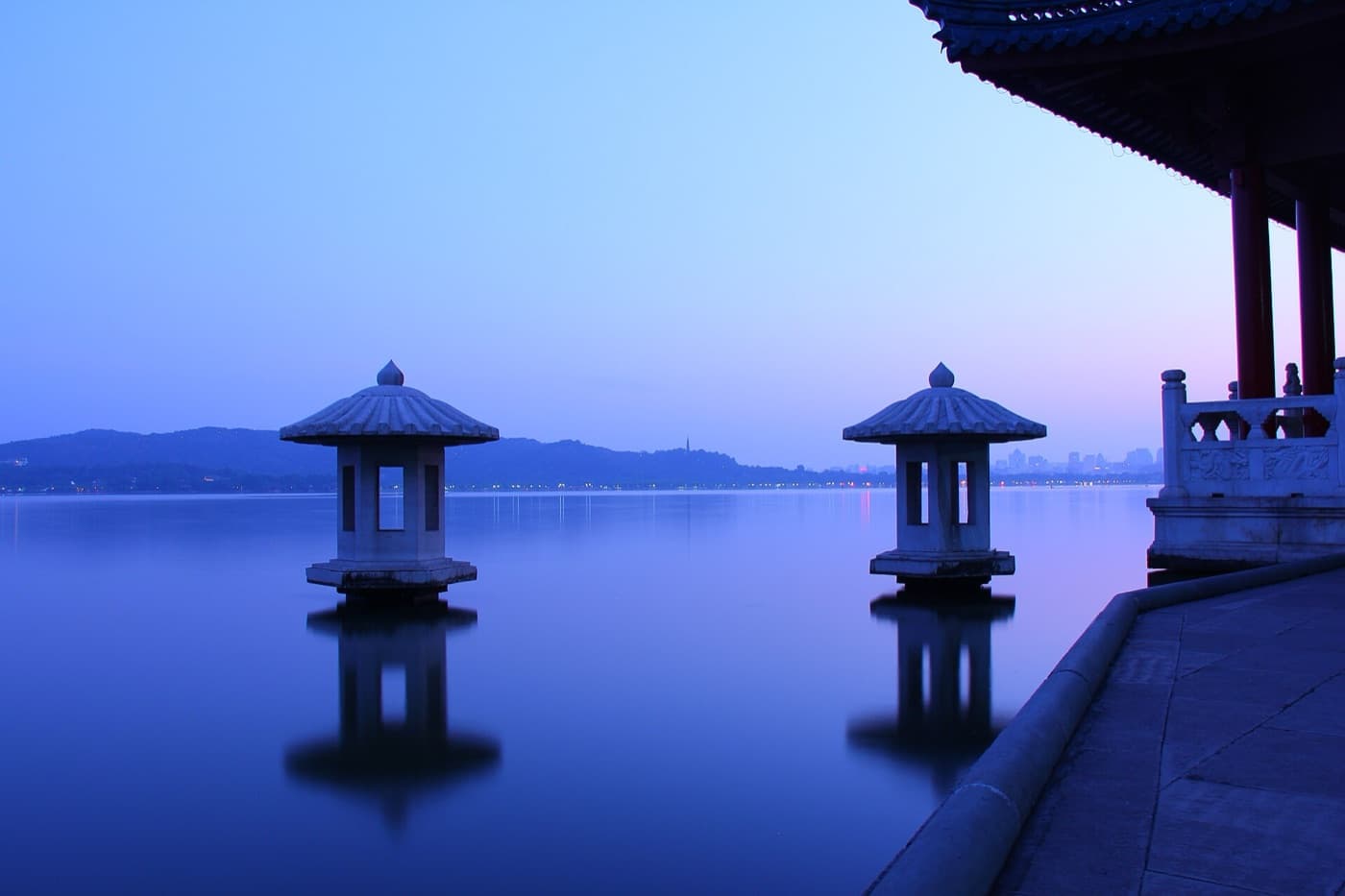
New Ten Scenes of West Lake
History & Culture · Hiking & Outdoors · Photography · Nature
Qinghefang Historic District
Qinghefang is the only relatively intact old urban district remaining in Hangzhou. Walking through it is like walking through the history of the city. It has been a bustling area since ancient times, and in the Song dynasty, when Hangzhou was the capital, it was literally the “imperial city.” The smooth stone rims of the ancient wells in its lanes hint at its long history. Today, it also embodies the folk culture of Hangzhou: there is so much to eat, do and see, from grand, stately merchant houses to the small stalls of folk artisans.
2–3 hours
Xiling Seal Engravers' Society
Founded in 1904, the Xiling Seal Engravers' Society is the oldest and most accomplished society at home and abroad devoted to the study of epigraphy and seal carving, and is known as the "No. 1 Famous Society under Heaven." Its main buildings include Baitang Hall, Zhuge Pavilion and Yangxian Pavilion, where calligraphy and inscriptions by famous figures are everywhere. The society also houses the China Seal Art Museum, which holds more than 6,000 paintings, calligraphy works and seals from successive dynasties.
0.5–1 hour · Free
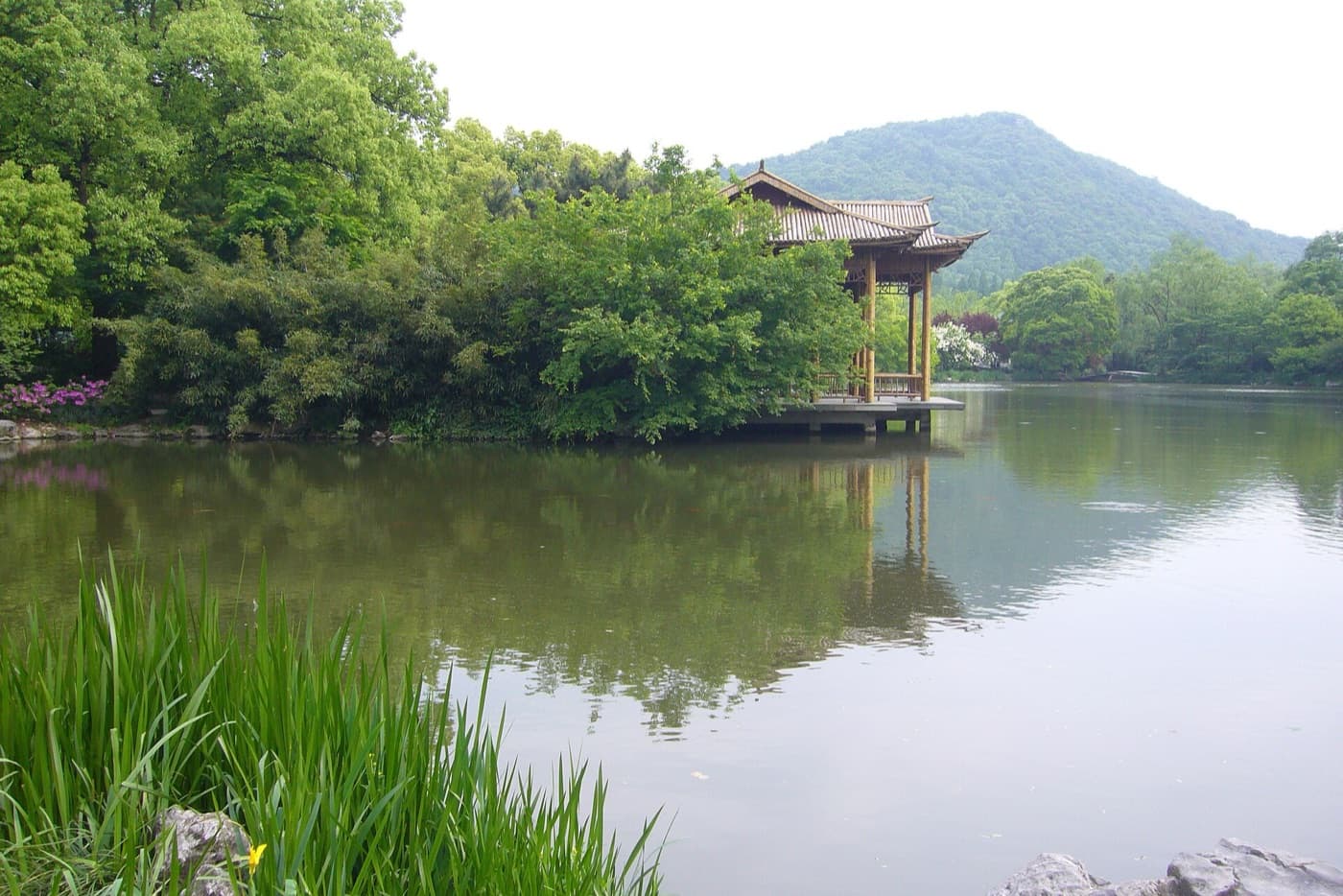
Xixi National Wetland Park
At Xixi, you can glide through the reeds on a sculling boat or stroll along the riverside boardwalks on foot. What's special is that Xixi has preserved its village houses, so even if you're far removed from the ancient way of life, you can still photograph its most original rural dwellings. As the sculling boat drifts lazily along, if you get a sense of having been here before, that's the best part. Picture Ge You in the film *If You Are the One*, sipping Longjing tea on a boat just like yours and savouring the story behind "Xixi, Stay a While."
5–6 hours · ¥80; sculling boat ¥100/boat/hour; electric boat ¥60; electric shuttle ¥10/person/trip
Shuangxi Bamboo Sea
The appeal of Shuangxi Bamboo Sea lies in its bamboo and water. The scenery here is beautiful, with tea plantations covering the hillsides and deep, shadowy bamboo groves. At Luyu Spring, you can listen to the zither and sip tea, and get a sense of the carefree spirit of the Seven Sages of the Bamboo Grove. Adventurous visitors can try the "No. 1 Rafting in Jiangnan," which is both thrilling and exciting.
0.5–1 day · ¥69.9
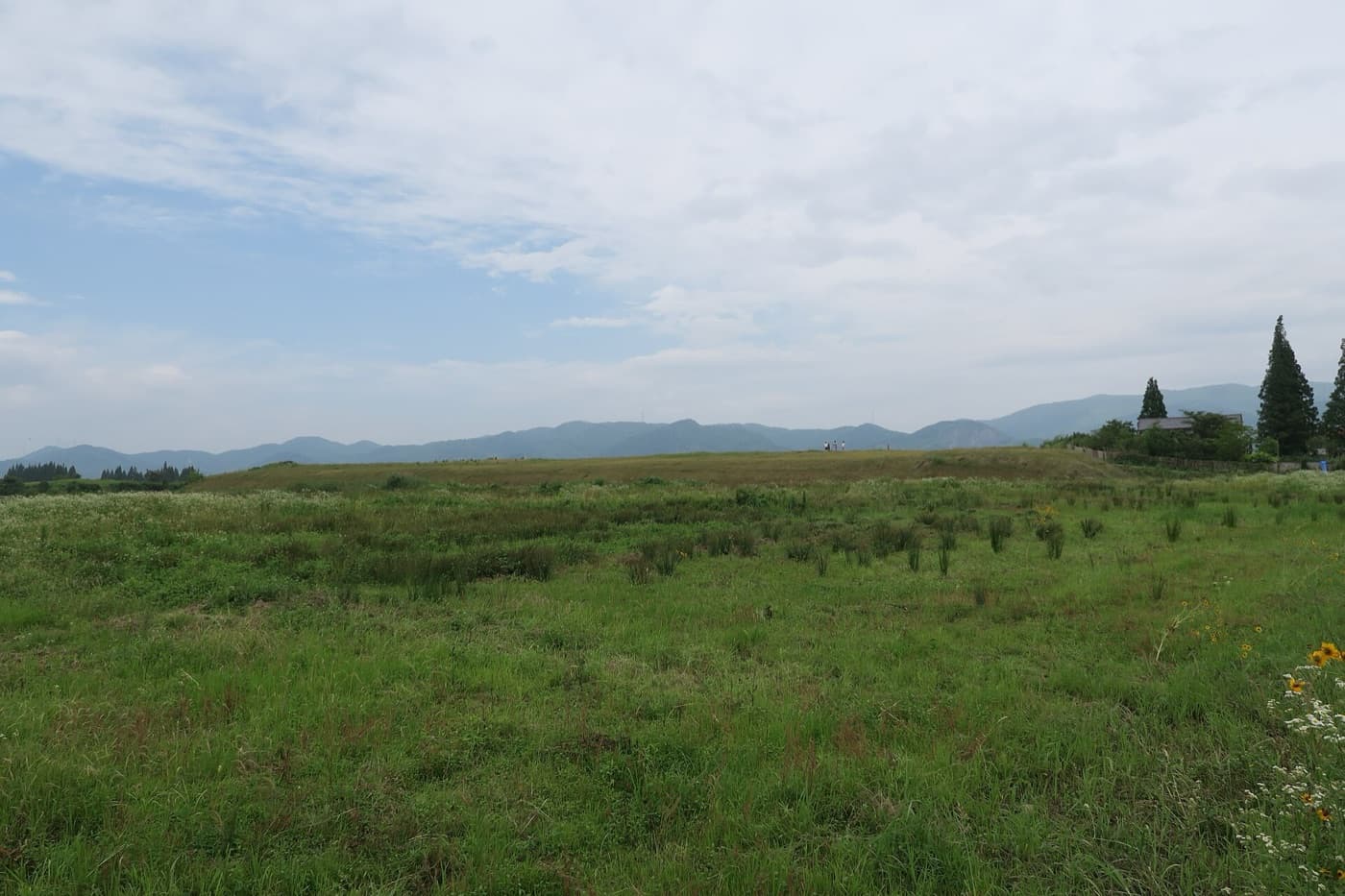
Archaeological Ruins of Liangzhu City Park
Liangzhu Ancient City Site Park is one of China's most important large-scale archaeological sites. It is not an ordinary park but a comprehensive project for protecting, using, developing and presenting cultural heritage. Visitors can explore the Liangzhu ruins on foot or by boat, along two different routes, one by water and one by land.
3–4 hours · ¥60; sightseeing bus ¥20
West Zhejiang Grand Canyon
The canyon's mountains are high and its streams swift, with ring-shaped valleys covered in lush vegetation and unusual landforms, earning it the reputation of "white horses emerging from the rock, yellow oxen ploughing the cliffs." Compared with the Three Gorges of the Yangtze, it offers a different kind of poetic and picturesque charm.
1 day · ¥120 (includes shuttle bus)
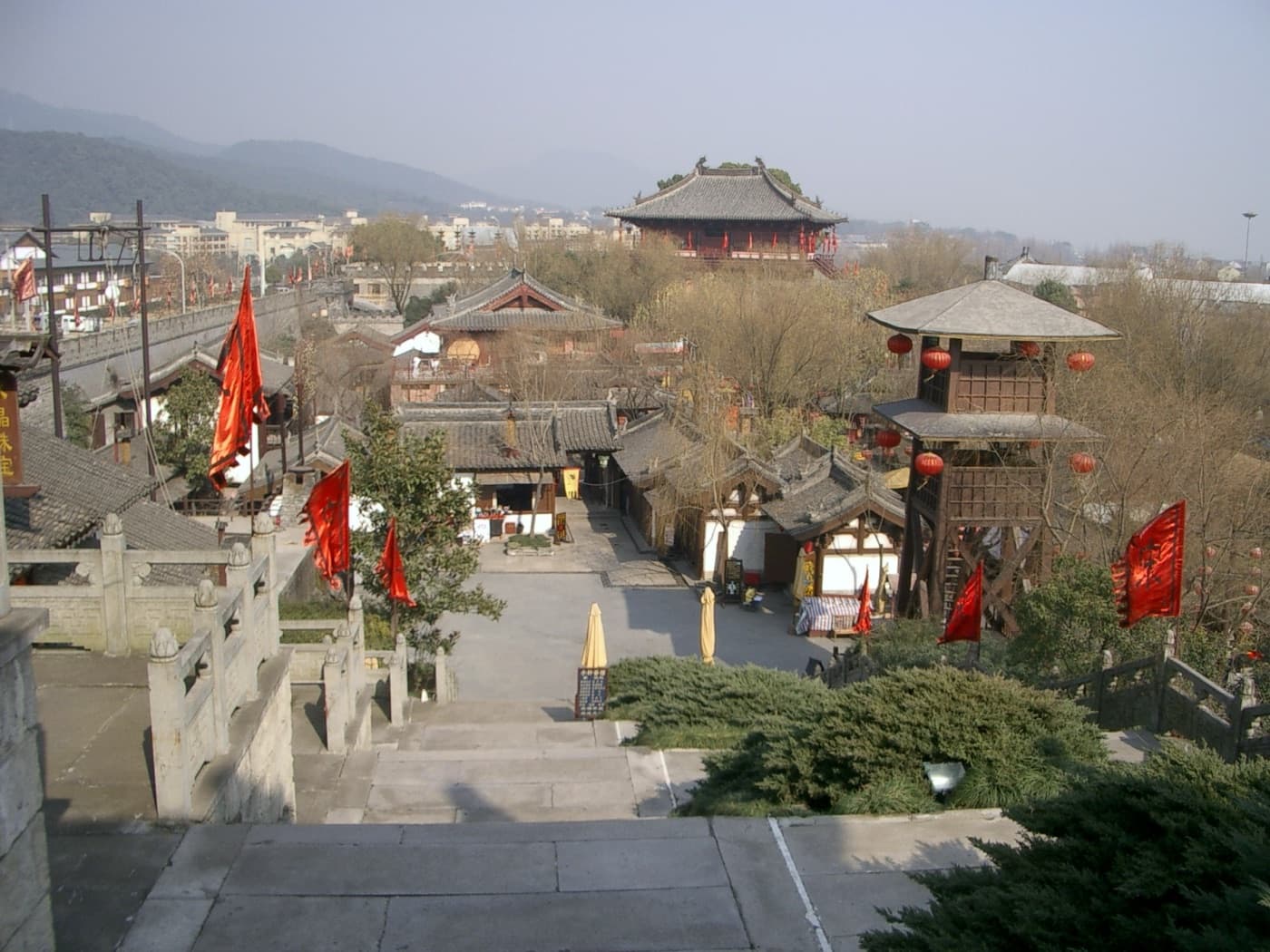
Song Dynasty Town (Songcheng)
Song Dynasty Town is located in the Zhijiang Tourist Resort in Hangzhou. It is the city's first large-scale man-made theme park and holds AAAA-level scenic area status. The large-scale song-and-dance spectacle *Song Dynasty Town: Romance of a Thousand Years* is the soul of the park, and it is also hailed as one of the "Three Great Masterpieces of the World." Beyond the stage shows, the internet-famous Rainbow Stairs are also worth a visit. The steps are painted in rainbow colours, and each step is a different colour, so it feels like walking on a rainbow, a truly distinctive experience.
3 hours · Audience seats ¥320; VIP seats ¥350 (includes *Song Dynasty Town: Romance of a Thousand Years*)
Gushan Hill (Solitary Hill)
Located in the northwest corner of West Lake, Gushan Hill is one of the finest vantage points for views of the lake. On its southern slope are Xihu Tianxiajing (Xihu Tianxiajing scenic spot), Wenlan Pavilion and the Zhejiang Provincial Museum. The Xiling Seal Engravers' Society lies on its western side, and on its northern slope stands Fanghe Pavilion, where the timeless story of Lin Bu, the hermit famed for his "plum-blossom wife and crane sons," took place. The pavilion is surrounded by plum trees, making it a prime spot for plum-blossom viewing on the lake.
3 hours
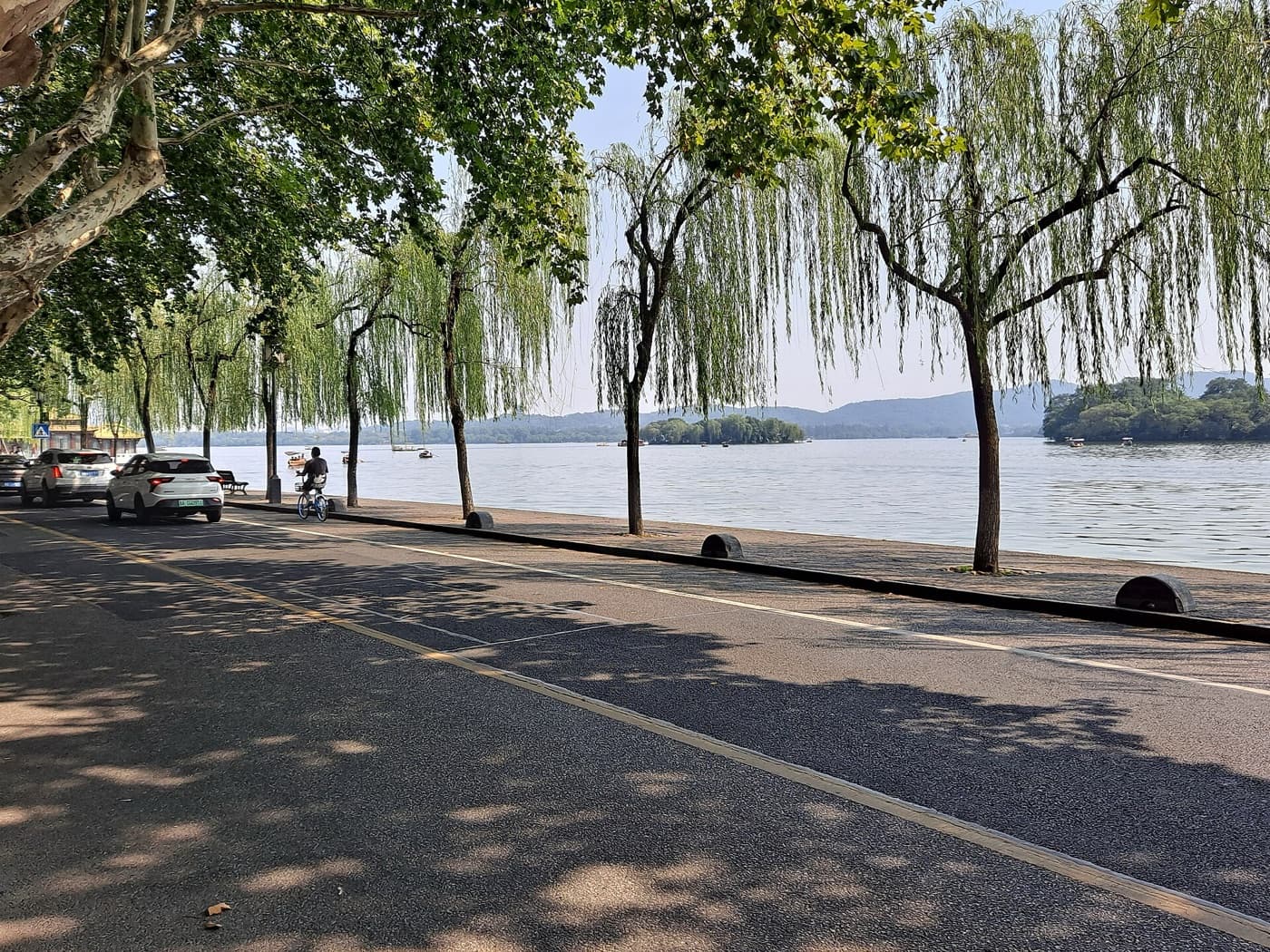
Bai Causeway
Together with the Su Causeway, the Bai Causeway is one of the two famous causeways of West Lake in Hangzhou. It runs from the east end at Broken Bridge (断桥残雪) to the west end at Autumn Moon over Calm Lake (平湖秋月).
0.5–1 hour
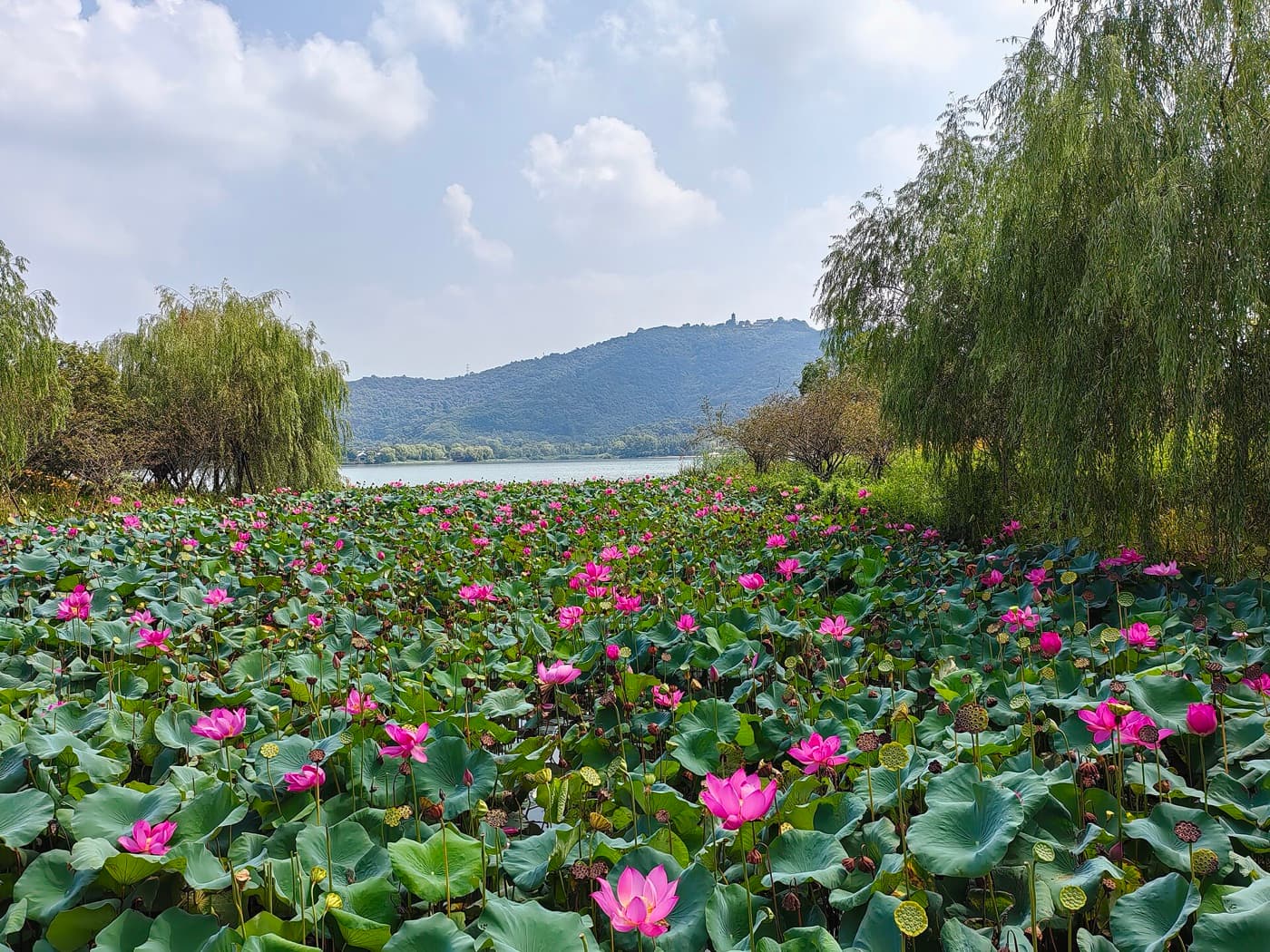
Xianghu Lake
Compared with the bustle of West Lake, Xianghu Lake is like a quiet, gentle beauty, ideal for travellers who prefer tranquillity. Yilan Pavilion on the mountaintop offers the best view of Xianghu Lake and the Qiantang River. From the pavilion, you can look west over the vast expanse of Xianghu Lake. The Eight Scenes of Xianghu Lake are: Ancient Reflections on City Hill, Dawn Light, Evening Bells from Yangqi, Distant Views from Yilan Pavilion, Moonlight over the Lake, Clouds Reflected on the Lake's Heart, Boat Songs on Hengtang, and Kiln Smoke at the Foot of the Mountain.
0.5–1 day · Free admission; boat trips charged separately. Lake circuit sightseeing boat ¥60; Xianghu boat + Jinsha water play ¥75; vintage car tour ¥40; family combo ticket for Xianghu boat + Jinsha water play ¥113
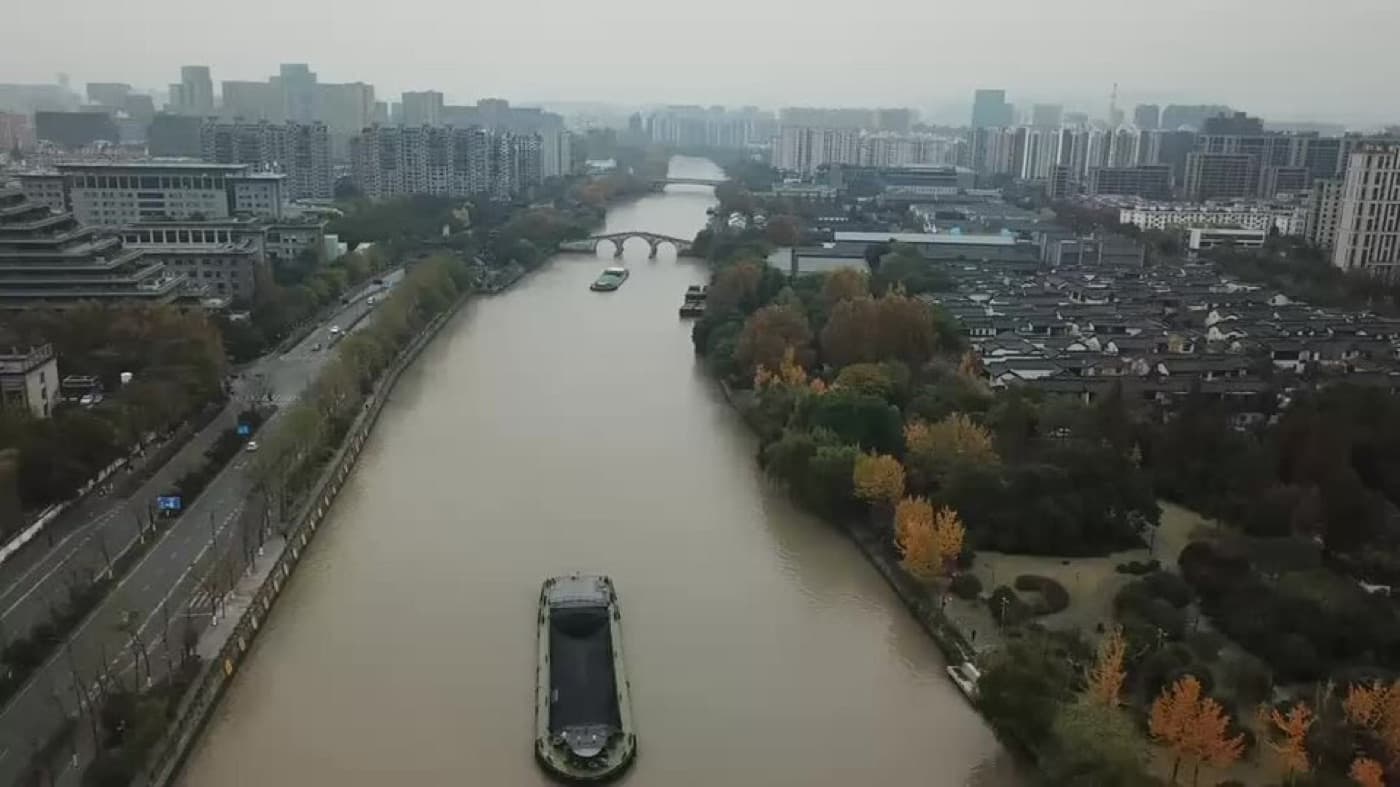
Beijing–Hangzhou Grand Canal Scenic Area
The name Hangzhou first appeared in the Sui dynasty, the era in which the Beijing–Hangzhou Grand Canal was built, and the city's prosperity began with the canal's flourishing. For some 1,400 years since the canal was dug, Hangzhou has remained the centre of Jiangnan. Today, setting out from Wulinmen Wharf and travelling north by boat, you can take in the distinctive scenes along the Grand Canal heritage route, including Evening Rain at Jiangqiao, Buddhist Chants at Xiangji, Remaining Wealth at Fuyi, Moon Over Gongchen, and Homes West of the Bridge.
History & Culture
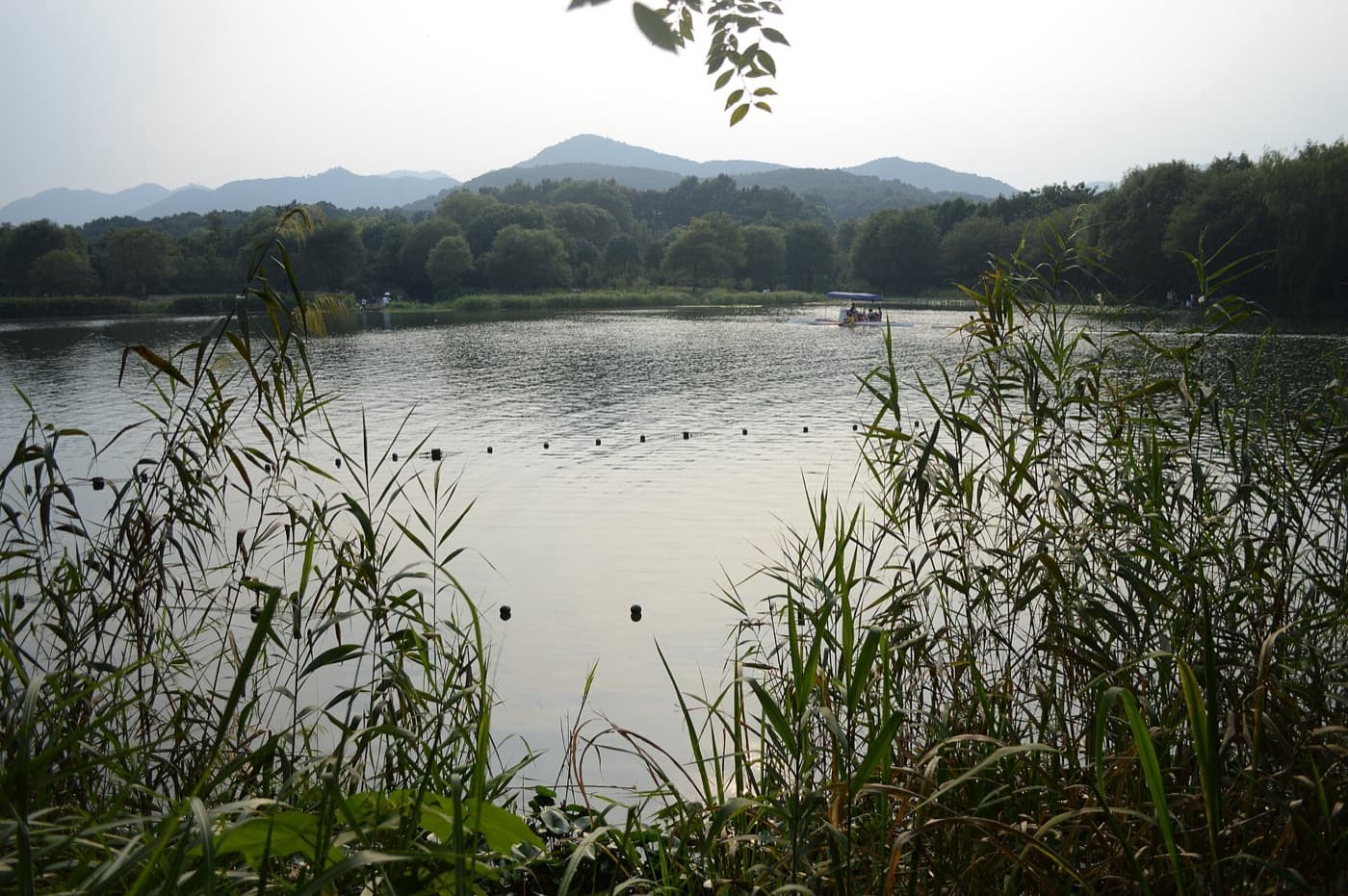
Maojiabu
A village entirely in the Jiangnan style, Maojiabu is something of a rural paradise just outside the city. Car noise and exhaust fumes are rare here, and the air is fresh. The local Wolong Bridge is very well known, and boats can pass beneath it. Restaurants stand beside the bridge, and on a drizzly afternoon, a cup of wine here is an excellent choice.
1–2 hours
Xiaohe Zhijie Historic District
Authentic old houses, rarely renovated, and many "old Hangzhou" residents still live here, giving the district a rich sense of everyday life. Along the way you'll find plenty of cafés, tea bars, mahjong parlours and noodle shops. Stop at a small tea stall run by a local resident, and take the chance to look inside the rustic courtyards of the houses.
1–2 hours
Oriental Cultural Park
Oriental Culture Park brings together garden culture, religious culture and wellness culture, and is a key tourism project in Hangzhou and Xiaoshan. It lies next to Xianghu Lake on one side and Yupu on the other, with pastoral villages, birdsong amid the grasses, gentle hills and clear water, and scenery of great beauty.
5 hours · ¥80
OMG Thrill Park
Built in a karst valley, this park has a "Reaching the Sky and Going Underground" theme. You can walk a glass skywalk under clear skies to "reach the sky," or explore a magical underground river to "go underground." Thrill-seekers may want to try the high-altitude swing, and visitors who love taking photos will enjoy posing as an angel in front of the "Angel Wings." In short, everyone can find something to delight them here.
3–4 hours · Whole-park pass ¥469
Getting there & around
Getting In and Out
There are many ways to get in and out of Hangzhou, and its transport network is very developed.
By Air
Hangzhou Xiaoshan International Airport is located to the east of the city, 27 km from the urban centre. Airport buses run from the Wulinmen civil aviation ticket office and Hangzhou East Railway Station, with a bus every 15 to 30 minutes. The first bus departs at 7:30 and the fare is ¥20. A taxi costs about ¥100.
Hangzhou is a railway hub in Zhejiang, with trains south to Guangzhou and north to Xi'an and Beijing. Hangzhou has three main railway stations: Hangzhou Station (Chengzhan), Hangzhou West Station and Hangzhou East Station.
Chengzhan Railway Station (城站火车站) is close to the city centre. From Chengzhan, it takes only about 10 minutes by car to reach the West Lake shore.
Hangzhou East Railway Station (火车东站) is a high-speed rail passenger station with trains to Shanghai, Kunming, Ningbo and other cities across the country. It is quite far from the city centre, but it is directly connected by metro, so transport is very convenient.
Hangzhou West Railway Station (杭州西站) officially opened in 2022. It currently offers high-speed and bullet train services to major cities including Beijing, Xi'an, Wuhan, Nanjing, Chongqing and Guangzhou.
To meet the needs of travellers who want to take their own cars on trips to other cities, Beijing has launched a “self-drive car transport train” running between Beijing and Hangzhou in both directions. The round-trip fare for car transport starts at around ¥3,000.
Don't Forget Your Umbrella
Don't forget to bring an umbrella when travelling in Hangzhou.
Good-Value Park IC Card
Shanghai residents visiting Hangzhou can now apply for a Hangzhou Park IC annual card, which is convenient and good value.
Parking Fees in Hangzhou
Street parking fees in Hangzhou depend on the zone and the length of stay. Parking zones are divided into core, first-tier and second-tier areas. During the day, the first hour costs ¥5, ¥3 and ¥2 respectively, and each additional hour costs ¥6, ¥4 and ¥3. At night, a flat rate of ¥5 per hour applies. In the West Lake Scenic Area, parking costs ¥10 per hour during the day and ¥5 per hour at night. Fees are higher on public holidays.
Hangzhou's Railway Stations
Since the opening of Hangzhou Xinke Station (杭州新客站), Hangzhou East Station mainly handles trains that pass through, while all departing trains leave from Xinke. Hangzhou Xinke Station has three levels: underground, ground and elevated. The underground level is a car park for taxis and private cars picking up passengers, with 150 spaces each. The ground level consists of a concourse and a plaza, serving as the pick-up area for coaches and pedestrians.
Trains from Shanghai to Hangzhou are very convenient. If you take a train to Hangzhou Chengzhan Station, you will step out directly onto West Lake Avenue, whereas Hangzhou East is much farther away. Many Shanghai visitors travel to Hangzhou on weekends, so it is best to buy your return ticket in advance; otherwise, you may have to stand for the whole journey.
Road
The Shanghai–Hangzhou and Shanghai–Nanjing expressways make road travel to Hangzhou very fast. As long as you check the direction of your destination, you won't confuse the departure and stopping points, since they run in the same direction.
Free shuttle buses run from Hangzhou Railway Station to the corresponding long-distance bus stations.
Waterways
Waterway transport in Hangzhou mainly consists of cruises on the Grand Canal from Suzhou to Hangzhou. These usually run overnight, departing in the evening and arriving the next morning, with stops in Suzhou and Wuxi. There is also a route on the Qiantang River. Both services generally operate only in summer and during the peak tourist season.
Canal cruises: The “Tiantang” and “Longjing” cruise ships operated by Hangzhou Grand Canal Tourism run daily, departing for Suzhou at 17:30 and for Wuxi at 18:00. Both arrive at 7:00 the next day. Fares range from ¥70 to ¥150. Tickets can be bought on the spot, and except on public holidays and weekends, return tickets can also be booked in advance.
Qiantang River cruises: Hangzhou Qiantang River Tourism offers three tour routes: the Qiantang River night cruise, the 24-hour Fuchun River cruise, and a day trip covering the Qiantang River, Fuchun River, Guanshan and a farmhouse restaurant.
The West Lake Tunnel is now open. The western passage allows vehicles to travel from the Huancheng West Road entrance straight to Nanshan Road. On the eastern passage, southbound-to-northbound vehicles can enter from Jiefang Road, pass under the lake and reach Huancheng West Road. The tunnel has a height limit of 3 metres.
Eating and Playing in Hangzhou
The Starbucks in West Lake Tiandi has excellent surroundings, and Zhiwei Restaurant (知味馆) on Yang Causeway has a lovely setting. After trying Hangzhou's famous dishes, those who would rather not walk can take an electric sightseeing car around the lake for a full circuit. It costs ¥40 per person per hour, saving time and energy, and makes a good choice.
Hangzhou Tourist Transfer Centre
For trips to nearby districts and counties such as Fuyang, Tonglu and Lin'an, you can also choose products from the Hangzhou Tourist Transfer Centre. It offers day trips to nearby areas, travel information consultation, and transfer services.
Hangzhou Night Tour Line 9
Stops: Wulin Square (East Runway), Yan'an Xincun, Fengqi Road, Shaonian Palace, Broken Bridge, Ge Hill, Xinxin Hotel, Yue Temple, Hangzhou Flower Garden, Dingjia Hill Scenic Area, Air Force Sanatorium, Yuhu Bay, Su Causeway, Jingsi, Changqiao (Nanshan Road), Wansongling Junction (Nanshan Road), Qingbo Gate (Nanshan Road), West Lake Avenue, Hubin (Yan'an Road), Shengli Theatre, Yan'an Xincun, Wulin Square (East Runway).
This route does not run every month. It usually operates only during the peak tourist season, from July to October.
Tourist Shuttle Bus Hours
Tourist shuttle buses and suburban buses operate from 6:00 to 18:00, while city buses run from 6:00 to 22:00. Holiday sightseeing shuttles run only on weekends and public holidays.
Hangzhou's Buses
1. Only Route 8 (Gulou–Desheng Village), Route 228 (Hangzhou East Station–Wulin Gate), Route 251 (Railway Station–Gongzhen Bridge) and Route 208 operate after 22:00. These are all overnight buses, running every 30 minutes.
2. Almost all city buses in Hangzhou are self-service, including air-conditioned ones. Board at the front door and alight at the rear door. Have enough small change ready before boarding, as drivers do not give change.
Getting Around the City
Bus
Hangzhou bus fares range from ¥2 to ¥5, and all buses are air-conditioned. Routes beginning with “B” are express buses, with fares of ¥3 to ¥4. Routes beginning with “Y” are tourist shuttle routes that pass by many of Hangzhou's main attractions.
West Lake New South Line is 3.5 km long and divided into five sections: Yi Gongyuan, Yongjin Gate, Liulang Wenying, Xueshi Bridge and Changqiao. It has 18 historic and cultural sites in total. It runs daily from 8:00 to 17:30, and visitors can ride electric sightseeing cars along the southern lakeside route. There are three types of tickets:
1. Full Lake Circuit: Travels clockwise around the lake in one direction. The fare is ¥40, and with this ticket, passengers may get off at any stop and get back on up to four times.
2. Shuttle Round Trip: The fare is ¥10. Shuttle cars run on three sections: Shaonian Palace Sluice to Xiling Bridge, Kuahong Bridge to the front of Leifeng Pagoda, and Gongyuan to Tang Yunzhi Art Museum. Passengers may get on and off twice within each section.
3. Charter Tour: ¥10 per half hour.
The lake's electric sightseeing cars come in four sizes, seating 4, 8, 11 and 14 passengers. They travel at about 10 km per hour, allowing visitors to take in the lake and mountain scenery at a leisurely pace.
Metro
Hangzhou Metro currently has Lines 1–10, 16 and 19 open. Chengzhan Station, Hangzhou East Station and Yuhang High-Speed Railway Station are all directly served by metro. The Longxiangqiao, Fengqi Road and Ding'an Road stations on Line 1 are close to the busy Hubin shopping district and are the most convenient interchange stations for sightseeing around West Lake.
Taxi
Standard taxis have a starting distance of 3 km and a flagfall of ¥13. For distances of 3 to 10 km, the rate is ¥2.5 per km. Night fares are 30% higher.
Bicycle
Hangzhou has many public bicycle rental points. You can apply for a public bicycle rental card (Z-card), which lets you pick up a bike at one point and return it at another, making it very convenient. Cards can be obtained at most staffed rental points in the West Lake Scenic Area, or at bus centre hubs such as Longxiangqiao, Wushan Square and Shaonian Palace.
Renting a bicycle to tour West Lake is a wise choice, as it is both convenient and eco-friendly. There are also many privately run bicycle rental shops along the lake, typically charging ¥10 per hour, and prices are negotiable.
Water Bus
Water buses also run along the canal within Hangzhou, with stops including Genshan Wharf, Wulinmen, Xinyifang and Gongchen Bridge. Other leisure routes include a night cruise on the Qiantang River and a trip to the ancient town of Tangqi.
Hangzhou Taxis
1. Most Hangzhou taxis change shifts around 4 to 5 p.m., and drivers may refuse passengers during this time, so it can be hard to hail a cab then.
2. Hangzhou urban GPS-dispatched taxi booking hotline: 0571-28811111 (valid citywide). Taxi complaints hotline: 96520.
3. During major holidays, odd-even plate restrictions apply, and it is difficult to hail a taxi before 7:00 or after 22:00.
Touring West Lake by Electric Bike
You can rent an electric bike to ride around West Lake, which feels relatively effortless. Current rules require that the bike be returned to where it was rented. Recommended route: Bai Causeway → Su Causeway → Yang Causeway → Beishan Road. The full loop takes 3 to 3.5 hours and takes in several different types of West Lake scenery.
Touring Hangzhou by Rental Car
For out-of-town visitors who enjoy touring by car, Hangzhou has car rental companies offering rental services. Prices vary by vehicle model and rental period, and there is a wide range of options.
Airport Information Desk
Airplane- Phone:
- 0571-96299
Wulinmen Passenger Terminal Ticket Office
Wulinmen Passenger Terminal Ticket Office- Address:
- 208 Huancheng North Road
- Phone:
- 0571-85190851
Tourist Transport Hub (Huanglong) Center
Hangzhou Tourist Transport Hub- Phone:
- 0571-87961729
Tourist Transport Hub (Wushan) Center
Hangzhou Tourist Transport Hub- Phone:
- 0571-87809951
Car Breakdown Repair Service
Touring Hangzhou by Rental Car- Phone:
- 0571-85451919
Eat & drink
Zhejiang cuisine is renowned for fresh ingredients, meticulous preparation, and excellent color, aroma, taste, and presentation. It is one of China's Eight Great Cuisines. Its specialties include quick-frying, stir-frying, deep-frying, sautéing, braising, stewing, roasting, steaming, red-braising, and pan-frying, and it relies mainly on meat, fish, poultry, and bamboo shoots.
In recent years Hangzhou has earned the nickname “culinary desert,” and its famous dishes Longjing Shrimp and West Lake Sweet and Sour Fish have come in for a lot of teasing. In fact, West Lake Sweet and Sour Fish is prepared with great care, yet very few restaurants today can make it well. Longjing Shrimp, meanwhile, depends heavily on ingredient quality; if the shrimp is even slightly past its best, it is hard to eat.
Recommended Dishes
Recommended Snacks
Hangzhou is also famous for its snacks. When you visit, be sure to try these treats: cat's ear noodles (maoerduo), stinky tofu, chilled drunken white shrimp, honey-glazed lotus root, West Lake beef soup, West Lake snow glutinous rice cake (xue niangao), Pianerchuan noodles, lotus flower pastry, Song Sao fish soup, Qianlong fish head, stir-fried shrimp and eel noodles, crab roe noodles, pork liver noodles, Luhui (芦荟), yellow croaker noodles, beef and glass noodle soup, shrimp wontons, duck blood soup, doughnuts, red bean soup, xiaolongbao steamed buns, Houkou steamed buns, and braised tofu in marinade.
Recommended Teahouses
Hangzhou's teahouses are as ubiquitous as historic sites, and Hangzhou's Longjing tea is first-rate, which is why “Tasting Longjing Tea” is a signature experience here. You should definitely drink tea while in Hangzhou, though you don't necessarily have to go to Longjing; each teahouse has its own character.
Dongpo Pork
Recommended DishesThere is a saying: “Cook it on slow heat, use little water, and it becomes beautiful once the fire is just right.” Once out of the wok, the pork is glossy and bright red, tender enough to melt like tofu without falling apart, with a fragrant, silky flavor that never feels greasy. It is a traditional signature dish of Hangzhou.
Beggar's Chicken
Recommended DishesA traditional signature dish of Hangzhou. Young chicken, Shaoxing rice wine, and West Lake lotus leaves are carefully prepared and slow-roasted over low heat, locking in the juices while infusing the meat with the fragrance of lotus and wine.
West Lake Sweet and Sour Fish
Recommended DishesMade with live grass carp, whose flesh is tender and has a distinctive, crab-like flavor. A version made with mandarin fish is also good.
Longjing Shrimp
Recommended DishesMade with river shrimp and fresh Longjing tea picked around Qingming Festival. It has a unique flavor and is a classic dish that showcases the character of Hangzhou cuisine.
Honey-Glazed Ham and Nanrou with Bamboo Shoots
Recommended DishesTwo of Hangzhou's famous dishes, both delicious and nourishing. Nanrou (cured pork) with spring bamboo shoots was listed in 1956 as one of the 36 famous Hangzhou dishes. The bamboo shoots are crisp and tender, the nanrou is fragrant and soft, and cooking them together makes the broth even more savory and refreshing.
Steamed Shad
Recommended DishesOne of the 36 famous dishes of Hangzhou. It uses shad from the Fuchun River, best when caught around the Dragon Boat Festival, and is steamed with ham, bamboo shoot, and shiitake mushrooms. Because the fat under the scales is thick, the fish is steamed without removing its scales. Once cooked, the flesh is tender and the scales are rich and oily to suck on.
West Lake Water Shield Soup
Recommended DishesAlso called chicken and water shield soup, it is prized as a “treasure of the soup pot.” A traditional Hangzhou dish, it is silky, delicate, and nutritious.
Tianxianglou
Recommended RestaurantsA century-old Hangzhou institution, famous at home and abroad alongside Louwailou and Zhiweiguan. Its Dongpo Pork is especially renowned.
- Address:
- 2nd–3rd Floor, Zhejiang Hotel, No. 447 Yan'an Road, Xiacheng District
- Phone:
- 0571-87076789
Waipojia
Recommended RestaurantsThe top representative of budget dining: first-rate home-style Hangzhou cuisine, second-rate surroundings, and third-rate prices. Be sure to book ahead when dining here. You don't need to worry about not having enough food, so feel free to order boldly. Recommended dishes are Tea-Fragrant Chicken, Green Pea Purée, and Mapo Tofu.
- Address:
- 5th Floor, Intime Westlake
- Phone:
- 0571-87002008
Louwailou
Recommended RestaurantsLouwailou is the place to eat authentic Hangzhou cuisine, and its history and architecture alone make it worth a visit. It is the oldest restaurant in the city, and the list of celebrated figures who have dined here is practically endless. Perched on Gushan Hill, it lets you enjoy West Lake's beauty while savoring Hangzhou dishes. The most authentic local specialties here are Beggar's Chicken, West Lake Sweet and Sour Fish, Dongpo Pork, and Longjing Shrimp. The Dongpo Pork in particular carries the true tradition: a square piece of tender pork served in a small red clay pot, with excellent color, aroma, taste, and texture, melting in your mouth in a way few other restaurants can match.
- Address:
- No. 30 Gushan Road
- Phone:
- 0571-87969682
- Louwailou and Other Food Spots 1. Louwailou is very famous, and many people come specifically because of its reputation. Prices are quite steep, though: Beggar's Chicken is ¥380, Longjing Shrimp is ¥198, and West Lake Sweet and Sour Fish (made with grass carp) is ¥180. Still, the restaurant is always busy. 2. Restaurants such as Hongni and Zhangshengji now offer comparable flavors. They are much cheaper than Louwailou, but it is best to book at least 24 hours in advance.
Longjing Restaurant
Recommended RestaurantsRecommended: wild mandarin fish soup, Longjing Shrimp, and big fish head.
- Address:
- No. 1 Longjing Village, West Lake District
- Phone:
- 0571-87964286
Kuiyuanguan
Recommended RestaurantsHangzhou's noodles are every bit as good as those in the north; see for yourself at Kuiyuanguan. Its stir-fried eel noodles, winter mushroom noodles, and “three delicacies” noodles are its specialties.
- Address:
- No. 154 Jiefang Road
- Phone:
- 0571-87964286
Zhiweiguan
Recommended RestaurantsIf you want to sample Hangzhou's snacks all in one place, Zhiweiguan is a good choice, though it is a bit pricey. Its Hangzhou specialty dishes are very authentic.
- Address:
- No. 83 Renhe Road, Shangcheng District
- Phone:
- 0571-87017778
Xinyuan Teahouse (Tiancheng Branch)
Recommended TeahousesA long-established teahouse. Opinions on its tea vary, but its buffet is universally praised. The interior is antique and elegant, with a refined, timeless atmosphere.
- Address:
- 407–411 North Qiutao Road, Lanqiao Subdistrict (Xizi Elevator Group)
- Phone:
- 0571-85106983
He Teahouse
Recommended TeahousesHe Teahouse ranks among Hangzhou's top three teahouses. The owner is said to be an antiques enthusiast, so the style and taste of the teahouse are certainly refined. The decor is antique and steeped in classical Chinese charm, with Buddha statues throughout, creating a very peaceful feeling. There are quite a few private rooms, and the snacks are good, though the selection is a bit limited. Staff bring special pastries or drinks from time to time.
- Address:
- Inside Amanfayun Hotel, No. 22 Fayun Lane, Xihu Subdistrict, West Lake District
- Phone:
- 0571-87979556
Where to stay
Hotels and guesthouses are spread all around West Lake. Rooms are usually easy to find on weekdays but tight on weekends, so it is best to book at least two days ahead. It makes sense to stay as close to West Lake as possible, though the nearer you are to the lake, the higher the room rates. Standard rooms at ordinary Hangzhou hotels generally cost ¥200–400. The Hangzhou International Youth Hostel is also very popular, and many foreign visitors choose to stay there.
Accommodation Around West Lake
Youke Youth Hostel, Qingyu Inn, Xihu Boke Ju, Jiangnanyi Xinyu International Youth Hostel, Nanshan Road International Youth Hostel and Backpacker Hostel are all good choices. Prices generally range from ¥50–150.
Accommodation at Universities
The guesthouses at Gongshang University, the Provincial Youth League Academy, Zhejiang University of Science and Technology, Zhejiang University Yuquan Campus, Zhejiang University Xixi Hotel and Hangzhou Dianzi University are also worth considering. Prices generally range from ¥100–150.
Shangri-La Hotel
Recommended AccommodationIn terms of facilities, setting and service, the Shangri-La is the best, and with West Lake right outside the door, it carries the same first-class atmosphere.
- Address:
- No. 78 Beishan Road
- Phone:
- 0571-87977951
Hangzhou International Youth Hostel
Recommended AccommodationLocated on the bar street by West Lake with many foreign guests, it is said to be Hangzhou's best youth hostel.
- Address:
- No. 101-3 Nanshan Road
- Phone:
- 0571-87918948
Shopping
Yan'an Road and Jiefang Road are Hangzhou's busiest commercial streets, and Wulin Square is the city centre. To buy Hangzhou handicrafts and local specialties, visit the Jingdezhen Comprehensive Store on Yan'an Road, the Antiques Store on Jiaogong Road, or the Tourist Handicraft Products Mall on Guangfu Road.
Specialty Shopping
Hangzhou Silk
Specialty ShoppingHangzhou silk is sold at the city's major sights and on its street corners, but the Hangzhou Silk City on Xinhua Road offers exquisite silk goods at lower prices, and bargaining is possible.
Longjing Tea
Specialty ShoppingIf you visit in spring, you'll arrive just as the new season's West Lake Longjing tea goes on sale. Freshly pan-fried tea is sold at the entrances of major shopping centres, and business is brisk despite the high prices. If you are not a tea expert, buying freshly pan-fried tea is the safest choice.
Hangbai Chrysanthemum
Specialty ShoppingAnother local specialty, mainly drunk to clear heat and cool the body. Hangbai chrysanthemums from the Tongxiang area are considered the finest in quality.
West Lake Tiandi
Specialty ShoppingLocated on Yongjin Pond on the south shore of West Lake, it brings together world-famous cafés, clubs, restaurants, entertainment venues and shops, and is a gathering place for stylish, fashionable people in Hangzhou.
Nightlife
The most atmospheric way to experience Hangzhou at night is to take a boat out on West Lake to the island at its centre, where costumed performances and welcome ceremonies await. Song Dynasty Town and Huanglong Cave both offer period-style night tours and Yue opera performances. For a more relaxed evening, the teahouses, bars and night markets each have their own character and suit different kinds of visitors. If you are interested, you can also see Zhang Yimou's *Impression · West Lake* (tickets ¥220). It may not match the romance you have imagined, but it gives a taste of Zhang Yimou's "Impression" series. In addition, a free musical fountain show runs along the West Lake shoreline every evening, and many people sit on the benches to wait for it to begin.
Recommended Night Activities
Wushan Night Market
Recommended Night ActivitiesHangzhou's oldest and liveliest night market street, and also its most down-to-earth, grassroots spot. From antiques and calligraphy to clothing and accessories, you'll find just about everything, and it is sure to satisfy your urge to browse and bargain.
Shuguang Road Teahouse Street
Recommended Night ActivitiesWest of West Lake, Shuguang Road is less than 100 metres from the lake and is famous as a street of teahouses, with some bars mixed in.
Nanshan Road Bar and Gallery Street
Recommended Night ActivitiesBars, galleries and teahouses, plus exquisite and affordable late-night snacks: what place could suit fashionable crowds better? The bars on Nanshan Road all have a distinct personality, and because they sit beside West Lake, they appeal to both locals and visitors.
Day trips & beyond
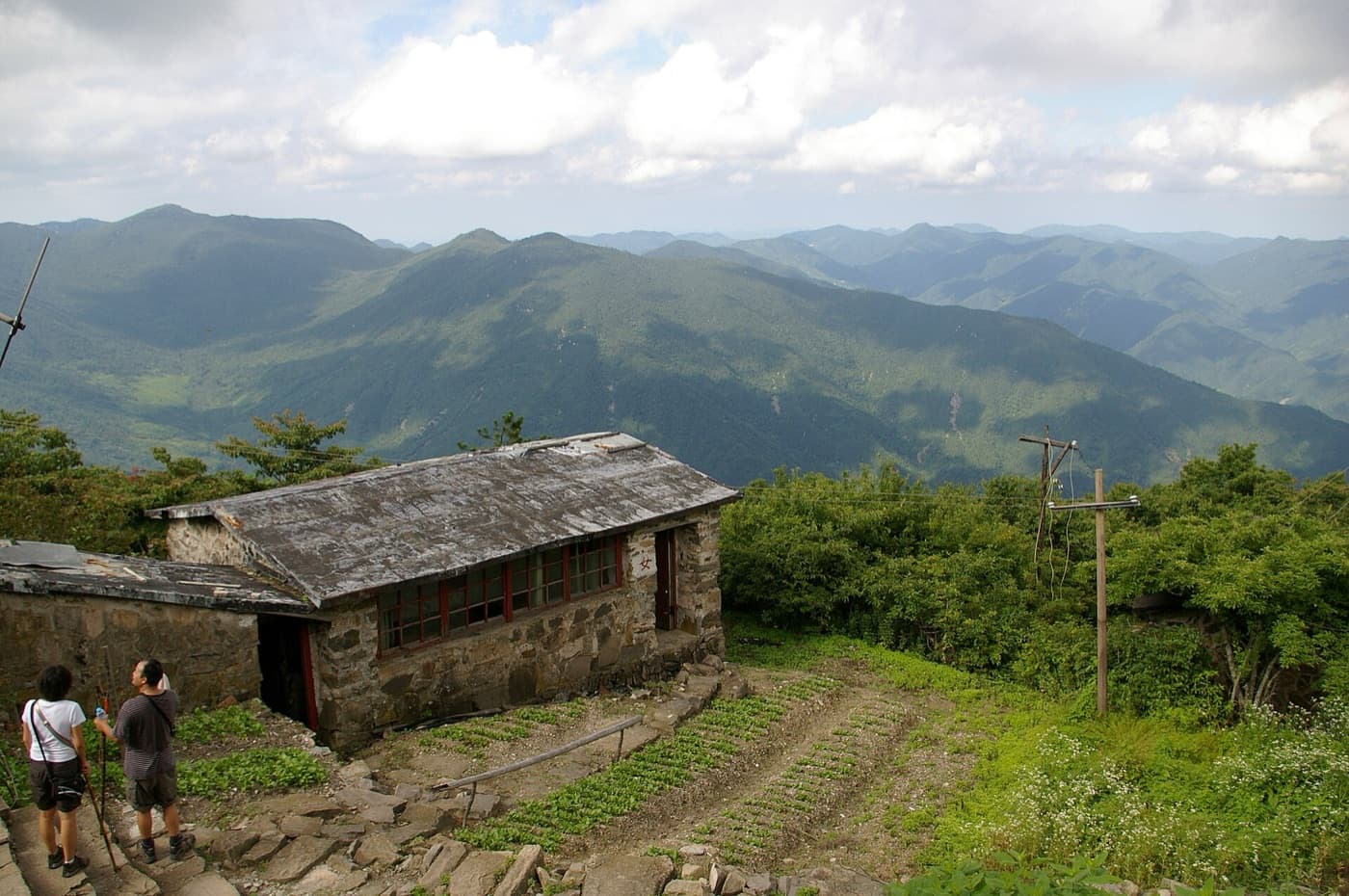
Mount Tianmu
The eastern and western summits of Mount Tianmu each hold a pool, like a pair of eyes gazing up at the sky, which gave the mountain its name. Mount Tianmu has long been praised as “the great canopy of ancient trees heard across the nine regions.” It is home to a rich variety of plants and animals, including many rare species. Its peaks and ridges are lush with ancient trees, and it features dramatic rock formations and cascading waterfalls. It is also a renowned mountain of religious significance.
Hiking & Outdoors · Nature
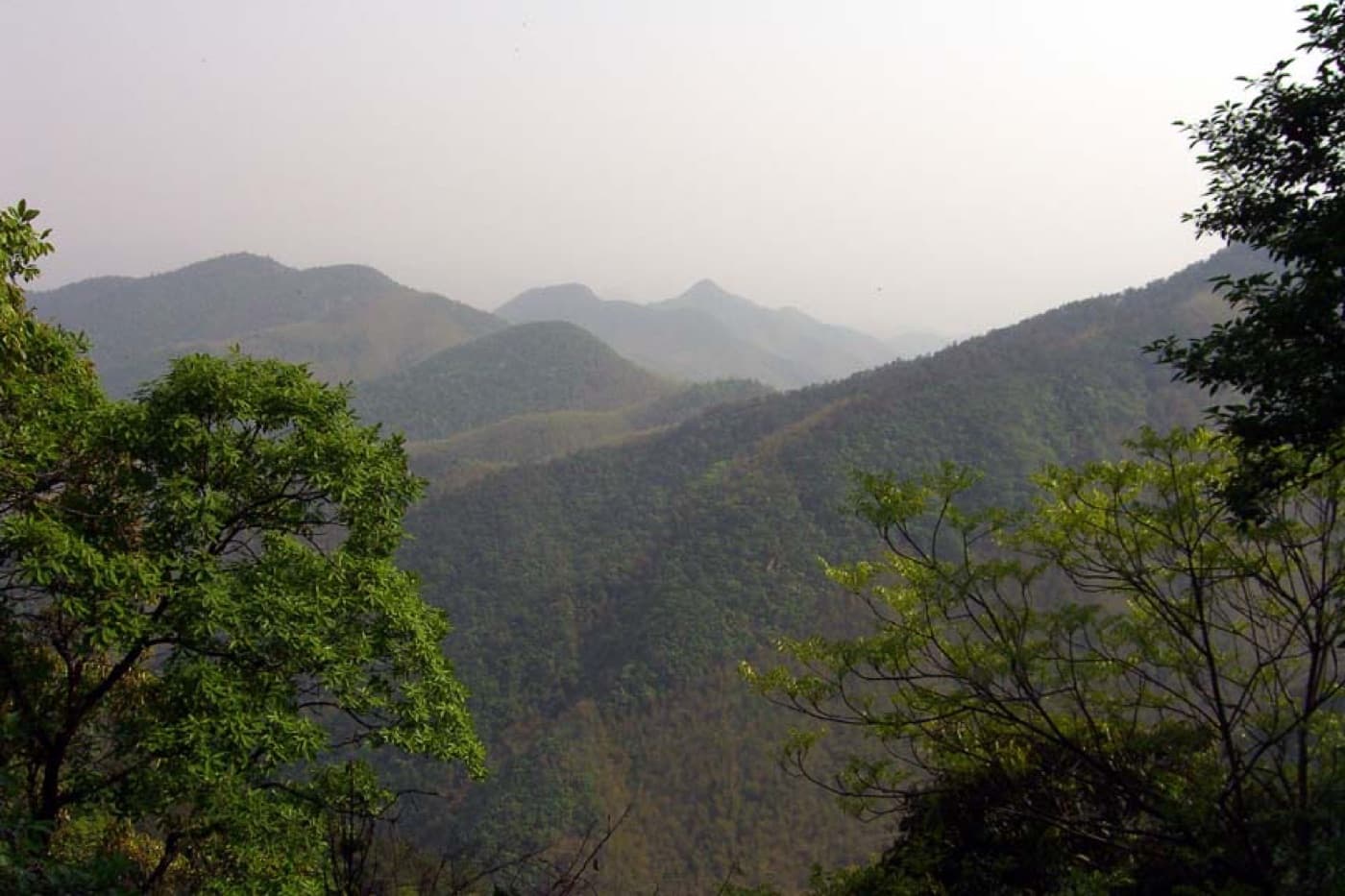
Mount Mogan
Legend has it that during the Spring and Autumn period, the master swordsmiths Ganjiang and Moye, a husband-and-wife pair from the State of Wu, threw themselves into the furnace here and forged the world-famous male and female swords. Mogan Mountain's scenery is enchanting, with the picturesque Reed Marsh Park, the quaint and tranquil Wuling Village, the thrilling Sword Pool Waterfall, and more than a hundred other sights.
1–2 days
Longmen Ancient Town
Longmen Ancient Town is said to be the hometown of Sun Quan, Emperor Wu of the Eastern Wu kingdom in the Three Kingdoms period, and its history spans more than a thousand years. Its Ming and Qing architecture has survived centuries of upheaval and war, and together with its small bridges, flowing streams and old lanes, it forms the town's distinctive scenery. Visitors can experience the folk customs of the Jiangnan region, explore the rich Sun family culture, and sample local specialties such as Wentai vermicelli, Guotai tofu and Jiangdong yuanbao. The films *The Barber* and *Dwelling in the Fuchun Mountains* were shot here.
2–4 hours
Yaolin Wonderland
Yaolin Wonderland is a fantastical cave world, attracting Chinese and international visitors with its splendid scenery of “seclusion, depth, wonder and beauty.” Its extraordinary landforms and magnificent stalactite formations are considered wonders of nature. Major highlights include the Fairy Gathering, the Penglai Palace and the Galaxy Waterfall. The cave has also yielded Eastern Han stamped pottery shards, Sui and Tang charcoal inscriptions, Five Dynasties and Northern Song coins, and Yuan dynasty celadon fragments, providing valuable material for archaeological research.
1 hour
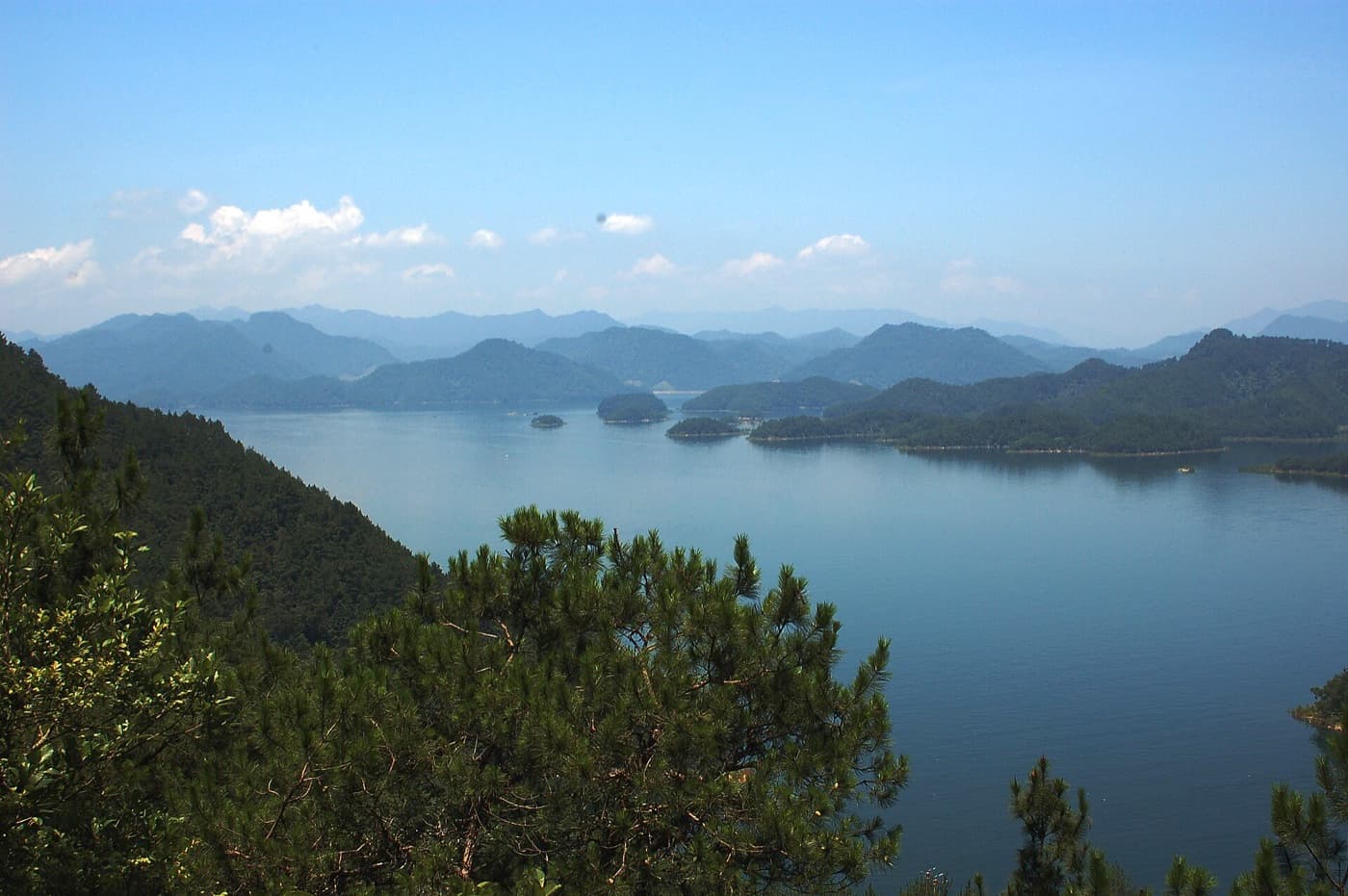
Qiandao Lake (Thousand Island Lake)
In 1959, the construction of the Xin'anjiang Hydropower Station submerged two thousand-year-old cities dating back to the Han and Tang dynasties, Shicheng (the former county seat of Suian) and Hecheng (the former county seat of Chun'an), overnight beneath the emerald waters. Over 3,000 villages and 300,000 mu of farmland have since lain dozens of metres underwater, and more than 1,000 former hilltops have become islands in the lake. This is the origin of Qiandao Lake (Thousand Island Lake). The lake has 1,078 islands, each with its own charm. In spring, islands blanketed in wildflowers look like carefree village girls; in summer, you'll long to swim and surf in the blue waters; in autumn, the red leaves call to mind the line “frost-touched leaves redder than the flowers of the second month”; in winter, snow covers the lake and hills and pines stand firm on the cliffs, a scene worthy of a Wang Wei painting.
2 days
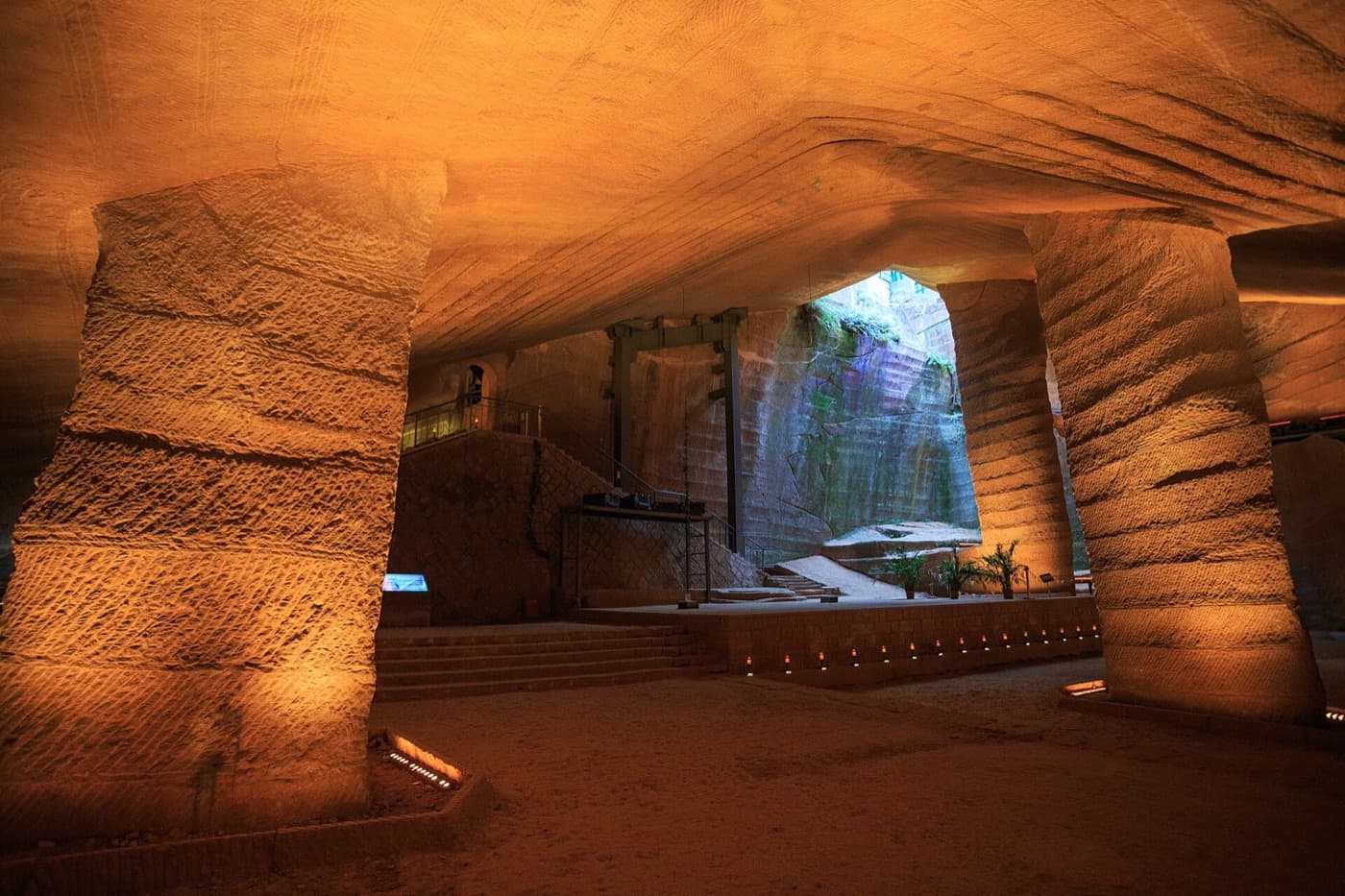
Longyou Grottoes
The vast underground man-made grottoes are truly awe-inspiring, magnificent and seemingly the work of gods. Each grotto is rectangular, shaped like an inverted dou measure, with straight walls and sharp corners, supported by thick pillars holding up the ceiling. The historical background, purpose and ancient quarrying techniques behind the grottoes remain unclear, which is why they are known as “an eternal mystery” and the “ninth wonder of the world.”
2 hours
Minjuyuan Folk Residence Garden
Whether or not you have seen the ancient villages of southern Anhui or Wuyuan, we recommend visiting for a comparison. Minjuyuan is one of only two demonstration sites in China where cultural relics were protected by relocation. Over 30 Ming and Qing dynasty buildings were moved and rebuilt here, and many are fine examples of their kind. The scenic area stages folk performances including the “She ethnic betrothal” show, the flower-rolling dragon dance, the pixiu dance, and traditional hand-made “Longyou xuan paper.”
2–3 hours
Qiantang River Tidal Bore Viewing
Around the 18th day of the eighth lunar month, the Qiantang River tidal bore can be seen from the shore: surging waves gallop toward you like a charging horse herd, fitting the ancient description “waves that rise to the sky and overturn rivers and seas, with a force that could topple mountains.” Apart from the Mid-Autumn period, the tidal bore can also be viewed on the 15th day of each lunar month.
1–2 hours
Source: China Self-Guided Travel 2025 (《中国自助游》, Tianjin Science & Technology Press, Aug 2024), pp. 1107–1159. Translated from the Chinese edition; names and prices follow the guidebook. · Plain text version