Lijiang travel guide
丽江
Wherever elderly people go about their daily lives, a town carries a palpable sense of history, the passage of time and the weathering of years. Lijiang is such a town.…
18 places · In the guidebook: pages 229–245

Lijiang, Yunnan Province · AI illustration for China Trip
Quick itinerary
Lijiang in 4 days
- Day 1
- Lijiang Old Town→
- Wanku Tower→
- Mufu Mansion→
- Sifang Square
- Day 2
- Lijiang Old Town→
- Shuhe Ancient Town→
- Baisha Mural Village→
- Dongba Pantheon Park→
- Yuhu Village→
- Li
- Day 3
- Day 4
- Lijiang→
- Tiger Leaping Gorge→
- Shangri-La
The feel of the place
- Naxi Elders
- Wherever elderly people go about their daily lives, a town carries a palpable sense of history, the passage of time and the weathering of years. Lijiang is such a town. Yet the elders who once sat in small groups in front of their doors, wearing Naxi dress and chatting in the sun, are becoming fewer and fewer on Sifang Square, as many of them have now embraced modern life.
- An Unfortified Town
- “Unfortified” refers not only to the fact that Lijiang has no city walls, but also to a state of mind. Standing among an ancient town, towering snow peaks and gently flowing clear streams, visitors instinctively slow their pace and let down their guard.
- Shops Everywhere
- Following the layout of Sifang Square, the residences were built along the water, and today they have become shops, restaurants and bars, run by owners with accents from all over China. The number of shops keeps growing, selling a dizzying array of crafts: some are local specialties, others are wholesale goods from around the world, all of which will help you remember Lijiang long after you leave.
Preparation and Information
Language
Lijiang's common languages are Mandarin and Naxi, but Lijiang locals and visitors from elsewhere alike use Mandarin.
Climate and Best Time to Visit
Lijiang's annual average temperature is 12.6–19.8℃. Winters are mild and summers cool, and temperatures change little over the year, though morning and evening temperatures can feel like a blend of spring and summer. July and August are the rainy season, when landslides can disrupt travel plans. April–May and September–October are the best times to visit, both for the weather and for the state of the plants.
Things to see

Lijiang Old Town
2–3 days · Free admission, but a ¥50 Old Town maintenance fee applies
One of the most famous towns along the Ancient Tea Horse Road, with a history of 800 to 900 years. Its wooden houses under grey tiled roofs make the Old Town a delight to wander. Standing on East Street, you can look up and see Jade Dragon Snow Mountain. During the Ming Dynasty the Old Town was known as “Dayan Xiang”, named for its resemblance to a large jade inkstone. It has served as a filming location for TV series such as *One Meter Sunshine* (一米阳光) and *Mu Mansion Saga* (木府风云).

Mu Residence
¥40 (buying the map lets you stamp a commemorative seal)
“To the north, the Forbidden City; to the south, the Mu Mansion.” The entire complex is modelled on the layout of Beijing's Forbidden City and has a commanding presence. It reflects the grandeur of Central Plains architecture of the Ming Dynasty while retaining echoes of Tang and Song architecture. The criss-crossing water channels throughout the compound showcase the traditional characteristics of the Bai and Naxi peoples.

Shuhe Ancient Town
A miniature version of Lijiang Old Town, but quieter and cosier than Lijiang itself, and especially good for lazing about and soaking up the sun. The ancient town nestles between mountains and rivers, with houses arranged in a pleasing pattern. Clear streams wind alongside the lanes through the village, and water can be channelled to wash the streets. The town was once famous for leather processing, bamboo weaving and other handicrafts. The stone slabs worn smooth by countless hooves and feet still hint at its former prosperity. It is also the birthplace of the Mu tusi (chieftain) family, where you can experience more unspoiled Naxi folk customs.
0.5–1 day · Shuhe Ancient Town charges an entrance fee, depending on group type: ¥40 per person for tour groups and self-drive travellers; free for independent travellers
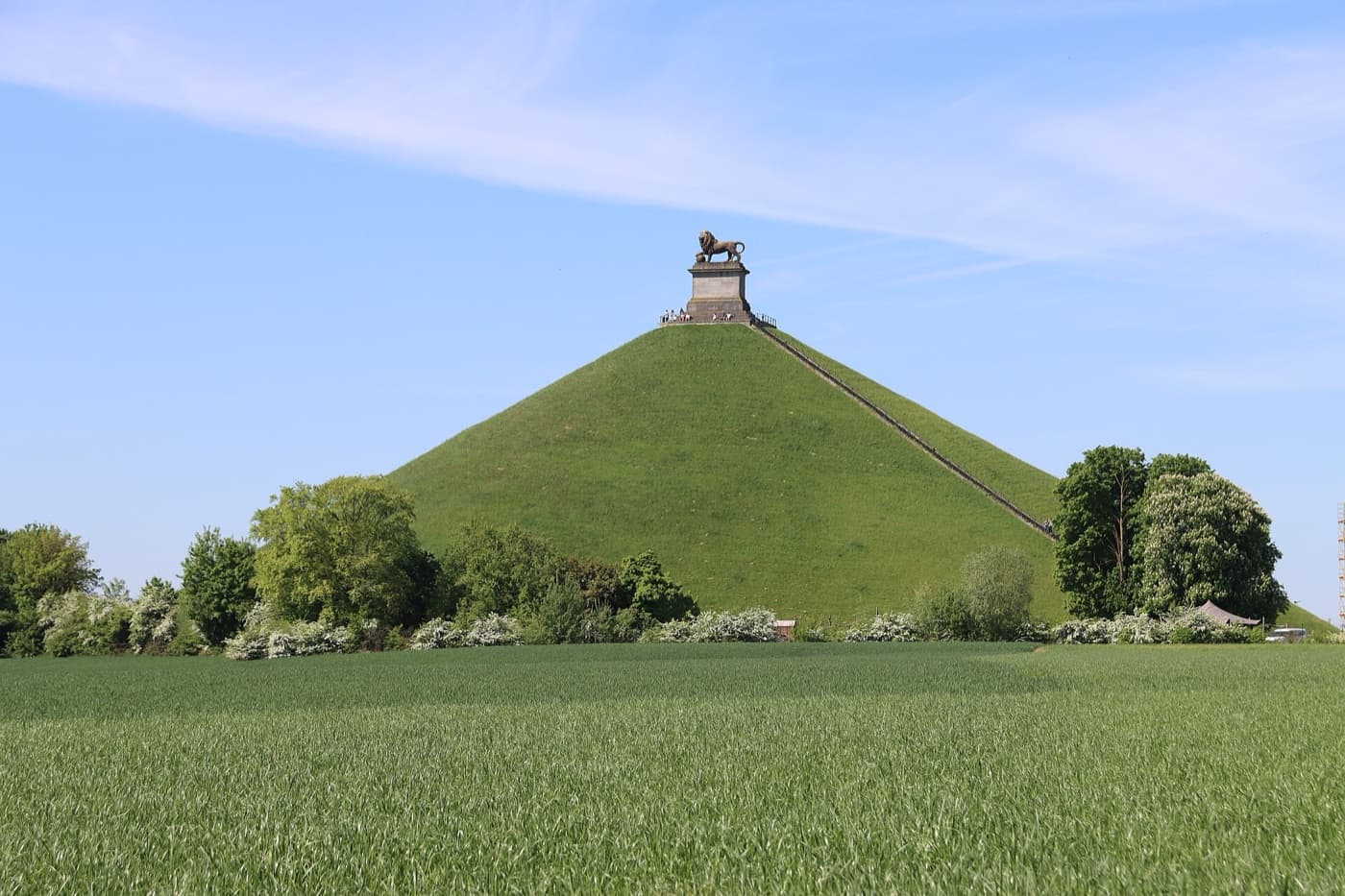
Lion Hill
Named for the mountain's resemblance to a sleeping lion. The Old Town's buildings cluster around its foot, making it the best spot to photograph the panorama of Lijiang Old Town. From Wangu Tower on the summit, you can gaze north at Jade Dragon Snow Mountain, east over the Old Town, west over Lijiang New Town and south over the rural villages.
2 hours · Wangu Tower ¥35
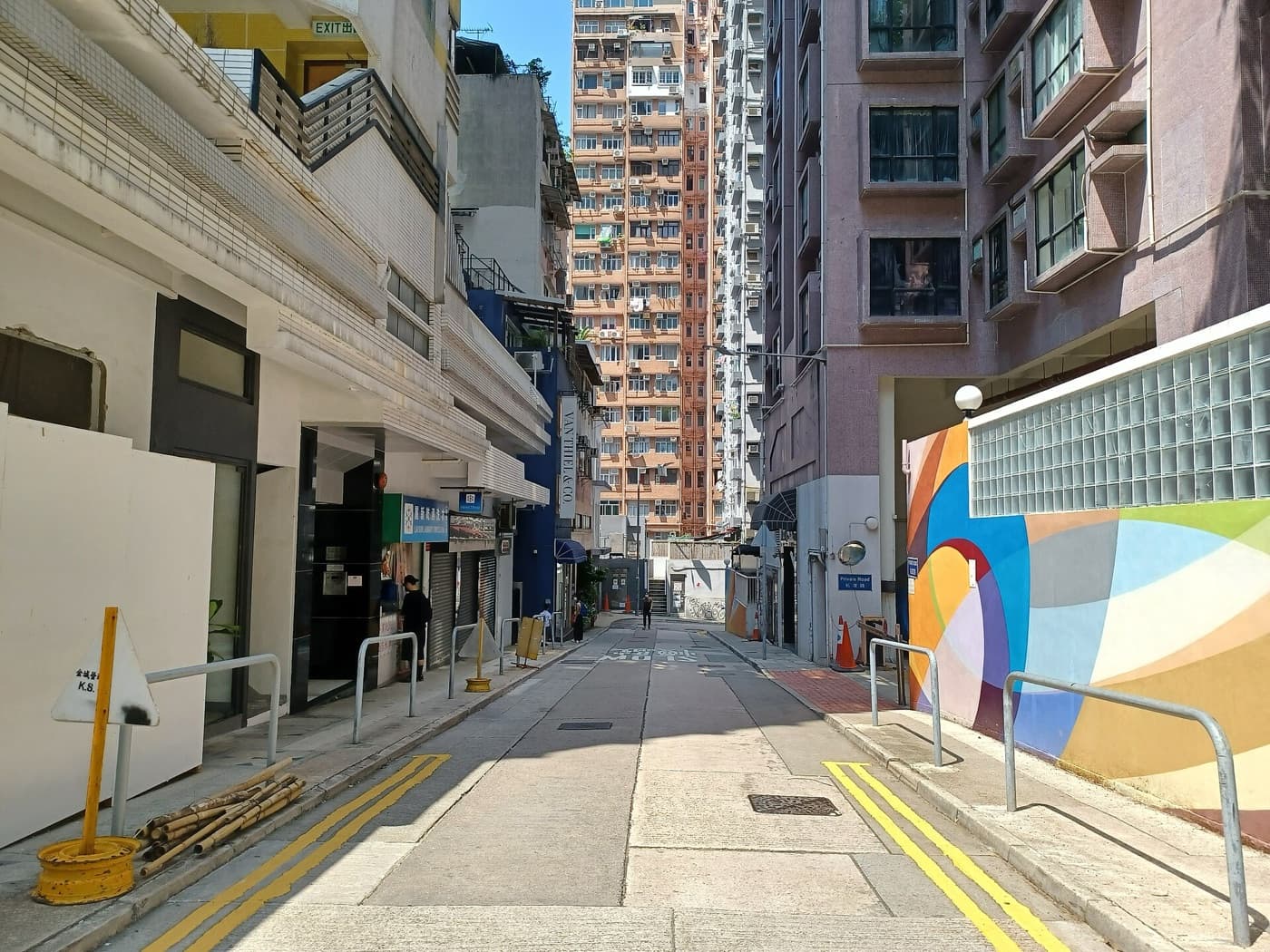
Sifang Street and Wangu Tower
Sifang Street is the central square of the Old Town and is said to be the only square in the world with a self-flushing function. Wangu Tower is the tallest building in Lijiang Old Town, offering a panoramic view of the entire Old Town.
Sifang Street 1–2 hours; Wangu Tower 0.5–1 hour · Sifang Street is free; Wangu Tower ¥35
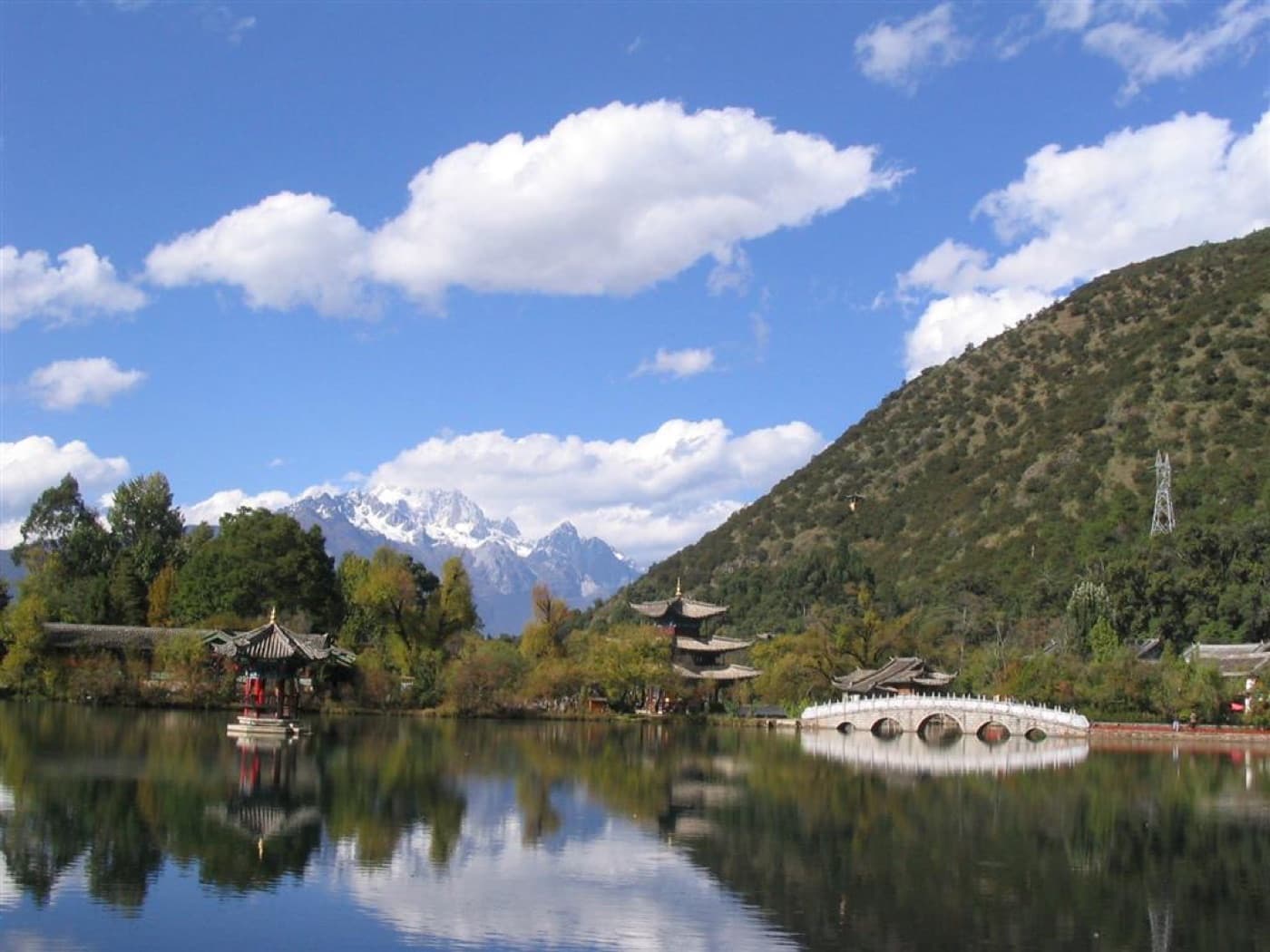
Black Dragon Pool
Black Dragon Pool is the best spot for admiring the reflection of Jade Dragon Snow Mountain. Passing through the back gate of the pool leads to the Lijiang Dongba Culture Museum, a must-visit for understanding Dongba culture.
2–3 hours · Free (entry requires a receipt for the Old Town maintenance fee)
Lijiang Romance Show Scenic Area
A living ancient tea-horse town, comprising themed zones such as Tea Horse Old Street, Lake Naco, Snow Mountain Beach and ethnic villages. It offers a wide range of food and showcases Lijiang's thousand-year culture and history. The scenic area stages a rotating lineup of spectacular performances, including the large-scale song-and-dance show *Lijiang Romance*, the large-scale live-action show *Lijiang Love Song*, the immersive drama *The Great Earthquake*, *Mu Mansion Seeks a Son-in-Law*, and *Guozhuang Carnival*.
1–2 hours · Ticket to the *Lijiang Romance* show: ¥280
Dongba Pantheon Park
A theme park showcasing and promoting the ancient and mysterious Dongba culture. The park holds nearly a thousand Naxi wooden deity figures in varied poses, along with totem pillars and more, offering a striking visual experience and inviting reflection. At the Dongba Pantheon Park, visitors can also see Dongba script, “the only living pictographic script in the world”, and experience mysterious Dongba rituals and dances.
1–2 hours · ¥15
Baisha Village Murals
This was once the political, economic and cultural centre of Lijiang. Baisha Frescoes absorbed the fine, refined brushwork of Han Chinese painting and blended the flowing, vivid style of Tibetan Buddhist painting, while retaining the boldness of the Naxi character, making them treasures of mural art. Fifty-five Baisha frescoes survive today. The Liuli Hall, Dabaoji Palace and Dajue Palace are all national key cultural heritage protection units.
1 hour · ¥20
Lashihai Wetland Park
Yunnan's first nature reserve named after a “wetland”, where large flocks of migratory birds arrive to winter each autumn. December to February is the best birdwatching season.
2–3 hours · ¥30
Wenhai Village
Once an important stretch of the Yunnan–Tibet section of the Ancient Tea Horse Road, where caravans often stopped to let their mules and horses graze. On the south shore of Wenhai Lake stands a stone pillar, said to be the transformed staff of Karmapa, the Tibetan Buddhist leader. In late spring, azaleas blanket the hillsides in a truly spectacular sight.
2–4 hours · Free
Getting there & around
Getting There
The railway from Kunming to Lijiang is now complete, making train travel the most convenient way to reach Lijiang, with the route passing through Dali. The railway linking Lijiang with Shangri-La is under active construction.
By Air
Lijiang Sanyi Airport is about 30 km from the city centre. A civil aviation shuttle bus runs between the airport and the urban area, with the terminus at the courtyard of the Lijiang Civil Aviation Blue Sky Hotel in New Town. The journey takes about 50 minutes and the fare is ¥20.
By Train
By Road
Lijiang has two main long-distance bus stations: Lijiang Passenger Station (New Station) and Lijiang Express Bus Station.
Long-Distance Bus Stations and Destinations
Getting Around
Buses
Buses within Lijiang mainly serve the major sights, and the fare is usually ¥1.
Taxis
Lijiang's main taxi stands are near Yulong Bridge, at the junction of the Old Town and New Town, and around the Dongba Cultural International Exchange Center. Some taxis also offer charter services to sights such as Yunshanping and Yufeng Temple.
Lijiang Silverware
The Old Town now has more silver shops than anything else, but nine or ten out of ten of the sellers are from Heqing in Dali, because Lijiang's traditional craft is copperware, not silverware. Copperware can be bought at Zhongyi Market in the Old Town.
Tea-Horse Ancient Road
In ancient Tibet, the local population relied mainly on farming and herding, eating plenty of meat and dairy but few vegetables, so tea, rich in vitamins, became a necessity for highland residents. On the steep mountain roads of northwest Yunnan, horses were the only means of transport, and they carved out the Tea-Horse Ancient Road, which crosses the Hengduan, Gangdise and Himalayan mountain ranges and fords the Jinsha, Nu, Lancang and Yarlung Tsangpo rivers. It is the longest-distance ancient trade route in the world, with a total length of over 10,000 li (about 5,000 km). The Tea-Horse Road has two main routes. One starts from the Pu'er tea-producing areas of Yunnan and runs through Xiaguan (Dali), Lijiang, Diqing and Deqen to Mangkang, Qamdo, Bomi and Lhasa in Tibet, then branches out to Zedang, Gyantse and Yadong in southern Tibet, and on to Myanmar and India. The other starts from Dajianlu (Ya'an) in Sichuan and runs through Luding, Kangding, Batang and Qamdo to Lhasa, then to Shigatse in southern Tibet, and on to Nepal and India. Lijiang was the most important market town on the Yunnan–Tibet Tea-Horse Road.
Old Town Maintenance Fee
On 4 December 1997, Lijiang Old Town was inscribed on the UNESCO World Heritage List. The Old Town charges visitors a maintenance fee. Within the Jade Dragon Snow Mountain scenic area, there are checkpoints where tickets are checked and top-ups sold, and tickets can also be bought at the Old Town scenic area, Black Dragon Pool and Jade Dragon Snow Mountain.
Lijiang Railway Station
Lijiang Railway Station- Address:
- L2-2, Yushuifang Commercial Street, Minzhu Road, Old Town District
Eat & drink
“Lijiang baba and butter tea” are widely enjoyed across Yunnan, while pipa pork and chicken-bean jelly are also signature Lijiang dishes. “Three-layer water” is the Naxi people's answer to the Manchu-Han Feast.
Specialty Food Streets
Rong Po Restaurant on Shuangshi Duan, Xinhua Street, Old Town, is famous for its “three-layer water.” A small shop near Mufu Mansion specialises in Lijiang baba and is well known locally. Near Baisui Archway there is a small shop that wins repeat customers with its chicken-bean jelly. Xinyi Street is a short street that people call the “Snack Street,” with a concentration of many kinds of snacks. “Mama Fu” and “97” are large restaurants with many Chinese and foreign regulars.
Jianghu Bar
Recommended Places to EatHidden away from the “jianghu” outside, this fire-pit bar uses thick soundproof walls to shut out the folk-style atmosphere within, where singers belt out folk songs about faraway places.
- Address:
- 41 Wangjiazhuang Lane, Wuyi Street, Old Town District
- Phone:
- 15126096262
Amayi Naxi Eatery
Recommended Places to EatA long-established restaurant in Lijiang where you can try many local snacks, such as chicken-bean jelly and grilled fish.
- Address:
- 18 Xingren Xiaduan, Wuyi Street, Old Town District (next to Xiao Shiqiao)
- Phone:
- 0888-5309588
No. 88 Snacks
Recommended Places to EatArguably Lijiang's most popular street stall, it has become diners' first choice thanks to its low prices and consistent flavour.
- Address:
- 88 Xingren Shangduan, Wuyi Street, Old Town District
- Phone:
- 0888-8888676
Dianchu Restaurant
Recommended Places to EatXiao guoba Naxi cuisine. Highly rated in Lijiang rankings, with delicious dishes and excellent service.
- Address:
- Inside Shipotian, 18 Zhenxing Lane, Wuyi Street, Old Town (middle section of Zhenxing Lane)
- Phone:
- 15608880033
Where to stay
In this small town, hotels, guesthouses, inns and residences are all available, from the five-star Lijiang Guanfang Hotel to guesthouses at ¥20 a night. Many visitors choose to stay on Sifang Square in order to experience the daily life of Naxi families in the Old Town's residences.
Guiye Folk Ideal Homestay
Recommended AccommodationA small courtyard with a tranquil setting and abundant floral decoration. Sunbathing and drinking tea in the courtyard is very relaxing.
- Address:
- 36 Chongren Lane
- Phone:
- 18869027242
Shopping
Many visitors like to buy the carved wooden plates sold by street-side shops as gifts. In fact, spirulina is a plant unique to Chenghai Lake near Lijiang, and Dongba tie-dyeing and handwoven cloth are also truly homegrown, so they are worth a try.
Shawls
Lijiang's large day-night temperature gaps make shawls a favourite among young women. Shops often claim their shawls are handwoven, but most are machine-woven, and few people can tell the difference, so there is no need to overspend chasing a handwoven one. You can usually bargain the price down to ¥20–40. Shawls are also a little cheaper at the visitor centre in Shuhe.
Old Town Bells
The Old Town has many shops selling bells, and two are the most famous. One is the “Bunong bell” sold at the shop beside the large stone. It is said to have been inspired by the author's hiking along the Tea-Horse Ancient Road. Because it conveys the loneliness, drifting and solitude of the modern wanderer's dream, it has become a famous Lijiang souvenir. The other uses wooden bells to express Dongba culture. The antique-looking wooden bell has been named the “muyu bell” (wooden fish bell) by its owner.
Nightlife
Naxi ancient music concerts and bars are the main components of Lijiang's nightlife. Sifang Square has many Naxi ancient music ensembles (Naxi ancient music concerts: A-grade ticket ¥160, B-grade ¥140, C-grade ¥120). You can also enjoy the large-scale ethnic song-and-dance evening show “Lishui Jinsha” (Golden Sands of Lijiang) at the International Ethnic Culture Exchange Center (adult ticket ¥280, child ticket ¥200).
Bars
Wooden House Story, Cherry Blossom House and Camel Bar are the best known, while Yuanyin is also a distinctive bar.
Day trips & beyond
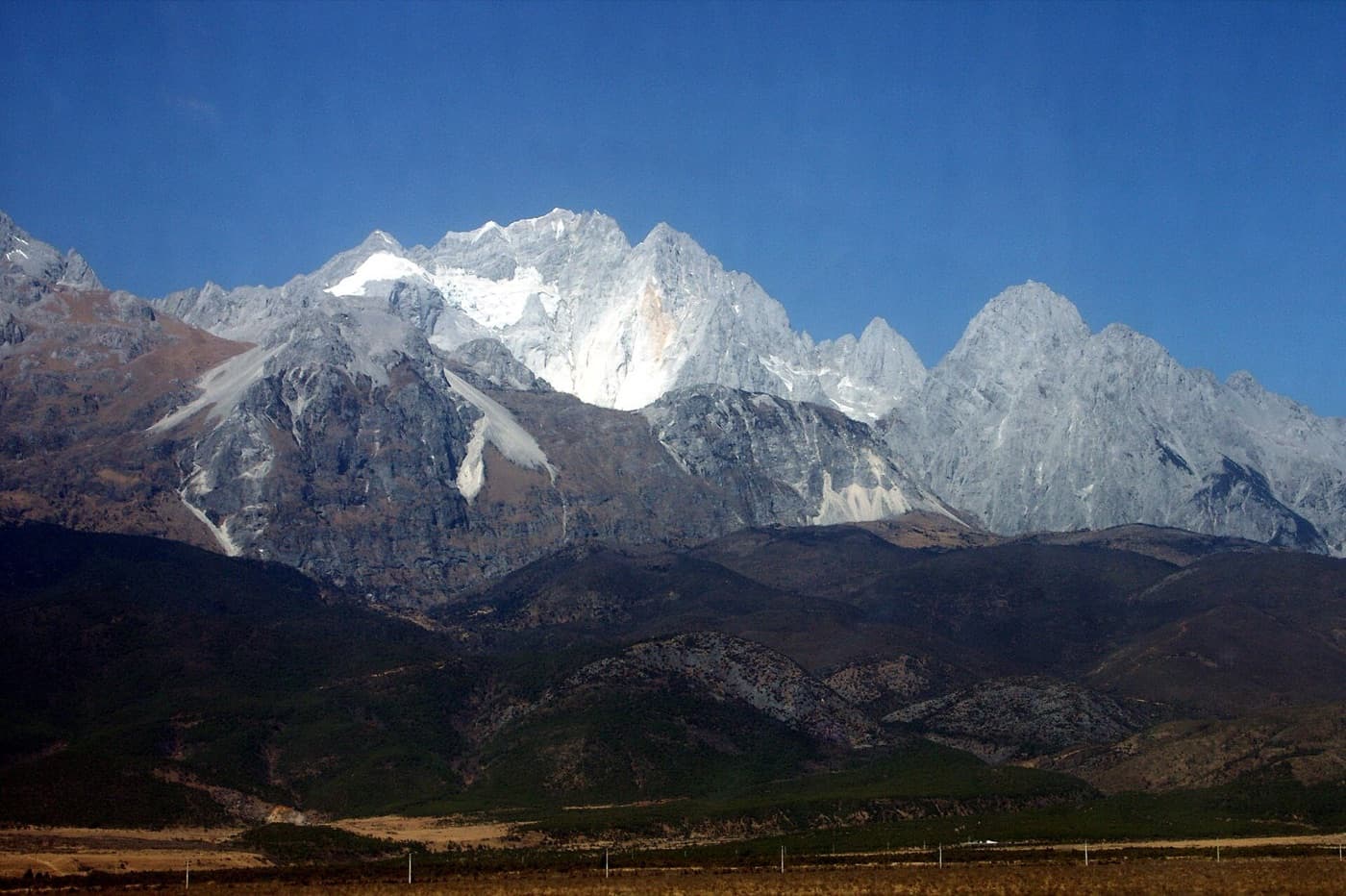
Jade Dragon Snow Mountain
The sacred mountain in the hearts of the Naxi people, constantly wreathed in clouds and mist. The snow peaks are majestic yet graceful, and as the seasons change, azaleas blooming at successive altitudes create the mountain's most beautiful scenery. The scenic area includes Yushuizhai, the Glacier Park, Blue Moon Valley and more. The Blue Moon Valley Square also hosts the large-scale live show *Impression Lijiang*.
0.5–1 day
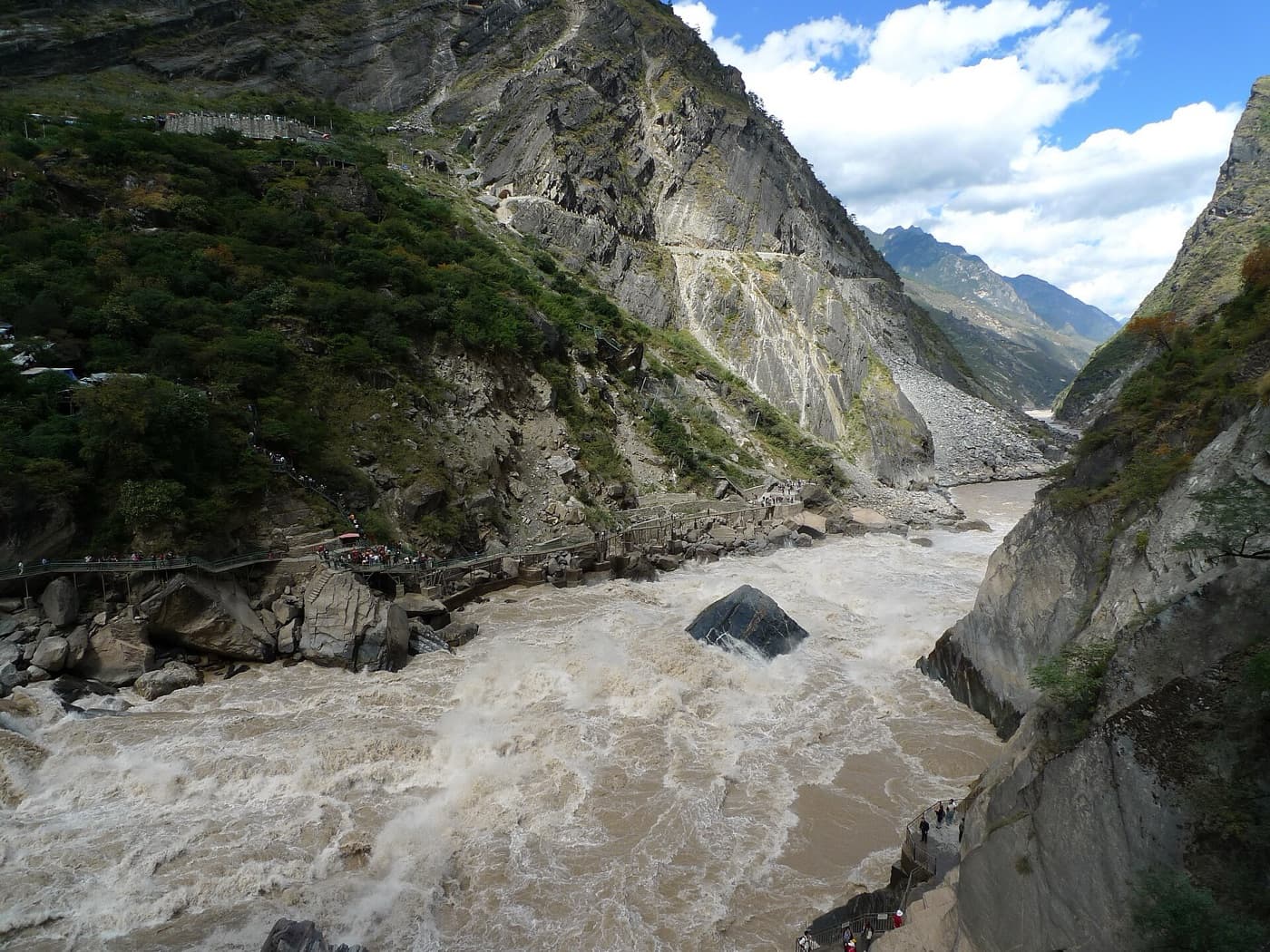
Tiger Leaping Gorge
Tiger Leaping Gorge is one of the world's most famous deep river canyons, renowned for its wild, perilous and majestic scenery. It is divided into three sections (Upper, Middle and Lower Tiger Leaping Gorge) with 18 dangerous rapids in total. The river flows between the snow-capped peaks of Jade Dragon and Haba, with an elevation difference of more than 3,900 metres, making for a truly awe-inspiring sight. Upper Tiger Leaping Gorge is 9,000 metres from Tiger Leaping Gorge Town and is the narrowest stretch of the river. The middle section includes a fairly hazardous stretch of trail. Lower Tiger Leaping Gorge connects to Daju in Lijiang. Hiking Tiger Leaping Gorge is a dream for many travellers, as the scenery is even more spectacular when walking upstream against the current, and it is a real test of oneself. In fact, the hike is not as difficult as it might seem: good fitness and determination are all it takes, and endless scenery awaits beyond every steep peak.
0.5–1 day
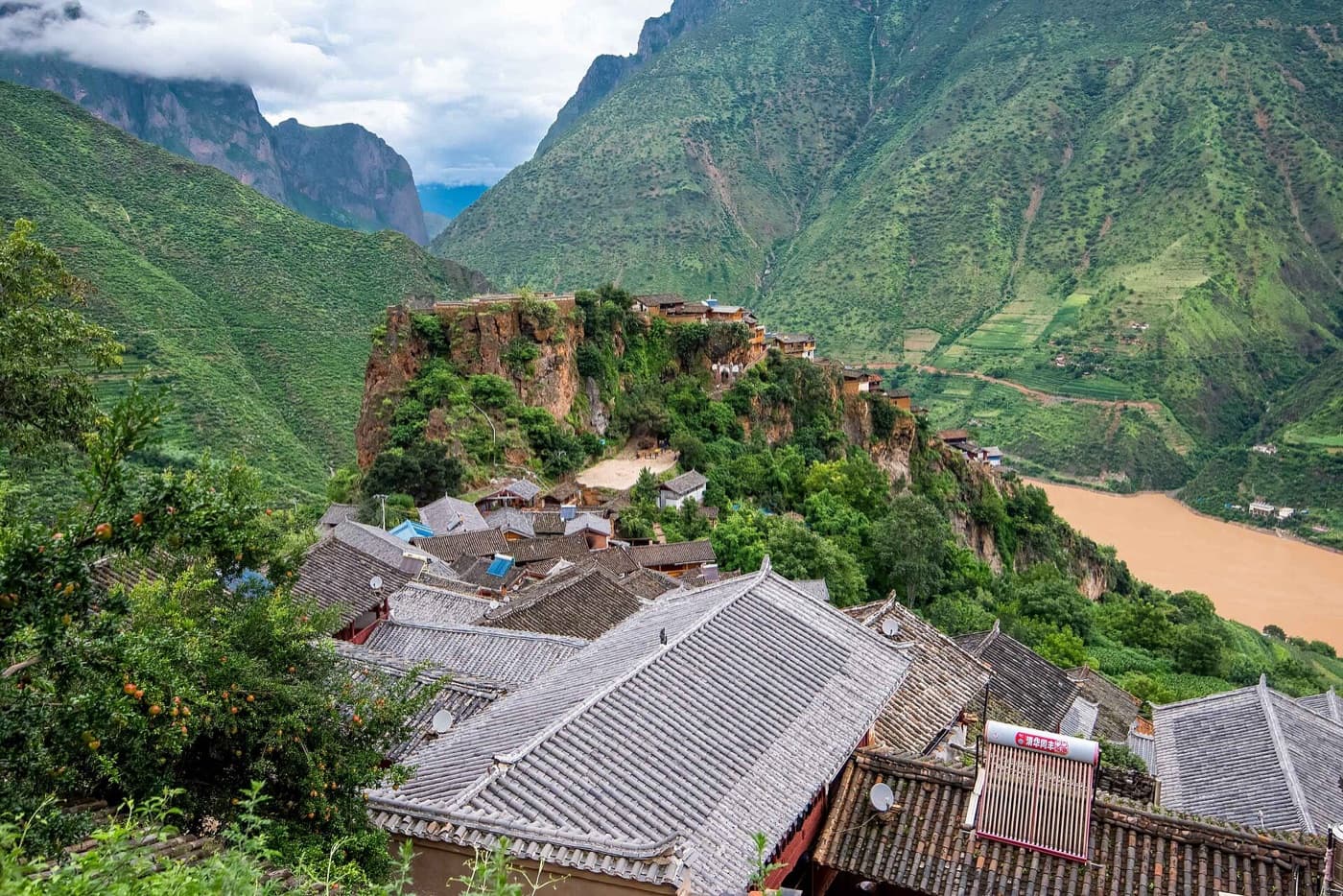
Baoshan Stone Town
Baoshan Stone Town takes its name from the fact that all of its more than 100 local households live on a single mushroom-shaped boulder. Cliffs and sheer rock walls surround the town on three sides, and on the fourth side it drops straight down to the Jinsha River. The only passages are the northern and southern stone gates, making it a true natural fortress. What is especially fascinating is that the stoves, water vats and even the beds here are all carved from stone.
2–3 hours
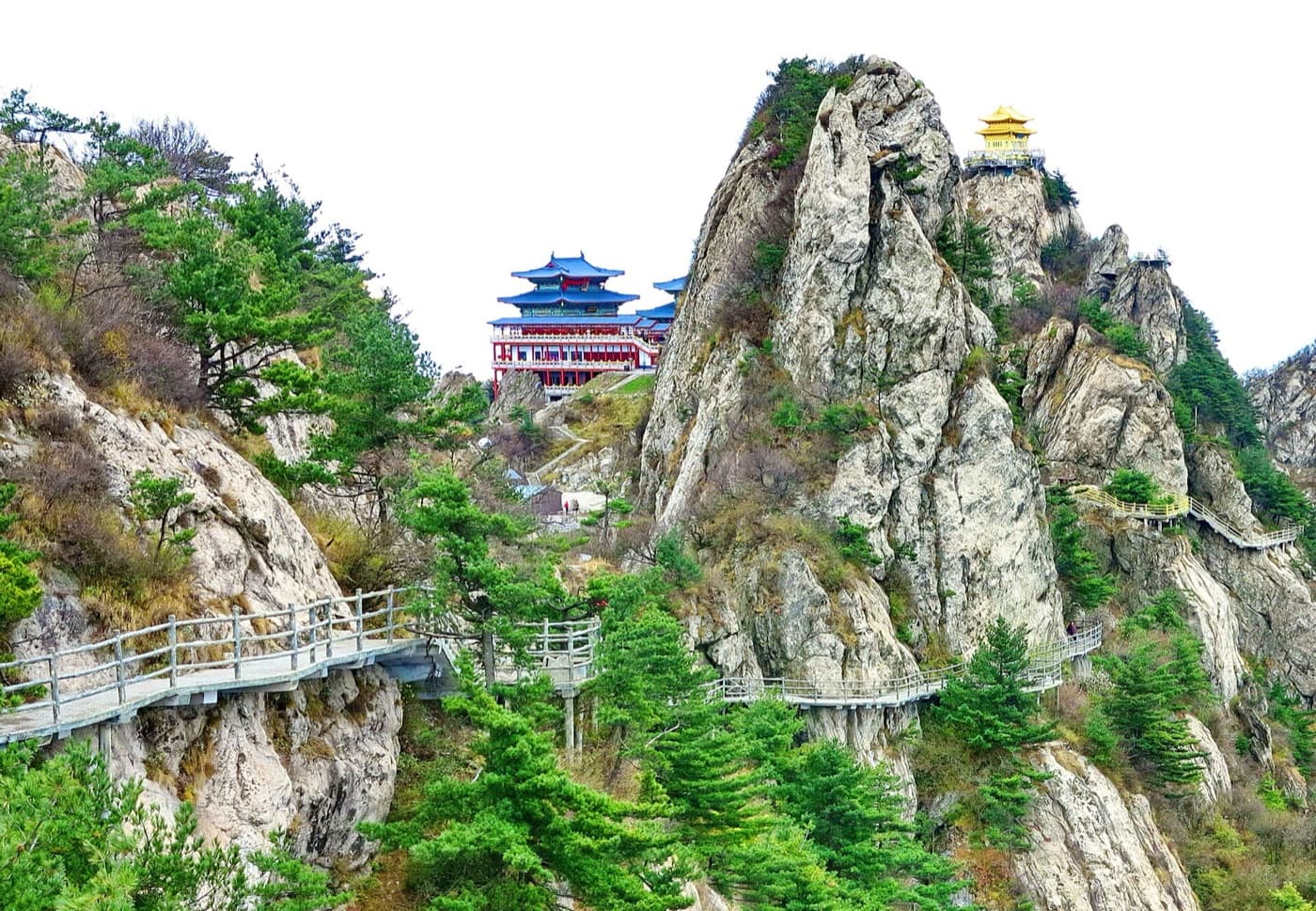
Laojunshan Mountain
Laojun Mountain is known as the “Ancestor of All Mountains in Yunnan”, its name deriving from the legend that Taishang Laojun, the Taoist deity, once refined elixirs here. Its natural scenery is dominated by alpine meadows, lakes, wildflowers and streams, and it is one of the main components of the Three Parallel Rivers Scenic Area. The area contains the largest and most fully developed Danxia landform in China, which hiking enthusiasts should not miss.
1–2 days
Shigu Town (First Bend of the Yangtze River)
The town is named after a drum-shaped stone stele carved from white marble. Where the Yangtze River is blocked by the Hailuo cliffs, it makes a sharp V-shaped turn and then flows northeast, forming the “First Bend of the Yangtze River”. The sight of the Yangtze (Jinsha River), Lancang River and Nu River flowing side by side is extremely rare anywhere in the world.
3–5 hours
Yuhu Village
Yuhu Village, also known as “Xuesong Village”, was home to the Austrian-American Joseph Rock from 1922 to 1949. During this time he wrote a large number of articles about Lijiang for the American magazine National Geographic, and his former residence is still preserved here today. The Jade Pillar Reaching the Sky, to the southwest, rises to around 2,800 metres above sea level. Its main attractions include the Giant Rock with Inscriptions, Prince's Cave, Guanyin Rock, Xuesong Hermitage, a thousand-year-old tree, and the upper and lower Deep Pool Waterfalls.
3–5 hours
Blue Moon Valley
A deep valley formed by the melting of snow and glacier ice. On sunny days the water appears blue, and the valley is crescent-shaped. Seen from afar, it looks like a blue moon nestled at the foot of Jade Dragon Snow Mountain, hence the name Blue Moon Valley.
3–4 hours
Source: China Self-Guided Travel 2025 (《中国自助游》, Tianjin Science & Technology Press, Aug 2024), pp. 229–245. Translated from the Chinese edition; names and prices follow the guidebook. · Plain text version