Baisha Village Murals
This was once the political, economic and cultural centre of Lijiang. Baisha Frescoes absorbed the fine, refined brushwork of Han Chinese painting and blended the flowing,…
Baisha Village Murals, Lijiang
Key facts
- Admission
- ¥20
- Opening hours
- 8:30—18:00
- Time needed
- 1 hour
- Getting there
- Near the Baisha Township People's Government (bus stop)
- Guidebook rating
- 3 / 5
From China Self Guided Travel 2025, page 236. Open in Google Maps
About Baisha Village Murals
This was once the political, economic and cultural centre of Lijiang. Baisha Frescoes absorbed the fine, refined brushwork of Han Chinese painting and blended the flowing, vivid style of Tibetan Buddhist painting, while retaining the boldness of the Naxi character, making them treasures of mural art. Fifty-five Baisha frescoes survive today. The Liuli Hall, Dabaoji Palace and Dajue Palace are all national key cultural heritage protection units.
Frequently asked questions
How much does Baisha Village Murals cost?
Admission to Baisha Village Murals is ¥20, as listed in the 2025 guidebook. Prices can change; check the official channel before you go.
What are the opening hours of Baisha Village Murals?
Baisha Village Murals is open 8:30—18:00.
How do I get to Baisha Village Murals?
Near the Baisha Township People's Government (bus stop)
How long should I spend at Baisha Village Murals?
Plan on 1 hour for Baisha Village Murals.
Where is Baisha Village Murals?
Baisha Village Murals is in Lijiang, Yunnan Province, in the Southwest of China.
More places in Lijiang

Shuhe Ancient Town
A miniature version of Lijiang Old Town, but quieter and cosier than Lijiang itself, and especially good for lazing about and soaking up the sun. The ancient town nestles between mountains and rivers, with houses arranged in a pleasing pattern. Clear streams wind alongside the lanes through the village, and water can be channelled to wash the streets. The town was once famous for leather processing, bamboo weaving and other handicrafts. The stone slabs worn smooth by countless hooves and feet still hint at its former prosperity. It is also the birthplace of the Mu tusi (chieftain) family, where you can experience more unspoiled Naxi folk customs.
Shuhe Ancient Town charges an entrance fee, depending on group type: ¥40 per person for tour groups and self-drive travellers; free for independent travellers · 0.5–1 day

Mu Residence
“To the north, the Forbidden City; to the south, the Mu Mansion.” The entire complex is modelled on the layout of Beijing's Forbidden City and has a commanding presence. It reflects the grandeur of Central Plains architecture of the Ming Dynasty while retaining echoes of Tang and Song architecture. The criss-crossing water channels throughout the compound showcase the traditional characteristics of the Bai and Naxi peoples.
¥40 (buying the map lets you stamp a commemorative seal)

Lijiang Old Town
One of the most famous towns along the Ancient Tea Horse Road, with a history of 800 to 900 years. Its wooden houses under grey tiled roofs make the Old Town a delight to wander. Standing on East Street, you can look up and see Jade Dragon Snow Mountain. During the Ming Dynasty the Old Town was known as “Dayan Xiang”, named for its resemblance to a large jade inkstone. It has served as a filming location for TV series such as *One Meter Sunshine* (一米阳光) and *Mu Mansion Saga* (木府风云).
Free admission, but a ¥50 Old Town maintenance fee applies · 2–3 days
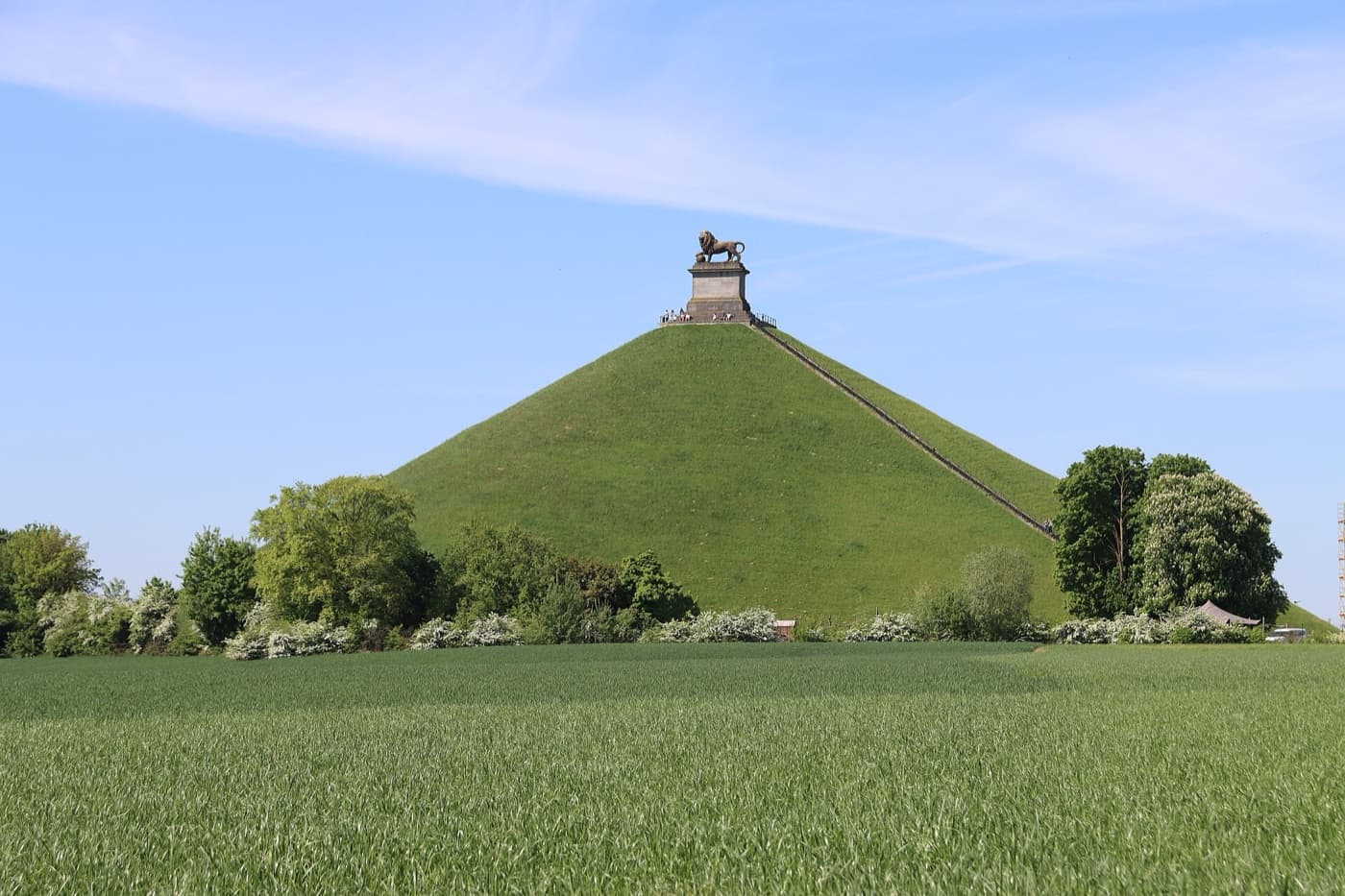
Lion Hill
Named for the mountain's resemblance to a sleeping lion. The Old Town's buildings cluster around its foot, making it the best spot to photograph the panorama of Lijiang Old Town. From Wangu Tower on the summit, you can gaze north at Jade Dragon Snow Mountain, east over the Old Town, west over Lijiang New Town and south over the rural villages.
Wangu Tower ¥35 · 2 hours
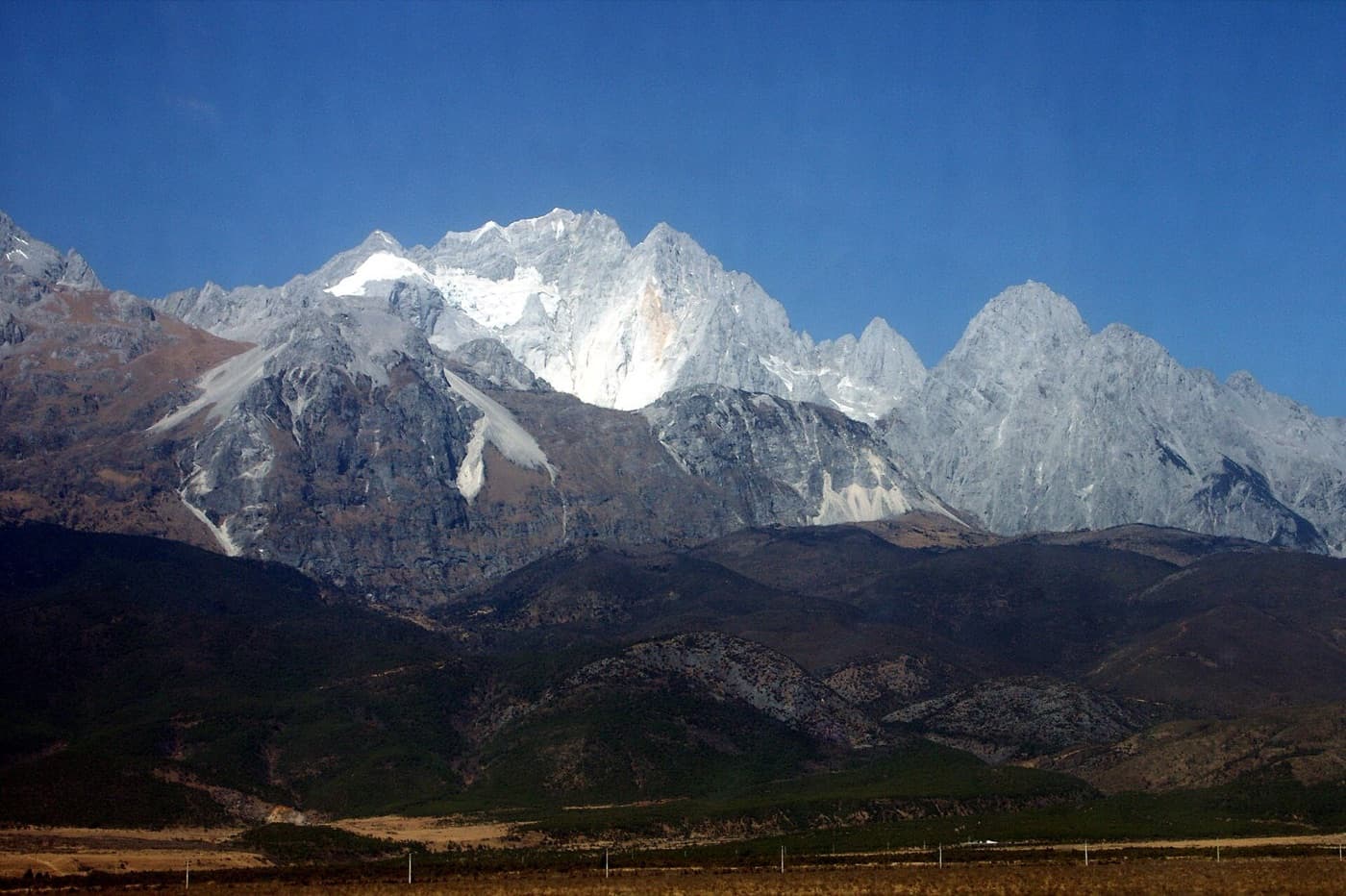
Jade Dragon Snow Mountain
The sacred mountain in the hearts of the Naxi people, constantly wreathed in clouds and mist. The snow peaks are majestic yet graceful, and as the seasons change, azaleas blooming at successive altitudes create the mountain's most beautiful scenery. The scenic area includes Yushuizhai, the Glacier Park, Blue Moon Valley and more. The Blue Moon Valley Square also hosts the large-scale live show *Impression Lijiang*.
¥100 (excludes Impression Lijiang, the eco-shuttle and the cable car); round-trip cable car ¥200 · 0.5–1 day
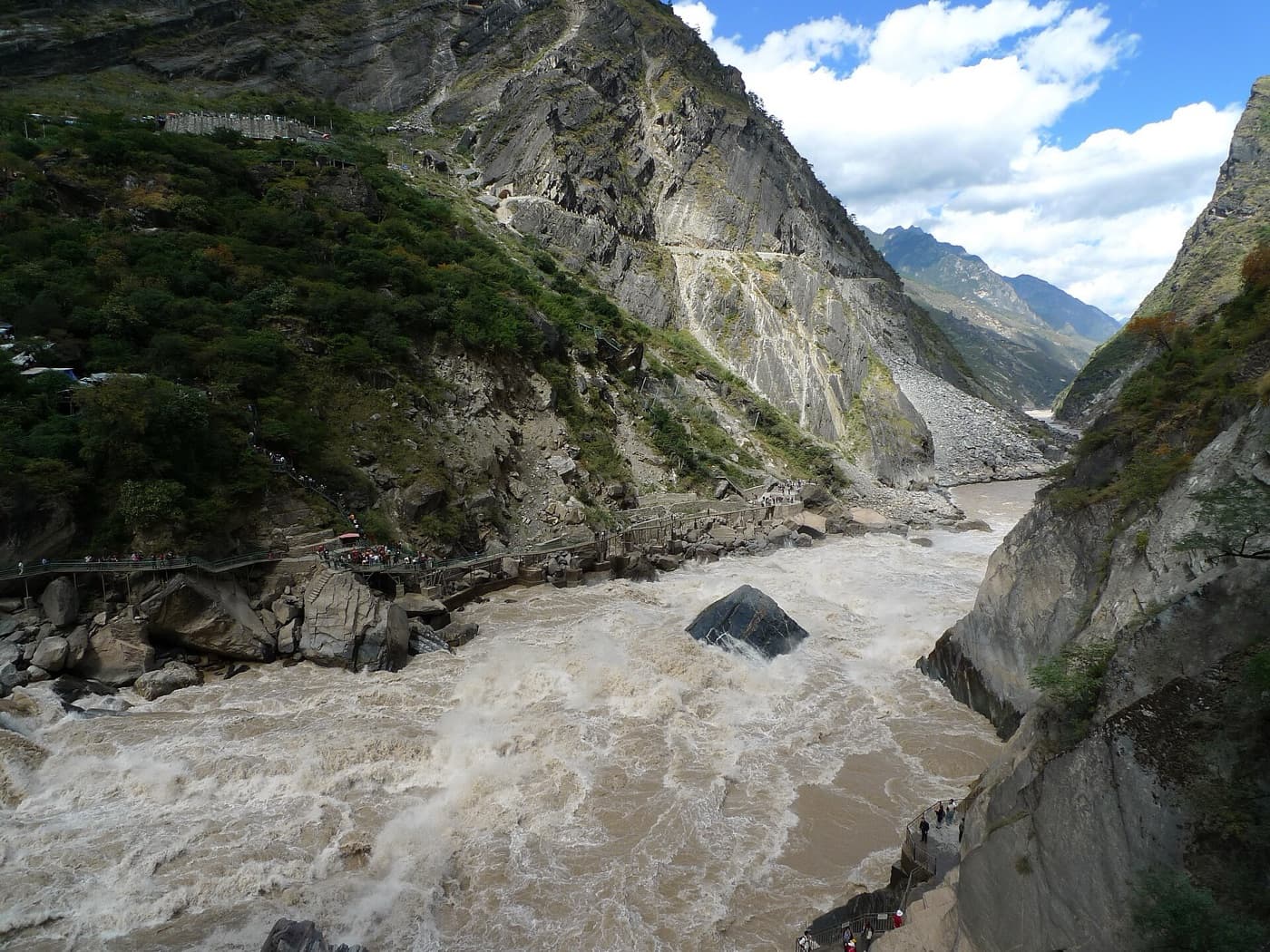
Tiger Leaping Gorge
Tiger Leaping Gorge is one of the world's most famous deep river canyons, renowned for its wild, perilous and majestic scenery. It is divided into three sections (Upper, Middle and Lower Tiger Leaping Gorge) with 18 dangerous rapids in total. The river flows between the snow-capped peaks of Jade Dragon and Haba, with an elevation difference of more than 3,900 metres, making for a truly awe-inspiring sight. Upper Tiger Leaping Gorge is 9,000 metres from Tiger Leaping Gorge Town and is the narrowest stretch of the river. The middle section includes a fairly hazardous stretch of trail. Lower Tiger Leaping Gorge connects to Daju in Lijiang. Hiking Tiger Leaping Gorge is a dream for many travellers, as the scenery is even more spectacular when walking upstream against the current, and it is a real test of oneself. In fact, the hike is not as difficult as it might seem: good fitness and determination are all it takes, and endless scenery awaits beyond every steep peak.
¥45 · 0.5–1 day