Blue Moon Valley
A deep valley formed by the melting of snow and glacier ice. On sunny days the water appears blue, and the valley is crescent-shaped. Seen from afar,…
Blue Moon Valley, Lijiang
Key facts
- Admission
- Free
- Opening hours
- 8:00—16:00
- Time needed
- 3–4 hours
- Getting there
- Near Snow Mountain Junction (bus stop)
- Guidebook rating
- 3 / 5
From China Self Guided Travel 2025, page 244. Open in Google Maps
About Blue Moon Valley
A deep valley formed by the melting of snow and glacier ice. On sunny days the water appears blue, and the valley is crescent-shaped. Seen from afar, it looks like a blue moon nestled at the foot of Jade Dragon Snow Mountain, hence the name Blue Moon Valley.
Frequently asked questions
How much does Blue Moon Valley cost?
Admission to Blue Moon Valley is Free, as listed in the 2025 guidebook. Prices can change; check the official channel before you go.
What are the opening hours of Blue Moon Valley?
Blue Moon Valley is open 8:00—16:00.
How do I get to Blue Moon Valley?
Near Snow Mountain Junction (bus stop)
How long should I spend at Blue Moon Valley?
Plan on 3–4 hours for Blue Moon Valley.
Where is Blue Moon Valley?
Blue Moon Valley is in Lijiang, Yunnan Province, in the Southwest of China. Snow Mountain Scenic Area, Yulong Naxi Autonomous County, Lijiang City
More places in Lijiang

Shuhe Ancient Town
A miniature version of Lijiang Old Town, but quieter and cosier than Lijiang itself, and especially good for lazing about and soaking up the sun. The ancient town nestles between mountains and rivers, with houses arranged in a pleasing pattern. Clear streams wind alongside the lanes through the village, and water can be channelled to wash the streets. The town was once famous for leather processing, bamboo weaving and other handicrafts. The stone slabs worn smooth by countless hooves and feet still hint at its former prosperity. It is also the birthplace of the Mu tusi (chieftain) family, where you can experience more unspoiled Naxi folk customs.
Shuhe Ancient Town charges an entrance fee, depending on group type: ¥40 per person for tour groups and self-drive travellers; free for independent travellers · 0.5–1 day

Mu Residence
“To the north, the Forbidden City; to the south, the Mu Mansion.” The entire complex is modelled on the layout of Beijing's Forbidden City and has a commanding presence. It reflects the grandeur of Central Plains architecture of the Ming Dynasty while retaining echoes of Tang and Song architecture. The criss-crossing water channels throughout the compound showcase the traditional characteristics of the Bai and Naxi peoples.
¥40 (buying the map lets you stamp a commemorative seal)

Lijiang Old Town
One of the most famous towns along the Ancient Tea Horse Road, with a history of 800 to 900 years. Its wooden houses under grey tiled roofs make the Old Town a delight to wander. Standing on East Street, you can look up and see Jade Dragon Snow Mountain. During the Ming Dynasty the Old Town was known as “Dayan Xiang”, named for its resemblance to a large jade inkstone. It has served as a filming location for TV series such as *One Meter Sunshine* (一米阳光) and *Mu Mansion Saga* (木府风云).
Free admission, but a ¥50 Old Town maintenance fee applies · 2–3 days
Shigu Town (First Bend of the Yangtze River)
The town is named after a drum-shaped stone stele carved from white marble. Where the Yangtze River is blocked by the Hailuo cliffs, it makes a sharp V-shaped turn and then flows northeast, forming the “First Bend of the Yangtze River”. The sight of the Yangtze (Jinsha River), Lancang River and Nu River flowing side by side is extremely rare anywhere in the world.
Free · 3–5 hours
Baoshan Stone Town
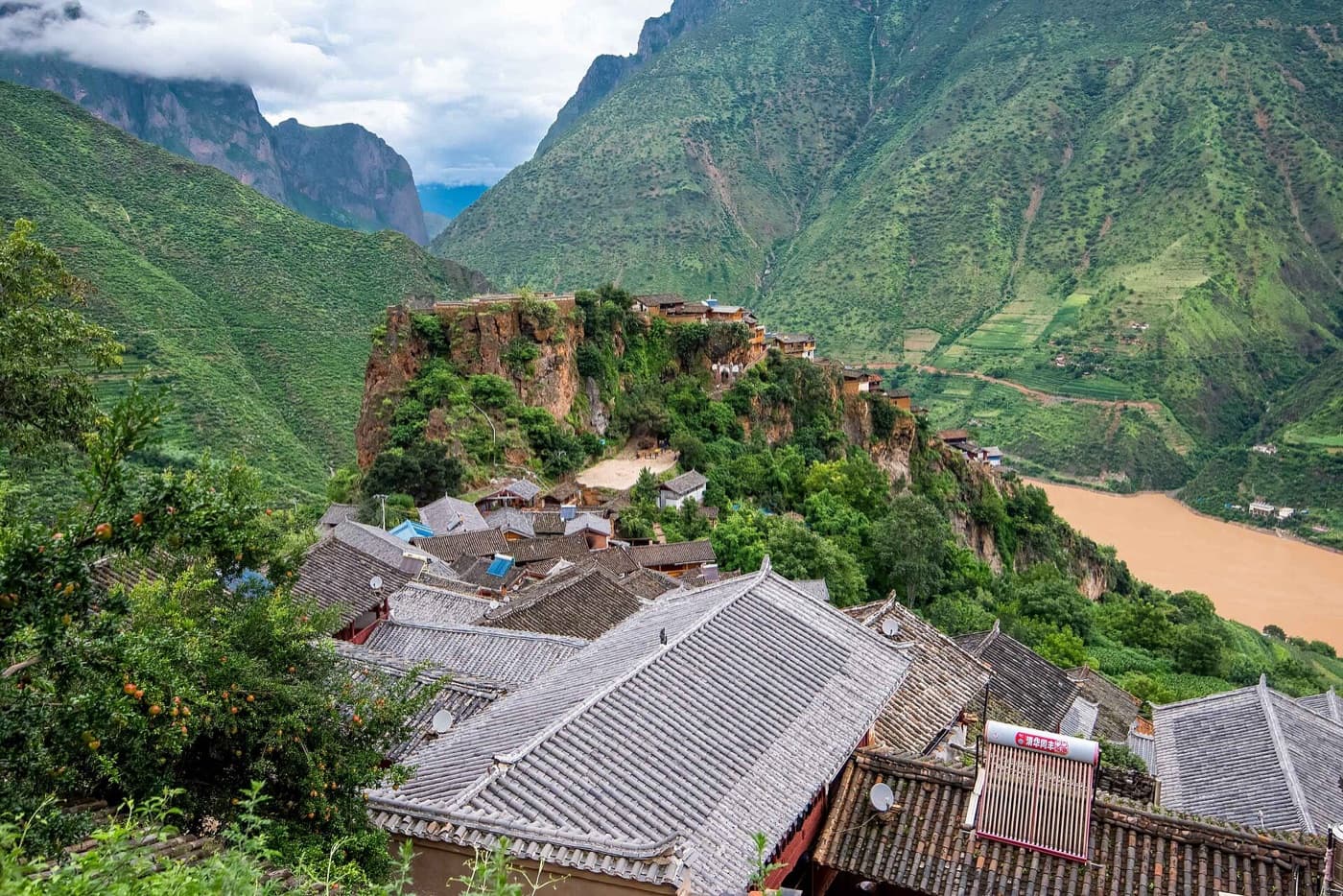
Baoshan Stone Town takes its name from the fact that all of its more than 100 local households live on a single mushroom-shaped boulder. Cliffs and sheer rock walls surround the town on three sides, and on the fourth side it drops straight down to the Jinsha River. The only passages are the northern and southern stone gates, making it a true natural fortress. What is especially fascinating is that the stoves, water vats and even the beds here are all carved from stone.
2–3 hours
Laojunshan Mountain
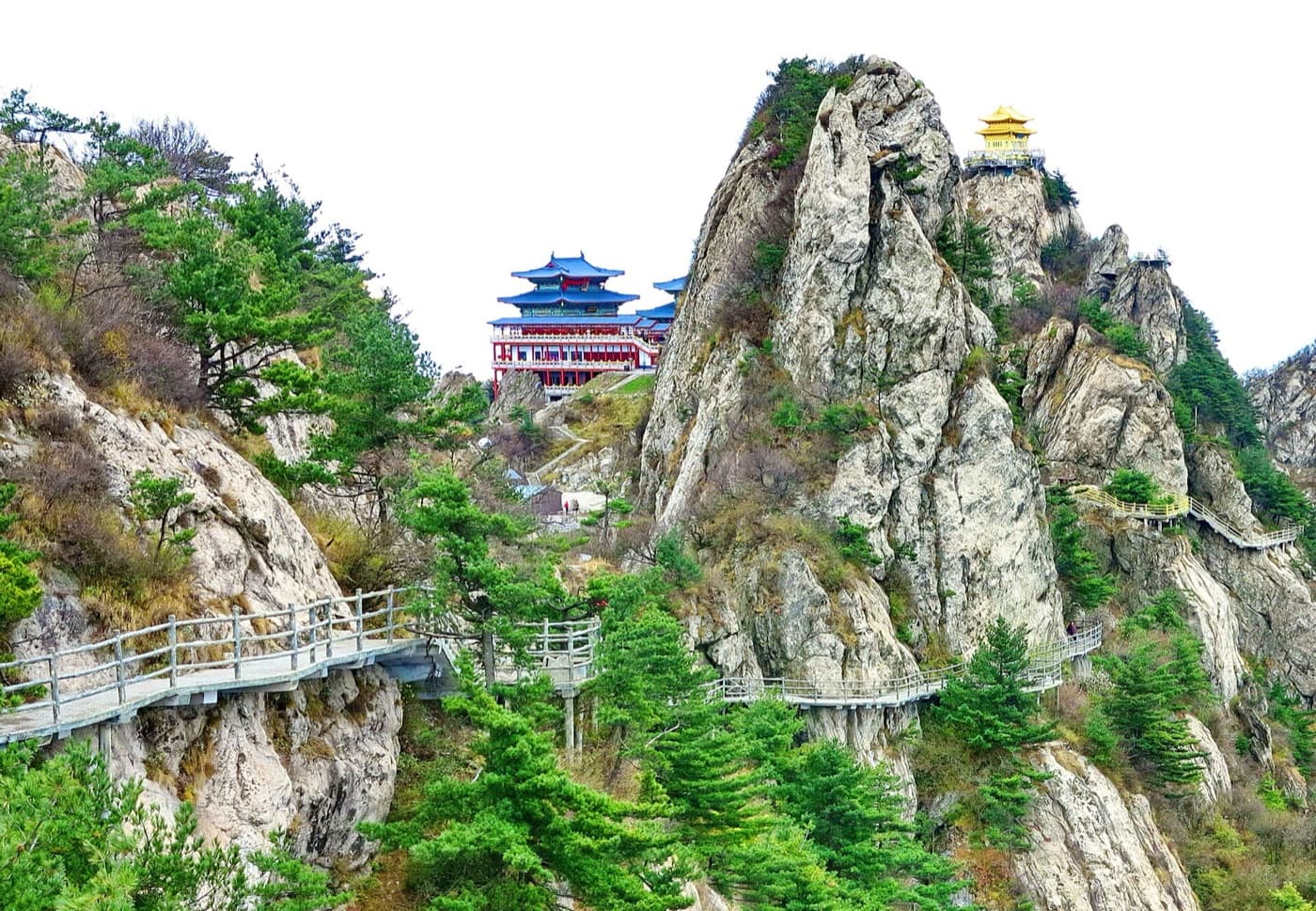
Laojun Mountain is known as the “Ancestor of All Mountains in Yunnan”, its name deriving from the legend that Taishang Laojun, the Taoist deity, once refined elixirs here. Its natural scenery is dominated by alpine meadows, lakes, wildflowers and streams, and it is one of the main components of the Three Parallel Rivers Scenic Area. The area contains the largest and most fully developed Danxia landform in China, which hiking enthusiasts should not miss.
¥70 · 1–2 days