Dali travel guide
大理
Locals in Bai costume move among the crowds of visitors who have come from far and wide, and it can feel as though you have walked into a newly developed folk tourism village.
20 places · In the guidebook: pages 208–229

Dali, Yunnan Province · AI illustration for China Trip
Quick itinerary
Dali in 5 days
- Day 1
- Dali Ancient Town→
- Three Pagodas of Chongsheng Temple→
- Three Pagodas Reflection Park→
- Renmin Road (dinner)
- Day 2
- Erhai Lake Circuit (Dali Old Town→
- Caicun→
- Xizhou→
- Butterfly Spring→
- Taoyuan Wharf→
- Shuanglang→
- Wase Town→
- Xiao Putuo Island→
- Jinsuo Island→
- Tianlong Babu Film and Television City→
- Dali Old Town)
- Day 3
- Dali Ancient Town→
- Cangshan Mountain
- Day 4
- Dali→
- Shaxi Ancient Town→
- Baoshi Mountain→
- Jianchuan County
- Day 5
- Jianchuan County→
- Nuodeng Ancient Village
The feel of the place
- Folk village
- Locals in Bai costume move among the crowds of visitors who have come from far and wide, and it can feel as though you have walked into a newly developed folk tourism village.
- Foreigners' Street
- Foreigners' Street has been repaired and rebuilt many times, and from the outside it now looks much like any other street, but the bars and shops along it still keep their own distinct character.
- Five Golden Flowers
- Films, a form of popular art, have made the beauty of Bai women famous far and wide. In Dali Old Town, young women in modernized Bai costume may pass you at any moment.
- Xian (leisure)
- In everyday Dali speech, 'xian' can mean to drop by someone's home for a chat, to go on an outing, or to go shopping. The word echoes the romantic, poetic spirit that runs deep in this city.
Dali's Scenery
Dali has beautiful scenery and a pleasant climate, with Cangshan Mountain and Erhai Lake and a romantic atmosphere. Resort hotels offer complete facilities, making them an excellent choice for holidays, family trips, business meetings and investment visits.
One Rain Brings Autumn
Temperatures drop quickly in July and August. Locals say 'one rain brings autumn', so even if you visit in summer, pack long sleeves and long trousers. Most places in Dali do not have air conditioning.
Dali City and Dali Old Town
For historical reasons, the relationship between Dali City and Dali Old Town is the most commonly confused. Dali City is the capital of Dali Prefecture, also known as Xiaguan. Dali Old Town is the ancient capital of the Nanzhao Kingdom, more than 30 kilometres from the city centre. When people talk about visiting Dali, they usually mean Dali Old Town.
Dali Braids
On arrival in Dali, women can visit a small hair salon and have local stylists braid their hair. Very fine braids paired with multicoloured wool thread will give you a distinctive 'Dali look'.
Bai Local Deity Worship
Most residents of Dali are Bai. Alongside Buddhism and Taoism, each village worships its own guardian deity, known as a 'benzhu'. A benzhu may be an animal. Never harm such an animal, and try not to carry food associated with a benzhu.
Preparation and Advice
Language
Dali Bai Autonomous Prefecture, or Dali Prefecture, is home to people who mostly use local dialects, but Mandarin is widely understood throughout the region.
Climate and Travel Seasons
Average annual temperatures range from 12.2 to 18.9℃. The lack of distinct seasons is a feature of Dali's climate, and the rainy season is concentrated from May to October. People say 'Dali's March is full of beauty', and spring is the ideal time to visit, as many Bai festivals and fairs take place around the third lunar month.
Things to see

Dali Ancient Town
3+ hours
People often compare Dali with Lijiang. Dali may lack Lijiang's graceful charm, but it is more unpretentious and expansive. Some say Dali is the birthplace of China's hippie culture. Underground musicians and painters have brought a free-spirited atmosphere here, so it is no wonder people say that after staying in Dali for a while, you may become “decadent.” The whole old town sits with Cangshan Mountain at its back and faces Erhai Lake. Its streets follow a grid layout, and its houses, with stone-slab paths and grey-tiled sloping roofs, reflect Bai architectural style. Traditional customs are still alive in the old town, and you can feel the long history and culture of the Bai people.

Cangshan–Erhai National Nature Reserve
1 day · There are two cable cars up Cangshan Mountain, and cruises on Erhai Lake: 1. Xima Pool Cable Car round trip ¥335 (includes admission to the Film and Television City and the Geological Park) 2. Gantong Cable Car one way ¥115 (Cangshan admission + cable car). It is recommended to ride up and hike down, as the descent offers views of the Tianlong Babu Film and Television City, Dali Ancient Town and Erhai Lake 3. Erhai Lake cruise ¥142
“Xiaguan wind, Shangguan flowers, Cangshan snow and Erhai moon” are together known as the Four Scenic Wonders of Dali. Cangshan stretches along the western shore of Erhai Lake, like a pair of lovers standing side by side. Touring Cangshan from Shangguan, you can see the water-eroded cave where Tianlong Babu was filmed, where Duan Yu met his fairy sister and learned his peerless martial arts. From the mountain you can take in the full view of Erhai Lake, and if the weather is clear, you can see the “Cangshan snow” on the summit. On the way down, you can enjoy the “Shangguan flowers” blooming across the hillsides.
Tianlong Babu Film and Television City
Backed by Cangshan Mountain and facing Erhai Lake to the east, the Film and Television City is the filming base for the TV series Tianlong Babu (Demi-Gods and Semi-Devils). Its architecture is modelled on the painting “Along the River During the Qingming Festival” and consists of three major zones: the palaces of the Dali Kingdom, the Liao and Western Xia kingdoms, and a Jurchen tribal area. Built as a large-scale production base for Tianlong Babu, it has also been used as a location for other productions, including Tea Horse Road, Legend of Yin Shang, Princess of Dali, Ten Perfect Girls and The Four Great Constables of Youth.
1–3 hours · ¥40
Shuanglang Ancient Town
If you want to escape the bustle of the city and find a quiet place, come to Shuanglang! In this small fishing village, you can face Erhai Lake, look west toward Cangshan, and enjoy a relaxed pace of life.
1–2 days
Yuji Island
Yuji Island is one of the three islands in Erhai Lake and is considered the essence of the Cang-Er landscape, earning it the nickname “the Number One Village of Cang-Er.” From the island, you can gaze at the Nineteen Peaks of Cangshan and look down over the scenery of Erhai. The island has well-preserved Bai ethnic dwellings with a distinctive fishing-village character. The famous inns, such as Moon Palace and Qinglu, generally do not admit visitors, but other inns are open for viewing in the afternoon. Touts on the island will offer to take you by boat so you can see Moon Palace up close.
1–3 hours · ¥10
Nanzhao Fengqing Island
One of the three islands in Erhai Lake in Dali, with scenery so breathtaking that it feels like paradise. If you come early, the island is quiet and uncrowded, with the shimmering waters of Erhai stretching out before you. Many visitors head to the island's center to pose beside the Nanzhao historical sculptures, but the small paths along the lakeshore offer even better views and are more suitable for photography.
1–3 hours · ¥50
Gantong Temple
Backed by the Cangshan Mountains, whose peaks hold snow year-round, and facing the misty expanse of Erhai Lake with its scattered white sails, Gantong Temple gathers the spirit of heaven and earth. The late-Ming monk Dandang (担当) once inscribed a couplet here: “An ancient temple among dense pines, the finest vista in the southwest; horses neigh and flowers bloom, Cang and Er famed as the foremost mountain.”
3+ hours · Free
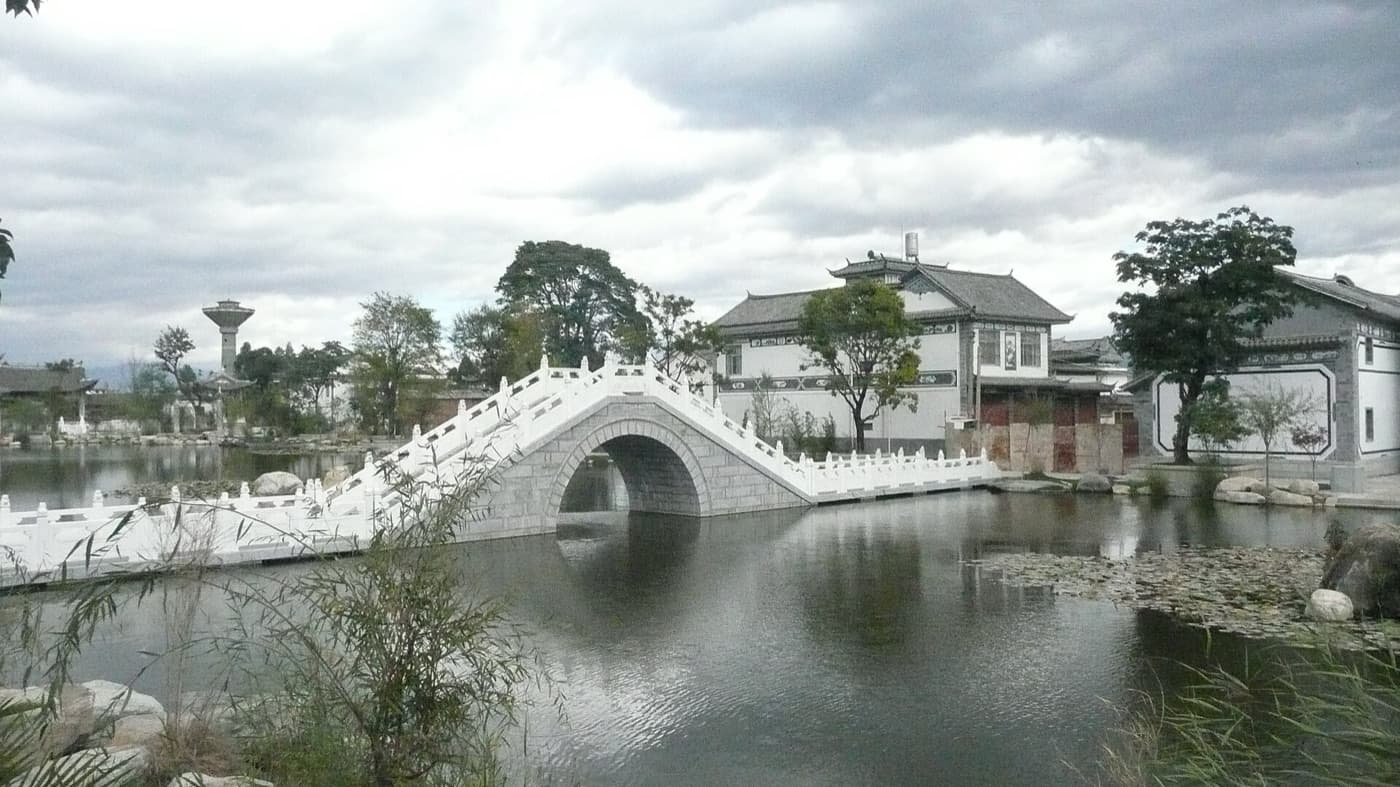
Xizhou Ancient Town
Xizhou Ancient Town lies with Cangshan Mountain to its west and Erhai Lake to its east. It is a Bai historic and cultural town with over a thousand years of history. Bai residential architecture is a hallmark of Xizhou, dating from the Ming and Qing dynasties, and its most representative buildings are the Yan and Yang family compounds. Xizhou posu bingba, a crispy pastry, is a famous local snack.
4–5 hours · Free
Zhoucheng Village
Zhoucheng still preserves a wide range of traditional Bai customs and is known as a “living fossil of Bai folk culture.” “Stone-paved paths outside every door, running water in front of every house” and “four-sided courtyard homes with five skywells” are signature features of this Bai village. Also known as the “Hometown of Bai Tie-Dye,” Zhoucheng lets visitors watch the process of making Bai tie-dye: the cloth is hand-stitched, tied, and repeatedly dyed in cold baths, resulting in textiles full of ethnic character.
1–3 hours
Butterfly Spring
In the hearts of the Bai people, Butterfly Spring is a symbol of faithful love. Each year on the 15th day of the fourth lunar month, the “Butterfly Fair” brings young Bai men and women from far and wide. Here they “toss a stone to test the depth of the water” and use their singing to find the one they love. Butterfly Spring is known for its three marvels: the spring, the butterflies, and the trees. The stone archway beside the spring bears the inscription “Butterfly Spring,” written by Guo Moruo himself.
1–3 hours · ¥40

Three Pagodas of Chongsheng Temple Cultural Tourism Area
In the era of the Dali Kingdom, Buddhism was revered, and many emperors took monastic vows here, a sign of the site's high status. The Three Pagodas were once a symbol of the Nanzhao Kingdom and are now a landmark of Dali. They were originally part of a vast Buddhist complex from the Nanzhao period. Other buildings were later destroyed, leaving only the three pagodas, which became a place for later generations to pay tribute to history. The main pagoda, also known as the Qianxun Pagoda, has a screen wall to its east inscribed with the characters “Eternally Guarding the Mountains and Rivers.”
1–3 hours · ¥75
Haishe Park
Along Erhai Lake there are several spots from which you can look out over the lake to Cangshan, and one of them is Haishe Park. This narrow peninsula extends into Erhai Lake and gets its name from its tongue-like shape. The fresh, beautiful scenery makes it very photogenic. Haishe has many specialty coffee shops and a craft market, giving it a strong artsy atmosphere.
Photography · Nature
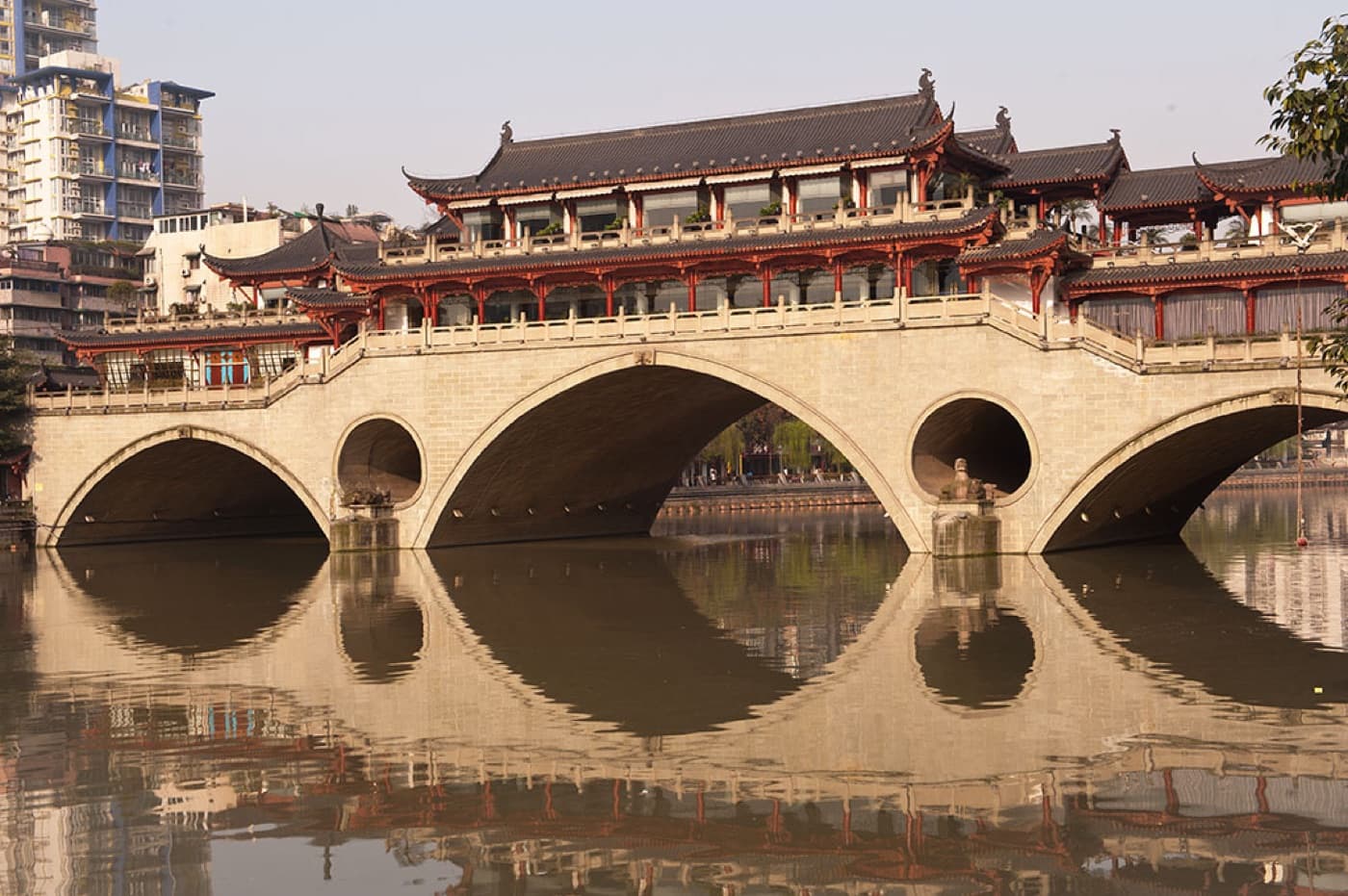
Langqiao Covered Bridge
This is a water channel. Photographed from the side with people walking along it, it creates an atmospheric scene, and many couples choose to take their wedding photos here.
Free
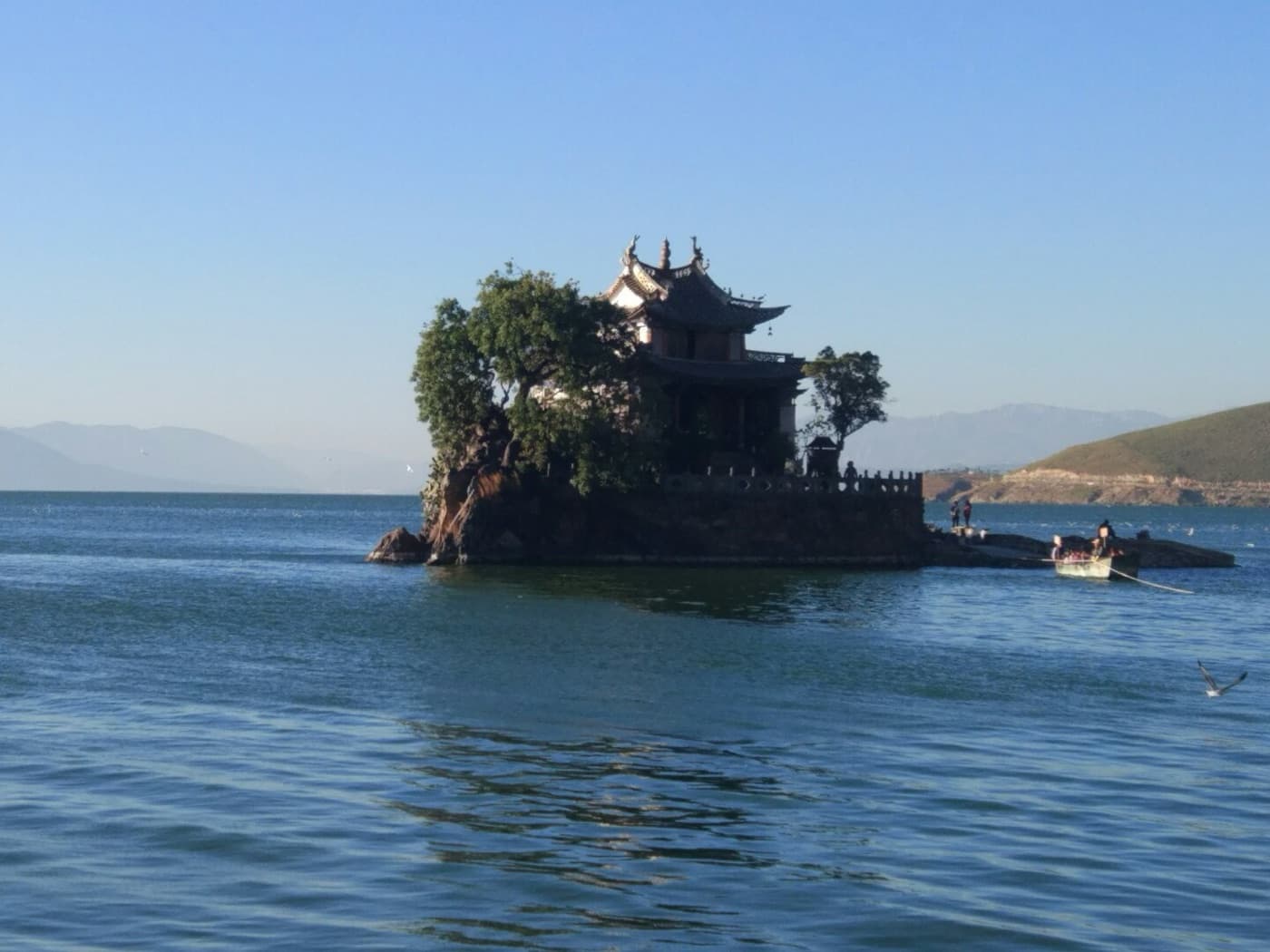
Xiao Putuo Island
A tiny island in Erhai Lake, covering only about 100 square meters. It resembles a seal floating on the water, and legend says this seal subdued the dragon in the lake. On Xiao Putuo Island stands a pavilion built during the Chongzhen era of the Ming dynasty, which houses statues of bodhisattvas.
Free
Getting there & around
Getting There
As a popular tourist city, Dali has convenient transport links, with an airport and railway station. If you want to enjoy the scenery along the way, driving or taking a long-distance bus is also a good choice.
Long-Distance Bus Terminals
1. Buses from Kunming to Dali terminate at Xiaguan (a newer urban district), not Dali Old Town. From Xiaguan bus station, take bus No. 4 or No. 8 directly to Dali Old Town (about 13 km from Xiaguan). The fare is ¥2 and the journey takes around 30 minutes.
2. Many taxi drivers near Dali Railway Station will offer to take you to Dali for ¥3. This actually means Xiaguan, not Dali Old Town. A taxi from Xiaguan to the Old Town costs about ¥40.
tip: Best season to visit: 'Dali's March is full of beauty', so spring is the most suitable time to go. Most Bai festivals take place in March and April, when you can experience the rich ethnic culture at its best.
Air
Dali Airport is located on the southeast shore of Erhai Lake, 13 km from Dali City. It has flights to and from Kunming and Xishuangbanna, as well as flights to Guangzhou, Beijing and Chengdu. A taxi from the airport to Dali Old Town costs about ¥90.
Rail
Road
Xiaguan is Dali's key transport hub. Its main long-distance bus stations include the North Passenger Station and the Bus Station (main station).
Long-Distance Bus Stations and Departure Directions
Getting Around
Buses
Dali has more than ten urban bus routes. Buses No. 4 and No. 8 run directly from Xiaguan to Dali Old Town, taking about 30 minutes, with a fare of ¥2.
Taxis
Standard taxis charge a flagfall of ¥8 during the day and ¥10 at night. From Dali Railway Station to Dali Old Town, a taxi costs about ¥40–50.
CAAC Ticket Office
Air- Phone:
- 0872-2428915
Dali Railway Station
Rail- Address:
- Weishan Road and Dianyuan Road, Dali City, Dali Bai Autonomous Prefecture
North Passenger Station
North Passenger Station- Address:
- 30 Yuhua Road
Bus Station (East Station)
North Passenger Station- Address:
- 372 Weishan Road
Express Passenger Station
North Passenger Station- Address:
- 1 South Huancheng Road
Eat & drink
When it comes to Dali, Sanchacha (Three-Course Tea) and Eryuan rushan (milk fans) are essential to mention.
Local Specialties
Sand-Pot Fish
Local SpecialtiesOne of Dali's signature local dishes, made by slow-simmering more than ten fresh ingredients, including tender chicken slices and winter mushrooms, with gongyu or carp from Erhai Lake. Visitors can try this dish on boat trips and in major restaurants throughout Dali.
Dengchuan Rushan (Milk Fans)
Local SpecialtiesDali is the birthplace of rushan. Among the 'eighteen oddities of Yunnan' is 'milk made into fans for sale', which refers to rushan. Rushan is a cheese, creamy white and shaped like a folding fan, hence the name. It is highly nutritious and has a rich, mellow flavour. It is a premium dish that the Bai people serve to guests. Dengchuan rushan can be eaten raw or fried in oil, and it can be served as soon as it is shaped or kept for a long time. It travels well and is sold far and wide, and it is popular in some Southeast Asian countries.
Bai Erkuai (Rice Cakes)
Local SpecialtiesA Yunnan specialty made from high-quality rice, usually cut into blocks, strips or slices. It can be braised, boiled, stir-fried, stewed, steamed or deep-fried, with different flavours each time, and it never gets tiresome to eat.
Xizhou Baba (Flatbread)
Local SpecialtiesAlso called posu baba, this is a wheat flatbread with an excellent colour, aroma and taste. It is a popular snack in Dali City, and the traditional Bai-style baba from Xizhou is the most famous.
Three-Course Tea
Local SpecialtiesThree-course tea is the finest expression of Bai tea culture, embodying the philosophy of life that 'the first cup is bitter, the second sweet, and the third leaves a lingering aftertaste'. Tea is often accompanied by folk songs and dances, which are a pleasure to watch. Authentic three-course tea can be enjoyed at the Wenxian Building in Dali Old Town, the Nanzhao Culture City in Dali, and the Yan Family Compound in Xizhou, where ethnic song and dance performances are also staged.
Meizijing Restaurant
Recommended RestaurantsA long-established restaurant in Dali with a thriving business. It is set in an elegant Bai courtyard with a two-hall layout and a screen wall, and features ancient plum trees and an old well. The restaurant is famous for its plum cuisine, including black plum fish, carved plum pork and black plum radish. Its homemade plum wine is also distinctive. It is ideal for romantic dinners or gatherings with family and friends.
- Address:
- 130 Renmin Road, Dali Town, Dali City
- Phone:
- 0872-2671578
Duan Gongzi Restaurant
Recommended RestaurantsA themed restaurant inspired by The Legend of the Condor Heroes' Tianlong Babu series. The dining room has an otherworldly feel, staff wear martial-arts style costumes, the music is full of heroic spirit, and even the menu looks like a martial arts manual. If you are not sure what to order, choose a set meal, which covers most of the signature dishes.
- Address:
- Intersection of Renmin Road and Yeyu Road, Dali City
- Phone:
- 18213322996
Where to stay
Outside peak tourist season, accommodation in Dali is generally cheap. Guesthouses are different from hotels and restaurants: they are inexpensive and give you a sense of being at home.
Dali Yu'an Garden Boutique Inn
Recommended AccommodationA Bai-style family courtyard with a large garden. Green bamboo, a clear pond, and bamboo pavilions with elegant, layered upper floors. The walls and curtains of the rooms are hung with hand-printed blue-and-white cloth, giving a cosy and romantic atmosphere.
- Address:
- 3 Sanyue Street, Dali Old Town
- Phone:
- 17787207339
Hetai Garden Inn
Recommended AccommodationA three-storey small building with simple, very clean rooms. It offers good value for money.
- Address:
- 120 Guangwu Road, Dali Old Town
- Phone:
- 0872-2671193
Shopping
Marble and tie-dye are the most representative souvenirs and can be found everywhere in Dali.
Zhaoji Plum Shop
Crispy plums, carved plums and plum wine are Dali specialties. Zhaoji Plum Wine is a long-established shop in Dali Old Town. It sells many varieties of plums, and those who have tried them praise them highly. The preserved fruit is also tasty, though the range is smaller.
- Address:
- 282 Fuxing Road, Dali Old Town
- Phone:
- 0872-2661896
Zhoucheng Village Tie-Dye
Tie-dyeing is a traditional handcraft of folk dyeing and printing popular among the ethnic minorities of Yunnan, with a long history. Almost every household in Zhoucheng runs a small workshop making batik or tie-dye. The local seal carving is also excellent.
- Getting there:
- Minibuses and pony carts run to Zhoucheng from Dali Old Town and Xiaguan.
Nightlife
At nightfall, the Old Town is decorated with modern lighting that turns it into a glowing castle, including the towering Three Pagodas in the distance. Yet what people miss most is the quiet the Old Town once had, when apart from the lights of Foreigners' Street, everything was still. Today the liveliest places at night are Foreigners' Street, and the most relaxing option is to find a bar with a distinctive style and order a glass of Dali beer.
Foreigners' Street
Located in Dali Old Town, this east-west street is paved with bluestone slabs. At night the bars open and the street becomes especially lively, with Tangchao Bar the most famous of them. Along the street are Chinese and Western restaurants, jewellery shops, antique shops, tie-dye shops and galleries, selling Bai snacks and souvenirs. You can eat and browse your way along, although prices are on the high side.
Tangchao Bar
A well-known bar that is easy to find simply by following the sound of music.
Bad Monkey Bar
A bar in Dali Old Town. Go in the evening, when it fills up with plenty of night owls.
Day trips & beyond
Shibaoshan Scenic Area
Shibaoshan Scenic Area is made up mainly of two sights: Baoxiang Temple and Shibao Mountain. Baoxiang Temple, built on a cliff, is known as the “Hanging Temple of Yunnan.” The surface of Shibao Mountain is covered in cracked red sandstone, the most typical example of Danxia landform. Most remarkable of all is that Shibao Mountain's stone appears to “bloom,” which sets it apart from Danxia landscapes elsewhere.
3+ hours
Nuodeng Ancient Village
Nuodeng Village lies northwest of the Yunlong County seat in Dali Prefecture. The village retains many buildings from the Ming and Qing dynasties, the renowned Yuhuang Pavilion Taoist complex, and numerous Bai residences with distinctive architectural styles. Its quiet, secluded setting feels like a hidden paradise, earning it the name “Thousand-Year-Old Bai Village.” Nuodeng ham is very famous, and you should definitely try it.
1–3 hours
Shaxi Ancient Town
Shaxi was once an important post station on the Tea Horse Ancient Road and still retains the look of its days as a tea-horse trading town. The ancient town is home to an old opera stage, Yujin Bridge, Xingjiao Temple, and other sights. Visitors can also enjoy Shaxi Dongjing ancient music, watch the traditional Bai Bawang Whip dance, and taste local specialties such as dicanzi (a local herb), matsutake mushrooms, and goat's milk cake.
1–3 hours
Weishan Ancient City
The birthplace of the Nanzhao Kingdom, also known as Mengh'ua City. The existing Weishan Ancient City was built in the Ming dynasty and preserves well the chessboard-style layout of the Ming and Qing periods. The city holds many historical relics and ancient buildings of commemorative and research value.
3–4 hours
Wuliangshan Cherry Blossom Valley
Every winter, the cherry trees here burst into bloom, their branches laden with blossoms like pink snowflakes dancing in the wind and filling the air with fragrance. Framed by distant mountains and village courtyards, the valley is serene and peaceful, as beautiful as a scroll painting and like a paradise on earth. It is a haven for photography enthusiasts.
1–3 hours
Jizushan Scenic Area
A famous Buddhist pilgrimage site, said to be the Dharma field of Venerable Kashyapa, the foremost disciple of Shakyamuni Buddha. The Eight Scenes of Jizushan are: Cangshan's Accumulated Snow, Erhai's Mist, Waterfalls Piercing the Clouds, Clear Thunder at Huashou, Autumn Moon at the Pagoda Courtyard, Buddha's Light on the Heavenly Pillar, Pine Waves across the Ravines, and Reflected Glow on Layered Cliffs. From the 1st to the 15th day of the first lunar month is the Jizushan Pilgrimage Festival, when a steady stream of pilgrims makes the mountain lively.
1 day
Source: China Self-Guided Travel 2025 (《中国自助游》, Tianjin Science & Technology Press, Aug 2024), pp. 208–229. Translated from the Chinese edition; names and prices follow the guidebook. · Plain text version