Zhoucheng Village
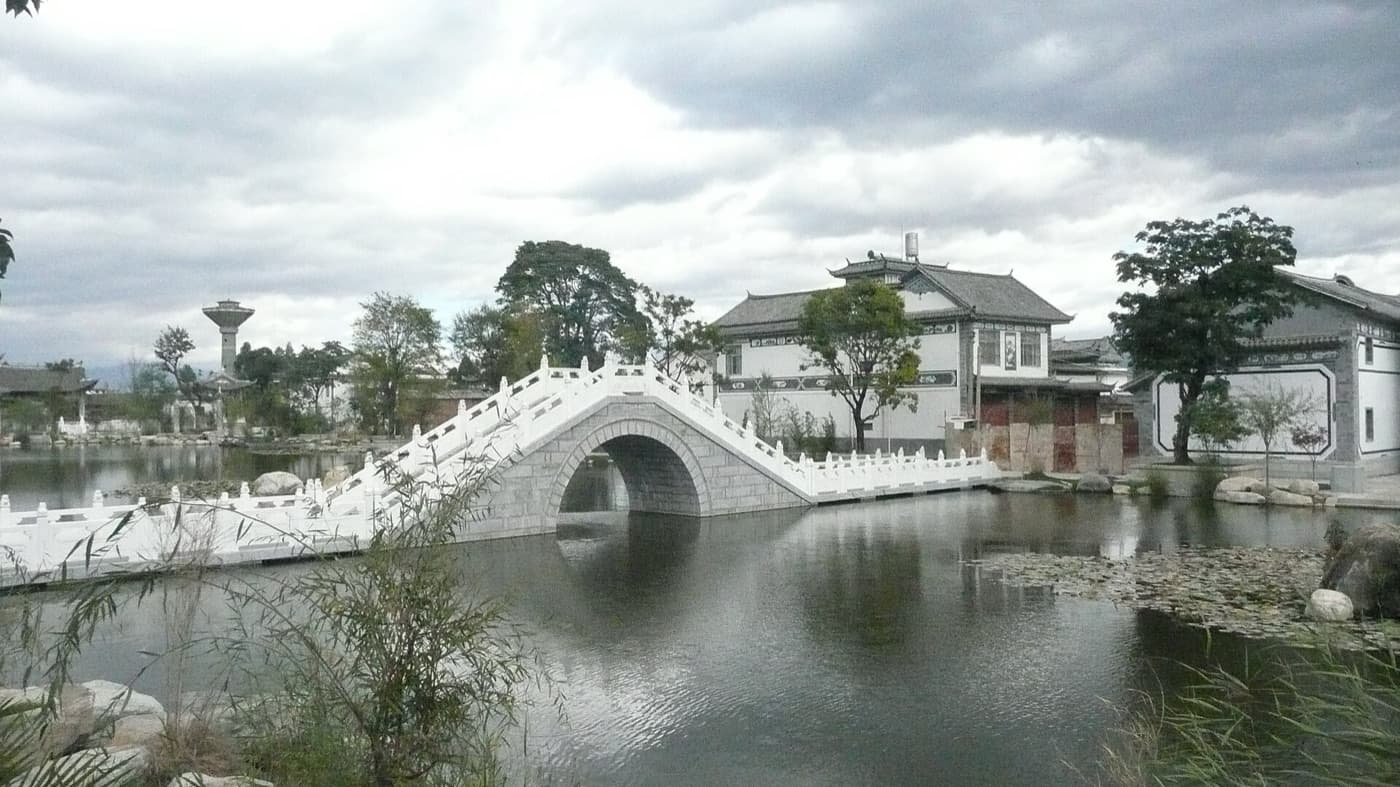
Zhoucheng still preserves a wide range of traditional Bai customs and is known as a “living fossil of Bai folk culture.” “Stone-paved paths outside every door,…
Zhoucheng Village, Dali
Key facts
- Time needed
- 1–3 hours
- Getting there
- Tourist shuttles to Zhoucheng depart from Dali North Bus Station.
- Guidebook rating
- 4 / 5
From China Self Guided Travel 2025, page 222. Open in Google Maps
About Zhoucheng Village
Zhoucheng still preserves a wide range of traditional Bai customs and is known as a “living fossil of Bai folk culture.” “Stone-paved paths outside every door, running water in front of every house” and “four-sided courtyard homes with five skywells” are signature features of this Bai village. Also known as the “Hometown of Bai Tie-Dye,” Zhoucheng lets visitors watch the process of making Bai tie-dye: the cloth is hand-stitched, tied, and repeatedly dyed in cold baths, resulting in textiles full of ethnic character.
Frequently asked questions
How do I get to Zhoucheng Village?
Tourist shuttles to Zhoucheng depart from Dali North Bus Station.
How long should I spend at Zhoucheng Village?
Plan on 1–3 hours for Zhoucheng Village.
Where is Zhoucheng Village?
Zhoucheng Village is in Dali, Yunnan Province, in the Southwest of China.
More places in Dali

Cangshan–Erhai National Nature Reserve
“Xiaguan wind, Shangguan flowers, Cangshan snow and Erhai moon” are together known as the Four Scenic Wonders of Dali. Cangshan stretches along the western shore of Erhai Lake, like a pair of lovers standing side by side. Touring Cangshan from Shangguan, you can see the water-eroded cave where Tianlong Babu was filmed, where Duan Yu met his fairy sister and learned his peerless martial arts. From the mountain you can take in the full view of Erhai Lake, and if the weather is clear, you can see the “Cangshan snow” on the summit. On the way down, you can enjoy the “Shangguan flowers” blooming across the hillsides.
There are two cable cars up Cangshan Mountain, and cruises on Erhai Lake: 1. Xima Pool Cable Car round trip ¥335 (includes admission to the Film and Television City and the Geological Park) 2. Gantong Cable Car one way ¥115 (Cangshan admission + cable car). It is recommended to ride up and hike down, as the descent offers views of the Tianlong Babu Film and Television City, Dali Ancient Town and Erhai Lake 3. Erhai Lake cruise ¥142 · 1 day

Dali Ancient Town
People often compare Dali with Lijiang. Dali may lack Lijiang's graceful charm, but it is more unpretentious and expansive. Some say Dali is the birthplace of China's hippie culture. Underground musicians and painters have brought a free-spirited atmosphere here, so it is no wonder people say that after staying in Dali for a while, you may become “decadent.” The whole old town sits with Cangshan Mountain at its back and faces Erhai Lake. Its streets follow a grid layout, and its houses, with stone-slab paths and grey-tiled sloping roofs, reflect Bai architectural style. Traditional customs are still alive in the old town, and you can feel the long history and culture of the Bai people.
3+ hours
Xizhou Ancient Town
Xizhou Ancient Town lies with Cangshan Mountain to its west and Erhai Lake to its east. It is a Bai historic and cultural town with over a thousand years of history. Bai residential architecture is a hallmark of Xizhou, dating from the Ming and Qing dynasties, and its most representative buildings are the Yan and Yang family compounds. Xizhou posu bingba, a crispy pastry, is a famous local snack.
Free · 4–5 hours
Butterfly Spring
In the hearts of the Bai people, Butterfly Spring is a symbol of faithful love. Each year on the 15th day of the fourth lunar month, the “Butterfly Fair” brings young Bai men and women from far and wide. Here they “toss a stone to test the depth of the water” and use their singing to find the one they love. Butterfly Spring is known for its three marvels: the spring, the butterflies, and the trees. The stone archway beside the spring bears the inscription “Butterfly Spring,” written by Guo Moruo himself.
¥40 · 1–3 hours
Gantong Temple
Backed by the Cangshan Mountains, whose peaks hold snow year-round, and facing the misty expanse of Erhai Lake with its scattered white sails, Gantong Temple gathers the spirit of heaven and earth. The late-Ming monk Dandang (担当) once inscribed a couplet here: “An ancient temple among dense pines, the finest vista in the southwest; horses neigh and flowers bloom, Cang and Er famed as the foremost mountain.”
Free · 3+ hours
Nanzhao Fengqing Island
One of the three islands in Erhai Lake in Dali, with scenery so breathtaking that it feels like paradise. If you come early, the island is quiet and uncrowded, with the shimmering waters of Erhai stretching out before you. Many visitors head to the island's center to pose beside the Nanzhao historical sculptures, but the small paths along the lakeshore offer even better views and are more suitable for photography.
¥50 · 1–3 hours