Jiuzhaigou and Aba Prefecture travel guide
九寨沟与阿坝州
After the 2017 earthquake and the 2018 heavy rains, Jiuzhaigou's ecosystem suffered serious damage, several scenic spots within the park were badly destroyed, and the scenic area was closed.…
16 places · In the guidebook: pages 363–382

Jiuzhaigou and Aba Prefecture, Sichuan Province · AI illustration for China Trip
Quick itinerary
Jiuzhaigou and Aba Prefecture in 5 days
- Day 1
- Huanglong→
- Songpan Ancient Town (overnight in the ancient town)
- Day 2
- Songpan→
- Songpinggou Valley→
- Kalong Valley→
- Heishui County (overnight in Heishui County)
- Day 3
- Heishui County→
- Dagu Glacier→
- Hongyuan Grassland (overnight in Hongyuan)
- Day 4
- Day 5
The feel of the place
- Natural Disasters
- After the 2017 earthquake and the 2018 heavy rains, Jiuzhaigou's ecosystem suffered serious damage, several scenic spots within the park were badly destroyed, and the scenic area was closed. After a long period of restoration work, Jiuzhaigou has now reopened in an orderly way.
- Fairy-Tale World
- Anyone who sees Jiuzhaigou finds their vocabulary falls short, and they all, without prior agreement, reach for the same phrase to describe this magical place: a fairy-tale world. Visiting here, you'll find everything feels unreal. The richness of colours, the purity of land and sky, the transparency of the air, and the ever-shifting scenery make it seem impossible that such a place exists in the real world. Yet unless you come yourself, how would you know?
Preparation and Consultation
Language
Most local residents are Tibetan. Having long dealt with outsiders, however, the vast majority can speak Sichuan dialect or Mandarin, so communication is usually not a problem.
Climate and Travel Season
Jiuzhaigou is busiest from late spring to early autumn, and October is the golden time to visit. You must, however, go before mid-November, as many sights close for fire prevention and other reasons after that. Mornings and evenings are cold, so bring a warm set of clothes even in summer. Summer brings plenty of rain, so don't forget an umbrella. Summer scenery is not at its best, and the road from Chengdu along the Min River often sees landslides that may disrupt your itinerary.
Tourist Hub
Along the Aba Prefecture route, centred on Jiuzhaigou, lie many of Sichuan Province's best-known attractions.
Key Transit Hubs
Apart from Jiuzhaigou and Huanglong, no direct shuttle buses run between the other sights, so you will need to change buses or hire a car. The most important transit hubs are Songpan (松潘) and Chuanzhusi (川主寺).
Songpan
To Jiuzhaigou: four departures daily, fares ¥42–50.
To Huanglong: in peak season, buses to Huanglong depart daily from 6:00, fare ¥28, usually returning to Songpan around 15:00. There are no buses in the off-season.
Chuanzhusi
You can wait at the Chuanzhusi bus station for the pass-through buses running from Songpan to Jiuzhaigou and Huanglong (these generally reach Chuanzhusi about half an hour after leaving Songpan). The fare is a few yuan cheaper than boarding in Songpan.
Free Oxygen
Don't buy an oxygen cylinder. There are oxygen stations along almost the whole route to Huanglong, and for just ¥1 you can buy a set of tubing and breathe oxygen for free. At Huanglong, it is recommended to take the cable car up and walk down, as the scenery on the way down is truly beautiful.
Things to see
1. The number of visitors entering and leaving Jiuzhaigou is limited, so it is best to travel with a tour group.

Jiuzhaigou
Jiuzhaigou · 1 day · Peak season: entrance ¥190, sightseeing bus ¥90; off-season: entrance ¥80, sightseeing bus ¥80
No river is more colourful or pure than Jiuzhaigou's, and no mountain's foliage is more brilliant and varied. Here nature is never monochrome: in spring new buds turn green, in summer orioles and swallows dart about, in autumn the mountains blaze with red leaves, and in winter the ice gleams like jade. Water is the soul of Jiuzhaigou, which is why it is said that “once you have seen Jiuzhaigou's water, you need not see any other.” The Shuzhenggou section is the main valley, about 14 km long, with more than 40 lakes (haizi), roughly 40% of all the lakes in the scenic area. It is the entrance to Jiuzhaigou: every visitor passes through Shuzheng Valley. Key sights include Penjing Beach, Reed Sea, Huohua Lake, Shuzheng Waterfall, Rhinoceros Lake and Nuorilang Waterfall. The Rizegou section is the highlight of the Jiuzhaigou scenic line, with stunningly beautiful and ever-changing scenery. Sights include the Nuorilang Lake Group, Mirror Lake, Pearl Shoals Waterfall, Peacock Channel, Five-Flower Lake, Panda Lake Waterfall, Arrow Bamboo Lake, Eagle Claw Cave, Swan Lake, Fangcao Lake, Jianyan Hanging Spring and the primeval forest. The Zharugou valley is the longest valley developed so far in Jiuzhaigou, at 18 km. It passes Jiwan Lake and Five-Colour Pond before reaching Changhai (Long Lake) at an altitude of 3,100 metres.

Huanglong National Scenic Area
沟内 · 1 day · Peak season ¥170; off-season ¥60; cable car ¥80 up, ¥40 down
Separated from Jiuzhaigou by a single mountain, Huanglong is remarkable for its glistening, smooth travertine rocks. The terraces wind up the gully like a golden dragon coiling its way upward. Within roughly one square kilometre behind Huanglong Temple lies the “golden” core of the scenic area. Less than 100 metres behind the rear temple stands the Dragon King Temple, where the annual Huanglong Temple Fair is held. Behind Huanglong Rear Temple rise the highest pools in the gully, the “Shitazhenhai” (Stone Pagoda Guarding the Sea), also known as the Five-Colour Pools. Visiting Huanglong without seeing these pools would be a great pity.

Miyaluo and Bipenggou
The Miyaluo Golden Autumn Red Leaf Scenic Area is the largest and most spectacular red leaf scenic area discovered and opened in China to date. Its main attraction, Bipenggou, combines primeval forest, canyon scenery, lake waterfalls and snowy mountain meadows, where you can admire both snow and red leaves. Along the way to Miyaluo you pass Taoping Qiang Village, where you can see the most typical Qiang architecture, the diaolou (watchtowers). The towers are truly impressive.
沟内 · Miyaluo: 2–3 hours; Bipenggou: 0.5–1 day · Bipenggou admission plus shuttle bus within the park ¥60; Taoping Qiang Village ¥30
Ganbao Tibetan Village
The village is a typical large settlement of the Jiarong Tibetan people. The houses are built from granite taken from the riverbed. Stone houses stay warm in winter and cool in summer, and they are resistant to earthquakes, fire and water. From the hilltop you can look down over the entire village and gaze into the distance at the open snow-capped mountains.
Jiuzhaigou · 1–2 hours · Free
Haizigou
Haizigou is the essential route for climbing the peaks of Siguniang Mountain. Climbers usually enter through Haizigou and reach Camp 1 and base camp on foot or on horseback. The scenery in Haizigou is wild and magnificent. The first half, through Guowoping and Chaoshanping, is dominated by alpine meadows, while the second half is mainly lakes (haizi). The valley can only be explored on foot or by horse, and it is recommended to spend a night camping in the gully to fully enjoy its beautiful scenery.
Jiuzhaigou · 2–3 hours · ¥60 (April–November); ¥40 (November–March of the following year)
China Ancient Qiang City Scenic Area
The world's largest core exhibition site for Qiang culture, Ancient Qiang City combines cultural heritage protection, leisure experiences and sightseeing. It vividly showcases the past and present development of the Qiang people and their precious cultural treasures. The site includes the China Qiang Museum, an Intangible Cultural Heritage Transmission Centre and Qiang Culture Square.
Jiuzhaigou · 2–4 hours
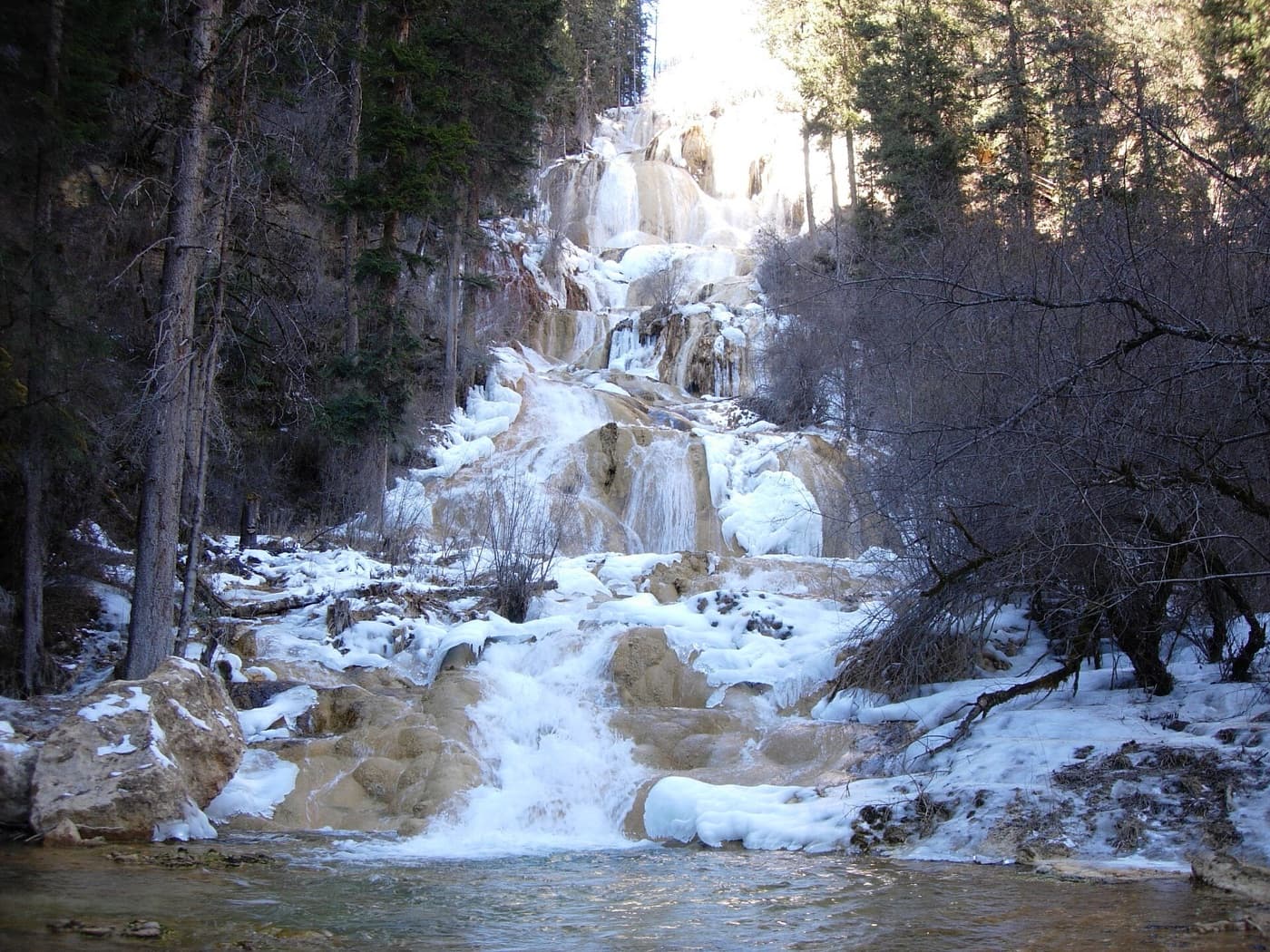
Munigou
Munigou is covered in forest, and its mountains, woods, caves and lakes complement one another beautifully. Its large and small lakes and the magnificent travertine pools and waterfalls are its most stunning features. Munigou is a dazzling new star on the “Jiuzhaigou–Huanglong” golden tourist route. Zhaga Waterfall stands 104 metres tall and is the highest calcified waterfall in China. Separated from Zhaga Waterfall by a mountain, Erdaohai lies at the end of the Munigou scenic area and is the highlight of Munigou. It combines the charms of both Jiuzhaigou and Huanglong. At the deepest point of Erdaohai, beneath an ancient pine, lies Pearl Lake, whose waters are said to help with various skin conditions.
沟内 · Zhaga Waterfall ¥70; Erdaohai ¥70; combined ticket ¥100
Zoige Rer Grassland
Located in the northeastern part of Aba Tibetan and Qiang Autonomous Prefecture, across Hongyuan and Ruoergai counties, the area is made up of meadows and marshland. The Red Army passed through during the Long March. It is a paradise for migratory birds and local wildlife. Langmusi Monastery, which carries the colours of Tibetan Buddhism, and the Jiangzha Hot Springs, famous across Sichuan, Gansu and Qinghai, are found here, along with the Tiebu Sika Deer Nature Reserve and hundreds of miles of virgin forest. The First Bend of the Yellow River lies just over 10 km north of Tangke Township.
沟内 · 0.5–1 day · Free
Flower Lake
Flower Lake is a natural lake on the Rer Dam Grassland, shining like a sapphire set into the northwestern border of Sichuan. Its wide expanse is underlain by bottomless marsh, and walking along the boardwalk around the lake reveals endless scenery. Dense reeds grow along its shores, and the lake takes its name from a white wildflower that blooms across it. It was once named one of China's most beautiful wetlands. The best time to visit is from June to September, and mid-July is when the flowers are at their peak and the lake truly lives up to its name. It is also the best place to see the black-necked crane, a first-class nationally protected species.
沟内 · 1–2 hours · Peak season ¥75
Kalonggou Scenic Area
Kalong Valley is a karst landscape, where stalactites come in dazzling colours. It has over a hundred colourful pools of varying sizes, dramatic waterfalls with steep drops, and autumn mountain forests painted in brilliant hues. Its scenery rivals and, in many ways, even surpasses that of Jiuzhaigou. Every October, the “Glacier and Autumn Forest Festival” is held here.
沟内 · 1 day · ¥60
Dagu Glacier
The Dagu Snow Mountain stands within Sanda Ancient Village, Luhua Town, Heishui County, at an altitude of 3,800–5,100 metres. It boasts mountain glaciers, waterfalls, lakes, primeval forest, extensive rhododendron groves and scattered meadows. The ecology remains in excellent condition, and you can easily spot the small wildlife that lives here.
沟内 · 0.5–1 day · ¥120; sightseeing bus ¥70; cable car ¥180
Lianbao Yezé
Lianbao Yeze is a famous sacred mountain in the Tibetan regions, ranked eighth among the region’s ten most sacred mountains. Some say it was the ancient battlefield where King Gesar waged his campaigns. Each sight in Lianbao Yeze has its own character. Longgacuo Lamahu Lake is the largest lake in the scenic area, with five smaller lakes surrounding the main lake. Legend says this is where King Gesar rescued his beloved consort Zhumu. Luoyun Co is another high-altitude freshwater lake. A huge ox-heart-shaped stone is reflected in its waters, creating a sight that is both spectacular and spiritual. Walk along the north shore for a while and you will see waterfalls dozens of metres high, which are truly dramatic. Zhumu Co has a different kind of grandeur. The Zhumu Lake, Zhumu River and Zhumu Gully together form a majestic world of lakes and rocks, with strange, precipitous mountains and peaks on both banks in countless shapes that invite the imagination.
沟内 · 2–4 hours · ¥60
Zhaohua Ancient City
A strategic gateway in northern Sichuan, Zhaohua was a prize fought over by military forces throughout history. The famous battles in ‘Romance of the Three Kingdoms’, including Zhang Fei’s lantern-lit night battle with Ma Chao, took place here. Its winding bluestone-paved old streets and weathered stone city walls record more than 2,000 years of history.
沟内 · 3–4 hours · No entry ticket is needed for the ancient city. A combined ticket is required to visit some attractions, priced at ¥58.
Langzhong Ancient City
Like Lijiang in Yunnan and Pingyao in Shanxi, Langzhong is a famous historic and cultural city. It has a history of 2,300 years, and more than 1,300 years ago it was already renowned as ‘the fairyland of Langyuan’. Its extensive ancient residential courtyards combine features of Beijing siheyuan courtyard houses with southern garden architecture. Today, with its rich cultural landscape and beautiful natural scenery, it is striving to join the ranks of UNESCO World Heritage Sites.
沟内 · 0.5–1 day · Combined ticket ¥100. Zhang Fei Temple ¥50; Imperial Examination Hall ¥50; Confucian Temple ¥30; Zhongtian Tower ¥15; Huaguang Tower ¥15
Thousand Buddha Cliff
The cliffs on the east bank of the Jialing River are covered with rock-carved Buddhist figures that began in the Southern and Northern Dynasties, flourished in the Tang Dynasty and continued into the Qing Dynasty. The site stretches more than 200 metres long and 40 metres high, with niches and caves arranged across as many as 13 tiers. Despite wars across the centuries, more than 7,000 carvings survive. Many have lost their heads or arms, yet the overall effect is still highly impressive. In style, the plump human figures and openwork carving techniques differ from those of the Central Plains, giving the site outstanding artistic value.
沟内 · 3–4 hours · ¥50
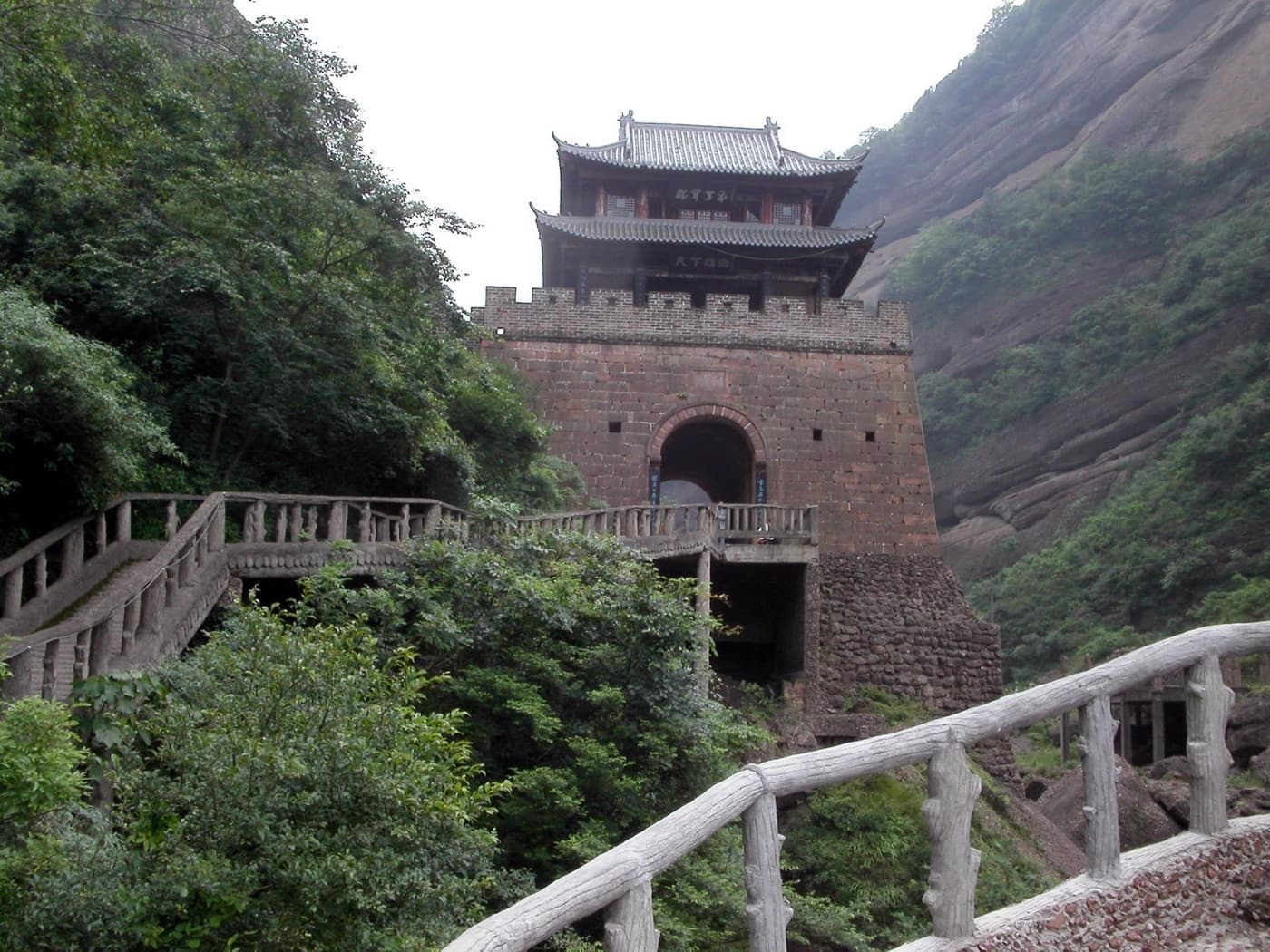
Jianmen Pass
‘The road to Shu is harder than climbing to the heavens’: this line from Li Bai captures the perils of the Shu Road, and only by standing at Jianmen Pass can you truly grasp the commanding force of its saying that one man holding the pass can stop ten thousand. Jianmen Pass refers specifically to the mountain peaks between Guangyuan and Jiange, which have been carved by flowing water into steep, sword-like terrain. It is known as ‘the most formidable pass under heaven’. Only by being there can you truly appreciate the marvels of nature’s craftsmanship.
沟内 · 0.5–1 day · ¥105
Getting there & around
Getting There
Most visitors to Jiuzhaigou travel via Chengdu. It is best to buy your bus ticket from Chengdu to Jiuzhaigou one day in advance.
By Air
Jiuzhaigou Huanglong Airport is located in Chuanzhusi Town, Songpan County, about 90 km from Jiuzhaigou. Besides Chengdu and Chongqing, it has direct flights to Xi'an, Kunming, Zhangjiajie, Shenzhen, Guangzhou and Shanghai.
Fly first to Chengdu or Chongqing, then connect to Huanglong Airport. Civil aviation shuttle buses run from Huanglong Airport to Jiuzhaigou (¥45) and to Huanglong (¥22).
By Rail
You can take a train to Chengdu, or get off at Guangyuan or Jiangyou, then continue by bus to Jiuzhaigou.
By Road
Jiuzhaigou has two bus stations: the Jiuzhai Passenger Transport Centre at the valley entrance in Zhangza Town, and the Jiuzhaigou Bus Station in Jiuzhaigou County town.
Long-Distance Bus Stops
Chengdu → Jiuzhaigou
Buses leave Chengdu's Xinnanmen Bus Station every morning for the valley entrance; the journey takes 8–10 hours. Chengdu's Chadianzi Bus Station also runs daily buses to the valley entrance and to Jiuzhaigou County town.
Long-Distance Bus Stops
Check whether there have been landslides on the road ahead, to avoid danger
tip: Eco-Buses
Eco-buses only stop at designated stations, though you can ask to get off at a non-station point on the bus. Buses start at 7:00. The last buses back to Nuorilang leave Changhai at 16:30, the Primeval Forest at 18:00, and Nuorilang Central Station at 19:00 (18:00 in winter, when there are fewer visitors). Don't let the scenery make you forget the time; missing the last bus will leave you stranded.
Getting Around the Scenic Area
From May to November, the scenic area runs a shuttle system with 22 stops, and visitors can explore freely. From December to April, a tour-bus system applies: visitors ride a fixed bus. The system is not strictly enforced, and on the return trip you can often ride other groups' buses. Almost every sight has a bus stop; follow the stop signs.
Inquiry Hotline
By Air- Phone:
- 0837-7243770
Ticket Hotline
By Air- Phone:
- 0837-7243700
Jiuzhai Passenger Transport Centre (near the valley entrance)
Long-Distance Bus Stops- Address:
- East of the valley entrance, Jiuzhaigou Scenic Area, Jiuzhaigou County
Jiuzhaigou Bus Station (County Town)
Jiuzhaigou Bus Station (County Town)- Address:
- Beside Jiuzhaigou County town
Chengdu Xinnanmen Bus Station
Long-Distance Bus Stops- Address:
- No. 2 Xinnanmen, Wuhou District, Chengdu
Chadianzi Passenger Station
Chadianzi Passenger Station- Address:
- West Third Ring Road, Chengdu
Eat & drink
Most food in the Jiuzhaigou–Huanglong area is trucked in from outside, so eating and drinking costs are higher, and the range of flavours is limited.
Roast whole lamb, hand-grabbed beef steak, zamian noodles, potato cibā, and qingke barley liquor can be found at every stop along the way. Many visitors may find them unfamiliar, but Sichuan dishes are common and there is a wide choice of instant noodles, so there is no need to worry too much about adjusting your diet.
Where to stay
Accommodation is no concern when travelling to Jiuzhaigou–Huanglong. Ordinary hotels and guesthouses, as well as inns run by Tibetan families, are available, with prices and service levels varying widely. However, tourism here is highly seasonal: after October it shifts to the off-season, and most places to eat and stay close. Those who wish to travel in winter must plan ahead to avoid being left without a bed. There are many hotels at the valley entrance, easy to find once you get off the bus. In peak season, bargaining skills come in handy.
By regulation, overnight stays inside the valley are not permitted, but you may try arranging to stay at a Tibetan family's home inside the valley. Well-known options include Uncle Shi's home and Xiao Liu's home in Shuzhengzhai.
Aba Prefecture Route
Daocheng and Garzê
Along the Prefecture Route
Four Seasons Fairytale Hotel
Four Seasons Fairytale Hotel- Address:
- Pengfeng Village, Jiuzhaigou Scenic Area
- Phone:
- 0837-7777123/13990435355
Xintaoge Tibetan Homestay
Xintaoge Tibetan Homestay- Address:
- No. 1 Building, Longkang Village, Zhangzha Town, Jiuzhaigou County, Aba Prefecture
- Phone:
- 18508374400
Shopping
In this area, ethnic handicrafts are the most captivating purchases, along with Chinese herbal medicines that are rare elsewhere. Qiang embroidery, Tibetan rings, Tibetan knives and prayer beads are the most worthwhile souvenirs here.
Recommended Local Specialties
Qiang Embroidery
Recommended Local SpecialtiesGeometric patterns with bold lines. The Qiang are one of China's smallest ethnic minorities, so their embroidery is worth collecting.
Tibetan Knife
Recommended Local SpecialtiesA distinctive accessory that is not too expensive: around ¥10–20 after bargaining. If you are flying, however, you will have to leave it behind, as airlines do not allow it in checked baggage.
Nightlife
To help visitors get their money's worth, Jiuzhaigou offers plenty of evening activities, so the nights here are far from dull.
The Jiuzhaigou Ethnic Arts Centre occasionally hosts Tibetan and Qiang bonfire parties with guozhuang dancing, and Tibetan and Qiang foods such as roast whole lamb, butter tea, milk tea, hand-grabbed mutton, lamb ribs and yak meat are all on offer.
Source: China Self-Guided Travel 2025 (《中国自助游》, Tianjin Science & Technology Press, Aug 2024), pp. 363–382. Translated from the Chinese edition; names and prices follow the guidebook. · Plain text version