Jiuzhaigou
No river is more colourful or pure than Jiuzhaigou's, and no mountain's foliage is more brilliant and varied. Here nature is never monochrome: in spring new buds turn green,…

Jiuzhaigou, Jiuzhaigou and Aba Prefecture · AI illustration for China Trip
Key facts
- Admission
- Peak season: entrance ¥190, sightseeing bus ¥90; off-season: entrance ¥80, sightseeing bus ¥80
- Time needed
- 1 day
- Guidebook rating
- 5 / 5
From China Self Guided Travel 2025, page 367. Open in Google Maps
About Jiuzhaigou
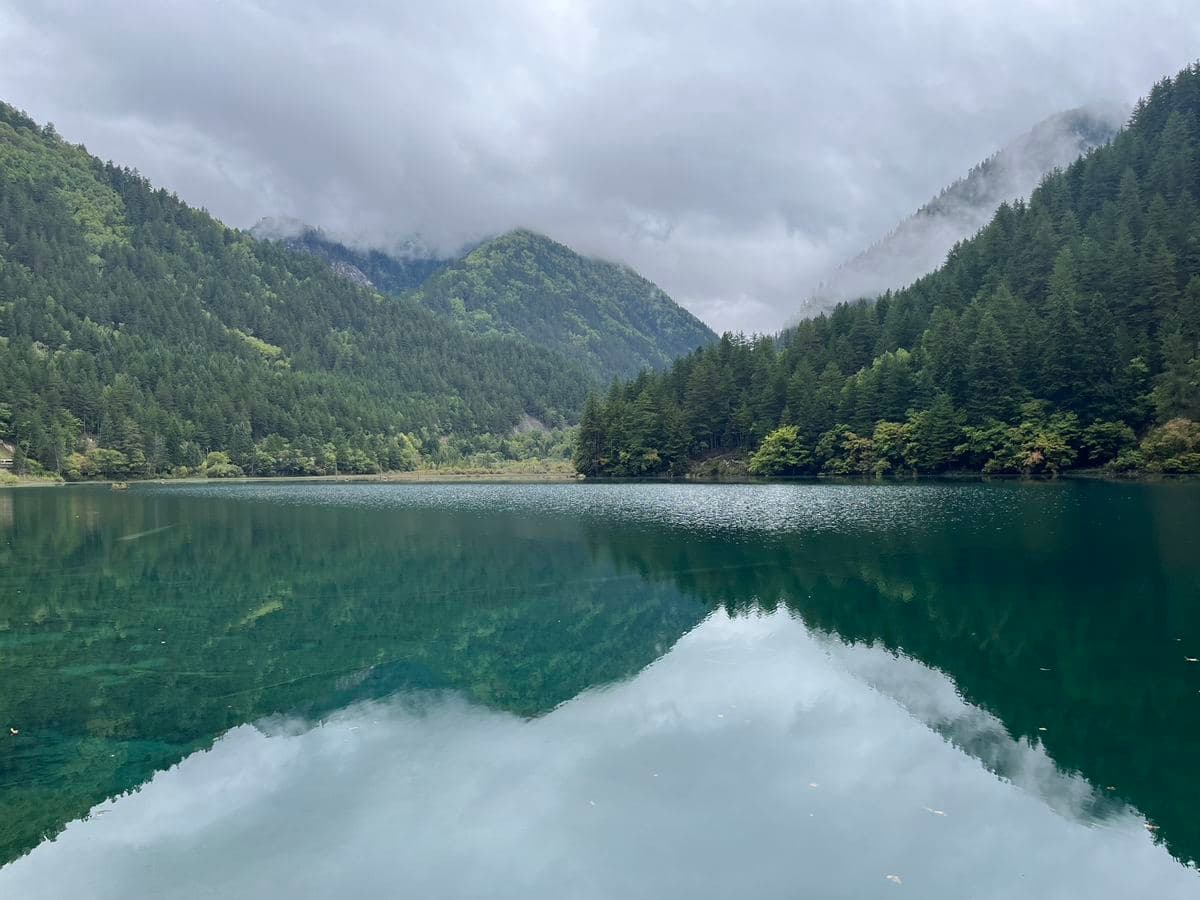
No river is more colourful or pure than Jiuzhaigou's, and no mountain's foliage is more brilliant and varied. Here nature is never monochrome: in spring new buds turn green, in summer orioles and swallows dart about, in autumn the mountains blaze with red leaves, and in winter the ice gleams like jade. Water is the soul of Jiuzhaigou, which is why it is said that “once you have seen Jiuzhaigou's water, you need not see any other.”
The Shuzhenggou section is the main valley, about 14 km long, with more than 40 lakes (haizi), roughly 40% of all the lakes in the scenic area. It is the entrance to Jiuzhaigou: every visitor passes through Shuzheng Valley. Key sights include Penjing Beach, Reed Sea, Huohua Lake, Shuzheng Waterfall, Rhinoceros Lake and Nuorilang Waterfall. The Rizegou section is the highlight of the Jiuzhaigou scenic line, with stunningly beautiful and ever-changing scenery. Sights include the Nuorilang Lake Group, Mirror Lake, Pearl Shoals Waterfall, Peacock Channel, Five-Flower Lake, Panda Lake Waterfall, Arrow Bamboo Lake, Eagle Claw Cave, Swan Lake, Fangcao Lake, Jianyan Hanging Spring and the primeval forest. The Zharugou valley is the longest valley developed so far in Jiuzhaigou, at 18 km. It passes Jiwan Lake and Five-Colour Pond before reaching Changhai (Long Lake) at an altitude of 3,100 metres.
Frequently asked questions
How much does Jiuzhaigou cost?
Admission to Jiuzhaigou is Peak season: entrance ¥190, sightseeing bus ¥90; off-season: entrance ¥80, sightseeing bus ¥80, as listed in the 2025 guidebook. Prices can change; check the official channel before you go.
How long should I spend at Jiuzhaigou?
Plan on 1 day for Jiuzhaigou.
Where is Jiuzhaigou?
Jiuzhaigou is in Jiuzhaigou and Aba Prefecture, Sichuan Province, in the Southwest of China.
More places in Jiuzhaigou and Aba Prefecture

Huanglong National Scenic Area
Separated from Jiuzhaigou by a single mountain, Huanglong is remarkable for its glistening, smooth travertine rocks. The terraces wind up the gully like a golden dragon coiling its way upward. Within roughly one square kilometre behind Huanglong Temple lies the “golden” core of the scenic area. Less than 100 metres behind the rear temple stands the Dragon King Temple, where the annual Huanglong Temple Fair is held. Behind Huanglong Rear Temple rise the highest pools in the gully, the “Shitazhenhai” (Stone Pagoda Guarding the Sea), also known as the Five-Colour Pools. Visiting Huanglong without seeing these pools would be a great pity.
Peak season ¥170; off-season ¥60; cable car ¥80 up, ¥40 down · 1 day

Miyaluo and Bipenggou
The Miyaluo Golden Autumn Red Leaf Scenic Area is the largest and most spectacular red leaf scenic area discovered and opened in China to date. Its main attraction, Bipenggou, combines primeval forest, canyon scenery, lake waterfalls and snowy mountain meadows, where you can admire both snow and red leaves. Along the way to Miyaluo you pass Taoping Qiang Village, where you can see the most typical Qiang architecture, the diaolou (watchtowers). The towers are truly impressive.
Bipenggou admission plus shuttle bus within the park ¥60; Taoping Qiang Village ¥30 · Miyaluo: 2–3 hours; Bipenggou: 0.5–1 day
Ganbao Tibetan Village
The village is a typical large settlement of the Jiarong Tibetan people. The houses are built from granite taken from the riverbed. Stone houses stay warm in winter and cool in summer, and they are resistant to earthquakes, fire and water. From the hilltop you can look down over the entire village and gaze into the distance at the open snow-capped mountains.
Free · 1–2 hours
Haizigou
Haizigou is the essential route for climbing the peaks of Siguniang Mountain. Climbers usually enter through Haizigou and reach Camp 1 and base camp on foot or on horseback. The scenery in Haizigou is wild and magnificent. The first half, through Guowoping and Chaoshanping, is dominated by alpine meadows, while the second half is mainly lakes (haizi). The valley can only be explored on foot or by horse, and it is recommended to spend a night camping in the gully to fully enjoy its beautiful scenery.
¥60 (April–November); ¥40 (November–March of the following year) · 2–3 hours
China Ancient Qiang City Scenic Area
The world's largest core exhibition site for Qiang culture, Ancient Qiang City combines cultural heritage protection, leisure experiences and sightseeing. It vividly showcases the past and present development of the Qiang people and their precious cultural treasures. The site includes the China Qiang Museum, an Intangible Cultural Heritage Transmission Centre and Qiang Culture Square.
2–4 hours
Munigou
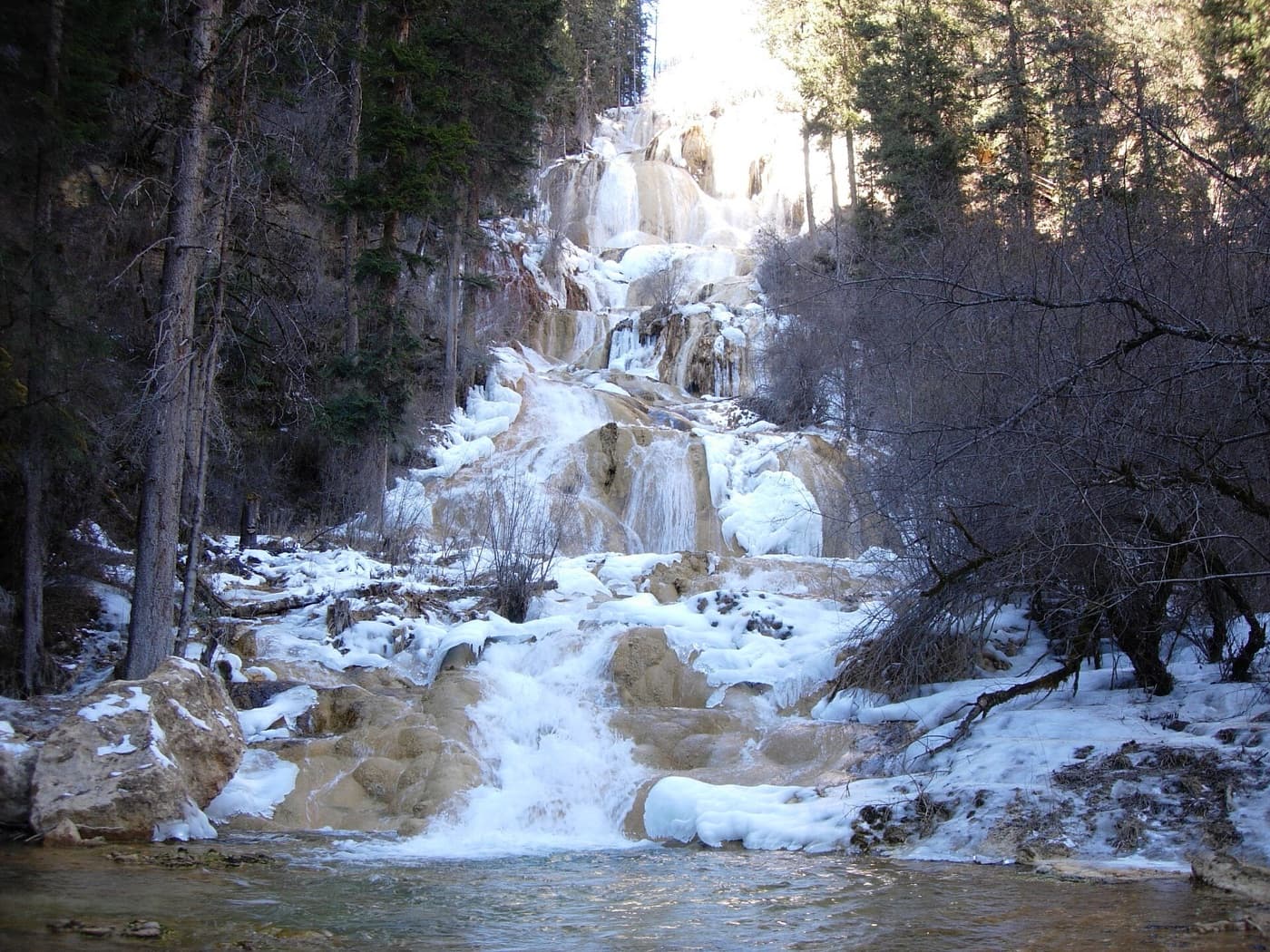
Munigou is covered in forest, and its mountains, woods, caves and lakes complement one another beautifully. Its large and small lakes and the magnificent travertine pools and waterfalls are its most stunning features. Munigou is a dazzling new star on the “Jiuzhaigou–Huanglong” golden tourist route. Zhaga Waterfall stands 104 metres tall and is the highest calcified waterfall in China. Separated from Zhaga Waterfall by a mountain, Erdaohai lies at the end of the Munigou scenic area and is the highlight of Munigou. It combines the charms of both Jiuzhaigou and Huanglong. At the deepest point of Erdaohai, beneath an ancient pine, lies Pearl Lake, whose waters are said to help with various skin conditions.
Zhaga Waterfall ¥70; Erdaohai ¥70; combined ticket ¥100