Pingyao travel guide
平遥
Pingyao's old town still has 3,797 traditional courtyard houses, most of which are inhabited. With its intact ancient city walls and the traditional residences where people still live,…
19 places · In the guidebook: pages 1801–1823

Pingyao, Shanxi Province · AI illustration for China Trip
Quick itinerary
Pingyao in 1 days
- Day 1
- Pingyao Ancient City (Ancient City Wall→
- Rishengchang Draft Bank→
- Ming and Qing Street→
- Yonglonghao→
- Escort Agency Museum→
- Gushi Tower→
- Ancient County Yamen→
- City God Temple→
- Grand Opera House→
- Confucius Temple→
- Qingxu Temple→
- North China's No. 1 Escort Agency)
The feel of the place
- Traditional Residences
- Pingyao's old town still has 3,797 traditional courtyard houses, most of which are inhabited. With its intact ancient city walls and the traditional residences where people still live, Pingyao remains a living ancient city.
- Old Draft Banks
- Pingyao was home to China's earliest financial institutions: the draft banks (piaohao). In their heyday, the eight great Pingyao draft banks, led by Rishengchang, had branches in 45 cities across China and even maintained remittance business with San Francisco and New York. It was these financial magnates of the time who shaped today's Pingyao, and the exquisite mansions that still stand there remain a major force in the town's economy.
Pingyao's Three Treasures
Pingyao's three treasures are lacquerware, beef and Changshan yam.
Preparation and Information
Language
As a highly commercialised tourist destination with a prosperous past, communicating in Pingyao should not pose much of a problem.
Climate and Travel Season
Pingyao has distinct seasons, with a large temperature difference between winter and summer. January is the coldest month, at around -7°C; July is the hottest, at around 28°C, with an extreme high of 39°C. The annual average temperature is around 10°C, and summer has the most rainfall. The best seasons to visit Pingyao are summer and autumn.
Pingyao's Draft Banks
Draft banks (piaohao) were money-changing houses run by Shanxi merchants in former times, focused mainly on remittance business, and they reached their peak in the late Qing dynasty. Draft bank merchants are one of Pingyao's defining features. Records show that Pingyao once had dozens of draft banks; the 22 most famous were: Rishengchang, Weitaihou, Weifenghou, Weishengchang, Xintaihou, Tianchengheng, Rixinzhong, Xiehexin, Xietongqing, Baichuantong, Qianshengheng, Qianjisheng, Weichanghou, Qideichang, Yunfengtai, Songshengchang, Xianghezhen, Yishengchang, Huiyuanyong, Yongtaiqing, Yongtaiyu and Baofenglong.
Pingyao International Photography Festival
Since 2001, Pingyao has held an International Photography Festival every year in mid-to-late September, which has become a major event in China's photography world. Visitors at this time can see photography exhibitions and take part in many celebratory activities.
Pingyao International Film Festival
Every October, Pingyao holds the Pingyao International Film Festival, founded by director Jia Zhangke. It is an absolute carnival for film lovers.
Pingyao Taxi Fares
Pingyao taxis have a flag-fall of ¥6 for the first 1.5 km, then ¥1.8 per km.
Protection Against Sand
Shanxi is cold, dry and windy with plenty of sand. When visiting Pingyao, it's best to bring sunglasses and a hat for protection against wind and sand.
Things to see
*Once More, Pingyao* is staged on the south side of the Lize Garden International Hotel on Shuncheng Road, outside the West Gate. Performances run Tuesday to Sunday, with no shows on Mondays. There are two shows daily, at 14:00 and 19:00, and each show lasts 90 minutes.

Pingyao Ancient City Wall
2–4 hours · The ancient town is open free of charge; a combined ticket for the sights costs ¥125.
The Pingyao Ancient City Wall is one of the few complete ancient county-level city walls still standing in China. The earliest rammed-earth walls are said to have been built by Yin Jifu, a great general of the Western Zhou dynasty. During the Hongwu era of the Ming dynasty, the wall was expanded on the old foundation into the brick-and-stone structure seen today. The city’s overall layout is shaped like a tortoise, giving rise to the saying “the tortoise plays in the water, mountains face the sun,” which is why Pingyao is also commonly called “Tortoise City.” The old town has six gates, each with its own symbolism: the South Gate is the tortoise’s head, facing the Zhongdu River; outside the city there were originally two wells, likened to the tortoise’s eyes; the North Gate is the tortoise’s tail and the lowest point of the town, so all the city’s rainwater drains out through it; the four gates and barbicans in the east and west are like the tortoise’s paws stretched forward. Only the outer gate of the barbican at the East Lower Gate opens straight to the east. Legend has it that the builders feared the tortoise would crawl away, so they straightened its left leg and tied it to the Lutai Pagoda in Cisi Temple outside the city. The city wall is said to have 3,000 crenellations and 72 small watchtowers, symbolizing Confucius’s 3,000 disciples and 72 sages, so that this bustling commercial city would never lack literary refinement.

Rishengchang Draft Bank
1–1.5 hours · Included in the Pingyao Ancient Town combined ticket
Experience the legend of the Shanxi merchants. Founded in the Daoguang era of the Qing dynasty, Rishengchang was China’s first and also largest draft bank (piaohao) handling remittance business. At its peak, Rishengchang had branches in 35 cities large and small across the country, with annual remittance volumes ranging from 1 million to 38 million taels of silver. Today, Rishengchang is also known as the China Draft Bank Museum. It has more than 20 exhibition halls, broadly divided into a historical display section and a section recreating the original layout, which together trace the development of China’s national banking industry.

Shuanglin Temple
Shuanglin Temple was originally called Zhongdu Temple and was built in the early Northern Wei dynasty. Across its three courtyards and ten halls, more than 2,000 colored sculptures of Vajra guardians, Guanyin, Arhats and others from the Song, Yuan, Ming and Qing dynasties have been preserved. Particularly noteworthy are the lifelike donor figures, rare examples of secular sculpture from ancient times. The religious statues inside the temple are also not overly stylised. Each one has its own distinct form and spirit, making them rare artistic treasures of antiquity. Among them, the 'Guanyin Crossing the Sea' and the 'Guanyin at Ease' are especially exquisite.
2–3 hours · ¥33
Pingyao County Government Office
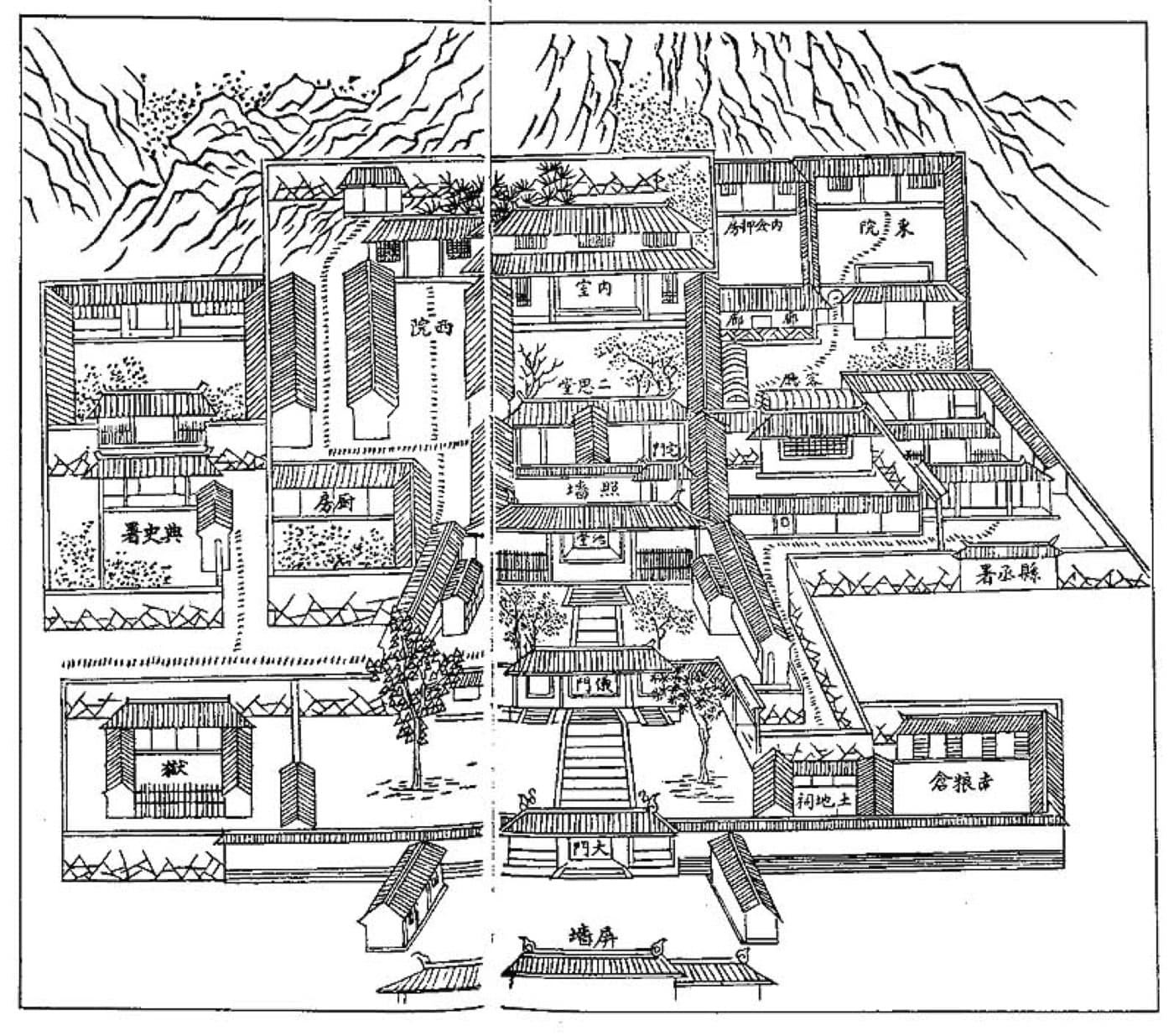
The Pingyao County Government Office is one of the very few complete ancient county yamens still surviving in China. Its buildings line up along the central axis, with Six Ministries offices (六部房) in the east and west wings. The courtyard also contains a bell tower, an Earth God shrine, grain halls, a heavy prison, a female prison, a light prison, the Hall of the King of Hell and many other structures. The yamen also houses the only Imperial Edict Museum in China.
1 hour
City God Temple
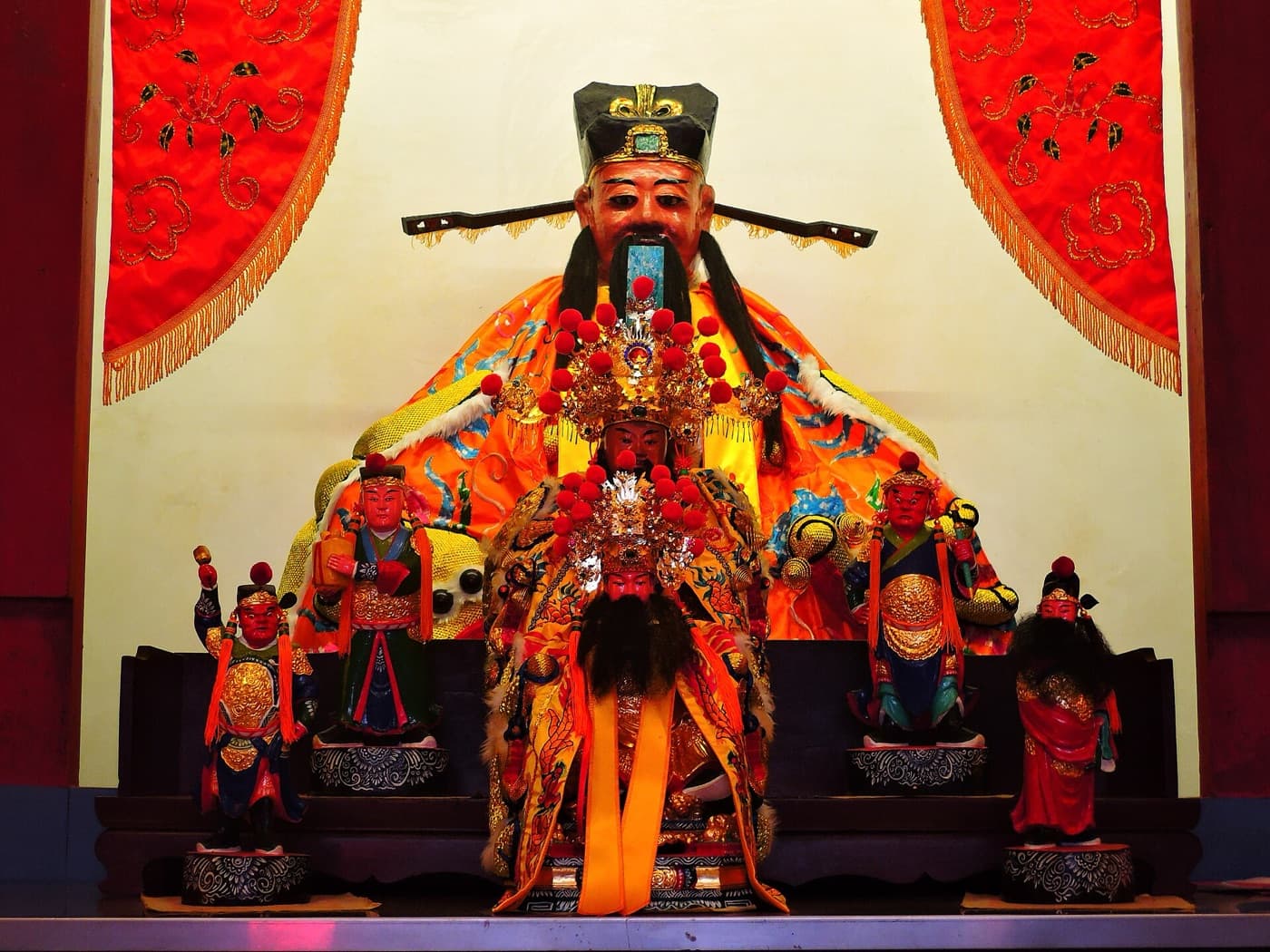
The surviving temple buildings date from the Ming and Qing dynasties and are among the most completely preserved City God Temples in China. Its most distinctive feature is a “temple within a temple”: the City God Temple, the Caishen (God of Wealth) Temple and the Zaojun (Kitchen God) Temple are linked together, forming a unique scene of “deities of different kinds sharing one temple and receiving incense together.” The City God sits in the centre, with the Kitchen God and the God of Wealth on either side. The octagonal trigram caisson (藻井) above the Caishen opera stage was created by cleverly using the rear ends of the bracket arms (斗拱翘昂) as decoration. It is not only distinctive in form but also helps gather and project sound. Five large earthenware jars are buried beneath the stage floor, creating resonance and giving the stage excellent acoustics.
1–2 hours
Qingxu Temple
Qingxu Temple was first built in the Tang dynasty and is a Taoist temple complex. The complex has 10 buildings in total. The Dragon and Tiger Hall and the Three Pure Ones Hall were built in the Yuan dynasty, and the Azure Dragon and White Tiger statues are rare masterpieces of Yuan sculpture. The surviving relics of the Chunyang Palace include nearly 30 stone steles from the Song, Yuan, Ming and Qing dynasties. Qingxu Temple now houses the Pingyao Cultural Relics Exhibition Hall. It displays Tang and Song cast-iron Buddha statues and many Ming-dynasty wooden Taoist deity statues. The latter are life-sized and rarely seen elsewhere in China.
30 minutes
China Escort Agency Museum
The China Escort Agency Museum introduces the history of China’s escort agencies (镖局), along with the ten most famous escort agencies and ten most famous escort masters of the Ming and Qing dynasties, and anecdotes from the process of escorting goods. It is well worth a visit.
0.5–1 hour · Included in the Pingyao Ancient Town combined ticket
Zhenguo Temple
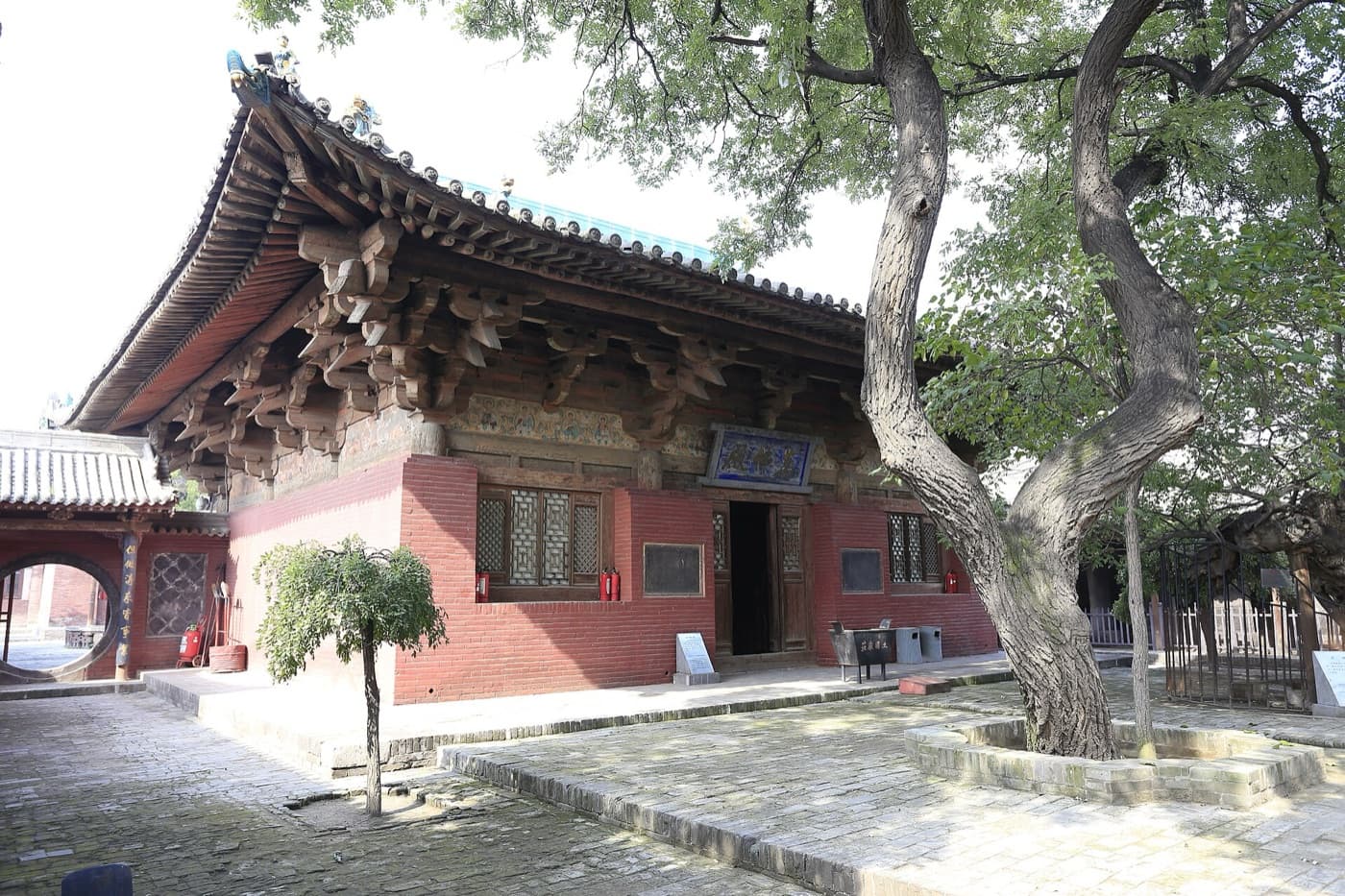
The entire temple was built without a single nail. All structures are joined wood-to-wood by mortise and tenon, making it a great treasure of ancient Chinese architecture. The temple is divided into front and rear sections, with the Heavenly King Hall, Hall of Ten Thousand Buddhas, Three Buddhas Tower and others arranged from south to north. The most famous feature inside the Three Buddhas Tower is the Ming-dynasty mural on its walls, which depicts the life of Shakyamuni Buddha. Its composition is complete and fluid, making it a treasure of Ming-dynasty mural painting.
1–2 hours · ¥23
Getting there & around
Getting In and Out
Getting to and from Pingyao relies mainly on rail and road, and transport is convenient.
Rail
The Tongpu Railway runs north-south through Pingyao, reaching north to Taiyuan and Shijiazhuang and south to Linfen and Yuncheng. Pingyao has two railway stations: Pingyao Station and Pingyao Ancient City Station. Pingyao Ancient City Station is a high-speed rail station, while Pingyao Station mainly serves ordinary fast trains. Visitors departing from Beijing, Lanzhou, Chongqing, Xi'an, Jinan and other cities can take high-speed and EMU trains that run directly to Ancient City Station. The journey from Beijing to Pingyao takes about 4 hours.
From Pingyao Ancient City Station to the old town, take bus route 108; the fare is ¥1 and the journey takes about 40 minutes. From Pingyao Station, the old town is about 2 km away and can be reached on foot.
Road
Pingyao and Taiyuan are connected by road. Buses from Jiannan Bus Station in Taiyuan take only about 2 hours, with a fare of about ¥28.
Local Transport
Pingyao's old town is not large, and its streets are narrow and densely populated, so you generally do not need a vehicle to tour it; walking is sufficient. The town also has rickshaws and electric carts operated specifically for visitors.
Pingyao Bus Station
Road- Address:
- East side of the railway station
- Phone:
- 0354-5690011
Eat & drink
Food in Pingyao centres on noodles. Shanxi is said to have over 300 kinds of noodles, though for most people the differences are mainly in shape. Like most of Shanxi, Pingyao locals typically eat millet porridge, steamed buns and baked flatbreads in the morning and evening. At midday, the choice is all kinds of noodle dishes, such as dalu noodles (noodles with braised toppings), zhajiang noodles (noodles with fried soybean paste sauce) and cuo'er (hand-pinched dough flakes). The toppings are plentiful and the flavours are refreshing.
Local Snacks and Snack Streets
Drink Purified Water
Pingyao's tap water tastes slightly salty and may cause mild discomfort when drunk. It is advisable to buy purified water instead.
Try the Local Specialities
The Ming-Qing Street in the old town has many restaurants where you can sample Pingyao's local specialities.
Tips for Eating in Pingyao
1. When having breakfast here, always ask the price beforehand, or you will likely be overcharged. The difference may only be a few yuan, but it will spoil your mood.
2. Meals in Pingyao usually mean noodles. If you really want rice, not every restaurant will have it, and even where it is available, the price is surprisingly high: ¥3 for a small bowl and ¥5 for a large bowl.
Reverse-Pedalling Tricycles
Reverse-pedalling tricycles are a familiar sight in Pingyao. Renting one in the evening and wandering freely around the city is especially enjoyable.
Bargaining in Pingyao
Almost everything here is negotiable, including entrance tickets (especially for smaller sights), and accommodation, meals and shopping even more so. Just don't haggle too aggressively, or it may cause hassle.
Pingyao Beef
Local Snacks and Snack StreetsA famous Pingyao speciality: a uniquely processed braised beef that is served in almost every restaurant in Pingyao and is also sold at street stalls. Pingyao beef has a mild flavour and colour, and a tender, smooth texture. If you want to take some home, vacuum-packed versions are available, and the Guanyun brand is considered the best quality.
Dougan (Dried Tofu)
Local Snacks and Snack StreetsPingyao dried tofu is delicious, so be sure to give it a try.
Wantuo (Bowl-Served Snack)
Local Snacks and Snack StreetsA traditional local snack of Pingyao County and an excellent accompaniment to drinks, with a strong regional character. Wantuo was created in the early Guangxu reign of the Qing dynasty by Master Dong Xuan, a renowned chef from Nanbao in the south of Pingyao County, and has a history of over 100 years.
Cao Family Smoked Pork Knuckle
Local Snacks and Snack StreetsA traditional delicacy that rivals Pingyao beef in fame. It was once selected for the imperial court, where it won the praise of Empress Dowager Cixi, who was known for her discerning palate.
Long Mountain Yam
Local Snacks and Snack StreetsIn Pingyao, known as the "Home of the Long Mountain Yam", there are many ways to cook it, such as stir-frying and deep-frying. The most distinctive are honey-glazed Long Mountain Yam and medicinal-herb Long Mountain Yam.
Zuipingyao Restaurant · Dreaming of the Ancient City
Recommended Places to EatA highly recommended snack and noodle restaurant that offers five-star quality at very affordable prices. Guoyourou (stir-fried pork), kaolaolao, Long Mountain Yam, wantuo, knife-cut noodles and many other Shanxi specialities are all available here.
- Address:
- No. 16 Nanjie Street, Pingyao Ancient City
- Phone:
- 13293548000
Where to stay
As a popular tourist city, Pingyao has many hotels for visitors to stay in. The most distinctive option is to stay in one of the traditional old residences, with their square courtyards, small central patios, wooden lintels and floors……
Leave Early in the Morning
These residences are open to visitors during the day, so you will usually need to check out by around 9:00 a.m. the next morning.
Where to Buy Daily Necessities
If you need daily necessities, there are two supermarkets in front of the railway station with moderate prices.
Accommodation Outside the Old Town
There are many hotels and guesthouses outside the old town, and prices are usually lower than for comparable places inside the walls.
Family Guesthouses
Recommended AccommodationThese are old residences converted into guesthouses, usually run privately in ancestral homes. Prices are negotiable, and standard rooms are around ¥100. You may still see faded paintings on the walls from two or three hundred years ago, and staying there feels like a dream. The bedding is usually the owners' own. Often there is no private bathroom; there is a chamber pot in the corner, otherwise you will need to use the public toilet outside the room. Showers are also only available in the public bathhouse.
Tianyuankui Inn
Leave Early in the MorningThe hotel is not large but has plenty of old-world charm, making it a good place to stay. Bicycles can be rented at the inn for ¥10 a day.
- Address:
- No. 73 Nanjie Street, Ancient City
- Phone:
- 0354-5680069
Jinjing Tower Inn
Leave Early in the MorningThe facilities here are relatively new and very clean.
- Address:
- No. 29 Nanjie Street, Old Town
- Phone:
- 0354-5683751
Pingyao Yide Inn
Leave Very Early in the MorningSaid to have been developed from the former residence of the Wang family, a prominent banking dynasty that ran draft banks (piaohao), this is a classic two-courtyard siheyuan with authentic Ming and Qing architecture. The exterior looks worn, but the interior is very clean, and the grandeur of the past is still easy to sense. Staying here gives you the illusion of having stepped back in time.
- Address:
- 16 Shaxiang Street
- Phone:
- 0354-5686507
Shopping
The old town has boosted tourism, and it has also boosted the circulation of antiques and handicrafts. Although it can be hard to tell whether antiques are genuine, hunting for antiques and buying crafts remains one of the highlights of a visit to Pingyao.
Recommended Shopping
Antiques on Ming-Qing Street
Recommended ShoppingMany shops on Ming-Qing Street sell antiques, and it is hard to tell which are genuine. There are usually more people looking than buying. If you are serious about buying, you will need to bargain hard, but don't push the price down so far that the low figure scares you off. Here, a small antique vanity box can be priced at over ¥1,000.
Tuiguang Lacquerware
Recommended ShoppingA famous Pingyao handicraft with fine workmanship that gleams brilliantly from a distance. However, it is made on machine production lines, so it lacks the artistic creativity and rustic charm of traditional handmade work.
Insoles on West Street
Recommended ShoppingAbout 50 metres north of the western exit of Ming-Qing Street, there is an unassuming little shop with beautiful insoles displayed at the entrance as a marker. The insoles, with sky-blue, pink or light-green backgrounds, are embroidered with rose-red, sapphire-blue and parrot-green patterns. They cost about ¥20 a pair, and you can bargain.
Old Wooden Furniture
Recommended ShoppingShanxi's Ming and Qing furniture has a distinct style, with simple, rustic forms, generous use of materials and frequent lacquer painting. It offers a different charm from the finely carved hardwood furniture of Jiangnan. If you are lucky, you may find some on Ming-Qing Street.
Paper Cuts
Recommended ShoppingPingyao County is renowned for its paper cuts. The Ancient City Paper Cutting shop at No. 56 Zhengfu Street (where you can watch the process being made) and the Jianyiyuan on West Street of Pingyao are good places to buy them.
Shage Xiren (Gauze-Pavilion Puppets)
Recommended ShoppingBased on traditional opera, each small pavilion stages a single play, presenting the joys, sorrows, loves and hatreds of its characters on a miniature stage. Worth a look.
Nightlife
The most relaxing night life in the old town is to pick up a packet of beef from a street stall, buy a pot of Changshengyuan yellow rice wine, warm it in a teapot, and sit cross-legged on the heated kang (brick bed) of a traditional residence, with a small low table in front of you. Drinking wine and eating beef there, you may feel like a hero from Water Margin. It may seem a little affected, but it is a delightful way to spend a night in the ancient town.
Day trips & beyond

Wang Family Compound
Known as 'the First Residence in China' and 'the Forbidden City of the folk'. The Wang Family Compound referred to here means the two most distinctive of the many Wang family properties in Lingshi County: Gaojiaya and Hongmenpu. Their combined built area exceeds 30,000 square metres. Gaojiaya is an enclosed, fortress-style complex, a veritable museum of architectural art. Built into the mountainside, it is imposing and grand. It has 26 courtyards and more than 200 rooms, divided into front and rear courtyards. The front courtyard served as the social space, where exquisite brick, stone and wood carvings can be seen everywhere from the gate to the interior rooms. The rear courtyard was the owners' living quarters, likewise decorated mainly with carvings, refined and elegant. Hongmenpu faces Gaojiaya across the east-west axis and takes its name from its red gate. The stone carvings within the fortress are distinctive and richly meaningful, blending northern and southern styles. They are a model of Qing-dynasty carving art.
2–3 hours

Chang Family Manor
Chang Family Manor is a Qing-dynasty complex of northern residences. The saying from central Shanxi, 'One courtyard for the Qiaos, two streets for the Changs', conveys its vast scale. Within the courtyards, pavilions, terraces, towers and studios sit among unusual rocks and rare flowers. The exquisite brick, wood and stone carvings, along with the painted decoration on the timber components, are all considered masterpieces of Qing architectural art.
2 hours
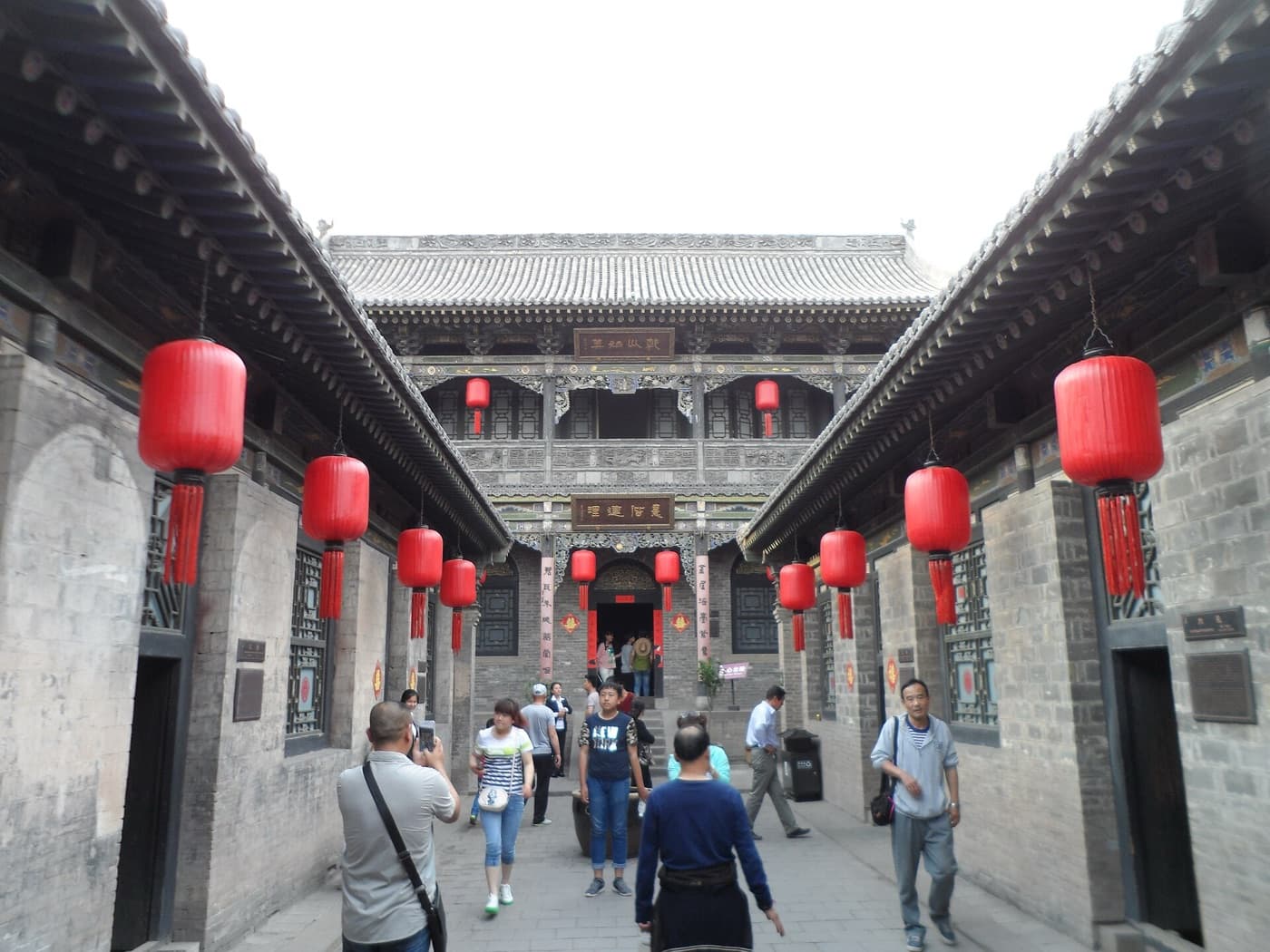
Qiao Family Compound
The filming location of Raise the Red Lantern. The compound has not a single blade of grass or tree. Its near-absolute symmetry and layered repetition have a powerful impact. It is a typical residence of a wealthy Qing-dynasty family, with 19 courtyards and over 300 rooms arranged in the shape of the double-happiness character 双喜. On the brick screen wall opposite the main gate, the 'One Longevity Becomes a Hundred' panel features 100 different styles of the character for 'longevity'. Their archaic, vigorous forms make it a rare artwork. The compound also holds more than 500 ancient paintings and calligraphy works by famous masters of the Tang, Five Dynasties, Song, Yuan, Ming and Qing dynasties, most of them treasures.
2–3 hours
Cao Family Compound (Sanduo Hall)
The whole complex is laid out in the shape of the character 寿 (longevity), and is characterised by its towering, thick and simple architecture. Cao Family Compound preserves architectural complexes from the Ming, Qing and Republican periods and displays countless treasures. It is a newly developed tourist site celebrating Shanxi merchant culture.
1 hour
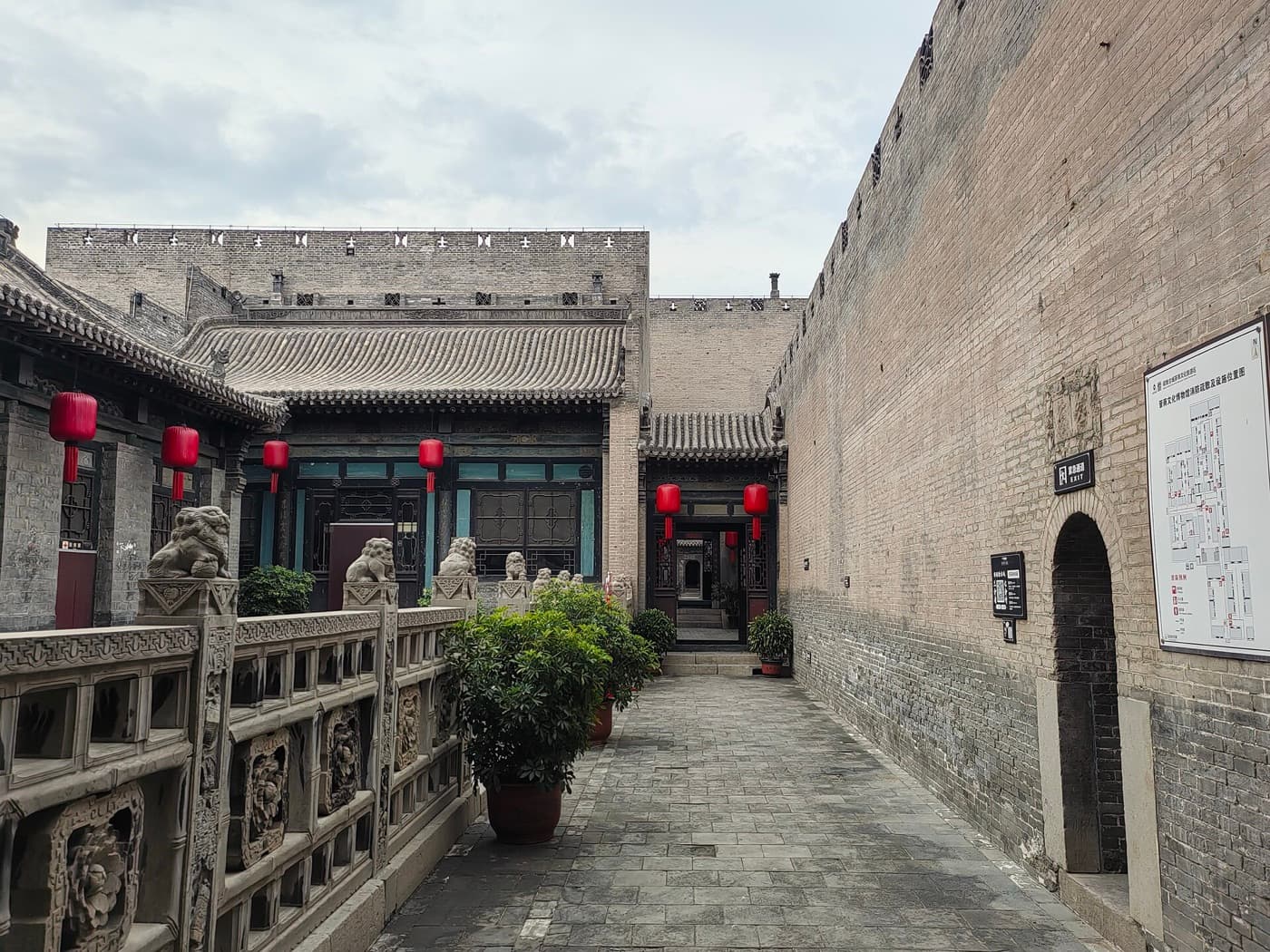
Qu Family Compound
The Qu family, who built Qu Family Compound, were prominent merchants of central Shanxi, famous nationwide since the Ming and Qing dynasties. They had more than a dozen courtyards and over a thousand rooms in Qixian town, earning them the nickname 'Qu Half-City'. Every architectural element of Qu Family Compound is a rare work of art. Architects have praised it as embodying the styles of the Song, Yuan, Ming and Qing dynasties and combining the best of Jiangnan and Hebei.
1–3 hours
Kong Xiangxi Residence
This was formerly the old home of a well-known gentry family surnamed Meng in Taigu. When the family's fortunes declined, it was bought by Kong Xiangxi, a man renowned for 'managing finances with skill'. The whole compound sits on the south side and faces north. It consists of multiple interlocking courtyards, each divided into several quadrangles.
2 hours
Zhangbi Ancient Fortress
'Strange deities in ancient temples, bright fortress walls and hidden tunnels that amaze' is the greatest feature of this thousand-year-old fortress. It is believed that Zhangbi Ancient Fortress was built between the late Sui and early Tang dynasties as a military stronghold, and its shape resembles a dragon. Within the fortress lies an extensive network of tunnels with a total length of nearly 10 kilometres. Many villages in Shanxi have tunnels, but none has been found with a layout as complex and extensive as Zhangbi's.
2 hours
Yuci Old Town
The old town contains many historical sites and cultural landmarks, including the City God Temple, the county government office, the Confucian Temple, Fengming Academy, the North-South Main Street, the Market Tower, Sifeng Tower, Qingxu Pavilion, Dacheng Temple, the West Garden, and the Sang Yun Former Residence Ruins Park. Together they form a distinctive Ming-Qing landscape that unites temple, market, street and scenery.
3–4 hours
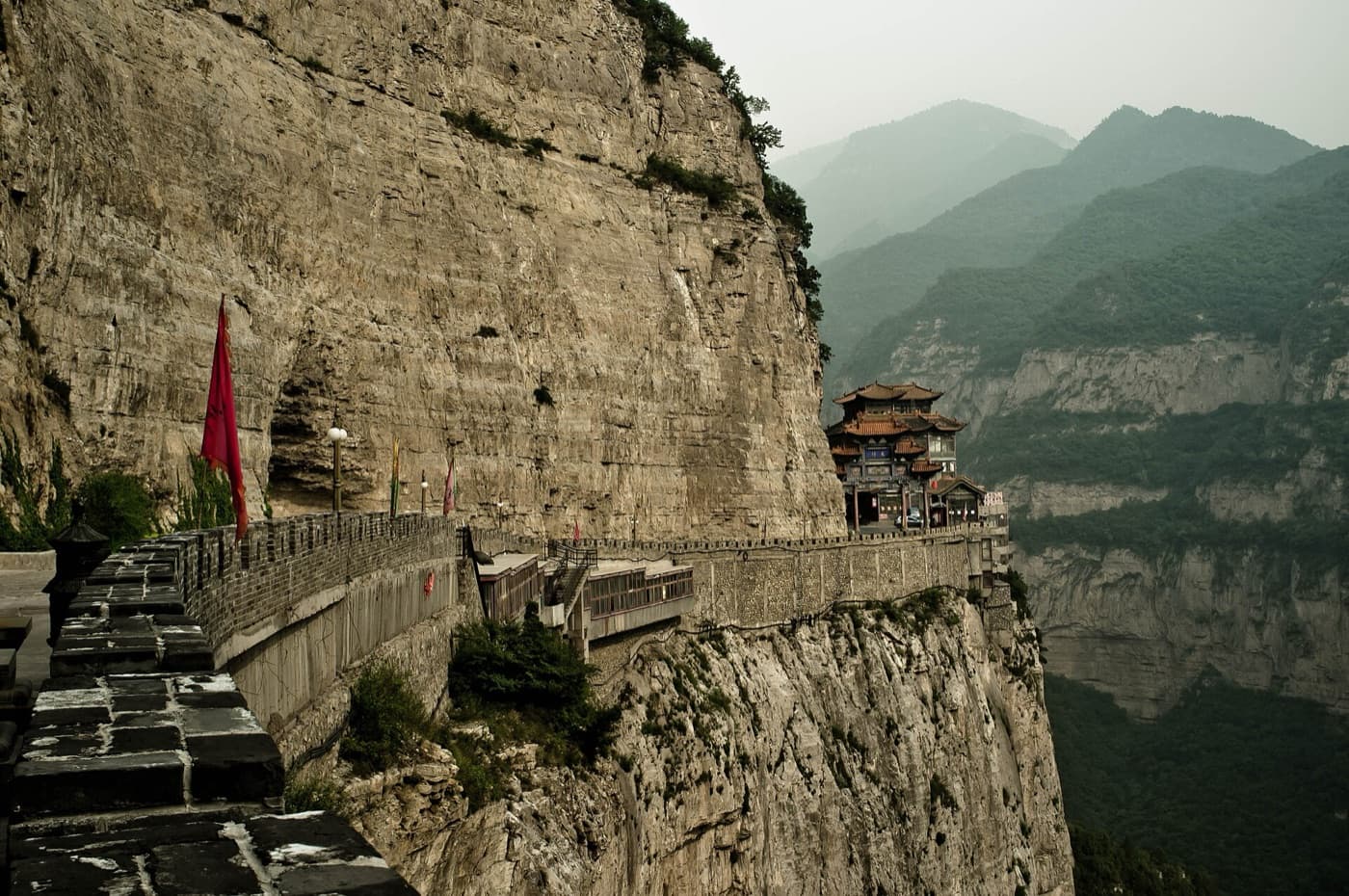
Mianshan Mountain
Mianshan lies southeast of Jiexiu, 20 km from the urban centre. It is the birthplace of the Cold Food Festival (寒食节) because Jie Zitui (介子推), a famous minister of the Jin state, hid here and died in a fire. The scenic area combines mountain scenery, cultural relics, Buddhist and Taoist temples and revolutionary sites. Two sights should not be missed. The first is Baofu Temple (抱腹寺), a breathtakingly precipitous spot where more than 20 halls are tucked beneath Baofu Cliff, sheltered from wind, rain and snow. The second is Shuitao Gully (水涛沟), considered the spirit of Mianshan. Legend says it was formed by the hoofprints of General Yuchi Gong (尉迟恭) when his horse stumbled. The air here is exceptionally fresh, with more than 15,000 negative ions per square metre, earning it the name "natural oxygen bar." Its most striking feature is the spectacular "Ten-Li Gallery of Cascades" (十里画廊,叠瀑大观): a ten-li (about 5 km) water system with nearly a hundred waterfalls, the largest dropping more than 80 metres and the smallest just 0.5 metres.
1 day
Shi Family Compound
The village sits in a mountain formation shaped like a phoenix, and the compound lies right at the bird's heart. Stone paths are one of Shi Family Compound's signature features. Every courtyard is linked by paths paved with uniform sandy stone slabs, and stone streets and lanes wind through the village. The architectural carving here is exceptionally fine. Most notable are the window lattices and partition screens dominated by the character 寿 (shòu, "longevity"), which feature 108 different designs. These are said to represent the Shi family's 108 businesses and Shanxi's 108 counties.
1 day
Hougou Ancient Village
The village is built into the mountainside. Most of its dwellings are independent cave dwellings (yaodong) from the Qing dynasty and the Republican era, mainly laid out as traditional three-sided and four-sided courtyards. What makes the village especially remarkable is that it preserves a complete and pure set of folk customs of the northern Han Chinese. Its many customs and traditional festivals are still carried in the memory of local residents.
2–4 hours
Source: China Self-Guided Travel 2025 (《中国自助游》, Tianjin Science & Technology Press, Aug 2024), pp. 1801–1823. Translated from the Chinese edition; names and prices follow the guidebook. · Plain text version