Zhenguo Temple
The entire temple was built without a single nail. All structures are joined wood-to-wood by mortise and tenon, making it a great treasure of ancient Chinese architecture.…
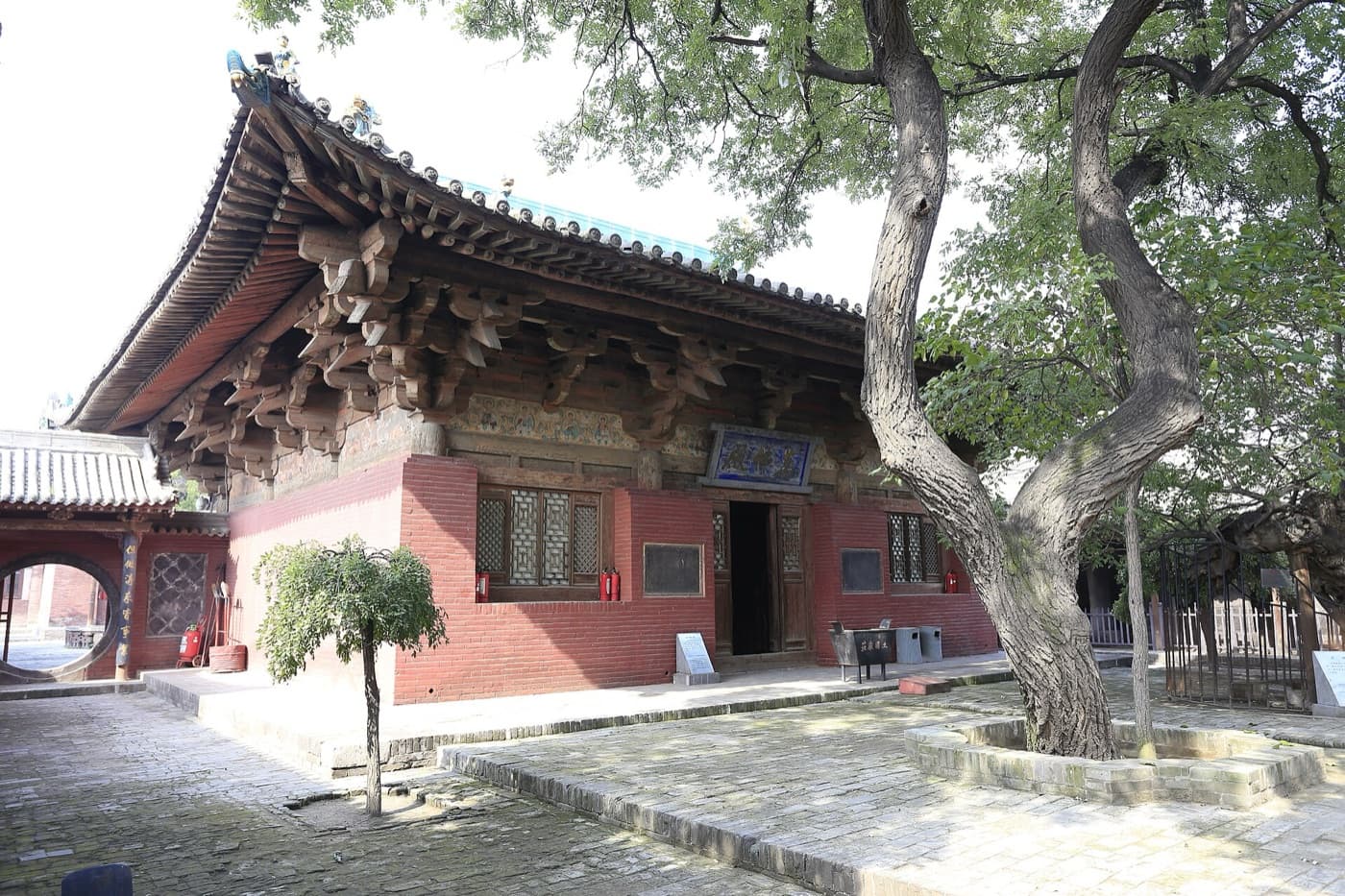
Zhenguo Temple, Pingyao · Zhangzhugang · CC BY-SA 3.0 · Wikimedia Commons
Key facts
- Admission
- ¥23
- Opening hours
- 8:00–18:00 (1 April–8 October); 8:00–17:30 (9 October–31 March of the following year)
- Time needed
- 1–2 hours
- Getting there
- Within the city, take a bus to Haodong (bus stop). Alternatively, take a bus running between Qixian and Pingyao, or between Pingyao and Yuci, to Hongshan Town (fare ¥4). From Hongshan Town, rent a three-wheeled taxi for a round trip of about ¥10
- Guidebook rating
- 3 / 5
From China Self Guided Travel 2025, page 1811. Open in Google Maps
About Zhenguo Temple
The entire temple was built without a single nail. All structures are joined wood-to-wood by mortise and tenon, making it a great treasure of ancient Chinese architecture. The temple is divided into front and rear sections, with the Heavenly King Hall, Hall of Ten Thousand Buddhas, Three Buddhas Tower and others arranged from south to north. The most famous feature inside the Three Buddhas Tower is the Ming-dynasty mural on its walls, which depicts the life of Shakyamuni Buddha. Its composition is complete and fluid, making it a treasure of Ming-dynasty mural painting.
Frequently asked questions
How much does Zhenguo Temple cost?
Admission to Zhenguo Temple is ¥23, as listed in the 2025 guidebook. Prices can change; check the official channel before you go.
What are the opening hours of Zhenguo Temple?
Zhenguo Temple is open 8:00–18:00 (1 April–8 October); 8:00–17:30 (9 October–31 March of the following year).
How do I get to Zhenguo Temple?
Within the city, take a bus to Haodong (bus stop). Alternatively, take a bus running between Qixian and Pingyao, or between Pingyao and Yuci, to Hongshan Town (fare ¥4). From Hongshan Town, rent a three-wheeled taxi for a round trip of about ¥10
How long should I spend at Zhenguo Temple?
Plan on 1–2 hours for Zhenguo Temple.
Where is Zhenguo Temple?
Zhenguo Temple is in Pingyao, Shanxi Province, in the North China of China. Haodong Village, Pingyao County, Jinzhong City
More places in Pingyao

Shuanglin Temple
Shuanglin Temple was originally called Zhongdu Temple and was built in the early Northern Wei dynasty. Across its three courtyards and ten halls, more than 2,000 colored sculptures of Vajra guardians, Guanyin, Arhats and others from the Song, Yuan, Ming and Qing dynasties have been preserved. Particularly noteworthy are the lifelike donor figures, rare examples of secular sculpture from ancient times. The religious statues inside the temple are also not overly stylised. Each one has its own distinct form and spirit, making them rare artistic treasures of antiquity. Among them, the 'Guanyin Crossing the Sea' and the 'Guanyin at Ease' are especially exquisite.
¥33 · 2–3 hours

Rishengchang Draft Bank
Experience the legend of the Shanxi merchants. Founded in the Daoguang era of the Qing dynasty, Rishengchang was China’s first and also largest draft bank (piaohao) handling remittance business. At its peak, Rishengchang had branches in 35 cities large and small across the country, with annual remittance volumes ranging from 1 million to 38 million taels of silver. Today, Rishengchang is also known as the China Draft Bank Museum. It has more than 20 exhibition halls, broadly divided into a historical display section and a section recreating the original layout, which together trace the development of China’s national banking industry.
Included in the Pingyao Ancient Town combined ticket · 1–1.5 hours

Wang Family Compound
Known as 'the First Residence in China' and 'the Forbidden City of the folk'. The Wang Family Compound referred to here means the two most distinctive of the many Wang family properties in Lingshi County: Gaojiaya and Hongmenpu. Their combined built area exceeds 30,000 square metres. Gaojiaya is an enclosed, fortress-style complex, a veritable museum of architectural art. Built into the mountainside, it is imposing and grand. It has 26 courtyards and more than 200 rooms, divided into front and rear courtyards. The front courtyard served as the social space, where exquisite brick, stone and wood carvings can be seen everywhere from the gate to the interior rooms. The rear courtyard was the owners' living quarters, likewise decorated mainly with carvings, refined and elegant. Hongmenpu faces Gaojiaya across the east-west axis and takes its name from its red gate. The stone carvings within the fortress are distinctive and richly meaningful, blending northern and southern styles. They are a model of Qing-dynasty carving art.
¥55 · 2–3 hours

Pingyao Ancient City Wall
The Pingyao Ancient City Wall is one of the few complete ancient county-level city walls still standing in China. The earliest rammed-earth walls are said to have been built by Yin Jifu, a great general of the Western Zhou dynasty. During the Hongwu era of the Ming dynasty, the wall was expanded on the old foundation into the brick-and-stone structure seen today. The city’s overall layout is shaped like a tortoise, giving rise to the saying “the tortoise plays in the water, mountains face the sun,” which is why Pingyao is also commonly called “Tortoise City.” The old town has six gates, each with its own symbolism: the South Gate is the tortoise’s head, facing the Zhongdu River; outside the city there were originally two wells, likened to the tortoise’s eyes; the North Gate is the tortoise’s tail and the lowest point of the town, so all the city’s rainwater drains out through it; the four gates and barbicans in the east and west are like the tortoise’s paws stretched forward. Only the outer gate of the barbican at the East Lower Gate opens straight to the east. Legend has it that the builders feared the tortoise would crawl away, so they straightened its left leg and tied it to the Lutai Pagoda in Cisi Temple outside the city. The city wall is said to have 3,000 crenellations and 72 small watchtowers, symbolizing Confucius’s 3,000 disciples and 72 sages, so that this bustling commercial city would never lack literary refinement.
The ancient town is open free of charge; a combined ticket for the sights costs ¥125. · 2–4 hours

Chang Family Manor
Chang Family Manor is a Qing-dynasty complex of northern residences. The saying from central Shanxi, 'One courtyard for the Qiaos, two streets for the Changs', conveys its vast scale. Within the courtyards, pavilions, terraces, towers and studios sit among unusual rocks and rare flowers. The exquisite brick, wood and stone carvings, along with the painted decoration on the timber components, are all considered masterpieces of Qing architectural art.
¥80 · 2 hours
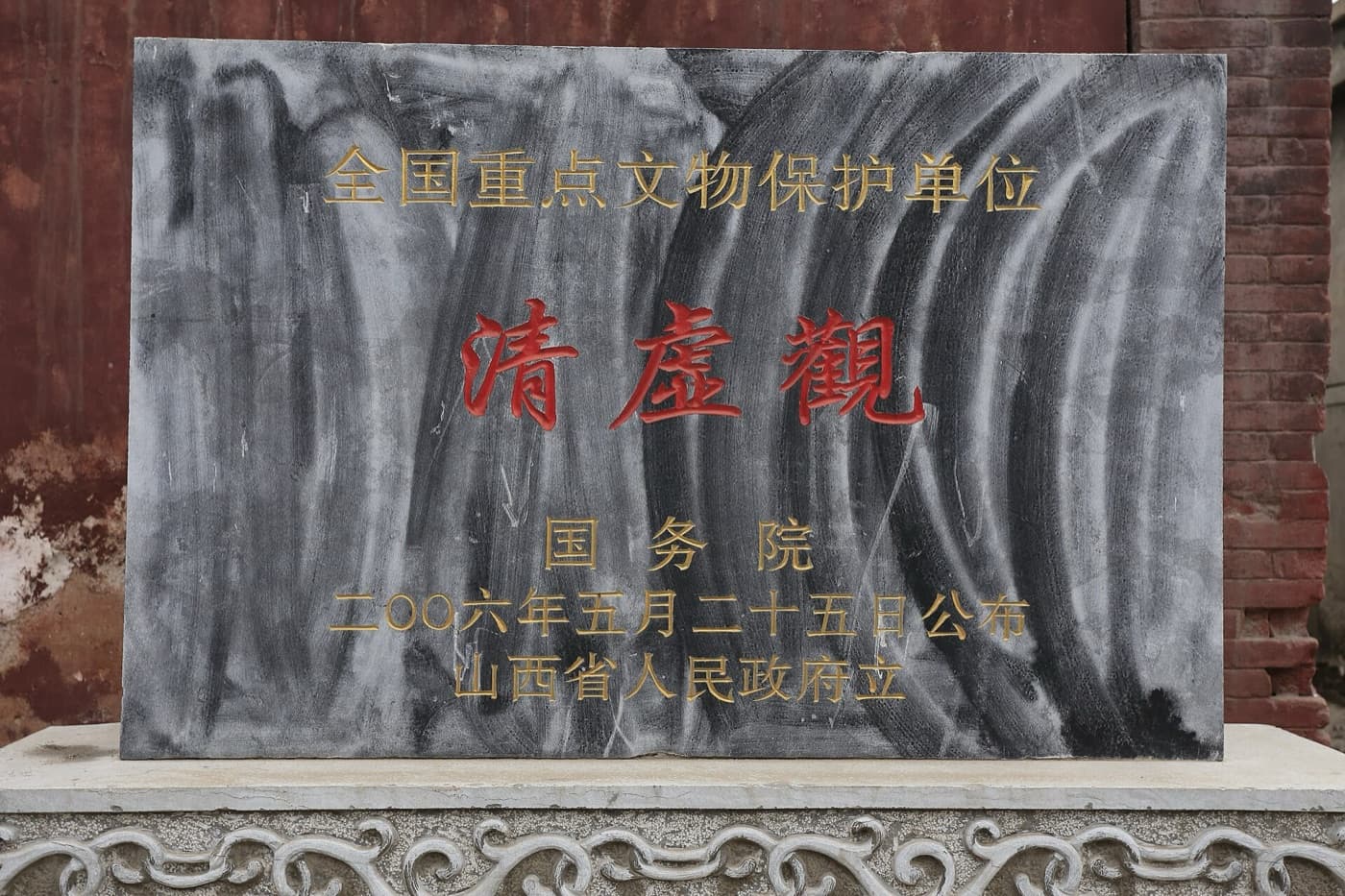
Qingxu Temple
Qingxu Temple was first built in the Tang dynasty and is a Taoist temple complex. The complex has 10 buildings in total. The Dragon and Tiger Hall and the Three Pure Ones Hall were built in the Yuan dynasty, and the Azure Dragon and White Tiger statues are rare masterpieces of Yuan sculpture. The surviving relics of the Chunyang Palace include nearly 30 stone steles from the Song, Yuan, Ming and Qing dynasties. Qingxu Temple now houses the Pingyao Cultural Relics Exhibition Hall. It displays Tang and Song cast-iron Buddha statues and many Ming-dynasty wooden Taoist deity statues. The latter are life-sized and rarely seen elsewhere in China.
30 minutes