Northern Shaanxi travel guide
陕北
Northern Shaanxi is a region rich in outstanding people, and a local saying goes: “Mizhi’s women, Suide’s men.” Both places have produced many remarkable figures since ancient times.…
12 places · In the guidebook: pages 669–681

Northern Shaanxi, Shaanxi Province · AI illustration for China Trip
Quick itinerary
Northern Shaanxi in 4 days
- Day 1
- Xi'an→
- Yaowang Mountain (Medicine King Mountain)→
- Yuhuagong Palace Ruins (overnight in Tongchuan or Huangling County)
- Day 2
- Day 3
- Yan'an Revolutionary Sites Tour
- Day 4
- Yan'an→
- Bolang Valley→
- Hongshi Gorge
The feel of the place
- Mizhi’s Women, Suide’s Men
- Northern Shaanxi is a region rich in outstanding people, and a local saying goes: “Mizhi’s women, Suide’s men.” Both places have produced many remarkable figures since ancient times. Mizhi’s women are known for being intelligent, virtuous and capable; Diaochan, one of the Four Great Beauties of China, was from Mizhi. Suide’s men are tall, bold and handsome; Han Shizhong, the famous Southern Song general who resisted the Jin, was from Suide. In modern times, both places have continued to produce talent: Mizhi gave us Gao Peilan and others, outstanding heroines who made major contributions to socialist construction, while Suide gave us Li Zizhou, one of the founders of the CCP’s Shaanxi organization.
tip: A trip to Northern Shaanxi mainly covers three areas: Tongchuan, Yan'an and Yulin. Tongchuan’s attractions focus on historical and cultural sites. If you have already visited Xi’an, Tongchuan’s sights are not must-sees, so you can decide whether to stop based on your time and interests.
Yan'an is the highlight of a Northern Shaanxi trip. If time allows, visit the ancient cypress forest at the Mausoleum of the Yellow Emperor to pay respects to Xuanyuan, the Yellow Emperor. Allow 2–3 days. The drive from Xi’an to Yan'an takes about 7 hours.
Yulin’s attractions include Hongshixia Gorge, Zhenbeitai and Qixing Temple, but what truly draws visitors is the still-undeveloped folk culture of Northern Shaanxi, which is ideal for photography enthusiasts to explore on their own.
tip: When viewing Hukou Waterfall, don’t stand too close to the railings, as some are loose and pose a safety hazard. Visitors begin to be cleared from the site at 16:00, so arrive as early as you can. The riverbed at Hukou is either layered rock or waterlogged sand, so watch your footing: “Don’t walk while taking photos, and don’t take photos while walking.” The journey to Hukou is long, so bring some snacks to eat on the way. Accommodation near Hukou is both limited and expensive, so it is better to head back to Yichuan County town to stay the night.
Preparation and Advice
Climate and Best Time to Visit
The average annual temperature along the Northern Shaanxi route is around 10°C. The region is arid to semi-arid, and during your travels you will encounter loess and dust storms, so take care to protect your camera.
Things to see
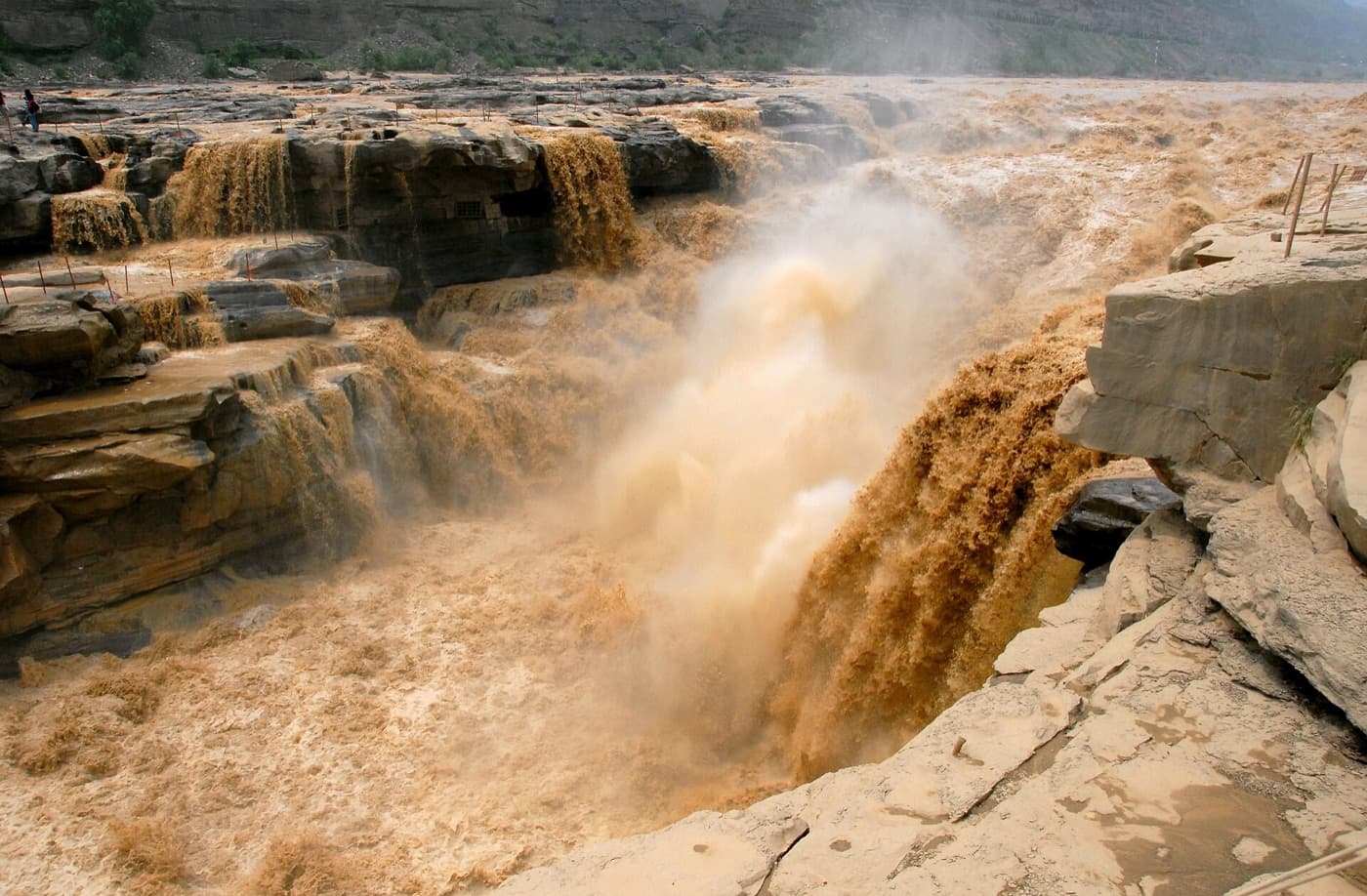
Hukou Waterfall Scenic Area on the Yellow River
2–3 hours · ¥100; sightseeing shuttle ¥40 (round trip)
Hukou Waterfall lies in Yichuan County, Shaanxi Province, on the Qin-Jin Grand Canyon stretch of the Yellow River, and is known as the 'Golden Waterfall'. When the rolling Yellow River surges here, its banks suddenly narrow. A torrent more than 300 metres wide is abruptly squeezed into less than 50 metres, and the water rushes with even greater force before plunging from a cliff more than 20 metres high, like countless golden dragons leaping. The result is a thunderous spectacle and wonders such as the 'Thunder Head Rain Hole', the 'Ten-Thousand-Foot Dragon Trough' and the 'Rainbow Bridge to the Sky'. Hukou Waterfall has two prime viewing seasons. The first is spring, April and May, when mountain peaches bloom and ice cliffs melt, known as the 'March Peach Blossom Flood'. The second is autumn, September to November, just after the rainy season, when the autumn breeze picks up and rainbows often appear, known as the 'Autumn Breeze at Hukou'. Both periods bring ample, steady water flow, and the waterfall is at its most magnificent. In winter the falls freeze into a landscape of silver and jade, which has its own distinct beauty.
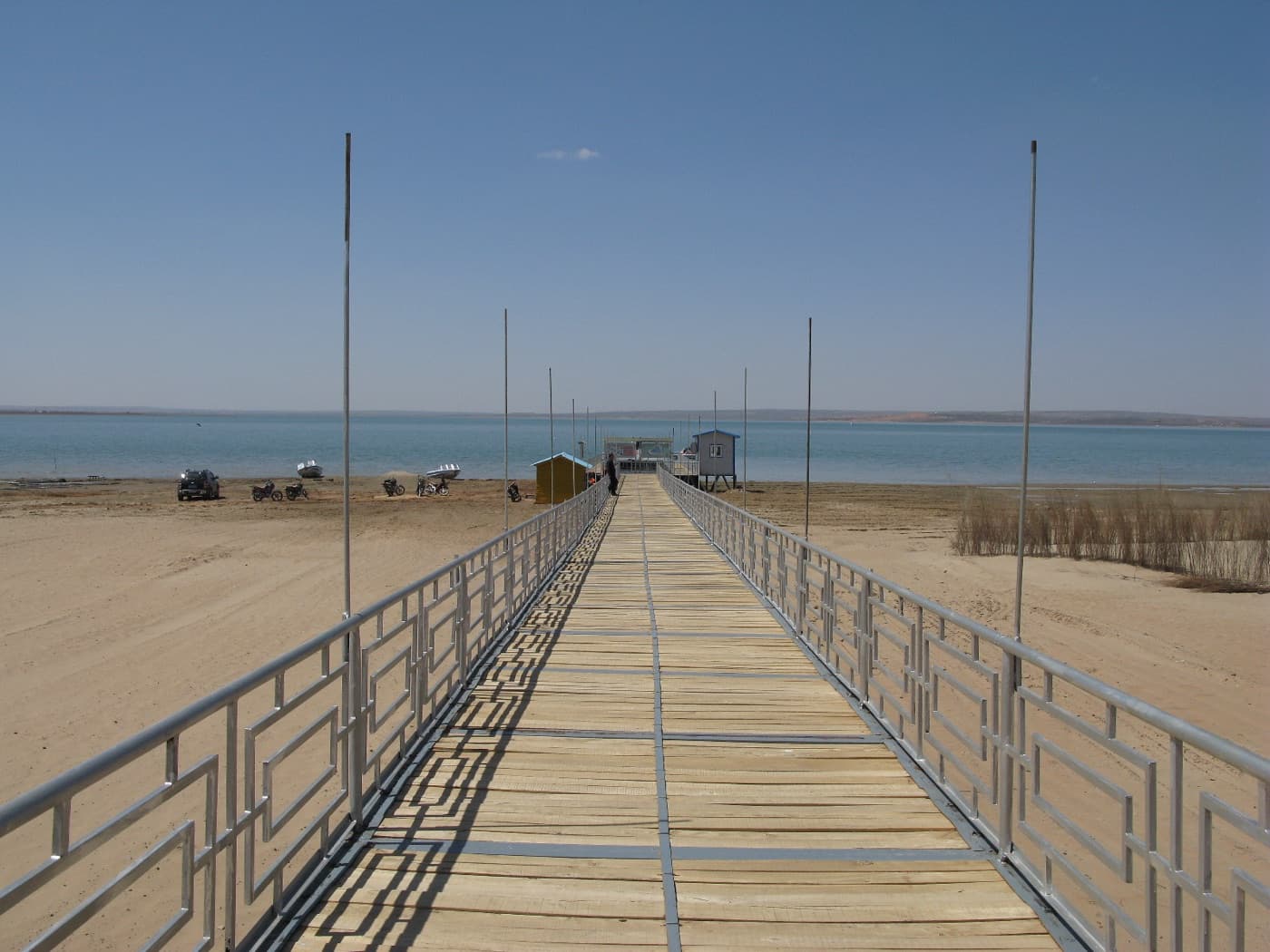
Hongjiannao Lake Scenic Area
4–5 hours · ¥30
Hongjiannao is China's largest desert freshwater lake and a habitat for the relict gull. The lake was named for the alkaline soil found along its shores, which can be boiled into a slightly reddish caustic soda. Legend has it that when Wang Zhaojun was married far away to the Xiongnu, she looked back toward her homeland from here, overcome with sorrow, and wept for seven days and seven nights. For this reason, Hongjiannao is also called 'Zhaojun's Tears.' Seven seasonal rivers flow into the lake year-round, and its misty waves stretch vast and seemingly imbued with spirit. Gazing at the sparkling water as waterbirds roam freely, you'll feel as though time has stood still.
Yaowang Mountain (Medicine King Mountain)
Yaowang Mountain, also known as Medicine King Mountain, lies 2 kilometres east of the urban area of Yaozhou District, Tongchuan City, Shaanxi Province. It consists of five small peaks and is where Sun Simiao, a renowned physician of the Sui and Tang dynasties, lived in seclusion in his later years. In the Ming dynasty, five stone tablets engraved with his medical texts were erected on the mountain. The mountain also holds more than 100 stone steles from various dynasties, seven Buddhist grottoes from the Sui and Tang periods, and precious relics including Tang-dynasty statues and Yuan-dynasty murals.
2–3 hours · ¥70 (March to December), ¥50 (December to March of the following year)
Mausoleum of the Yellow Emperor Scenic Area
Xuanyuan Huangdi is regarded as the common ancestor of the peoples of the Central Plains. The Mausoleum of the Yellow Emperor stands 3.6 metres tall with a circumference of 48 metres, and it bears a stele inscription from the Qing dynasty. This site was identified as the true resting place of the Yellow Emperor based on the Records of the Grand Historian (Shiji), which states, 'The Yellow Emperor died and was buried at Qiaoshan.' Qiaoshan is covered with ancient cypress trees, more than 30,000 of which are over a thousand years old, making it the largest ancient cypress woodland in China.
2–3 hours · Peak season ¥75; off-season ¥50
Ganquan Grand Canyon
Ganquan Grand Canyon is known as 'China's Antelope Valley.' Hundreds of millions of years ago, powerful earthquakes split the mountains apart, forming a huge fissure. Over millions of years of shaping by wind, water and time, it slowly developed into this fantastical canyon landscape. Ganquan Grand Canyon comprises several scenic areas, including Huashugou (Birch Gully), Huabao Gully, Longba Gully, Mudan Gully and Yixiantian (One Line Sky), each with its own character. Birch Gully is especially striking. Within the canyon, flowing lines of curves and straight edges interweave, and the shifting light and shadow create breathtaking views. Everything appears simple, harmonious and natural, leaving visitors in awe of nature's handiwork.
2–3 hours · ¥98; scenic shuttle bus ¥70 per person
Longzhou Danxia
This is an undeveloped, pristine land that has nonetheless attracted many travelers and photographers. Known as China's 'Wave Valley' and the 'Red Sand Mound' that has gone viral online, it features Danxia peaks in all shapes, isolated steep rock formations, golden plateau deserts in the distance and vividly colored Danxia landforms up close. The clear water of Longzhou Reservoir reflects the blue sky, together forming a colorful picture scroll.
2–3 hours
Yellow River Qiankun Bay Scenic Area
Known as the 'First Bend of the Yellow River Under Heaven,' this perfect 320-degree turn is the finest stretch of the Qinjin Grand Canyon and forms a natural taijitu (yin-yang symbol). Standing at Qiankun Pavilion and looking into the distance, hills rise and fall and gullies criss-cross the land, while the Yellow River surges like an unstoppable dragon. Anyone who sees it is awed by its majestic grandeur.
1–2 hours · Full ticket ¥80; Qiankun Bay single-site ticket ¥60; Qingshuiguan single-site ticket ¥30; Huifengzhai single-site ticket ¥20
Yuhua Palace Scenic Area
Yuhua Palace lies in the Yuhua Mountains, 45 kilometres north of Tongchuan. It was originally a detached palace of Li Shimin (Emperor Taizong). Later, to give the monk Xuanzang a quiet place for practice, Emperor Gaozong converted the palace into Yuhua Temple and granted it to Xuanzang. The site holds many precious relics, historical anecdotes and beautiful poems. It is also home to the largest ski resort in Northwest China. It's a great place to indulge in nostalgia for the past or to enjoy the thrill of skiing.
1 day · ¥60 (June to February of the following year), ¥40 (March to May)
Chenlu Ancient Town
Chenlu Ancient Town was born from porcelain. Ceramics decorate its walls and pave its roads, giving the town a rustic and cultural character. Hidden deep in the mountains and reached by winding mountain roads, it is a little inconvenient to get to, which happens to preserve the town's authenticity.
1 hour · Free
Revolutionary Holy Land Tour (Yan'an)
The Yan'an Revolutionary Memorial Hall is located in Wangjiaping, Yan'an City. Its exhibitions present historical materials on the leadership of the Chinese Communist Party Central Committee in Yan'an and the Shaanxi-Gansu-Ningxia Border Region from 1935 to 1948, when the Chinese revolution was guided from this base.
1–2 hours · Free; Free; Free; Free; Free; ¥60
Hongshi Gorge Scenic Area
At Hongshi Gorge, red cliffs face each other across the gorge, shaded by willow trees. The Great Wall winds through the gorge, and the Yuxi River flows vigorously alongside it. It is known as 'the Foremost Scenic Wonder of the Great Wall.' The gorge also contains the largest group of cliff inscriptions in Shaanxi Province, attracting many calligraphy enthusiasts.
2–3 hours · ¥30
Zhenbeitai Great Wall Scenic Area
Zhenbeitai is the largest surviving beacon tower on the Great Wall and is known as the 'First Tower of the Great Wall.' Together with Shanhaiguan and Jiayuguan, it is called one of the 'Three Great Wonders of the Great Wall.' From the top, you can overlook Yulin City and the Hongshi Gorge Reservoir, with spectacular views.
2 hours · ¥30
Getting there & around
Arrival and Departure
By Air
Yan'an Airport has direct flights to Beijing, Xi’an and Yulin. Yulin Yuyang Airport has direct flights to Beijing, Xi’an, Guangzhou, Taiyuan, Shenzhen, Shanghai, Chengdu and Yinchuan.
By Rail
Yulin Railway Station is located on Xingyu Road, west of National Highway 210 in Yulin City. Major stops along the line include Yulin, Shenmu, Lintong, Xi’an, Xianyang and Ankang. To reach the station, take bus 6, 7 or 10.
Yan'an Railway Station is located in the city centre at Qilipu (七里铺). Take bus 18, 603, K10 or K11 and get off at the Yan'an South Bus Station, which is next to the station. Trains from Yan'an run direct to Beijing, Shijiazhuang, Zhengzhou, Shanghai and Nanjing.
By Road
Yulin Long-Distance Bus Station is located on Renmin West Road in the city. Long-distance coaches run daily to Xi’an, Taiyuan, Luoyang, Dongsheng, Fugu, Shenmu and Yan'an Daliutan, among other destinations.
Yan'an Long-Distance Bus Station (East Bus Station) is located on Dongguan Street in the city and can be reached by bus 13, 18, 19, 20 and others. The South Bus Station is opposite Qilipu Railway Station.
Chuankou Bus Station in Tongchuan is located on Chuankou Road in Wangyi District. Coaches mainly run to Xi’an, Huangling, Yan'an, Xianyang and Weinan, as well as to the counties and districts under Tongchuan’s jurisdiction. To travel from Xi’an to Tongchuan, take a coach from Xi’an North Bus Station or from the bus station at Xi’an Railway Station Square.
Getting Around
The cities of Northern Shaanxi are small, and their attractions are not as concentrated as those around Xi’an, so renting a car is an efficient way to save time and see the sights quickly.
Local Customs and Folk Traditions
The distinctive local customs of Northern Shaanxi are summed up as the “Ten Oddities of Northern Shaanxi”: “Cook a big stew, pinch noodles fast, wrap a towel over the head, sheepskin coats worn with the fleece out, cave dwellings warm and durable, bare backs unafraid of the sun, sit cross-legged honestly, squat whether young or old, curse in an odd way, and don’t know how to court.”
Cook a big stew: all the dishes are cooked together in one pot, serving as both stir-fries and soups. Pinch noodles fast: rolled dough is cut into wide strips, then pinched off piece by piece into boiling water with dazzling speed. Wrap a towel over the head: a white towel is wound around the head, crossed at the front with both ends standing upright. Sheepskin coats worn with the fleece out: the coats are not covered in cloth; the leather is scraped flat and kept supple. Cave dwellings warm and durable: every household builds cave dwellings from stone or brick, or digs them into the foot of an old mountain, making them solid and cosy. Bare backs unafraid of the sun: people go shirtless in the hottest weather, tanning and peeling without complaint. Sit cross-legged honestly: sitting cross-legged on the kang (heated brick bed), locals are as calm, gentle and steady as a Buddha. Squat whether young or old: both adults and children like to squat, whether working or resting. Curse in an odd way: refers to coarse, dirty language used when swearing. Don’t know how to court: raised in the countryside without urban advantages, locals speak bluntly and honestly.
Where to stay
Yan'an has good accommodation, with large hotels and restaurants to choose from, and the facilities are quite good.
However, the most distinctive place to stay is a cave dwelling (yaodong). Yangjialing has a quasi-three-star stone cave hotel with a strong local character. Every evening, when the lights come on, the hotel's windows glow in rows like a sky full of stars, a truly spectacular sight, though it is not cheap. Private guesthouses in Yan'an are relatively inexpensive, but their hygiene and facilities should be checked before booking.
Shopping
Recommended Shopping
Ansai Paper-Cutting
Recommended ShoppingNorthern Shaanxi paper-cutting carries the spirit of the Qin and Han dynasties. Its style is both delicate and graceful and bold and generous, showing skill within roughness and beauty within earthiness. It is truly art woven into everyday life.
Red Dates
Recommended ShoppingProduced in the mountainous areas of northern Shaanxi. The large temperature difference between day and night gives them a high sugar content. The flesh is thick and the dates are large, sweet and delicious.
Source: China Self-Guided Travel 2025 (《中国自助游》, Tianjin Science & Technology Press, Aug 2024), pp. 669–681. Translated from the Chinese edition; names and prices follow the guidebook. · Plain text version