Hukou Waterfall Scenic Area on the Yellow River
Hukou Waterfall lies in Yichuan County, Shaanxi Province, on the Qin-Jin Grand Canyon stretch of the Yellow River, and is known as the 'Golden Waterfall'. When the rolling Yellow River surges here,…
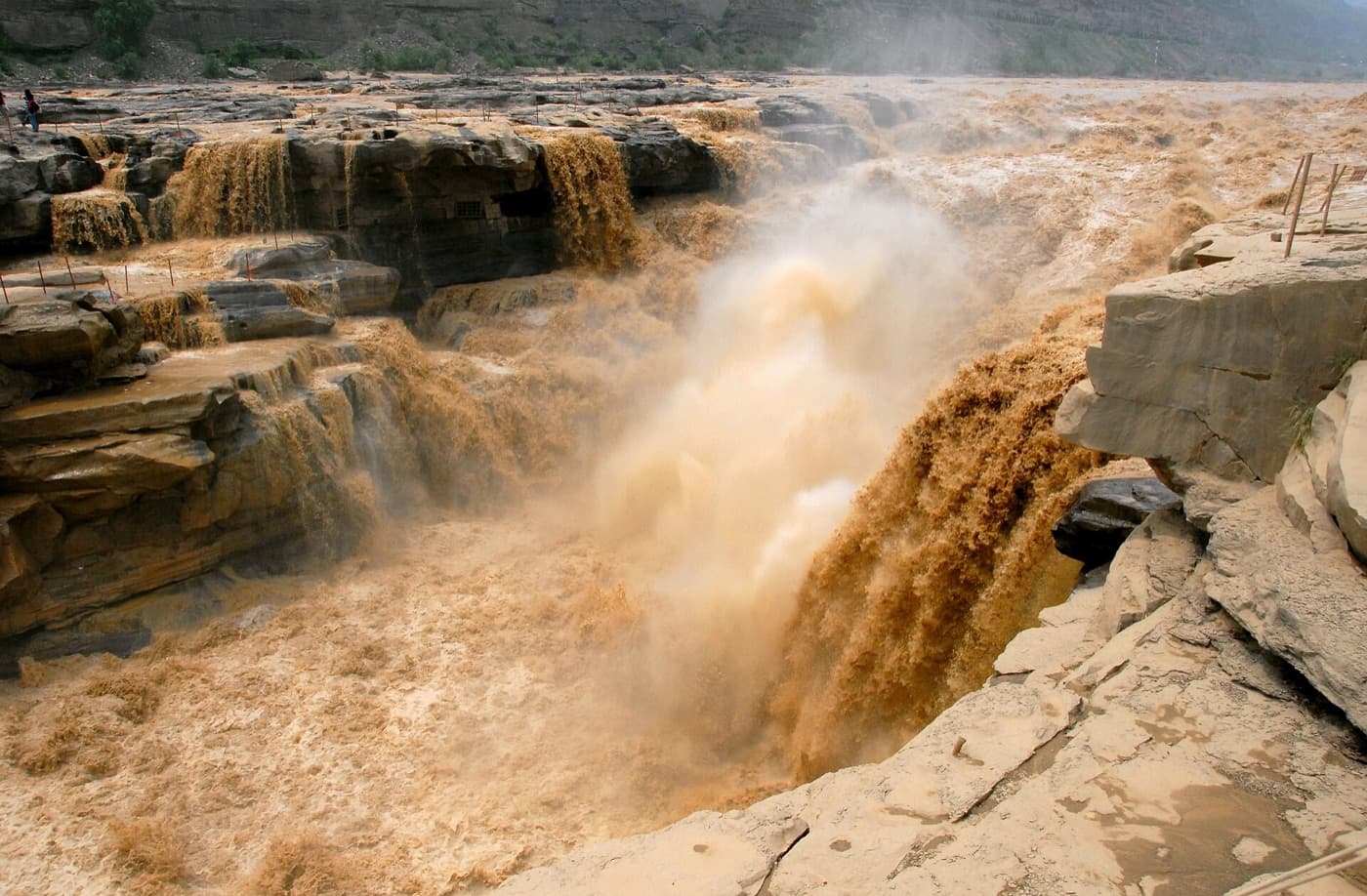
Hukou Waterfall Scenic Area on the Yellow River, Northern Shaanxi · Leruswing · CC BY-SA 3.0 · Wikimedia Commons
Key facts
- Admission
- ¥100; sightseeing shuttle ¥40 (round trip)
- Opening hours
- 7:00—18:00
- Time needed
- 2–3 hours
- Getting there
- Direct express bus from Xi'an East Bus Station to Hukou. Minibuses to Hukou run from Yan'an Baota District South Bus Station.
- Guidebook rating
- 4 / 5
From China Self Guided Travel 2025, page 673. Open in Google Maps
About Hukou Waterfall Scenic Area on the Yellow River
Hukou Waterfall lies in Yichuan County, Shaanxi Province, on the Qin-Jin Grand Canyon stretch of the Yellow River, and is known as the 'Golden Waterfall'. When the rolling Yellow River surges here, its banks suddenly narrow. A torrent more than 300 metres wide is abruptly squeezed into less than 50 metres, and the water rushes with even greater force before plunging from a cliff more than 20 metres high, like countless golden dragons leaping. The result is a thunderous spectacle and wonders such as the 'Thunder Head Rain Hole', the 'Ten-Thousand-Foot Dragon Trough' and the 'Rainbow Bridge to the Sky'.
Hukou Waterfall has two prime viewing seasons. The first is spring, April and May, when mountain peaches bloom and ice cliffs melt, known as the 'March Peach Blossom Flood'. The second is autumn, September to November, just after the rainy season, when the autumn breeze picks up and rainbows often appear, known as the 'Autumn Breeze at Hukou'. Both periods bring ample, steady water flow, and the waterfall is at its most magnificent. In winter the falls freeze into a landscape of silver and jade, which has its own distinct beauty.
Tips from the guidebook
- Equipment: Hukou Waterfall is very windy and sandy, so take proper sand protection for your camera. If you shoot up close, such as from inside Dragon Cave, waterproofing for your camera is essential.
Frequently asked questions
How much does Hukou Waterfall Scenic Area on the Yellow River cost?
Admission to Hukou Waterfall Scenic Area on the Yellow River is ¥100; sightseeing shuttle ¥40 (round trip), as listed in the 2025 guidebook. Prices can change; check the official channel before you go.
What are the opening hours of Hukou Waterfall Scenic Area on the Yellow River?
Hukou Waterfall Scenic Area on the Yellow River is open 7:00—18:00.
How do I get to Hukou Waterfall Scenic Area on the Yellow River?
Direct express bus from Xi'an East Bus Station to Hukou. Minibuses to Hukou run from Yan'an Baota District South Bus Station.
How long should I spend at Hukou Waterfall Scenic Area on the Yellow River?
Plan on 2–3 hours for Hukou Waterfall Scenic Area on the Yellow River.
Where is Hukou Waterfall Scenic Area on the Yellow River?
Hukou Waterfall Scenic Area on the Yellow River is in Northern Shaanxi, Shaanxi Province, in the Northwest of China.
More places in Northern Shaanxi
Yaowang Mountain (Medicine King Mountain)
Yaowang Mountain, also known as Medicine King Mountain, lies 2 kilometres east of the urban area of Yaozhou District, Tongchuan City, Shaanxi Province. It consists of five small peaks and is where Sun Simiao, a renowned physician of the Sui and Tang dynasties, lived in seclusion in his later years. In the Ming dynasty, five stone tablets engraved with his medical texts were erected on the mountain. The mountain also holds more than 100 stone steles from various dynasties, seven Buddhist grottoes from the Sui and Tang periods, and precious relics including Tang-dynasty statues and Yuan-dynasty murals.
¥70 (March to December), ¥50 (December to March of the following year) · 2–3 hours
Mausoleum of the Yellow Emperor Scenic Area
Xuanyuan Huangdi is regarded as the common ancestor of the peoples of the Central Plains. The Mausoleum of the Yellow Emperor stands 3.6 metres tall with a circumference of 48 metres, and it bears a stele inscription from the Qing dynasty. This site was identified as the true resting place of the Yellow Emperor based on the Records of the Grand Historian (Shiji), which states, 'The Yellow Emperor died and was buried at Qiaoshan.' Qiaoshan is covered with ancient cypress trees, more than 30,000 of which are over a thousand years old, making it the largest ancient cypress woodland in China.
Peak season ¥75; off-season ¥50 · 2–3 hours
Ganquan Grand Canyon
Ganquan Grand Canyon is known as 'China's Antelope Valley.' Hundreds of millions of years ago, powerful earthquakes split the mountains apart, forming a huge fissure. Over millions of years of shaping by wind, water and time, it slowly developed into this fantastical canyon landscape. Ganquan Grand Canyon comprises several scenic areas, including Huashugou (Birch Gully), Huabao Gully, Longba Gully, Mudan Gully and Yixiantian (One Line Sky), each with its own character. Birch Gully is especially striking. Within the canyon, flowing lines of curves and straight edges interweave, and the shifting light and shadow create breathtaking views. Everything appears simple, harmonious and natural, leaving visitors in awe of nature's handiwork.
¥98; scenic shuttle bus ¥70 per person · 2–3 hours
Longzhou Danxia
This is an undeveloped, pristine land that has nonetheless attracted many travelers and photographers. Known as China's 'Wave Valley' and the 'Red Sand Mound' that has gone viral online, it features Danxia peaks in all shapes, isolated steep rock formations, golden plateau deserts in the distance and vividly colored Danxia landforms up close. The clear water of Longzhou Reservoir reflects the blue sky, together forming a colorful picture scroll.
2–3 hours
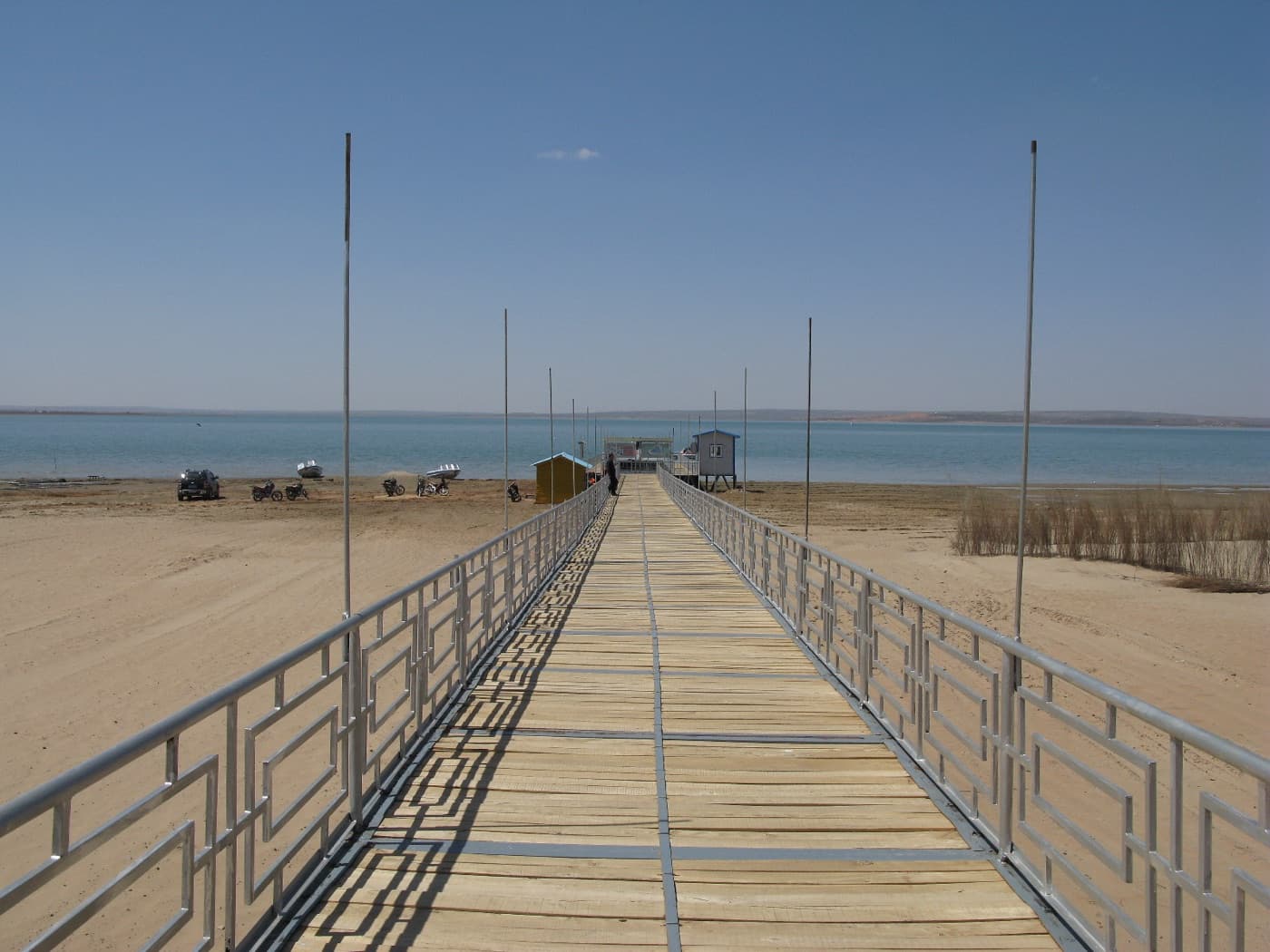
Hongjiannao Lake Scenic Area
Hongjiannao is China's largest desert freshwater lake and a habitat for the relict gull. The lake was named for the alkaline soil found along its shores, which can be boiled into a slightly reddish caustic soda. Legend has it that when Wang Zhaojun was married far away to the Xiongnu, she looked back toward her homeland from here, overcome with sorrow, and wept for seven days and seven nights. For this reason, Hongjiannao is also called 'Zhaojun's Tears.' Seven seasonal rivers flow into the lake year-round, and its misty waves stretch vast and seemingly imbued with spirit. Gazing at the sparkling water as waterbirds roam freely, you'll feel as though time has stood still.
¥30 · 4–5 hours
Yellow River Qiankun Bay Scenic Area
Known as the 'First Bend of the Yellow River Under Heaven,' this perfect 320-degree turn is the finest stretch of the Qinjin Grand Canyon and forms a natural taijitu (yin-yang symbol). Standing at Qiankun Pavilion and looking into the distance, hills rise and fall and gullies criss-cross the land, while the Yellow River surges like an unstoppable dragon. Anyone who sees it is awed by its majestic grandeur.
Full ticket ¥80; Qiankun Bay single-site ticket ¥60; Qingshuiguan single-site ticket ¥30; Huifengzhai single-site ticket ¥20 · 1–2 hours