Shenyang travel guide
沈阳
Shenyang travel guide with a day by day itinerary, 13 places with tickets and opening hours, where to eat and stay, and how to get there.
13 places · In the guidebook: pages 2237–2254

Shenyang, Liaoning Province · AI illustration for China Trip
Quick itinerary
Shenyang in 2 days
- Day 1
- Shenyang Imperial Palace→
- Zhang Marshal Mansion→
- September 18th History Museum→
- Qing Fuling Mausoleum
- Day 2
The feel of the place
Shenyang had walls of rammed earth as early as the Liao and Jin periods. In 1625, Emperor Taizu of the Qing made Shenyang his capital, and in 1634 Emperor Taizong renamed it Shengjing. Shenyang thus became the political and cultural centre of the Manchus before they entered the Central Plains, and the Shenyang Imperial Palace was built during this period. Although it cannot compare with the Palace Museum in Beijing, its distinctive Manchu Eight Banners architecture has made it famous at home and abroad.
Preparation and Advice
Language
The Shenyang dialect is quite close to Mandarin and easy to understand, so there are no barriers to communication.
Climate and Travel Seasons
The annual average temperature in the Shenyang area is 6.7–8.4°C. July is the warmest month, averaging 24.7°C, while January is the coldest, averaging about −8.5°C. Summers are hot, with mainly southerly and southwesterly winds. Winters are cold and dry, with mainly northerly and northwesterly winds. Spring and autumn are short, and temperatures rise and fall quickly. Spring warms up fast with ample sunshine, while autumn is brief, with high skies, clear air and pleasant coolness.
Best Time to Visit
1. For spring or autumn trips to Shenyang, pack light layers such as lined jackets, wool sweaters and suits. Summers are hot, so a single layer is enough.
2. Compared with southern China, Shenyang's winters are colder and drier, so bring a down jacket or padded coat for outdoor warmth.
3. Bring rain gear in spring, in summer, and during the transition from summer to autumn.
4. April to October is the golden travel season.
Wonders of Shenyang Meteorite Mountain
Shenyang Meteorite Mountain Nature Reserve lies on the southern outskirts of Shenyang, mainly across six townships including Lixiang in Dongling District and Yaoqianhu in Sujiatun District. Its geological landscape is unique and unmatched anywhere in the world, making it a precious natural heritage site.
Things to see

Shenyang Imperial Palace Museum
2–4 hours · ¥50
The palace complex built and used by Qing emperors Nurhaci and Hong Taiji. Its architecture has distinct Manchu characteristics, and among the palace complexes that survive in China, its historical and artistic value is second only to Beijing's Forbidden City. The layout reflects the Eight Banners system and is unique to Shenyang Palace. The Wenshu Pavilion, built to store the Siku Quanshu (Complete Library of the Four Treasuries), is also here. After seeing the Forbidden City's grandeur and sense of space, you may find Shenyang Palace underwhelming. It is hemmed in by the city's buildings and is far smaller in scale. But this is how the palace looked before the Qing entered the Central Plains, and it would be unfair to measure it against the Forbidden City in terms of atmosphere.
Zhang Xueliang Former Residence Museum
¥18
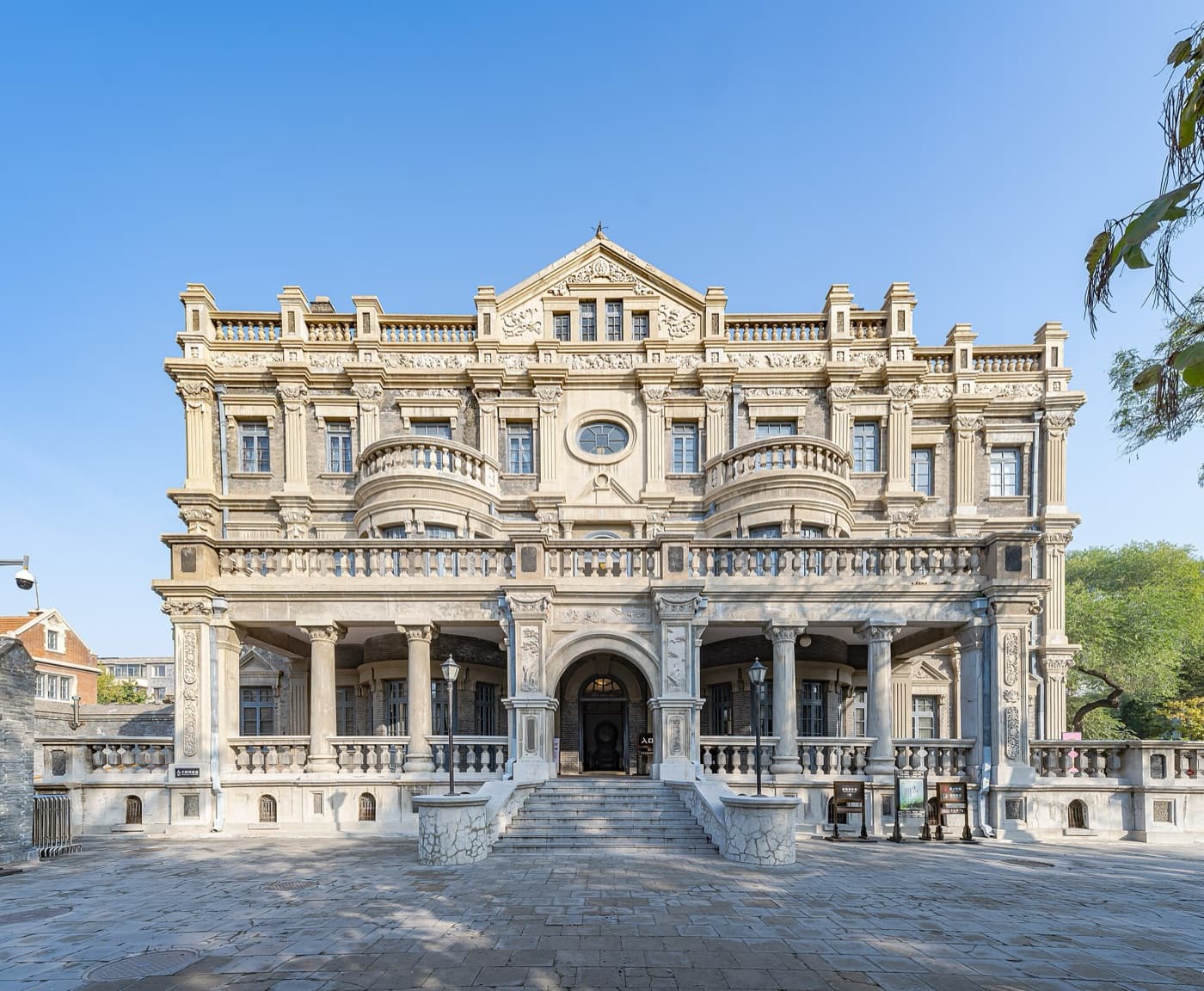
South of Shenyang Imperial Palace stand the residences of Zhang Zuolin and Zhang Xueliang. This compound witnessed many turning points in history. Zhang Zuolin rose to power here as the Northeast Warlord. After the Huanggutun Incident, he was mortally wounded and died in the Marshal's Residence. Zhang Xueliang announced the 'Northeast Flag Change' here. As the saying goes, touring one Marshal's Residence reveals half the history of the Republic of China. The architecture is exquisite: the Great Green Building is grand and majestic, the Small Green Building is simple and approachable, and Miss Zhao Si's Building carries a faint Western charm. Those familiar with history will appreciate the distinctive character of each building even more.
Taiqing Palace
Taiqing Palace was first built in 1663 and is a Quanzhen Taoist temple in Northeast China. The complex faces south. The front courtyard contains the Lingguan Hall, flanked by the Shifang Hall and the Yunshui Hall. The Guandi Hall stands on the north axis and houses a statue of Guan Yu. The Yuhuang Pavilion enshrines the highest deity of Taoism, the Jade Emperor.
1–2 hours · ¥2 (excludes incense and fortune-stick fees)
Beiling Park (Zhaoling Mausoleum)
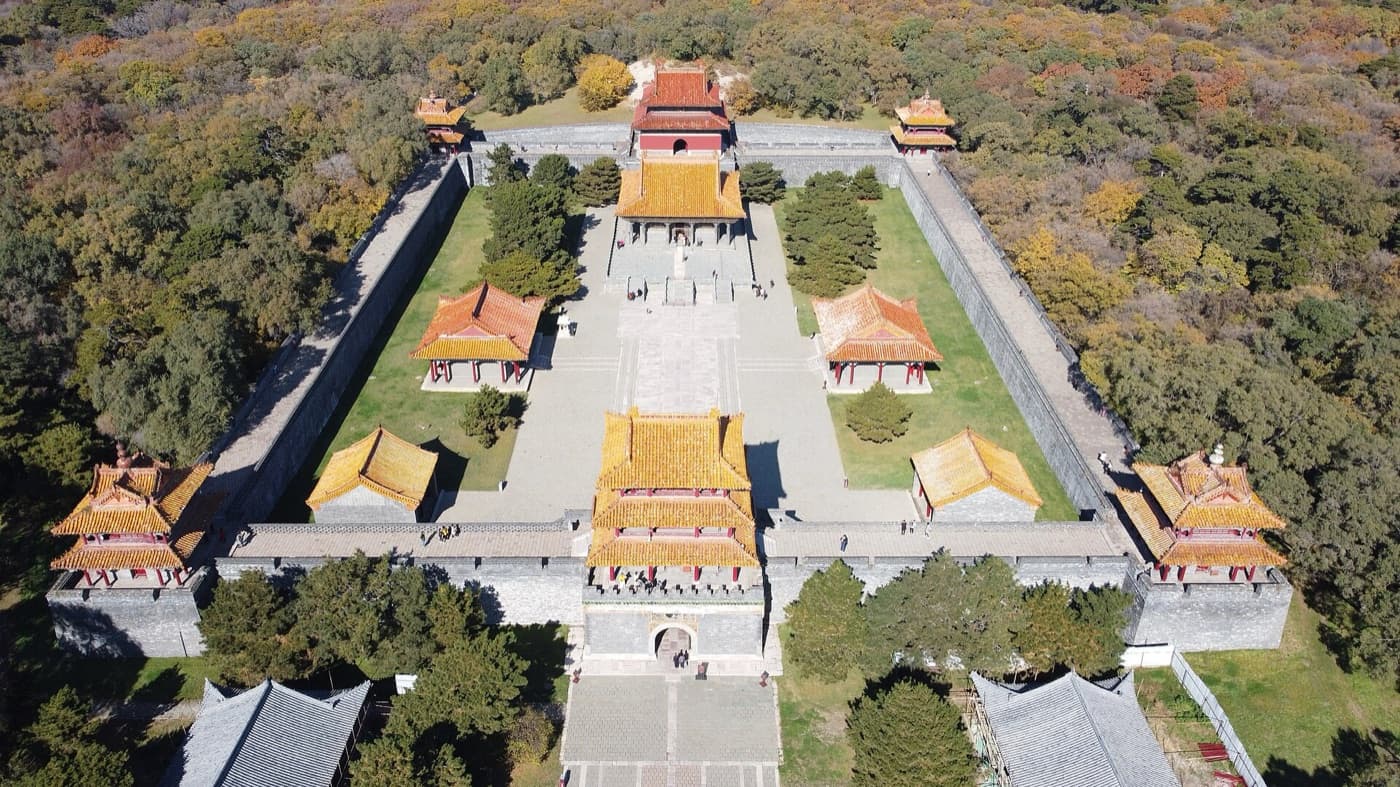
Shenyang's largest park. In its central section is the tomb of Hong Taiji, the second Qing emperor, and Empress Xiaoduan Wen. A giant statue of Hong Taiji stands in the square, its expression remarkably lifelike. Climb the Minglou Tower for views of the imperial garden landscape. The mausoleum's layout follows the principle of 'court in front, chambers behind'. It is arranged from south to north in three parts, front, middle and back, with the main buildings all on the central axis and symmetrically arranged on either side.
1–3 hours · ¥5
Fuling Tomb of the Qing Dynasty (Eastern Mausoleum)
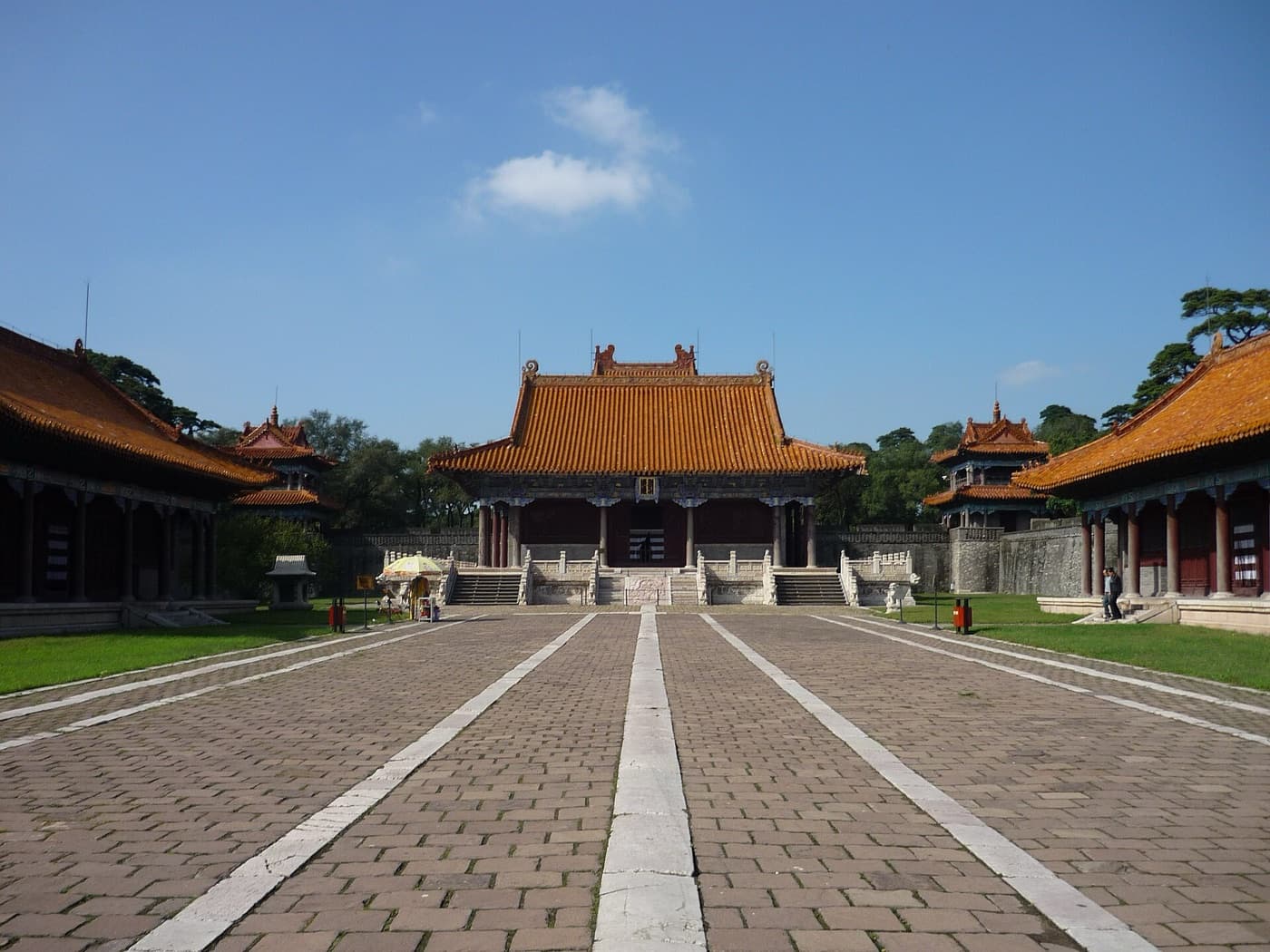
Fuling is the tomb of Qing Emperor Taizu Nurhaci and Empress Xiaoci Gao of the Yehe Nara clan. Because it lies on Shenyang's eastern outskirts, it is also known as the Eastern Mausoleum (东陵). The '108 steps' (一百零八磴), built into the natural terrain, symbolize the 36 Heavenly Generals and 72 Earthly Fiends and are a defining feature of Fuling.
2–4 hours · ¥30
Qipanshan Scenic Area
Qipanshan belongs to the Hadaling range, an extension of the Changbai Mountain system, where the low hills of eastern Liaoning stretch westward. It is internationally famous as the venue for the World Women's Chess Championship. The scenery here is distinctive, with many sights worth seeing, including Lotus in Green Pond (碧塘风荷), Spring Dawn on North Ridge (北岭春晓), Fragrant Grass and Clouds (芳草云天), Misty Rain over Xiu Lake (秀湖烟雨), Snow over Hui Mountain (辉山晴雪), the View from Qipan (棋盘远眺) and Red Autumn Leaves in Xiangyang (向阳红叶).
1–2 days · Free
Liaoning Provincial Museum
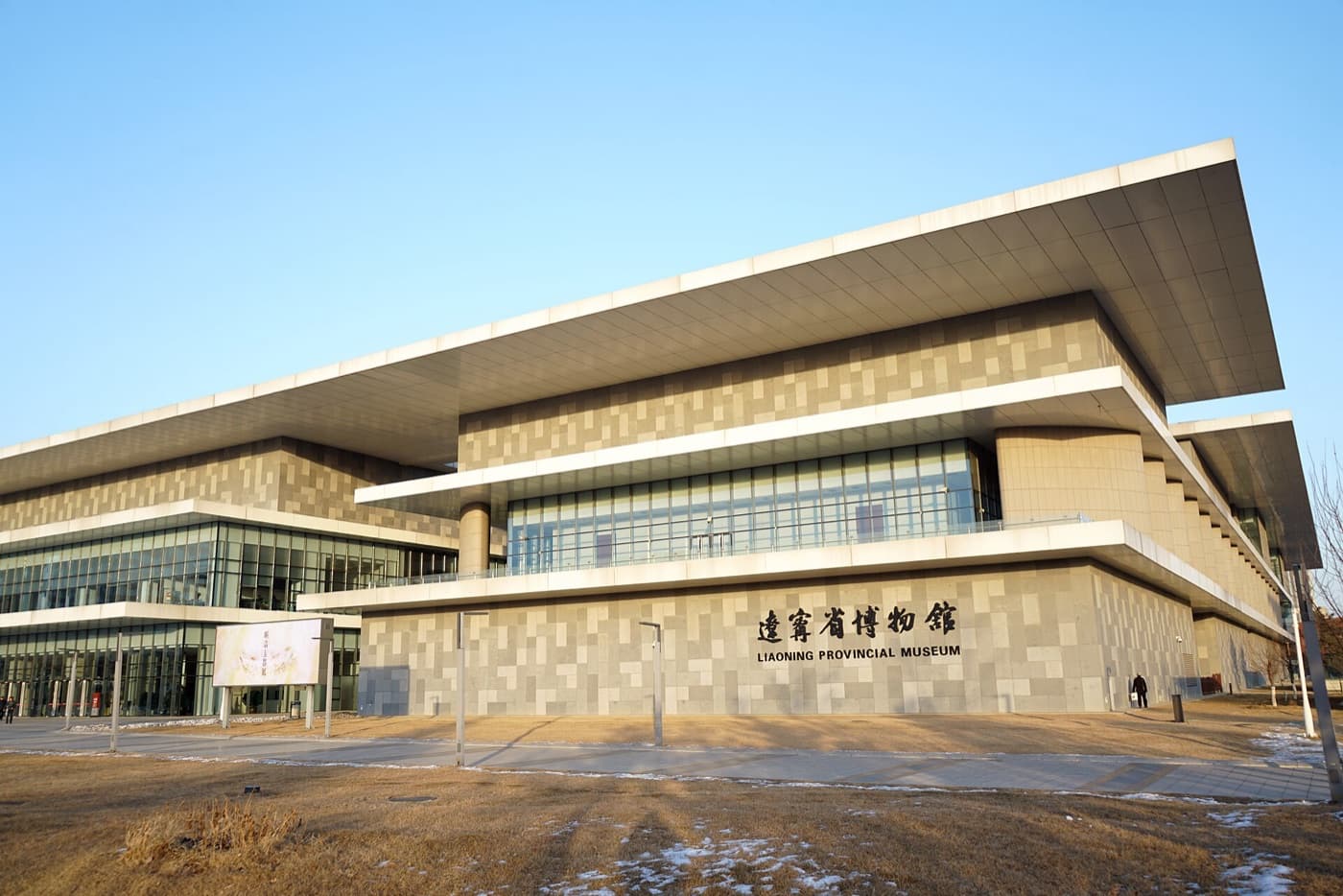
The museum's most notable treasures include calligraphy and paintings from the Jin, Tang, Song and Yuan dynasties, silk embroidery through the ages, Liao ceramics, ancient maps, currency through history, oracle bone inscriptions, bronzes and stone inscriptions. It holds kesi (silk tapestry) and embroidery masterpieces from the Song, Yuan, Ming and Qing dynasties, collected by General Zhang Xueliang, which makes the museum one of the world's richest collections of ancient Chinese silk embroidery.
2–3 hours · Free; closed on Mondays
Shenyang Guaipo Scenic Area (Strange Slope)
Guaipo (Strange Slope), together with nearby Xiangshan (Ringing Mountain) and Wengding, is known as the 'Three Mysteries'. The scenic area also features the Songlin Huaigu Valley, nicknamed 'Snow in June' (六月飞雪), and combines the strange, secluded, unique and playful. The Seven-Eye Dragon-Piercing Stele, inscribed by Emperor Qianlong, is another sight not to be missed.
1 day · ¥40
Guandong Film and Television City
Guandong Film and Television City is a microcosm of Guandong culture. Its 177 late Qing and early Republican-style buildings make it the only film and television city in China that showcases the architecture of the Northeast, recreating the distinctive buildings of Shenyang's Zhongjie and Taiyuan Street from the 20th century.
2–3 hours; 2–3 hours · ¥95; Free
Getting there & around
Getting There and Away
Shenyang is one of the largest transport hubs in Northeast China, with a modern network of railways, highways and civil aviation.
By Air
Shenyang Taoxian International Airport, one of the largest airports in Northeast China, is located in Taoxian Township, Dongling District, 22 km from downtown Shenyang. More than 40 domestic routes depart from Shenyang, with flights every day to all major cities in China, as well as international routes to North Korea, South Korea, Japan and Russia.
By Rail
Shenyang is one of the largest railway hubs in Northeast China, where five main lines meet: Beijing–Harbin, Shenyang–Dalian, Shenyang–Jilin, Shenyang–Dandong and Shenyang–Fushun. Passenger services mainly use Shenyang North Railway Station, with Shenyang Railway Station as a secondary option. Trains from Shenyang generally depart from Shenyang North Station, and many trains on the Beijing–Harbin and Shenyang–Jilin lines pass through North Station without stopping at Shenyang Station.
Freight and Passenger Combined Ticket Office
High-Speed Rail
The newly opened Harbin–Dalian railway serves Shenyang Station and Shenyang North Station, so visitors can take high-speed trains to Harbin and Dalian.
By Road
Expressways connect Shenyang with Beijing, Dalian, Changchun, Fushun and Benxi, and express coach services run along these routes.
Long-distance coach services link Shenyang with cities and counties in the three northeastern provinces, Beijing–Tianjin–Hebei and Inner Mongolia, accounting for one-third of the city's external passenger traffic.
Getting Around the City
Numerous overpasses have ended the era when railway lines cut the city in two. More than 300 bus and trolleybus routes operate in the city, and some buses run through the night. City buses have no conductors, and most routes charge a flat fare of ¥1. Suburban buses also have no conductors and charge by distance.
Metro
Shenyang Metro Lines 1, 2, 9 and 10 are open, with other lines under construction. The starting fare is ¥2.
Shenyang Taoxian International Airport Shuttle Bus Hotline
Shenyang Taoxian International Airport Shuttle Bus Hotline- Phone:
- 024-96833
Shenyang North Railway Station Information Desk
Railway- Phone:
- 024-62041168
(Advance-sale train tickets within 5 days
RailwayCombined ferry tickets from Dalian Port to other ports)
- Opening hours:
- 8:00—11:30;13:00—15:00
Shenyang Long-Distance Bus Terminal
Shenyang Long-Distance Bus Terminal- Address:
- Longzhimeng Bus Hub, 22 Pangjiang Street, Dadong District
- Phone:
- 024-31982345
Liaoning Express Bus Station (Huyue)
Liaoning Express Bus Station (Huyue)- Address:
- 120 Huigong Street, Shenhe District
- Phone:
- 024-62233333
Shenyang SK Bus Station
Shenyang SK Bus Station- Address:
- Shengli South, Heping District
No. 63 Street
Shenyang SK Bus Station- Phone:
- 024-23290660
Nanta Bus Station
Nanta Bus Station- Address:
- North side of the Provincial Library
- Phone:
- 024-24215511
Eat & drink
Shenyang's cuisine has a long history. Built on Manchu cooking, it has developed its own distinctive style, the most representative example of which is the Manchu-Han Banquet.
Because ethnic minority and Han Chinese rulers took turns governing the region, a wide range of ethnic snacks gathered in Shenyang. Examples include Ma's Shaomai (Muslim-style steamed dumplings), Najia white pork with blood sausage (Manchu), and Korean dagao (rice cakes), grilled beef and Xita cold noodles. Traditional snacks such as Laobian dumplings and Laoshanji's Haicheng-style filled pies bear the hallmarks of Han Chinese cuisine.
Signature Dining
Fengtian Small Restaurant (Wanxiang City Branch)
Signature DiningUnlike the rustic Northeastern dishes found elsewhere, the Northeastern cooking here is a little more refined. The old-style guobaorou (sweet and sour pork), xuemian doushazi (sweet bean dessert) and braised fish head are all highly recommended.
- Address:
- Level 4, Wanxiang City, Qingnian Avenue
- Phone:
- 024-31255777
Laobian Dumpling House (Zhongjie Road Branch)
Signature DiningNo visit to Shenyang is complete without Laobian dumplings. This century-old local institution serves dumplings that taste excellent whether pan-fried, boiled or steamed. Recommended dishes include ice-flower pan-fried dumplings, stir-fried filling dumplings and the Dumpling Feast.
- Address:
- 208 Zhongjie Road, Shenhe District
- Phone:
- 024-24865369
Where to stay
As the capital of Liaoning Province, Shenyang has very convenient accommodation, with hotels and guesthouses at every price level. However, it is best to book rooms in advance in autumn and winter, when many people visit Shenyang. Staying near Shenyang North Railway Station or Zhongjie is recommended.
Shenyang Imperial Palace
Recommended AccommodationRose Atour Hotel. Located right on the pedestrian street and close to a metro station, with very convenient transport.
- Address:
- No. 201 Zhongjie Road, Shenhe District
- Phone:
- 024-24898188/24898019
Shenyang Qing Culture Themed Hotel
Recommended Accommodation(Formerly the Shenyang Real Estate Building) The hotel is decorated in an antique style, with many old photographs on the walls and well-chosen furnishings. It has a strong late-Qing atmosphere and a rich cultural feel.
- Address:
- No. 287 Daxi Road, Shenhe District
- Phone:
- 024-82978888
Shopping
Shopping Recommendations
Zhongjie
Shopping RecommendationsShenyang's most prosperous and bustling commercial pedestrian street, with large shopping malls as well as many distinctive small shops. It is also a hub for Shenyang snacks and a must-visit for shoppers.
Taiyuan Street
Shopping RecommendationsShenyang's main shopping street and the centre of its major department stores. It also has specialist shops, with open-air markets around the outskirts. You can find reasonably priced goods here.
Wu'ai Market
Shopping RecommendationsOne of China's five largest wholesale and retail markets, known for its wide range of goods and good value for money.
Antiques
Shopping RecommendationsWest of the Shenyang Imperial Palace, in the Beibei Hutong off Shenyang Road, is the famous Shengjing Antiques City. Several other antiques markets nearby are also worth a browse. About 200 metres east of Shenyang North Railway Station is Shenyang's largest antiques city and open-air market, the Shenyang North Station Antiques Market. It mainly sells jade and porcelain, and the second and third floors have several coin counters. It is usually quiet, but it gets very crowded on weekends.
Nightlife
Xita Street, located in Heping District, is nearly 500 metres long. Both sides of the main street are lined with shops in Korean ethnic style, and most signs are written in both Chinese and Korean, while some use only Korean. At night the street is bright with lights and crowds, making it a great place to relax, shop, sample Korean cuisine and learn about Korean culture.
Almost every visitor to Shenyang goes to see an Erren Zhuan performance at the Liu Laogen Grand Stage on Zhongjie. The stage has an old-fashioned charm and luxurious private boxes, where you can enjoy distinctive Northeastern Erren Zhuan.
Warm-hearted Shenyang People
People in Shenyang are very warm and give detailed answers to any question you ask.
Shenyang Fengwei Lou
This restaurant specialises in local snacks and is well known for its long-established brands. Its Shenyang signature dishes include Beiyang jiaozi, Li Liangui smoked meat pancake, Tianjin baozi, Majia shaomai, the Beiyang jiaozi banquet and the Kaifeng baozi banquet. It also serves famous specialties from other regions: Kaifeng guantang bao, Shandong shuijian bao, Sichuan longchaoshou, sesame pan-fried buns, soy-braised meat buns, small tangyuan, pearl tangyuan, Shanghai shengjian bao, pork and vegetable wontons, Shaanxi roujiamo, Jingsheng corn vegetable cakes, jianbing guozi, leek boxes, Korean cold noodles, knife-cut noodles, multi-flavoured noodles, Qingzhen huitou and spring pancakes, among others.
Day trips & beyond
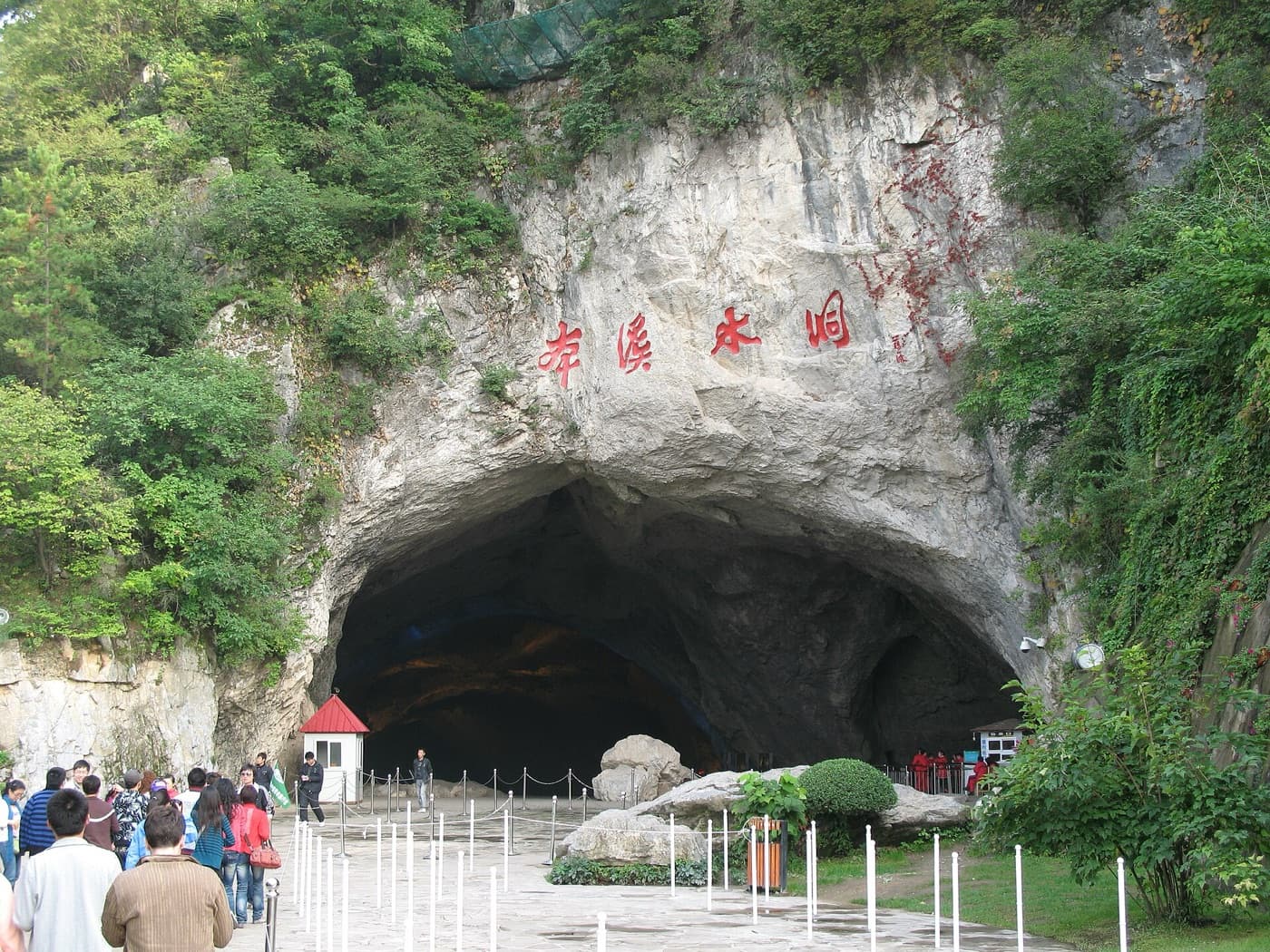
Benxi Water Cave Scenic Area
Centred on the Benxi Water Cave, the area combines mountains, water, caves, springs, lakes and an ancient human heritage site. The Water Cave is a large limestone karst cave flooded with water, formed several million years ago. Its developed route covers nearly 3,000 metres, making it the longest flooded cave discovered in the world.
Nature
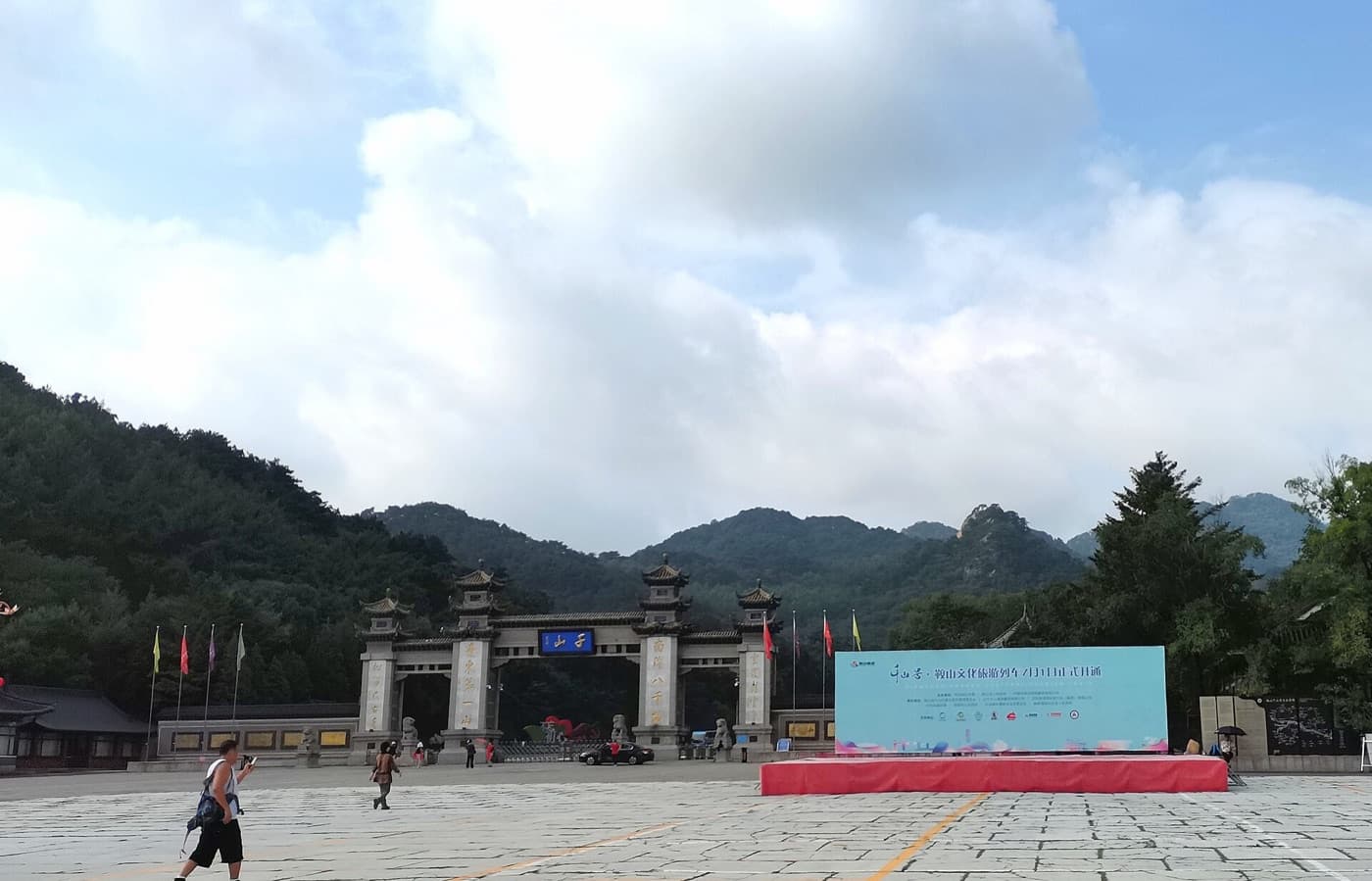
Qianshan Scenic Area
Qianshan is a branch of the Changbai Mountains, and its name comes from its 999 peaks. Its Maitreya Buddha carving is comparable to the Leshan Giant Buddha. Xianrentai, the first peak of Qianshan, is named after a legend in which immortals flew in on cranes to play chess on its summit. Wuliang Temple is the largest and most exquisite of the temples in Qianshan. The newly opened Qianshan Cable Car runs directly to the Xiao Huangshan scenic area, making travel much easier for visitors.
0.5–1 day
Wolong Lake Ecological Scenic Area
Liaoning Province's largest plain freshwater lake is scenic and pleasant in every season. In summer you can admire the blue water and sky, in spring and autumn you can watch wild geese and ducks gather, and in winter you can experience Khitan Liao Dynasty culture at the Winter Fishing Festival.
Nature
Guanmenshan Reservoir
Known as the "Little Jiangnan" and the "Huangshan of the Northeast," it has five beauties: striking peaks, clear water, delicate mists, lush trees and beautiful flowers. Its steep peaks rise sharply from the ground, and the summits are crowned with graceful pines and towering rocks, as if naturally arranged like giant bonsai.
1–2 days
Source: China Self-Guided Travel 2025 (《中国自助游》, Tianjin Science & Technology Press, Aug 2024), pp. 2237–2254. Translated from the Chinese edition; names and prices follow the guidebook. · Plain text version