Western Hunan (Xiangxi) travel guide
湘西
Western Hunan (Xiangxi) travel guide with a day by day itinerary, 14 places with tickets and opening hours, where to eat and stay, and how to get there.
14 places · In the guidebook: pages 1968–1987

Western Hunan (Xiangxi), Hunan Province · AI illustration for China Trip
Quick itinerary
Western Hunan (Xiangxi) in 3 days
The feel of the place
Tired of city skyscrapers and busy roads, many people come in search of Xiangxi's stilt houses and bluestone-paved lanes. In this region, steeped in an aura of antiquity, restless hearts can find calm. Fenghuang's beauty, Wangcun's old-world charm, the thrilling rafting on the Mengdong River and the region's ancient tales are what keep visitors lingering in Xiangxi. Fenghuang in particular, made famous worldwide by the writer Shen Congwen, has such traditional folkways and such elegant, ancient-town scenery that many visitors feel an urge to settle there.
tip: Fenghuang Ancient Town is very small, and every sight can be reached on foot. There is no need to plan a sightseeing route; simply wander at will and you will come across unexpected beauty.
Sacrificial Rites
The Miao people hold many sacrificial activities, mostly to pray to the gods for blessings. The main rituals include "Jielong" (Dragon Connecting), "Zhuiniu" (Cow Sacrifice) and "Tiaoxianghui" (Fragrance Dance Gathering).
Boat Tips
In Fenghuang Ancient Town you will often be asked whether you want to take a boat trip on the Tuo River. In fact, a boat ride on the Tuo River is already included in the combined ticket, so there is no need to pay extra. Moreover, private boats can only travel down the lower reaches of the Tuo River, where you cannot see the main sights such as the stilt houses.
Maogusi
Maogusi is a primitive form of drama with a storyline, performed by the Tujia people as part of the Xiao Baishou song-and-dance activities. Also called the Maolie Dance, it has been hailed by Chinese and foreign guests as "the thousand-year-old Maogusi that never grows old."
Preparation and Advice
Language
The Xiangxi dialect can be understood if people speak slowly. Communicating in Mandarin with local young people is usually no problem.
Climate and Travel Season
Xiangxi's average annual temperature ranges from 15.8 to 16.9℃, with rainfall concentrated from April to June. Summers are not too hot and winters are not too cold, so the area can be visited year-round.
Things to see

Fenghuang Ancient Town
1–2 days · Fenghuang Ancient Town itself has no entrance fee. Admission to the Nanhua Mountain Shenfeng Scenic Area is ¥59. By Air Fly to Zhangjiajie Hehua Airport, then travel by rail to Jishou, and onward to Fenghuang. Alternatively, fly into Tongren Fenghuang Airport in Guizhou, about 30 km from Fenghuang (fewer flights available), then take a taxi to Fenghuang for about ¥100. You can also fly into Zhijiang Airport and travel from there. By Train Take a train to Jishou or Huaihua, then transfer to a high-speed train to Fenghuang. By Road Jishou → Fenghuang: Exit Jishou Railway Station, where air-conditioned tourist coaches to Fenghuang usually wait at the square between stations, ¥20 per person. Jishou South Bus Station (吉首汽车南站) operates from 6:30 to 17:30, with a bus to Fenghuang every 15–20 minutes, ¥20 per person; a private charter costs ¥100. Huaihua → Fenghuang: From Huaihua Railway Station, take a taxi (¥8) to Huaihua West Bus Station, then board a coach to Fenghuang, ¥40 per person. Tongren → Fenghuang: Get off the train at Yuping, travel to Tongren city centre, then transfer to a bus to Fenghuang, ¥25 per person.
Many people regard Fenghuang Ancient Town as one of China's most beautiful small towns. Its mountains are gentle yet graceful, its rivers shallow yet crystal clear, and its pavilions and towers nestle among peaks and flowing water. Delicate and charming, it resembles a subtle, lingering landscape painting. Fenghuang Ancient Town comprises six scenic areas: the Ancient Town Scenic Area, Nanhua Mountain Scenic Area, Shawan Scenic Area, Qiliang Cave Scenic Area, Huangsiqiao Ancient Town, and the Southern Great Wall. The Ancient Town Scenic Area holds most of Fenghuang's historic buildings and is the core area of the town, well worth savouring at leisure. In former times, the town was known for the 'Eight Views of Fenghuang': Verdant Peaks of Nanhua, Woodcutters' Songs on Orchid Path, Morning Bell at the Mountain Temple, Welcoming the Sunrise at East Ridge, Fishing Lights at Dragon Pool, Waves at the Temple Pavilion, Moon over the Stream Bridge, and Majestic Peaks. The first three are at Nanhua Mountain, and the last five are in the Shawan Scenic Area. Keen travellers may wish to see them all.

Miaoren Valley
1–2 hours · ¥68
Miaoren Valley boasts natural scenery of breathtaking craftsmanship and well-preserved ancient Miao villages. It has been recognised by experts at home and abroad as a "living fossil of the Miao people". The narrow, secluded valley hides caves, and the caves hide valleys, forming a labyrinth that feels like a fairyland. Mountain flowers bloom throughout the seasons, and birdsong fills the air.
Huilong Pavilion
The stilt houses (吊脚楼) are located in the southeast of Fenghuang Ancient Town. They face the old official road in front and hang over the Tuo River behind. These historic buildings survive from the Qing dynasty and the early Republic period, and they have a strong Miao architectural character.
1–2 hours · Free
Laodong Miao Village
Laodong Miao Village is located in Fenghuang County in western Hunan and is the oldest Miao village in western Hunan, with more than 600 years of history. It is a stone town laid out in the nine-palace, eight-trigram pattern (九宫八卦), with ingenious design, and its homes are all connected to one another. Here you can see one of the most original Miao cultural traditions, liangcai (亮彩), as well as the most mysterious and striking shamanic practices of western Hunan: 'driving corpses' (赶尸), 'casting gu' (放蛊), and 'summoning immortals' (降仙).
2–3 hours · ¥148
Southern Great Wall
The Southern Great Wall, also known as the 'Miao Frontier Wall', is part of the Great Wall built in the Ming dynasty and stretches about 190 km. The Ming rulers built it to separate southern ethnic minorities, suppress resistance, and secure stability in the Miao frontier. Along the way are numerous watchtowers, cannon platforms, fortified sentry posts and gates built for garrisoning troops and defence. It is not as grand as the Great Wall in the north, but it has its own southern landscape and the distinctive character of western Hunan's ethnic minority culture.
1–2 hours · ¥45
Shanjiang Miao Village
Also called Zongbing Camp, and known in the Miao language as Bagu, Shanjiang lies in a gorge 20 km northwest of Fenghuang Ancient Town. It is a small mountain village full of authentic Miao life. Ancient customs are still preserved here: brilliantly colourful Miao costumes, the distinctive 'door-blocking wine' (拦门酒) ritual, unique kagu drums, road-blocking songs and bianbianchang (边边场) dance gatherings, as well as traditional festivals such as the 'April Eighth' (四月八) festival with its moon and flower dances, and the 'Sixth of the Sixth Month' (六月六) festival with its antiphonal mountain songs.
3 hours · Miao Valley ¥100
Dehang Canyon
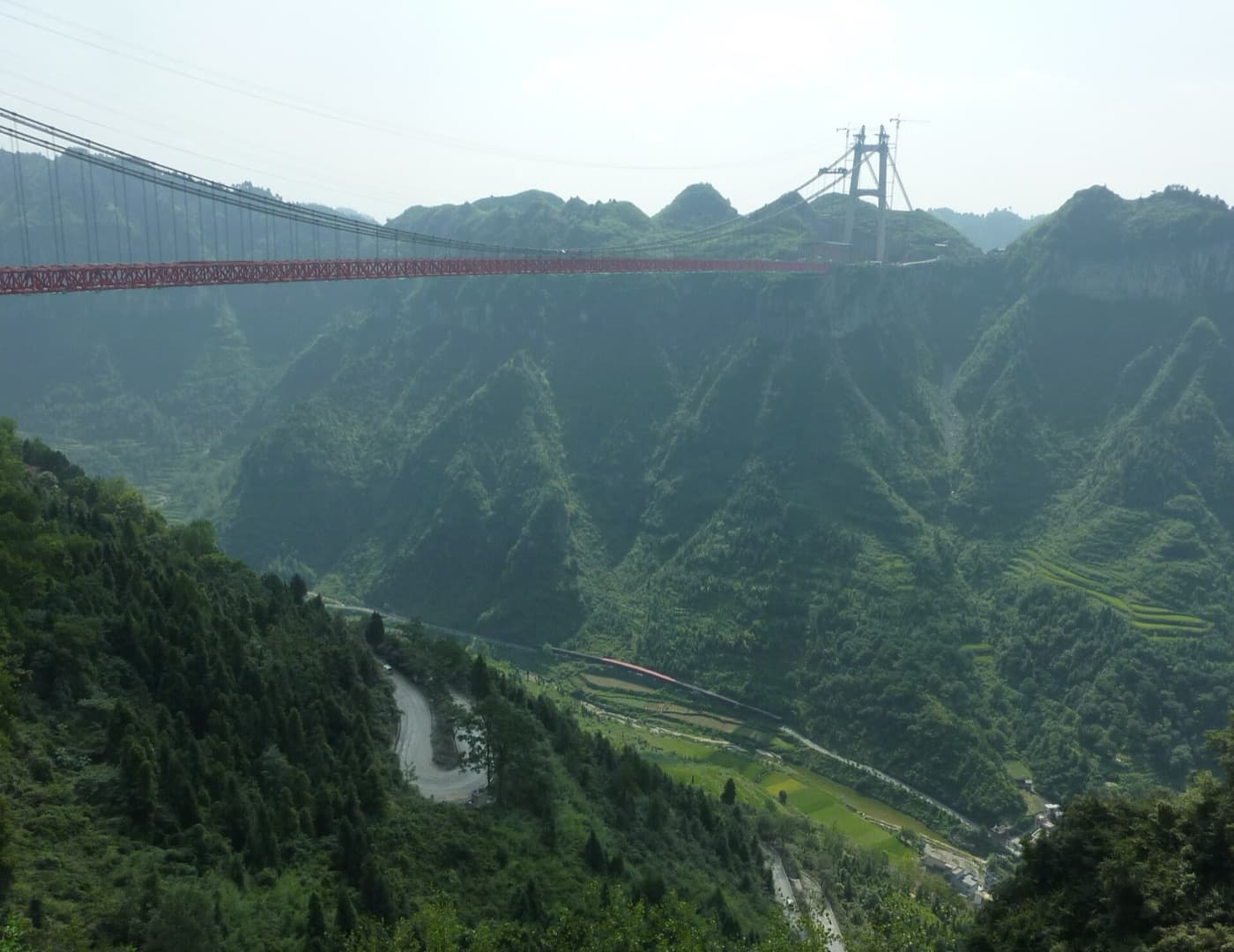
Dehang is famed for its beautiful natural scenery, including Liusha Waterfall, Pangu Peak, the marvellous Aizhai Highway and the views of Yuquan Gate. Its ethnic culture is equally rich, with Miao hospitality, the "door-blocking" custom of antiphonal singing, song festivals, and traditional Miao and Tujia song and dance such as Miao drum dancing.
0.5–2 days · ¥80
Furong Town
Furong Town, formerly known as Wangcun, is a classic ancient town of western Hunan. Tujia stilt houses and bluestone-paved lanes are everywhere, and wandering here in the fine drizzle is a particularly memorable experience. The film *Furong Town* was shot here, and the town was renamed in its honour.
0.5–1 day · ¥108
Qiliang Cave
Qiliang Cave is renowned for its qi (wondrous), xiu (elegant), kuo (expansive) and you (secluded) character, and is praised as "all the wonders of the world gathered in one cave". It comprises five sections: the Gallery, Paradise, Dragon Palace, Ancient Battlefield and the Yin-Yang River. Within the cave are mountains, and within the mountains are caves, all interconnected. Countless forms of stalagmites and stalactites create a magnificent panorama.
1 hour · ¥60
Mengdong River
Mengdong River lies in the middle reaches of the Youshui, an upper tributary of the Yuan River. It is a high-gorge lake formed after the completion of the Fengtan Hydropower Station. It has been praised as "possessing the grandeur of the Three Gorges, the marvels of Zhangjiajie, the charm of the Li River and the warmth of West Lake". This may be a touch exaggerated, but it is certainly worth a visit.
2–3 hours · Rafting ¥220
Zuolong Gorge Scenic Area
Zuolong Gorge is made up of several sections, including Tianliang Stream, Huolong Pool, Heicao Gorge and Nanzhao Gorge. The gorge is about 6.5 kilometres long, with its highest point over 300 metres. For many years it lay hidden deep within the Wuling Mountains. The cliffs on either side stand very close together, with layers of rock striations visible on their faces. Water murmurs along the gorge floor, and waterfalls appear unexpectedly, always delighting visitors.
2–4 hours · ¥78
Qianzhou Ancient Town
Qianzhou Ancient Town is rich in attractions. Its main sights include Qiancheng Old Street, Guanyin Pavilion, the Confucian Temple, Wenchang Pavilion, Brush Rack Mountain, Misty Rain Bridge, Xianzhen Mountain, Meiwang Lake, the former site of King Wu of Wu, the ancient city site of the Miao Uprising, Huangshi Lake, Beizi Crag and Wu Mountain. Qianzhou Ancient Town is worth visiting year-round, with March to November being the best period.
2–4 hours · ¥70
Red Stone Forest National Geopark
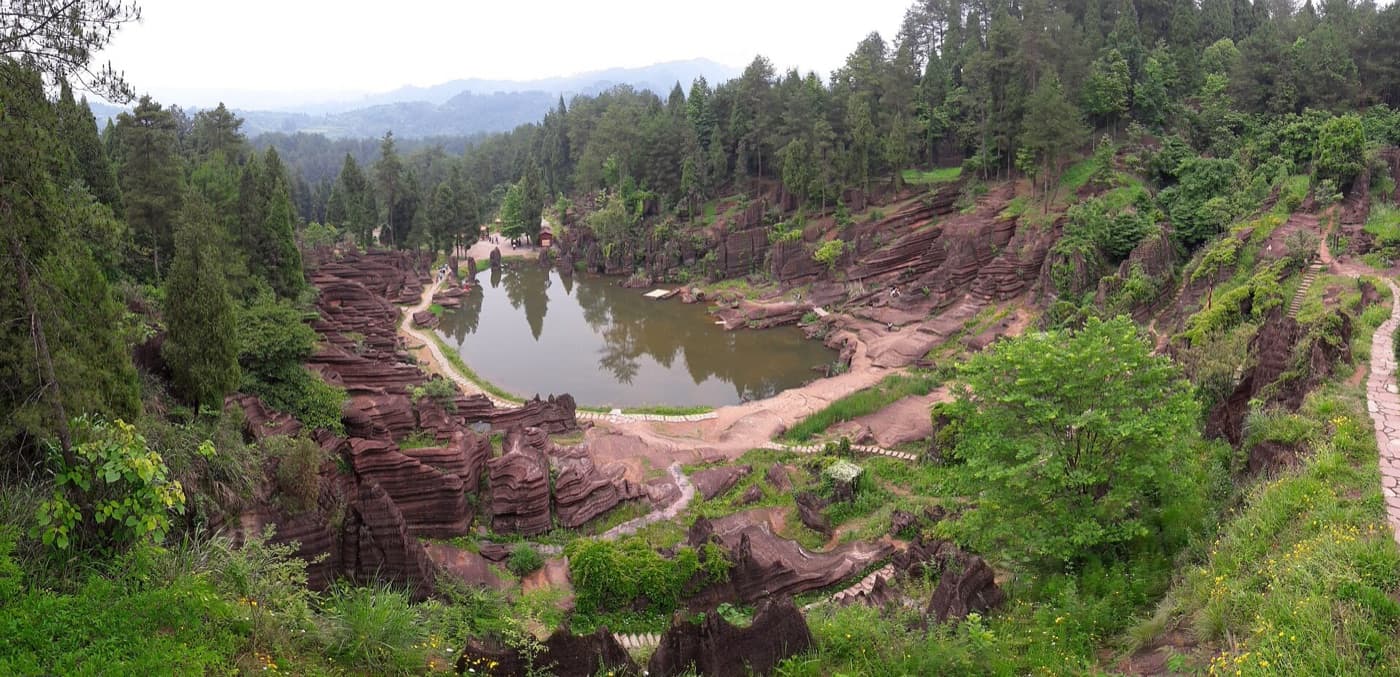
This is China's only red carbonate stone forest. Every rock is covered with fine striations, resembling a coral reef. The scenic area combines redness, elegance, steepness, strangeness, superlative beauty and antiquity, making it a natural sculpture museum of stone. It is therefore no surprise that it is known as the "Number One Wonder of Wuling".
2–3 hours · ¥120
Shen Congwen's Former Residence
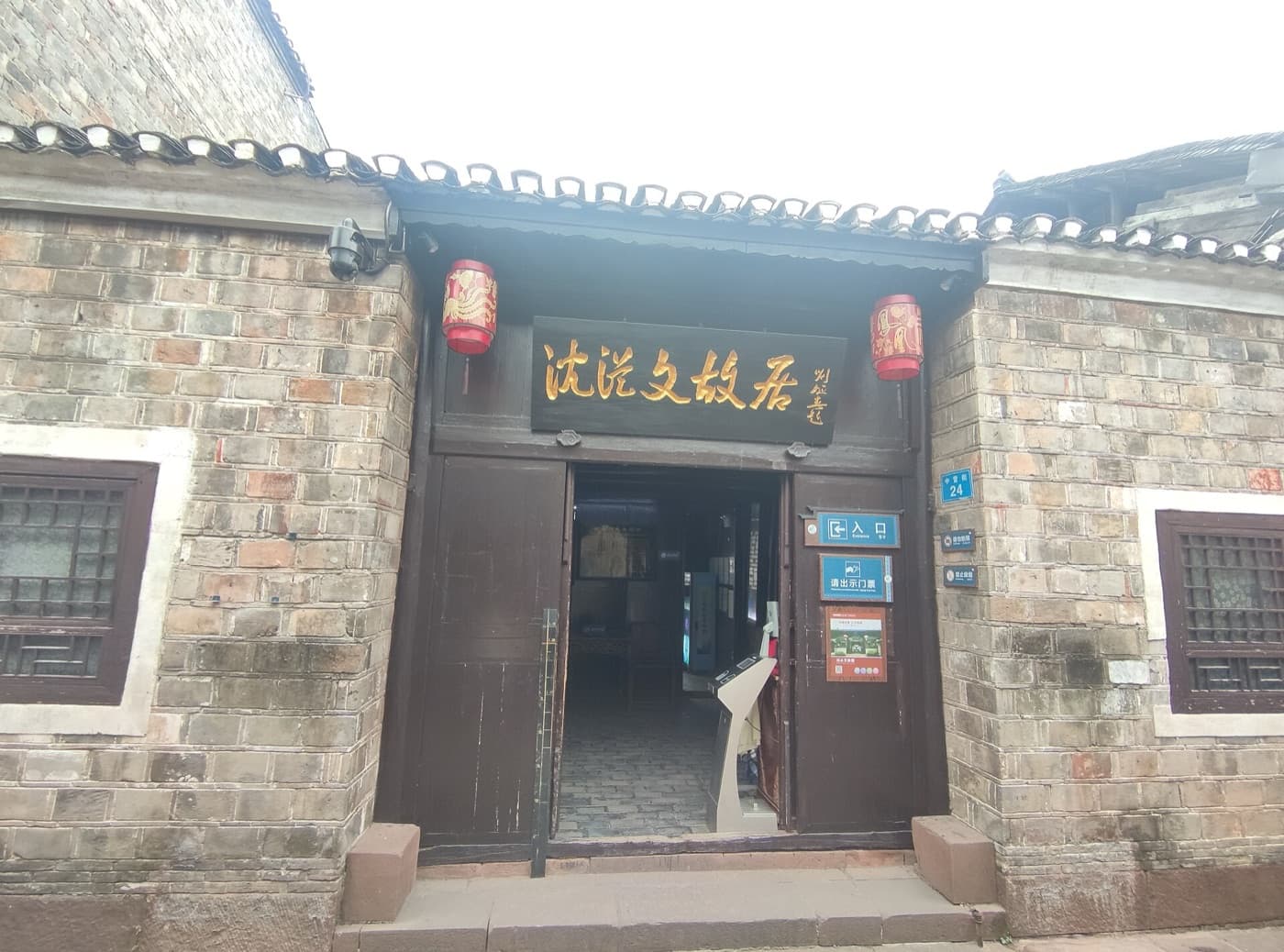
No mention of Fenghuang Ancient Town is complete without Shen Congwen. It was his brilliant pen that made this remote and beautiful old town famous throughout China. He is hailed as the 'Father of China's rural literature' and described as the 'voice of the emotions of the people of western Hunan'. Shen Congwen's Former Residence is a courtyard house enclosed by fired-brick walls. The whole building is antique in style and reflects the strong Ming and Qing architectural character of western Hunan. It displays Shen's calligraphy, manuscripts, personal belongings and portraits, and is one of Fenghuang's cultural attractions.
1 hour
Getting there & around
Getting There and Away
Xiangxi is mainly mountainous, and transport across the prefecture is not very convenient; few of its county towns have rail access. Jishou, as the capital of the Xiangxi Tujia and Miao Autonomous Prefecture, is the most accessible.
Rail
Fenghuang is now served by high-speed rail. Fenghuang Ancient Town Station has high-speed trains to and from Beijing, Shanghai, Guangzhou, Shenzhen, Changsha and other cities.
Road
As the prefectural capital, Jishou is connected by road with all the county towns in the prefecture and serves as the main hub between Xiangxi's sights. However, mountain roads are winding and hard going; the Aizhai Road near Jishou is especially famous for its nine bends and eighteen turns.
Eat & drink
Xiangxi cuisine is an important branch of Hunan cuisine. It excels at preparing wild mountain delicacies, smoked bacon and various cured meats. Its flavours emphasise salty, savoury, sour and spicy notes, and it is often cooked over charcoal. The curing methods are also distinctive, with most meats cured and then air-dried. Signature dishes include braised chestnuts with choy sum, Xiangxi sour meat and stir-fried blood duck.
Tujia hotpot has a distinctive character, evident in its tableware, seating and dishes, and it is well worth trying if you get the chance. Qianzhou duck hotpot and Longshan Maoping chili chicken hotpot are the area's best-known varieties. Countless restaurants use these names, so ask locals which one serves the best; their recommendations are the most reliable.
Glutinous rice cakes (nuomi baba), oil cakes (youba ba) and sugar sanzi are common street snacks among the Tujia and Miao people of Xiangxi.
Specialty Food Spots
Jishou has a street known as "Haochi Jie" (locally meaning "greedy street"), lined with snack stalls offering delicious food at astonishingly low prices. Several other specialty eateries are also worth a visit, such as Xiongjia Duck Shop, Xiangli Renjia, Laobotou and a specialty mutton restaurant. Ask locals for directions.
In the evening, many street stalls line the road from the county post office to the East Gate, mostly selling mala tang, barbecue and other snacks, all with a fiery kick. The Dashi Restaurant is well known in Fenghuang, serving sour cabbage, lichen, cured meat, stir-fried pine mushrooms and pot-style mushrooms with meat, dishes full of local character. The Old Street Restaurant on Handicraft Street is also not to be missed.
Where to stay
Accommodation in western Hunan is fairly convenient. Every county seat has guesthouses or hotels, and conditions are usually quite decent. Some places also have family inns, which are very convenient.
Shopping
Miao paper-cuts and silverwork, Tujia brocade, and Fenghuang's batik and blue-printed cloth are the famous handicrafts of Xiangxi. Most are handmade with an antique charm, and they make lovely decorations for the home.
Shopping for handicrafts is one of the highlights of a trip to Fenghuang, and Handicraft Street is well worth a stroll. Among its shops, Wu Huahua's tie-dyeing, Xiong Chengzao and Liu Dapao's batik, and Ye Shuiyun's brocade are all worth a look, as they are made and sold by the artisans themselves.
Xiangxi zongjun mushrooms, Xiangxi wild kiwifruit, Guzhang Maojian tea, Guzhang chestnuts and Longshan big-head mustard are well-known local specialties of western Hunan. They are not only delicious but also quite inexpensive, so it is worth buying a good supply.
Nightlife
Xiangxi's nightlife is not highly developed, but cinemas, pool halls and bathhouses can be found in every county town. In Jishou, you can head to Haochi Street for cheap and tasty snacks.
Xiangxi Mountain Folk
The mountain people of Xiangxi are simple and warm-hearted, and they usually do not refuse to host outside guests in their homes. If you cannot find a hotel in the mountains, turning to a local villager will often bring a warm welcome. They may even refuse payment, so a small gift can come in handy.
Miao Clothing
Miao clothing comes in a wide variety of styles and distinctive craftsmanship, with more than 130 styles and a strong ethnic character. Techniques include cross-stitch, embroidery, batik, weaving and inlay work. Miao women's dress is especially distinctive, with pleated skirts and a fondness for silver ornaments.
Markets
No visit to Xiangxi is complete without a market. The Miao markets at La'er Mountain, Heku and Shanjiang in Fenghuang draw vendors from Guizhou, Chongqing and Miao villages across Xiangxi, earning them the saying "two provinces and one municipality gather at one market." The goods on offer are plentiful, prices are low and the handicrafts are exquisite, ranking among the finest of all markets. You can also see Miao women in festive dress.
La'er Mountain holds its market on the 2nd and 7th days of the lunar month, Shanjiang on the 3rd and 8th, and Heku on the 1st and 6th.
River Lanterns
In the evenings, many vendors sell river lanterns along the Tuo River. It is said that releasing a lantern lets you make a wish, and many children will follow you insistently, trying to sell you one.
Fenghuang Specialty Dishes
Glutinous rice with sour chili, tofu in sour broth, Miao sour fish and Fenghuang blood-cake duck are all rare delicacies worth tasting.
Local Breakfast
In Jishou, stop by the small restaurants at Hongqiaotou to try the local breakfast specialties of rice tofu (mi doufu) and mung bean noodles (lüdou mian). They are delicious.
Source: China Self-Guided Travel 2025 (《中国自助游》, Tianjin Science & Technology Press, Aug 2024), pp. 1968–1987. Translated from the Chinese edition; names and prices follow the guidebook. · Plain text version