Shen Congwen's Former Residence
No mention of Fenghuang Ancient Town is complete without Shen Congwen. It was his brilliant pen that made this remote and beautiful old town famous throughout China.…
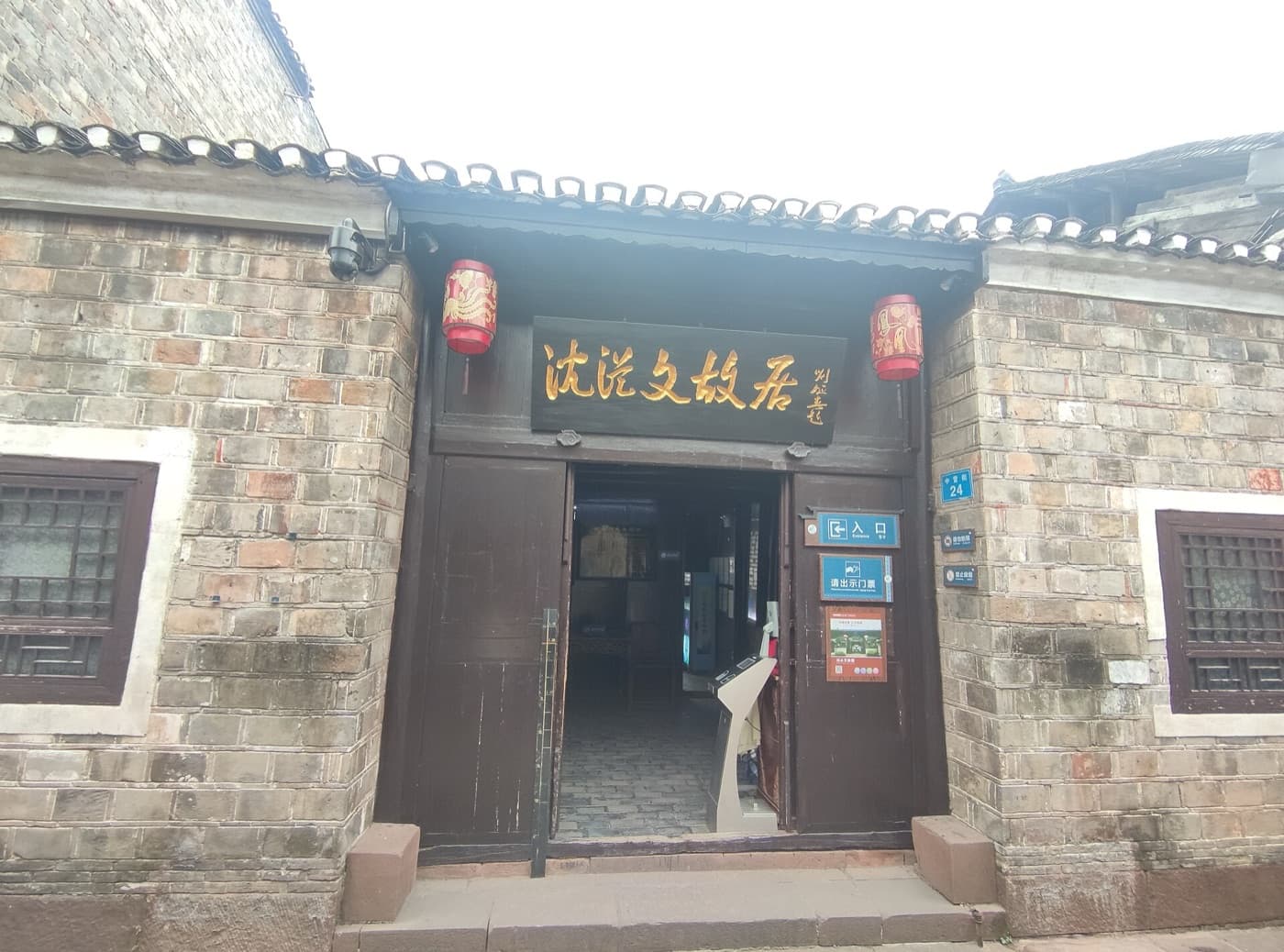
Shen Congwen's Former Residence, Western Hunan (Xiangxi) · Kurgenera · CC BY-SA 4.0 · Wikimedia Commons
Key facts
- Time needed
- 1 hour
- Guidebook rating
- 3 / 5
From China Self Guided Travel 2025, page 1974. Open in Google Maps
About Shen Congwen's Former Residence
No mention of Fenghuang Ancient Town is complete without Shen Congwen. It was his brilliant pen that made this remote and beautiful old town famous throughout China. He is hailed as the 'Father of China's rural literature' and described as the 'voice of the emotions of the people of western Hunan'. Shen Congwen's Former Residence is a courtyard house enclosed by fired-brick walls. The whole building is antique in style and reflects the strong Ming and Qing architectural character of western Hunan. It displays Shen's calligraphy, manuscripts, personal belongings and portraits, and is one of Fenghuang's cultural attractions.
Frequently asked questions
How long should I spend at Shen Congwen's Former Residence?
Plan on 1 hour for Shen Congwen's Former Residence.
Where is Shen Congwen's Former Residence?
Shen Congwen's Former Residence is in Western Hunan (Xiangxi), Hunan Province, in the Central China of China.
More places in Western Hunan (Xiangxi)

Fenghuang Ancient Town
Many people regard Fenghuang Ancient Town as one of China's most beautiful small towns. Its mountains are gentle yet graceful, its rivers shallow yet crystal clear, and its pavilions and towers nestle among peaks and flowing water. Delicate and charming, it resembles a subtle, lingering landscape painting. Fenghuang Ancient Town comprises six scenic areas: the Ancient Town Scenic Area, Nanhua Mountain Scenic Area, Shawan Scenic Area, Qiliang Cave Scenic Area, Huangsiqiao Ancient Town, and the Southern Great Wall. The Ancient Town Scenic Area holds most of Fenghuang's historic buildings and is the core area of the town, well worth savouring at leisure. In former times, the town was known for the 'Eight Views of Fenghuang': Verdant Peaks of Nanhua, Woodcutters' Songs on Orchid Path, Morning Bell at the Mountain Temple, Welcoming the Sunrise at East Ridge, Fishing Lights at Dragon Pool, Waves at the Temple Pavilion, Moon over the Stream Bridge, and Majestic Peaks. The first three are at Nanhua Mountain, and the last five are in the Shawan Scenic Area. Keen travellers may wish to see them all.
Fenghuang Ancient Town itself has no entrance fee. Admission to the Nanhua Mountain Shenfeng Scenic Area is ¥59. By Air Fly to Zhangjiajie Hehua Airport, then travel by rail to Jishou, and onward to Fenghuang. Alternatively, fly into Tongren Fenghuang Airport in Guizhou, about 30 km from Fenghuang (fewer flights available), then take a taxi to Fenghuang for about ¥100. You can also fly into Zhijiang Airport and travel from there. By Train Take a train to Jishou or Huaihua, then transfer to a high-speed train to Fenghuang. By Road Jishou → Fenghuang: Exit Jishou Railway Station, where air-conditioned tourist coaches to Fenghuang usually wait at the square between stations, ¥20 per person. Jishou South Bus Station (吉首汽车南站) operates from 6:30 to 17:30, with a bus to Fenghuang every 15–20 minutes, ¥20 per person; a private charter costs ¥100. Huaihua → Fenghuang: From Huaihua Railway Station, take a taxi (¥8) to Huaihua West Bus Station, then board a coach to Fenghuang, ¥40 per person. Tongren → Fenghuang: Get off the train at Yuping, travel to Tongren city centre, then transfer to a bus to Fenghuang, ¥25 per person. · 1–2 days

Miaoren Valley
Miaoren Valley boasts natural scenery of breathtaking craftsmanship and well-preserved ancient Miao villages. It has been recognised by experts at home and abroad as a "living fossil of the Miao people". The narrow, secluded valley hides caves, and the caves hide valleys, forming a labyrinth that feels like a fairyland. Mountain flowers bloom throughout the seasons, and birdsong fills the air.
¥68 · 1–2 hours
Huilong Pavilion
The stilt houses (吊脚楼) are located in the southeast of Fenghuang Ancient Town. They face the old official road in front and hang over the Tuo River behind. These historic buildings survive from the Qing dynasty and the early Republic period, and they have a strong Miao architectural character.
Free · 1–2 hours
Laodong Miao Village
Laodong Miao Village is located in Fenghuang County in western Hunan and is the oldest Miao village in western Hunan, with more than 600 years of history. It is a stone town laid out in the nine-palace, eight-trigram pattern (九宫八卦), with ingenious design, and its homes are all connected to one another. Here you can see one of the most original Miao cultural traditions, liangcai (亮彩), as well as the most mysterious and striking shamanic practices of western Hunan: 'driving corpses' (赶尸), 'casting gu' (放蛊), and 'summoning immortals' (降仙).
¥148 · 2–3 hours
Southern Great Wall
The Southern Great Wall, also known as the 'Miao Frontier Wall', is part of the Great Wall built in the Ming dynasty and stretches about 190 km. The Ming rulers built it to separate southern ethnic minorities, suppress resistance, and secure stability in the Miao frontier. Along the way are numerous watchtowers, cannon platforms, fortified sentry posts and gates built for garrisoning troops and defence. It is not as grand as the Great Wall in the north, but it has its own southern landscape and the distinctive character of western Hunan's ethnic minority culture.
¥45 · 1–2 hours
Shanjiang Miao Village
Also called Zongbing Camp, and known in the Miao language as Bagu, Shanjiang lies in a gorge 20 km northwest of Fenghuang Ancient Town. It is a small mountain village full of authentic Miao life. Ancient customs are still preserved here: brilliantly colourful Miao costumes, the distinctive 'door-blocking wine' (拦门酒) ritual, unique kagu drums, road-blocking songs and bianbianchang (边边场) dance gatherings, as well as traditional festivals such as the 'April Eighth' (四月八) festival with its moon and flower dances, and the 'Sixth of the Sixth Month' (六月六) festival with its antiphonal mountain songs.
Miao Valley ¥100 · 3 hours