Chaoshan travel guide
潮汕
Gongfu tea is the tea ritual of Chaoshan households. When you enter a Chaoshan home, guests are welcomed alike, close or distant, and the host will immediately brew gongfu tea,…
15 places · In the guidebook: pages 2377–2391

Chaoshan, Guangdong Province · AI illustration for China Trip
Quick itinerary
Chaoshan in 5 days
- Day 1
- Day 2
- Kaiyuan Temple→
- Guangji Bridge→
- Han Yu Memorial Museum→
- Longhu Ancient Village→
- Shantou
- Day 3
- Day 4
- Queshi Scenic Area→
- Old Town Quarter→
- Shantou University→
- Jieyang
- Day 5
The feel of the place
- Gongfu Tea
- Gongfu tea is the tea ritual of Chaoshan households. When you enter a Chaoshan home, guests are welcomed alike, close or distant, and the host will immediately brew gongfu tea, a courtesy handed down through generations. To savour gongfu tea is to truly understand Chaoshan culture; it is an indispensable part of daily life and has become part of every household. Antique tea caddies and exquisite teacups, wreathed in rising steam and accompanied by warm, repeated invitations of 'please', will delight you even if you do not drink; simply watching is enough to enchant.
- Ancient Charm
- Chaozhou is a city that has weathered more than 1,600 years of history. As you wander through its ancient villages, ancestral halls and streets, the mottled walls seem eager to tell you of the city's rich past. The historic architecture that survives here radiates a sense of mystery, and scholars of Chinese and foreign architecture alike marvel at its exquisite craftsmanship. This is a city of ancient charm. Accompanied by the lilting sounds of the Chaozhou dialect, a light heart grows more contemplative, and as you explore you will be irresistibly drawn into its deep history.
- Chaoshan Cuisine
- No trip to Chaoshan is complete without its food. Chaoshan cuisine is a treasure of China's culinary culture and a hallmark of Chaoshan culture, renowned at home and abroad. Diners who seek it out often say, 'Chaozhou dishes are exquisitely made, light and delicious, truly hard to leave.' As one of the three major schools of Cantonese cuisine, Chaozhou cuisine is famed far and wide for its clarity, lightness, elegance and ingenuity, and it has become a shining signature of the Chaoshan region.
Self-Guided Itineraries
Sights in the Chaoshan area are rather scattered across Chaozhou, Shantou, Jieyang and other places. Travellers can plan their own itinerary according to the time they have.
Chaoshan Folk Customs
Chaoshan preserves many folk customs that are rare across the country, such as pig competitions, tower-burning and Yingge dance. Practices recorded in ancient texts can still be seen here today.
Preparation and Advice
Language
Shantou and Chaozhou mainly speak Teochew (Chaozhou dialect). The mountainous northern part of Raoping County in Chaozhou City and most of Jiexi County in Jieyang are Hakka-speaking areas. Standard Mandarin is generally sufficient for communication.
Climate and Best Time to Visit
The Tropic of Cancer passes through the southern part of the area, which has a subtropical monsoon climate. The region is warm and humid all year round, and all four seasons are suitable for travel.
Things to see
1. On Nan'ao Island, goods are sold by the kilogram (except tea). When shopping, be sure to clarify whether a price is per kilogram or per jin (斤), to avoid unnecessary disputes.
Guangji Bridge
1–2 hours · ¥20
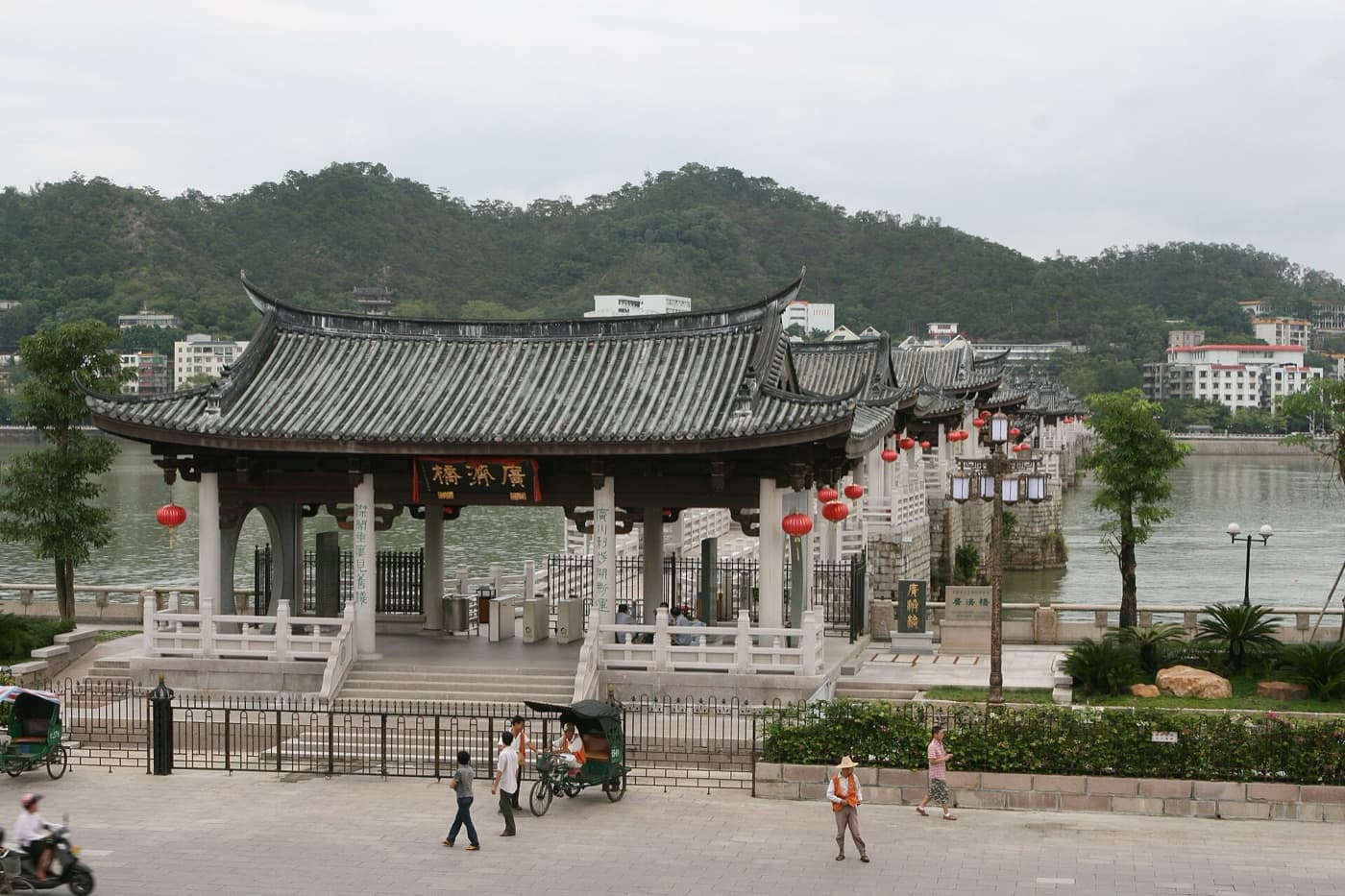
Commonly known as Xiangzi Bridge, it is one of China’s four great ancient bridges, alongside Zhaozhou Bridge, Luoyang Bridge and Lugou Bridge, famed for its unique “eighteen shuttle boats and twenty-four piers” design. First built in 1171 and repaired by successive dynasties, it took on its “eighteen shuttle boats and twenty-four piers” form by 1513. The bridge is linked by 24 piers in its eastern and western sections and 18 shuttle boats in the middle. Its floating section can be opened and closed, and its structure is unusual, combining beam, arch and pontoon bridge types in one, a unique case in the history of Chinese bridge building.
Daoyun Tulou
1 hour
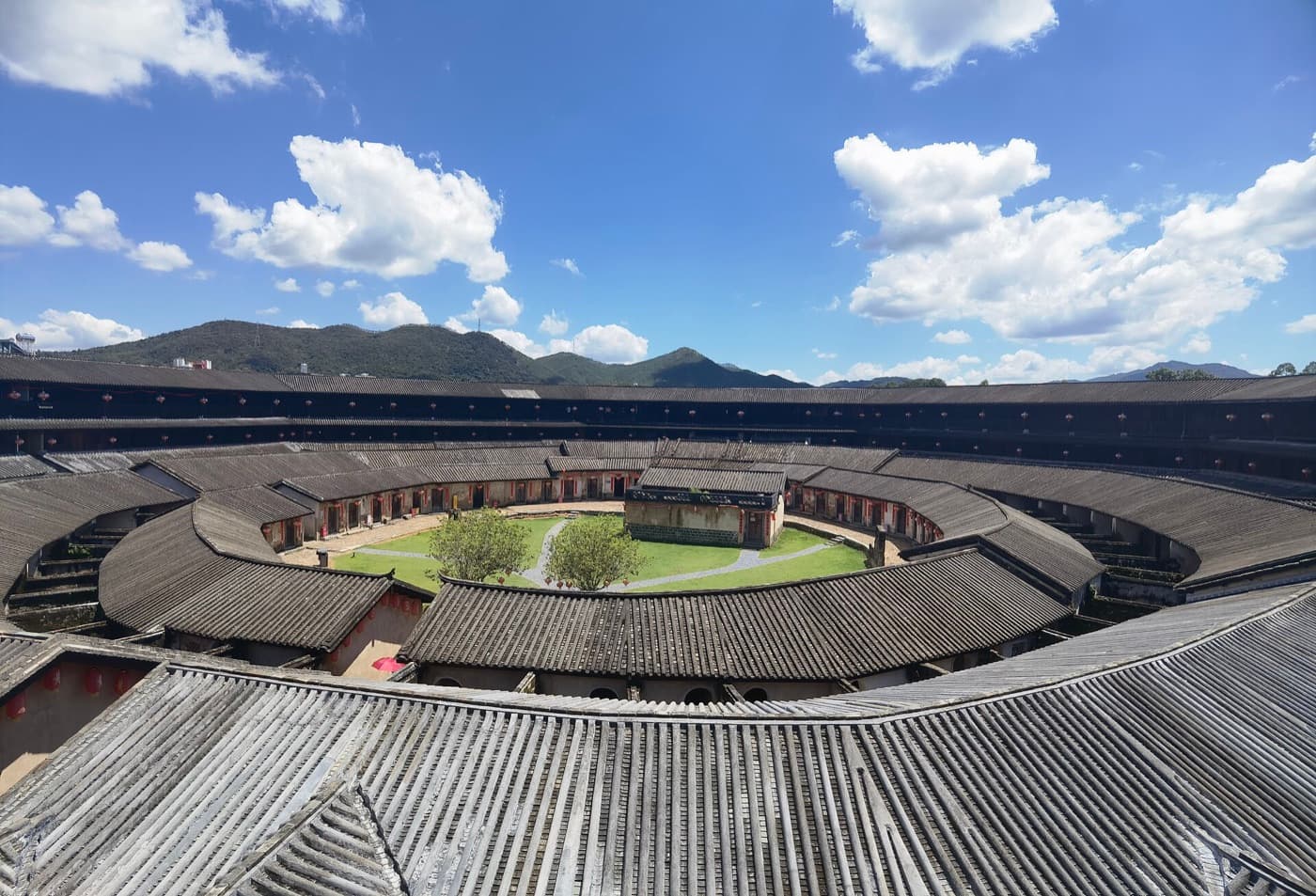
One of the largest Hakka tulou (earthen round houses) discovered in China so far, its defining feature is a layout based on the Bagua (eight trigrams) diagram. Daoyun Tulou is still home to local residents, adding lively local character to the ancient earthen walls. Its unique architecture attracts many ancient-architecture experts and visitors from China and abroad to study and sightsee. It is also a paradise for photography enthusiasts.
Chaozhou Ancient City
Chaozhou Ancient City lies along the lower reaches of the Han River and is blessed with exceptional natural scenery. The city has a long history, and several old buildings in its historic quarter carry the charm of the Tang and Song dynasties. Visitors should not miss the Eight Scenes of Chaozhou, which took shape in the late Ming and early Qing dynasties: Spring Floods at Xiangqiao (湘桥春涨), Oak Trees at Han Shrine (韩祠橡木), Ancient Pines at Jinshan (金山古松), Seasonal Rain at Phoenix (凤凰时雨), Pagoda at Longqiu (龙湫宝塔), Autumn Wind at Ecrossing (鳄渡秋风), Buddhist Lanterns at Beige (北阁佛灯) and Fishing Rafts on West Lake (西湖渔筏).
3–5 hours · Ticket A ¥111; Ticket B ¥128
Kaiyuan Temple
One of the largest ancient architectural complexes in Chaozhou, Kaiyuan Temple is known as “the First Ancient Temple of Eastern Guangdong” and is one of the four surviving Kaiyuan-era temples in China.
1–2 hours · Free
Paifang Street
Many arcade-style (qilou) buildings line the street, and 22 memorial archways (paifang) stand along it, giving it a lingering sense of antiquity. Beyond the historic sights, the street’s local food is also very tempting.
1–2 hours
Longhu Ancient Village
The village still preserves hundreds of ancestral halls and mansions from successive dynasties, along with inscriptions, calligraphy and stone tablets left by notable scholars. Its depth of history, scale and distinctive layout are rare in Chaoshan and across eastern Guangdong.
2 hours
Han Wengong Shrine
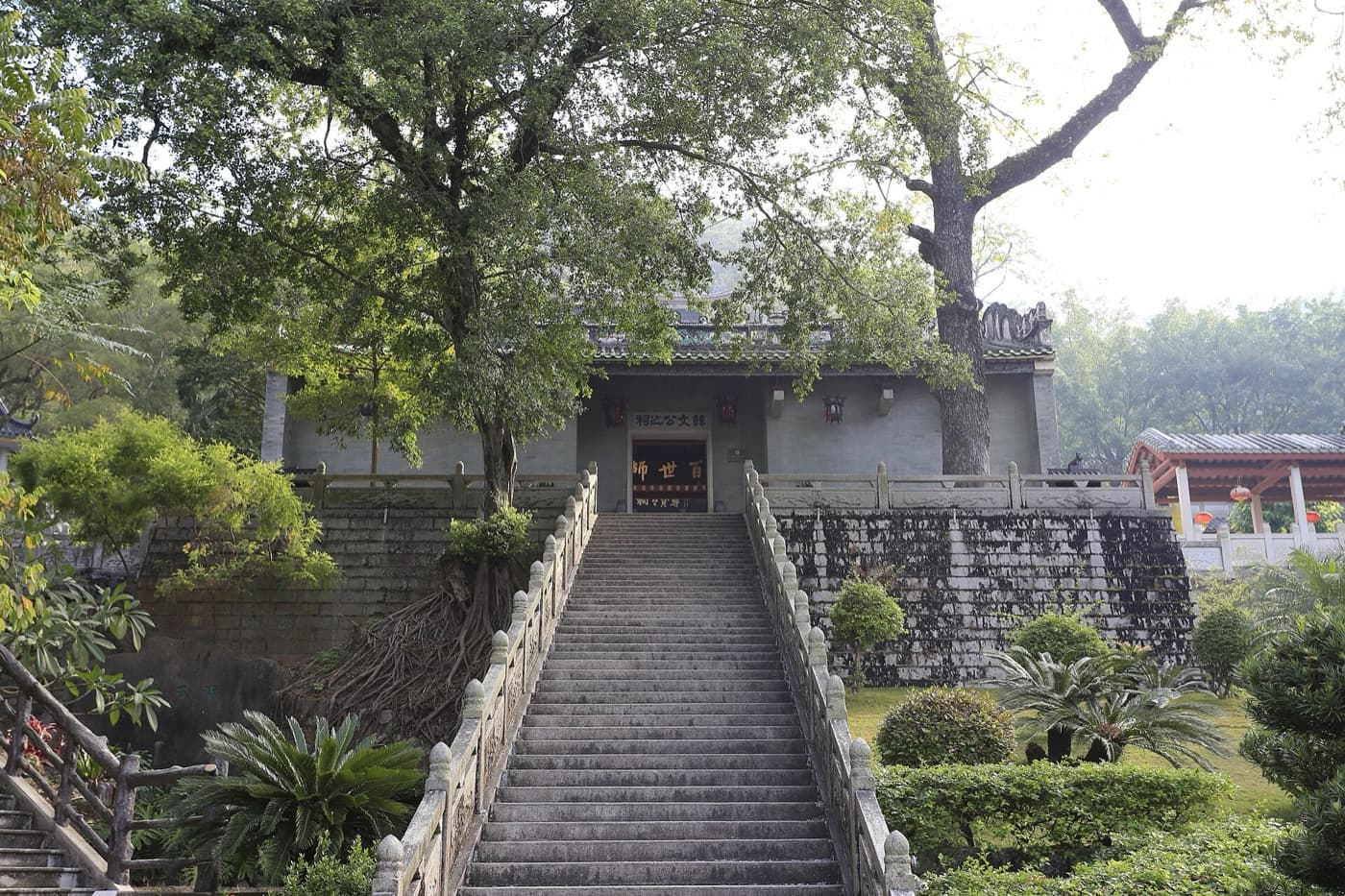
Han Yu served as prefect of Chaozhou, where he suppressed evil practices, supported farming and sericulture, freed enslaved people and promoted education, making outstanding contributions to the region’s development. To commemorate him, the Han Wengong Shrine was built. The most worthwhile feature of the shrine is its historical stele inscriptions: 40 stone steles from different dynasties are preserved here. The most notable include the Ming-dynasty “Record of the Expanded Han Shrine” and “Merit Not Inferior to Yu”, the Qing-dynasty seal-script carving “Transmitting the Dao and Initiating Literature”, and the re-carved “Stele of the Han Wengong Temple of Changli Count in Chaozhou”. There are also plaques written by many modern celebrities.
1–2 hours · Free admission with ID card
Nan'ao Island
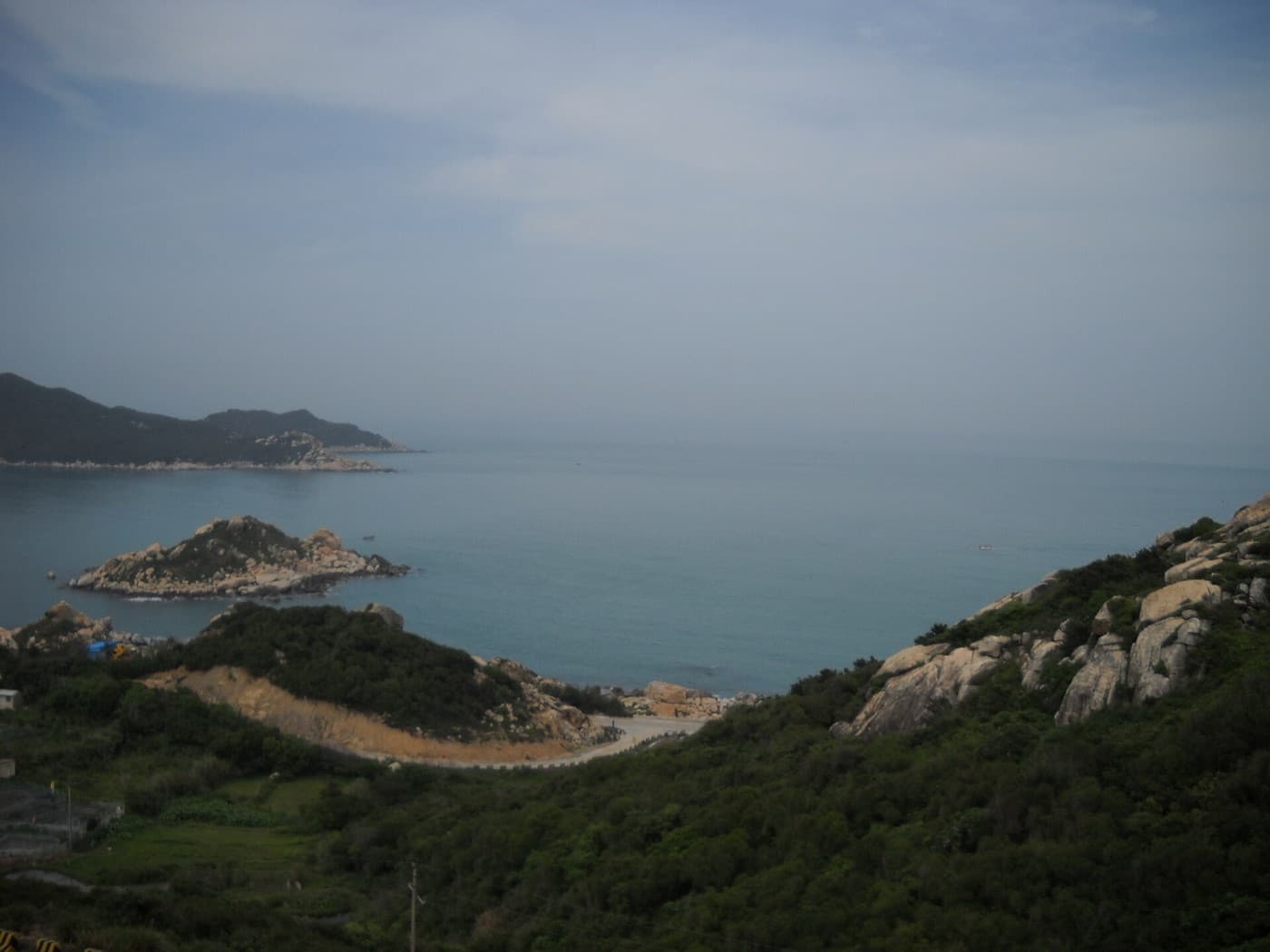
Lying on the sea where Guangdong and Fujian meet, Nan’ao is made up of 23 islands, large and small, known as “the guardian of Chaoshan and the throat of Fujian and Guangdong”. Besides historic sites such as Changshanwei Battery, Zongbingfu and Xiongzhen Pass, the island also has Huanghua Mountain National Forest Park and the Qing’ao Bay tourist area.
1–2 days · Zongbingfu (Garrison Commander’s Office) ¥10; Qing’ao Bay free; Gold and Silver Island ¥5; Song Well ¥5
Queshi Scenic Area
Foremost of the Eight Scenic Views of Shantou and one of Guangdong’s first provincial-level scenic and historic sites, Queshi lies on the southern side of Shantou Bay. It consists of coastal terraces and 43 peaks, and combines sea, mountains, rocks, caves and human heritage. Uniquely blending grandeur, strangeness, elegance and seclusion, it has long been the first choice for visitors to Shantou, filled with rich subtropical scenery and distinctive Chaoshan charm.
1 day · Tashan Scenic Area ¥10; Yanfeng Scenic Area ¥10; combined ticket for both areas ¥15; Longquan Cave ¥6; cable car ¥50
Gate of Nature
Gate of Nature sits at Qing’ao Bay and is the 11th Tropic of Cancer marker tower built in China to date. When the sun is directly overhead at the Tropic of Cancer, the shadow passes through the central tube of the sphere above and falls on the centre of the platform below. It is one of Nan’ao’s newer attractions.
1–2 hours · Free
Qiaolou Xiaojiao (Watchtower Dawn Bugle)
“Dawn Bugle at Qiaolou” refers to Jinxian Gate in Rongcheng District, Jieyang. The gate was first built in the Ming dynasty and is rich in legend. It is said that during the Tang and Song dynasties, seven scholars buried a stone plaque inscribed with “Jinxian Gate”, and in the Ming dynasty seven scholars who wished to build a city gate here dug it up.
15–30 minutes · Free
Huangmanzhai Waterfall
The waterfall cluster mainly consists of Huangmanzhai Falls, Milky Way Falls and Triple-Tier Falls. The pools beneath the falls are crystal clear, and the Sea Turtle Rock and Sea Dragon Rock along the banks are lifelike.
Half a day · ¥120
Qinglan Guaijiu Valley National Geopark
Volcanic activity some 200 million years ago shaped Qinglan Guaijiu Valley, whose landscape is both strange and beautiful. Thousands of distinctive mortar-shaped potholes (shijiu hu) pock the riverbed and the undersides of its caves. Strange mortars, rocks and caves come together here, and a stroll through the valley is a constant source of wonder. The mysterious Dihe Cave (Dihe Dong) is the highlight: within it, mortars sit inside caves and caves inside mortars, and its underground river has flowed for a thousand years without drying up. The valley was also a filming location for the film “Shame Iron Fist” (《羞羞的铁拳》).
2 hours · ¥60
Old Town Quarter
This is a must-visit for overseas Chinese returning to trace their family roots. Most of the Western-style arcade buildings on the old street were built in the 1920s–1930s, in styles including faux-Roman, faux-Gothic and Baroque. Although the old street no longer enjoys its former prosperity, its ancient buildings still stand firm.
3–4 hours
★
Eastern Guangdong’s only national forest park, surrounded by the sea on three sides, offering views over the whole of Nan’ao Island. Its main attraction is the Yingshi Mountain cliff-carving area, with more than 1,300 calligraphy works by renowned masters carved into the rock on a grand scale. The area enjoys an oceanic climate, with mild winters and cool summers, and an annual average temperature of 21.5℃.
2–3 hours · ¥20
Getting there & around
Getting There
Transport in the Chaoshan area is built around a road network radiating from Shantou.
By Air
Jieyang Chaoshan International Airport is the main airport of the Chaoshan region, located between Shantou, Chaozhou and Jieyang. It has domestic flights to Guangzhou, Shanghai, Beijing, Changsha, Chengdu, Chongqing, Dalian, Guangzhou, Guilin, Hong Kong and other cities, as well as international flights to Bangkok, Seoul, Naypyidaw and Singapore.
Airport Express
High-Speed Rail
The Xiamen–Shenzhen High-Speed Railway, opened in early 2013, passes through Chaozhou, Shantou and Jieyang. Passengers can board high-speed trains here, or travel from here to Xiamen, Shenzhen and other cities.
By Road
With Shantou as the hub, expressways reach Shanwei, Lufeng and other cities and counties throughout the Chaoshan area, making travel very convenient. National Highways 206 and 324 and several provincial roads, including 523, 527, 528, 529 and 530, serve the region.
Chaoshan Airport
Airport ExpressAirport express lines are now open to Shantou East, Shantou West, Shantou Chenghai, Shantou Chaonan, Chaozhou and Jieyang. The fare to Shantou is ¥28 on all of them.
- Phone:
- 0663-3828788
Eat & drink
Chaoshan cuisine has a history of several thousand years. Its hallmarks are dishes that are light without being bland, fresh without a fishy taste, tender without being raw, and rich without being greasy. Chaozhou’s gongfu tea (工夫茶) is also world-famous for its meticulous brewing. Across the small cups and saucers, a sequence of steps known as “Guan Gong Patrols the City” and “Han Xin Musters the Troops” unfolds, with graceful traditional vessels and fragrant tea that fills the air.
Signature Dishes
Specialty Food Streets
Xima Road in Chaozhou, Fuping Road Food Street in Shantou, Longxing Seafood Stalls in Shantou, Chaoshan Food Street, etc.
Chaoshan Cuisine
Although the saying goes that “Chaozhou has the finest cuisine under heaven,” Shantou’s food reflects the depth of Chaoshan’s food culture. Every year Shantou hosts a variety of food festivals, and the Chaoshan Food Festival, the largest of its kind in eastern Guangdong, has created special food-themed travel routes around Shantou.
Recommended Restaurants
Chaoshan Signature Dishes
Signature DishesSteamed Lobster, Chilled Jinzhong Chicken, Chess-Piece Tofu, Chaoshan Braised Meats, Steamed Lotus Chicken, Steamed Taiji Crab, Stir-Fried Large Prawns, Iron-Pressed Pigeon, Deep-Fried Shuangjiang Bird, Satay Beef, Wine-Soaked Shiitake, Glutinous Rice Crispy Chicken, Crispy-Skin Roast Chicken, Red-Braised Frog, Almond White Lung, etc.
Chaozhou Snacks
Signature DishesBean-paste Haitang fruit, Hakka nian gao, sweet crystal buns, crystal balls, sha cake, dried shrimp and bamboo shoot, five-flavor ginger, glutinous rice ciba, Heping cake, oyster omelette sauce, beef balls, etc.
Xinmeiyuan Grand Restaurant
Recommended RestaurantsA hugely popular signature restaurant in Shantou serving Chaoshan-style cuisine, with a focus on seafood. Prices range from budget to upscale, and its snacks are good value.
- Address:
- Gaoxin Technology Development Zone, North Huashan Road, Jinping District, Shantou
- ¥
- ¥110 per person
Within the District
Recommended Restaurants- Phone:
- 0754-88364349
Fuhecheng Beef Balls (Fuping Road Branch)
Recommended RestaurantsA long-established name in Shantou, suited to everyday budgets. Recommended: beef balls and beef hotpot.
- Address:
- No. 93, Fuhe Comprehensive Building, Fuping Road, Shantou
- Phone:
- 13670466666
Hu Rongquan Eatery
Recommended RestaurantsA very famous old establishment. Whenever Chaozhou food comes up, someone is sure to mention “Hu Rongquan.” It is said that three well-known Chaozhou snacks were created here: yamu nian (鸭母捻), spring pancakes and qingyou subing (plain oil flatbread).
- Address:
- Nos. 183–185 Taiping Road, Chaozhou
- Phone:
- 13670776143
Where to stay
Accommodation in Chaoshan is not as convenient as in the Pearl River Delta, but prices are relatively lower. Every prefecture-level city and county town has budget two- and three-star hotels, and even cheaper guesthouses.
Source: China Self-Guided Travel 2025 (《中国自助游》, Tianjin Science & Technology Press, Aug 2024), pp. 2377–2391. Translated from the Chinese edition; names and prices follow the guidebook. · Plain text version