Wuyi Mountain travel guide
武夷山
As early as the Western Zhou period, Wuyi Mountain was already part of the “Land of the Seven Min” (七闽之地), the settlement area of the Min people. In the late Spring and Autumn period, the Yue people entered Fujian.…
18 places · In the guidebook: pages 1573–1594

Wuyi Mountain, Fujian Province · AI illustration for China Trip
Quick itinerary
Wuyi Mountain in 3 days
- Day 1
- Day 2
- Nine-Bend Stream Rafting (passing Yunü Peak)→
- Wuyi Palace→
- Dawang Peak→
- Yixiantian (Thread of Sky)
- Day 3
- Dahongpao Scenic Area→
- Shuilian Cave
The feel of the place
- Boat Coffins
- As early as the Western Zhou period, Wuyi Mountain was already part of the “Land of the Seven Min” (七闽之地), the settlement area of the Min people. In the late Spring and Autumn period, the Yue people entered Fujian. Later, through ethnic migration and blending, the area gradually took on its present character, with the Han people in the majority and the She people living in concentrated communities. This is why traces of ancient Yue culture, such as cliff-suspended boat coffins (架壑船棺), are still preserved here.
- The Dangers of Hard-Sell Tactics
- Travellers on group tours to Wuyi Mountain are usually taken to a place called the Snake Garden, as the mountain's snakes are famous. Here, to sell a snake medicine said to have miraculous healing properties, the salesperson will stage a demonstration of a scalding burn being cured by the medicine. Keep your eyes open and be careful not to be cheated.
Finding Your Own Accommodation
Whether at the airport, railway station or long-distance bus station, do not readily follow drivers who solicit passengers, as they can typically earn a commission of nearly 50% from accommodation. It is best to book a room in advance. Even if you look for a room on arrival, keep your luggage spread out so that touting drivers do not know you have not yet checked in. When negotiating the price at a place to stay, be sure to say that you came on your own, otherwise you will be charged extra for no reason.
Vehicle Fares in Wuyi Mountain
1. A vehicle from Wuyi Mountain Railway Station to the scenic area generally costs ¥20, though it can be bargained down to as little as ¥10. Locals, however, pay ¥1 per person for a shared minivan (mian de).
2. A taxi from the airport to the Wuyi Mountain Resort costs around ¥30. Outside the airport gate, cross the road and take a small city-bound bus, which reaches most of Wuyi Mountain's scenic spots, for about ¥2.
Buy Tickets Through Official Channels
1. Do not believe locals who say you can pay an extra ¥10 to start rafting immediately. Be sure to queue and buy tickets properly.
2. It is clearly stipulated that no tip is required for the boatman.
Preparation and Enquiries
Language
As this is a developed tourist area, Mandarin will get you by without any trouble.
Climate and Travel Season
Wuyi Mountain's temperatures change little through the year, and the climate is fairly humid. Overall, it is suitable for visiting at any time of year. Winter is the weakest season, as most of the scenery has withered and the natural views are much diminished. Summer is hot, but since everything is lush, it is the best time to tour Wuyi Mountain.
Things to see
Yunwo – Wuyi Palace
Jiuqu Stream
Ride a replica bamboo raft about 2 metres wide and 9 metres long from Nine Bends to First Bend. This is the most distinctive attraction in Wuyi Mountain, offering views of the entire area. As the Jiuqu Stream alternates between calm and rushing waters, the bamboo raft glides past peak after peak of breathtaking scenery. You can also spot the “Wuyi boat coffins,” which have been suspended on the sheer cliffs for more than 3,000 years. Bamboo rafting
2–4 hours · ¥100 per person, plus ¥2 per person for insurance. Each raft seats 6 people. Rafting takes about 90 minutes.
Longchuan Grand Canyon
The Longchuan Grand Canyon is a delightful place, a world of miniature landscapes and waterfalls. After seeing the Chongquan Waterfall, you can walk among towering ancient trees, a scene of great beauty. Surrounded by green hills and clear waters, the canyon quietly expresses the poetry and painting of Wuyi Mountain. The air is fresh and rich in negative ions, making it a natural oxygen bar.
1–3 hours · ¥75
Huxiao Rock
Tiger Roar Rock rises steeply into the sky, with springs and boulders, and is one of the few truly outstanding scenic spots in Wuyi Mountain.
2–3 hours
Yixiantian (Thread of Sky)
A huge boulder leans over three adjoining caves. Inside them, you can look up through a crack and see a single thread of daylight. Besides its unique scenery, the site is home to some rare plants and animals and holds cultural relics.
1 hour
East China's No. 1 Rafting Route
This is the Tongmu Stream inflatable raft ride, with four or five sections of extremely steep drops and thrills throughout. You must hold on to the raft the entire way, making it a must-visit for adventure lovers.
¥100, about 90 minutes of rafting
Yangu Huaxiang Trail
The Yangu Huaxiang Trail (Rock Bones and Fragrant Flowers Trail) has several especially beautiful sights. Wuyi Mountain's finest tea-growing areas lie along this route and its surroundings, and locals also call it “the most expensive and most romantic road.”
Hiking & Outdoors
Tianyou Peak
Tianyou Peak is the best place to take in the full view of Wuyi Mountain. Seen from afar, Tianyou Peak rises above the other peaks, wrapped in mist, so that climbing to its summit feels like wandering through the heavens. Surrounded by many other peaks, it overlooks the Jiuqu Stream on three sides, where the clear water flows past like a jade ribbon.
1–3 hours
Wuyi Palace
The gateway to the Wuyi Mountain scenic area, Wuyi Palace was first built during the Tianbao era of the Tang dynasty and was expanded to more than 300 rooms during the Song dynasty. Today, two Dragon Wells and Wannian Palace and Sanqing Hall survive. Wannian Palace now houses the Zhu Xi Memorial Hall, Sanqing Hall is home to the International Lanting Academy, and nearby are Song Street and the Wuyi Mountain Museum at its eastern end. All are worth a visit.
1–2 hours
Da Hong Pao
Da Hong Pao is the “champion” of Wuyi rock teas. It grows in Jiulongke in northern Wuyi Mountain, where only four bushes remain, making it extremely rare and precious. Jiulongke is a gorge fed by seeping spring water. The Da Hong Pao grows at an elevation of more than 600 metres, where streams tumble over rocks and clouds drift through the air. The cliff wall bears three vermilion characters reading “Da Hong Pao.”
1–3 hours
Shuilian Cave
Shuilian Cave (Water Curtain Cave), originally named Tangyao Cave-Heaven, lies on the east side of Danxia Ridge. It is the largest rock cave in Wuyi Mountain and is long known as “the finest in the mountains.” The cave is spacious enough to hold a thousand people, and several temples without tiled roofs are built against the cliff. Clear spring water falls from the summit and drifts in the wind, as described in the lines: “Crimson cliffs a thousand fathoms high, sunlit yet brushed by rain; ten thousand pearls drawn like a hanging curtain.” Along the cliff stand three sites: the Three Sages Shrine, dedicated to the Song-dynasty Confucian scholars Liu Ziyu, Zhu Xi and Liu Gong; the Three Teachings Hall, dedicated to Confucius, Laozi and Shakyamuni; and the ruins of the Qingwei Cave Daoist Temple.
1–3 hours
Qinglong Waterfall
Qinglong Grand Waterfall and the surrounding area have been measured as having the highest concentration of negative ions in the air of Wuyi Mountain, making it a true natural oxygen bar. It is also a base for European-style body-art photography under the theme “Man and Nature.”
1–3 hours · ¥88 (includes sightseeing shuttle)
Yunü Peak (Jade Maiden Peak)
Jade Maiden Peak (Yunü Feng) stands in the Second Bend, its whole form resembling a graceful young woman. On the rock to the right of the peak, the characters “Jingtai” (镜台, “Mirror Stand”) are written in neat, elegant script. They are the largest cliff inscription in Wuyi Mountain. The bamboo raft pier on the left bank of Jade Maiden Peak is the starting point for Jiuqu Stream rafting, and riding a bamboo raft down Jiuqu Stream is the best way to admire the peak and its cliff inscriptions.
1 hour
Yunwo (Cloud Nest)
One of the most beautiful places in Wuyi Mountain. It is best known for its clouds, which is why it is called “Cloud Nest” (Yunwo). In winter and spring, at dawn and dusk, wisps of cloud often drift out of the caves beneath the cliffs and curl around the rock pinnacles, a truly spectacular sight. At the foot of the mountain, Ziyang Academy (紫阳书院) was once Zhu Xi's retreat and teaching site, and many inscriptions by famous figures are carved into the rock faces.
1–2 hours
Getting there & around
Getting There and Away
Wuyi Mountain has an airport. Railways mainly connect it with major cities in Fujian, while road transport is relatively convenient.
By Air
Wuyi Mountain Airport can handle medium-sized aircraft such as the Boeing 737. It currently operates around 30 routes, including to most domestic cities as well as Hong Kong and Macau. The airport is 9 km from the city centre and 15 km from the scenic area.
Wuyi Mountain Railway Station now has several lines. Direct trains run from Fuzhou, Xiamen, Quanzhou and other cities in Fujian, and high-speed trains run from Beijing, Shanghai, Shenzhen, Hangzhou and many other cities to Wuyishan North Station.
By Road
Nanping and Shaowu in Fujian, and Shangrao in Jiangxi, are the transfer hubs for travel to Wuyi Mountain, with coaches running daily between them. You can go first to Shaowu in Fujian or Shangrao in Jiangxi and then transfer to a bus to Wuyi Mountain. Shaowu to Wuyi Mountain costs around ¥20, with a bus every half hour from 6:10 to 17:30. Shangrao to Wuyi Mountain costs around ¥30, with a bus every hour from 6:00 to 17:00. Shaowu Bus Station is directly opposite the railway station. Shangrao Bus Station is some distance from the railway station, so take a tricycle or minivan to Shangrao Long-Distance Bus Station.
Getting Around
In Wuyi Mountain city, bus fares are ¥1–2. Taxis start at ¥7 for the first 2 km and are metered by distance. Beyond 2 km, the rate is ¥1.8 or ¥2 per km, depending on the vehicle's engine displacement. For distance over 5 km, a 50% empty-running surcharge may be added to the per-km rate. Within the scenic area, journeys between attractions take only a few minutes, so it is very convenient. Only the Dahongpao Scenic Area requires a taxi to reach.
Taking the Bus
The distance from Wuyi Mountain city to the Wuyi Mountain scenic area is 15 km. All the attractions can be reached by the “City–Xingcun” bus line, with fares of ¥1–2. There are also hail-and-ride tourist shuttles along the way, costing around ¥5.
Hiring a Car
Renting a car within the resort area costs ¥80 per day. Once inside the nature reserve, a trip to the mountain top costs ¥300. A trip only to the museum or eco-rafting area, or to the Qinglong Waterfall area without entering the reserve, costs ¥200.
Wuyi Mountain Bus Station
By Road- Address:
- No. 64, Wujiu North Road
Wuyi Mountain Long-Distance Bus Ticket Office
By Road- Phone:
- 0599-5311446
Eat & drink
Wuyi Mountain is both a famous scenic mountain and a treasure trove of wildlife and plant resources. As a result, it offers hundreds of dishes year-round, many of them mountain delicacies. Please note, however, that you should protect nationally protected plants and animals in Wuyi Mountain: do not eat nationally protected species or wild game.
Banquets, Liquor and Snacks
Wuyi Mountain is also the home of the banquet. The Manting Banquet is the most legendary “feast of the immortals” in Wuyi Mountain; the Eight Trigrams Banquet has remained popular for 800 years; and the Snake Banquet offers a great variety of dishes, all delicious.
Wuyi Mountain's best-known liquor is Wuyi Liuxiang (Wuyi Lingering Fragrance). Wuyi Qinquan, Wengong Jiu, chrysanthemum wine, five-step snake wine and October white rice wine also enjoy some local renown.
Wuyi Mountain snacks come in every flavour and texture, savoury, sweet, meaty, vegetarian, fragrant, crispy, soft and chewy, with a distinctive taste that reflects the local character of northern Fujian.
Finding Your Own Places to Eat
Restaurants that drivers or guides take you to usually charge higher prices, so be sure to bargain. If a place doesn't feel right, you can always find somewhere else to eat on your own.
Set Menus Are Better Value
Set menus are better value than ordering à la carte. Even with a set menu, you can look through the menu first and swap out dishes you don't like for ones you do, at no extra cost. This gives you roughly the same meal you'd order à la carte, but at the set-menu price.
Recommended Specialties
Chicken Mince with Golden Bamboo Shoots, Chrysanthemum Grass Carp, Loach Vermicelli and Hometown Tofu are the local signature dishes. Wuyi Mountain's snacks are also distinctive, but its dazzling array of snake dishes is truly unique. As for drinks, Wuyi Liuxiang is the finest of the local liquors.
Sliced Rabbit Hotpot
Recommended SpecialtiesA traditional signature dish, eaten in a similar way to northern Chinese lamb hotpot.
Nine-Bend Bamboo Raft
Recommended SpecialtiesA dish that looks and tastes as good as its name suggests. Made with shiitake mushrooms, lean pork or fresh river fish, and bamboo shoot slices, it is shaped like a bamboo raft on the Nine-Bend Stream, with a crispy exterior and tender interior. The dish was created by the Wuyi Hotel, so naturally that's where to try it.
Snake Banquet
Recommended SpecialtiesStir-fried Dragon Ribs, Stir-fried Dragon Eggs, Boiled Dragon Pearls, Dragon Playing in Water and Dragon-Tiger Fight are all made with snake as the main ingredient, so be sure to try the snake banquet when you visit Wuyi Mountain. The Dragon-Phoenix Soup in particular is so fragrant that your mouth will water the moment it arrives at the table.
Fire-Roasted Beans
Recommended SpecialtiesA snack with rustic countryside charm. When the beans are ripe, a fire is built and freshly picked beans, stalks and pods together, are hung over the flames until cooked. You then peel and eat them. A local saying goes: “Even if you never eat them, Fire-Roasted Bean Pod Flat is famous all the same.”
Huma Fan
Recommended SpecialtiesA traditional snack, also known as mázhī (glutinous rice cake). The main ingredient is high-quality glutinous rice, mixed with sugar and sesame and shaped into rice balls, prized for their chewy, sweet and smooth texture.
Liangshuizai
Recommended SpecialtiesA refreshing drink made from xili fruit (Ficus pumila).
Kuzhu Cake
Recommended SpecialtiesAn entirely natural, green food made from kuzhu (Castanopsis sclerophylla) and other shell-bearing mountain plants. It has a slightly astringent flavour.
Where to stay
Wuyi Mountain Yuehua Hotel
Recommended AccommodationA luxury hotel, so prices are on the high side. From your room, however, you can enjoy the spectacular scenery of Dawang Peak and the garden pavilions and water pavilions among lush flowers and trees, letting you take in the spirit of the mountains and waters and the splendour of Wuyi.
- Address:
- No. 11, Dawang Peak South Road
- Phone:
- 0599-5238999
- Where to stay? Sangu Resort Area has many guesthouses and hotels, and plenty of places to eat and drink nearby, making it a top choice for many visitors. However, prices rise sharply during public holidays. Lantang Village at the foot of Dawang Peak has beautiful surroundings and many guesthouses where you can see Dawang Peak from your room. Nanyuan Ridge is where many popular trendy guesthouses are clustered.
Shopping
Oolong Tea
Wuyi Mountain's oolong tea is well worth sampling. “Small Red Robe” costs around ¥300/kg, though this is only a guide. It's best not to buy tea at the tea houses your guide takes you to.
Tips for Eating Within the Scenic Area
1. Restaurants in the scenic area should be bargained with, whether or not they display clear prices.
2. Avoid the cheap street stalls that offer free shuttle pick-ups. Their prices often differ from those on their business cards, and hard-selling is common.
Yancha (Rock Tea)
A specialty of Wuyi Mountain, of which Da Hong Pao is the most prized. Colour, aroma and smoothness are the key criteria for judging rock tea. If you ride a bamboo raft downstream along the Nine-Bend Stream, at the Fourth Bend you'll see a flat, riverside area on the south bank. This is the site of the Yuan dynasty Imperial Tea Garden.
Five-Step Snake Wine
A medicinal wine that is a Wuyi Mountain specialty. It may help relieve rheumatoid arthritis, sciatica, tetanus, skin itching and similar conditions.
Day trips & beyond
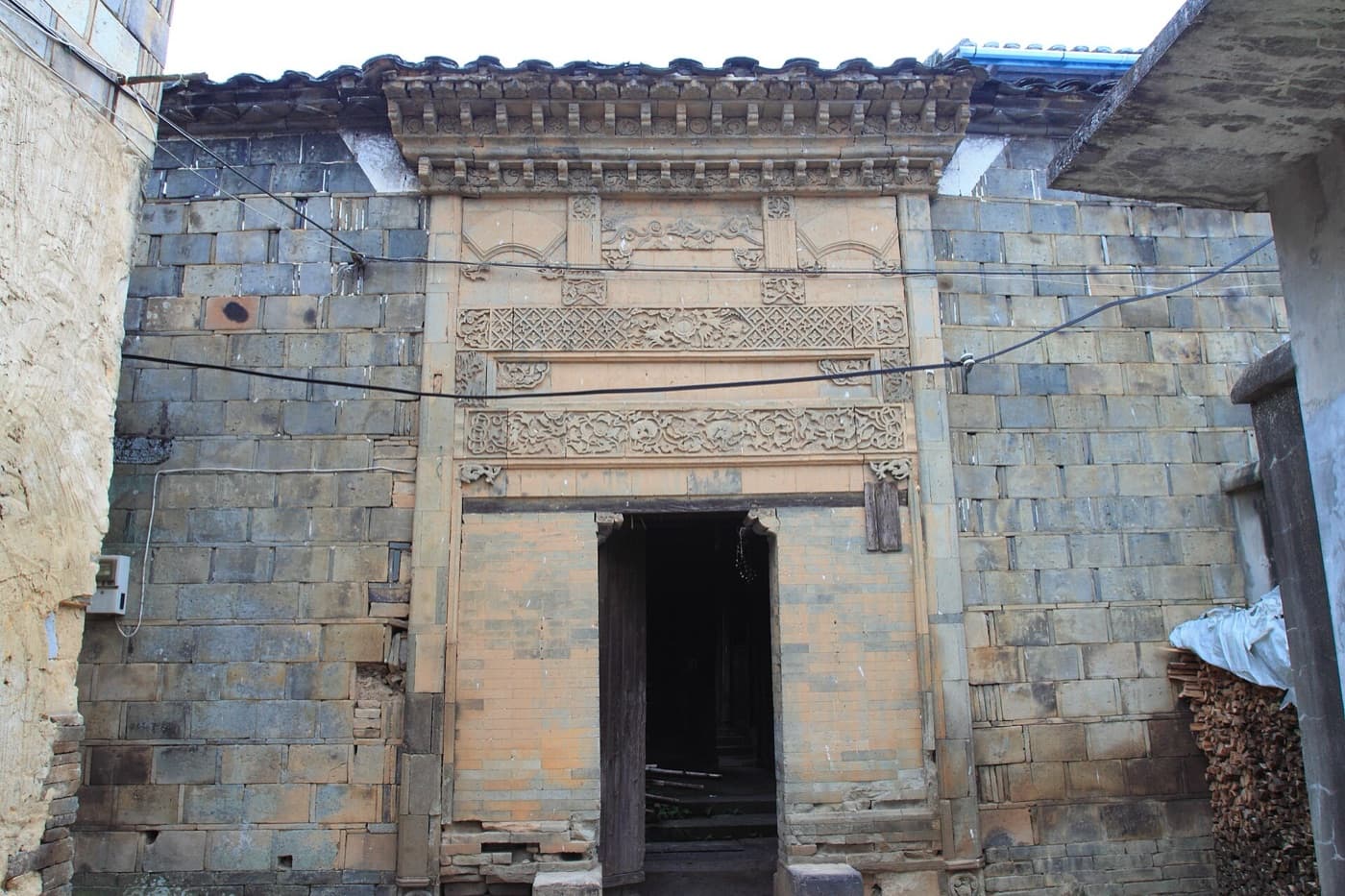
Chengcun Village
Chengcun Village is simple and quiet, with a rich cultural charm. According to the Zhao Clan Genealogy kept in the village, the Zhao family descends from Zhao Yuanzuo, the eldest son of Song Emperor Taizong, Zhao Guangyi. Many ancestral halls survive in the village, the most striking architecturally being the magnificent Centenary Arch (Baisui Fang) and the ancestral halls of the three clans. At the southwest village entrance stands the Guyue Gatehouse, facing south, its brick walls weathered by centuries of wind and rain. The Jujing Tower (聚景楼) in the village center is a feng shui structure; climbing it gives sweeping views of the surroundings. Chengcun still preserves traditional folk weddings, whose joyful festive scenes leave a lasting impression.
History & Culture · Old Towns & Villages · Photography
Heping Ancient Town
Heping Ancient Town, located in Shaowu City, Nanping, was originally named Heping (禾坪, “rice threshing ground”) because the area produced abundant rice and was flat. Its establishment dates back to the Tang dynasty, and it is one of the oldest ancient towns in Fujian Province. Nearly 200 historic residences remain intact in the town, making it one of the largest and best-preserved ancient towns in China. Heping is hailed as the bridge through which Central Plains culture entered Fujian. Relics still in the town include the Jukui Pagoda, whose inscribed plaque was written by Yuan Chonghuan, and plaques inscribed by Republican-era presidents. Heping is also a representative example of the historical and cultural heritage of South Wuyi, renowned for its thriving education and flourishing literary culture. From the Song to the Qing dynasties, the town produced more than 100 jinshi (top-level imperial exam graduates), and countless xiucai and juren scholars. The most distinguished was Huang Qiao, Vice Minister of Works under the Later Tang, who founded Heping Academy. Heping Academy was the earliest academy in northern Fujian's history, and the Song Neo-Confucian scholar Zhu Xi once lectured here. Heping rice wine, Heping Guanxing tea, Heping tofu, Heping rice noodles and Heping baoci (glutinous rice cakes) are famed for their pure, natural flavours and remain traditional specialties of Shaowu today.
3–5 hours
Wufu Ancient Town
Wufu Town lies in the southeastern part of Wuyishan City. Originally named Wufuli, it was established in the mid-Jin dynasty, more than 1,700 years ago. Set amid towering mountains and ridges, it has ten li of lotus ponds, earning it the nickname “Land of Lotus.” Wufu has produced many famous figures through the ages and is the hometown of the Song lyricist Liu Yong, the “Three Talents of the Liu Family,” the “Five Worthies of the Hu Family,” and Zhu Xi. The place that best showcases the achievements of Zhu Xi and his ancestors is Xingxian Old Street. Notable buildings on the street include Xingxian Academy, the Zhuzi Community Granary, Zhuzi Lane and the Five Worthies Well. Xingxian Academy was founded around the reign of Emperor Xiaozong of the Southern Song and is where Zhu Xi once lectured and taught his disciples. Its gateway tower rises high, and its exquisite construction features brick carvings of flowers, birds and figures on the doorway. The form is imposing and solemn, making it a spectacular sight.
3–5 hours
Xiamei Village
Xiamei Village lies 8 km from Wuyi Mountain and is a provincial-level historic and cultural village in Fujian. People have lived here since the Neolithic period. During the Southern Song dynasty, the renowned Neo-Confucian philosopher Zhu Xi lectured here. Most of the historic residences in the Xiamei complex were built during the Qianlong era. Each house's gateway is decorated with exquisite brick carvings that express wealth and grandeur. Wood carving is found mainly on the windows, where the patterns feature elegant, auspicious animals, plants and figures, and many fine window carvings remain intact in the old houses today. The finest examples are the 'Xiaofanchuan' (Little Fanchuan) in the Zou Clan Ancestral Hall and in the Zou Family Mansion. The grandest and most finely carved building in the village is the Zou Family Mansion (Zou Dafu Residence). Its hitching stone in front of the gate and the richly detailed brick carvings on its entrance reflect a strong traditional cultural character.
1–3 hours
Da'anyuan
If you have ample time in Wuyi Mountain, consider visiting Da Anyuan. Its natural environment is excellent, making it a natural forest oxygen bar. It consists of six main attractions: the Huanggang Mountain Grand Canyon, the Tea Horse Ancient Road, Longguiyuan, Taipingyang, Longjing and the canyon rafting. The whole scenic area is flat, so hiking is effortless, and in summer many people come here to go rafting.
1 day
Source: China Self-Guided Travel 2025 (《中国自助游》, Tianjin Science & Technology Press, Aug 2024), pp. 1573–1594. Translated from the Chinese edition; names and prices follow the guidebook. · Plain text version