Zhenjiang Museum
The Zhenjiang Museum was founded in 1958. Its architecture is in the Indian colonial style, and it was originally one of the earliest British consulates built along the coast and rivers of China.…
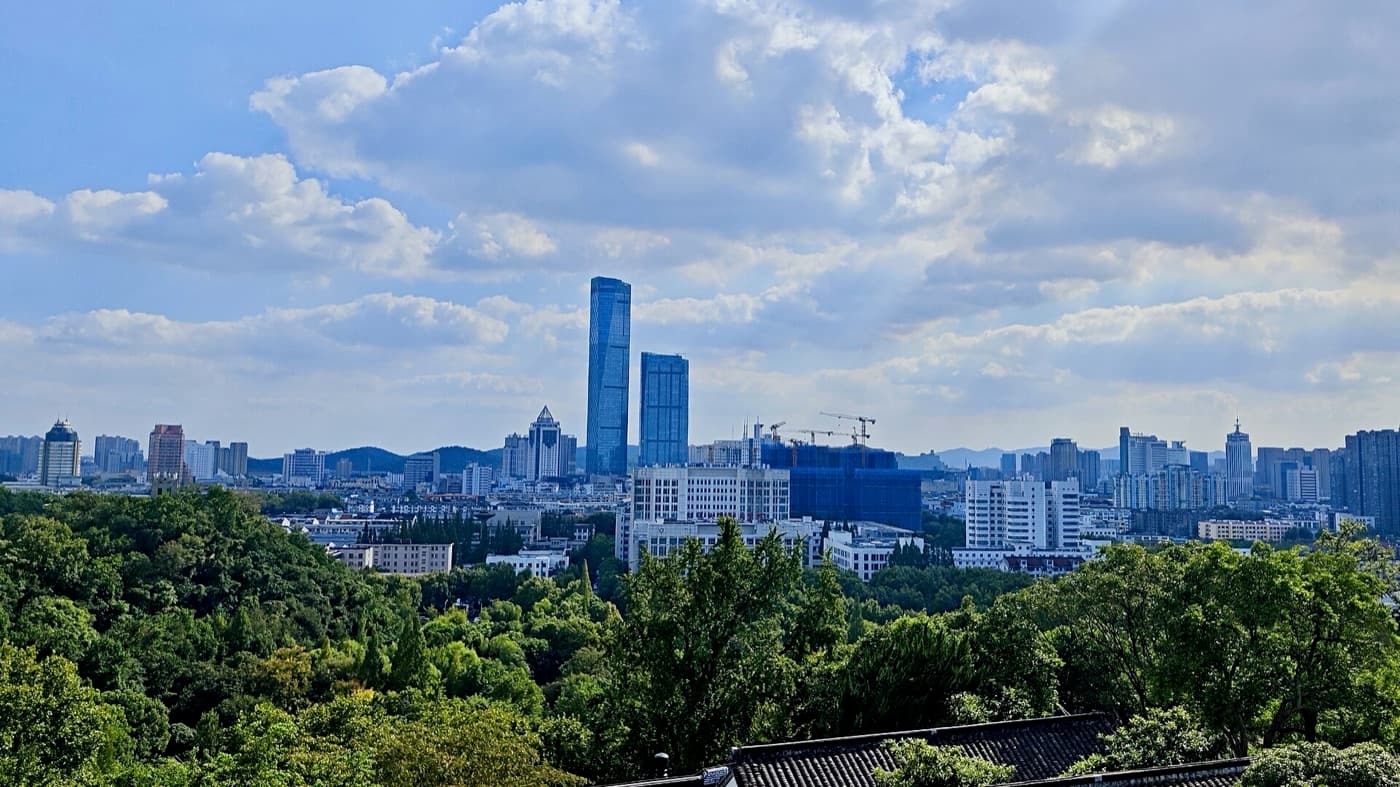
Zhenjiang Museum, Zhenjiang · Cz2018764171 · CC BY-SA 4.0 · Wikimedia Commons
Wichtige Fakten
- Eintritt
- Free
- Öffnungszeiten
- 9:00–17:00 (closed on Mondays)
- Zeitbedarf
- 2–4 hours
- Anreise
- Near Xijin Ferry Old Street (bus stop)
- Bewertung im Reiseführer
- 4 / 5
Aus China Self Guided Travel 2025, Seite 1057. In Google Maps öffnen
Über Zhenjiang Museum
The Zhenjiang Museum was founded in 1958. Its architecture is in the Indian colonial style, and it was originally one of the earliest British consulates built along the coast and rivers of China. The historic building lies against the foot of Yuntai Mountain on the west and adjoins Xijin Ferry Old Street on the east. Despite a century of wind and rain, it retains its graceful appearance. The museum’s collection includes more than 30,000 pieces and sets of artefacts and nearly 100,000 volumes of ancient books. Its particular strengths are bronze ware from the State of Wu in the Western Zhou and Spring and Autumn periods, Six Dynasties celadon, Tang gold and silver wares, and Ming and Qing painting and calligraphy.
Häufig gestellte Fragen
Was kostet Zhenjiang Museum?
Der Eintritt für Zhenjiang Museum beträgt Free, laut Reiseführer 2025. Preise können sich ändern; prüfe sie vor der Reise beim offiziellen Anbieter.
Wie sind die Öffnungszeiten von Zhenjiang Museum?
Zhenjiang Museum ist geöffnet: 9:00–17:00 (closed on Mondays).
Wie komme ich zu Zhenjiang Museum?
Near Xijin Ferry Old Street (bus stop)
Wie viel Zeit sollte ich für Zhenjiang Museum einplanen?
Plane für Zhenjiang Museum 2–4 hours ein.
Wo liegt Zhenjiang Museum?
Zhenjiang Museum liegt in Zhenjiang, Jiangsu Province, in der Region Ostchina von China. 85 Boxian Road, Runzhou District, Zhenjiang
Weitere Orte in Zhenjiang

Zhouzhuang Ancient Town
1984 machte Chen Yifeis Film *Erinnerungen an die Heimat* alle auf das sanfte Wasserdorf im schönen Süden des Jangtse-Deltas aufmerksam. Zhouzhuang wird seit alters als „Land der Wasser und Seen“ bezeichnet. Es gleicht einem Lotusblatt, das auf dem Wasser treibt. Das Kunstvollste daran sind die Brücken, entlang derer sich Häuser am Fluss reihen. All dies bildet das Bild von „kleinen Brücken, fließendem Wasser und Häusern“, das für Jiangnans Wasserdörfer typisch ist. Hier ein Kunqu-Lied zu hören und den Großmutter-Tee (Apo-Tee) zu probieren, hat einen ganz besonderen Reiz.
Jiaoshan Scenic Area
Shaped like a floating jade, the mountain is covered in lush greenery, with temples and pavilions half hidden by the surrounding shade. Its forest of steles and stone carvings preserve a rich legacy of ancient culture, and it is one of China’s best-known “Mountains of Calligraphy.”
Peak season ¥65; off-season ¥50 · 3–5 hours
Jinshan Scenic Area
Since ancient times Jinshan has been known as the “Mountain of Myths.” The episode “the flooding of Jinshan” in the classic Chinese folk tale “Legend of the White Snake” comes from this place. Jinshan has many famous sites scattered throughout. Jinshan Temple is an ancient monastery that has attracted poets and travellers for centuries. The Zhongling Spring (中泠泉) was already famous across the land in the Tang dynasty and is known as the “Best Spring under Heaven.”
Peak season ¥65; off-season ¥50 · 2–4 hours
Maoshan Mountain
The name “Maoshan Taoists” is known at home and abroad, and the tradition has been passed on in Japan, Singapore, Malaysia and other countries, which is rare in the history of Chinese Daoism. Setting aside the many famous Daoist priests who practised here in history and the calligraphy left by generations of scholars and literati, it is worth coming just to catch a glimpse of the “sky lantern,” the sacred light that appears above the summit of Maoshan.
Peak season ¥100, sightseeing bus ¥35; off-season ¥80, sightseeing bus ¥25 · 1 day
Baohuashan Mountain
Der Baohuashan ist für seine vier Wunder berühmt: die Schönheit der Wälder, die Anmut der Gipfel, die Tiefe der Höhlen und die Pracht der Nebel und Wolken. Der Waldanteil beträgt 92 %, darunter fast hundert tausend Jahre alte Bäume. Im Frühling leuchten die Hänge in Gelb. Der Longchang-Tempel hat über 1500 Jahre überdauert und ist heute Chinas größtes Zentrum für die Mönchsordination. Deshalb wird der Baohuashan auch als „erster Berg der Vinaya-Schule“ bezeichnet.
¥50 (inkl. Qianhua-Altdorf und Longchang-Tempel)
Nanshan Mountain
Das Nanshan-Landschaftsgebiet umfasst drei alte Klöster aus der Östlichen-Jin-Dynastie: den Zhaoyin-Tempel, den Zhulin-Tempel und den Helin-Tempel. Außerdem gibt es drei berühmte Quellen: die Hupao-Quelle (Tigersprung), die Lupao-Quelle (Hirschsprung) und die Zhenzhu-Quelle (Perlenquelle). Das weitläufige Gebiet umfasst 16 Berggipfel. Inzwischen sind im Nanshan-Bezirk zahlreiche neue Sehenswürdigkeiten entstanden, weshalb er ein beliebtes Ziel für Autoreisen aus der Umgebung geworden ist.
¥40 (Am Nanshan gilt derzeit ein Reservierungssystem für den Eintritt. Reservierungen sind über das offizielle WeChat-Konto möglich.) · 1 Tag