Yamdrok Lake
Yamdrok Lake is said to have the most beautiful water in the world. If you are lucky enough to pass by on a clear day, your trip to Tibet will have been worth it.…

Yamdrok Lake, Shannan · AI illustration for China Trip
Key facts
- Admission
- Free
- Opening hours
- Open all day (all year 2026)
- Time needed
- 1–3 hours
- Getting there
- If you take a bus, first ride to the end of the Yarlung Tsangpo Bridge, then take a taxi to Yamdrok Lake. Chartering a jeep is more expensive; a six-seat jeep typically costs ¥1500–2000 per day. Ordinary taxis may not be able to make it when road conditions are poor.
- By car
- From Lhasa, cross the Qushui Bridge. Turning left leads to Gonggar Airport; turning right leads to Yamdrok Lake. On the right side of the road you can see the Yamdrok Hydropower Station. The road winds up switchbacks and crosses the Kampa La Pass at 5,030 meters. Once past the pass, you can see Yamdrok Lake and the distant, steep Nyenchen Khangsar Peak.
- Guidebook rating
- 5 / 5
From China Self Guided Travel 2025, page 598. Open in Google Maps
About Yamdrok Lake
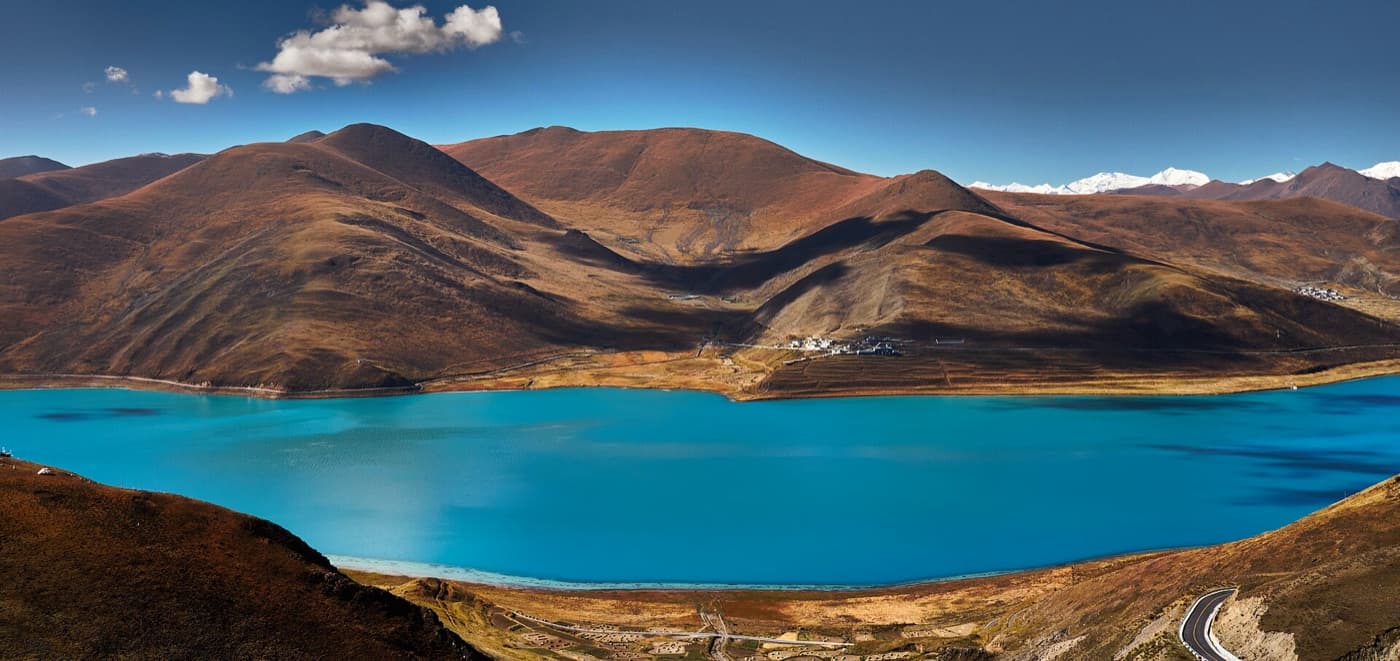
Yamdrok Lake is said to have the most beautiful water in the world. If you are lucky enough to pass by on a clear day, your trip to Tibet will have been worth it.
Yamdrok Tso (羊卓雍错) lies in Nagarzê County of Shannan City and is an important stop on the old road from Lhasa to Shigatse, often known simply as "Yamdrok." It is one of Tibet's three sacred lakes. At an altitude of 4,441 meters, it measures 130 kilometers from east to west and 70 kilometers from north to south, with a total area of 638 square kilometers. The lake is long and narrow, looking more like a vast river that has come to rest in the valley.
Because the mountains are so high, the weather changes dramatically. In rain or fog, it feels like climbing 1,000 meters vertically inside a tin box. Only when you see the prayer flags at Kampa La Pass does the hardship end. This stretch has the best road conditions of the whole journey, yet it still feels daunting. On the other side of the pass lies the beautiful lake, a calm haven under the blue sky, its pure colour so gentle and serene that you feel an urge to make it your own.
After stopping briefly at the pass, the car heads down toward the lakeshore, and for a long stretch the road follows the water, continuing even in your dreams after you have grown tired and fallen asleep.
Tips from the guidebook
- 1. Best season: July to September is ideal, when the air is humid and the temperature is comfortable. Yamdrok Lake is a low-salinity saltwater lake that begins to freeze in mid-November, with ice half a meter thick. The ultraviolet rays are strong, so apply sunscreen before going outside. In cold seasons, bring plenty of warm clothing. Avoid rainy days when visiting Yamdrok Lake, or you will see nothing at all.
- 2. Mudslides: During the August rainy season, mudslides are so large that it seems the entire mountain is moving, as if the whole valley is being filled in. The new road was built over these mudslide deposits.
- 3. Legend: Historical records say that Yamdrok Lake is shaped like a scorpion. According to legend, it was once divided into nine small lakes. The dakini Yeshe Tsogyal, worried that the many living beings in the lake would perish, tossed gold into the air, made prayers and recited mantras, and joined all the small lakes into one body, shaped like the iron scorpion held in the hand of Padmasambhava. That is why many place names in the basin are related to scorpions. On Yumbudo Island, which sits where the scorpion's heart would be, are the remains of a small Nyingma monastery built by Renzeng Duo'ejiong in the mid-16th century. Near the monastery are handprints said to belong to Padmasambhava.
- 4. Samding Monastery: On a steep, precipitous peak to the southwest of Yamdrok Lake stands Samding Monastery, which houses the mummified body of Dorje Phagmo, a series of reincarnated lamas. The monastery's overall form resembles the Potala Palace in Lhasa, with a Red Palace and a White Palace.
Frequently asked questions
How much does Yamdrok Lake cost?
Admission to Yamdrok Lake is Free, as listed in the 2025 guidebook. Prices can change; check the official channel before you go.
What are the opening hours of Yamdrok Lake?
Yamdrok Lake is open Open all day (all year 2026).
How do I get to Yamdrok Lake?
If you take a bus, first ride to the end of the Yarlung Tsangpo Bridge, then take a taxi to Yamdrok Lake. Chartering a jeep is more expensive; a six-seat jeep typically costs ¥1500–2000 per day. Ordinary taxis may not be able to make it when road conditions are poor.
How long should I spend at Yamdrok Lake?
Plan on 1–3 hours for Yamdrok Lake.
Where is Yamdrok Lake?
Yamdrok Lake is in Shannan, Tibet Autonomous Region, in the Southwest of China. Located between Nagarzê County and Gonggar County in Shannan City, Tibet
More places in Shannan

Zetang Town
Zetang Town lies on the south bank of the Yarlung Tsangpo River, southeast of Lhasa. It is the seat of the Shannan City government and the economic, cultural and religious centre of the region. It is home to Yumbulakhang, the first palace in Tibet, and Trandruk Temple, where Songtsen Gampo and Princess Wencheng once lived. Zetang is one of the birthplaces of the Tibetan people.
Free · 1 day

Lhamo La-tso
“Lhamo La-tso” means “Lake of the Goddess's Soul”. The lake is not large, but it holds a special place in the hearts of Tibetans. Between the 4th and 6th Tibetan months each year, many people come here to make pilgrimages and enjoy the view. To reach the lake, you must climb a hill of 200–300 metres; the summit is very windy and hung with prayer flags. Seen from the top, Lhamo La-tso resembles a gourd, round at both ends and slightly narrower in the middle.
¥50 · 1–2 hours
Yarlung River Scenic Area
Shannan is one of the birthplaces of the Tibetan people and the only national scenic area in Tibet. The scenic zone covers Naidong, Zhanang, Jiacha, Lhozhag, Gongga and other counties directly south of Shannan. Snow-capped peaks and glaciers, pastoral fields and pastures, riverbank valleys, ancient cultural heritage and folk customs together make up a scene that is mysterious, unadorned and spectacular. Sights in the area include Changzhu Temple, the Tombs of the Tibetan Kings, Yumbulagang and Samye Monastery. Medieval architecture and folk dwellings, as well as local customs and religious rituals, display a distinctive ethnic character.
No combined ticket; smaller sights are sold separately · 3 hours
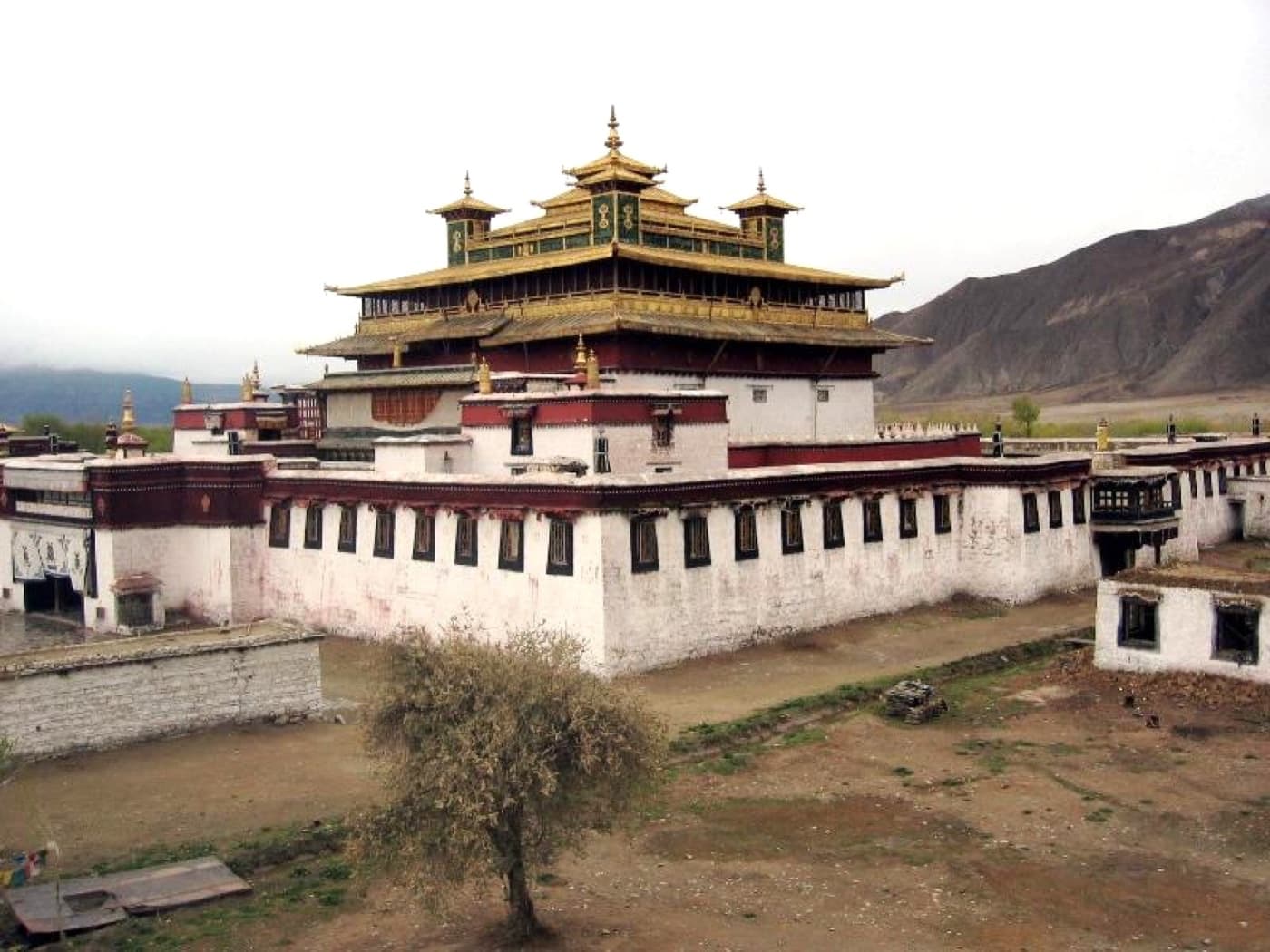
Samye Monastery
Samye Monastery is known as “Tibet's First Monastery” and was the first temple in the history of Tibetan Buddhism to house the complete Three Jewels of Buddha, Dharma and Sangha. Its murals are rich in content; the most famous is the 92-metre-long “Historical Records” mural, which narrates religious accounts of Tibetan history and ancient legends.
¥40 · 2–3 hours
Chimphu Retreat
Chimphu is as famous as Samye Monastery; Tibetans say that visiting Samye without going to Chimphu is like not having been there at all. Eminent masters such as Śāntarakṣita and Padmasambhava practised here, leaving many sacred traces. Chimphu sits on the slopes of the Nari Mountains, 15 km northeast of Samye Monastery, at an altitude of 4,300 metres. Today, many ascetic practitioners who have travelled from afar still meditate here, and many Tibetans and visitors regard it as a holy site.
Free · 1–2 hours
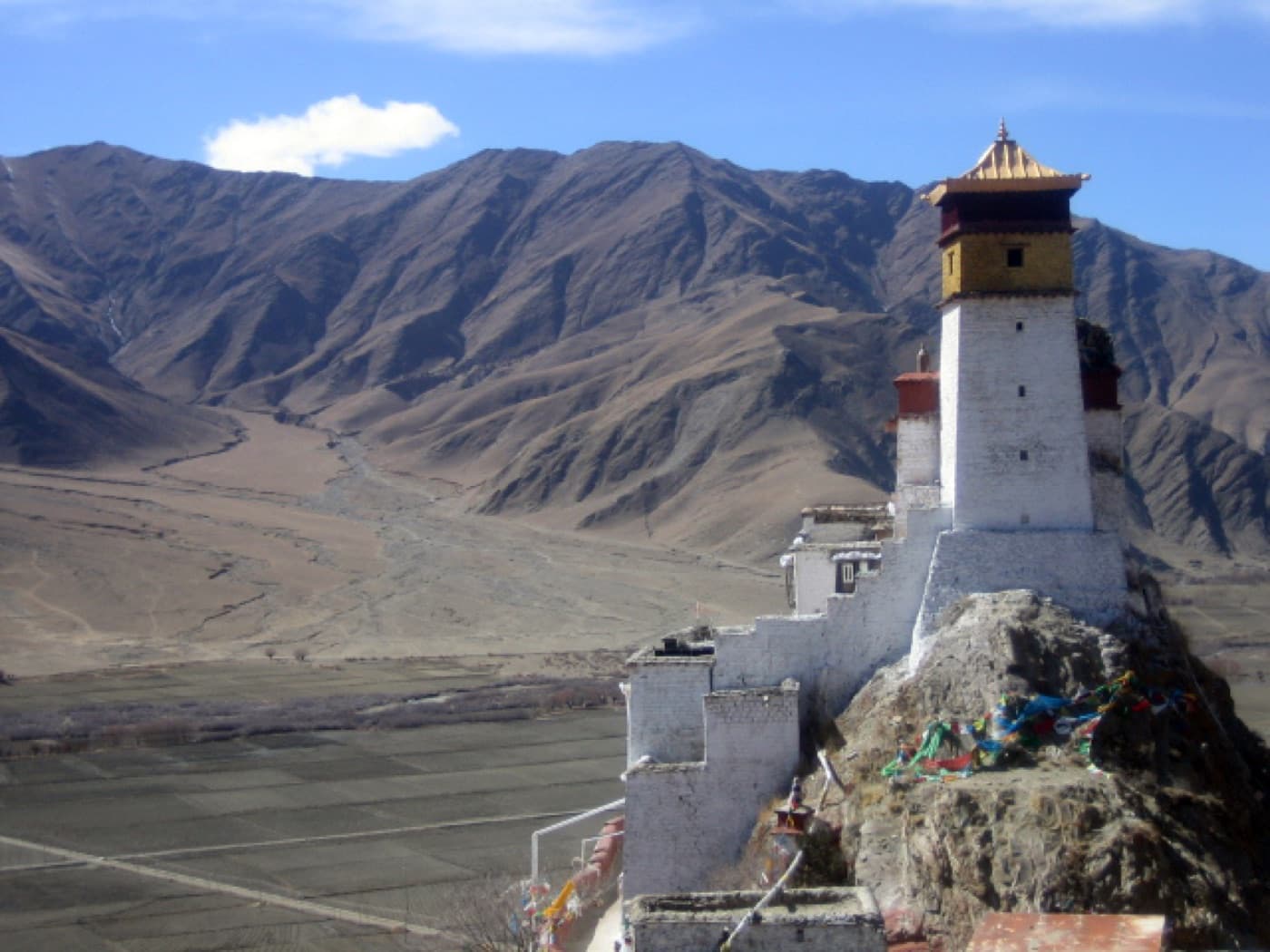
Yumbulagang
Yumbulagang was the first palace in Tibetan history and has a history of more than 2,100 years. Its interior murals vividly depict the stories of Tibet's first king, its first building and its first cultivated field.
¥60 · 1–3 hours