Wangkou
Wangkou is an ancient Huizhou village, facing the undulating Xiang Mountain (象山). The long street inside the village is called Guanlu Zhengjie and is known as the 'Thousand-Year-Old Street.' The Yu C…
Wangkou, Wuyuan
Key facts
- Admission
- ¥55
- Opening hours
- 7:30—17:00
- Time needed
- 1–2 hours
- Getting there
- Take the Wuyuan city bus special line that departs from the Wuyuan long-distance bus station
- Guidebook rating
- 3 / 5
From China Self Guided Travel 2025, page 1487. Open in Google Maps
About Wangkou
Wangkou is an ancient Huizhou village, facing the undulating Xiang Mountain (象山). The long street inside the village is called Guanlu Zhengjie and is known as the 'Thousand-Year-Old Street.' The Yu Clan Ancestral Hall, built during the Qianlong era of the Qing dynasty, is well worth a visit. The hall is renowned for its fine carving and is praised as an 'Art Palace.'
Frequently asked questions
How much does Wangkou cost?
Admission to Wangkou is ¥55, as listed in the 2025 guidebook. Prices can change; check the official channel before you go.
What are the opening hours of Wangkou?
Wangkou is open 7:30—17:00.
How do I get to Wangkou?
Take the Wuyuan city bus special line that departs from the Wuyuan long-distance bus station
How long should I spend at Wangkou?
Plan on 1–2 hours for Wangkou.
Where is Wangkou?
Wangkou is in Wuyuan, Jiangxi Province, in the East China of China.
More places in Wuyuan
Huangling
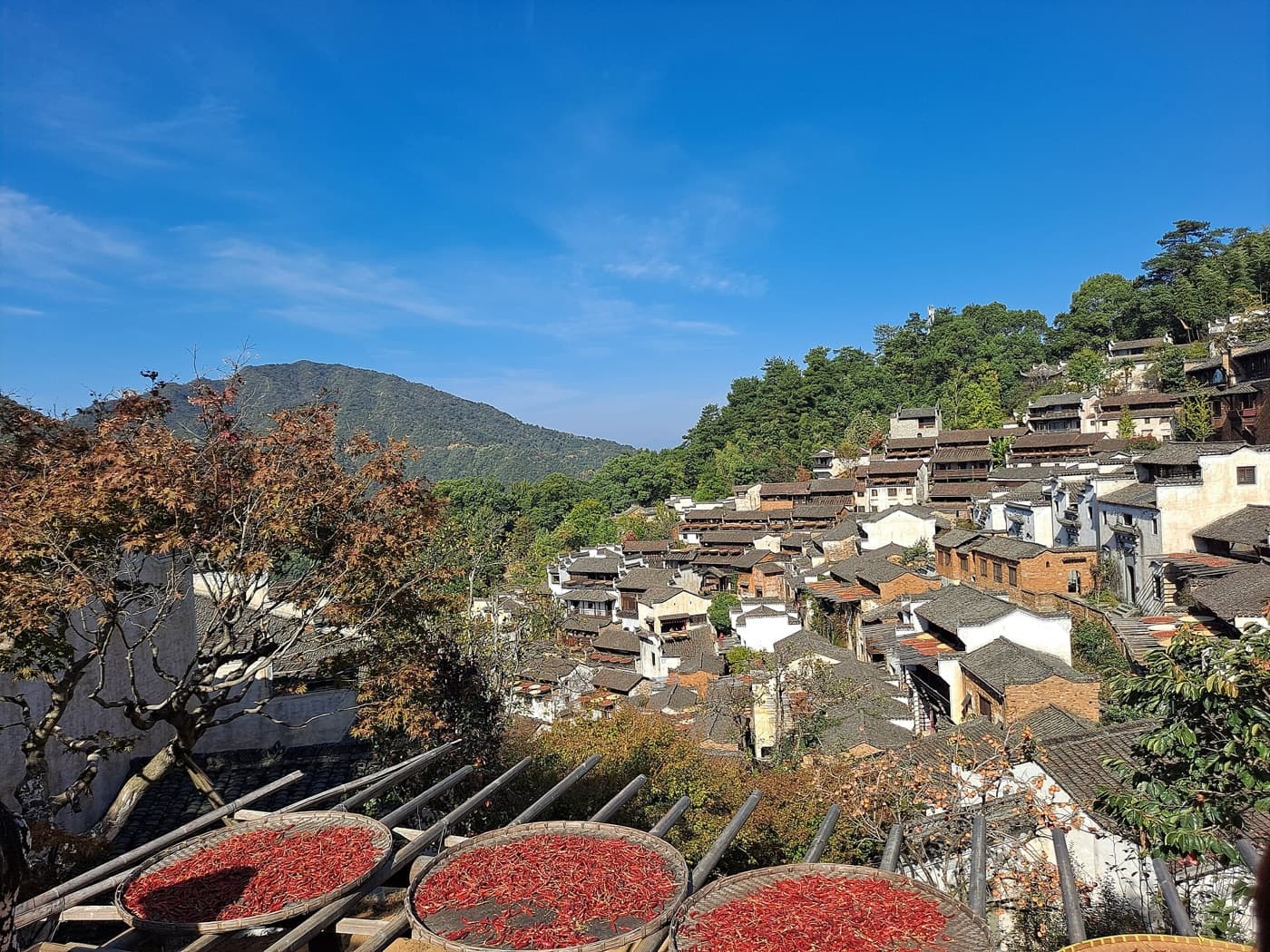
Huangling is located in the hometown of Jiang Zemin. Surrounded by mountains, its houses are packed in tiers and its terraced fields are stacked one above another, making for beautiful scenery. The Tianjie Nine Lanes (天街九巷) link the village like a jade belt, creating a moving scene reminiscent of the painting 'Along the River During the Qingming Festival.' Huangling's 'autumn drying' (晒秋) tradition is famous far and wide. Villagers spread their crops on bamboo trays on wooden racks outside their lookout windows, creating a distinctive folk landscape. In Huangling you can also experience folk activities such as walking a cable bridge, zip-lining and riding hot-air balloons.
¥145 · 0.5–1 day
Wolong Valley
Wolong Valley is a pristine forest gorge. Its greatest attractions are the clusters of flying waterfalls and the emerald, crystal-clear streams, which together look like a natural ink-wash landscape painting. It is the Shangri-La from Jin Yong's novels and is ideal for escaping the summer heat. As you hike uphill, you will pass many sights. Take your time, stop often and enjoy the waterfalls. Near the summit is Konghou Bridge (箜篌桥), a suspension bridge that thrills timid visitors as they cross it.
Entrance ¥55; cable car ¥50 one way, ¥100 round trip · 3–4 hours
Jiangling
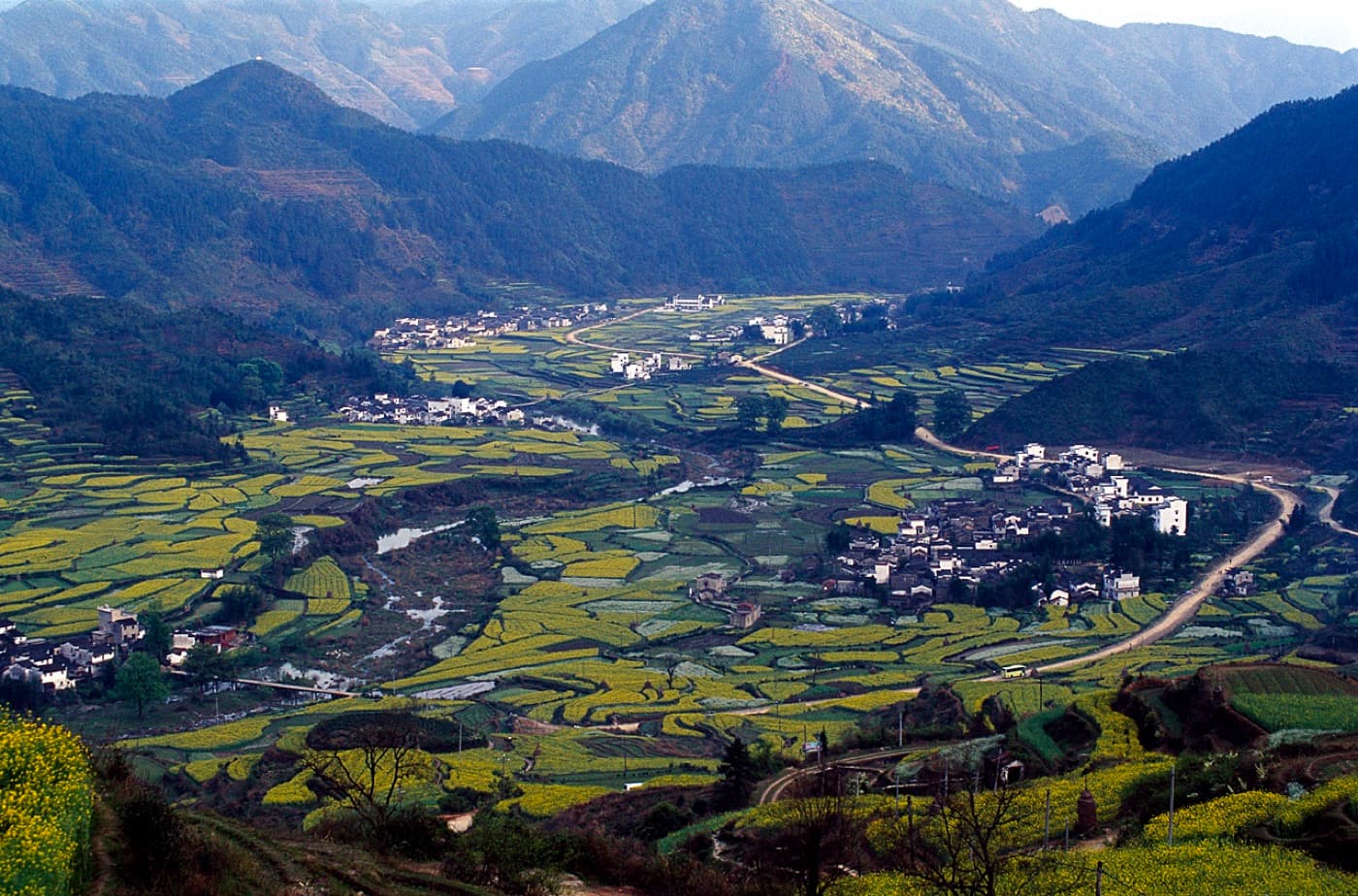
'You haven't truly seen Wuyuan until you've been to Jiangling.' Jiangling is the most beautiful village for viewing terraced rapeseed fields. From the high ground you can see the most magnificent rapeseed flowers and the most graceful Hui-style houses. The best viewpoint is on the hill, where the rapeseed flowers blanket the slopes in a spectacular display just before Qingming Festival. The hills are not high, but the paths are dirt roads that become difficult in the rain. You can also take a motorbike taxi up and down.
¥80 · 4 hours
Shicheng Village
Shicheng Village is home to a remarkable collection of ancient trees, with groves of rare species. Its more than 100 maple trees are especially striking. From mid-to-late November, when the maple leaves begin to turn red, photography enthusiasts arrive at dawn and stay until dusk. The vivid colours set against black-and-white ancient houses form a natural giant palette. In autumn in Wuyuan, Shicheng and Changxi are two villages not to be missed.
2–3 hours
Jingdezhen
Known as the home of Chinese porcelain, Jingdezhen offers exquisite ceramic art and a chance to delve deeply into ceramic culture. Today the city has shed its “backwater” image and transformed into a distinctive creative city, drawing a steady stream of young artists and creatives.
¥95; ¥110 · 3–4 hours
Likeng Village (Ikeng)
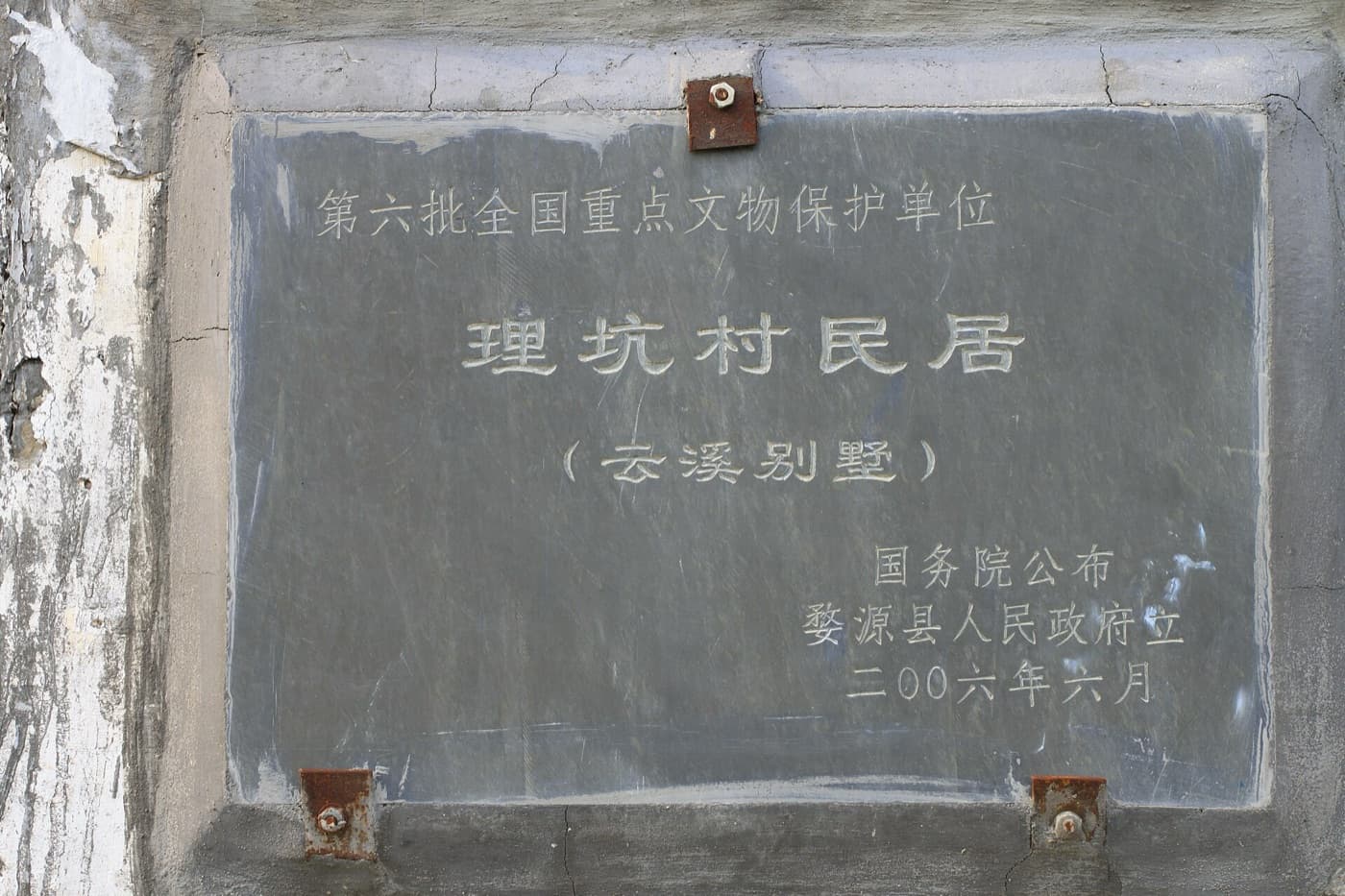
Ikeng Village was founded in the early Southern Song dynasty. Its villagers are well-educated and courteous to their neighbours. The village preserves many Ming and Qing official residences, such as the Shangshu Residence, the Tianguan Shangqing Residence and Jiamu Hall. All are exquisitely crafted, with bracketed eaves and upturned roof corners. Pine trees and bamboo set off the black-tiled, white-walled houses, while ancient paths, stone bridges and rushing streams complete a picture of remarkable harmony.
¥60 · 2 hours