Tengwang Pavilion
Together with Yellow Crane Tower, Yueyang Tower and Penglai Pavilion, Tengwang Pavilion is counted among China's Four Great Towers. It has been destroyed and rebuilt 29 times in history,…
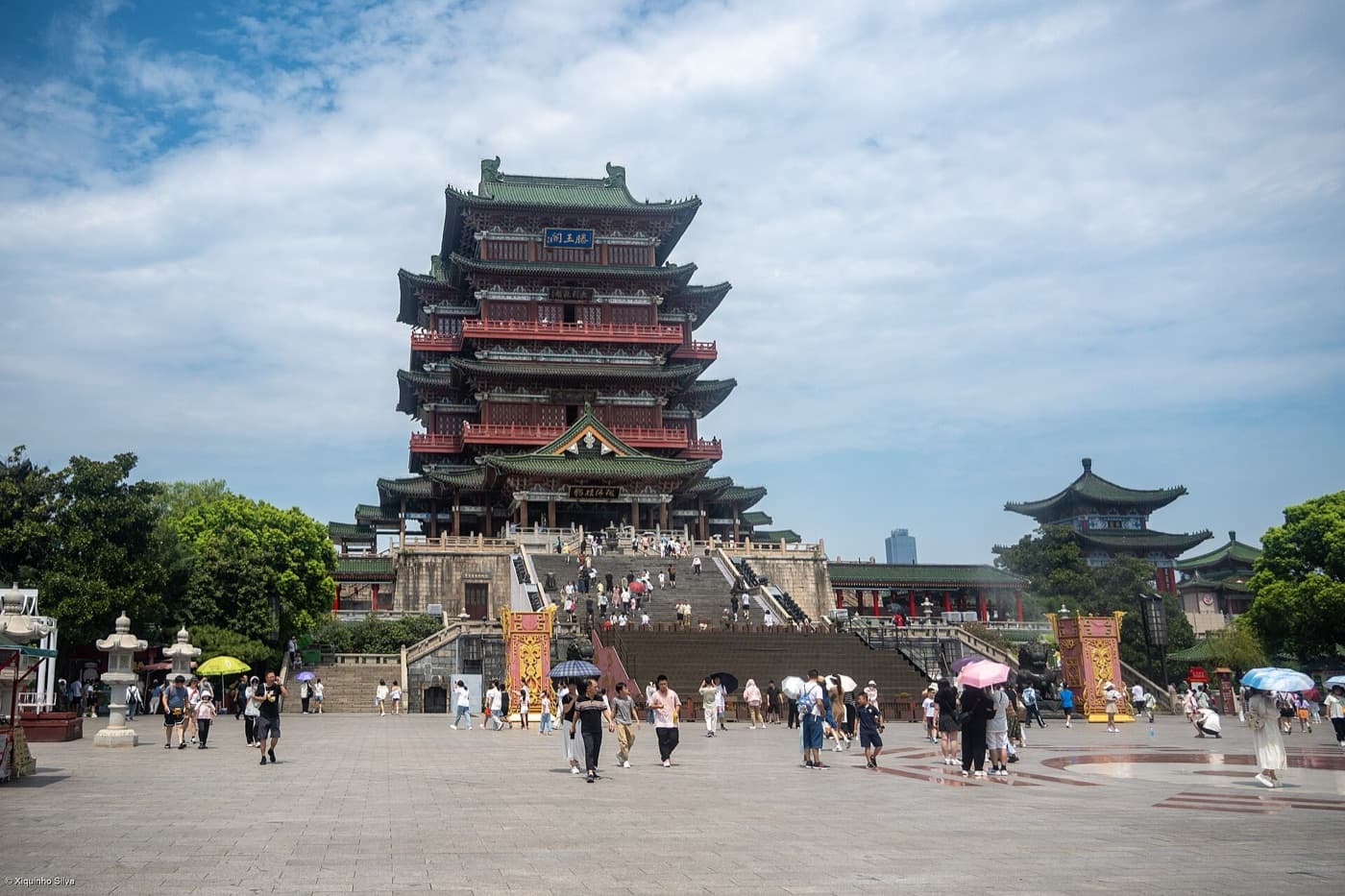
Tengwang Pavilion, Nanchang · xiquinhosilva · CC BY 4.0 · Wikimedia Commons
Key facts
- Admission
- ¥50
- Opening hours
- 8:00—18:30
- Time needed
- 1–2 hours
- Getting there
- Near Tengwang Pavilion (bus stop), Tengwang Pavilion (metro station)
- Guidebook rating
- 4 / 5
From China Self Guided Travel 2025, page 1436. Open in Google Maps
About Tengwang Pavilion
Together with Yellow Crane Tower, Yueyang Tower and Penglai Pavilion, Tengwang Pavilion is counted among China's Four Great Towers. It has been destroyed and rebuilt 29 times in history, yet it still keeps its classic architectural style. Visitors can soak up the cultural atmosphere here and let themselves sink into history, which is sure to be a memorable experience. The night view is especially recommended: from the tower after dark you can look out over the old and new parts of Nanchang, a sight that is truly breathtaking.
Frequently asked questions
How much does Tengwang Pavilion cost?
Admission to Tengwang Pavilion is ¥50, as listed in the 2025 guidebook. Prices can change; check the official channel before you go.
What are the opening hours of Tengwang Pavilion?
Tengwang Pavilion is open 8:00—18:30.
How do I get to Tengwang Pavilion?
Near Tengwang Pavilion (bus stop), Tengwang Pavilion (metro station)
How long should I spend at Tengwang Pavilion?
Plan on 1–2 hours for Tengwang Pavilion.
Where is Tengwang Pavilion?
Tengwang Pavilion is in Nanchang, Jiangxi Province, in the East China of China. 58 Fanggu Street, Donghu District, Nanchang
More places in Nanchang
Poyang Lake National Wetland Park
Poyang Lake is China's largest freshwater lake, and its beauty and abundance speak for themselves. It was also the base where Zhou Yu trained his navy during the Battle of Red Cliffs, and it was the lucky ground where Zhu Yuanzhang defeated Chen Youliang with a smaller force. Su Dongpo's line “Mountains green, waters vast, the Great and Small Gu stand mid-river” describes the scenery of Poyang Lake.
¥155 (includes sightseeing bus and boat) · 0.5–1 day
Meiling Mountain
Meiling is mentioned in the TV drama *Nirvana in Fire*. Since ancient times, its Hongya Alchemy Well, Xishan Autumn Green and Tongyuan Three Groups (waterfall groups, terraced field groups and water-mill groups) have been celebrated scenes that literati vied to write poems about. Meiling is known for its lush peaks, winding streams, deep valleys and jagged rocks, and its character is verdant, secluded, graceful and unusual. It is often called “Little Mount Lu.”
Lion Peak ¥40; Shenlong Pool ¥30; Hongya Single Well ¥30; Bamboo Sea Pearl ¥30; Ziqing Mountain ¥15 · 3–4 hours
Nanchang Sunac Land
It brings together the traditional culture of the Gan-Po region of Jiangxi with elements of world-class theme parks. Sunac Land is well worth a visit, and Sunac Mall is also a place where you could easily spend the whole day.
¥199 · 0.5–1 day
Haihunhou Museum
Haihunhou is the only Han dynasty imperial clansman to have held the titles of king, emperor and marquis. The Haihunhou Tomb is the best-preserved, most structurally complete and most clearly laid out Western Han marquis tomb complex in China, and it has the most complete sacrificial system of any such site found so far. It is also the largest, most richly endowed and relatively well-preserved Han dynasty marquis-rank local tomb known in southern China. Inside the tomb, the solemn atmosphere and dazzling array of cultural relics invite visitors to reflect in awe on that weighty history.
¥60; free; ¥20; Ferris wheel ¥50 · 3–5 hours; 1–2 hours
Anyi Ancient Village
The most mysterious, most pastoral, most graceful in its old county character and most rustic of ancient villages, it sits at the foot of Meiling. It is made up of three villages, Luotian, Shuinan and Jingtai, arranged in a triangle. The three are linked by a sea of flowers known as the “Flower Field of Joy,” which can be enjoyed from spring through autumn.
¥80 · 3–4 hours