Rongbuk Monastery
Rongbuk Monastery, whose full name is Ladui Chaxiong Rongbu Dong'a Qulin Monastery (拉堆查绒布冬阿曲林寺), belongs to the Nyingma school of Tibetan Buddhism and is a rare monastery where monks and nuns live to…
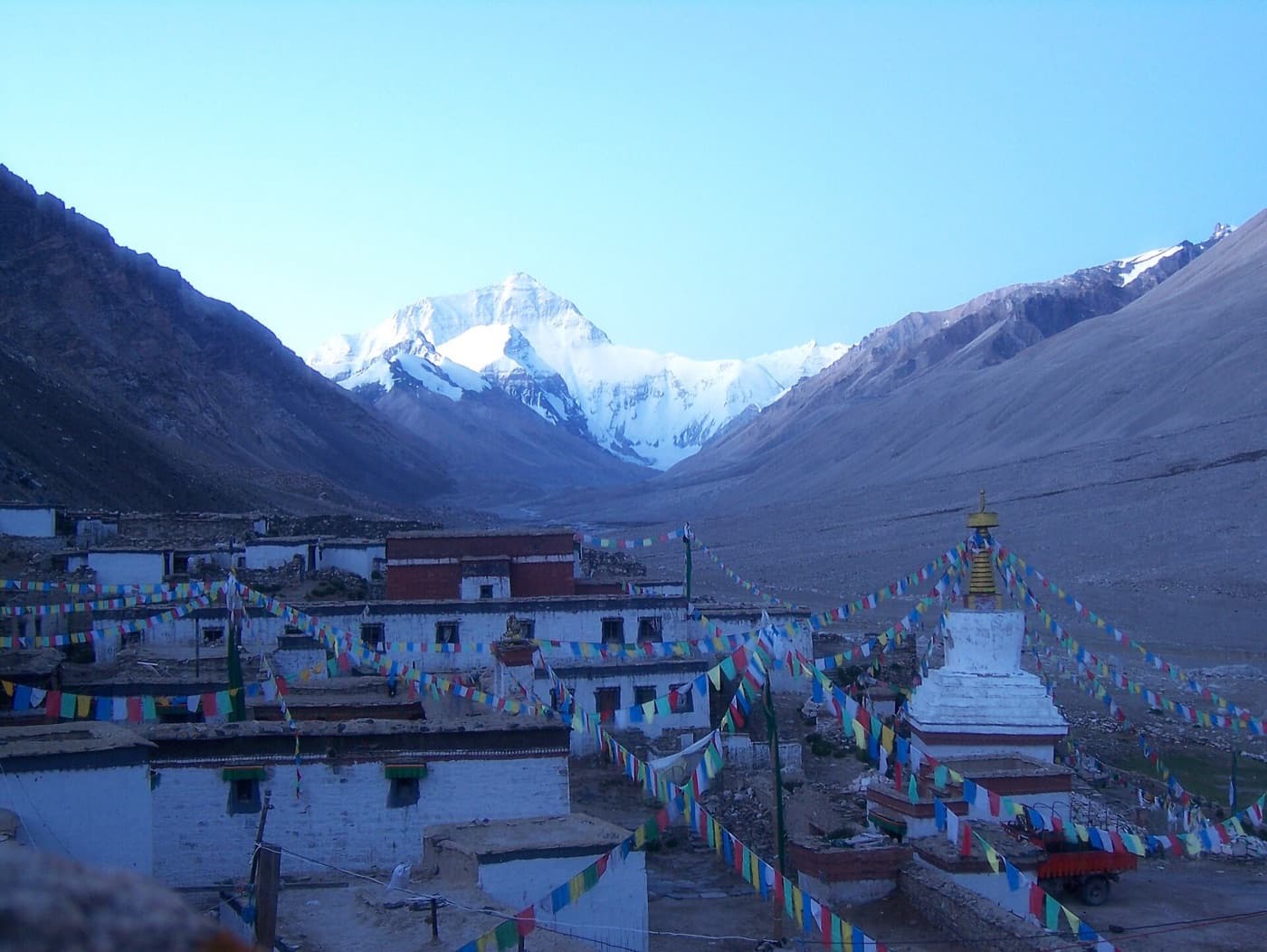
Rongbuk Monastery, Shigatse · Original uploader was DamnYankees at en.wikipedia · Public domain · Wikimedia Commons
Key facts
- Admission
- ¥30
- Opening hours
- 09:00-18:00 (all year 2026; may be closed in winter)
- Time needed
- 1–3 hours
- Getting there
- The best way to reach Rongbuk is by chartered vehicle, as there are very few shared rides on this route from New Dingri.
- Guidebook rating
- 3 / 5
From China Self Guided Travel 2025, page 562. Open in Google Maps
About Rongbuk Monastery
Rongbuk Monastery, whose full name is Ladui Chaxiong Rongbu Dong'a Qulin Monastery (拉堆查绒布冬阿曲林寺), belongs to the Nyingma school of Tibetan Buddhism and is a rare monastery where monks and nuns live together. The monastery has an old site and a new one. The old monastery is close to Mount Everest and houses the meditation cave where Padmasambhava (莲花生大士) once meditated in seclusion, as well as a rock bearing his hand and footprints, and stupas. Looking south from the monastery offers an excellent view of Mount Everest. The mani stone pile and white chorten at the monastery gate are often used by visitors as foreground for photos of the peak.
Tips from the guidebook
- Since all supplies have to be transported in from outside the mountains, prices and taste are about what you would expect.
Frequently asked questions
How much does Rongbuk Monastery cost?
Admission to Rongbuk Monastery is ¥30, as listed in the 2025 guidebook. Prices can change; check the official channel before you go.
What are the opening hours of Rongbuk Monastery?
Rongbuk Monastery is open 09:00-18:00 (all year 2026; may be closed in winter).
How do I get to Rongbuk Monastery?
The best way to reach Rongbuk is by chartered vehicle, as there are very few shared rides on this route from New Dingri.
How long should I spend at Rongbuk Monastery?
Plan on 1–3 hours for Rongbuk Monastery.
Where is Rongbuk Monastery?
Rongbuk Monastery is in Shigatse, Tibet Autonomous Region, in the Southwest of China. No. 6 Qomolangma East Road, Dingri County, Shigatse
More places in Shigatse

Mount Everest (Qomolangma)
The final 100 kilometres require passing a border checkpoint, then continuing up the valley. You will pass the ruins of an ancient fortress, a village, rabbits, antelopes, and increasingly sparse vegetation, until there is nothing at all. There are only loose stones, snowmelt, and peaks, with no grass or moss, and very little life to be seen. Winding around one mountain after another, the driver says, 'Look, Qomolangma.'
Mountain entry fee ¥160; sightseeing bus ¥120 · 1-2 days

Tashilhunpo Monastery
A pitch-black passageway lets you walk around the Buddha statue. The precious beads and agates inlaid on the base are within arm's reach, and the splendour feels like a dream. Founded in 1447 by Gendun Drupa, a disciple of Tsongkhapa and the First Dalai Lama. From the Fourth Panchen Lama onward, it became the centre of the Panchen Lamas' religious and political activities. It is the fourth-largest monastery of the Gelug school and houses the world's largest gilded bronze Buddha, 22.4 metres tall. The bronze figure is inlaid with more than 1,400 gemstones, and a huge diamond on its brow is set off by over 30 diamonds the size of broad beans. Tashilhunpo has four colleges (扎仓) built into the slope of the mountain. Of the monastery's 64 khang-tsen (康村), many have moved away. Try walking through the dark little chambers: the wooden stair railings have been polished glossy by countless touches, and through narrow window openings you can look out at the bustling monastery grounds, as if gazing across another age.
Peak season ¥100, off-season ¥55 (free during the Jumping Buddha Festival) · 2 hours

Everest Base Camp
Eight kilometres beyond Rongbuk Monastery lies the Chinese Everest Base Camp, famous throughout the mountaineering world. The only permanent structure there is a small stone hut belonging to the Chinese Mountaineering Association, but during the climbing season, hundreds of tents crowd the foot of the mountain, housing challengers of every nationality and the finest Sherpa guides. On a small hill near the camp stands the new survey marker for Everest's height. On the slope beside it are many gravestones, where numerous brave climbers rest eternally. On the way from Xegar to Everest, you cross the Gyu La Pass at 5,170 metres, where you can gaze out over the Roof of the World: Cho Oyu, Everest, Makalu and Shishapangma stand in a row, a magnificent sight!
Included in the Mount Qomolangma Ecological Protection Fee · 1-3 hours

Rongbuk Glacier
The Rongbuk Glacier lies in the vast area at the foot of Mount Everest, between 5,300 and 6,300 metres. Made up of the West Rongbuk and Central Rongbuk glaciers, it extends 22.4 km and is the world's most fully developed and best-preserved valley glacier. Cirques, glaciers and hanging glaciers are widespread, and countless glacial lakes, ice cliffs, ice caves and ice streams create breathtaking scenery. Known as “China's most beautiful glacier” and the world's largest “high-mountain park,” it is an extraordinary sight.
Free · 1 hour
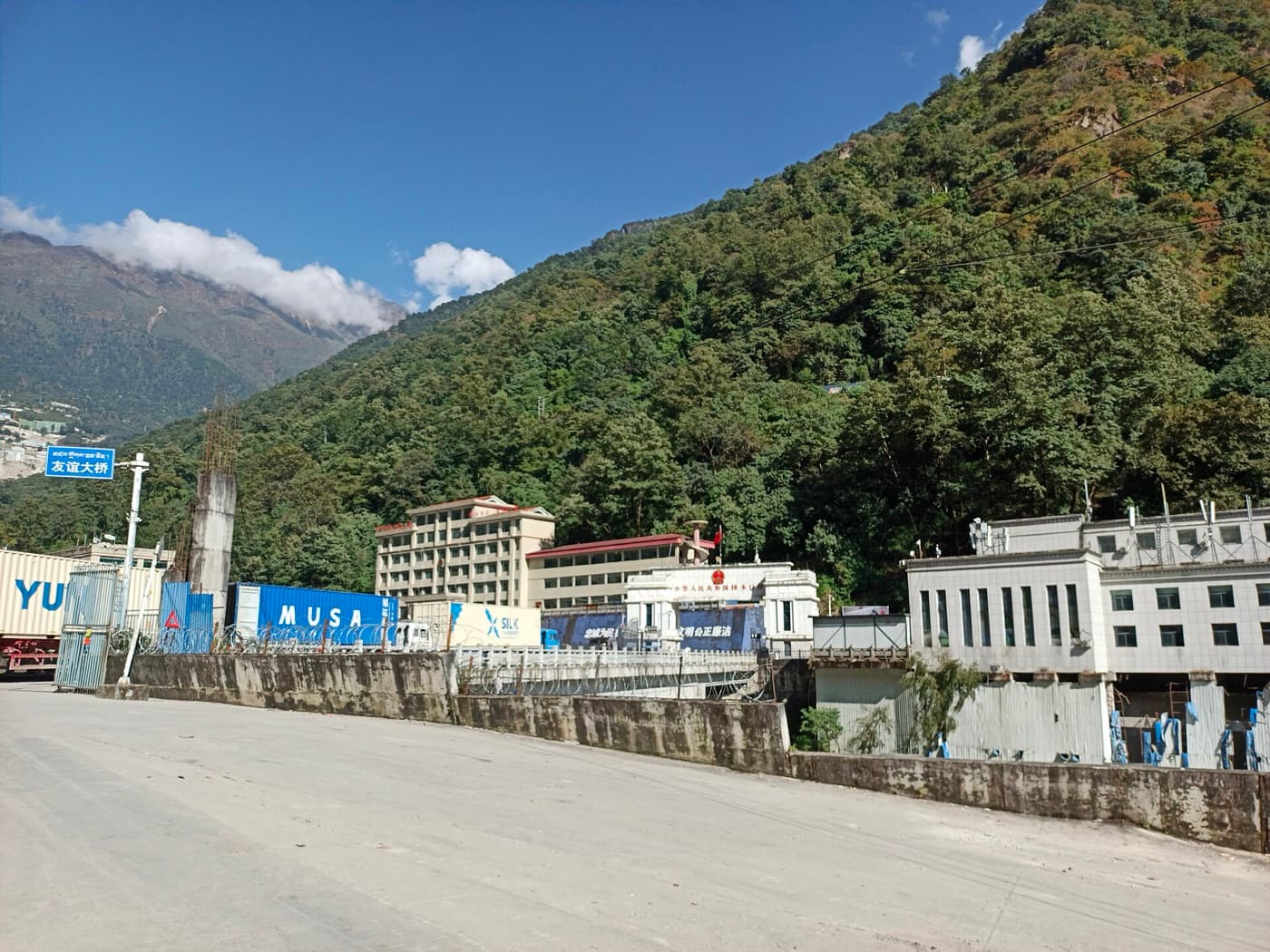
Zhangmu Port
Located on the border with Nepal. The roads are rough, but the scenery along the way is stunning. Zhangmu Port sits at an altitude of only 2,800 metres. The town is a commercial hub where Tibetans and Han Chinese are joined by many Indians and Nepalis, and the streets are full of colourful Nepali trucks. Goods are displayed in dazzling variety, and travellers from north and south often gather here, earning it the nickname 'Little Hong Kong' of Tibet.
Free
Samzhubze Dzong Fortress
Over six centuries of changing times, this former political and religious centre of Tsang, and the seat of successive Panchen Lamas, has retained its simple dignity. Samzhubze Dzong is known as the 'Little Potala Palace'. Compared with the Potala Palace, where crowds fill the square despite daily visitor limits, this place feels like a luxury: there is no entrance ticket and no booking required, and you can enjoy its sacred serenity beneath blue skies and white clouds.
Free · 1 hour