Princess Wencheng Live Performance Theatre
A performance not to be missed. The show tells the classic epic of Princess Wencheng's marriage alliance with the Tibetan king Songtsen Gampo. The staging is grand and the music is stirring,…
Princess Wencheng Live Performance Theatre, Lhasa
Key facts
- Admission
- ¥380–¥1,280, depending on seat location
- Time needed
- 2 hours
- Getting there
- Near Cijiaolin Avenue Station (次角林大道站) and Cijiaolin Folk Art Troupe Station (次角林民间艺术团站), both bus stops
- Guidebook rating
- 4 / 5
From China Self Guided Travel 2025, page 540. Open in Google Maps
About Princess Wencheng Live Performance Theatre
A performance not to be missed. The show tells the classic epic of Princess Wencheng's marriage alliance with the Tibetan king Songtsen Gampo. The staging is grand and the music is stirring, and it showcases the blending of Han and Tibetan cultures. Unlike traditional theatre, the highlight of this large-scale outdoor live drama, The Princess Wencheng, is that it uses the stars of the plateau as its backdrop and the mountains and rivers as its scenery, which makes you feel as if you are inside the story.
Tips from the guidebook
- 1. Showtimes can change often, so it is best to check in advance.
- 2. A 15% handling fee applies to refunds on the day of the performance. VIP tickets are non-refundable. Refunds must be requested by 19:00 on the day of the show, so plan your schedule carefully to avoid losing money because of conflicts in your itinerary.
Frequently asked questions
How much does Princess Wencheng Live Performance Theatre cost?
Admission to Princess Wencheng Live Performance Theatre is ¥380–¥1,280, depending on seat location, as listed in the 2025 guidebook. Prices can change; check the official channel before you go.
How do I get to Princess Wencheng Live Performance Theatre?
Near Cijiaolin Avenue Station (次角林大道站) and Cijiaolin Folk Art Troupe Station (次角林民间艺术团站), both bus stops
How long should I spend at Princess Wencheng Live Performance Theatre?
Plan on 2 hours for Princess Wencheng Live Performance Theatre.
Where is Princess Wencheng Live Performance Theatre?
Princess Wencheng Live Performance Theatre is in Lhasa, Tibet Autonomous Region, in the Southwest of China. Cijuelin China Culture and Tourism Creative Park, Chengguan District
More places in Lhasa

Namtso Lake
For many people who have been to Namtso, it is one of the most majestic places they have ever seen. If you can visit only three places in Tibet, travellers who have been there recommend Namtso, the Himalayas and Mount Kailash (Kangrinboqe). Namtso is China's second-largest saltwater lake after Qinghai Lake, and it is the highest saltwater lake in the world. Five islets dot the lake, and the massive Tashi Peninsula is visible from far away. On Tashi Island, two small hills rise. If you climb to the summit of the taller one, you will see a huge pile of mani stones and prayer banners, along with a line of small mani stone piles stretching for hundreds of metres. This is the highest point of Namtso, with the vast lake spreading out around you like a sea. Along the shore stand snow-capped mountains, and on clear days you can see the main peak of the Nyainqêntanglha Range.
¥145 in low season (entry ticket + sightseeing shuttle); ¥210 in peak season (entry ticket + sightseeing shuttle) · 1–2 days

Jokhang Temple
The Jokhang Temple holds a supreme position in Tibetan Buddhism and is the highest-ranking temple of the Gelug (Yellow Hat) school. In 643 CE, the 18-year-old Princess Wencheng arrived in Lhasa carrying a life-size statue of Shakyamuni at age 12. It is said to have been modelled on Shakyamuni himself and consecrated by him personally, which makes it the most precious. To house the statue, Songtsen Gampo built Ramoche Temple for Princess Wencheng, and built the Jokhang for the Nepalese Princess Bhrikuti, who had married him earlier. In the time of Princess Jincheng, the statue was moved to the Jokhang, and the temple was then continually expanded until it reached its present scale.
¥85 · 1–2 hours

Potala Palace
A treasure house: you may never see as many treasures in your lifetime as you will here, and seeing them up close is dazzling. The Potala Palace stands on Marburi Hill (玛布日山) in the centre of Lhasa and is the largest and most complete palace complex in Tibet. 'Potala' is Sanskrit for 'Sacred Place of Avalokiteśvara'. In the 7th century, the Tubo king Songtsen Gampo built a palace here when he married Princess Wencheng of the Tang dynasty; it was later destroyed in wars. It was rebuilt in the mid-17th century. It covers 130,000 square metres and was the political centre of the former Tibetan region. The whole complex is built of wood and stone, with gilded roofs. The Potala Palace was the venue for large-scale religious and political ceremonies. The 7th floor at the top was the Dalai Lama's winter residence; because it receives abundant sunlight, it is known as the East and West Sunlight Halls. The Red Palace houses mainly the stupa tombs and chapels of successive Dalai Lamas, with eight stupa tombs in total, distributed among the halls on different floors. The largest is the stupa of the 5th Dalai Lama, 14.85 metres tall and inlaid with diamonds and agate. Its topmost gem, a heavenly bead (tianzhu), is said to be the most precious in the world. There is also a gem said to have formed in an elephant's brain, and the gold used alone amounted to 5,500 kilograms. This hall is the largest in the Potala Palace, covering 725 square metres.
¥200 (peak season, May–October); ¥100 (off-season, November–April). The Snow City and Treasure Hall at the foot of the mountain can be visited free of charge; the Golden Roof is not open to visitors. · 3–4 hours
Drepung Monastery
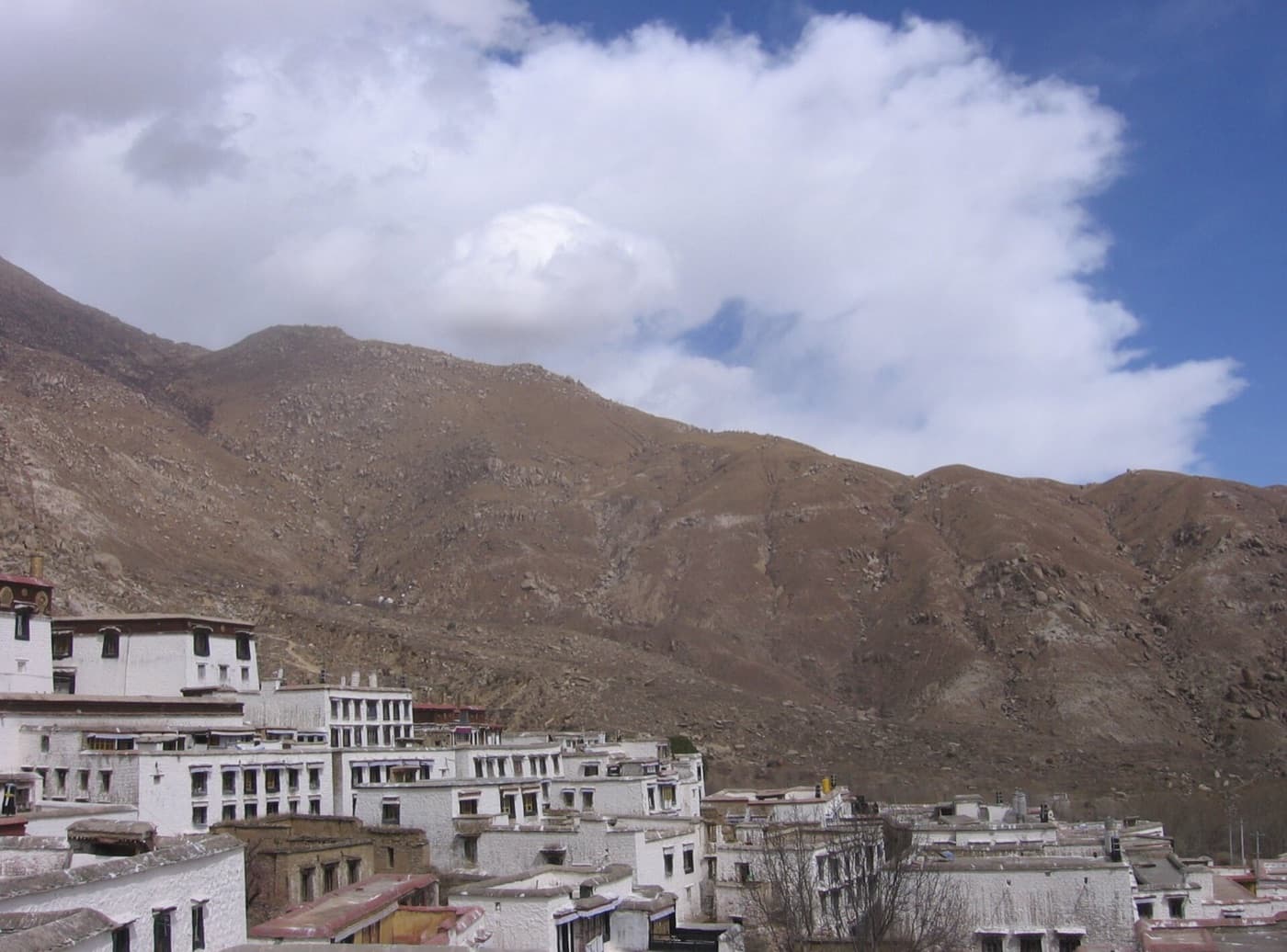
Drepung Monastery is the largest monastery in Tibet, covering 200,000 square metres, and has four dratsang. It was founded in 1416 by a disciple of Tsongkhapa. The Great Assembly Hall is the main building, supported by 183 pillars, and can hold 9,000 monks for scripture recitation. The Tsomchen Hall houses the stupas of the first to fourth Dalai Lamas. Ganden Phodrang, formerly known as Tusita Palace, meaning 'Palace of the Heavenly Gods', is located inside Drepung Monastery. It was home to the first to fifth Dalai Lamas before they moved to the Potala Palace.
¥60 · 2–3 hours
Sera Monastery
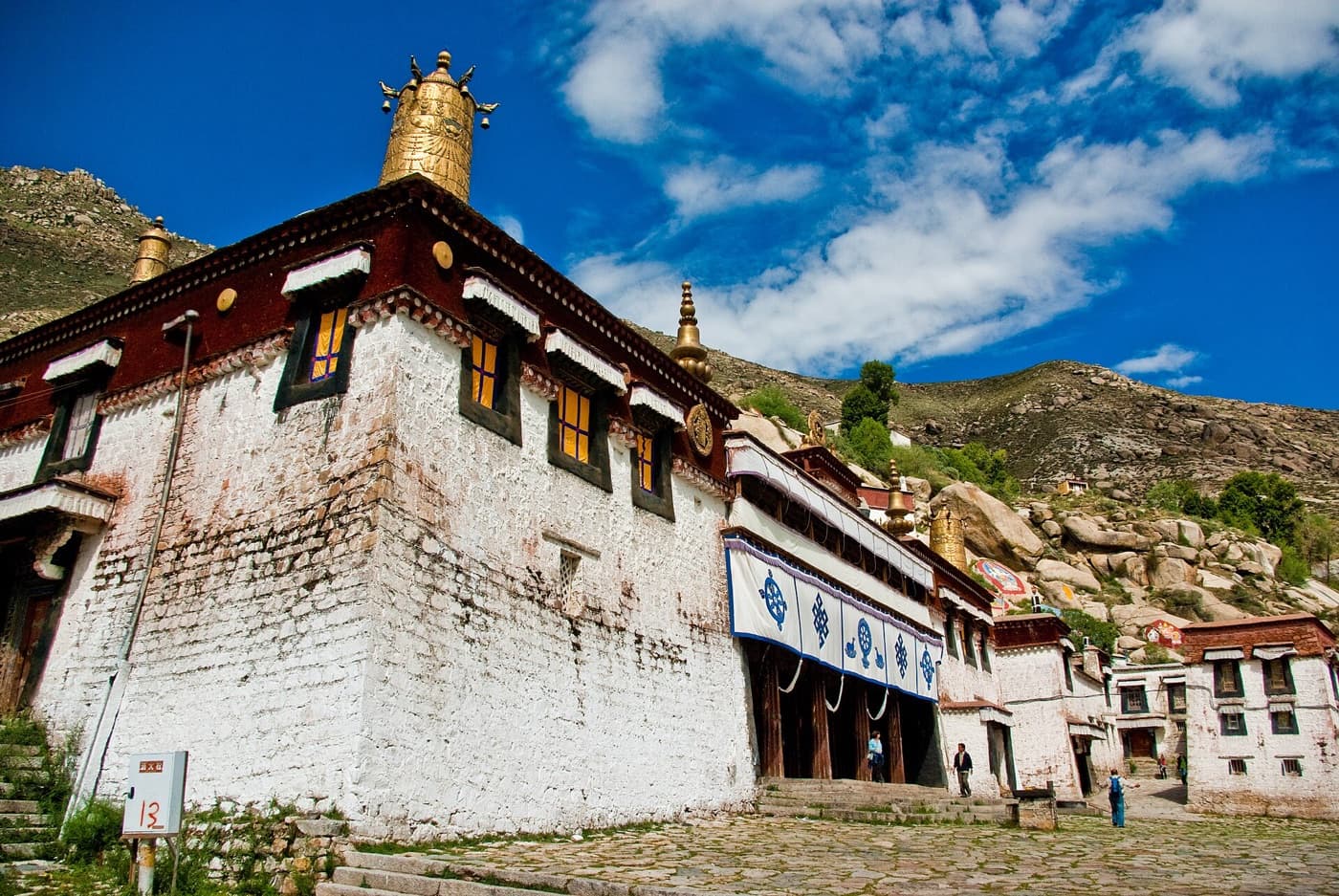
Sera Monastery, Drepung Monastery and Ganden Monastery are known together as Lhasa's Three Great Monasteries. Sera, the most recently built of the three, was founded in 1418 by Sakya Yeshe, one of the eight great disciples of Tsongkhapa, the founder of the Gelug school of Tibetan Buddhism. The monastery is divided into three dratsang (monastic colleges): Jangtse, Mey and Ngakpa, and 29 khang (monks' residential compounds). Sera Monastery is famous for its monastic debates. Debate is not only a form of academic exchange among monks but also a contest of spirit and wisdom, and it draws many visitors and devotees.
¥50; ¥10 after 17:00 · 3–4 hours
Ganden Monastery
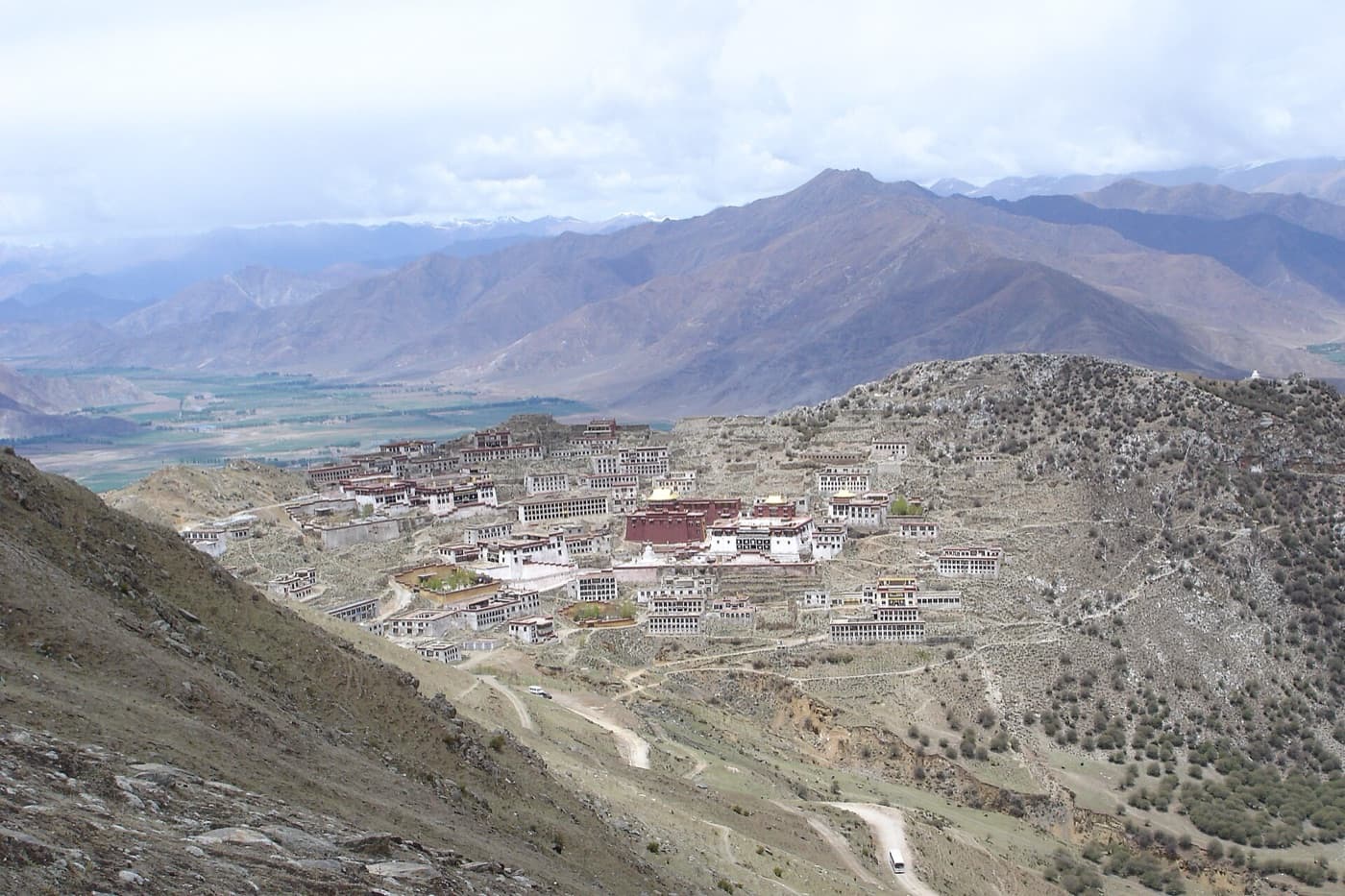
The first monastery of the Gelug school. Ganden Monastery, together with Sera and Drepung monasteries, is known as Lhasa's Three Great Monasteries. It was built by Tsongkhapa in 1409, and his body is enshrined in a stupa inside the monastery. The monastery has two dratsang, more than 50 buildings, and a set quota of 3,300 monks.
¥50 · 2–3 hours