Pala Manor
Pala Manor is the only well-preserved aristocratic estate from old Tibet still standing, and it ranks among the Twelve Great Manors. The three-storey main building is quite impressive.…
Pala Manor, Shigatse
Key facts
- Admission
- ¥30
- Opening hours
- 9:00—18:00
- Time needed
- 1–2 hours
- Getting there
- Take a taxi from Gyantse county town, which costs about ¥10. Alternatively, walk the roughly 3 km, which takes about 40 minutes, with lovely scenery along the way.
- Guidebook rating
- 3 / 5
From China Self Guided Travel 2025, page 556. Open in Google Maps
About Pala Manor
Pala Manor is the only well-preserved aristocratic estate from old Tibet still standing, and it ranks among the Twelve Great Manors. The three-storey main building is quite impressive. Fifty-seven rooms survive, with complete facilities and refined decoration. They include a prayer hall, a sunlit room, a reception hall, bedrooms and even a dedicated hall for mahjong. Inside, the rooms are richly carved and painted and sumptuously furnished. The prayer hall's decor is elaborate, and its scriptures and shrines are well preserved. The manor also has a brewery, a mill and a large communal stove for serfs. In sharp contrast to the tall, imposing main building is Langsheng Courtyard, diagonally opposite. Its rooms are cramped, low, small and damp, and each one housed several generations of a single family.
Frequently asked questions
How much does Pala Manor cost?
Admission to Pala Manor is ¥30, as listed in the 2025 guidebook. Prices can change; check the official channel before you go.
What are the opening hours of Pala Manor?
Pala Manor is open 9:00—18:00.
How do I get to Pala Manor?
Take a taxi from Gyantse county town, which costs about ¥10. Alternatively, walk the roughly 3 km, which takes about 40 minutes, with lovely scenery along the way.
How long should I spend at Pala Manor?
Plan on 1–2 hours for Pala Manor.
Where is Pala Manor?
Pala Manor is in Shigatse, Tibet Autonomous Region, in the Southwest of China.
More places in Shigatse

Tashilhunpo Monastery
A pitch-black passageway lets you walk around the Buddha statue. The precious beads and agates inlaid on the base are within arm's reach, and the splendour feels like a dream. Founded in 1447 by Gendun Drupa, a disciple of Tsongkhapa and the First Dalai Lama. From the Fourth Panchen Lama onward, it became the centre of the Panchen Lamas' religious and political activities. It is the fourth-largest monastery of the Gelug school and houses the world's largest gilded bronze Buddha, 22.4 metres tall. The bronze figure is inlaid with more than 1,400 gemstones, and a huge diamond on its brow is set off by over 30 diamonds the size of broad beans. Tashilhunpo has four colleges (扎仓) built into the slope of the mountain. Of the monastery's 64 khang-tsen (康村), many have moved away. Try walking through the dark little chambers: the wooden stair railings have been polished glossy by countless touches, and through narrow window openings you can look out at the bustling monastery grounds, as if gazing across another age.
Peak season ¥100, off-season ¥55 (free during the Jumping Buddha Festival) · 2 hours

Mount Everest (Qomolangma)
The final 100 kilometres require passing a border checkpoint, then continuing up the valley. You will pass the ruins of an ancient fortress, a village, rabbits, antelopes, and increasingly sparse vegetation, until there is nothing at all. There are only loose stones, snowmelt, and peaks, with no grass or moss, and very little life to be seen. Winding around one mountain after another, the driver says, 'Look, Qomolangma.'
Mountain entry fee ¥160; sightseeing bus ¥120 · 1-2 days

Everest Base Camp
Eight kilometres beyond Rongbuk Monastery lies the Chinese Everest Base Camp, famous throughout the mountaineering world. The only permanent structure there is a small stone hut belonging to the Chinese Mountaineering Association, but during the climbing season, hundreds of tents crowd the foot of the mountain, housing challengers of every nationality and the finest Sherpa guides. On a small hill near the camp stands the new survey marker for Everest's height. On the slope beside it are many gravestones, where numerous brave climbers rest eternally. On the way from Xegar to Everest, you cross the Gyu La Pass at 5,170 metres, where you can gaze out over the Roof of the World: Cho Oyu, Everest, Makalu and Shishapangma stand in a row, a magnificent sight!
Included in the Mount Qomolangma Ecological Protection Fee · 1-3 hours

Rongbuk Glacier
The Rongbuk Glacier lies in the vast area at the foot of Mount Everest, between 5,300 and 6,300 metres. Made up of the West Rongbuk and Central Rongbuk glaciers, it extends 22.4 km and is the world's most fully developed and best-preserved valley glacier. Cirques, glaciers and hanging glaciers are widespread, and countless glacial lakes, ice cliffs, ice caves and ice streams create breathtaking scenery. Known as “China's most beautiful glacier” and the world's largest “high-mountain park,” it is an extraordinary sight.
Free · 1 hour
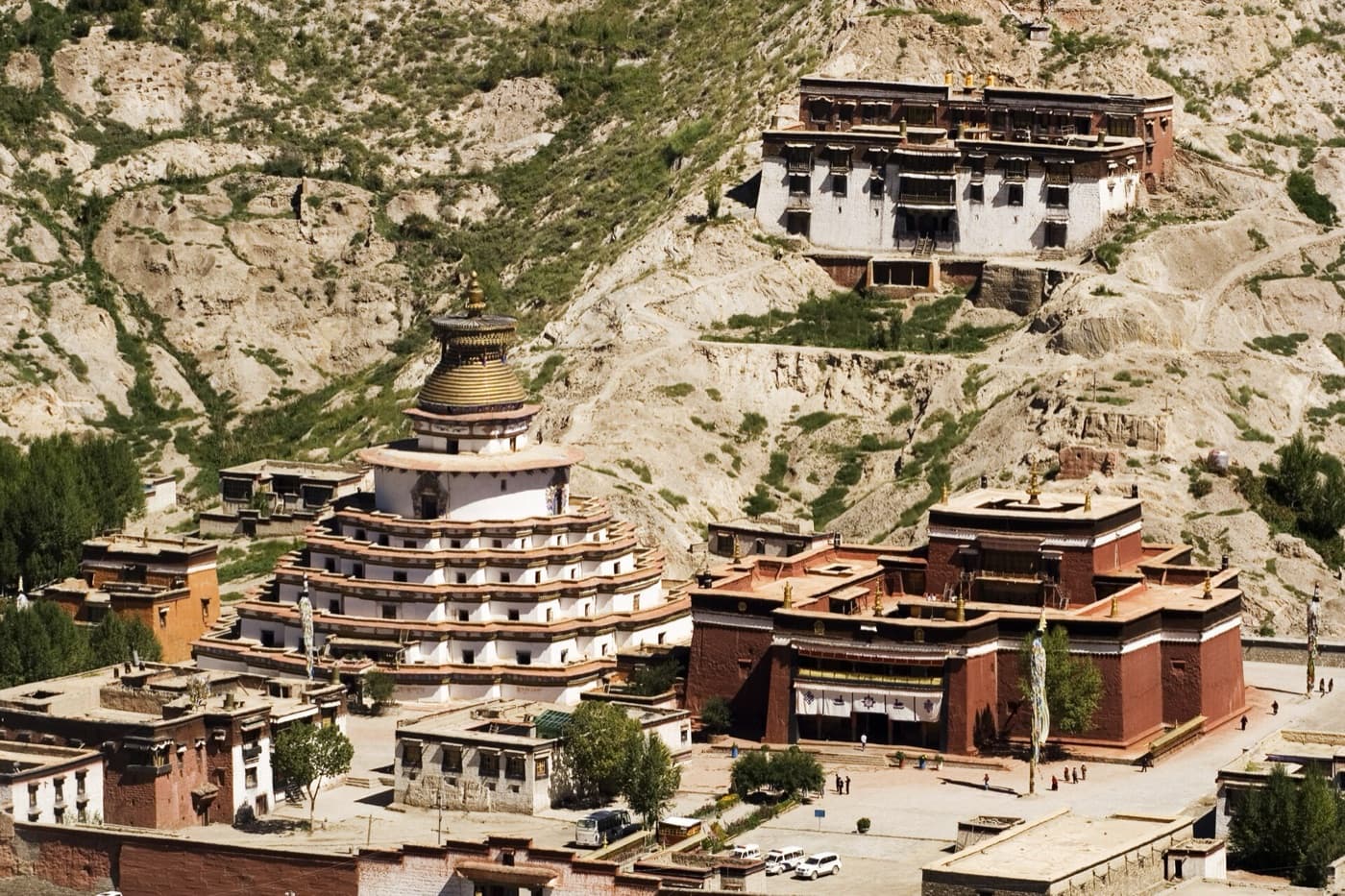
Palcho Monastery (Pelkor Chode)
Inside Palcho Monastery, the distinctive Kumbum (Pelkor Chode) is an octagonal, nine-storey tower and the monastery's signature building. Its interior is painted with a vast number of Buddha images, so it is also called the 'Tower of Hundred Thousand Buddhas'. The tower is 32 m tall, has 108 doorways and 77 chapels, and its design is distinctive beyond description. Palcho Monastery was first built in 1427. It originally belonged to the Sakya school (the Flower Sect), but other schools later moved in, so the Sakya, Gelug and Kadam (White Sect) schools came to coexist here. The monastery has 16 colleges (dratsang), and each school holds several of them according to its influence. The main hall houses an 8-metre-tall gilded bronze statue of Jampa Buddha (Maitreya).
From ¥60 (children under 1.2 m / under 6 years old free; ages 60-64 free on non-holidays and half price on holidays; ages 65 and over free; military personnel/disabled persons free, etc.) · 1–2 hours
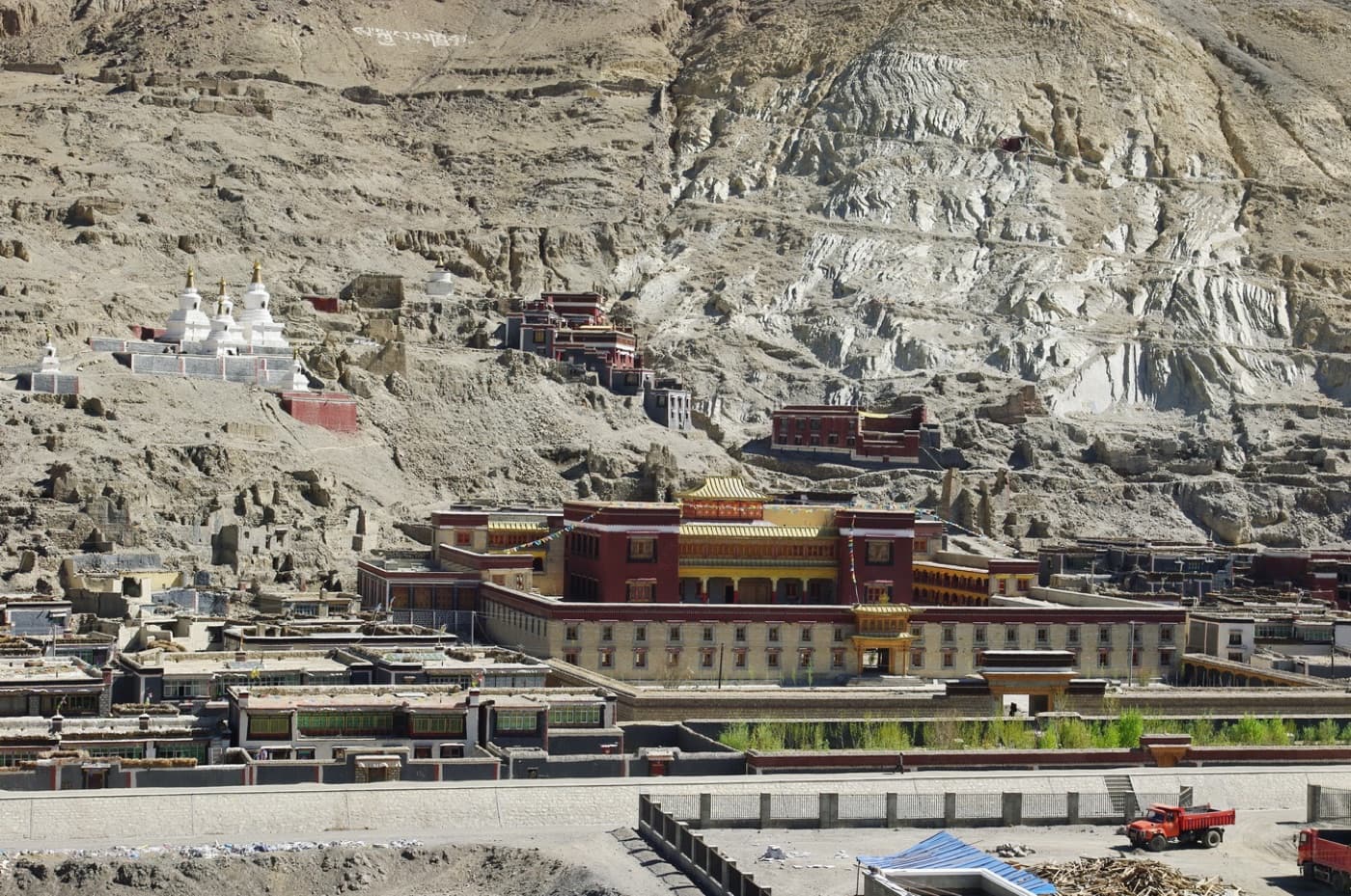
Sakya Monastery
Sakya Monastery is the first monastery of the Sakya school of Tibetan Buddhism and is known as the 'Second Dunhuang'. Its architecture is highly unusual. The complex is square in plan and enclosed by walls 10 m high, with watchtowers at the four corners and a man-made moat outside. The outer walls are painted red, black and white, the distinctive hallmark of Sakya temples in Tibetan Buddhism. The monastery's collection of relics is exceptionally rich. It includes thousands of Sanskrit palm-leaf scriptures, over a thousand years old, which are said to have been copied by Tibet's scribes at the direction of Sakya Lama Phagpa, as well as finely crafted murals. Dunhuang has become a relic of history, but Sakya Monastery's traditions have been passed down from generation to generation and continue to thrive. Sakya Monastery holds many ceremonies throughout the year, both large and small. The most significant and distinctive are the Summer Vajra Dance Festival, held in the seventh month of the Tibetan calendar, and the Winter Vajra Dance Festival, which begins on the 19th day of the eleventh Tibetan month.
¥60 · 1–3 hours