Old Villas
Old villas are Shanghai’s most classic residences. These exotic garden villas mostly have prominent backgrounds or romantic stories full of poetry and painting.…
Old Villas, Shanghai
Key facts
- Getting there
- Near the Shaanxi South Road–Yanan Middle Road bus stop, Shaanxi South Road metro station Kadoorie Residence: Not only is its exterior magnificent, but its interior is even more luxurious. The main hall and living rooms are all finished with imported Italian marble, so entering the hall feels like stepping into a marble palace. It is known as the “Marble Mansion.” Today it is a popular filming location for many TV dramas.; Near the Fuxing Middle Road–Ruijin Er Road bus stop Chen Lifu Former Residence: Located at 16 Dongping Road, this century-old garden house in Spanish architectural style has been fully preserved in its original structure. The garden contains ten trees nearly a century old: camphor, southern magnolia, wintersweet and orange trees, adding deep cultural character. It is now the restaurant “Heping Guandi (和平官邸).”
- Guidebook rating
- 4 / 5
From China Self Guided Travel 2025, page 926. Open in Google Maps
About Old Villas
Old villas are Shanghai’s most classic residences. These exotic garden villas mostly have prominent backgrounds or romantic stories full of poetry and painting. Their fairy-tale charm was once the envy of everyone, and today’s young people also dream of these luxurious buildings.
Hengshan Road is lined with garden houses once owned by powerful and wealthy figures of the past. It starts at Huaihai Middle Road in the former French Concession and continues to Xujiahui, with consulate buildings nearby. Dense French plane trees line both sides of the road, sheltering old buildings full of mysterious stories. Many of these old houses on Hengshan Road, with their vintage street lamps, have been refurbished and repurposed. For example, the residence of Xi Deyi, former governor of the Central Bank of the Nationalist Government, became the Shanghai-style restaurant “Xijia Garden (席家花园),” and the mansion of H. H. Kung (孔祥熙) became the Shanghai Film Studio. More and more old villas have been turned into distinctive restaurants and bars, now the most popular dating spots for young people.
Lilac Garden: Said to be where Li Hongzhang (李鸿章) kept his hidden love, this is an American-style garden villa. Building No. 3 houses a library with many rare books and antiquities. To the south of the garden lies a large expanse of green lawn with classically styled park benches.
Tips from the guidebook
- On the same road, No. 9 Dongping Road was the residence of Chiang Kai-shek and Soong Mei-ling, known as “Ai Lu (爱庐).” It now belongs to the Shanghai Conservatory of Music and is temporarily closed to the public.
Frequently asked questions
How do I get to Old Villas?
Near the Shaanxi South Road–Yanan Middle Road bus stop, Shaanxi South Road metro station Kadoorie Residence: Not only is its exterior magnificent, but its interior is even more luxurious. The main hall and living rooms are all finished with imported Italian marble, so entering the hall feels like stepping into a marble palace. It is known as the “Marble Mansion.” Today it is a popular filming location for many TV dramas.; Near the Fuxing Middle Road–Ruijin Er Road bus stop Chen Lifu Former Residence: Located at 16 Dongping Road, this century-old garden house in Spanish architectural style has been fully preserved in its original structure. The garden contains ten trees nearly a century old: camphor, southern magnolia, wintersweet and orange trees, adding deep cultural character. It is now the restaurant “Heping Guandi (和平官邸).”
Where is Old Villas?
Old Villas is in Shanghai, Shanghai Municipality, in the East China of China. 849 Huashan Road Moller Villa: A Nordic Norwegian-style building designed after a dream of the daughter of British merchant Moller, creating a fairy-tale world. The castle features pointed and sloped roofs of varying heights and uneven walls. The garden contains six brick-and-timber buildings of different heights, with 106 rooms in total. It is now the Hengshan Moller Villa Hotel.; 30 Shaanxi South Road; 64 Yanan West Road Mali Shi Garden: One of the most beautiful private residences in old Shanghai, composed of four villas in different styles: a modern Japanese building, a Viennese garden house, an English country-style villa, and a French neoclassical palace villa. It is now the Ruijin Guesthouse (瑞金宾馆), once a favourite choice for heads of state staying in Shanghai. The executive rooms overlooking the large garden, at over ¥2,000 a night, are worth trying. The garden has many restaurants, including Xiao Nan Guo (小南国), which serves traditional Shanghai cuisine; Lanna Thai Restaurant, which serves authentic Thai food; and several simple Western restaurants. These are all places where you can sit quietly and savour the legendary stories of the old house. Just outside the hotel is the famous Ruijin Road, a street of foreign-trade shops that is perfect for leisurely browsing.; 118 Ruijin Er Road, Ruijin Guesthouse
More places in Shanghai

Shanghai Museum
Its collection and architecture are truly first-class. Focusing on ancient Chinese art, its collection, exhibitions and research aim to present the complete development history of each artistic category. Its system, richness and quality are highly renowned at home and abroad. Moved here in 1995, the museum has a distinctive design that follows the traditional Chinese concept of 'round heaven, square earth'. Its overall form resembles a dignified ancient bronze vessel. The Shanghai Museum holds half of China's ancient art treasures, and its galleries have no showy gimmicks, yet they will leave visitors astonished by China's history.
Free admission, though some special exhibitions require tickets, with prices varying · 3+ hours

Old City God Temple
A crash course in old Shanghai folk culture. The Old City God Temple has long been like a grand temple fair that never ends. Whatever you might look for at other temple fairs, you'll find here, with its snacks and distinctive handicrafts the most famous of all. The Old City God Temple was built during the Yongle era of the Ming dynasty. Historically, the temple was repeatedly destroyed and rebuilt. The current temple was built in 1926 and rebuilt on a large scale in the 1990s, becoming a large, antique-style architectural complex and commercial district. The renovated old temple may have lost some of the atmosphere of the old city district, yet visitors still flock here, a testament to its enduring charm. The saying “Gold from the Old Temple brings you good luck” is known far and wide.
Free · 1–3 hours

Zhujiajiao Ancient Town
The best-preserved Jiangnan water town near Shanghai. Its waterside townscape, thousand-year history, historic sites and cultural charm define Zhujiajiao. It has less commercial bustle than many other towns, so it feels fresh and relaxed.
Free; folk customs tour ¥30; New Water Town heritage tour ¥60

Jiading Ancient Town
This ancient town, with over 780 years of history, still preserves pagodas, temples, monasteries and old trees. Most visitors come for Zhouqiao Old Street. Lying on the same central axis as the Fahua Pagoda, about 500 meters from it, are the Confucian Temple, Huilong Pool and Yingkui Hill, another distinctive scenic area beside Zhouqiao Old Street. The Confucian Temple in particular is considered the number one in Wuzhong.
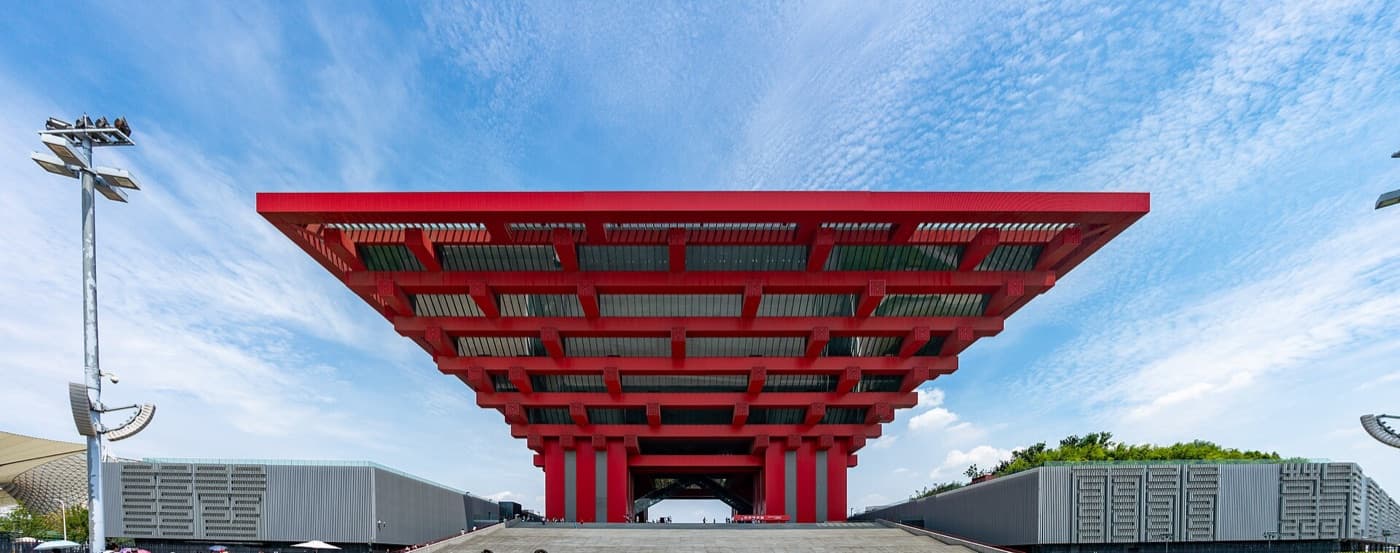
China Art Museum
The China Art Museum (中华艺术宫) is a large art palace converted from the China Pavilion of the 2010 Shanghai World Expo. It mainly displays modern and contemporary art, filling a gap in Shanghai’s art museum system. The multimedia version of the “Along the River During the Qingming Festival” (《清明上河图》), the star attraction of the China Pavilion at the Expo, will also be permanently displayed here. If you missed the Expo, this is a must-see.
Free; some exhibitions charge admission, generally ¥10–20 · 2–3 hours
Oriental Pearl Tower
Whatever the time of day, it always catches your eye. The Oriental Pearl Tower, which evokes "large and small pearls falling onto a jade plate," doesn't always look especially pearl-like in daylight. This Shanghai landmark is better suited to night photography; by day, it resembles the aluminium city sculptures found everywhere, magnified several thousand times! The tower stands 468 metres tall, making it the tallest TV tower in Asia and the third-tallest in the world. The visitable areas include the lower sphere, the middle sphere with its circular gallery, and the upper sphere with its space capsule. The top of the lower sphere sits 118 metres up and houses an observation gallery and the Dreamy Space City, among other attractions. The upper sphere is 295 metres high and contains a revolving tea room, a restaurant and an observation platform that can hold 1,600 people. Between the upper and lower spheres are five small spheres, which are five sets of luxury suites high in the air.
Three-sphere combo ticket: ¥220; two-sphere combo ticket (excluding the space capsule): ¥199; City History Exhibition Hall: ¥35 · 1–3 hours