Mulan Qingliang Village
The air here is fresh all year round. Even on scorching summer days, the average temperature stays at around 20°C, making it an excellent retreat from the heat. In spring,…
Mulan Qingliang Village, Wuhan
Key facts
- Admission
- ¥70
- Time needed
- 0.5–1 days
- Getting there
- Take a bus from Hankou Railway Station to Huangpi Bus Station, then transfer to a dedicated shuttle bus. Alternatively, take a dedicated shuttle bus from Xinhua Road in Hankou or Zhuye Mountain, which runs directly to the scenic area.
- By car
- Take the Wuhuang Expressway → Hanyi Expressway → Beijing-Zhuhai Expressway onto the Wuhan Outer Ring Road to the scenic area.
- Guidebook rating
- 3 / 5
From China Self Guided Travel 2025, page 2030. Open in Google Maps
About Mulan Qingliang Village
The air here is fresh all year round. Even on scorching summer days, the average temperature stays at around 20°C, making it an excellent retreat from the heat. In spring, mountain slopes are covered with cherry blossoms and azaleas. In summer, the hundred-metre-high Great Waterfall is breathtaking. In autumn, the hillsides blaze with red foliage. In winter, rime frost coats the trees in crystalline white, turning them into jade-like branches. Each season has its own distinct charm.
Frequently asked questions
How much does Mulan Qingliang Village cost?
Admission to Mulan Qingliang Village is ¥70, as listed in the 2025 guidebook. Prices can change; check the official channel before you go.
How do I get to Mulan Qingliang Village?
Take a bus from Hankou Railway Station to Huangpi Bus Station, then transfer to a dedicated shuttle bus. Alternatively, take a dedicated shuttle bus from Xinhua Road in Hankou or Zhuye Mountain, which runs directly to the scenic area.
How long should I spend at Mulan Qingliang Village?
Plan on 0.5–1 days for Mulan Qingliang Village.
Where is Mulan Qingliang Village?
Mulan Qingliang Village is in Wuhan, Hubei Province, in the Central China of China. Northwest Caidian Subdistrict, Huangpi District
More places in Wuhan
East Lake Ecological Tourism Scenic Area
East Lake is a must-visit in Wuhan. Come and see for yourself why this is the place where Mao Zedong lived for the longest time after the founding of the People’s Republic of China, apart from Zhongnanhai. The East Lake Greenway was the first urban AAAAA-rated scenic greenway in China. The Moshan Scenic Area of East Lake is another great place in Wuhan to view cherry blossoms, and it also houses several botanical gardens with a wide variety of plants. The scenic area also includes China’s largest Chu Culture Visitor Center, with main attractions such as Chu City, Chu Market, the Fengbiao Pillar, Chutian Terrace, Zhurong Stargazing, the Li Sao Stele, the Chucai Garden and the Nanguo Philosophy Garden.
Tingtao Scenic Area free; Moshan Scenic Area ¥60; Luoyan Scenic Area ¥13; Maanshan Urban Forest Protection Area ¥20 · 0.5–1 day

Yellow Crane Tower
Yellow Crane Tower, on Snake Hill (Shé Shān) in Wuchang, is one of the “Three Great Towers of the South.” First built in 223, it is said to have been constructed for military purposes. Over the centuries, countless literati visited and left behind celebrated poems, the most famous being Cui Hao’s lines: “The ancient sage has ridden off on a yellow crane, and only the Yellow Crane Tower remains here,” which have become timeless classics. The park comprises the South Tower, Baiyun Pavilion, the Mao Zedong Ci Poetry Pavilion, Gebi Pavilion, the Millennium Auspicious Bell, the Goose Stele Pavilion, the Yue Fei Portrait Pavilion, Shengxiang Pagoda, a stone archway, a poetry stele corridor, the bronze sculpture Huanglu Returns, and the Tomb of Chen Youliang. Without climbing this tower, it could be said you have not truly been to Wuhan.
¥70 · 1–3 hours
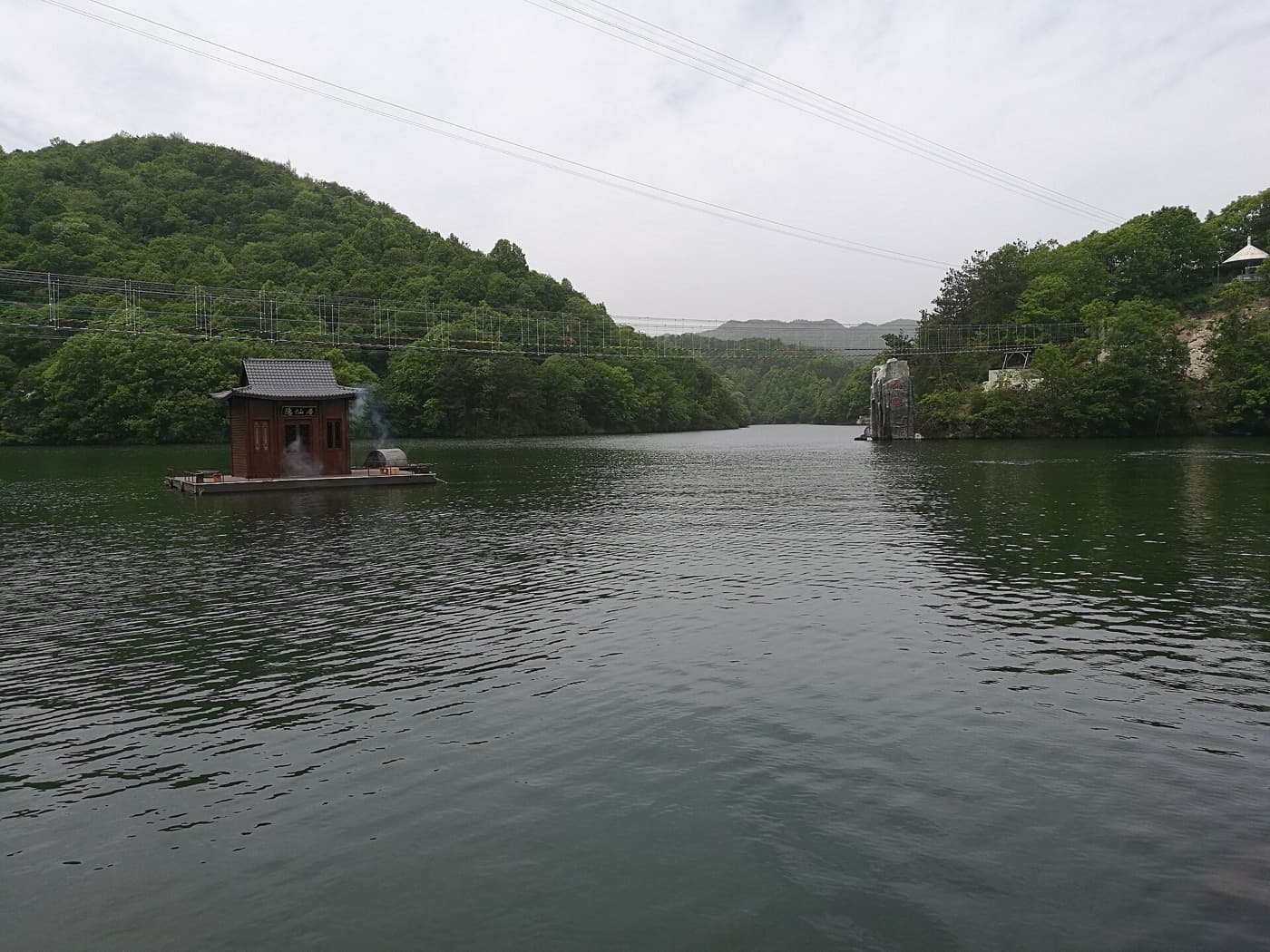
Mulan Tianchi Lake
Mulan Tianchi has more than 200 natural landscapes formed by waterfalls, streams and pools, strange rocks and unusual trees, of which more than 40 are accessible to visitors. Among the natural scenery, the most famous are the Upper Eight Pools, Lower Three Pools, the Great Waterfall and Diexue Stream in the Tianchi Gorge. The scenery here shares many similarities with Jiuzhaigou and Mount Lu. Legend has it that this was the maternal home of General Mulan, and the stories about Mulan are charming and rich in detail.
¥70 · 0.5–1 day
Jinli Gorge
Tucked away at the far north of Wuhan, this Tujia mountain village features stilted houses, wind-and-rain bridges, and Tusi chieftain compounds, all blending together into a landscape painting with distinctive Tujia character. Visitors can admire architecture with Miao village influences, savour authentic farmhouse cooking, and browse exquisite handicrafts, with plenty to see, taste and enjoy.
¥70
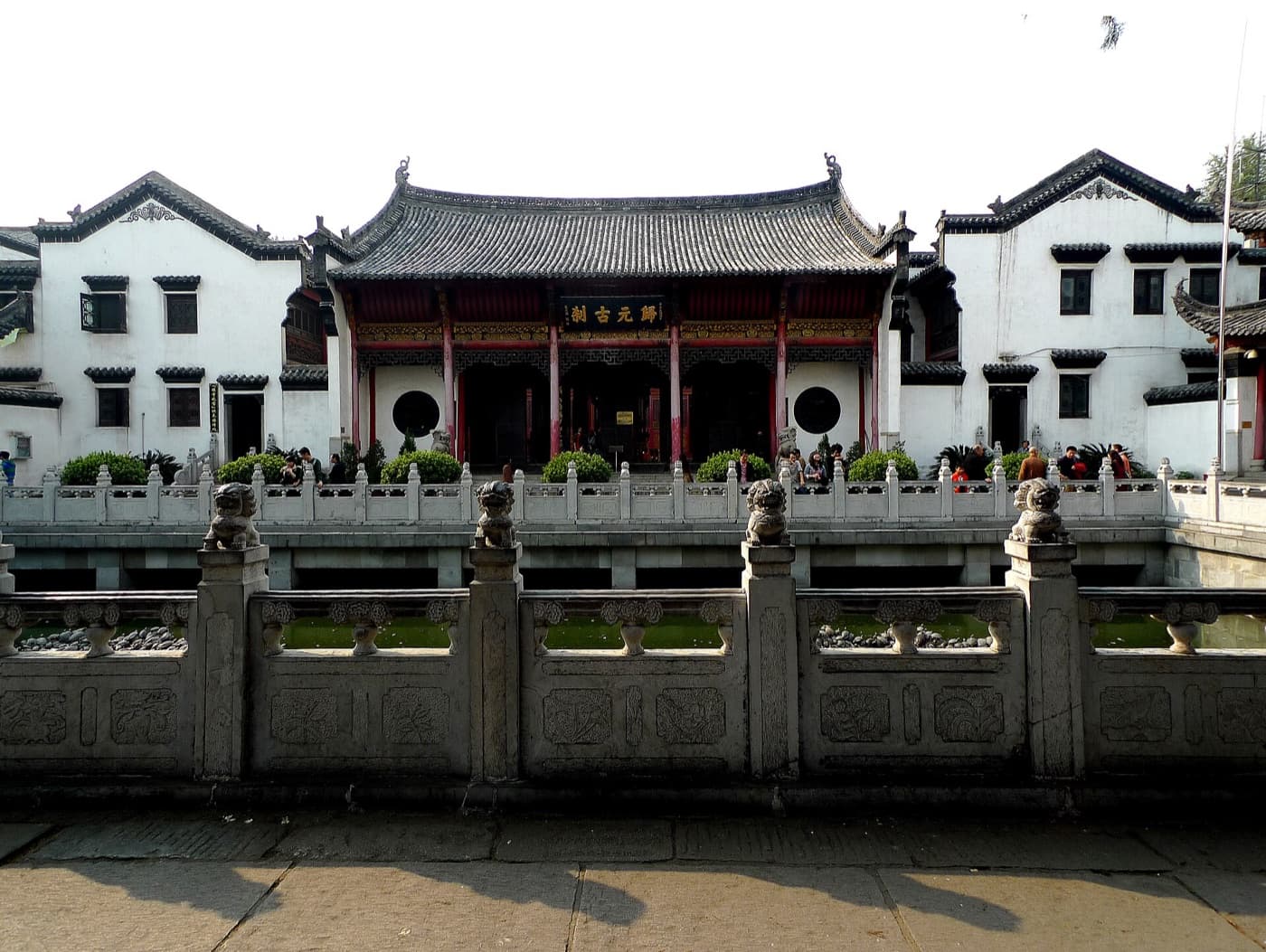
Guiyuan Temple
One of the “Four Great Buddhist Monasteries” of Wuhan, Guiyuan Temple is a Chan (Zen) Buddhist temple with a history of more than 300 years. The temple currently has 28 surviving halls, pavilions and towers, and its overall layout is shaped like a kasaya (Buddhist monk’s robe), which is its main architectural difference from other Buddhist temples. The temple’s nameplate is a rare vertical plaque in China, considered a marvel among Buddhist monasteries.
¥10 · 1–2 hours
Daoguanhe Scenic Area
The scenic area features one lake, two caves, three temples, three pools, four springs, six cliffs, ten streams and seventy-two peaks, along with famous sights such as Baoen Temple, Zixia Temple, the Summer Retreat, and Qulang Pavilion. Jiangjun Mountain, whose main peak rises 675 metres, is the highest peak in the Wuhan hills and is now designated a national forest park. The broad expanse of Daoguanhe Reservoir is best enjoyed by boat, where lake and mountain scenery unfold in every direction.
3–4 hours