Wuhan travel guide
武汉
For a long time, only two Chinese cities have dared to claim the word 'great': 'Great Shanghai' and 'Great Wuhan'. Great Wuhan carries so much past glory, and today the word 'great' holds even more meaning.…
13 places · In the guidebook: pages 2006–2033

Wuhan, Hubei Province · AI illustration for China Trip
Quick itinerary
Wuhan in 5 days
- Day 1
- Guiyuan Temple→
- Guqin Terrace→
- Qingchuan Pavilion→
- Jianghan Road Pedestrian Street (lunch)→
- Yellow Crane Tower→
- Memorial Hall of the Wuchang Uprising of the 1911 Revolution→
- Hubu Alley (dinner)
- Day 2
- Hubei Provincial Museum→
- East Lake Scenic Area→
- Wuhan University→
- Guanggu Pedestrian Street (dinner and shopping)
- Day 1
- Wuhan→
- Jinli Gorge→
- Mulanshan Scenic Area→
- Wuhan
- Day 2
- Day 3
The feel of the place
- Great Wuhan
- For a long time, only two Chinese cities have dared to claim the word 'great': 'Great Shanghai' and 'Great Wuhan'. Great Wuhan carries so much past glory, and today the word 'great' holds even more meaning. The Han River flows into the Yangtze here, and Wuchang, Hankou and Hanyang, the three towns at this T-junction, together make up Wuhan, which is vast indeed. Streams of people from north and south gather and disperse here, and northern and southern cultures meet and blend. No one feels lonely far from home here, for there is a warm welcome at every door. So 'great' also describes a broad, all-embracing spirit.
- Former Furnace Champion
- Among China's 'Four Great Furnaces', Wuhan once deservedly earned the title of 'furnace champion of its era'. But since the Three Gorges Project was completed, Wuhan's summer temperatures have not exceeded 37℃, and it has shed the furnace label. Today Guangzhou, Hangzhou and Fuzhou firmly hold the top three spots, and who will claim the 'fourth great furnace' remains to be seen.
- Guozao (Having Breakfast)
- In Wuhan dialect, 'guozao' means eating breakfast, and Wuhanese have a habit of eating breakfast out. So every morning, steaming breakfast stalls line the streets and alleys. Siji Mei's soup dumplings, Laotongcheng's doupi (bean-curd skin pancakes) and Cailinji's hot dry noodles are all cherished by old Wuhanese. Only Wuhan has turned breakfast into a true food culture.
- Complexity and Simplicity
- 'Nine-headed birds in the sky, Hubei folk on the ground' is a saying that is not derogatory. It reflects, from one angle, that Wuhanese are quick-witted, meticulous, clever but not crafty, delicate yet generous. Life brings conflicts and helplessness, but a positive outlook still occupies a large part of Wuhanese spiritual life. Their intelligence lets them handle everyday matters with ease, and their openness lets them find release under pressure and relief in calm.
Chu Opera
Chu opera is one of the main local opera genres in Hubei. Its repertoire mostly reflects folk tales and family life, and its performances are simple and humorous. Traditional representative pieces include 'Ge Ma', 'Pounding Tofu' and 'Hundred Days of Fate'.
Han Opera
Han opera is a traditional local opera of Wuhan, Hubei, and a national intangible cultural heritage. It was formerly known as Chu Diao and Han Diao (also called Chu Qiang and Chu Qu), and colloquially as 'Erhuang'. Han opera has more than 660 traditional plays, with beautiful melodies, elegant dialogue and grand texts.
Yangtze River Swimming Crossing
Large-scale Yangtze River crossing events in Wuhan began in the 1930s. In 1956, after swimming the Yangtze in Wuhan, Mao Zedong wrote the famous poem “Water Song: Swimming” (《水调歌头·游泳》), which made the Yangtze crossing world-famous.
Preparation and Information
Language
Wuhan sits in central China, blending northern and southern influences, and its local dialect is rich in expressions that most out-of-towners can partly decipher. Speaking Mandarin causes no problems, as virtually all Wuhan residents understand it, though their pronunciation has a distinct local flavour, which is why locals good-naturedly call it “bent-pipe” Mandarin.
Climate and Travel Seasons
Wuhan has distinct four seasons, with long springs and short autumns. Winters are cold and damp, while summers are among the hottest in the country. Summer temperatures stay high throughout the season, with small day-night temperature differences, so if you visit at this time, be sure to prepare thoroughly against the sun. If you are confident in your heat tolerance, it is well worth experiencing, as Wuhan's summer is its most distinctive season. Spring and autumn are generally the better times to visit: bring rain gear in spring and some warm clothing in autumn.
tip: 1. Asking for directions: When asking for directions in Wuhan, remember to smile, as the saying goes, “Nobody hits a smiling face.” Because the Yangtze flows through the city, locals often say “go upstream” or “go downstream” based on the river's flow, so it is useful to get your bearings on the direction of the river as soon as you arrive.
2. Loud voices: Wuhan people generally speak loudly and quickly. Don't be put off by this. If you cannot understand or did not catch something, feel free to ask the speaker to repeat or slow down. Locals are happy to help in this way.
Hankou China Southern Airlines Ticket Office
address: No. 21, Hankou Railway Station, near the Jinjiadun Passenger Station
phone: 027-83622000
Wuchang China Southern Airlines
address: 586 Wuluo Road
phone: 027-87645047
City One-Day Tour Route
Bus 402 runs from Wuchang Railway Station to Mount Mo (Moshan) on Lushan Road. Stops along the way include Honglou (Red Building), Yellow Crane Tower, Guishan (Turtle Hill), Qintai (Qin Terrace), Wuhan Port, Binjiang Park, Jiefang Park, Xudong Road, the Donghu Pear Garden, the Provincial Museum, Meiling, Fangyingtai, Meiyuan, and the Botanical Garden. Buses depart every 5–6 minutes and operate from 6:00 to 20:00.
Things to see

Yellow Crane Tower
1–3 hours · ¥70
Yellow Crane Tower, on Snake Hill (Shé Shān) in Wuchang, is one of the “Three Great Towers of the South.” First built in 223, it is said to have been constructed for military purposes. Over the centuries, countless literati visited and left behind celebrated poems, the most famous being Cui Hao’s lines: “The ancient sage has ridden off on a yellow crane, and only the Yellow Crane Tower remains here,” which have become timeless classics. The park comprises the South Tower, Baiyun Pavilion, the Mao Zedong Ci Poetry Pavilion, Gebi Pavilion, the Millennium Auspicious Bell, the Goose Stele Pavilion, the Yue Fei Portrait Pavilion, Shengxiang Pagoda, a stone archway, a poetry stele corridor, the bronze sculpture Huanglu Returns, and the Tomb of Chen Youliang. Without climbing this tower, it could be said you have not truly been to Wuhan.
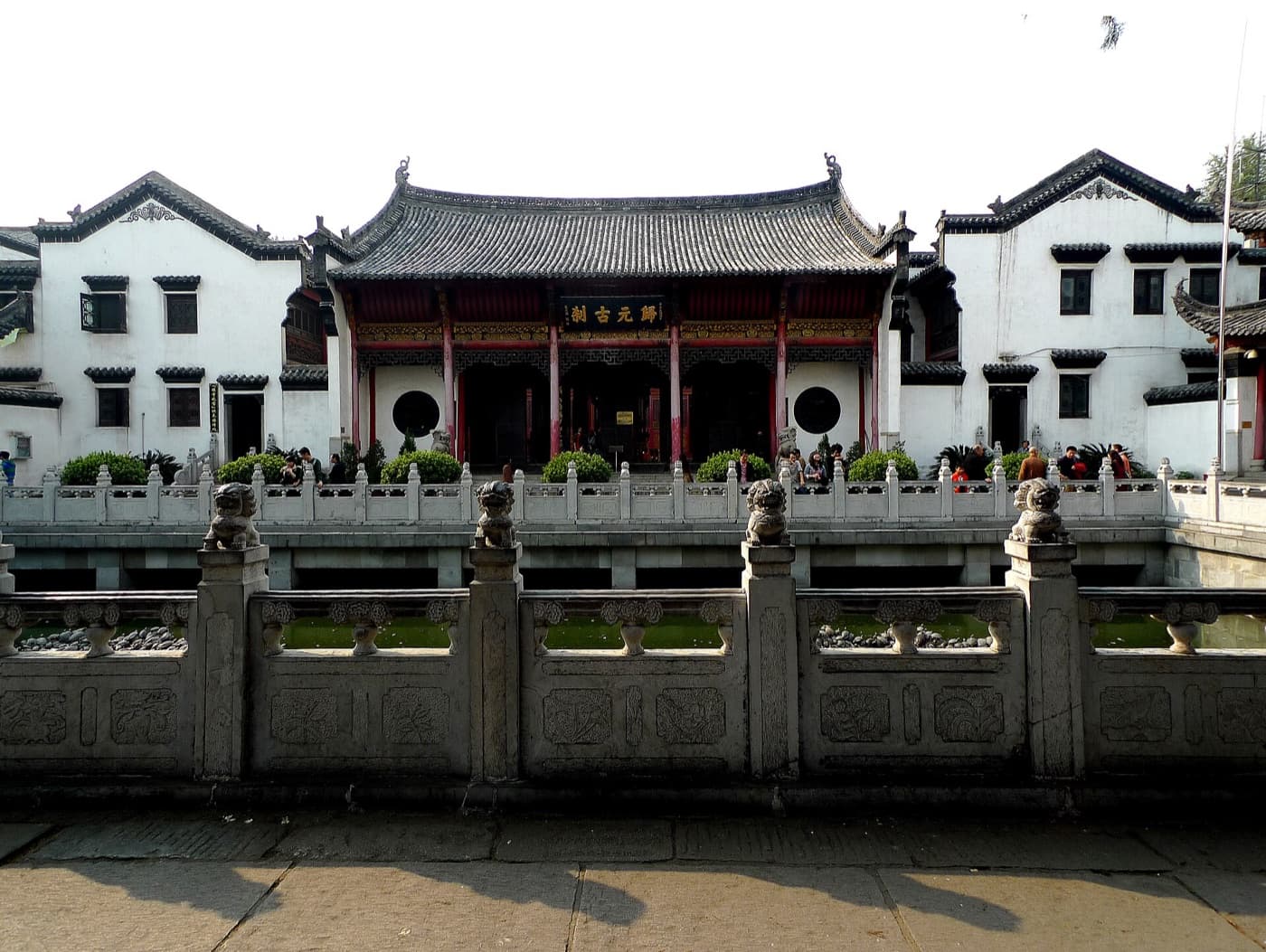
Guiyuan Temple
1–2 hours · ¥10
One of the “Four Great Buddhist Monasteries” of Wuhan, Guiyuan Temple is a Chan (Zen) Buddhist temple with a history of more than 300 years. The temple currently has 28 surviving halls, pavilions and towers, and its overall layout is shaped like a kasaya (Buddhist monk’s robe), which is its main architectural difference from other Buddhist temples. The temple’s nameplate is a rare vertical plaque in China, considered a marvel among Buddhist monasteries.
East Lake Ecological Tourism Scenic Area
East Lake is a must-visit in Wuhan. Come and see for yourself why this is the place where Mao Zedong lived for the longest time after the founding of the People’s Republic of China, apart from Zhongnanhai. The East Lake Greenway was the first urban AAAAA-rated scenic greenway in China. The Moshan Scenic Area of East Lake is another great place in Wuhan to view cherry blossoms, and it also houses several botanical gardens with a wide variety of plants. The scenic area also includes China’s largest Chu Culture Visitor Center, with main attractions such as Chu City, Chu Market, the Fengbiao Pillar, Chutian Terrace, Zhurong Stargazing, the Li Sao Stele, the Chucai Garden and the Nanguo Philosophy Garden.
0.5–1 day · Tingtao Scenic Area free; Moshan Scenic Area ¥60; Luoyan Scenic Area ¥13; Maanshan Urban Forest Protection Area ¥20
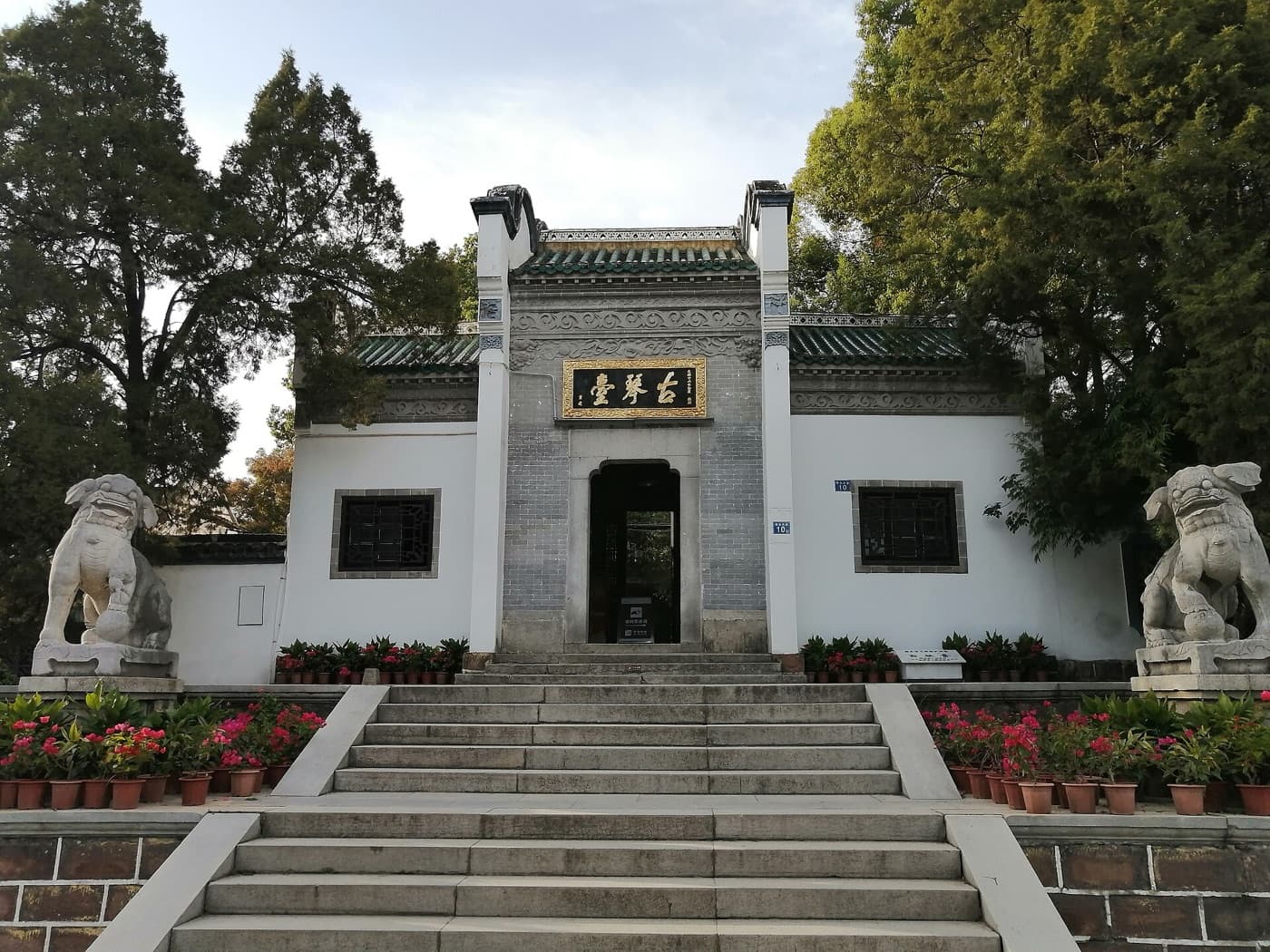
Guqin Terrace Scenic Area
Guqin Terrace, also known as Boya Terrace, lies on the western foot of Turtle Hill (Guishan) in Hanyang, beside the eastern shore of Yue Lake. It was built as a memorial to commemorate Yu Boya playing the guqin (zither) and meeting his true friend, Zhong Ziqi. Guqin Terrace was first built in the Northern Song dynasty and has been destroyed and rebuilt several times over the centuries. The main structure today has a single-eave hip-and-gable roof with a shallow hall projecting in front. In front of the hall is a square white marble platform, said to be where Boya played the guqin. The characters “Qin Tai” (Zither Terrace) are said to be the handwriting of Northern Song calligrapher Mi Fu, and the terrace walls are inlaid with relief carvings depicting the story of “Boya Smashes His Zither to Thank His True Friend,” vividly lifelike. The entire complex is exquisite and elegant, preserving the appearance of ancient architecture from that time.
1–2 hours
Wuhan University
One of the most beautiful universities in China, its campus is built against Luojia Mountain, and its scenery is naturally picturesque. The most famous sight is the cherry blossoms in March.
1–3 hours · Free
Chuhe Han Street
Chuhe-Han Street is a pedestrian shopping street with a strong cultural atmosphere, featuring popular check-in spots such as the World Performing Arts Theatre and the World Indoor Film Culture Theme Park.
2–4 hours
Qingchuan Pavilion
The “Number One Tower of Qingchuan in the State of Chu” on the bank of the Yangtze, built in the Ming dynasty. Its name comes from the famous line “the trees of Hanyang stand clear across the sunny river,” and together with Yellow Crane Tower and Guqin Terrace, it is known as one of Wuhan’s three major scenic landmarks. Qingchuan Pavilion faces the Han River to the north and the Yangtze to the east, and it sits across the river from Yellow Crane Tower, with each enhancing the other’s setting.
1 hour · Free
Lihuangpi Road
Lihuangpi Road is a retro street with a literary feel, lined with buildings preserved from the Republican era. It is a must-visit for Wuhan’s young artists and is also a well-known internet-famous street.
20–60 minutes; 0.5–1 hour · ¥60
Getting there & around
Known as the “Thoroughfare of Nine Provinces,” Wuhan is one of the few major cities in China that serves as a hub for rail, road, waterway and air transport. Connections north, south, domestic and international, by land and water, are convenient and fast.
Getting In and Out
By Air
Wuhan Tianhe International Airport is 26 km in a straight line from the Wuhan Yangtze River Bridge and takes about 25 minutes to reach the city centre by car.
By Rail
Wuhan has three railway stations: Hankou, Wuchang and Wuhan. All express and direct trains on the Beijing–Guangzhou line stop at Wuhan, Hankou and Wuchang stations. All three stations have large ticket offices, and there are also several ticket outlets around the city.
High-Speed Rail
Wuhan Station is the starting point of the Wuhan–Guangzhou high-speed rail. The journey to Guangzhou takes about 4 hours, and the fastest trip to Changsha takes 1 hour 18 minutes.
In addition, the Wuhan–Yichang high-speed rail starts at Hankou Station, and the trip from Hankou to Yichang East Station takes less than 2 hours.
By Road
Wuhan has excellent road connections and is the leading transport hub in Central China. The Beijing–Zhuhai Expressway runs through the city. Large and medium-sized coaches depart from the city's long-distance bus stations throughout the day for destinations across the province and neighbouring provinces and cities.
Wuhan Port Passenger Terminal is one of the largest river passenger terminals in China. The square in front of the terminal connects to the city's main roads.
Getting Around
Wuhan has built many bridges: the city currently has 694 urban bridges, including 11 spanning the Yangtze alone. These bridges link the three towns of Wuhan and make travel between the two banks of the Yangtze very convenient.
Buses
Most city sights are served by direct buses, which is very convenient. Buses are unstaffed: board at the front door and alight at the rear. Fares are ¥2 for air-conditioned buses, ¥1 for standard routes and ¥1.5 for double-decker buses, and some suburban routes use tiered fares.
Tourist Bus Routes
Wuhan operates one-day city tour bus routes with numbers starting with 4, offered on two ticket types: a standard ticket for ¥2, valid for a single journey from start to finish, and a pass for ¥5, valid for getting on and off at any stop on that route for the rest of the day. Both heating and air conditioning are provided at no extra charge. During major holidays, a tour guide is also on board.
Most Convenient Piers
The most convenient ferry piers are Wuhan Customs Pier in Hankou and Zhonghua Road Pier in Wuchang. They connect to Jianghan Road and Simenkou, the city's two main shopping areas.
Wuhan–Beijing Coach
Luxury coaches run between Wuhan and Beijing. The trip takes about 1 hour longer than by train, and the fare is cheaper than a hard sleeper train ticket, but these coaches only run during public holidays. From Beijing, you can take the Beijing–Zhuhai Expressway directly to Wuhan.
Double-Decker Buses
Ride the new double-decker sightseeing buses, which are unstaffed. The fare is ¥2 per single journey, or ¥1.5 if you pay with a Jiangcheng Card (江城通卡). The buses also sell discounted tickets for sights on board.
Wuhan Port Passenger Terminal
Listen Carefully to Station Announcements
Wuhan bus stop announcements usually follow the format “Arriving at XX stop, XX reminds you,” and often mix in advertising slogans, so they can be hard to make out.
Taxis
For cars with engines under 2.0 litres, the flag-fall is ¥10 for the first 3 km, then ¥1.8 per km beyond 3 km. For trips over 10 km, a 50% surcharge applies to the per-km rate.
Road Tolls
1. Apart from the expressway toll charged on trips to Tianhe Airport, there are no other bridge or road tolls within the city.
2. Taxis outside the railway stations often overcharge passengers.
Ferries
Ferry boats are something of a Wuhan speciality. Crossing the Yangtze by boat is a wonderful way to enjoy the riverside scenery.
Ferry Crossings
Wuhan Yangtze River Bridge and the Second Yangtze River Bridge operate odd-even licence plate restrictions, so some vehicles opt to cross by car ferry. Wuhan currently has two car ferry routes, both operating from 7:30 to 20:00.
Light Rail and Metro
Wuhan currently has 11 metro lines in operation: Lines 1, 2, 3, 4, 5, 6, 7, 8, 11 and 16, plus the Yangluo Line. Metro fares are based on distance: ¥2 for up to 4 km; ¥1 per 4 km for 4–12 km; ¥1 per 6 km for 12–24 km; ¥1 per 8 km for 24–40 km; ¥1 per 10 km for 40–50 km; and ¥1 per 20 km beyond 50 km. Each journey is limited to 4 hours.
Wuhan Port Passenger Terminal
Wuhan Port Passenger TerminalThis is Wuhan's main river passenger terminal. In recent years, river transport has declined sharply, and many passenger services to riverside cities have been cancelled, so it is best to check before you head to the pier.
- Address:
- Piers 20–23, Yanjiang Avenue, Wuhan
- Opening hours:
- 8:00—17:30
Eat & drink
Located on the middle and lower Yangtze Plain, Wuhan is blessed with abundant produce. Its food culture has been shaped by both northern and southern influences, giving Wuhan cuisine a broad, inclusive character that absorbs the distinctive flavours of many regions. Whether in Wuhan's giant banquet restaurants, small family-run kitchens or roadside stalls and open-air food stands, you'll find dishes that please both the crowd and the connoisseur, and nearly all of them are delicious without being expensive. Wuhan dishes draw on the rich aquatic produce of the rivers, ports and lakes that criss-cross the Jingchu heartland, as well as the wide variety of wild game and mountain delicacies from its rolling hills. They appeal to the modern appetite for natural, green, back-to-basics food, and their affordable prices have won them a loyal following. Beyond this, the abundance of snacks is an indispensable part of Chu culture.
Specialty Food Streets
Local Snacks
Wuhan's snack culture is especially rich. Breakfast alone offers dozens of varieties, including hot dry noodles (reganmian), thick rice noodle soup (hutang fen), bean-curd skin rolls (doupi), mianwo, shaomei, pan-fried dumplings (guotie) and fried dough sticks (youtiao), each with its own distinctive flavour. Because of long-established habits, most Wuhan people eat breakfast out, a practice they call 'guozao' (过早, literally 'passing the morning'). It sends them into the new day warm, satisfied and full of energy.
Traditional Cuisine
Wuhan has a vast range of dishes, and the most famous is steamed Wuchang fish. Its fame was cemented by a poem by Mao Zedong, and it truly lives up to its reputation: tender, fatty bream steamed with ham, winter mushrooms, winter bamboo shoots and chicken broth, then garnished with shreds of red, yellow and green vegetables, so the fish looks colourful. Its broth is fresh and fragrant, with a lingering aftertaste. The most distinctly Wuhan home-style dish is pork rib and lotus root soup. As an everyday dish, its nourishing qualities and rustic character make it a regular on Wuhan family tables.
Local Specialties
Many of Wuhan's famous snacks, such as Siji Mei soup dumplings, are currently struggling commercially, and their flavour is no longer what it once was. They still offer a taste of Wuhan, so visitors may sample them as they see fit. Many street stalls, however, have exceptionally skilled cooks and are well worth a try.
Yichang Flavours
Near the Yujiatou post office in Wuchang is a shop called 'Yichang Flavour Snacks', which specialises in Yichang-style snacks. Here you can try sour and spicy noodles, rarely found in Wuhan, with an authentic sour-spicy taste, as well as zhajiang noodles with unusual toppings. Delicious Yichang pickles are served free of charge.
Recommended Restaurants
Fish Dishes
Wangjiang Fish House, on the riverbank beneath the bridgehead at Wuchang, specialises in Yangtze River fish dishes. It is especially known for its white-sauce jiangwei (Yangtze bagrid catfish), stir-fried jiang catfish slices and bright-stove Yangtze eel. The white-sauce jiangwei has snow-white, translucent slices of flesh that are very refreshing, and a broth as white and thick as milk. Many visiting diners have praised it: 'Yangtze fish cooked in Yangtze water, the flavour is unmatched.'
Donghai Fishing Port Restaurant on Minyi Third Road is known for its signature dish, 'surfing fish' (冲浪鱼). The preparation is distinctive, and the result is tender and delicious; the raw ingredient is a single live grass carp. The stones used for the 'surfing' are somewhat larger than ordinary pebbles. Once heated, they are placed in a milky-white, clear broth, and marinated fish slices and greens are added. The fish slices tumble and billow in the boiling broth and hot oil, a lively and attractive sight.
Wuchang Fish
Wuchang Restaurant on Pengliuyang Road in Wuchang (very close to Yellow Crane Tower) is famous for its Wuchang fish, and is well worth a visit.
Specialty Foods
Barbecue and stir-fries are the stars of Wuhan's nightlife. In short, almost anything you can imagine can be grilled here, and it will be spicy. The most delicious options are grilled fish, grilled stinky tofu and grilled corn. Wuhan's barbecue scene is concentrated around Shouyi Park, Yujiatou in Wuchang, Hongshan's Huquan area and Hankou Railway Station Road.
Jingwu Road's duck necks have become a premium Wuhan product, and you'll find them at night markets across all three towns of Wuhan. They are very spicy, so visitors should be prepared. Duck necks have grown into a brand in their own right, sold in Beijing, Shanghai and other cities across the country. The night market on Jiqing Street is Wuhan's liveliest, but its prices are higher, so visitors should beware of being overcharged.
Wuhan's Restaurant Scene
1. Other restaurants of the same type as those above include Little Blue Whale Food Court, Prince Restaurant and Zuijiangyue Restaurant. They vary in size, but offer diverse menus with a distinctive charm, and none are particularly expensive.
2. Wuhan's restaurant industry is very well developed, and Wuhan people love eating out. At mealtimes these restaurants are almost always full, and you may need to take a number and queue, so visitors should arrive a little early to avoid a long wait.
Jiqing Street
Specialty Food Streets'Breakfast on Hubu Lane, late-night snacks on Jiqing Street': Chi Li's novel *Life Show* made this street, which best reflects Wuhan's urban culture, known to everyone. By day Jiqing Street is an ordinary, quiet little street, but come evening it comes alive, with a row of street stalls and restaurants, and street performers adding to the fun. Every business is thriving.
- Jiqing Street is very close to Jianghan Road Pedestrian Street and Riverside Park, so after your meal it's also worth strolling through the shops or enjoying the river views.
Hubu Lane
Specialty Food StreetsThe breakfast here is old-school and full of flavour. Shi Taipo's hot dry noodles, Xu Sao's fresh fish rice noodle soup, Wan family's rice wine and more than 30 other local specialties make this a must-visit for anyone who wants to taste Wuhan snacks. The old houses on both sides have since been demolished and replaced with newly built 'antique-style' buildings, and the road has been widened. Still, it's hard to recapture the feeling of old Wuhan locals crowding in here at dawn for breakfast.
- 1. If you enter through the archway with the bronze bells (编钟), there is a snack street on your right. Don't assume it has any old-established shops. Walk about 150 metres further, then turn into a small alley on your left. The shops of Shi Taipo and Xu Sao are down there. 2. When eating xiaolong soup dumplings, first gently bite a small hole in the skin, slowly sip out the broth, then eat the wrapper and the filling. Only this way can you truly appreciate the distinctive flavour of the soup dumplings.
Wufangzhai
Recommended EateriesRenowned as the 'Tangyuan King', 'Zongzi King' and 'Rice Cake King', its tangyuan (glutinous rice balls) have thin skins and rich, smooth fillings. They are particularly suited to visitors with a sweet tooth, so give them a try while in Wuhan.
- Address:
- Beside the Digital Port, 713 Zhongshan Avenue, Jianghan District, Hankou
- Phone:
- 027-82777128/13967306719
Zhou Heiya (Jianghan Jiefang Datong World Trade Store)
Recommended EateriesA Hubei specialty of marinated snacks.
- Address:
- 684 Jiefang Avenue, Annex 76, Jianghan District, Hankou
Sanwuchun European Garden Hotel
Recommended EateriesA model of Wuhan's dining scene, with lavish decor and an extraordinary setting. Eating here is a real pleasure. Its signature dishes are numerous, including crispy fried stone fish (酥炸石丁鱼), braised pidan with caifish (卤水皮蛋烧财鱼), Lixiang donkey-meat hotpot (利香驴肉火锅) and white-braised silver cod (白烩银鳕鱼).
- Address:
- 245 Xinhua Lower Road, Hankou
- Phone:
- 027-85779835
Yanyangtian
Recommended EateriesWith branches across all three towns of Wuhan, Yanyangtian is something of a 'flagship carrier' of Wuhan dining. Its floor space can seat more than a thousand diners at once, giving it an imposing presence. Its dishes are refined yet affordable, making it the first choice of ordinary Wuhan folk for a treat. Known as the 'Catfish King', its specialities include bean-dregs-baked Yangtze silver carp (豆渣巴烧江鲢), red-braised jiangwei (红烧鮰鱼), jiang-sauce lantern eggplant (酱烧灯笼茄), golden-medal fried cuttlefish (金牌烧墨鱼), spicy quail (辣子鹌鹑), pan-fried Wuchang fish (香煎武昌鱼), 'bandit chicken' (香式土匪鸡) and crab-roe tofu (蟹黄豆腐). Main branch on Baofeng Road
- Address:
- 185 Baofeng Road, Jiefang Avenue, Hankou
- Phone:
- 027-83779688
Yellow Crane Tower Golden Standard Restaurant
Recommended Eateries- Address:
- 235 Pengliuyang Road
- Phone:
- 027-88867979
Where to stay
Wuhan has a well-developed accommodation sector, with hotels and guesthouses everywhere. Well-known chains such as Shangri-La have branches in the city. There are also plenty of budget hotels and guesthouses suited to independent travellers.
Old buildings along Zhongshan Avenue
Qingjiang Hotel
Qingjiang Hotel- Address:
- 57 Zhonghua Road, Wuchang District
- Phone:
- 027-88855588/88726668
Wuhan Newbility Xinyi International Hotel
Wuhan Newbility Xinyi International Hotel- Address:
- 438 Zhongshan Road, Wuchang District
- Phone:
- 027-59220000
Shopping
Wuhan's shopping districts are concentrated along Jiefang Avenue in Hankou and Zhongshan Avenue. Highlights include Wuhan Square, Shimao Plaza, SOGO, Wangfujing Department Store and Xinmin Zhongle Park.
Local Specialties
Wuhan's traditional local specialties include Qingshan-brand mahonggao (麻烘糕) and Xiaogan sesame toffee (孝感麻糖). Their flavours are quite distinctive, so choose carefully when buying.
Recommended Shopping
Wuhan Square
Recommended ShoppingWuhan Square Shopping Mall is one of the largest single-building shopping centres in south-central China. This luxury complex combines shopping, entertainment, dining, business and leisure.
Xinmin Zhongle Park
Recommended ShoppingLocated on Zhongshan Avenue, Xinmin Zhongle Park is a favourite gathering place for young Wuhanese. It brings together entertainment, food, fashion, photography, beauty and trend-setting offerings, which is why it is one of the city's most popular spots.
Hanzheng Street
Recommended ShoppingWhen visitors think of shopping in Wuhan, Hanzheng Street is usually the first place that comes to mind. A nationally renowned distribution hub for small goods, it typically sells clothing, stockings, watches and toys, and is known for affordable prices. Be prepared to bargain, though.
Optics Valley (Guanggu)
Recommended ShoppingGuanggu has a 1,350-metre pedestrian-only commercial street, a great place to shop and relax. Clothing shops, snack stalls, local specialty stores, drink vendors and small restaurants line the route. The European-style architecture gives it a distinctly exotic charm.
Nightlife
Wuhan's Bund is lined with bars and cafés, offering a lively yet relaxed atmosphere. Night stalls on Baocheng Road, Zhonghua Road and similar streets form small-goods retail markets, where you can pick up appealing trinkets at low prices. They suit shoppers who enjoy browsing and are good at haggling.
Hongshan Square, Xibei Lake Square, Honglou Square and Wuzhan Square are popular spots for evening leisure, chatting and cooling off. Jianghan Road Pedestrian Street is bustling day and night, lined with trendy shops and entertainment venues, where shoppers and strollers find plenty to enjoy.
transport: Hankou Yuehan Pier: near Sanyang Road (三阳路) metro station, with the Yuehan Pier bus stop. Wuchang Hongxiang Pier: near Jiyuqiao (积玉桥) metro station, with the Linjiang Avenue Dakoukou (临江大道大堤口) bus stop. Hanjiang Tourist Pier: near Qiaokou (硚口) metro station, with the Yanhe Avenue Fumao Lane (沿河大道福茂巷) bus stop.
Day trips & beyond
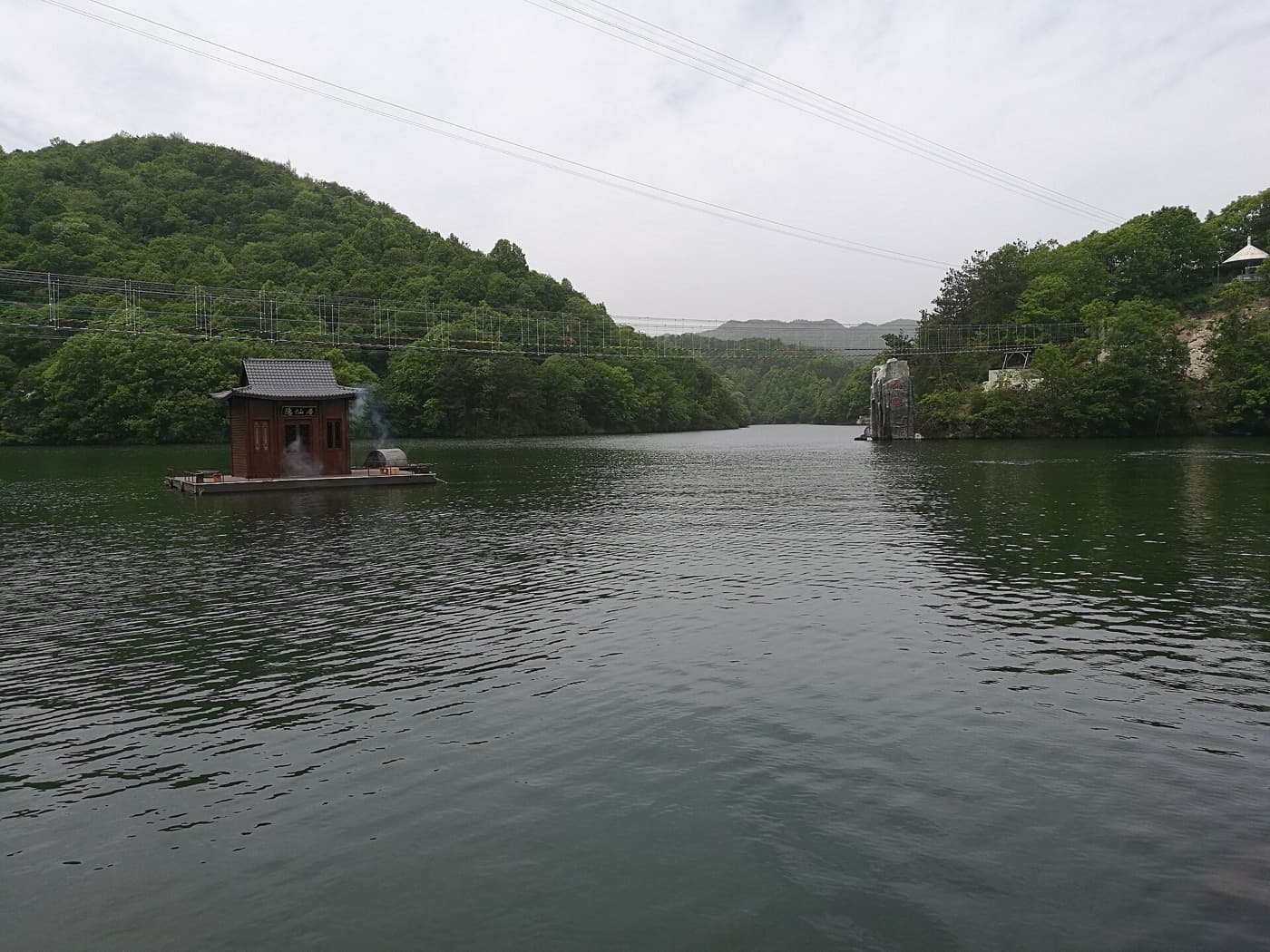
Mulan Tianchi Lake
Mulan Tianchi has more than 200 natural landscapes formed by waterfalls, streams and pools, strange rocks and unusual trees, of which more than 40 are accessible to visitors. Among the natural scenery, the most famous are the Upper Eight Pools, Lower Three Pools, the Great Waterfall and Diexue Stream in the Tianchi Gorge. The scenery here shares many similarities with Jiuzhaigou and Mount Lu. Legend has it that this was the maternal home of General Mulan, and the stories about Mulan are charming and rich in detail.
0.5–1 day
Jinli Gorge
Tucked away at the far north of Wuhan, this Tujia mountain village features stilted houses, wind-and-rain bridges, and Tusi chieftain compounds, all blending together into a landscape painting with distinctive Tujia character. Visitors can admire architecture with Miao village influences, savour authentic farmhouse cooking, and browse exquisite handicrafts, with plenty to see, taste and enjoy.
Ethnic Culture · Nature
Mulan Qingliang Village
The air here is fresh all year round. Even on scorching summer days, the average temperature stays at around 20°C, making it an excellent retreat from the heat. In spring, mountain slopes are covered with cherry blossoms and azaleas. In summer, the hundred-metre-high Great Waterfall is breathtaking. In autumn, the hillsides blaze with red foliage. In winter, rime frost coats the trees in crystalline white, turning them into jade-like branches. Each season has its own distinct charm.
0.5–1 days
Daoguanhe Scenic Area
The scenic area features one lake, two caves, three temples, three pools, four springs, six cliffs, ten streams and seventy-two peaks, along with famous sights such as Baoen Temple, Zixia Temple, the Summer Retreat, and Qulang Pavilion. Jiangjun Mountain, whose main peak rises 675 metres, is the highest peak in the Wuhan hills and is now designated a national forest park. The broad expanse of Daoguanhe Reservoir is best enjoyed by boat, where lake and mountain scenery unfold in every direction.
3–4 hours
Three Kingdoms Red Cliff Ancient Battlefield
Anyone who has read “Romance of the Three Kingdoms” knows the Battle of Red Cliffs, and the battlefield of this famous ancient clash lies about 40 kilometres from the centre of Chibi City. The scenic area comprises three hills: Red Cliff Mountain, Nanping Mountain and Jinluan Mountain. Key attractions include the Red Cliff Cliff Inscriptions, the Battle of Red Cliffs Exhibition Hall, Yijiang Pavilion, the Zhou Yu Stone Statue, Baifeng Terrace, Fengchu Hermitage, and the Red Cliff Stele Gallery. Standing here, you can almost picture the sweeping battle scenes of long ago and hear the thundering war cries echo through the hills.
2–3 hours
Source: China Self-Guided Travel 2025 (《中国自助游》, Tianjin Science & Technology Press, Aug 2024), pp. 2006–2033. Translated from the Chinese edition; names and prices follow the guidebook. · Plain text version