Mount Kailash
The highlight of a trip to Ali is Mount Kailash, the most sacred of mountains, and its companion holy lake, Lake Manasarovar.…

Mount Kailash, Ngari · AI illustration for China Trip
Key facts
- Admission
- ¥150
- Time needed
- 1–2 days
- Guidebook rating
- 5 / 5
From China Self Guided Travel 2025, page 590. Open in Google Maps
About Mount Kailash
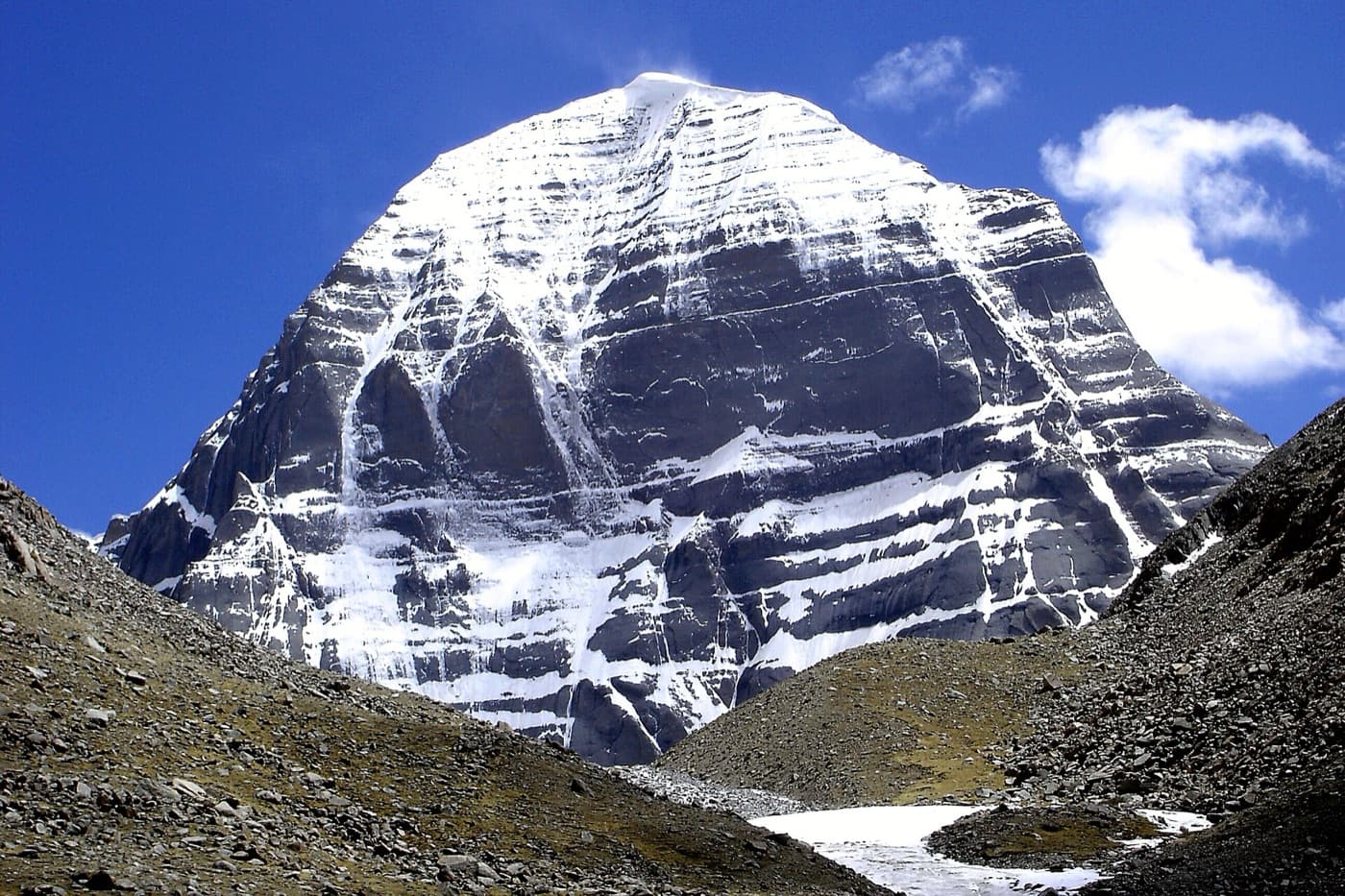
The highlight of a trip to Ali is Mount Kailash, the most sacred of mountains, and its companion holy lake, Lake Manasarovar.
Mount Kailash rises to 6,638 m and is the main peak of the Gangdise Mountains. Its snowy peak is symmetrical on all four sides, resembling a pyramid, which adds to its sense of mystery. Kailash is regarded as the centre of the world by Tibetan Buddhism, Hinduism and Bön alike, so pilgrims arrive in an unbroken stream. To this day, no one has climbed it, as its sacred status in people’s hearts cannot tolerate being trodden by ordinary mortals.
Tips from the guidebook
- Routes to the Mountain
- Route 1: Heading south. From Kashgar, travel south along the Xinjiang-Tibet Highway. From Yecheng it takes about 3 days to reach Shiquanhe, then change to another vehicle for Mount Kailash. There is no public transport on the Xinjiang-Tibet Highway. You can catch a lift at the Mountain Guesthouse or at Kilometre Zero, or wait by the roadside for military vehicles heading to Tibet. Shiquanhe is 480 km from the sacred mountain; with luck, it can be reached in one day.
- Route 2: Heading west. From Lhasa, travel west to Lhazê, passing Yamdrok Lake, and spend a night in Lhazê or Shigatse. Beyond Lhazê there are few places to eat or stay. At 53 km you reach Kaga Town, and 65 km further on is Sangsang, where you can also find lodging. 122 km beyond Sangsang is Road Maintenance Station No. 22, which has a sign pointing to Ali and splits into northern and southern routes.
- Northern Route: From Station 22, the northern route takes 6 days. The road is very bumpy, but the scenery is good. At 242 km you reach Coqen County, where highland guesthouses are available. 117 km north of Coqen is Dong Co, a fork in the road where trucks come to carry salt to Lhasa or Shigatse. 90 km west of the fork is Gerze, which has several Sichuanese restaurants and places to stay. Beyond Gerze is Ge’gyai, where you can stay at the county guesthouse. From Ge’gyai to Shiquanhe town is 112 km. From Shiquanhe town, Mount Kailash can be reached in one day.
- Southern Route: Shorter than the northern route, taking about 4 days. There are no lifts, so you must charter a vehicle. The southern route is very dangerous, so it is advisable to avoid it if possible.
Frequently asked questions
How much does Mount Kailash cost?
Admission to Mount Kailash is ¥150, as listed in the 2025 guidebook. Prices can change; check the official channel before you go.
How long should I spend at Mount Kailash?
Plan on 1–2 days for Mount Kailash.
Where is Mount Kailash?
Mount Kailash is in Ngari, Tibet Autonomous Region, in the Southwest of China.
More places in Ngari

Guge Kingdom Ruins
The Guge Kingdom Ruins cover about 180,000 square meters. Rising more than 300 meters from the foot of the mountain to its summit, the site is densely packed with dwellings, stupas and caves, more than 600 in all, forming a vast complex of ancient architecture. In recent years, the sculptures, carvings and murals unearthed around the ruins have become precious legacies left by this mysterious kingdom. Guge sculpture consists mainly of gilt and silver Buddhist figures, and its greatest achievement is the statues known as the Guge Silver Eyes. The most completely preserved and most numerous remains are the murals. Guge murals have a distinctive style and reflect every aspect of social life of the time. The site is surrounded by city walls with watchtowers at the four corners. The ruins sit on a small earthen hill and are arranged in three tiers: the royal palace, the temples and the residences.
¥65 · 2–3 hours
Lake Manasarovar and Lake Rakshastal
The sacred Lake Manasarovar lies at 4,588 m, over 20 km southeast of Mount Kailash. Across the Baga–Burang road is the ‘Ghost Lake’, Lake Rakshastal. Manasarovar is a freshwater lake, while Rakshastal is saltwater: one is clear and brimming with the longing for life, the other silent and deathly still. In terms of size, depth and altitude, Manasarovar can hardly rank among Tibet’s largest lakes. Yet Tibetan people revere it as a noble queen, and it is regarded as sacred by Bön, Tibetan Buddhism, Hinduism and other religions. Believers hold that its holy water can cleanse filth from the body and wash away poison from the heart, so everyone who makes the circuit of the lake bathes here.
Lake Manasarovar ¥150; Lake Rakshastal ¥35 · 1 day
Zanda Earth Forest
Between the Gangdise and Himalayan mountain ranges in Zanda, along the Xiangquan River (Sutlej) valley, stretches the magnificent Zanda Earth Forest, covering 210 square km at an average altitude of 4,000 m. Its ‘trees’ of earth rise and fall dozens of metres high, taking on myriad shapes full of character. Zanda’s sunsets are the most beautiful, and the earth forest bathed in their glow is the most enchanting. The ruins of the Guge Kingdom lie within the Zanda Earth Forest.
No entrance ticket, but you must carry a border permit (边防证) · 1–2 hours
Shiquanhe Town
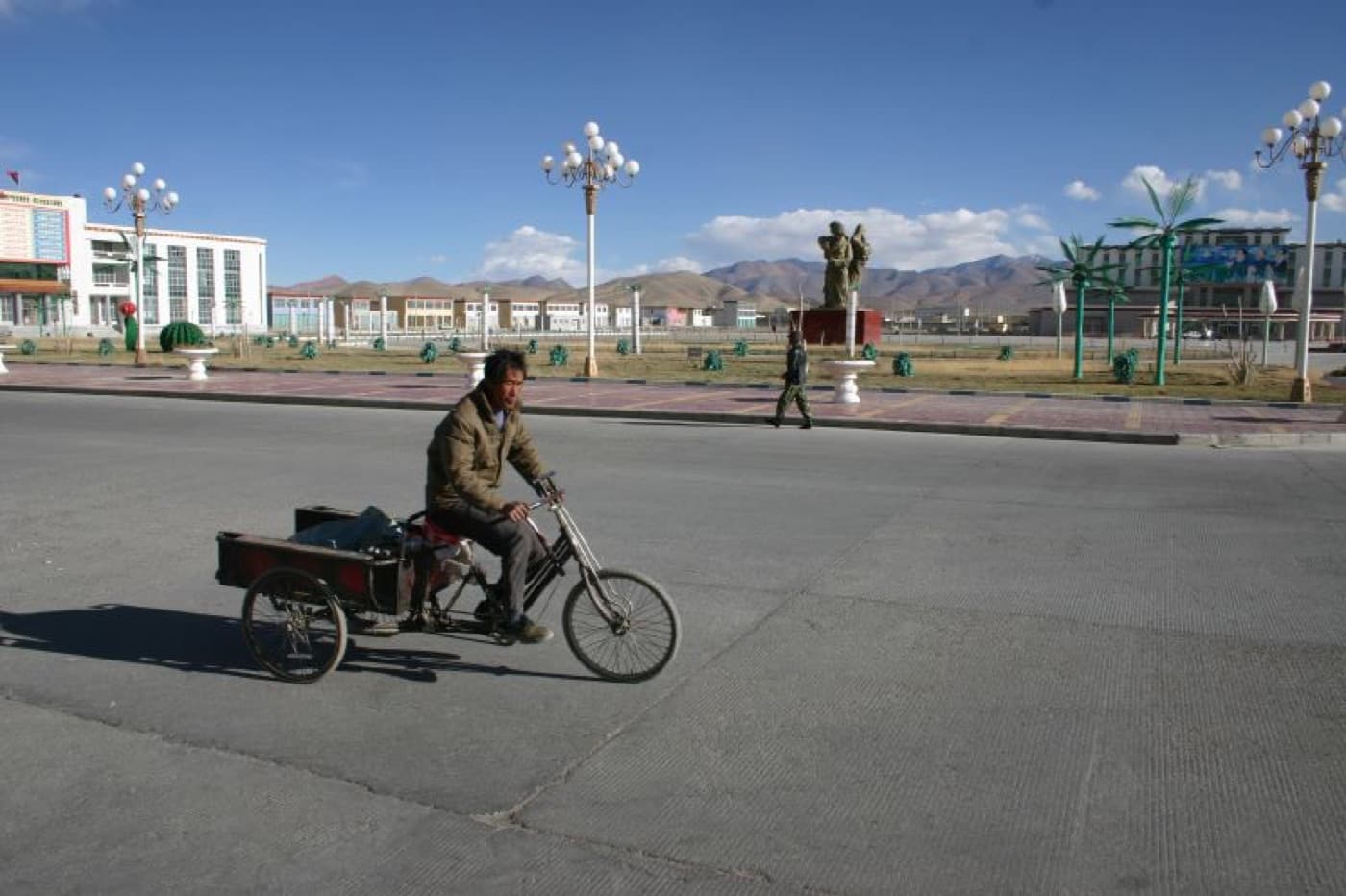
Walking along the main street of Shiquanhe Town gives a distinctly exotic feeling. The town takes its name from a bend of the Shiquanhe River, an upper tributary of the Indus, and today it is the administrative seat of Ngari (Ali) Prefecture. To someone from a big city, it may seem like nothing more than a small town ringed by mountains. But beneath the pure blue sky, where clouds and peaks seem within arm's reach, the whole town has an unhurried, laid-back feel.
1–2 hours
Pangong Tso
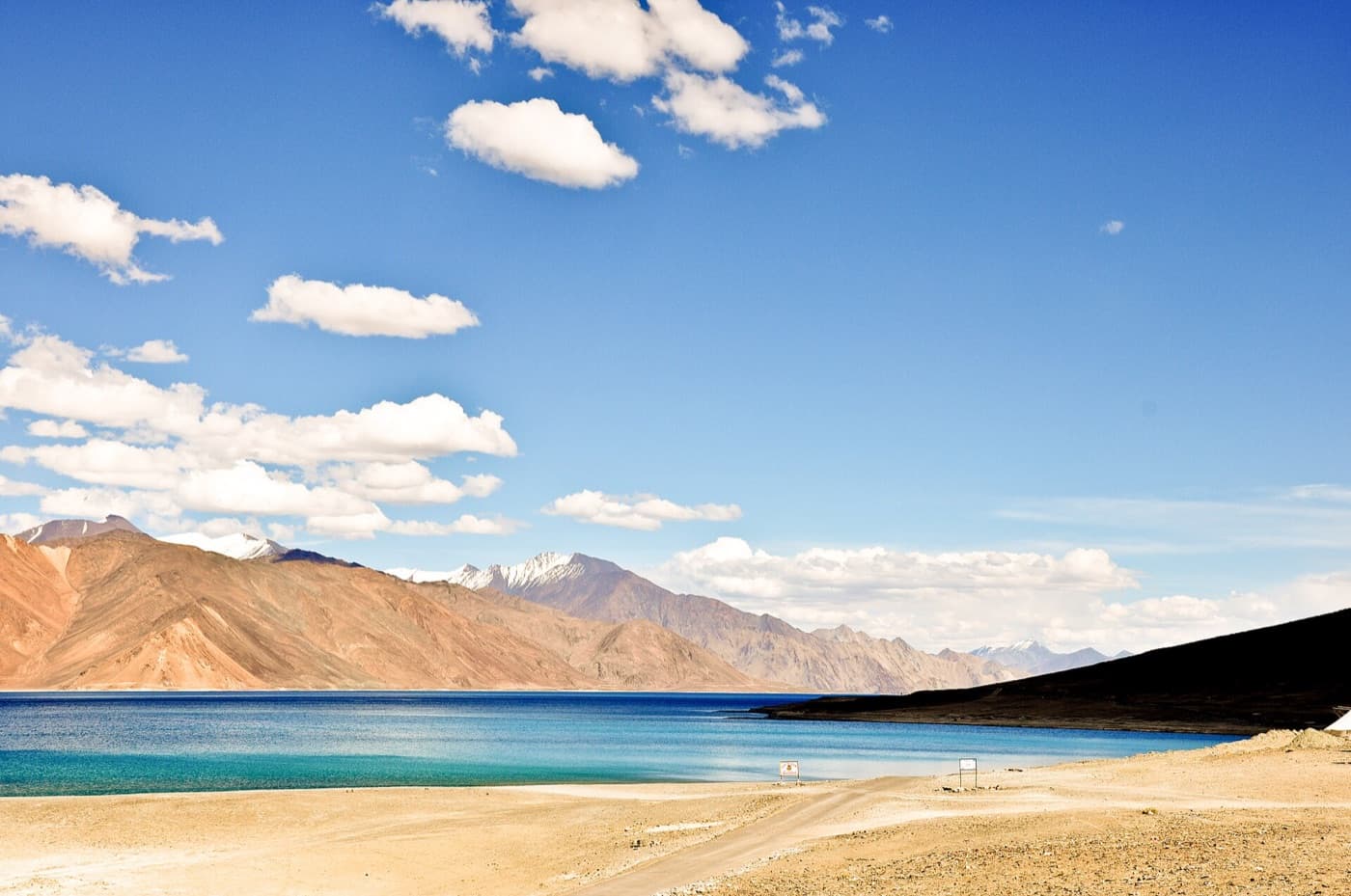
In Tibetan the lake is called "Tso Mo Ngar Rinpoche," meaning "Long-Necked Swan." It covers 604 square kilometers and is 150 kilometers long, but its average width is only 25 kilometers, and at its narrowest point it is just 5 meters across. The lake teems with fish and waterbirds, and every summer tens of thousands of Mediterranean black-headed gulls come here to breed. You can rent a boat to explore the lake, or visit Bird Island to see clusters of nests and eggs and watch gulls and bar-headed geese. Pangong Tso lies partly in Ngari, China, and partly flows into India. It is a long, narrow lake. Interestingly, although it is one lake, the water on the Chinese side is fresh, while the water on the Indian side is salty, bitter and undrinkable, and no fish live there.
1–2 hours
Tholing Monastery
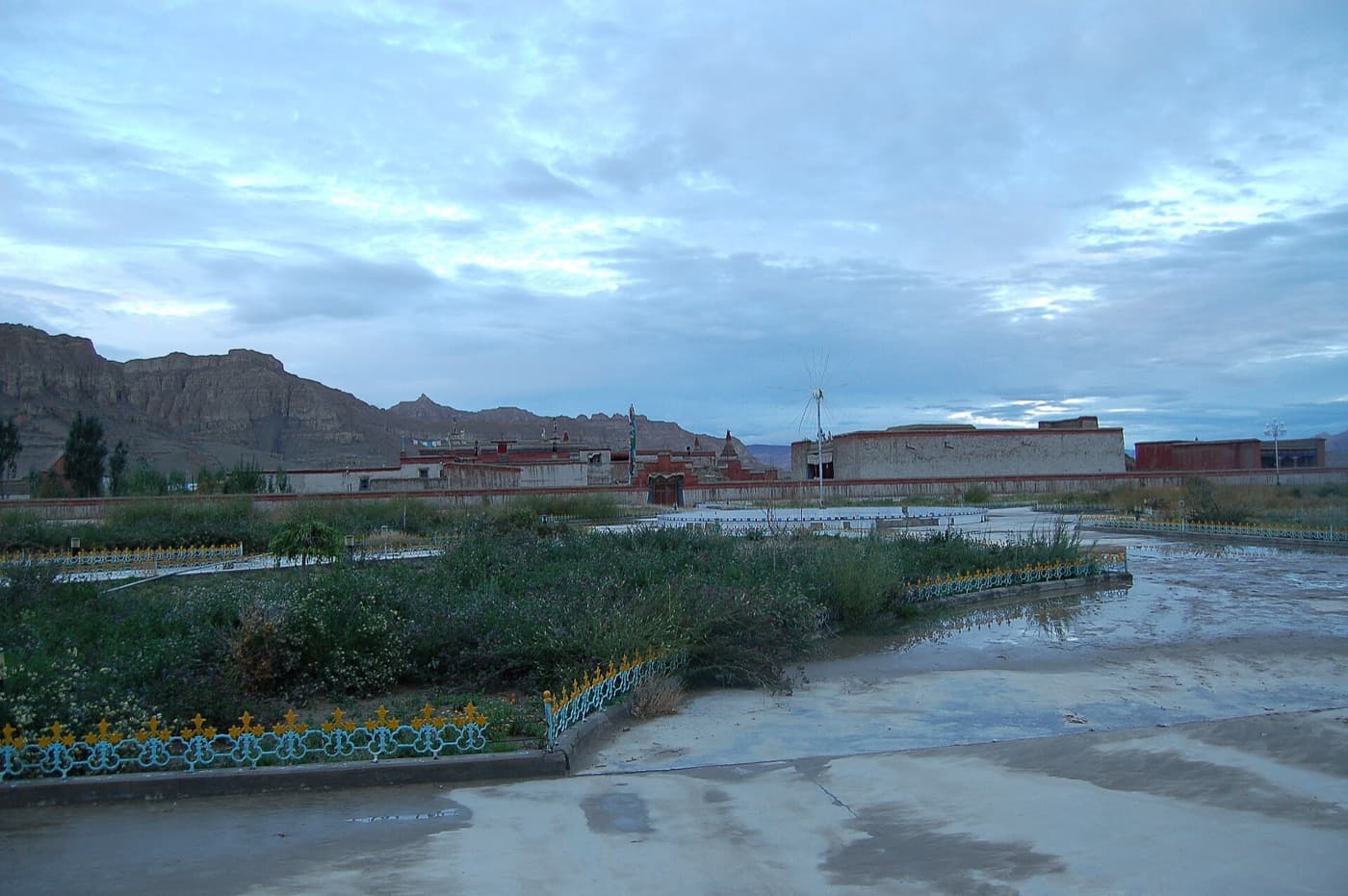
Tholing Monastery sits north of Zanda County, beside the Sutlej River (象泉河). It was built in the early 11th century by Yeshe-od, a king of Guge. Thanks to the vigorous promotion of Buddhism by the Guge Kingdom, Tholing Monastery gradually became the Buddhist centre of its time, and its scale and layout were modelled on Samye Monastery in Central Tibet. Over the centuries, despite repeated natural and human-caused damage, Tholing still has halls standing in rows and stupas rising high.
¥50 · 1 hour