Mila Mountain
At 5,103 m, Mila Mountain is known in Tibetan as Jiagezong, meaning 'Mountain of the Divine People'. It lies on the essential route into Tibet along the Sichuan-Tibet Highway (川藏线) and is well worth…
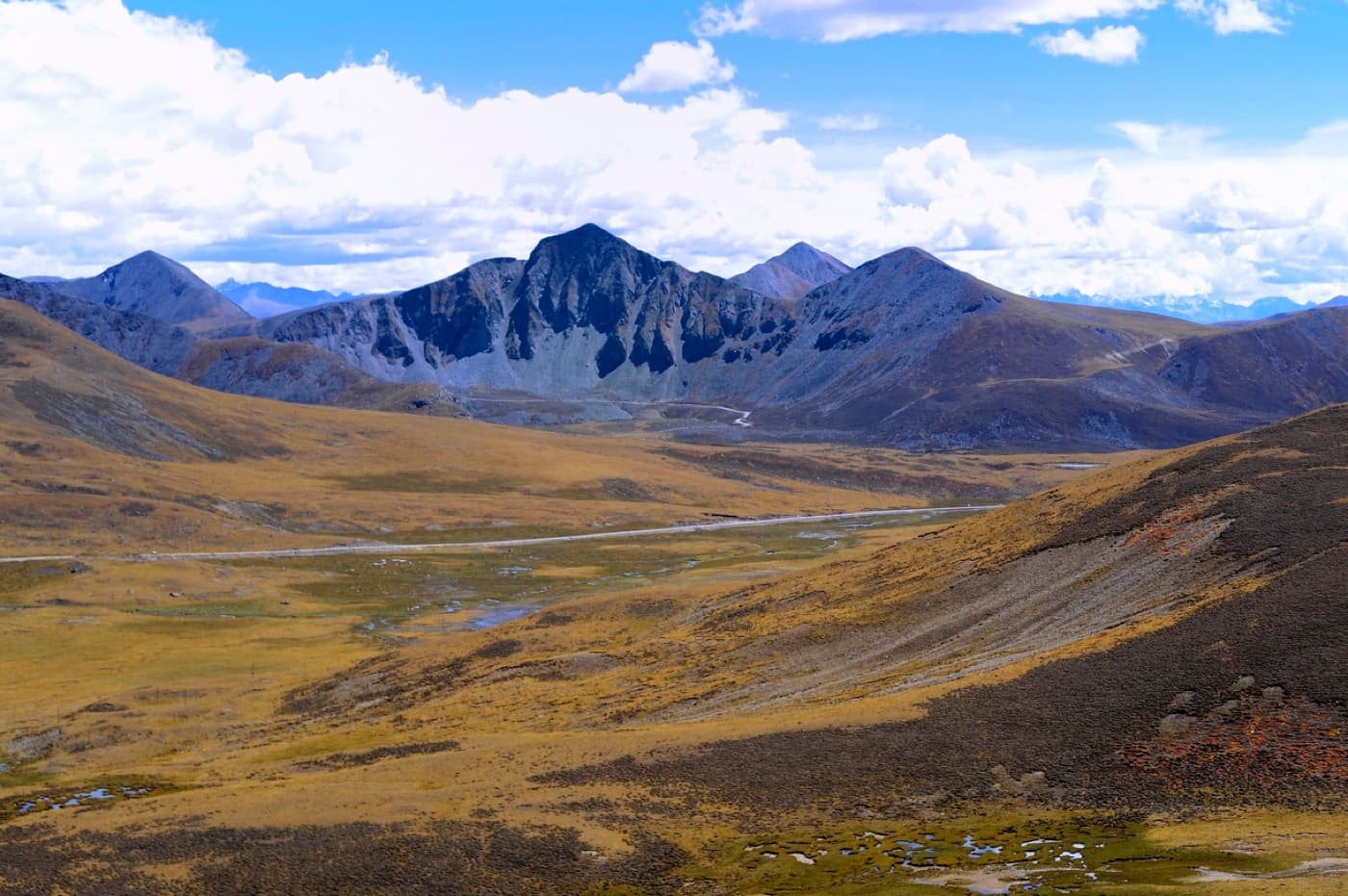
Mila Mountain, Lhasa · reurinkjan from Netherlands · CC BY 2.0 · Wikimedia Commons
Key facts
- Time needed
- 1–3 hours
- Getting there
- On the road from Nyingchi to Lhasa, follow National Highway 318 to reach it.
- Guidebook rating
- 3 / 5
From China Self Guided Travel 2025, page 550. Open in Google Maps
About Mila Mountain
At 5,103 m, Mila Mountain is known in Tibetan as Jiagezong, meaning 'Mountain of the Divine People'. It lies on the essential route into Tibet along the Sichuan-Tibet Highway (川藏线) and is well worth a stop. Three iconic bronze oxen and colourful prayer flags fluttering between earth and sky lend the place a sense of sanctity.
Frequently asked questions
How do I get to Mila Mountain?
On the road from Nyingchi to Lhasa, follow National Highway 318 to reach it.
How long should I spend at Mila Mountain?
Plan on 1–3 hours for Mila Mountain.
Where is Mila Mountain?
Mila Mountain is in Lhasa, Tibet Autonomous Region, in the Southwest of China.
More places in Lhasa

Namtso Lake
For many people who have been to Namtso, it is one of the most majestic places they have ever seen. If you can visit only three places in Tibet, travellers who have been there recommend Namtso, the Himalayas and Mount Kailash (Kangrinboqe). Namtso is China's second-largest saltwater lake after Qinghai Lake, and it is the highest saltwater lake in the world. Five islets dot the lake, and the massive Tashi Peninsula is visible from far away. On Tashi Island, two small hills rise. If you climb to the summit of the taller one, you will see a huge pile of mani stones and prayer banners, along with a line of small mani stone piles stretching for hundreds of metres. This is the highest point of Namtso, with the vast lake spreading out around you like a sea. Along the shore stand snow-capped mountains, and on clear days you can see the main peak of the Nyainqêntanglha Range.
¥145 in low season (entry ticket + sightseeing shuttle); ¥210 in peak season (entry ticket + sightseeing shuttle) · 1–2 days

Jokhang Temple
The Jokhang Temple holds a supreme position in Tibetan Buddhism and is the highest-ranking temple of the Gelug (Yellow Hat) school. In 643 CE, the 18-year-old Princess Wencheng arrived in Lhasa carrying a life-size statue of Shakyamuni at age 12. It is said to have been modelled on Shakyamuni himself and consecrated by him personally, which makes it the most precious. To house the statue, Songtsen Gampo built Ramoche Temple for Princess Wencheng, and built the Jokhang for the Nepalese Princess Bhrikuti, who had married him earlier. In the time of Princess Jincheng, the statue was moved to the Jokhang, and the temple was then continually expanded until it reached its present scale.
¥85 · 1–2 hours

Potala Palace
A treasure house: you may never see as many treasures in your lifetime as you will here, and seeing them up close is dazzling. The Potala Palace stands on Marburi Hill (玛布日山) in the centre of Lhasa and is the largest and most complete palace complex in Tibet. 'Potala' is Sanskrit for 'Sacred Place of Avalokiteśvara'. In the 7th century, the Tubo king Songtsen Gampo built a palace here when he married Princess Wencheng of the Tang dynasty; it was later destroyed in wars. It was rebuilt in the mid-17th century. It covers 130,000 square metres and was the political centre of the former Tibetan region. The whole complex is built of wood and stone, with gilded roofs. The Potala Palace was the venue for large-scale religious and political ceremonies. The 7th floor at the top was the Dalai Lama's winter residence; because it receives abundant sunlight, it is known as the East and West Sunlight Halls. The Red Palace houses mainly the stupa tombs and chapels of successive Dalai Lamas, with eight stupa tombs in total, distributed among the halls on different floors. The largest is the stupa of the 5th Dalai Lama, 14.85 metres tall and inlaid with diamonds and agate. Its topmost gem, a heavenly bead (tianzhu), is said to be the most precious in the world. There is also a gem said to have formed in an elephant's brain, and the gold used alone amounted to 5,500 kilograms. This hall is the largest in the Potala Palace, covering 725 square metres.
¥200 (peak season, May–October); ¥100 (off-season, November–April). The Snow City and Treasure Hall at the foot of the mountain can be visited free of charge; the Golden Roof is not open to visitors. · 3–4 hours
Yangbajain
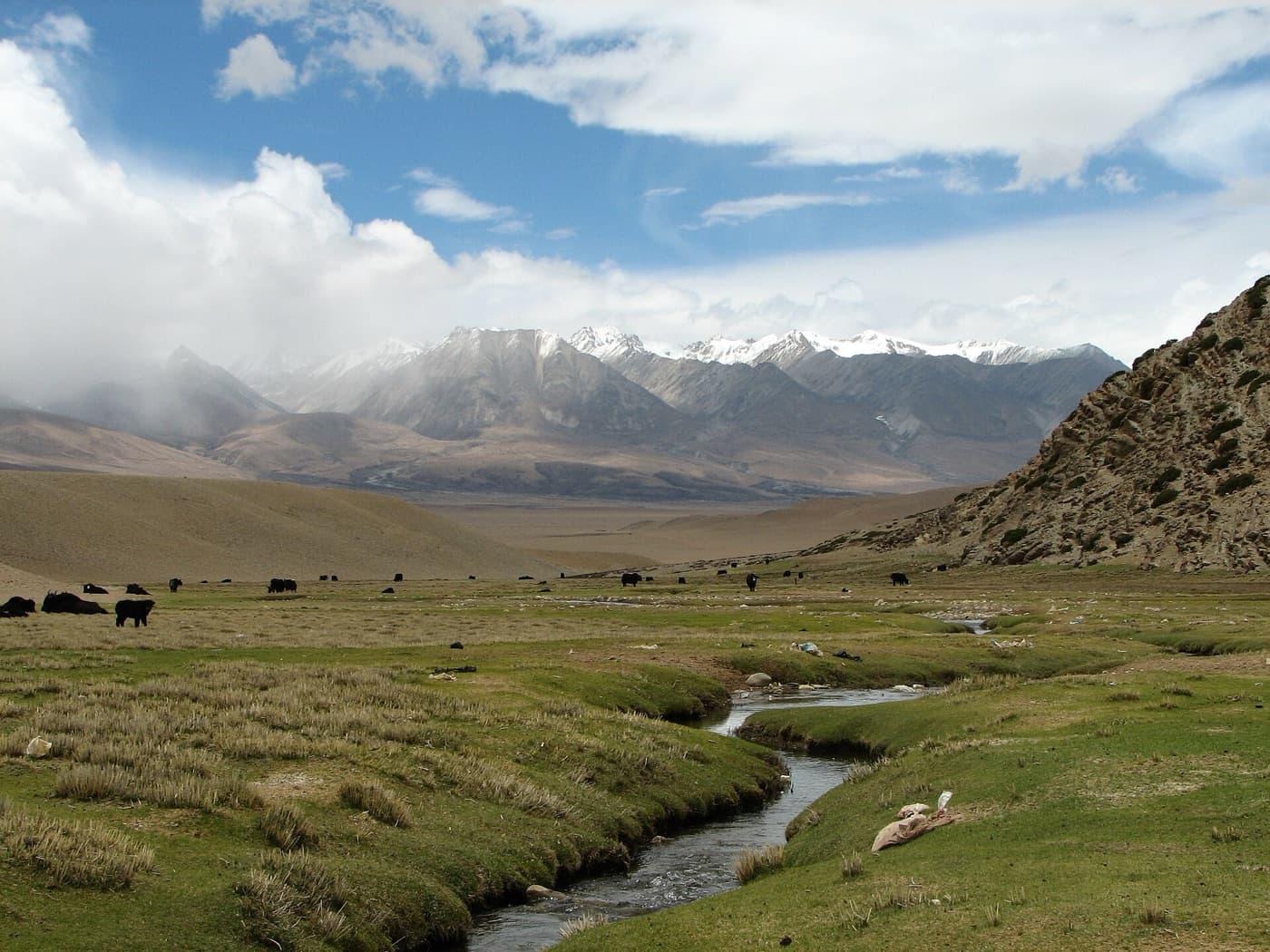
The Yangbajain geothermal field covers more than 7,000 square metres, and its water temperature stays at around 47°C. Most of the hot springs here contain hydrogen sulphide, which is said to help treat a range of chronic illnesses. Bathing takes place in an open-air swimming pool, with snow-capped mountains visible in the distance. Yangbajain is at its most beautiful at dawn, when huge clouds of steam rise from the geothermal fields over the water and white mist drifts across the scene like a fairyland.
Peak season ¥198 (1 May–14 October); off-season ¥128 (15 October–30 April). Bring your own swimsuit. · 4–5 hours
Tsurphu Monastery
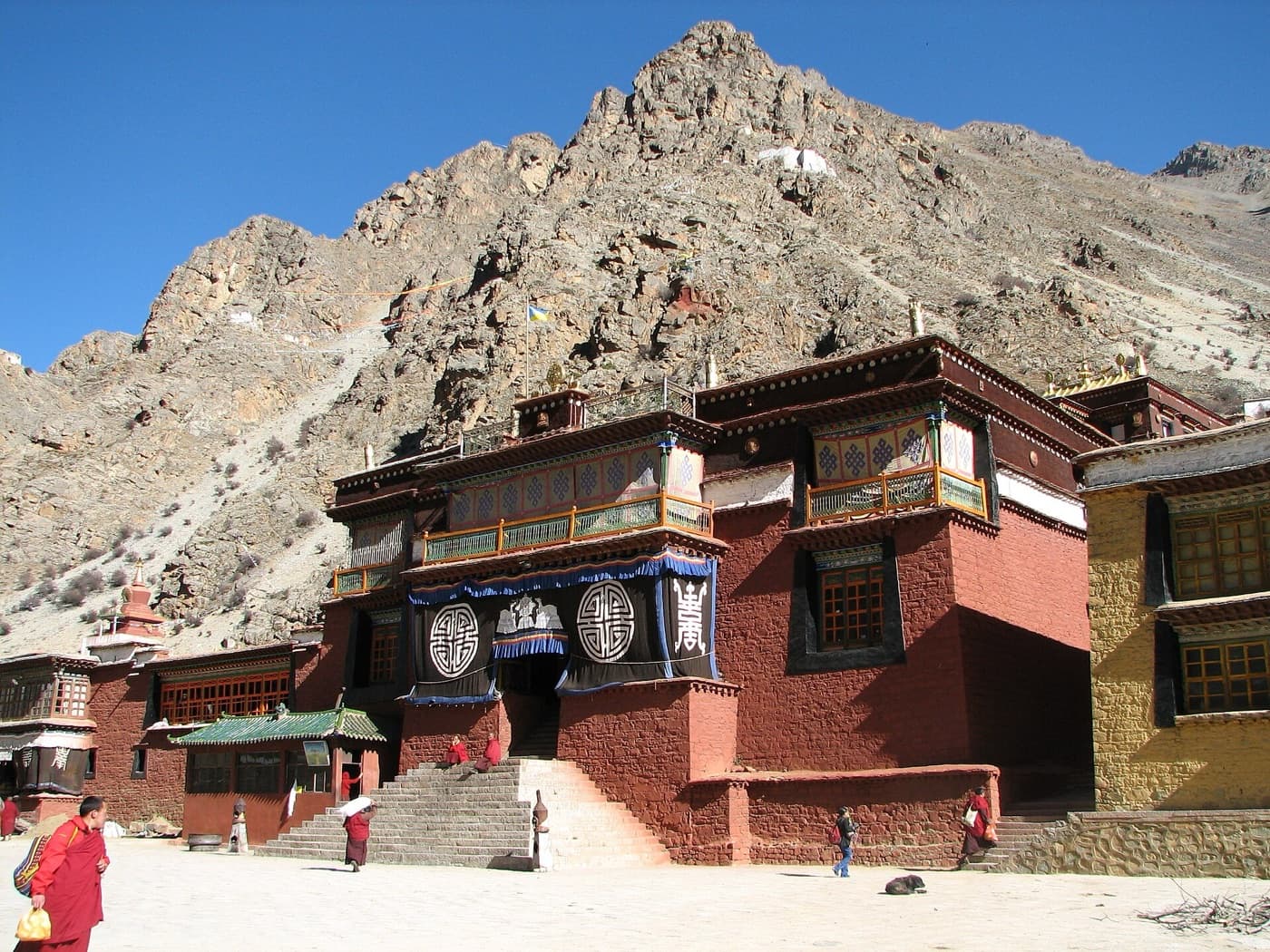
Tsurphu Monastery lies 60 km west of Lhasa, on the upper reaches of the Tsurphu River. It is also known as Cuobu Temple (磋卜寺). At an altitude of 4,300 m, it was founded in 1187 by Düsum Khyenpa, a disciple of the Karma Kagyu master Tabu Lhaje. It was rebuilt after the Cultural Revolution and is the main monastery of the Karma Kagyu school of Tibetan Buddhism in Tibet, belonging to the White Sect (Kagyu). Every year on 30 May, Tsurphu Monastery holds its annual ceremony to unveil a giant embroidered thangka of Shakyamuni Buddha.
¥35
Drigung Til Monastery
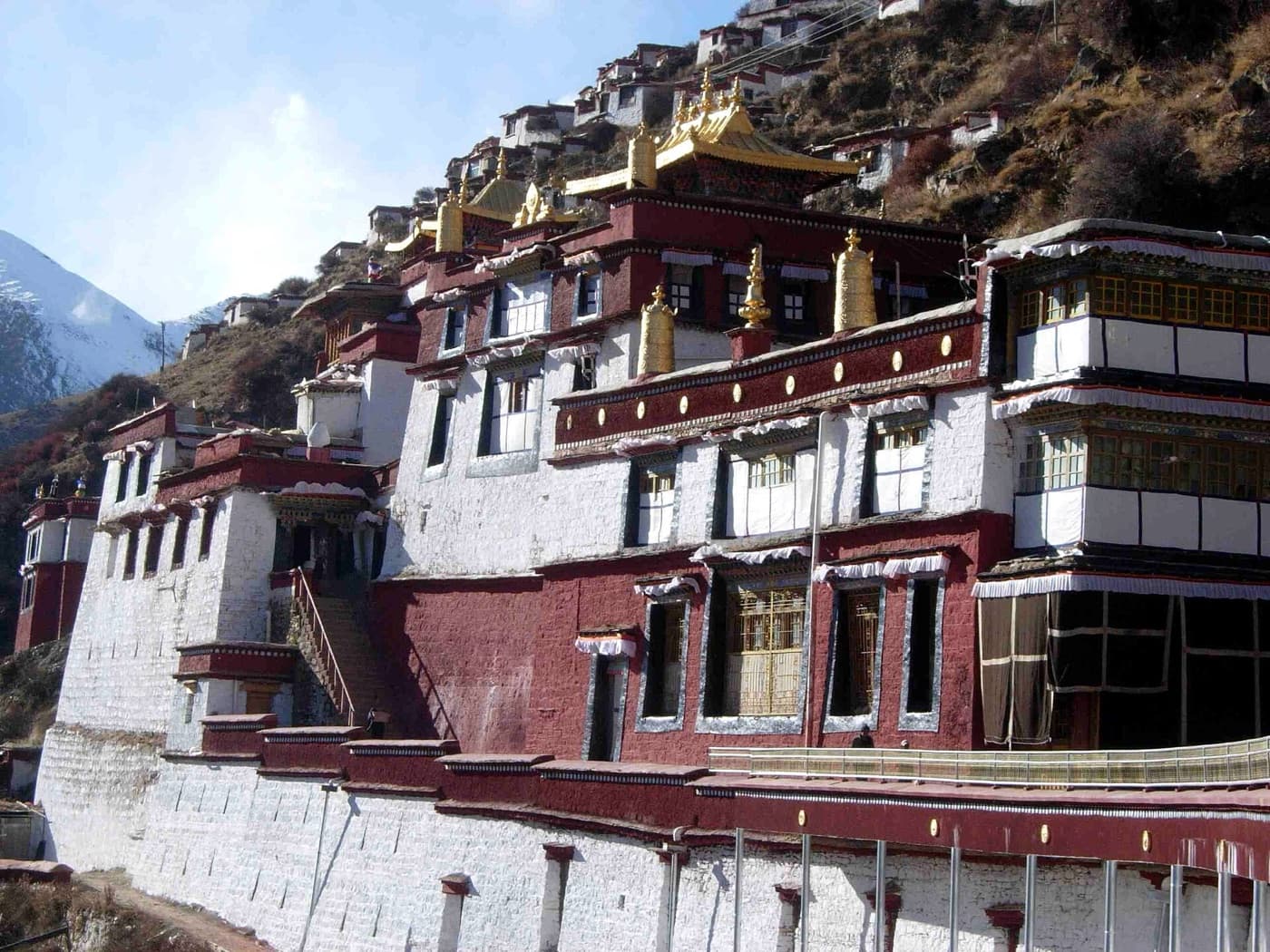
Built in 1179 by Rinchen Pel, the monastery stands between sheer cliffs and is very spectacular. Its main sights include the assembly hall, the stupa hall, the library, the mandala hall, the hall of protector deities, meditation and esoteric training rooms, and Tashi Gomang Hall.
¥30 · 2–3 hours