Maijishan Grottoes
The Maiji Mountain Grottoes were first carved during the Later Qin of the Sixteen Kingdoms period and were repaired and expanded by successive dynasties. There are 194 caves,…

Maijishan Grottoes, Eastern Gansu · AI illustration for China Trip
Key facts
- Admission
- ¥80; tickets for special-protection caves ¥100–180
- Time needed
- 2–3 hours
- Getting there
- Take a city bus within Tianshui and get off at Maijishan (麦积山) bus stop.
- Guidebook rating
- 5 / 5
From China Self Guided Travel 2025, page 775. Open in Google Maps
About Maijishan Grottoes
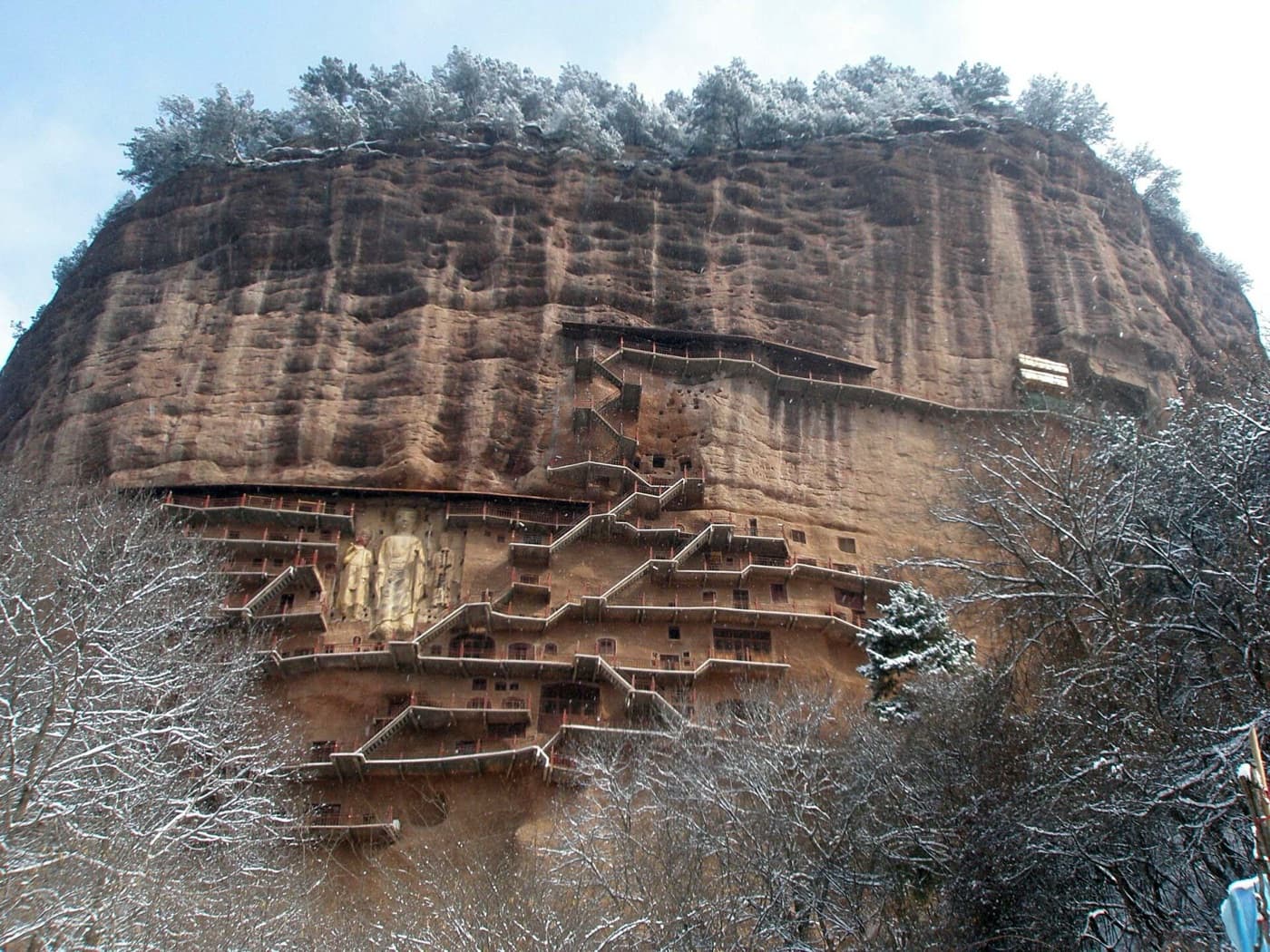
The Maiji Mountain Grottoes were first carved during the Later Qin of the Sixteen Kingdoms period and were repaired and expanded by successive dynasties. There are 194 caves, more than 7,000 clay and stone sculptures, and over 1,300 square metres of murals.
The caves are concentrated on cliffs 20–80 metres above the valley floor and linked by plank walkways. Because of the damp climate, few murals have survived, but the sculptures rival those of the Mogao Caves. Caves are also found at Xianren Cliff, Stone Gate and Qu Xi scenic areas, though these are mainly known for their natural scenery.
Tips from the guidebook
- Photography is generally not permitted inside the caves. To protect the relics, do not use flash even where photography is allowed.
Frequently asked questions
How much does Maijishan Grottoes cost?
Admission to Maijishan Grottoes is ¥80; tickets for special-protection caves ¥100–180, as listed in the 2025 guidebook. Prices can change; check the official channel before you go.
How do I get to Maijishan Grottoes?
Take a city bus within Tianshui and get off at Maijishan (麦积山) bus stop.
How long should I spend at Maijishan Grottoes?
Plan on 2–3 hours for Maijishan Grottoes.
Where is Maijishan Grottoes?
Maijishan Grottoes is in Eastern Gansu, Gansu Province, in the Northwest of China.
More places in Eastern Gansu
Tianshui Fuxi Temple Scenic Area
First built in the Yuan dynasty, this large temple complex is laid out across three courtyards on Guanfu West Road. It features ancient cypress trees and old residences, and the statue of Fuxi in the main hall was re-sculpted in recent years. Every year on the 16th day of the fifth lunar month, the Fuxi Festival is held here.
¥20 · 2–3 hours
Wushan Water Curtain Cave, Tianshui
Water trickles down the cave year-round, and on rainy days water cascades from the eaves like a curtain, which gives the cave its name. The complex includes Lashao Temple, the Thousand Buddha Caves, Xiansheng Pool and the Water Curtain Cave. It is the second most important grotto complex after the Maiji Mountain Grottoes. The scenic area is home to the Lashao Temple Buddha, an open-air cliff relief said to be the largest of its kind in Asia. More than a hundred statues from successive dynasties and over 2,000 square metres of murals survive here, making it well worth a visit.
Admission ¥30; sightseeing shuttle round trip ¥10 · 1–3 hours
Kongtong Mountain
Kongtong Mountain, one of the Twelve Immortal Mountains of Taoism, lies on the eastern foot of the Liupan Mountains, 15 km southwest of Pingliang. Thirty-odd pavilions and temples stand on the summit, divided into five platforms: east, west, south, north and central. Kongtong Reservoir lies at the foot of the mountain. From the peak, the Loess Plateau stretches out below, while pines and cypresses frame the temples and towers, and incense smoke and mist drift through the air. Emperors Qin Shi Huang and Han Wudi both climbed Kongtong Mountain to seek the wisdom of immortals, following the example of the Yellow Emperor.
Peak season ¥110; off-season ¥55 · 0.5–1 day
Yunya Temple Scenic Area
Yunya Temple sits among steep, dramatic peaks that vie for attention, known as the "Four Platforms and Sixteen Peaks." Below lies Zhulin Temple Reservoir, its calm waters mirroring the sky. Sunlight, water, clouds and peaks reflect and complement one another. The Yunya Temple Grottoes, carved into the sheer cliffs of the main peak, are known as the "culmination of late Chinese cave art," and hold significant historical and artistic value for the study of late Chinese grottoes and Buddhist art.
¥55 · 0.5 day
Xianren Cliff
Located 15 km from the Maiji Mountain Grottoes, Xianren Cliff is a scenic spot where Buddhism, Taoism and Confucianism coexist. It comprises three cliffs, five peaks and six temples. The three cliffs are East, West and South. The five peaks are Jade Emperor, Canopy, Pearl Offering, East Cliff and West Cliff. The six temples are Muglian, Stone Lotus, Iron Lotus, Flower Lotus, Water Lotus and Lingying. Majestic mountains, clear waters, lush trees and scattered wildflowers complement one another, making you feel as if you have stepped into a fairyland.
¥40 · 1–3 hours
Yuquan Taoist Temple Scenic Area
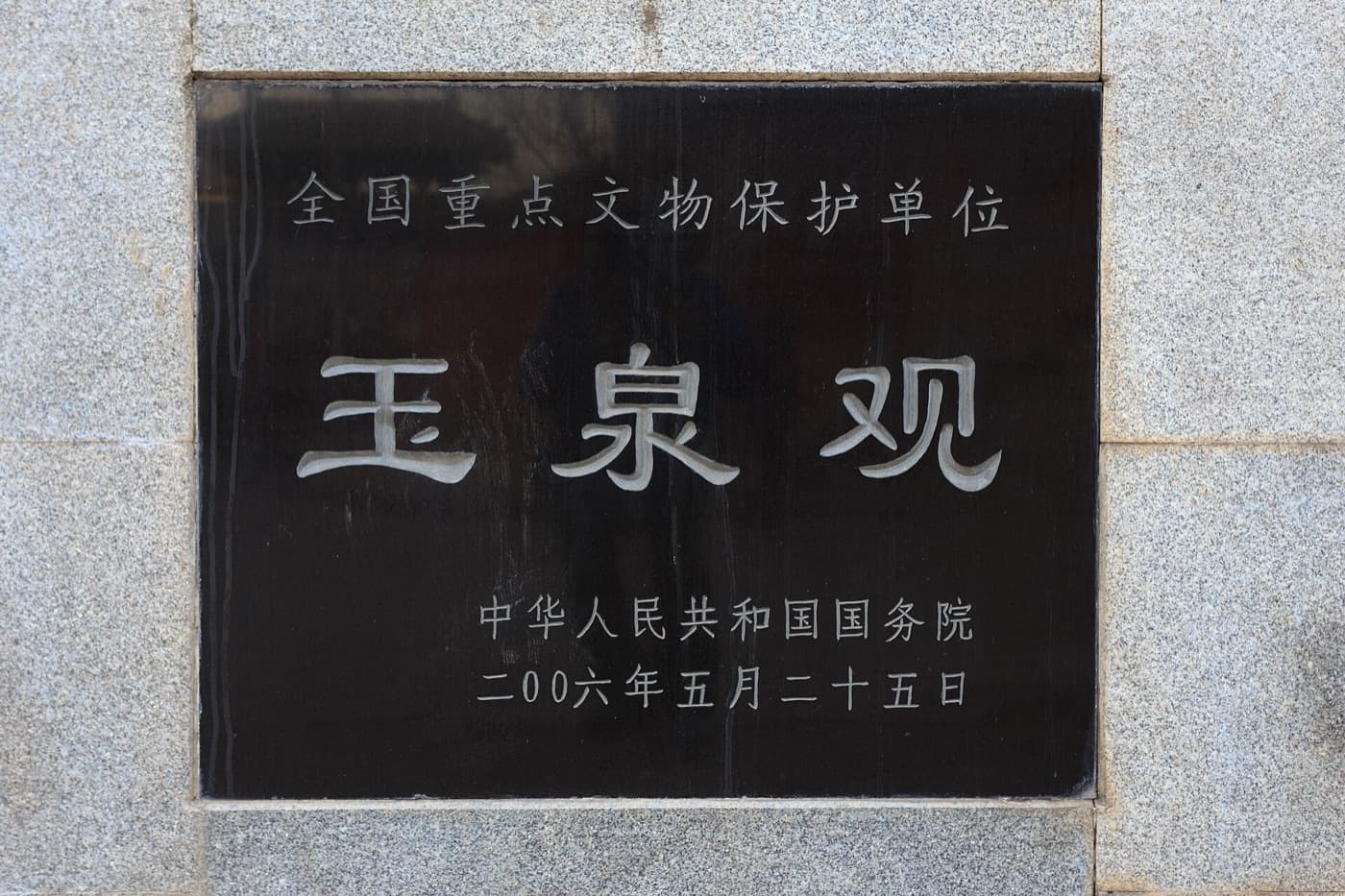
Built in 1299, this is the Taoist sacred site of Tianshui. It sits at the foot of Tianjing Mountain, north of the city centre, and takes its name from a clear spring (Yuquan, "Jade Spring") on the mountain. Every year on the 9th day of the first lunar month, the temple fair known locally as "Chaoguan" (Pilgrimage to the Temple) takes place.
¥20 · 1–3 hours