Laoniuwan on the Yellow River, Pianguan
The Yellow River enters Shanxi here, the Great Wall converges here, and the Shanxi-Shaanxi-Inner Mongolia Grand Canyon begins here, showcasing the rugged landscape of the Loess Plateau.…
Laoniuwan on the Yellow River, Pianguan, Datong
Key facts
- Admission
- ¥96
- Time needed
- 3–4 hours
- Getting there
- To reach the Laoniuwan area, first go to Shuozhou (朔州). From Datong, take a train, which takes about two hours to reach Shuozhou. From Shuozhou Long-Distance Bus Station, there are buses to Pianguan, though not many. Villagers at Laoniuwan can provide simple meals. Pianguan is known for its donkey meat and buckwheat noodles (liangmian), and its suanfan (sour rice) is distinctive. It may not suit everyone’s taste, but it is worth a try.
- Guidebook rating
- 4 / 5
From China Self Guided Travel 2025, page 1849. Open in Google Maps
About Laoniuwan on the Yellow River, Pianguan
The Yellow River enters Shanxi here, the Great Wall converges here, and the Shanxi-Shaanxi-Inner Mongolia Grand Canyon begins here, showcasing the rugged landscape of the Loess Plateau. This is where the Great Wall and the Yellow River meet, and it is one of China’s ten most beautiful canyons. The Laoniuwan scenic area consists of three bends and one valley: Baozi Tower Bend, Laoniuwan, Sizuo Tower Bend, and the small Yangjiachuan Gorge. On the cliff beside the Laoniuwan Fortress, right by the Yellow River, stands a hollow brick enemy tower that remains in excellent condition. Perched on the cliff and overlooking the river, it is one of Pianguan’s most celebrated scenic spots.
Frequently asked questions
How much does Laoniuwan on the Yellow River, Pianguan cost?
Admission to Laoniuwan on the Yellow River, Pianguan is ¥96, as listed in the 2025 guidebook. Prices can change; check the official channel before you go.
How do I get to Laoniuwan on the Yellow River, Pianguan?
To reach the Laoniuwan area, first go to Shuozhou (朔州). From Datong, take a train, which takes about two hours to reach Shuozhou. From Shuozhou Long-Distance Bus Station, there are buses to Pianguan, though not many. Villagers at Laoniuwan can provide simple meals. Pianguan is known for its donkey meat and buckwheat noodles (liangmian), and its suanfan (sour rice) is distinctive. It may not suit everyone’s taste, but it is worth a try.
How long should I spend at Laoniuwan on the Yellow River, Pianguan?
Plan on 3–4 hours for Laoniuwan on the Yellow River, Pianguan.
Where is Laoniuwan on the Yellow River, Pianguan?
Laoniuwan on the Yellow River, Pianguan is in Datong, Shanxi Province, in the North China of China.
More places in Datong

Yungang Grottoes
One of China’s Four Great Grottoes, Yungang was first carved during the Northern Wei dynasty. Its 45 caves contain more than 50,000 statues, most of which were completed before the Northern Wei capital moved to Luoyang. The outdoor Great Buddha (a seated Shakyamuni) in front of Cave 20, about 14 metres tall, is the most representative work at Yungang. Unfortunately, pollution around the grottoes is severe, and many statues are covered in coal ash. Key caves at Yungang include Cave 3, the largest; Cave 5, which houses the largest statue; Cave 6, which is highly representative; Cave 15, the Cave of Ten Thousand Buddhas; Caves 16–19, the earliest carved; and the aforementioned Cave 20.
¥120 (April–October); ¥100 (November–March) · 4–5 hours
Yingxian Wooden Pagoda
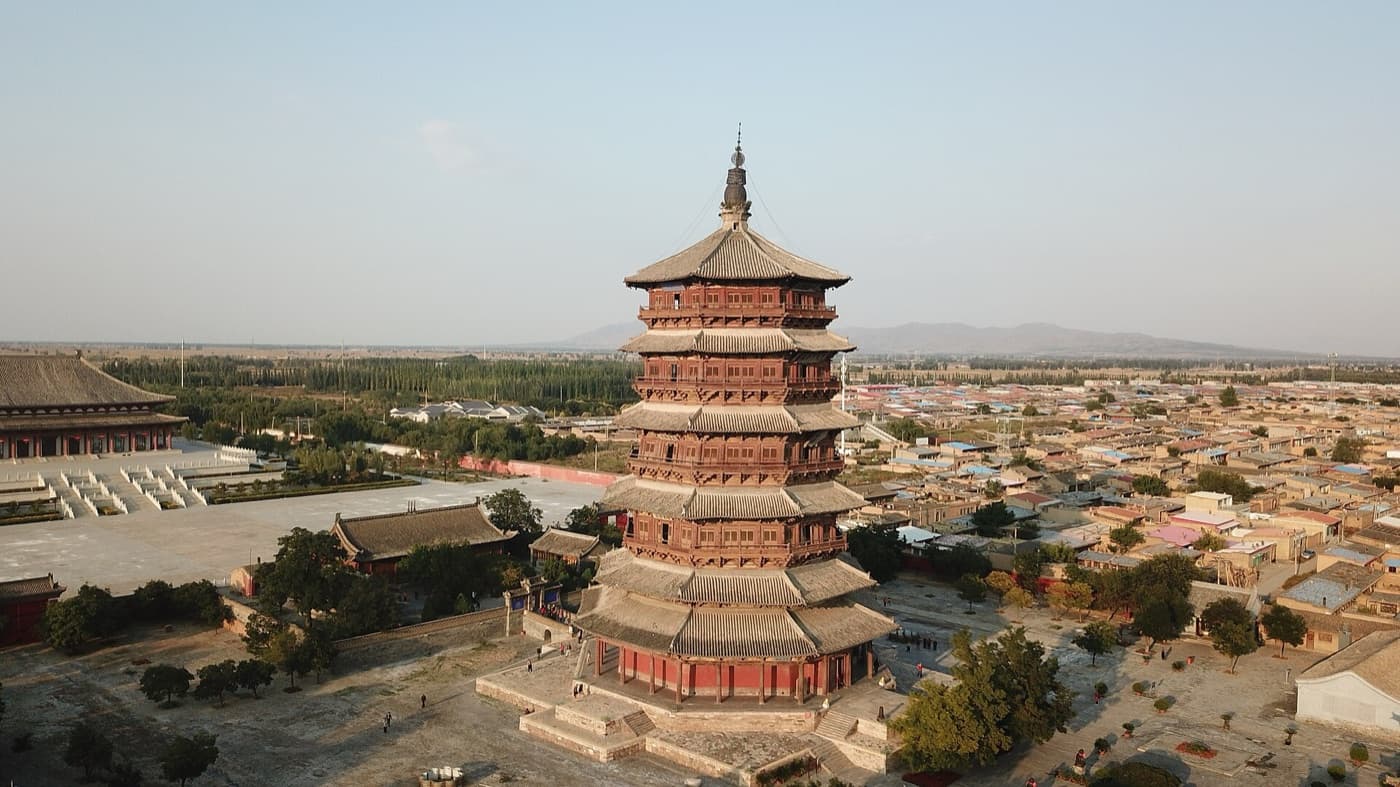
Among China’s surviving ancient pagodas, the Yingxian Wooden Pagoda is unmatched in size and is a treasure of ancient architecture in China and the world. This octagonal pagoda appears to have five storeys and six eaves, but each level contains a concealed mezzanine, so there are five visible storeys and four hidden ones, making nine in total. Notably, the pagoda houses two relics revered by Buddhists: the Buddha’s tooth relics (sarira). They are enshrined in two silver reliquaries decorated with the seven treasures, and have been verified as genuine remains of Shakyamuni’s tooth.
¥50 · 1–2 hours
Datong Earth Forest
Not as large as the Yuanmou Earth Forest in Yunnan, but the peculiar earth-pillar scenery is still dazzling, like countless masterpieces wrought by divine hands. The earth forest is magnificent and especially well suited to photography enthusiasts.
¥60 · 2–3 hours
Mount Heng
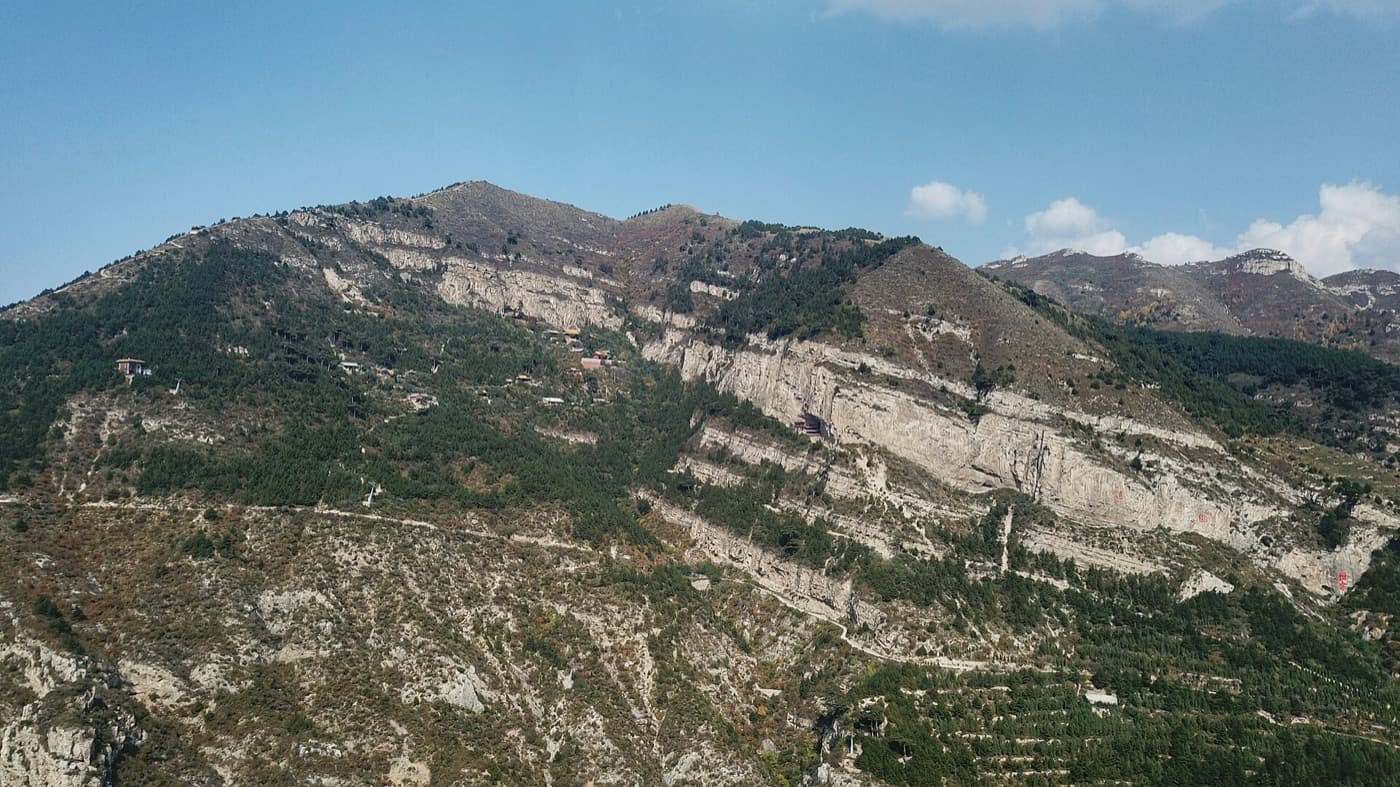
Known as the "Northern Marchmount" (北岳), a name that speaks to the grandeur of its scenery. Beyond its beauty, it is also a birthplace of Taoism; legend has it that the immortal Zhang Guolao (张果老) attained enlightenment through cultivation here. Peach blossoms here bloom for more than 20 days, so spring is the best time to visit.
¥45 · 0.5–1 day
Huayan Temple
During the Liao and Jin dynasties, Huayan Temple was one of China’s most important temples of the Huayan school of Buddhism. After the mid-Ming period, it was divided into an Upper Temple and a Lower Temple, each with its own gate and layout. Although the two are now joined as one complex, each still centres on a main hall. The Upper Temple’s focal point is the Jin-dynasty Great Hall, the largest surviving timber Buddhist hall in China. The Lower Temple centres on the Liao-dynasty Sutra Repository Hall, which preserves Liao-dynasty sculptures, stone sutra pillars, a multi-storey sutra cabinet, and celestial palace pavilions. Its wooden library hall is exquisitely carved. The Lower Temple now houses the Datong Museum.
¥32 · 2–3 hours
Shanhua Temple
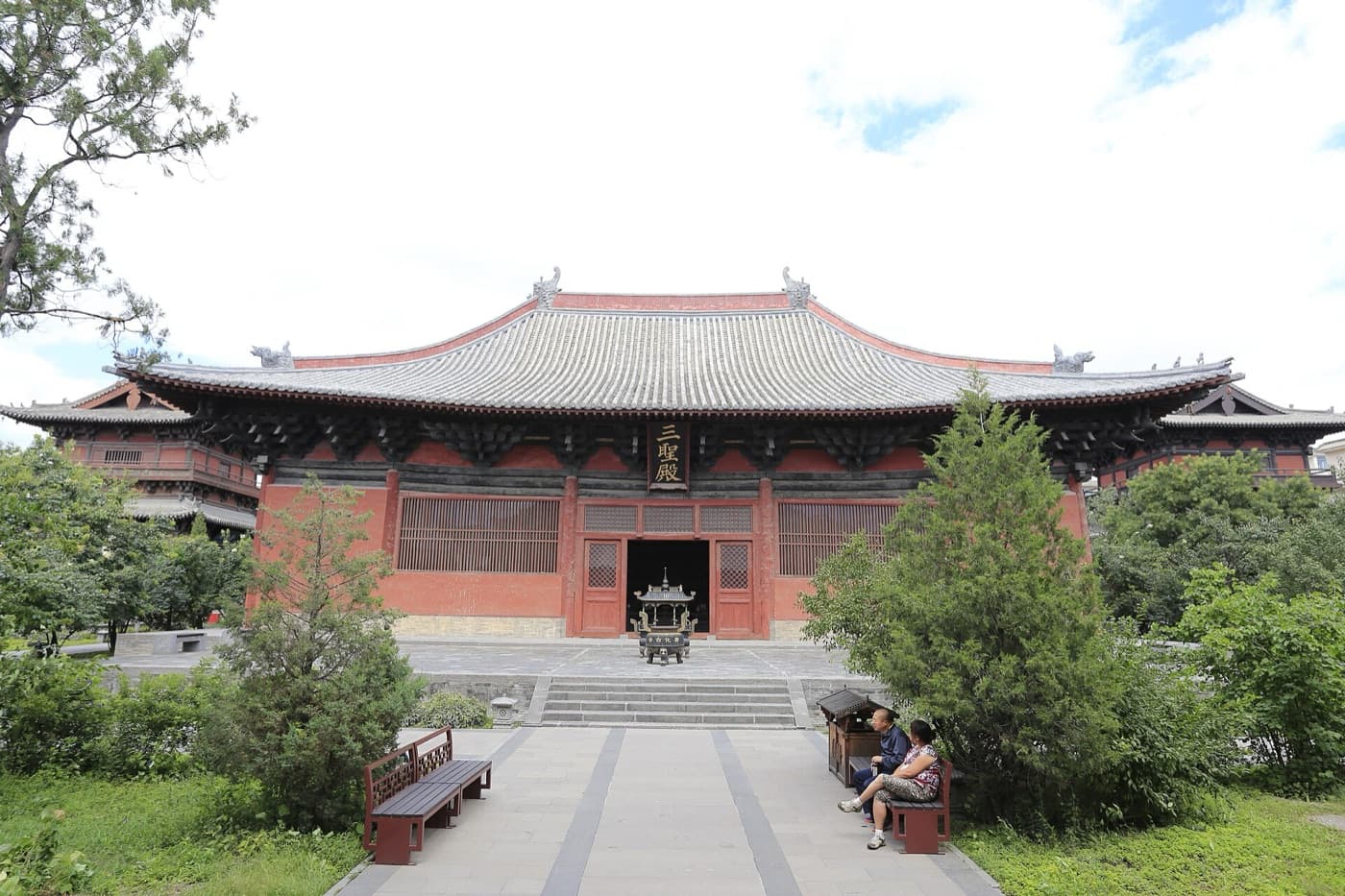
Shanhua Temple, popularly known as the South Temple, is a vast temple complex. Its buildings rise and fall in varying heights, with clear hierarchy, left-right symmetry, and a layout that is China’s most complete and largest surviving temple architecture from the Liao and Jin periods, nearly a thousand years old. The Four Heavenly Kings and the Eighteen Arhats inside the temple are relics of the Liao dynasty. The Five-Dragon Screen Wall here is not on the scale of Datong’s Nine-Dragon Screen Wall, but it is exquisitely crafted and still worth seeing.
Free · 40–60 minutes