Datong travel guide
大同
There was a time when Datong’s streets were lined with mounds of bituminous coal, and one overloaded coal truck after another struggled along the roads. The grey air was thick with a pungent smell.…
10 places · In the guidebook: pages 1840–1852

Datong, Shanxi Province · AI illustration for China Trip
Quick itinerary
Datong in 2 days
- Day 1
- Yungang Grottoes→
- Guanyin Cave→
- Huayan Temple→
- Great Mosque→
- Nine-Dragon Wall
- Day 2
- Datong Earth Forest→
- Hanging Monastery→
- Yingxian Wooden Pagoda
The feel of the place
- Coal Culture
- There was a time when Datong’s streets were lined with mounds of bituminous coal, and one overloaded coal truck after another struggled along the roads. The grey air was thick with a pungent smell. Those scenes are gone now. The city’s air quality has steadily improved, and its greenery is pleasant. Yet Datong, a major coal-mining city, still has deep and countless ties to coal.
- Faded Grandeur
- Once one of the Nine Border Garrisons (九边重镇) of the Ming dynasty, Datong was protected by tall, imposing city walls, including an inner city and a northern outer city. Beyond the city, several garrison forts, the inner and outer Great Walls, and a network of beacon towers formed a tight defensive line that made Datong’s city walls seem impregnable. Times have changed. Today only broken stretches of earthen walls remain, and it is hard to imagine their former grandeur. Only the small Wild Goose Pagoda, still standing in the southeast of the city, quietly recalls the past amid the modern city.
Historic and Cultural City
Datong is one of China’s historic and cultural cities. It was once the capital of the Northern Wei dynasty and a secondary capital during the Liao and Jin dynasties. It has long been a key military stronghold and a place where the Han people and northern ethnic groups frequently interacted in ancient times. The city has a distinctive frontier character, with many scenic and historic sites of considerable number and scale.
Datong Ancient City Walls
Datong’s city walls have a long history and are tall and sturdy. However, due to war, history, nature and human activity, they have suffered considerable damage. Even so, as of the late 1980s, more than 70% of the adobe city wall remained intact.
Tigu Yangge Dance
Also known as “di yangge” (ground yangge) or “tigu zi”, and called “gushi” (story) by the people of Hunyuan County, this is a traditional folk dance that originated in the Song and Yuan dynasties. Its performances fall into “large-scale”, “small-scale” and “street-crossing” forms. The performances are lively and vivid, and the music has a brisk rhythm.
Direct Buses to Scenic Areas
Direct buses run from Datong Long-Distance Bus Station to tourist areas such as the Yungang Grottoes and Mount Heng.
Preparation and Information
Language
Locals can all understand and speak Mandarin, so there are no language difficulties, although they speak with a Shanxi accent.
Climate and Best Time to Visit
Datong has cold winters and cool summers. The annual average temperature is 5.5°C, with a summer high of 37.7°C and a winter low of -20.9°C. Temperature differences are large over the year, and temperatures can change quickly within a single day. The four seasons are clearly defined, and there are big gaps between morning, midday and evening temperatures. The best time to visit is May to October.
Things to see

Yungang Grottoes
4–5 hours · ¥120 (April–October); ¥100 (November–March)
One of China’s Four Great Grottoes, Yungang was first carved during the Northern Wei dynasty. Its 45 caves contain more than 50,000 statues, most of which were completed before the Northern Wei capital moved to Luoyang. The outdoor Great Buddha (a seated Shakyamuni) in front of Cave 20, about 14 metres tall, is the most representative work at Yungang. Unfortunately, pollution around the grottoes is severe, and many statues are covered in coal ash. Key caves at Yungang include Cave 3, the largest; Cave 5, which houses the largest statue; Cave 6, which is highly representative; Cave 15, the Cave of Ten Thousand Buddhas; Caves 16–19, the earliest carved; and the aforementioned Cave 20.
Nine-Dragon Wall
1 hour
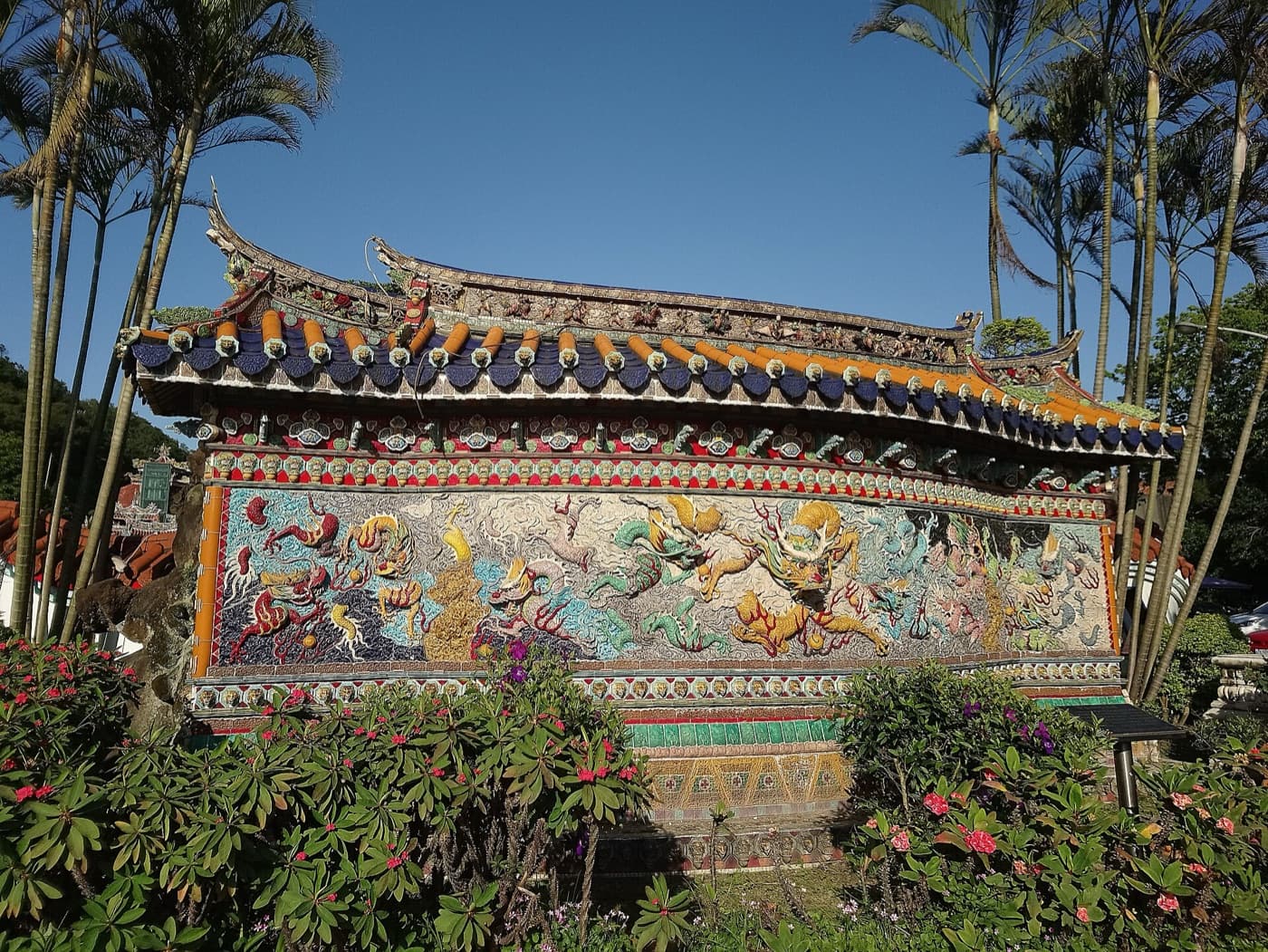
Datong’s Nine-Dragon Screen Wall is the longest of the three surviving “nine-dragon walls” in China. It originally stood in front of the palace of Zhu Gui, Prince of Dai (a son of Zhu Yuanzhang, founder of the Ming dynasty). The central dragon, in particular, showcases the superb carving skills of ancient China and is well worth seeing.
Huayan Temple
During the Liao and Jin dynasties, Huayan Temple was one of China’s most important temples of the Huayan school of Buddhism. After the mid-Ming period, it was divided into an Upper Temple and a Lower Temple, each with its own gate and layout. Although the two are now joined as one complex, each still centres on a main hall. The Upper Temple’s focal point is the Jin-dynasty Great Hall, the largest surviving timber Buddhist hall in China. The Lower Temple centres on the Liao-dynasty Sutra Repository Hall, which preserves Liao-dynasty sculptures, stone sutra pillars, a multi-storey sutra cabinet, and celestial palace pavilions. Its wooden library hall is exquisitely carved. The Lower Temple now houses the Datong Museum.
2–3 hours · ¥32
Great Mosque
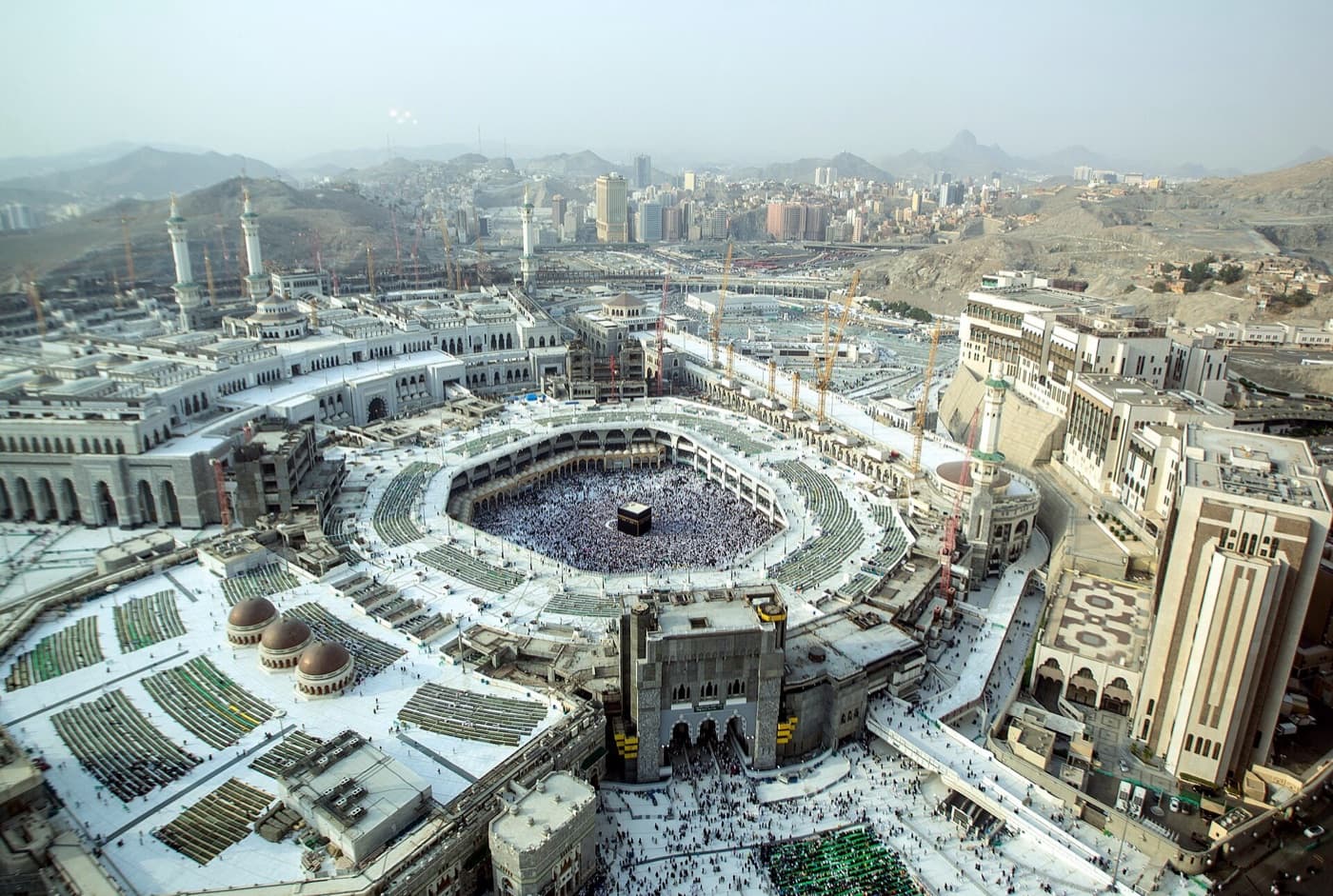
The inscriptions on the entrance plaque of the Datong Great Mosque are carved in Chinese characters, and the overall architecture retains the style of ancient Chinese timber buildings while also showing features of Arab culture. According to the “Imperial Edict Mosque Stele” re-erected in 1742, the mosque was founded in 628, making it nearly 1,400 years old. Most of the surviving structures date from the Qing dynasty.
1–2 hours · ¥12
Datong Volcano Cluster National Geopark
The Western Volcanic Area is the most densely concentrated and spectacular part of the geopark, with volcanic cones that rise up one after another like ghosts from the earth, most of them displaying a sense of majesty and mystery. Take plenty of photos to remember your visit.
2–3 hours · ¥5
Shanhua Temple
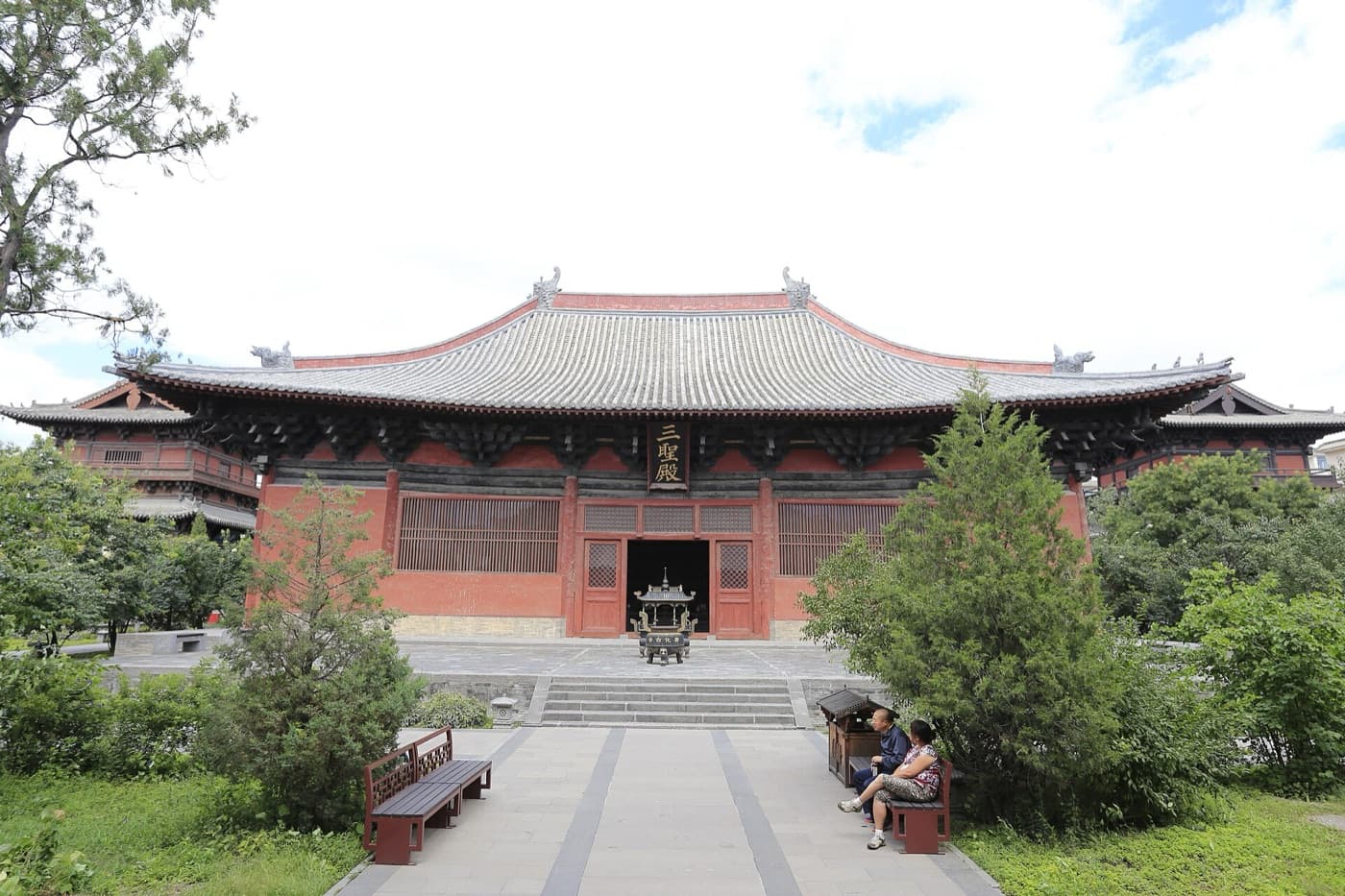
Shanhua Temple, popularly known as the South Temple, is a vast temple complex. Its buildings rise and fall in varying heights, with clear hierarchy, left-right symmetry, and a layout that is China’s most complete and largest surviving temple architecture from the Liao and Jin periods, nearly a thousand years old. The Four Heavenly Kings and the Eighteen Arhats inside the temple are relics of the Liao dynasty. The Five-Dragon Screen Wall here is not on the scale of Datong’s Nine-Dragon Screen Wall, but it is exquisitely crafted and still worth seeing.
40–60 minutes · Free
Getting there & around
Getting There and Around
By Air
The airport is located in Beijiazao Town, Yunzhou District, 15.2 km north of Datong’s city centre. Between the city and the airport you can take a civil aviation shuttle bus or a taxi. The airport shuttle departs from the entrance of Datong Hotel in the city, and the journey from the hotel to the airport takes 25–30 minutes.
By Rail
Datong’s rail network is well developed. The Jingbao, Jingyuan and Dazhang railways have all been upgraded to electrified double tracks. From Datong, trains run to Beijing, Taiyuan, Xi’an, Yinchuan, Shijiazhuang, Baotou, Shenyang and other cities.
By Road
More than ten new trunk highways leading out of the city have been built, including the Dayun, Datang, Dahuai, Dalai, Dayang, Daqing and Dazhang highways.
There are long-distance buses to Taiyuan, Hohhot, Xuanhua, Shuozhou, northern Shaanxi, the county-level districts within the city, Wutai Mountain and Mount Heng.
City Transport
The main roads in Datong's urban area include Daqing Road, Yungang Road, Xinkai North Road, Yingbin Road, the North and South Ring Roads, the Third Ring Road, Gongnong Road, Nanguan Street and more than ten others. Within the city you can take buses or taxis. Over 70 bus routes serve the urban area, and traffic generally flows well. Taxis start at ¥7, plus ¥1.6 per kilometre.
City Transport Fares
Bus fares are ¥1–3. Note that Datong's buses run for shorter hours: service stops at 18:00 (buses to the railway station stop at 21:30). When no buses are running, minibuses (面的) cruise the streets picking up passengers, charging the same fare as the buses.
Airport Information
Air- Phone:
- 0352-5688114
Datong Railway Station Information Desk
Rail- Phone:
- 0352-7122252
Datong Long-Distance Bus Station
Road- Phone:
- 0352-2464510
Eat & drink
Like the rest of Shanxi, Datong's cuisine centres on noodles. They are good quality and inexpensive, and the hand-shaved noodles (刀削面) are the most famous.
Local Snacks
Worth trying: pea noodles, lamb offal soup with noodles, oat noodles, buckwheat gedou (qiao mian gelao), Yanggao apricot kernel strips, Guangling dried tofu, Datong yellow cake, Hunyuan crispy roasted soybeans, Yingzhou beef tenderloin, lamb offal stew and mianma pian.
Dongfang Xiaomian Restaurant (Yingze Street branch)
Specialises in Shanxi hand-shaved noodles. The noodles are wide and thin with a satisfying chew, and the broth is delicious. The decor resembles fast-food chains such as McDonald's, and food arrives quickly.
- Address:
- West side of the western section of Jianshe Li Residential Compound, Yunzhong Road
- Phone:
- 0352-7688890/13613522570
Where to stay
Datong is one of Shanxi's main tourist cities, with hotels of various grades, and prices are not too high. Several well-equipped upmarket hotels are concentrated along Yingbin Road in the south of the city. Guesthouses near the stations are basic but very cheap. Air pollution in the city is fairly serious, so be prepared for it.
Datong Old Town Manxin Hotel
Recommended AccommodationThe hotel blends the design styles of the Yungang Grottoes with folk brick and wood carving, creating a place where history meets the contemporary. Staying here, you can feel the culture of the old town.
- Address:
- Building 10, Beixinxi Garden Residential Compound, West Ring Road
- Phone:
- 0352-5068555
Shopping
Datong's main shopping streets are Daxi Street and Sipailou Xiaonan Street.
Along these two streets are several large shopping centres. In the evenings, they turn into a night market, selling a wide variety of goods at low prices. With a discerning eye, you can find some good bargains here.
The Custom of Buying “Dolls”
In the Ming and Qing dynasties, people in the Datong area already had the custom of buying “clay dolls” or “cloth dolls” at temple fairs. Many people, hoping for a child, longevity, protection from misfortune or healing, would buy a “doll” for their child at a fair as a good omen. After the founding of the People's Republic of China, clay dolls gradually fell out of favour, while cloth dolls became ever more refined. Made from fine silks such as ling, luo, chou, duan, sha, juan, zhou and jin, they have distinct local character and have earned the nickname “Yungang silk figurines.”
Shopping Recommendations
Datong copper hotpot, Datong art porcelain, yellow flowers (daylilies), Hengshan old white spirit, egg carving and corn-husk weaving are all specialities of Datong. In addition, Hunyuan County produces the Chinese medicinal herb huangqi (astragalus root), which is high in quality and affordable, so visitors who need it may want to buy some.
Day trips & beyond
Yingxian Wooden Pagoda
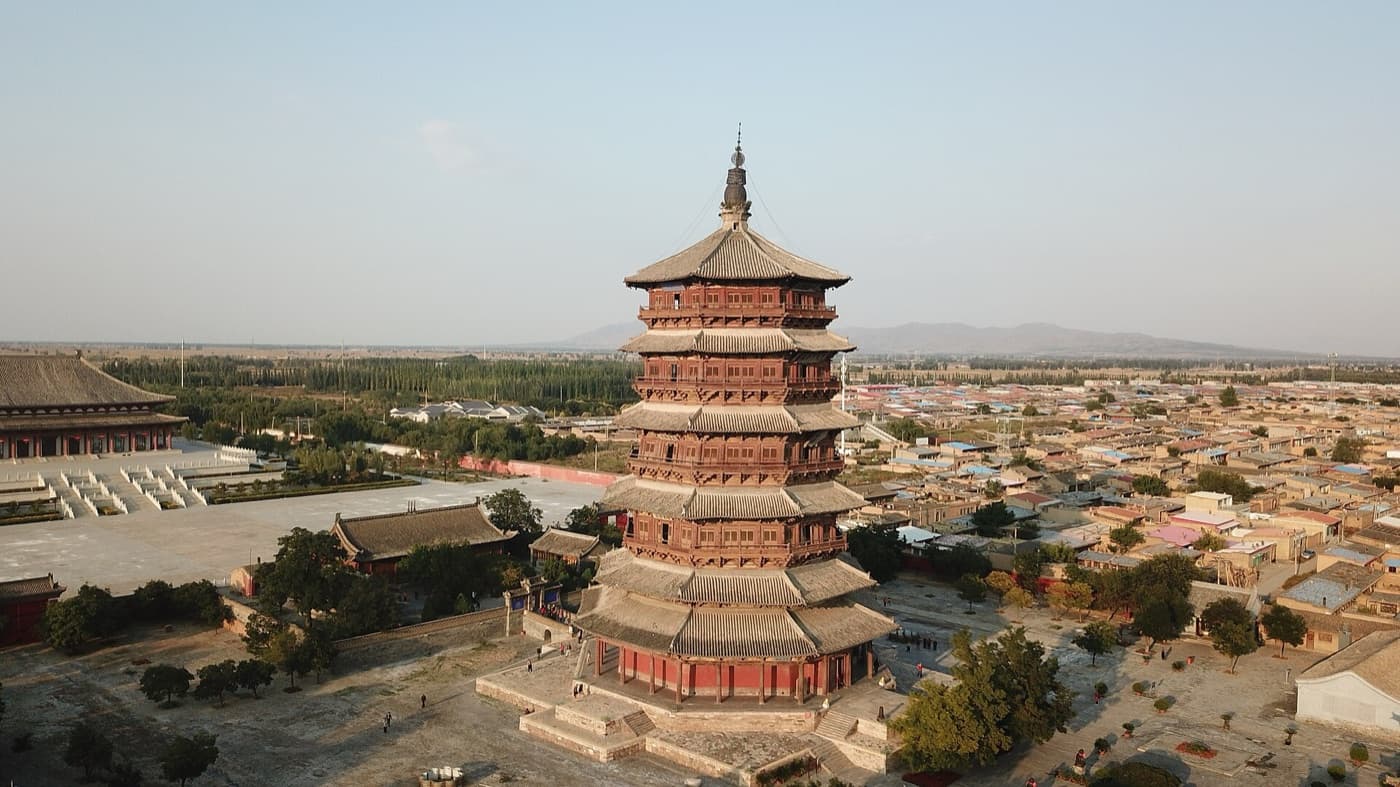
Among China’s surviving ancient pagodas, the Yingxian Wooden Pagoda is unmatched in size and is a treasure of ancient architecture in China and the world. This octagonal pagoda appears to have five storeys and six eaves, but each level contains a concealed mezzanine, so there are five visible storeys and four hidden ones, making nine in total. Notably, the pagoda houses two relics revered by Buddhists: the Buddha’s tooth relics (sarira). They are enshrined in two silver reliquaries decorated with the seven treasures, and have been verified as genuine remains of Shakyamuni’s tooth.
1–2 hours
Laoniuwan on the Yellow River, Pianguan
The Yellow River enters Shanxi here, the Great Wall converges here, and the Shanxi-Shaanxi-Inner Mongolia Grand Canyon begins here, showcasing the rugged landscape of the Loess Plateau. This is where the Great Wall and the Yellow River meet, and it is one of China’s ten most beautiful canyons. The Laoniuwan scenic area consists of three bends and one valley: Baozi Tower Bend, Laoniuwan, Sizuo Tower Bend, and the small Yangjiachuan Gorge. On the cliff beside the Laoniuwan Fortress, right by the Yellow River, stands a hollow brick enemy tower that remains in excellent condition. Perched on the cliff and overlooking the river, it is one of Pianguan’s most celebrated scenic spots.
3–4 hours
Datong Earth Forest
Not as large as the Yuanmou Earth Forest in Yunnan, but the peculiar earth-pillar scenery is still dazzling, like countless masterpieces wrought by divine hands. The earth forest is magnificent and especially well suited to photography enthusiasts.
2–3 hours
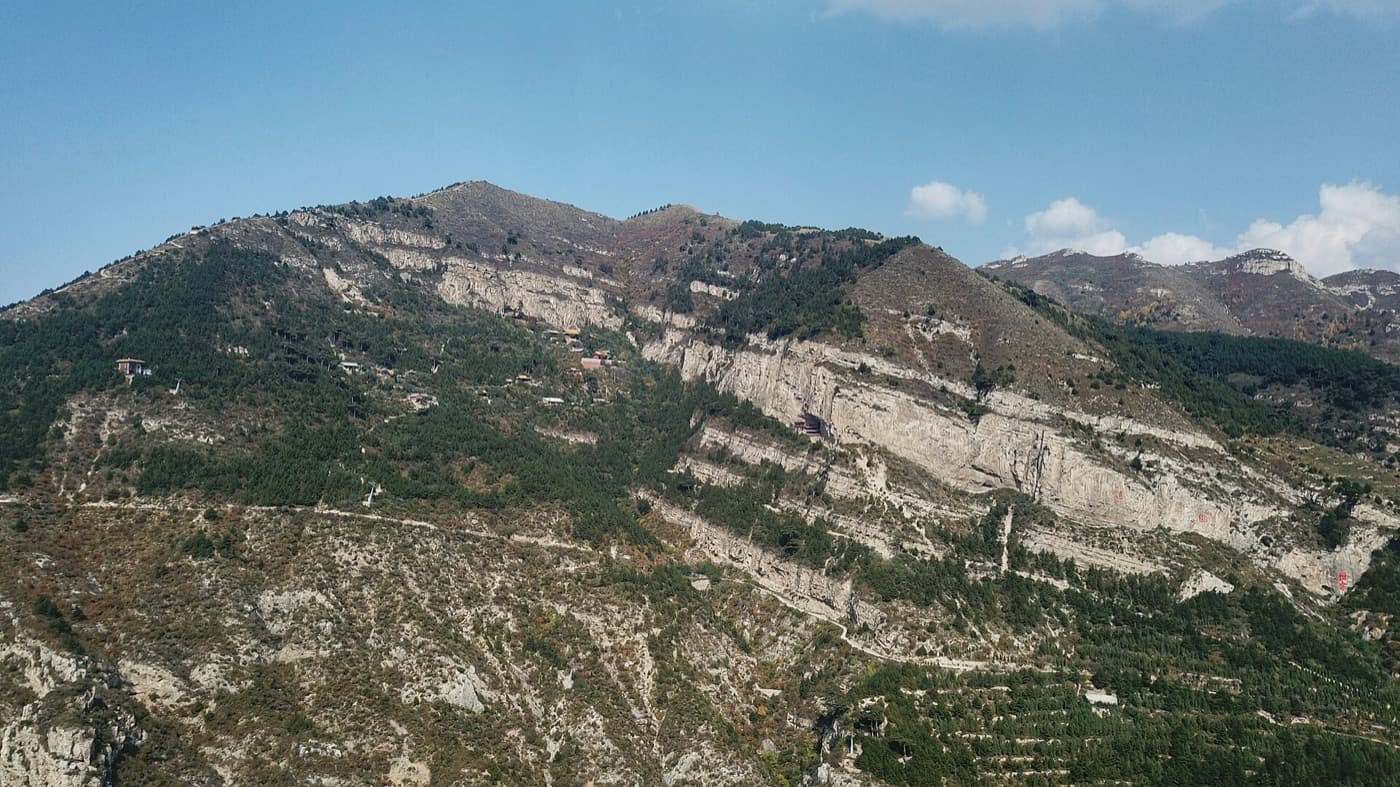
Mount Heng
Known as the "Northern Marchmount" (北岳), a name that speaks to the grandeur of its scenery. Beyond its beauty, it is also a birthplace of Taoism; legend has it that the immortal Zhang Guolao (张果老) attained enlightenment through cultivation here. Peach blossoms here bloom for more than 20 days, so spring is the best time to visit.
0.5–1 day
Source: China Self-Guided Travel 2025 (《中国自助游》, Tianjin Science & Technology Press, Aug 2024), pp. 1840–1852. Translated from the Chinese edition; names and prices follow the guidebook. · Plain text version