Historic Residences Tour
Former Residence of Cai Yuanpei: Cai Yuanpei lived here from birth until he took up his post as a compiler at the Hanlin Academy. The upstairs room of the eastern bay was once his living quarters.…
Historic Residences Tour, Shaoxing
Key facts
- Getting there
- From downtown Shaoxing, take a bus to Luxun Native Place Stop (e.g. Route 13, Route 18); the former residences are scattered across historic districts such as Luxun Native Place, Calligraphy Sage Native Place and Yue Wang City, and can be visited on foot
- Guidebook rating
- 3 / 5
From China Self Guided Travel 2025, page 1167. Open in Google Maps
About Historic Residences Tour
Former Residence of Cai Yuanpei: Cai Yuanpei lived here from birth until he took up his post as a compiler at the Hanlin Academy. The upstairs room of the eastern bay was once his living quarters.
Qingteng Study: Originally named Liuhua Study, this was the residence of Xu Wei, one of the Three Great Talents of the Ming dynasty. The study itself is not large, just a single-courtyard, four-sided compound with a garden. Yet its weighty history, the withered grapevines and the striking “Zizai Rock” all leave a lasting impression.
Qiu Jin’s Former Residence: This was the place where Qiu Jin discussed the plans for her secret uprising. Many of her handwritten works are preserved here, and her last poem, written before her execution, is also on display.
Frequently asked questions
How do I get to Historic Residences Tour?
From downtown Shaoxing, take a bus to Luxun Native Place Stop (e.g. Route 13, Route 18); the former residences are scattered across historic districts such as Luxun Native Place, Calligraphy Sage Native Place and Yue Wang City, and can be visited on foot
Where is Historic Residences Tour?
Historic Residences Tour is in Shaoxing, Zhejiang Province, in the East China of China. Yuecheng District, Shaoxing, Zhejiang Province (around Luxun Native Place / Calligraphy Sage Native Place / Yue Wang City)
More places in Shaoxing

Houshan Hill
Beyond its unique rock formations, Houshan preserves a remarkable ancient Yue culture. Ride a wupeng boat through a watery Jiangnan countryside that looks like a painting, and leave the noise of the city behind. Some 2,400 years ago, King Goujian of Yue practised 'sleeping on brushwood and tasting gall' here before achieving the restoration of his kingdom. During the Spring and Autumn and Warring States periods, this was already a kiln site for ancient Yue celadon. Lu You, the Song dynasty poet, had ancestors who lived here for three generations. Beyond its natural beauty, the imperial gardens and private residences carved into the landscape earn it the reputation of a model of ancient Yue stone culture.
¥40 · 2 hours
Shen Garden
This is where Lu You and Tang Wan each encountered the other after their respective marriages, and also where Tang Wan fell ill and never recovered, dying of melancholy. The timeless verses of Lu You and Tang Wan are inscribed side by side on one wall, one on the left and one on the right.
Daytime: ¥40; Shen Garden Night Show: Seat A ¥138, Seat B ¥118, Seat C ¥80 · 2 hours
Cangqiao Zhijie Historic Street
This historic street is one of the important cultural heritage sites of ancient Shaoxing. From north to south it is spanned by traditional old stone-slab bridges, including Cangqiao, Longmen Bridge, Xiguan Bridge and Huangyi Bridge, which lend it the atmosphere of a water town. Along the street are many museums worth a visit, such as the Yue Arts Museum, the Yellow Rice Wine Museum, the Theatre Museum and the Calligraphy and Painting Museum.
Free · 1–2 hours
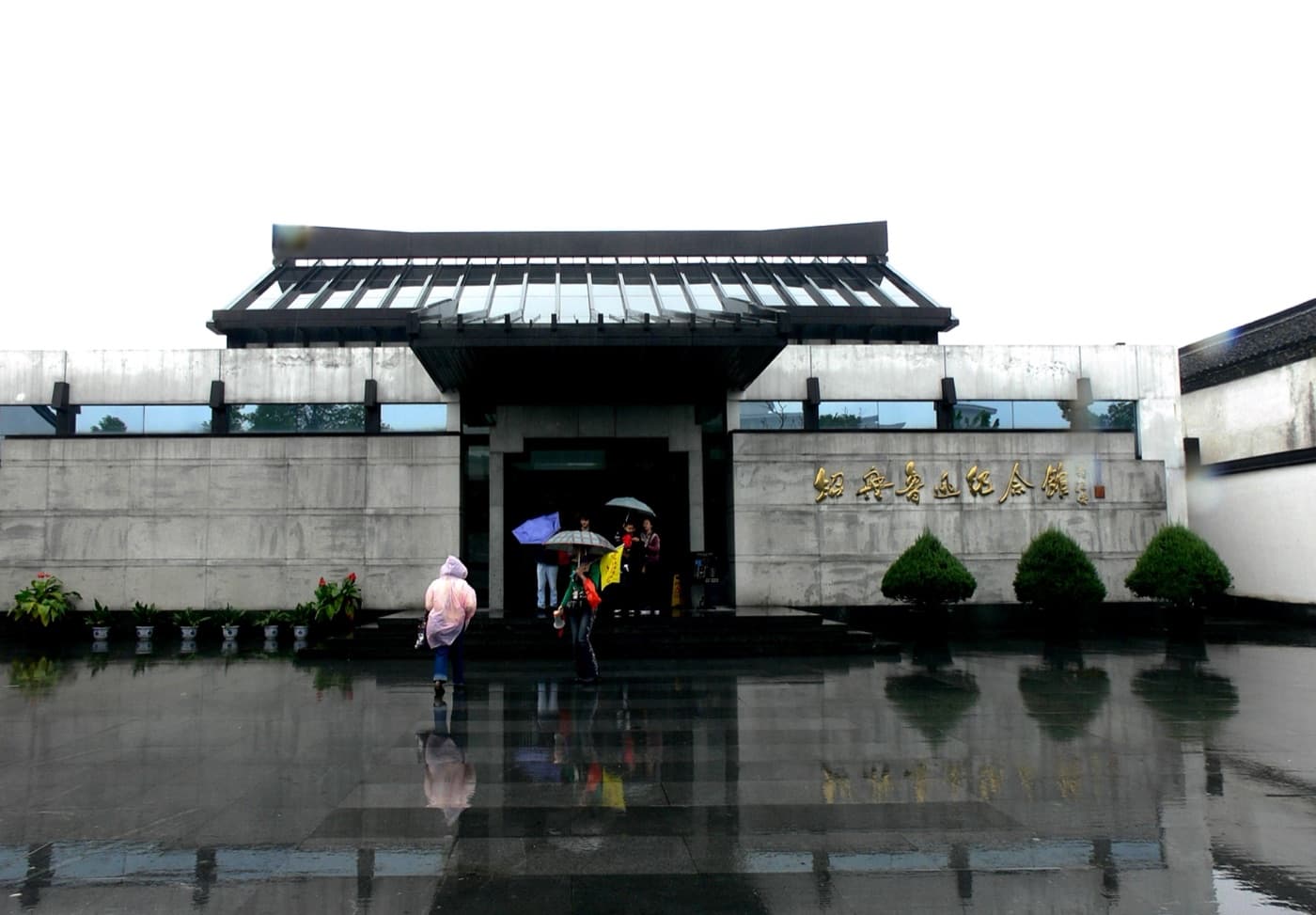
Lu Xun Memorial Hall
The Shaoxing Lu Xun Memorial Hall was founded in 1973. Visitors can see toys Lu Xun played with as a child, as well as the seashell that Runtu gave him… The exhibition hall’s courtyard is planted mainly with camphor, pine, plum and orchid trees. Following the descriptions in Dawn Blossoms Plucked at Dusk, jujube, honey locust and mulberry trees have also been planted to recreate the atmosphere of Lu Xun’s former living environment.
Free · 2–3 hours
Mount Kuaiji
Mount Kuaiji has a deep connection with Yu the Great, the legendary founding sage-king and hero of flood control in ancient China. The scenic area consists of five sections: the Mausoleum of Yu the Great, Incense Burner Peak, Wanwei Hill, Shifan Hill and Ruoye Stream. Standing at the summit of Mount Kuaiji, you can take in the ancient city of Shaoxing below, while distant mountain ranges stretch on, half-hidden in mist like a painting in pale ink.
¥60; combined ticket ¥140 (includes Mausoleum of Yu the Great, Bird Garden and Incense Burner Peak) · 2–4 hours
Lu Xun's Former Residence
Before you have visited Lu Xun’s Former Residence in person, you may have imagined the places where the great writer once lived. Standing in front of the residence, you will find that everything here is so rich and complete it seems hard to believe. The rear garden of Lu Xun’s Former Residence is the Baicao Garden (Hundred Herbs Garden), a playground of Lu Xun’s childhood where he often came to play. Not far from the residence is the Sanwei Study, the private school Lu Xun attended as a boy. The plaque reading “Sanwei Study” still hangs above the main hall, and the desk on which the teacher carved the character “早” (“early”) with a small knife is still in its original place. The scenes described in “From the Baicao Garden to the Sanwei Study” are now hard to find, but the rich, lively atmosphere of daily life in the essay still leaves a deep and pleasant impression.
Free admission, but advance reservation is required · 1–3 hours