Heishan Valley Scenic Area
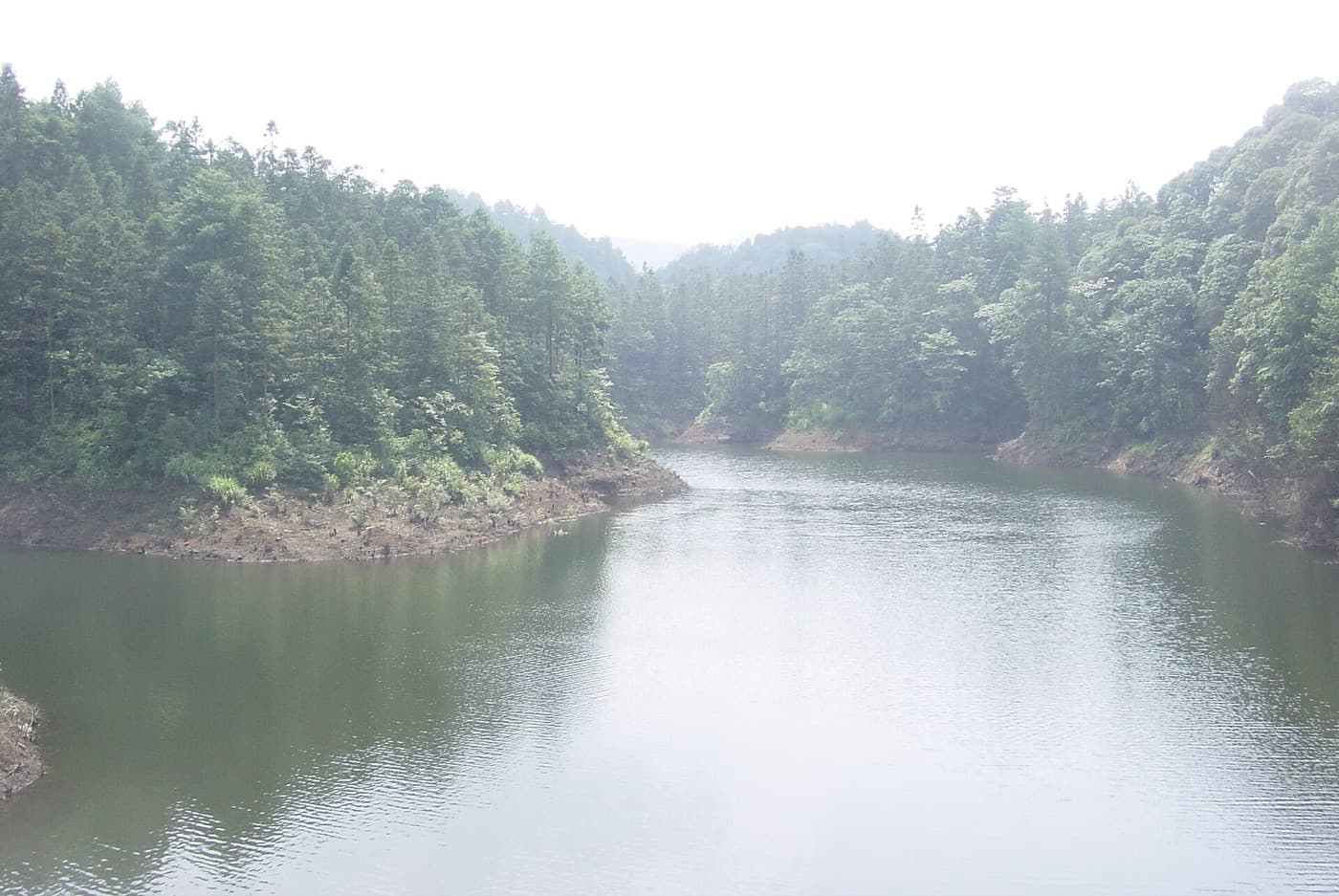
Hailed by experts as the “gene bank of Yu-Qian biodiversity,” Heishan Valley is the largest natural eco-scenic area in the Chongqing region, with its primitive ecosystem remarkably well preserved.…
Heishan Valley Scenic Area, Chongqing
Key facts
- Admission
- ¥85; sightseeing shuttle ¥30
- Opening hours
- 8:30–16:00 (March–October); 9:00–15:00 (November–February)
- Time needed
- 4–6 hours
- Getting there
- Take a long-distance bus from Chenjiaping, Caiyuanba or Nanping Long-Distance Bus Station to Wansheng urban area, fare ¥22–28. From Wansheng Bus Station, take a local bus to the Visitor Reception Center (bus stop).
- Guidebook rating
- 3 / 5
From China Self Guided Travel 2025, page 433. Open in Google Maps
About Heishan Valley Scenic Area
Hailed by experts as the “gene bank of Yu-Qian biodiversity,” Heishan Valley is the largest natural eco-scenic area in the Chongqing region, with its primitive ecosystem remarkably well preserved. It combines deep gorges, forests, waterfalls, karst caves and rare plants and animals. It is an ideal destination for canyon trekking, rafting, rock climbing, camping and fishing.
Frequently asked questions
How much does Heishan Valley Scenic Area cost?
Admission to Heishan Valley Scenic Area is ¥85; sightseeing shuttle ¥30, as listed in the 2025 guidebook. Prices can change; check the official channel before you go.
What are the opening hours of Heishan Valley Scenic Area?
Heishan Valley Scenic Area is open 8:30–16:00 (March–October); 9:00–15:00 (November–February).
How do I get to Heishan Valley Scenic Area?
Take a long-distance bus from Chenjiaping, Caiyuanba or Nanping Long-Distance Bus Station to Wansheng urban area, fare ¥22–28. From Wansheng Bus Station, take a local bus to the Visitor Reception Center (bus stop).
How long should I spend at Heishan Valley Scenic Area?
Plan on 4–6 hours for Heishan Valley Scenic Area.
Where is Heishan Valley Scenic Area?
Heishan Valley Scenic Area is in Chongqing, Chongqing Municipality, in the Southwest of China. Within Heishan Town, Economic and Technological Development Zone, Qijiang District, Wansheng
More places in Chongqing

Jinfo Mountain
Combining mountains, water, forests, rocks and caves, natural landscapes like this can be found throughout southwest China. Jinfo Mountain, however, has its own distinctive character, and it even has a ski resort and other recreational facilities, making it a great place to enjoy snow in winter. The scenic area is made up of three mountains—Jinfo, Baizhi and Jingba. Rare trees, exotic flowers and numerous nationally protected wildlife species thrive in its complex terrain. For urbanites who increasingly appreciate getting close to nature, this is a wild animal and plant park where you can nourish your soul and breathe fresh air.
West Gate combo ticket ¥260 (entrance ticket + cable car + shuttle bus); North Gate combo ticket ¥220 (entrance ticket + cable car) · 1–2 days

Ciqikou Ancient Town
“One stone-paved road, a thousand years of history.” For lovers of ancient towns and folk customs, Ciqikou is a 1,700-year-old town on the banks of the Jialing River. For food lovers, a visit means sampling its “Three Specialties”: qianzhang (pressed bean curd sheets), mahua fish (twisted dough fish), and maoxuewang (blood curd hotpot).
Free · 3–4 hours
Simian Mountain
Simian Mountain is a Danxia landform with rich natural resources and primeval forests. Numerous streams, lakes and waterfalls run through the mountains, and a variety of animals and plants add vibrancy to the scenery. It is known as China’s “treasure house of species genes.”
¥110 (February–October); ¥60 (November–January) · 1–2 days
Dazu Rock Carvings
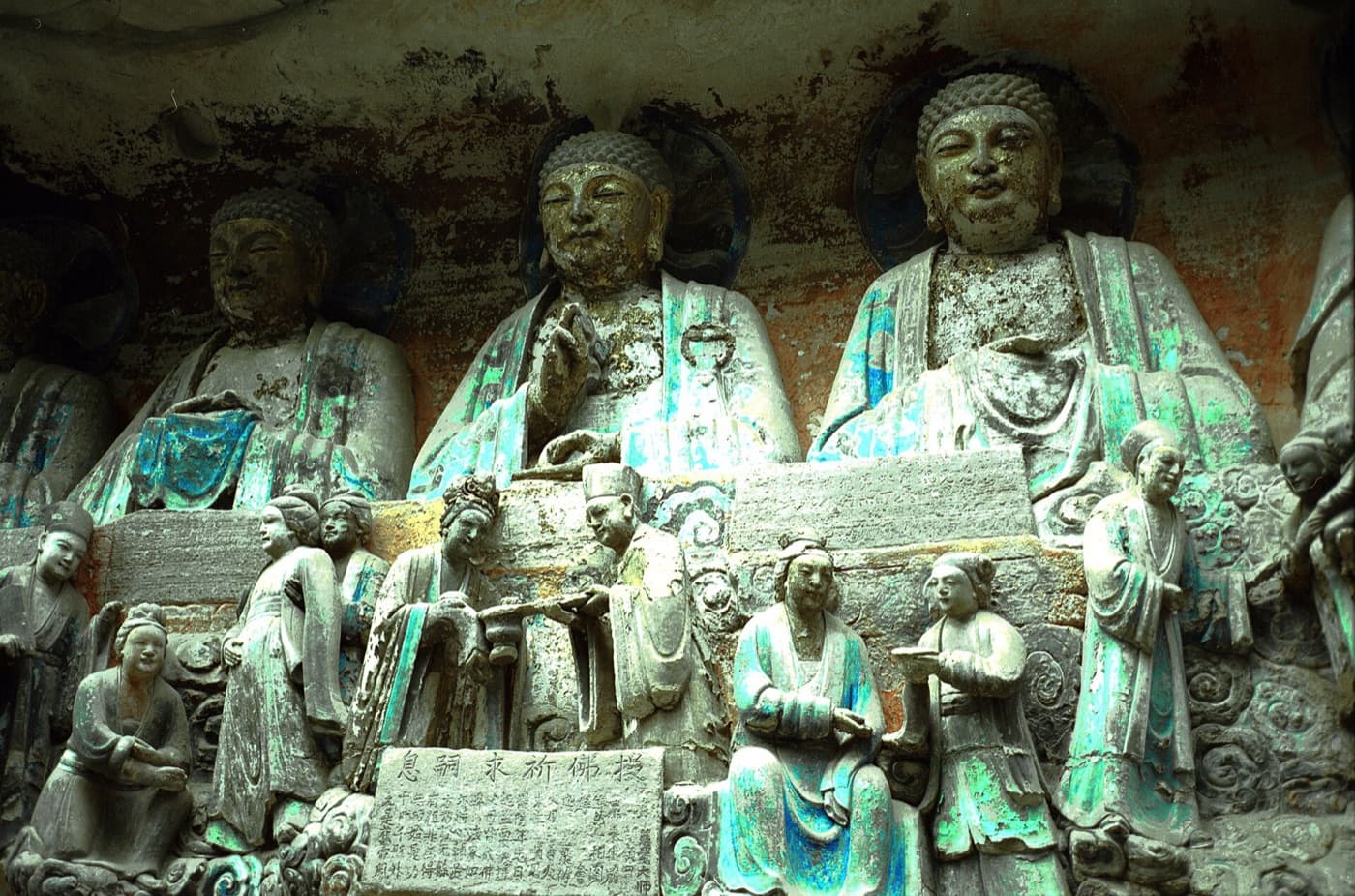
Even if you have seen the Longmen Grottoes and walked through the Yungang Grottoes, the Dazu Rock Carvings, as a masterpiece of ancient Chinese stone carving, are not to be missed. This is why they are said to be “the Dunhuang of the North and the Dazu of the South.” On 1 December 1999, UNESCO formally inscribed five cliff carving sites—Beishan, Baoding Mountain, Nanshan, Shizhuan Mountain and Shimen Mountain—on the World Heritage List. Baoding Mountain is a sacred Buddhist site, and the saying goes, “Pilgrimage to Mount Emei above, pilgrimage to Baoding below.” Its stone carvings at the Great Buddha Bay are the largest in scale, the highest in artistic value, and the best preserved. The carvings at Beishan are concentrated at Fowan (Buddha Bay), divided into southern and northern zones. The southern zone mainly features works from the late Tang and Five Dynasties, while the northern zone is dominated by works from the Northern and Southern Song dynasties.
Baoding Mountain ¥115; Beishan ¥70; combined ticket ¥140 · 4–5 hours
Gongtan Ancient Town
Gongtan is known as “the first historic and cultural town in Chongqing.” Its stilted houses (diaojiaolou) are a major draw, and the riverside examples are large, old and finely built. The town's stone-slab streets are also worth lingering over, with their history, culture and a simple, lived-in beauty. In 2005, the entire town was relocated to make way for the Wujiang Pengshui Hydropower Station. The Gongtan you see today is brand new, and its 1,700-year history now lies permanently submerged beneath the Wujiang River.
Wujiang Gallery cruise ¥58 · 3–5 hours
Youyang Peach Blossom Land
There are two Peach Blossom Lands in the world: one in Tao Yuanming's essay, and one in Youyang, Chongqing. Youyang's Peach Blossom Land sits in the heart of the Wuling Mountains and condenses some of the most beautiful untouched scenery. When the peach trees are in bloom, the scenic area is covered in drifting petals. Along quiet stone paths, you pass one pavilion and terrace after another: the Tao Gong Shrine, the Taoyuan Stele Forest, fields and village houses. Everything seems almost identical to the scenes described in “The Peach Blossom Spring.” Main sights include Peach Blossom Land, Fuxi Cave, Youzhou Ancient City, Taigu Cave and Peach Blossom Land Square. Fuxi Cave, about 3 km long, features winding walkways, a deep underground river and colourful stalactites, making it especially striking.
¥100 · 3–5 hours