Hanzhong Museum (Guhantai Branch)
Located in the southeast of Hanzhong City, Guhantai was built in 206 BCE and is the site of the palace constructed when Liu Bang was enfeoffed as King of Han.…
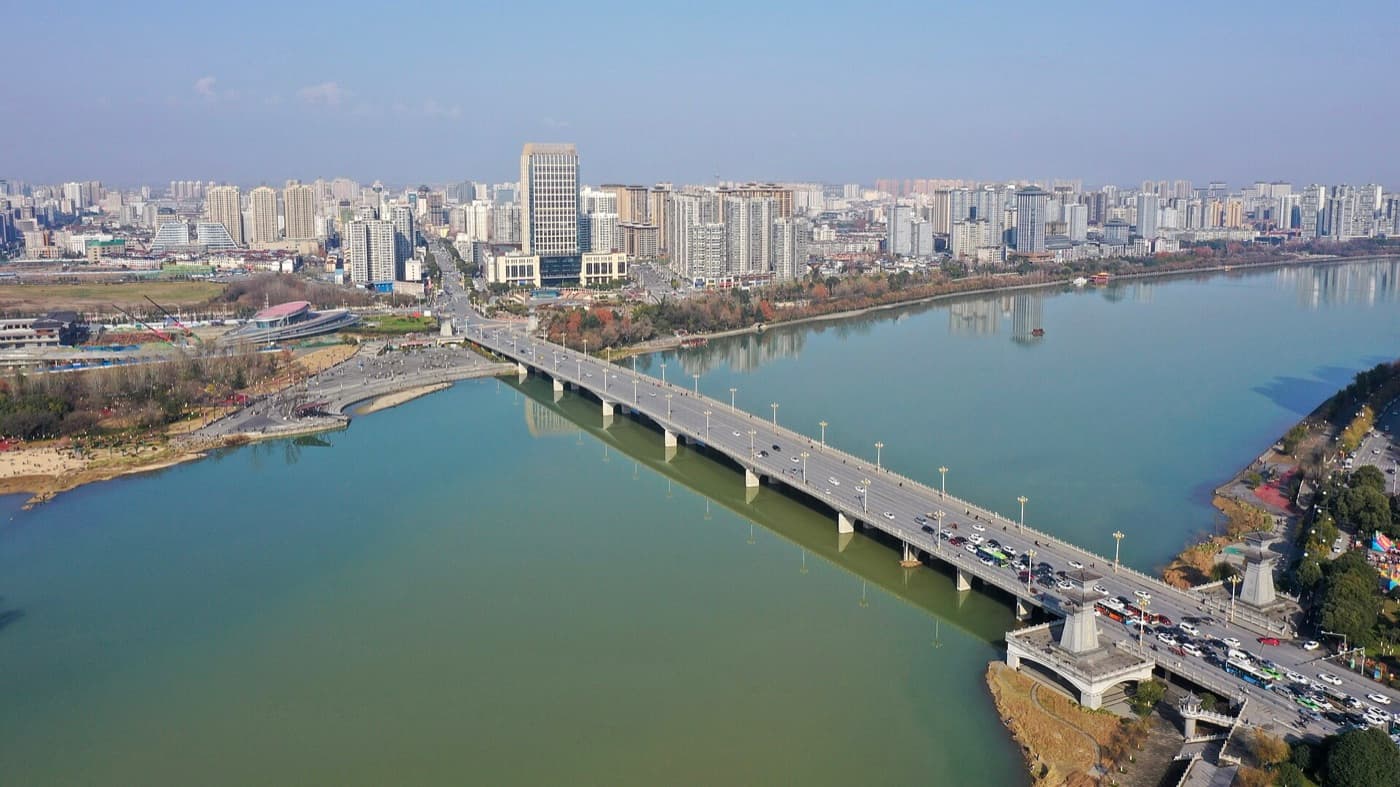
Hanzhong Museum (Guhantai Branch), Southern Shaanxi · Charlie fong · CC BY-SA 4.0 · Wikimedia Commons
Key facts
- Admission
- Free
- Opening hours
- Tuesday to Sunday (closed on Mondays)
- Time needed
- 2–3 hours
- Getting there
- Near Guhantai (bus stop)
- Guidebook rating
- 4 / 5
From China Self Guided Travel 2025, page 683. Open in Google Maps
About Hanzhong Museum (Guhantai Branch)
Located in the southeast of Hanzhong City, Guhantai was built in 206 BCE and is the site of the palace constructed when Liu Bang was enfeoffed as King of Han. The original buildings have been destroyed, and the Qing-dynasty Wangjiang Tower survives today. In recent years, the Hanzhong Museum has been built here. It houses seventeen of the stone panels of the Thirteen Shimen Inscriptions, moved from the Shimen cliff carvings, along with replicas of ancient plank roads and a model of Shimen, and exhibitions of revolutionary relics and historical artifacts.
Frequently asked questions
How much does Hanzhong Museum (Guhantai Branch) cost?
Admission to Hanzhong Museum (Guhantai Branch) is Free, as listed in the 2025 guidebook. Prices can change; check the official channel before you go.
What are the opening hours of Hanzhong Museum (Guhantai Branch)?
Hanzhong Museum (Guhantai Branch) is open Tuesday to Sunday (closed on Mondays).
How do I get to Hanzhong Museum (Guhantai Branch)?
Near Guhantai (bus stop)
How long should I spend at Hanzhong Museum (Guhantai Branch)?
Plan on 2–3 hours for Hanzhong Museum (Guhantai Branch).
Where is Hanzhong Museum (Guhantai Branch)?
Hanzhong Museum (Guhantai Branch) is in Southern Shaanxi, Shaanxi Province, in the Northwest of China.
More places in Southern Shaanxi
Shimen Plank Road Scenic Area
Shimen Plank Road is the hometown of Bao Si and is renowned as the 'Land of Plank Roads' in China. The story of 'openly repairing the plank road, secretly crossing at Chencang' took place here. Shimen is a tunnel carved in the 1st century. In 1970, during the construction of the Shimen Reservoir, it was submerged beneath the water. On the east and west walls inside the tunnel, on the steep slopes and cliffs for several li outside, and in the waters of the Bao River and on the large rocks of its sandbanks, there are cliff inscriptions dating from the Han to the Song dynasties. Among them, the 'Thirteen Han-Wei Inscriptions' were already famous nationwide during the Tang and Song periods. After visiting the Shimen Reservoir and the ancient plank road, you can dine right on site and sample fresh Bao River fish: delicious and affordable!
¥70 (peak season), ¥50 (off-season) · 2–3 hours
Foping Panda Valley Scenic Area
Foping is renowned as the "Hometown of Giant Pandas" and a "natural gene bank for wildlife and plants." The nature reserve focuses on protecting giant pandas and wild animals and plants. It is home to more than a hundred wildlife species, including giant pandas, takins and golden snub-nosed monkeys, as well as over a thousand kinds of rare plants.
¥50 (April–October); ¥35 (November–March) · 2–3 hours
Qingmuchuan Scenic Area
Qingmuchuan Ancient Town, where three provinces meet, takes its name from an ancient qing (green) mu (wood) tree that grows in the river valley. The town has clear mountain streams and a gentle, unspoiled local character. Its ancient architecture combines Chinese and Western styles, with carved beams, painted rafters and elegant proportions. The "Huilongchang" (Returning Dragon Market) old street stretches the town out along its length, lined on both sides with Ming and Qing dynasty residences. Highlights include the Wei Family Mansion, a grand old residence, and the tall, Western-style Furen Middle School. Strolling the lanes and chatting with the older residents, who tell stories of the "great warlord" of the past, is an experience with a special kind of drama.
Full-access ticket ¥60; individual attraction tickets ¥30 · 2–3 hours
Liping Scenic Area
Liping Scenic Area consists of four major sub-areas: Huangyang River, Shima Mountain, Lengba and Liping. Its main attractions are its primeval forests, the folk customs of the Bachi people and the former residence of An Han. Within the scenic area, Zhonghua Dragon Mountain is a unique geological formation created when the mountain fractured during the 2008 Wenchuan earthquake, and it is highly worth seeing. Shima Mountain is a classic high-altitude peak-cluster stone forest. For its latitude and elevation it is considered unrivalled, and it is the only one of its kind in China. The Erlangshan Reservoir is a high-gorge lake, with green mountains reflected in the water, where landscape and water blend together. The Lengba area is dominated by alpine meadows, where cattle and sheep graze, pastoral songs drift through the air and wildflowers cover the ground, creating a beautiful rural landscape. In March and April each year, when the rapeseed flowers bloom, Liping turns into a sea of yellow blossoms, and the golden colour spreads across the entire scenic area in a truly spectacular display.
Off-season ¥45; peak season ¥75; sightseeing bus ¥40 · 4–6 hours
Hanzhong Million-Mu Rapeseed Flower Sea
Around the Qingming Festival each year, Hanzhong's million mu of rapeseed flowers ripple like a golden sea of sunlight. Wherever you walk, you see only golden blossoms and smell only sweet fragrance. It has become one of the newest and most beautiful rapeseed flower viewing spots and is beloved by tourists and photography enthusiasts.
1 day
Zhang Liang Temple
Zhang Liang Temple is said to be the place where Zhang Liang, a statesman of the Western Han dynasty, lived in seclusion in his later years. The surviving buildings were all constructed during the Ming and Qing dynasties. The temple houses numerous inscriptions from successive dynasties, including over 100 stone inscriptions, more than 50 wooden plaques and over 30 pairs of couplets. The temple is located in Mount Zibai, on the southern slope of the Qinling Mountains. The mountain takes its name from the many cypress and pine trees that grow there.
¥60 (March–December); ¥30 (December–February) · 1–2 hours