Southern Shaanxi travel guide
陕南
In Hanzhong you can hear Shaanxi dialect laced with a strong Sichuan flavour. The area has lush green mountains, clean Han River water and authentic Sichuan snacks. Beyond Shaanxi's profound history,…
7 places · In the guidebook: pages 681–687

Southern Shaanxi, Shaanxi Province · AI illustration for China Trip
Quick itinerary
Southern Shaanxi in 1 days
- Day 1
- Hanzhong Museum→
- Guhan Terrace→
- Shimen Plank Road
The feel of the place
- Like Sichuan in Southern Shaanxi
- In Hanzhong you can hear Shaanxi dialect laced with a strong Sichuan flavour. The area has lush green mountains, clean Han River water and authentic Sichuan snacks. Beyond Shaanxi's profound history, culture and the generous spirit of its people, it feels more like a southern city (in China's geographical division, it has indeed entered the South).
tip: Scenic spots such as Foping Panda Valley, Qingmuchuan Ancient Town and Liping Scenic Area are quite far from Hanzhong city centre. A round trip usually takes a full day, so plan your itinerary according to your interests.
Preparation and Enquiries
Climate and Best Travel Season
The annual average temperature is around 13°C. Both temperature and rainfall are higher than in Xi'an, as the area has a subtropical monsoon climate. Coming to southern Shaanxi in summer makes for a wonderfully cool trip.
Things to see
Shimen Plank Road Scenic Area
Shimen Plank Road is the hometown of Bao Si and is renowned as the 'Land of Plank Roads' in China. The story of 'openly repairing the plank road, secretly crossing at Chencang' took place here. Shimen is a tunnel carved in the 1st century. In 1970, during the construction of the Shimen Reservoir, it was submerged beneath the water. On the east and west walls inside the tunnel, on the steep slopes and cliffs for several li outside, and in the waters of the Bao River and on the large rocks of its sandbanks, there are cliff inscriptions dating from the Han to the Song dynasties. Among them, the 'Thirteen Han-Wei Inscriptions' were already famous nationwide during the Tang and Song periods. After visiting the Shimen Reservoir and the ancient plank road, you can dine right on site and sample fresh Bao River fish: delicious and affordable!
2–3 hours · ¥70 (peak season), ¥50 (off-season)
Foping Panda Valley Scenic Area
Foping is renowned as the "Hometown of Giant Pandas" and a "natural gene bank for wildlife and plants." The nature reserve focuses on protecting giant pandas and wild animals and plants. It is home to more than a hundred wildlife species, including giant pandas, takins and golden snub-nosed monkeys, as well as over a thousand kinds of rare plants.
2–3 hours · ¥50 (April–October); ¥35 (November–March)
Qingmuchuan Scenic Area
Qingmuchuan Ancient Town, where three provinces meet, takes its name from an ancient qing (green) mu (wood) tree that grows in the river valley. The town has clear mountain streams and a gentle, unspoiled local character. Its ancient architecture combines Chinese and Western styles, with carved beams, painted rafters and elegant proportions. The "Huilongchang" (Returning Dragon Market) old street stretches the town out along its length, lined on both sides with Ming and Qing dynasty residences. Highlights include the Wei Family Mansion, a grand old residence, and the tall, Western-style Furen Middle School. Strolling the lanes and chatting with the older residents, who tell stories of the "great warlord" of the past, is an experience with a special kind of drama.
2–3 hours · Full-access ticket ¥60; individual attraction tickets ¥30
Liping Scenic Area
Liping Scenic Area consists of four major sub-areas: Huangyang River, Shima Mountain, Lengba and Liping. Its main attractions are its primeval forests, the folk customs of the Bachi people and the former residence of An Han. Within the scenic area, Zhonghua Dragon Mountain is a unique geological formation created when the mountain fractured during the 2008 Wenchuan earthquake, and it is highly worth seeing. Shima Mountain is a classic high-altitude peak-cluster stone forest. For its latitude and elevation it is considered unrivalled, and it is the only one of its kind in China. The Erlangshan Reservoir is a high-gorge lake, with green mountains reflected in the water, where landscape and water blend together. The Lengba area is dominated by alpine meadows, where cattle and sheep graze, pastoral songs drift through the air and wildflowers cover the ground, creating a beautiful rural landscape. In March and April each year, when the rapeseed flowers bloom, Liping turns into a sea of yellow blossoms, and the golden colour spreads across the entire scenic area in a truly spectacular display.
4–6 hours · Off-season ¥45; peak season ¥75; sightseeing bus ¥40
Hanzhong Million-Mu Rapeseed Flower Sea
Around the Qingming Festival each year, Hanzhong's million mu of rapeseed flowers ripple like a golden sea of sunlight. Wherever you walk, you see only golden blossoms and smell only sweet fragrance. It has become one of the newest and most beautiful rapeseed flower viewing spots and is beloved by tourists and photography enthusiasts.
1 day
Zhang Liang Temple
Zhang Liang Temple is said to be the place where Zhang Liang, a statesman of the Western Han dynasty, lived in seclusion in his later years. The surviving buildings were all constructed during the Ming and Qing dynasties. The temple houses numerous inscriptions from successive dynasties, including over 100 stone inscriptions, more than 50 wooden plaques and over 30 pairs of couplets. The temple is located in Mount Zibai, on the southern slope of the Qinling Mountains. The mountain takes its name from the many cypress and pine trees that grow there.
1–2 hours · ¥60 (March–December); ¥30 (December–February)
Getting there & around
Getting In and Out
By Air
Hanzhong Airport is 2 km from the city centre, and a taxi costs no more than ¥5. There are flights to Xi'an.
By Rail
Hanzhong Railway Station is located on the north section of Renmin Road in Hanzhong and can be reached by bus routes 1, 19 and 24. Trains originating in Hanzhong run to Xi'an, Ankang, Guangzhou and Beijing West, and through trains serve Wuhan (Hankou), Chengdu, Shanghai, Fuzhou and other cities.
Ankang Railway Station is located in Jiangbei (north of the river) district and can be reached by bus route 31. Trains serve Beijing, Shanghai, Zhengzhou, Xi'an, Chengdu, Chongqing, Wuhan, Fuzhou, Qingdao and other cities.
By Road
Roads are mostly mountainous, and road conditions are fair.
Hanzhong Bus Station is located at the city centre square, with daily buses to Xi'an, Xianyang, Baoji and other places.
Ankang Expressway Passenger Bus Station is located at the rerouted road junction in Jianmin Town, with direct buses to Xi'an.
Local Transport
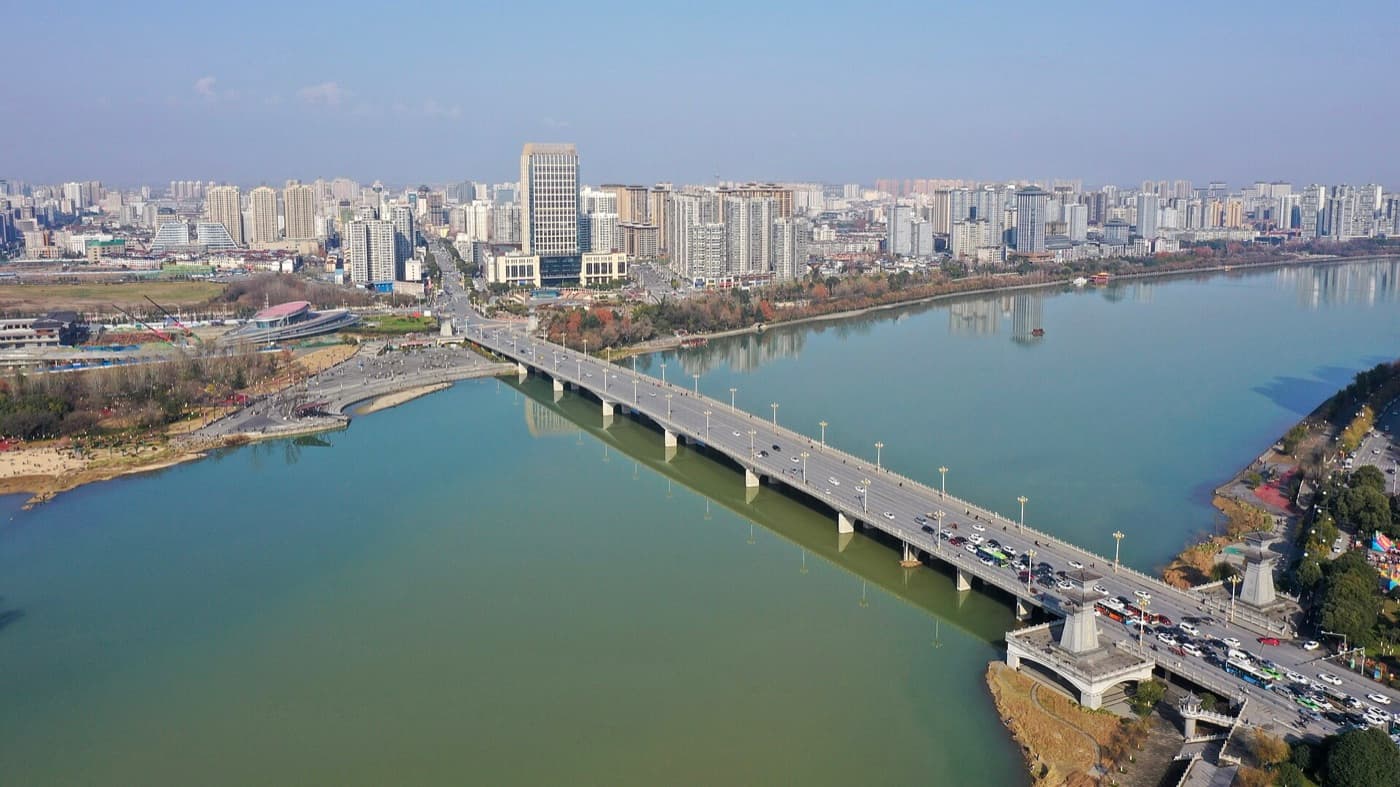
Taxis start at ¥6 during the day and ¥7 at night, but taxis at the railway station may ask non-locals for ¥10, which happens in most places. Local tourist shuttle buses run in good order. Hanzhong's urban area is divided into New and Old towns, and the Han River flows along the southern side of the city.
Airport Customer Service
By Air- Phone:
- 0916-2692046
Source: China Self-Guided Travel 2025 (《中国自助游》, Tianjin Science & Technology Press, Aug 2024), pp. 681–687. Translated from the Chinese edition; names and prices follow the guidebook. · Plain text version