Haizishan
Haizi Shan is the largest ancient ice-body relic on the Qinghai-Tibet Plateau and is known as the ‘Daocheng Ancient Ice Cap’.…
Haizishan, Garze Prefecture
Key facts
- Admission
- Free
- Opening hours
- Open all day
- Time needed
- 2 hours
- Getting there
- Take a bus from Daocheng to Litang. You can also charter a car, a drive of about 90 minutes costing around ¥300.
- Guidebook rating
- 3 / 5
From China Self Guided Travel 2025, page 390. Open in Google Maps
About Haizishan
Haizi Shan is the largest ancient ice-body relic on the Qinghai-Tibet Plateau and is known as the ‘Daocheng Ancient Ice Cap’. Its most distinctive features are the stone rivers and stone seas formed by gravel of all sizes, along with ice-carved lakes of many shapes. Here lie 1,145 lakes (haizi) of varying sizes, like pearls scattered by a heavenly deity across the mountains. Their density is the highest in China, which gave the mountain its name. Haizi Shan has a desolate charm unlike any other scenic area, rich with the weight of time and well worth lingering over.
Frequently asked questions
How much does Haizishan cost?
Admission to Haizishan is Free, as listed in the 2025 guidebook. Prices can change; check the official channel before you go.
What are the opening hours of Haizishan?
Haizishan is open Open all day.
How do I get to Haizishan?
Take a bus from Daocheng to Litang. You can also charter a car, a drive of about 90 minutes costing around ¥300.
How long should I spend at Haizishan?
Plan on 2 hours for Haizishan.
Where is Haizishan?
Haizishan is in Garze Prefecture, Sichuan Province, in the Southwest of China.
More places in Garze Prefecture

Daocheng Yading
In 1928, American explorer Joseph Rock arrived in Daocheng and published his photographs in National Geographic, causing a sensation. From then on, Daocheng Yading, long asleep in the ice of time, revealed its most ancient and innocent face, and people were enchanted by its allure as the ‘last pure land on the blue planet’. Chonggu Temple, Luorong Pasture, Five-Colour Lake and Milk Lake all have a serene, Shangri-La-like beauty. Among them, the most mysterious are the three sacred peaks. Chenrezig, Jambeyang and Chana Dorje stand in a triangular formation, collectively known as Nianqing Gongga Risong Gongbu. In Tibetan, the name means ‘the sacred site of three guardian mountains that never lose their snow’, and in Buddhism they are called the Three Protector Snow Mountains. This is a sacred mountain in Tibetan Buddhism, and for every Tibetan, making at least one pilgrimage circuit around Nianqing Gongga Risong Gongbu in a lifetime is a cherished wish.
¥146 (April–November), ¥120 (December–March), sightseeing bus ¥120 · 1–2 days

Larong Wuming Buddhist Academy
Serthar Larong Wuming Buddhist Academy is an enormous Buddhist academy. Beneath the deep blue sky and among the high mountain grasslands, thousands of small wooden cabins are densely packed across the hillsides around the academy’s main great assembly hall. The crimson cabins stretch and roll across the slopes, a truly spectacular sight. Many footpaths wind through the academy and are pleasant to stroll. On the hillside to the southwest of the prayer-wheel stupa, you can look down over the entire academy and capture its full panorama. On the highest peak within the academy stands a huge, gleaming golden mandala. Its red walls and golden roofs soar into the clouds, and each of its three tiers is brighter and more open than the one below, making the sacred site feel ever more solemn and majestic.
0.5–1 day
Maoya Grassland
Once named by China National Geographic as one of China’s six most beautiful grasslands. July is the golden season for tourism, with wildlife in abundance, making it a paradise for photographers. Every year on 1 August, the Litang August 1 Horse Racing Festival takes place, full of lively excitement.
Free · 1 hour
Gongga Mountain National Nature Reserve
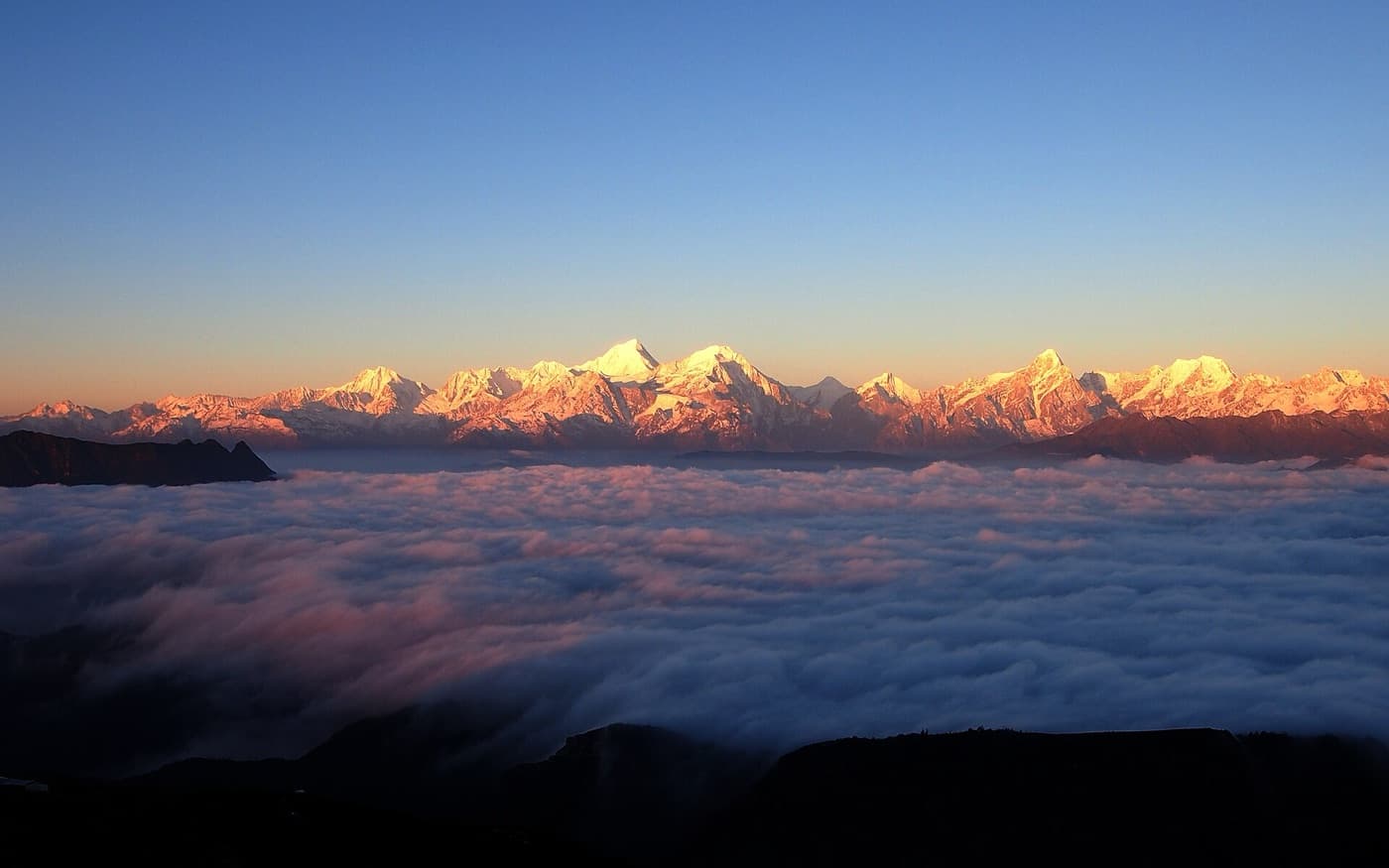
One of China's most distinctive glacier wonders. Centred on the snow-capped Mount Gongga, the reserve includes scenic areas such as Hailuogou, Yanzi Valley, Muge Lake, Gongga Temple, Wuxu Lake and the Southern Slope of Gongga. Revered by mountaineers, this sacred peak rewards hikers and cyclists with a deep sense of inner peace.
Free
Jiaju Tibetan Village
One of China's six most beautiful rural ancient towns. Located 5 km from the county seat at an altitude of 2,500 m, it is known as “the Shangri-La of the Hengduan Mountains.” The watchtower-style houses and their eaves are red, with walls in white or natural tones, decorated with sun, moon, star and religious motifs, making for a strikingly magnificent sight. The best way to experience it is to visit or stay in a local home, try butter tea and tsampa, and feel the warmth of the local people.
¥50 · 2–3 hours
Suopo Ancient Watchtowers
Suopo has 84 ancient watchtowers, the most concentrated cluster of such towers in all of Danba and indeed the world, including the world's only pentagonal watchtower. Built from earth and stone, the towers stand upright and straight, with sharp, knife-edge corners, and their walls of stacked stone are thick and sturdy. Most are attached to residential watchtower-houses, while others stand alone on flat ground or in valleys. Despite centuries of wind and weather, they still rise defiantly, displaying a majestic grandeur.
Free, but the owners of the watchtowers charge a fee when you climb up to visit.