Mount Putuo travel guide
普陀山
Long and narrow in shape, Mount Putuo is one of China’s four sacred Buddhist mountains. It is the dojo of Guanyin Bodhisattva and, geographically, a small island in the Zhoushan Archipelago.…
12 places · In the guidebook: pages 1187–1204

Mount Putuo, Zhejiang Province · AI illustration for China Trip
Quick itinerary
Mount Putuo in 1 days
- Day 1
- Pier→
- Nantianmen (South Heavenly Gate)→
- Puji Temple (vegetarian meal)→
- Fayu Temple→
- Foshan Summit (Huiji Temple)→
- South Sea Guanyin Statue→
- Pier
The feel of the place
- Famous Buddhist Mountain
- Long and narrow in shape, Mount Putuo is one of China’s four sacred Buddhist mountains. It is the dojo of Guanyin Bodhisattva and, geographically, a small island in the Zhoushan Archipelago. The mountain has both temples rising across its slopes and, to the east, sea and beaches, as well as rare flowers, unusual rocks and towering ancient trees. Yet its greatest appeal is the Buddhist legend of “the sacred site where Guanyin Bodhisattva manifested to preach to Shancai.” This is why Mount Putuo is known as the “Sacred Realm of the South Sea.”
- Monks
- With so many meditation halls, visitors on Mount Putuo will often come across a monk practising here. Some may carry a mobile phone, and some will take off their robes and sandals and head straight into the sea.
Book Ahead in the Peak Season
During holidays such as the Spring Festival, May Day, National Day and temple fair periods, Mount Putuo is packed with visitors. The days of the 19th of the second lunar month (Guanyin’s birthday), the 19th of the sixth lunar month (the day Guanyin attained enlightenment) and the 19th of the ninth lunar month (the day Guanyin left home) are pilgrimage days, so it is best to book train tickets and accommodation in advance for these dates.
One-Day Itinerary
This one-day route is designed specifically for visitors who hire a car. If you take the island buses or walk, it will take much longer, but these sights are the highlights of Mount Putuo and are must-sees.
Preparation and Advice
Climate and Travel Seasons
Mount Putuo enjoys mild winters and cool summers, and its air is always humid. Its scenery changes with the seasons. In spring, frequent fog makes the climb feel like walking through a fairyland, with the island’s landscape shifting among the clouds. In midsummer the average temperature stays below 29°C, and cool breezes blow in the evening. Autumn is the ideal season to watch the sunrise over the East China Sea. In deep winter, snow and ice are rare on Mount Putuo.
The Twelve Scenic Views of Mount Putuo
Lianyang Noon Ferry, Duanggu Sacred Traces, Meiwan Spring Dawn, Panto Sunset, Lianchi Moonlit Night, Fahua Sacred Cave, Gudong Tidal Sounds, Sunrise over the Sea, Qianbu Golden Sands, Guangxi Snow Clearing, Early Mist at Tea Mountain, Tianmen Pure Chanting.
Crowded Vehicles in Peak Season
In peak season, the Baifeng Ferry Terminal on the Ningbo side is packed with vehicles before the crossing to Zhoushan. Bring water and food and be prepared for long queues.
Transport Tips
If it is already past 17:30 when you reach Shengjiamen, take a taxi to Wugongzhi Pier (蜈蚣峙码头) on Zhujiajian. Ferries from there to Mount Putuo run until after 21:00, and there are more sailings.
Get Your Exit Stamped to Avoid Buying Tickets Twice
If you are staying on Mount Putuo and plan to visit Zhujiajian, make sure to get your exit stamped at the pier after buying your ferry ticket to Zhujiajian. This way you won’t have to buy another mountain entry ticket when you return to Mount Putuo the same day.
Driving: Parking Is Difficult
Private cars cannot go onto Mount Putuo, and parking at the Banshengdong Pier (半升洞码头) is very difficult. Parking is somewhat easier at Daxie Pier, Wugongzhi Pier on Zhujiajian, and Baifeng Pier.
Things to see
1. Mount Putuo is a Buddhist holy site, so please respect Buddhist beliefs. Photography is prohibited inside all temple halls.

Mount Putuo
2–3 days · Main entrance ticket: ¥220 (includes round-trip ferry)
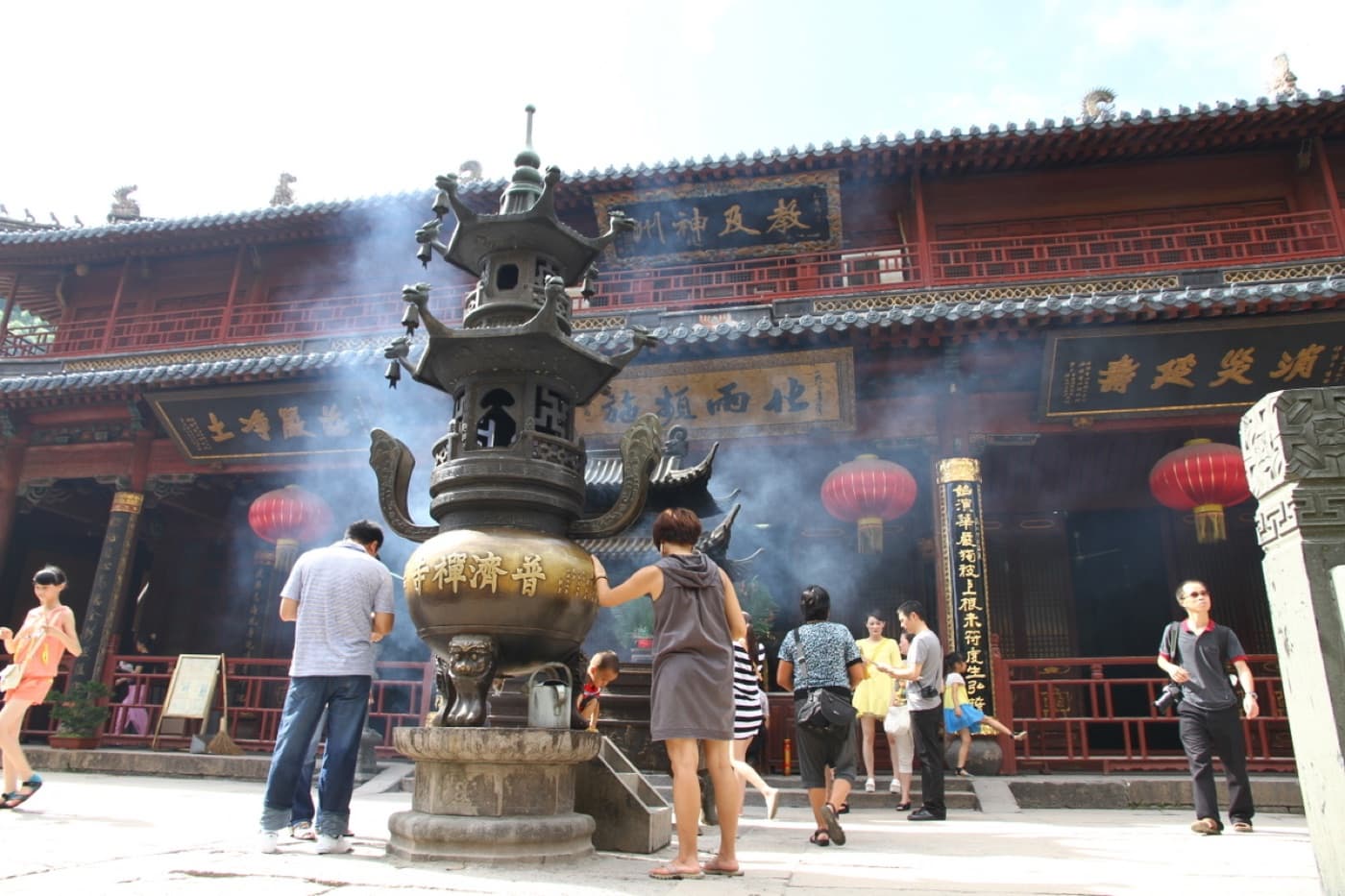
Mount Putuo has famous historic sites, a sunrise over the sea, and the hornbeam (a precious tree species rarely found in China). Who says Putuo isn't a famous mountain? Beside the South Heaven Gate is a cliff inscription, the four characters '海天大观' ('Grand View of Sea and Sky'), written by Lan Li, a Qing dynasty general of the Kangxi era; their bold, vigorous strokes make it another great attraction on Putuo. But Putuo's true appeal lies in its Buddhist tradition.
Puji Temple
1–2 hours · ¥5
Puji Temple, together with Fayu Temple and Huiji Temple, is known as one of the three great temples, and it is one of the most incense-filled temples on the mountain. Its beauty is best appreciated with Haiyin Pond (Sea Seal Pond) as a backdrop: the pond is home to many red carp, and in summer the lotus flowers bloom, which is especially lovely.
Fodingshan (Buddha's Summit)
As the saying goes, 'If you haven't climbed Buddha's Summit, you haven't really been to Putuo.' The main sights on Buddha's Summit include Huiji Temple, the Haitian Buddhist Realm Cliff, Bodhisattva Summit and several others. Its main peak, Baihua Peak, is the highest point on Mount Putuo. Clouds often wreathe the summit, earning it the name 'Huading Cloud Waves' and making it one of the Twelve Scenes of Putuo. From the observation terrace at the top, you can take in sweeping views of the Putuo Ocean and the Lotus Ocean. Climbing Buddha's Summit to pay homage is a Putuo Buddhist tradition: on the 19th day of the second, sixth and ninth lunar months, devotees from across the country prostrate themselves every three steps as they ascend to worship Guanyin Bodhisattva.
3–4 hours
Guanyin of the South Sea Statue
As you walk through Zizhu Lin (Purple Bamboo Grove), the sound of the tide drifts in from afar, and worldly cares seem to melt away. In the distance stands the 'Standing Statue of Guanyin of the South Sea', a symbol of the Buddhist realm where sea and sky meet. It is a place every Buddhist pilgrim must visit.
1 hour · ¥6
Qianbu Beach (Thousand-Step Beach)
A wide, gently sloping expanse of soft, fine sand that rivals Silver Beach in Beihai, Guangxi. At the northern end, a huge boulder sits among the sand; when the tide goes out, the rock is revealed, inscribed with the words 'Listening to the Tide', and stone steps lead up from it to Wanghai Pavilion (Sea-Viewing Pavilion). If you happen to visit at high tide, swimming against the incoming waves is exhilarating. Blue sky, white clouds, rolling waves and sand; green mountains, emerald cypresses, Buddhist chanting and wisps of incense.
2–3 hours
Baibu Beach (Hundred-Step Beach)
East of Duobao Pagoda, also known as Ta Qian Sha (Sand in Front of the Pagoda), it stretches 660 metres, with a headland jutting into the sea in its midst, earning it the nickname 'Lion's Tail'. Gentle waves brush the golden sand, and the glow of the sunset reflects over it like spread glass. The shallows and open sea make for a charming scene. Pavilions stand on the rocky slopes at each end, both excellent spots for watching the sunrise. Baibu Beach is one of China's best-known seaside swimming beaches, and the only seaside beach on Mount Putuo with complete facilities.
2–3 hours · Summer swimming ticket: ¥20 (includes shower)
Luojia Mountain
Legend has it that Guanyin Bodhisattva crossed the Lotus Ocean from here to establish her sacred site on Putuo. Since ancient times there has been a saying: 'Without visiting Luojia Mountain, your pilgrimage to Putuo is incomplete.' Owing to past destruction, everything here today has been rebuilt in later periods.
2–4 hours · ¥70 (includes round-trip ferry to Luojia Mountain)
Zhujiajian Island
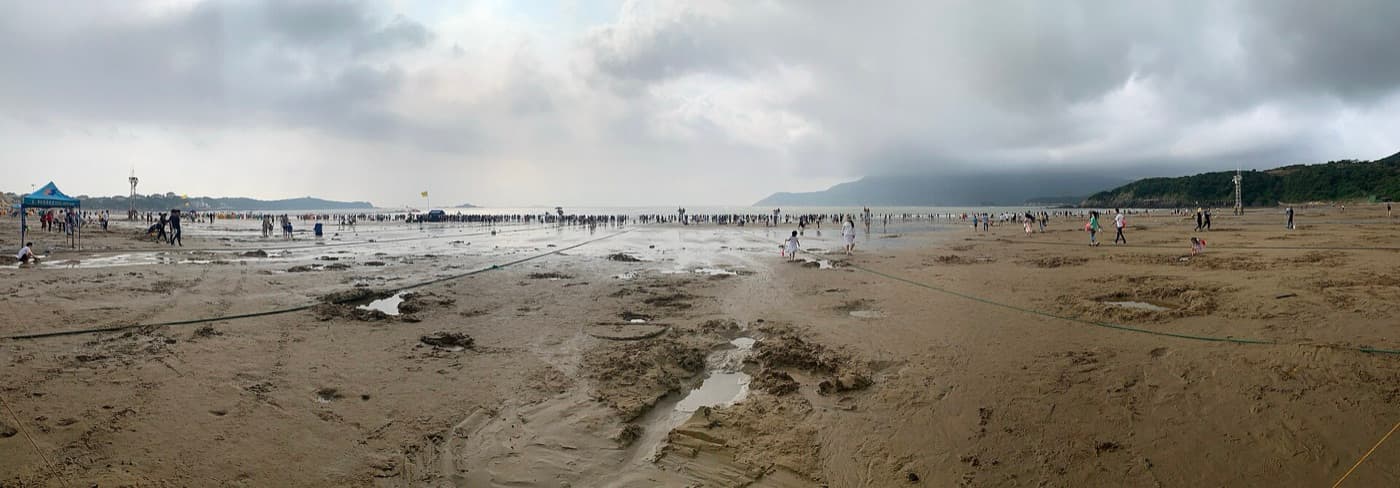
Zhujiajian boasts some of the finest sand beaches in the world. It is famous for its lifelike, vivid sand sculptures and is known as the home of China's International Sand Sculpture. The island has beautiful scenery, fresh air and a pleasant climate, and its golden beach stretches nearly 5 kilometres, vast and spectacular. When you visit, don't forget to take a photo beside the famous sand sculptures!
1–2 days · Nansha Beach: ¥20 in low season, ¥25 in peak season; International Sand Sculpture Art Square: ¥30; Daqingshan Scenic Area: ¥60 in low season, ¥100 in peak season
Fayu Temple
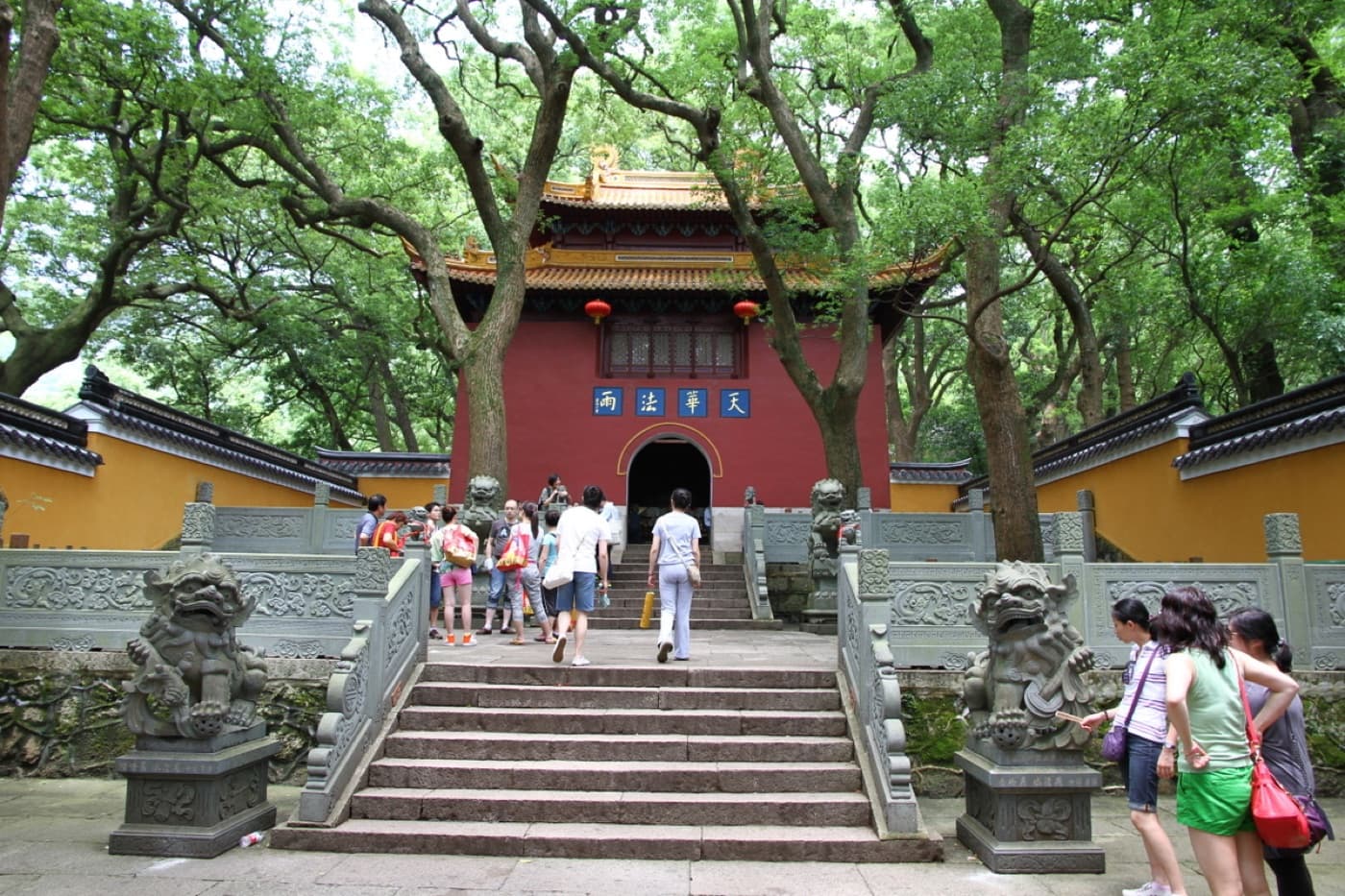
The second-largest temple on the mountain and a must-see. Like the others, it is a place to burn incense and worship devoutly; as Buddhist chanting echoes through the halls, you can glimpse the elegance of its architecture. A highlight of Fayu Temple is the glazed roof tiles on the Nine Dragons Hall, which are said to have been moved from the Ming dynasty Imperial Palace in Nanjing.
1–2 hours · ¥5
Huiji Temple
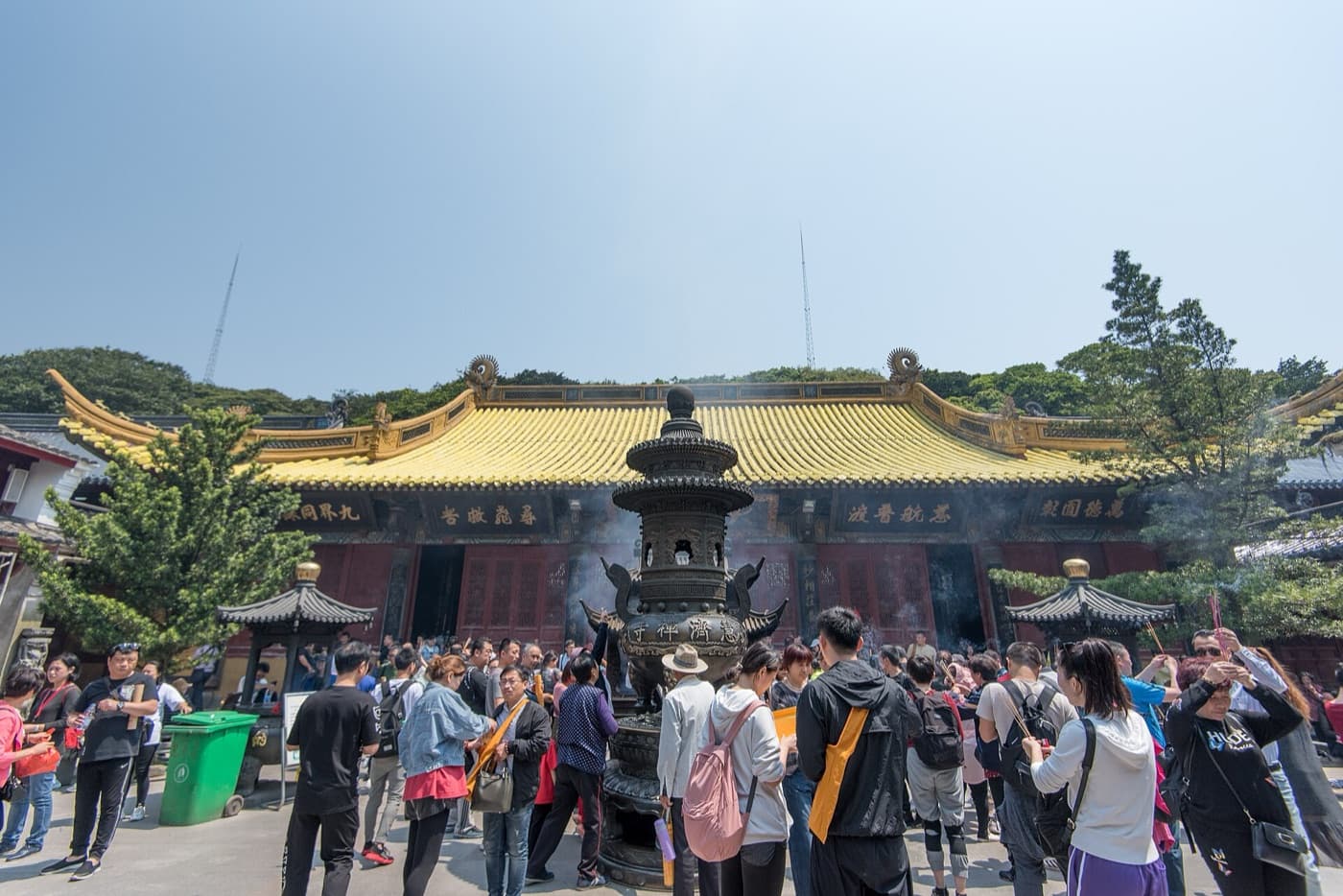
Together with Puji Temple and Fayu Temple, it is one of the three great temples of Mount Putuo.
1–2 hours · ¥5; cable car ¥40 one way, ¥70 return
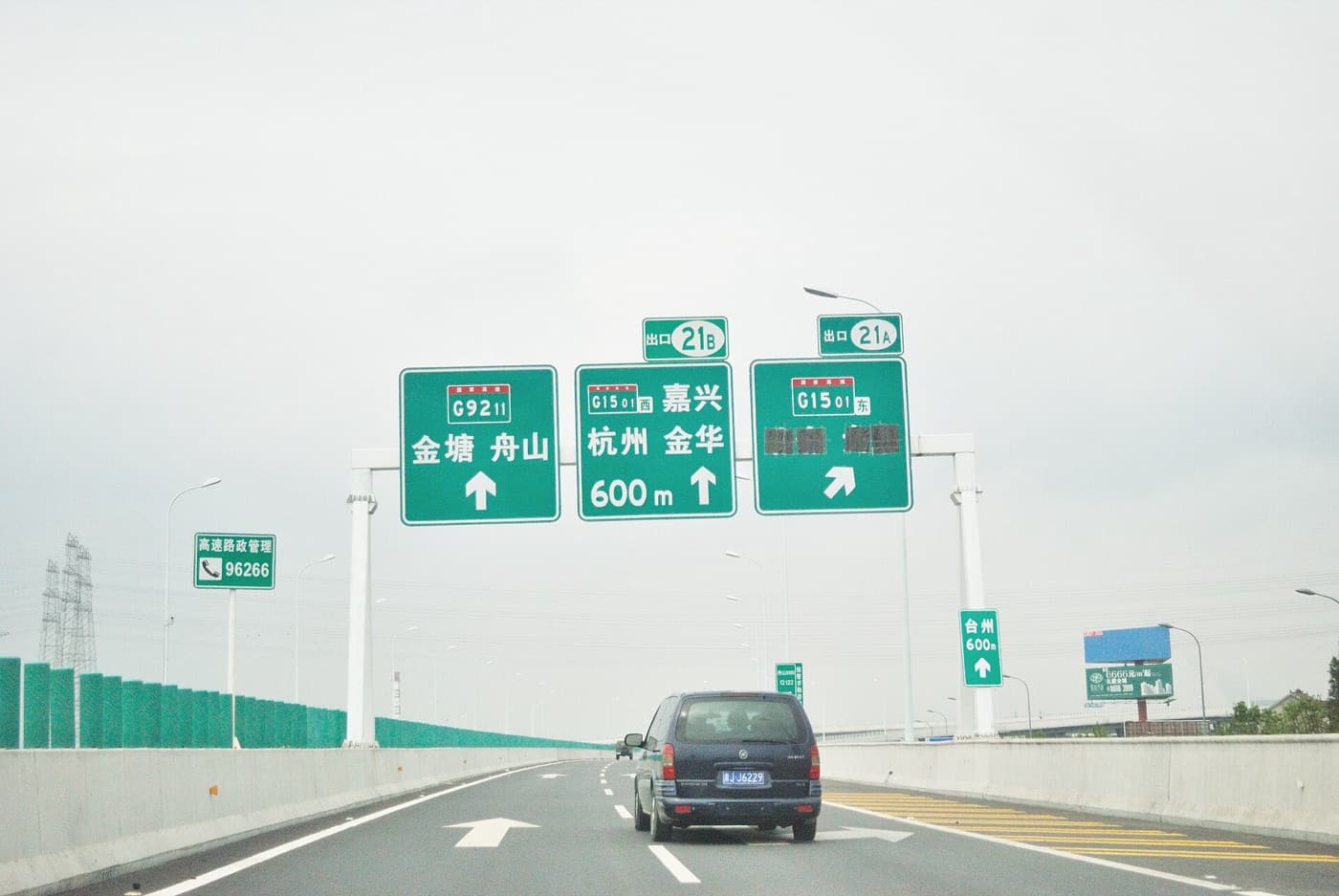
Zhoushan Cross-Sea Bridge
The Zhoushan Cross-Sea Bridge is made up of five sections: the Cen Gang, Xiangjiao Gate, Taoyao Gate, Xihou Gate and Jintang bridges. Among them, the Xihou Gate Bridge is the second-longest suspension bridge in the world. The bridge is spectacular and majestic, and it is a fine place to watch the sunset, though unfortunately stopping the car here is not permitted.
Nature · City & Leisure
Getting there & around
Getting There and Away
Mount Putuo lies on the Zhoushan Archipelago, and boat is the only way to get there. From the pier on the other side you then continue by other means.
By Air
Putuoshan Airport (普陀山机场) is on Zhujiajian Island, just 1.2 km from the famous fishing port of Shengjiamen, with Mount Putuo, the “Sea and Sky Buddhist Kingdom,” 2.5 km to the north. From the airport it takes only 10 minutes to reach Mount Putuo. The airport currently has flights to Beijing, Shanghai, Guangzhou, Shenzhen, Fuzhou, Xiamen and other cities. Shuttle buses run from the airport to Wugongzhi Pier (蜈蚣峙码头) on Zhujiajian, where you can take a ferry to Mount Putuo.
By Ship
Passenger ferries run directly to Mount Putuo from Shanghai (Luchaogang and Wusong), Ningbo and other places.
Shanghai → Mount Putuo
1. From Shanghai, take a boat from Shanghai People’s Square to Mount Putuo, departing at 7:00, 8:30 or 9:10. The trip takes about 4.5 hours and the fare is ¥135.
2. Boats depart daily at 7:30 from Shanghai Zhonggeng Travel City for Mount Putuo. The trip takes about 4.5 hours and the fare is ¥135.
3. Ferries run from the Shanghai Long-Distance Bus Station to Mount Putuo daily at 8:00 and 8:35. The trip takes about
5.5 hours, and the fare is ¥176.
Ningbo → Mount Putuo
Ferries run directly from Ningbo to Mount Putuo roughly every hour from early morning until evening. From Ningbo Railway Station, the trip takes 2.5 hours and the fare is ¥105.
By Rail
Take a train to Ningbo or Shanghai, then transfer to a ferry or speedboat.
By Road
There is no direct long-distance bus to Mount Putuo. Visitors can first take a bus to the Putuo Bus Station in Shengjiamen on Zhoushan’s main island, then transfer to the Banshengdong Pier (半升洞码头) for a ferry to Mount Putuo. From the Shengjiamen Putuo Bus Station to Banshengdong Pier, the bus costs ¥2 and a taxi about ¥10.
Shanghai → Mount Putuo
Shanghai South Railway Station has multiple direct buses to Putuo daily from 7:15 to 18:00. The trip takes about 4.5 hours and the fare is ¥150. After getting off, transfer to a ferry or speedboat to Mount Putuo.
Hangzhou → Mount Putuo
From Hangzhou East Bus Station, or the Hangzhou Huanglong Tourist Transport Hub, buses run directly to Putuo Bus Station every 20 minutes from 7:20 to 18:40. The fare is about ¥110. After getting off, transfer to a ferry or speedboat to Mount Putuo.
Ningbo → Mount Putuo
From Ningbo South (or North) Bus Station, buses run directly to Shengjiamen and Putuo Central Station every 15 minutes from 6:00 to 21:00. The trip takes about 3 hours and the fare is about ¥59. After getting off, transfer to a ferry or speedboat to Mount Putuo.
Driving
From Shanghai
Route: Shanghai → Shanghai–Hangzhou–Ningbo Expressway → Hangzhou Ring Expressway (East Line) → Ningbo → Hangzhou–Ningbo Expressway → Beilun → Daxie Pier or Baifeng Ferry Terminal → Mount Putuo
From Hangzhou
Route: Hangzhou → Hangzhou–Ningbo Expressway → Ningbo → Beilun → Daxie Pier or Baifeng Ferry Terminal → Mount Putuo
Getting Around the Island
Dedicated sightseeing shuttles link most of the island’s sights. They run every 10 to 15 minutes, but after 17:00 vehicles gradually stop running, so return to your accommodation before then. Fares are ¥2–10. The largest transfer stops, with the most buses, are the Ferry Terminal, Zizhulin, East of Puji Temple (Baibusha) and Fayu Temple (Qianbusha).
Route 1 Sightseeing Shuttle: Xitian Ferry Terminal → Cinema (Baotuo Hotel) → Financial Street → Haifang New Village → Pier → Zizhulin → Puji Temple → Dacheng Nunnery
Route 2 Sightseeing Shuttle: Pier → Zizhulin → Puji Temple → Dacheng Nunnery → Fayu Temple → Feishaao → Baoyue Nunnery → Gufo Cave → Cableway
Route 3 Sightseeing Shuttle: Puji Temple → Dacheng Nunnery → Fayu Temple → Feishaao → Xianghui Nunnery → Fanyin Cave
Return: Fanyin Cave → Xianghui Nunnery → Feishaao → Fayu Temple → Dacheng Nunnery → Puji Temple → Zizhulin → Pier
Cableway
The only way to reach Huiji Temple. One-way up is ¥40, one-way down is ¥35, and the round-trip combined ticket is ¥70.
Chartered Vehicles
Mount Putuo’s sights are spread out, so a group charter is more economical. A standard minibus costs ¥480 per day, a Toyota air-conditioned minibus ¥850 per day, and a Santana sedan ¥600 per day. Demand on Mount Putuo varies greatly between peak and off-season, and prices can be negotiated in the off-season.
Ferries
Travel from Mount Putuo to the other Zhoushan islands relies mainly on ferries and speedboats.
Mount Putuo → Shengjiamen
Ferries hourly from 7:00 to 16:10. The crossing takes half an hour and the fare is ¥16.
Speedboats every 20 minutes from 6:00 to 16:20. The crossing takes 12 minutes and the fare is ¥22.
Mount Putuo → Zhujiajian
Speedboats about every 30 minutes from 6:30 to 22:10. The crossing takes 5 minutes and the fare is ¥30.
Duangu Wharf on Mount Putuo → Luojia Mountain
Three sailings at 7:00, 8:00 and 13:00, with the boat returning with passengers.
Mount Putuo → Taohua Island
About 1 hour by speedboat.
Mount Putuo → Daishan
Departs at 16:00, arrives at 17:30.
Daishan → Mount Putuo
Departs at 6:00, arrives at 8:30.
Airport Information Desk
By Air- Phone:
- 0580-6260716
Airport Ticket Office
By Air- Phone:
- 0580-6260555
Mount Putuo Passenger Pier
Ningbo → Mount Putuo- Phone:
- 0580-6091121
Shengjiamen Banshengdong Passenger Pier
Ningbo → Mount Putuo- Phone:
- 0580-3661999
Shengjiamen Putuo Bus Station
By Road- Address:
- Donghai Middle Road & Punan Road
- Phone:
- 0580-3012011
Eat & drink
Recommended Food and Drink
Prices on Mount Putuo Are Relatively High
As Mount Putuo is an island, many goods are shipped in from the mainland, so prices are naturally somewhat higher. For example, bottled water costs ¥5–¥10 per bottle.
Local Specialties
Yunwu Buddhist Tea, Guanyin Cakes, Putuo Buddha Cakes, South Sea Laver, Huanhun Grass, Cuisheng Zi, Shicaihua, Guanyin Narcissus and Purple Bamboo are all unique to Mount Putuo. Among them, the Guanyin Narcissus, Buddhist tea and laver are especially distinctive.
Staying in Temples
Puji Temple, Fayu Temple and Huiji Temple, the three major temples, all offer accommodation. As the temples do not run lodging for profit, rooms cannot be booked in advance. Temple accommodation ranges from standard rooms to dormitory beds. Facilities are simple, but prices are very affordable, and guests can watch monks perform their morning and evening devotions, making it well suited to pilgrims.
Staying in Family Guesthouses
You can also choose family guesthouses along the roads of Mount Putuo. They are clean, all have private bathrooms, and showers are available 24 hours a day. Room rates fluctuate with holidays. Some family guesthouses also serve lunch and dinner every day.
tip: Staying in Nongjiale (Farmhouse Inns)
Longwan Village and Xishan New Village are the main clusters of resident-run nongjiale farmhouse inns, priced at ¥80–¥200, with a large gap between peak and off-peak seasons. Longwan Village is by the sea, so it suits those who want beaches and sunrise views over the water. Xishan New Village is closer to the main scenic spots, tourist service centres and banks, so you can choose according to your preferences.
Seafood
Recommended Food and DrinkMount Putuo has an abundance of seafood, including yellow croaker, cuttlefish, sea crab, clams, mussels, shellfish and striped shrimp.
Vegetarian Meals
Recommended Food and DrinkVegetarian food is an experience not to be missed on Mount Putuo. The dining halls of Puji Temple, Fayu Temple and Huiji Temple are open at times convenient for pilgrims. Breakfast is generally served 5:20–6:20, lunch 10:30–11:40, and dinner 16:20–17:20. For a little over ¥10, you can enjoy a vegetarian meal while admiring the temple architecture, killing two birds with one stone.
Where to stay
When staying on Mount Putuo, each guest must pay a ¥20 sea embankment construction fee. During peak season, it is best to book rooms a week in advance. In addition, due to the island's environmental policies, hotels do not provide disposable towels or toiletries as standard, so you will need to bring your own.
Zhuxiangju Hotel
A guesthouse run by the China Construction Bank, with decent service quality and reliability, and sea-view rooms available.
- Address:
- 20 Jinsha Road
- Phone:
- 0580-6698095
Jinshage Farmhouse Inn
A well-regarded nongjiale farmhouse inn a 10-minute walk from the pier. The surroundings are pleasant, the landlady's cooking is excellent, and it is very close to Guanyin of the South Sea.
- Address:
- No. 57, Building 25, Longwan Village
- Phone:
- 13868215290
Putuoshan Youyi Hostel
Located near Jinsha at the southern tip of the island, with a free beach right outside the door. The owner couple are warm and honest hosts, earning praise from many visitors and a good reputation online.
- Address:
- No. 6, Building 4, Longwan Village
- Phone:
- 13575623423/13735012079
Tata Sea View Guesthouse
Recommended AccommodationThe only youth hostel on Dongfu Island, very suitable for young travellers. The owner is very friendly.
- Phone:
- 13666593936
Haishang Yunju (Sea Cloud Retreat)
Recommended AccommodationSpacious, clean and comfortable rooms. Listening to the sound of the waves and watching the sunset from your room is simply delightful.
- Phone:
- 17317766223
Shopping
Recommended Shopping
Sea Fish
Recommended ShoppingMount Putuo produces the famous 'Four Great Sea Fish' of China, with yellow croaker and cuttlefish the most renowned. Midsummer is the peak fishing season and the best time to buy fresh seafood.
Foshou (Buddha's Hand Shellfish)
Recommended ShoppingShaped like a Buddha's hand with its five fingers spread, this shellfish is unique to Mount Putuo and is only available from August. When cooked, it gives off a rich aroma. It is fresh but not greasy, a distinctive seafood delicacy.
Fogua (Buddha Melon)
Recommended ShoppingA type of watermelon grown on Mount Putuo, known for its thin rind, red flesh and sweet taste.
Putuo Buddhist Tea
Recommended ShoppingAlso known as Fodingshan Cloud and Mist Tea, this is a wild tea that grows on Fodingshan Mountain at an altitude of 291 metres. Buddhist tea picked before Grain Rain and brewed with Mount Putuo's spring water is said to have medicinal properties.
Day trips & beyond
Source: China Self-Guided Travel 2025 (《中国自助游》, Tianjin Science & Technology Press, Aug 2024), pp. 1187–1204. Translated from the Chinese edition; names and prices follow the guidebook. · Plain text version