Wutai Mountain travel guide
五台山
Wutai Mountain travel guide with a day by day itinerary, 19 places with tickets and opening hours, where to eat and stay, and how to get there.
19 places · In the guidebook: pages 1824–1840

Wutai Mountain, Shanxi Province · AI illustration for China Trip
Quick itinerary
Wutai Mountain in 2 days
- Day 1
- Wuye Temple→
- Tayuan Temple (the iconic Great White Pagoda)→
- Xiantong Temple (the mountain's founding monastery, where you can visit the Zangzhen Pavilion)→
- Luohou Temple (where the Buddha appears as flowers bloom)→
- Yuanzhao Temple→
- Yuantong Temple→
- Pusading Temple (if you have time, you can also climb to Dailuo Peak on the East Terrace)
- Day 2
- Bishan Temple→
- Jifu Temple→
- Nanshan Temple→
- Guanyin Cave→
- Puhua Temple→
- Longquan Temple→
- Zhenhai Temple→
- Mingyue Pool→
- Fomu Cave
The feel of the place
Mount Wutai is located in Xinzhou Prefecture in the northeast of Shanxi Province, 230 km from Taiyuan. It is one of the world's five major Buddhist holy sites and the foremost of China's four sacred Buddhist mountains. Known as the 'Golden Wutai,' it enjoys a great reputation internationally.
Mount Wutai is made up of five major peaks: East, South, West, North and Central. They are said to represent the five wisdoms of Manjushri Bodhisattva and the Five Dhyani Buddhas. The East Peak is where you can see the sea of clouds and the sunrise; the West Peak is good for moon-viewing; the North Peak is the highest and is known as the 'Roof of North China' for its views of layered mountain ranges; the Central Peak has natural wonders in the sky; and the South Peak is the lowest of the five, with gentler slopes and beautiful scenery. In addition, as a sacred site of Manjushri Bodhisattva, Mount Wutai has grand Buddhist temples scattered across the five peaks, and countless precious cultural relics adorn the area. Moreover, Mount Wutai is a rare place in China where Han Chinese Buddhism and Tibetan Buddhism coexist. Whether or not you are a Buddhist, a visit here will cleanse your soul.
Respect Local Customs
1. Mount Wutai is a Buddhist holy site. Whether or not you believe in Buddhism, keep quiet and observe temple rules.
2. If you are only sightseeing, it is best to avoid incense vendors. Do not reach out to take anything unless you intend to buy it, or it will be very hard to shake them off.
3. Never bring out or eat meat or other non-vegetarian food inside Buddhist temples.
Visiting in Winter for the Snow
In winter, Mount Wutai is blanketed in white snow. It is harsh and bitterly cold, yet quiet and dignified, with a distinctive charm. As a result, even in the cold season, more than 10,000 people come each year to worship and sightsee.
Visiting Mount Wutai in winter requires attention to three points: first, the weather and road conditions; second, most guesthouses are closed in winter, so check your accommodation in advance; third, dress very warmly.
Interesting Forms of Address
1. Whether you meet a monk, a nun or a lay Buddhist, and whether they are young or old, you may address them as 'Shixiong' (senior brother).
2. Wherever you would say 'hello,' 'thank you' or 'goodbye,' you may say 'Amituofo' instead.
Climate and Best Time to Visit
Mount Wutai sits at high altitude and has a cool climate. From October onward, the mountains are covered in snow and ice, and temperatures do not rise above 5°C until May of the following year. The best time to visit is therefore May to September, when the weather is mild and pleasant.
Warm Clothing and Rain Gear Are Essential
Bring plenty of clothing when visiting Mount Wutai; a windproof, waterproof jacket is best. Summer is also a rainy season in northern China, so rain gear is essential for travellers. Visitors who want to climb to the summit for the sunrise should rent a padded cotton coat locally. Temperatures on Mount Wutai vary greatly between morning, midday and evening, which can easily lead to colds and stomach upsets, so it is advisable to bring some common medicines.
Things to see
The Mount Wutai scenic area entrance ticket does not include all temples. Most temples inside charge separately, generally around ¥10 each.

Xiantong Temple
2–3 hours · ¥10
The largest temple on Mount Wutai. Together with the White Horse Temple (白马寺) in Luoyang, it is one of the earliest temples in China, and it is the only nationally protected temple in the Wutai Mountain scenic area. The Great Treasure Hall (大雄宝殿) hosts Buddhist ceremonies. The Wuliang Hall (无量殿) is built entirely of brick and is remarkable for having no roof beams; it houses a cast bronze Vairocana Buddha. The Bronze Hall (铜殿) is a bronze structure containing more than 10,000 small, exquisitely crafted Buddha statues, and is a rare example of bronze cultural relics in China.

Nanshan Temple
History & Culture · Architecture · Temples
A seven-storey temple on Mount Wutai, built into the mountainside in clearly defined tiers, with a mysterious atmosphere. It is best known for its stone carvings, which depict Buddhist legends, Taoist stories, trees, flowers and plants, and are considered one of Mount Wutai's finest features. This is most evident in Youguo Temple (佑国寺) on the upper three floors, where the top level also offers fine views of the other four peaks of Mount Wutai.
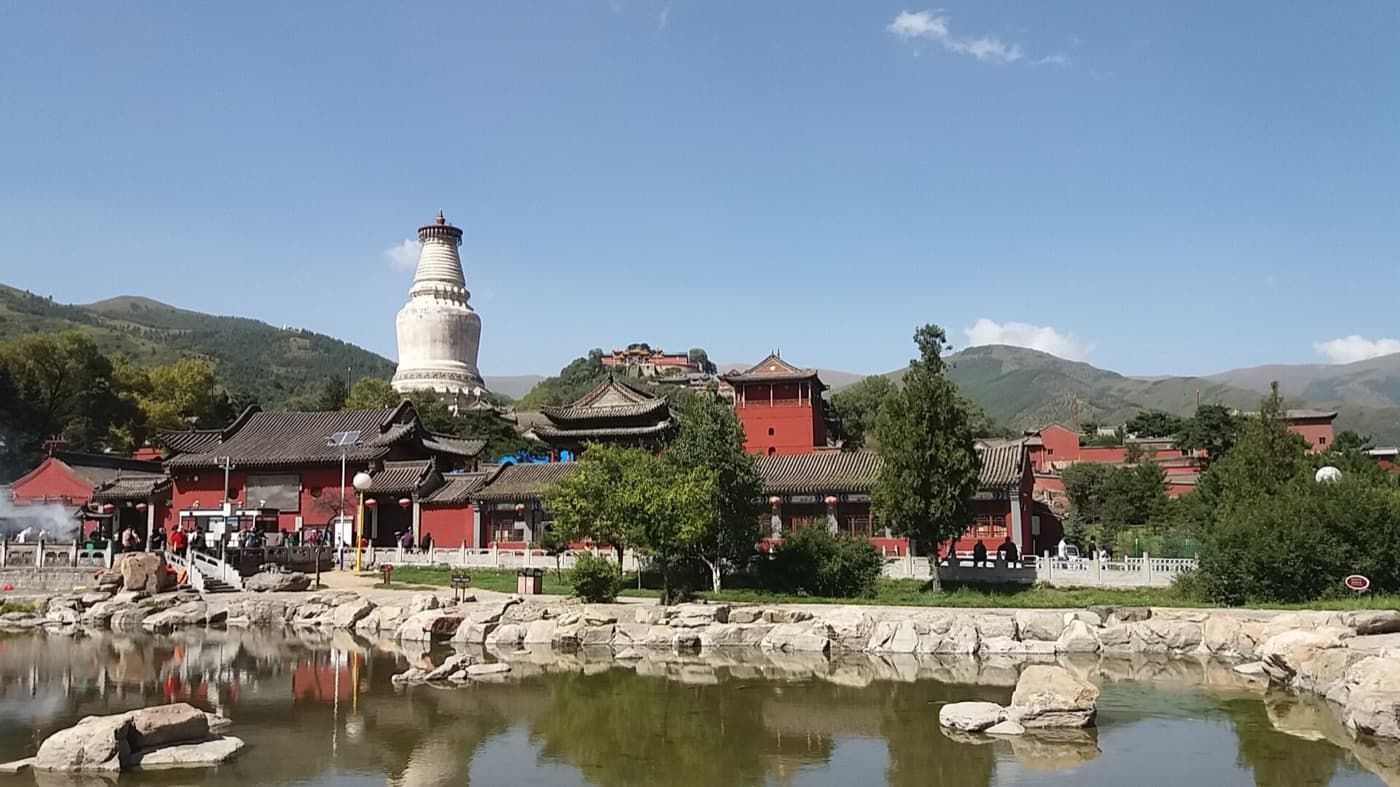
Tayuan Temple
Located south of Xiantong Temple, Tayuan Temple is one of the five main Chan (meditation) sites on Mount Wutai. It houses the most famous landmark on Mount Wutai, the Great White Pagoda (大白塔). To the south stand three wooden memorial archways inscribed "Pure Sacred Realm" (清凉圣境), built in the Ming dynasty.
1–3 hours · ¥10
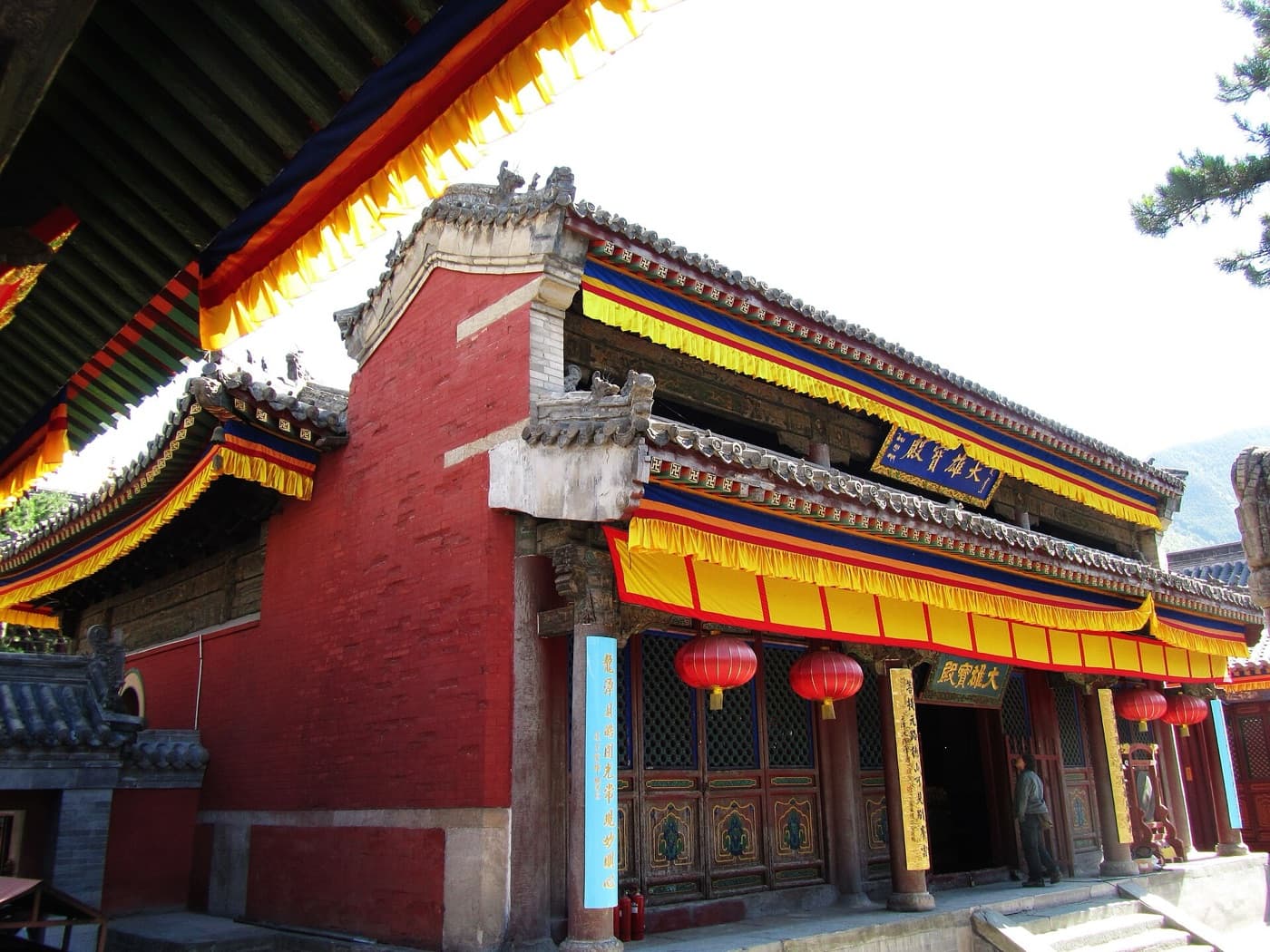
Luohou Temple
Located east of Xiantong Temple, Luohou Temple is one of the five main Chan sites and one of the ten Tibetan Buddhist temples on Mount Wutai. It is home to the most unusual man-made spectacle on the mountain, "Flowers Bloom, Buddhas Appear" (花开现佛). Every year on the 15th day of the sixth lunar month, the birthday of Manjushri Bodhisattva, monks dress in outlandish costumes and masks and perform "ghost dances" (跳鬼) for entertainment.
1–3 hours · Free
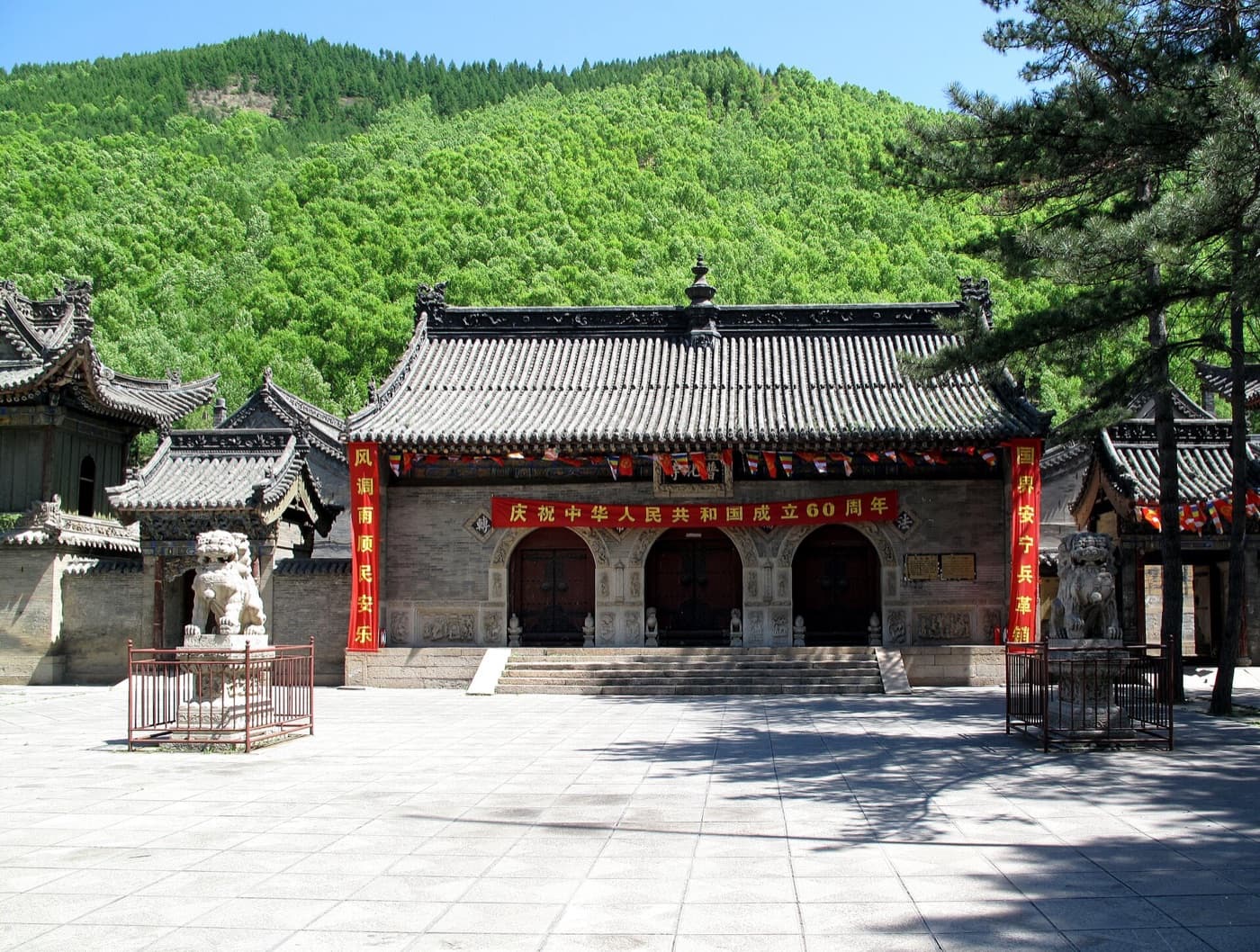
Puhua Temple
The most recently built temple on Mount Wutai; most of the current structures date from the Republican era. The circular stone carvings set into the screen wall in front of the temple are among the finest of Mount Wutai's temple screen walls. Inside the Great Hall, the gable walls depict the process of Shakyamuni attaining Buddhahood. Behind the hall stands a very rare statue of an "Old Manjushri" with a long beard and an arhat-like face.
History & Culture · Temples
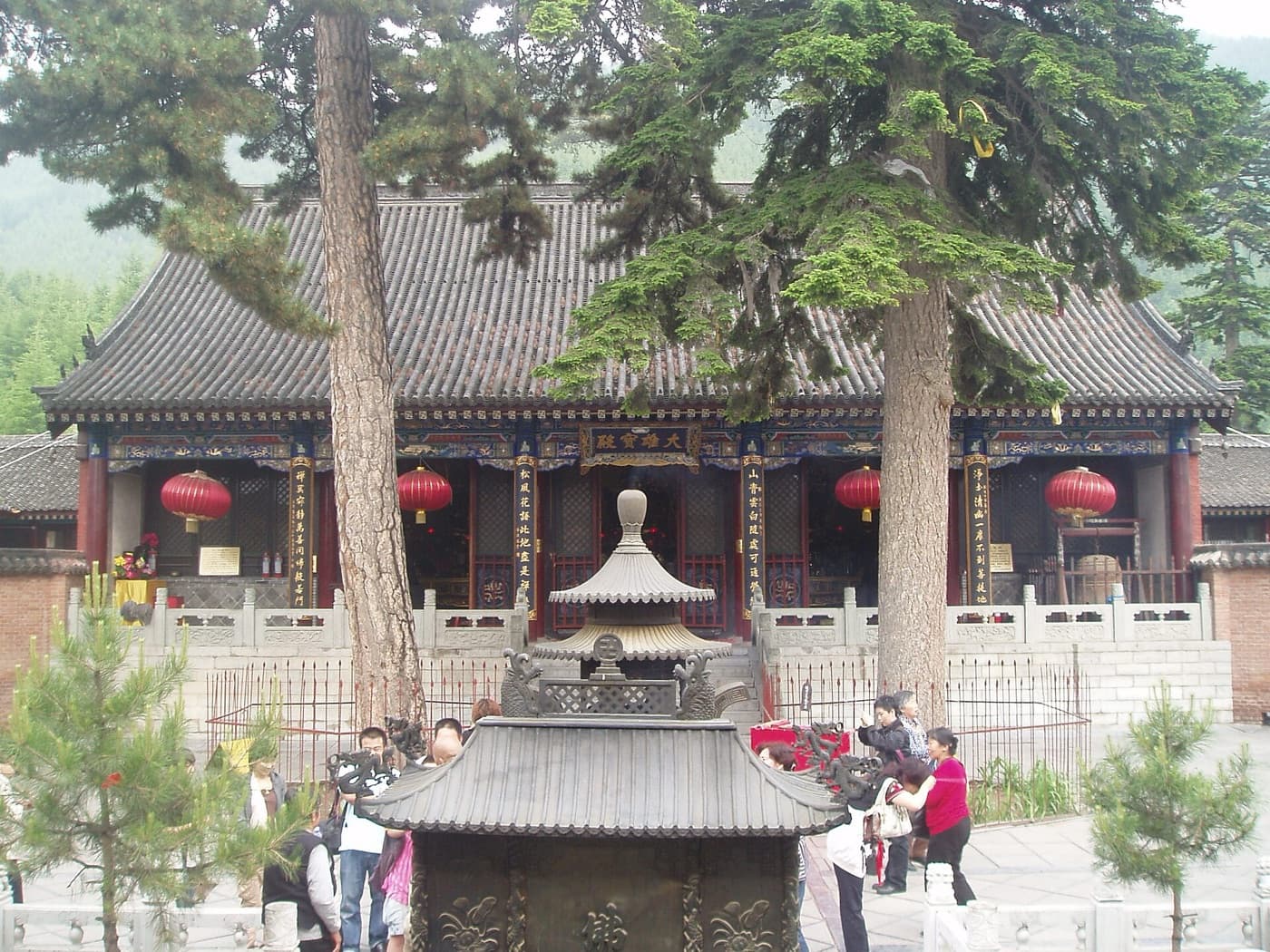
Dailuo Peak
Dailuo Peak sits on a mountaintop beside the Qingshui River, east of Taihuai Town, rising 400 metres vertically. To fulfil an emperor’s wish to worship at one temple while making a pilgrimage to Wutai, the peak’s hall houses five statues of Manjushri, symbolising the five summits of Wutai. This spared monks and pilgrims from outside the region the hardship of travelling the full mountain. Worshipping at Dailuo Peak is also known as the “Small Pilgrimage.”
1–2 hours · ¥8. Cable car up: ¥50; cable car down: ¥35
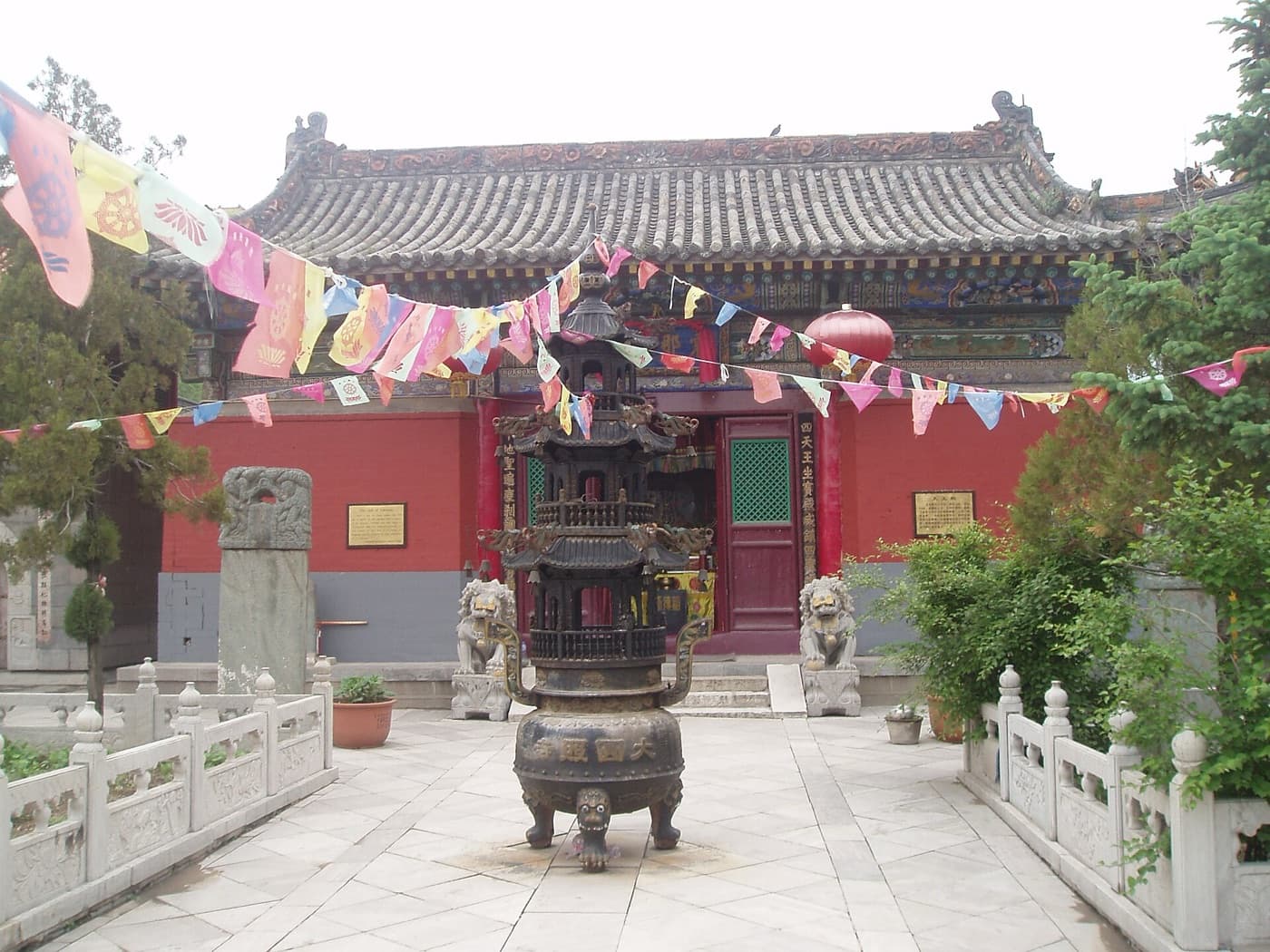
Yuanzhao Temple
Located opposite the bell tower of Xiantong Temple. Its gate is distinctive: most temples have a "three-gate" entrance, but this one has five, known as the "Five Front Gates" (五前门), a unique feature among Mount Wutai's temples.
1–2 hours · ¥10
Wanghai Temple
Built on the summit of East Terrace (东台) at 2,996 metres above sea level, Wanghai Temple is dedicated mainly to Manjushri Bodhisattva. It is one of the best places to watch the sunrise from East Terrace. When the sun rises and its rays spread, the temple is completely enveloped by clouds and mist, and the deep, resonant morning bell lends a solemn, reverent air.
History & Culture · Temples · Nature
Wuye Temple
Also called the Wanfo Pavilion (万佛阁), Wuye Temple is a Dragon King temple. On the 1st and 15th of each lunar month, crowds of devotees arrive, and over time it has become the centre of a range of activities, including rain prayers, opera performances and market fairs. It is said that wishes made here are very effective, which makes it the place with the most vigorous incense offerings on Mount Wutai.
Free
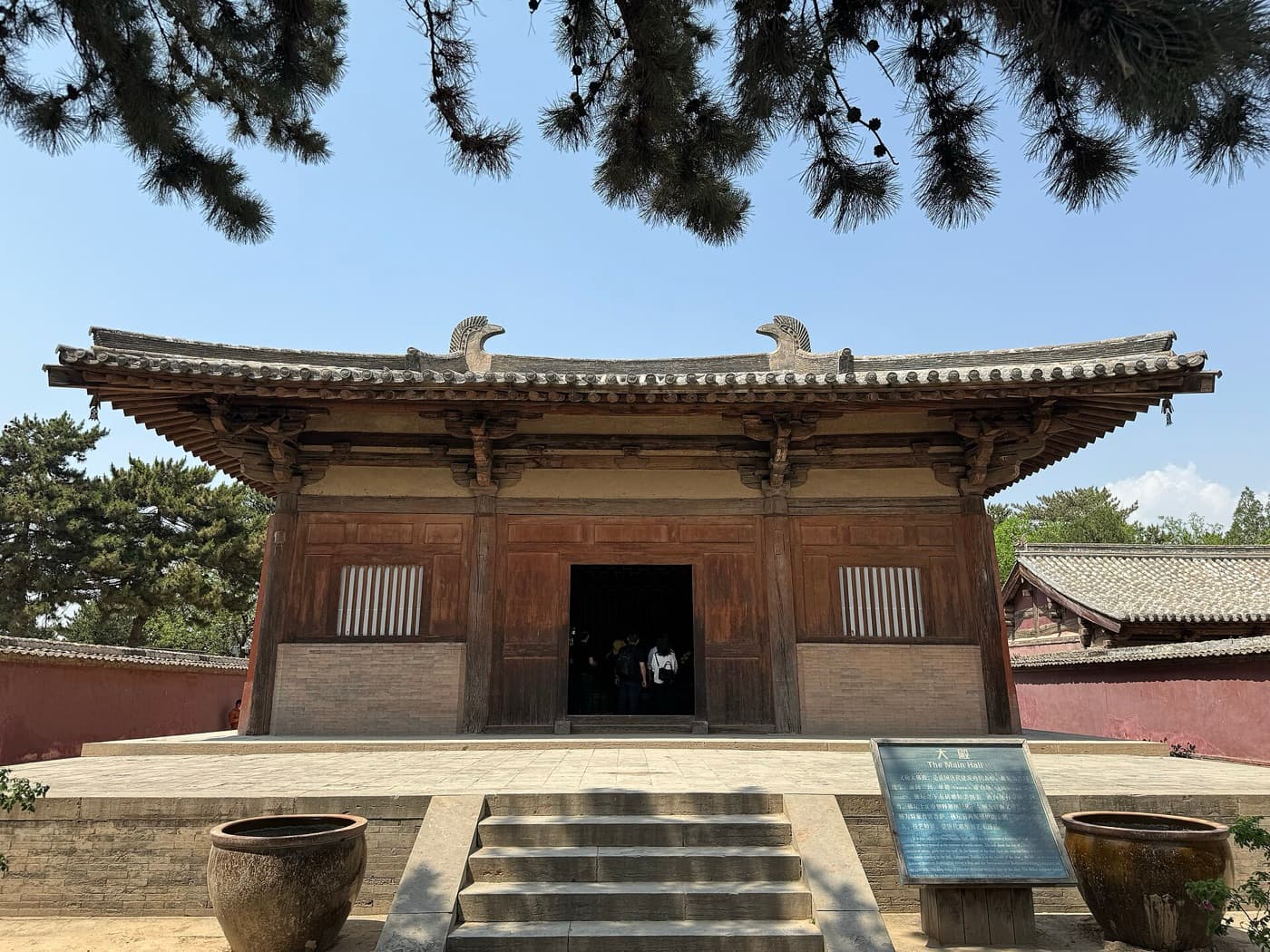
Nanchan Temple
One of the oldest surviving temples in China. Its founding date is unknown, but the existing buildings were rebuilt in the Tang dynasty, giving it at least 1,200 years of history. When Emperor Wuzong of Tang suppressed Buddhism, Nanchan Temple escaped destruction because of its remote location on Mount Wutai. Its Tang-era Great Buddha Hall and the Tang murals inside are considered national treasures.
2–3 hours · ¥10
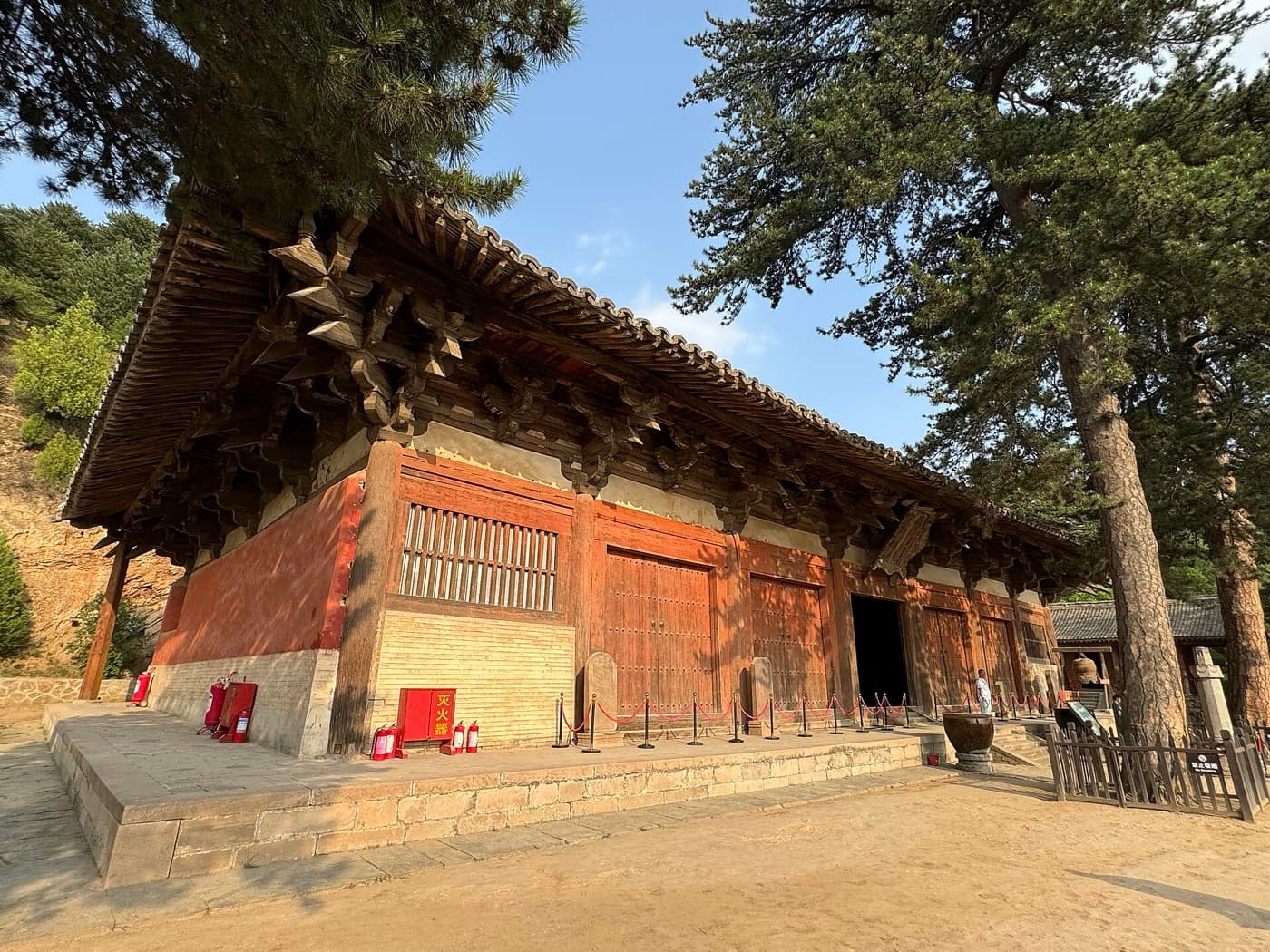
Foguang Temple
The temple holds precious Buddhist relics, earning it the nickname "Asia's Buddhist Radiance" (亚洲佛光). Its Tang-dynasty architecture, sculptures, murals and inscriptions are of great historical and artistic value and are known collectively as the "Four Wonders."
2–3 hours · ¥15
Wannian Ice Cave
Confirmed through an on-site survey by cave specialists from the Institute of Geology, Chinese Academy of Sciences, the cave formed during the Quaternary glacial period of the Cenozoic Era, roughly 3 million years ago. It is therefore named Wannian Ice Cave (万年冰洞).
1 day · ¥120
Shiziwo
Legend says that when Manjushri passed through here, his green lion mount was so enchanted by the scenery that it refused to leave. Manjushri built a lair for it on the spot, which gave rise to Shiziwo Temple (狮子窝寺). In the temple courtyard stands a 13-storey octagonal glazed pagoda containing more than 11,000 glazed Buddha statues, which is why it is also called the "Pagoda of Ten Thousand Buddhas" (万佛塔). It is an impressive sight.
1–4 hours
Fomu Cave
Mother Buddha Cave (佛母洞) is a natural limestone cave, 17 metres deep, divided into an outer and an inner chamber. The inner cave is gourd-shaped, and its walls are covered with coloured stalactites and stalagmites that resemble the internal organs of the human body, which is why it is known as the "mother's womb" (母腹). Most visitors come to crawl through the cave. Legend says that passing through it from one end to the other is like being reborn in the Buddha Mother's womb, that is, starting life anew.
1 hour
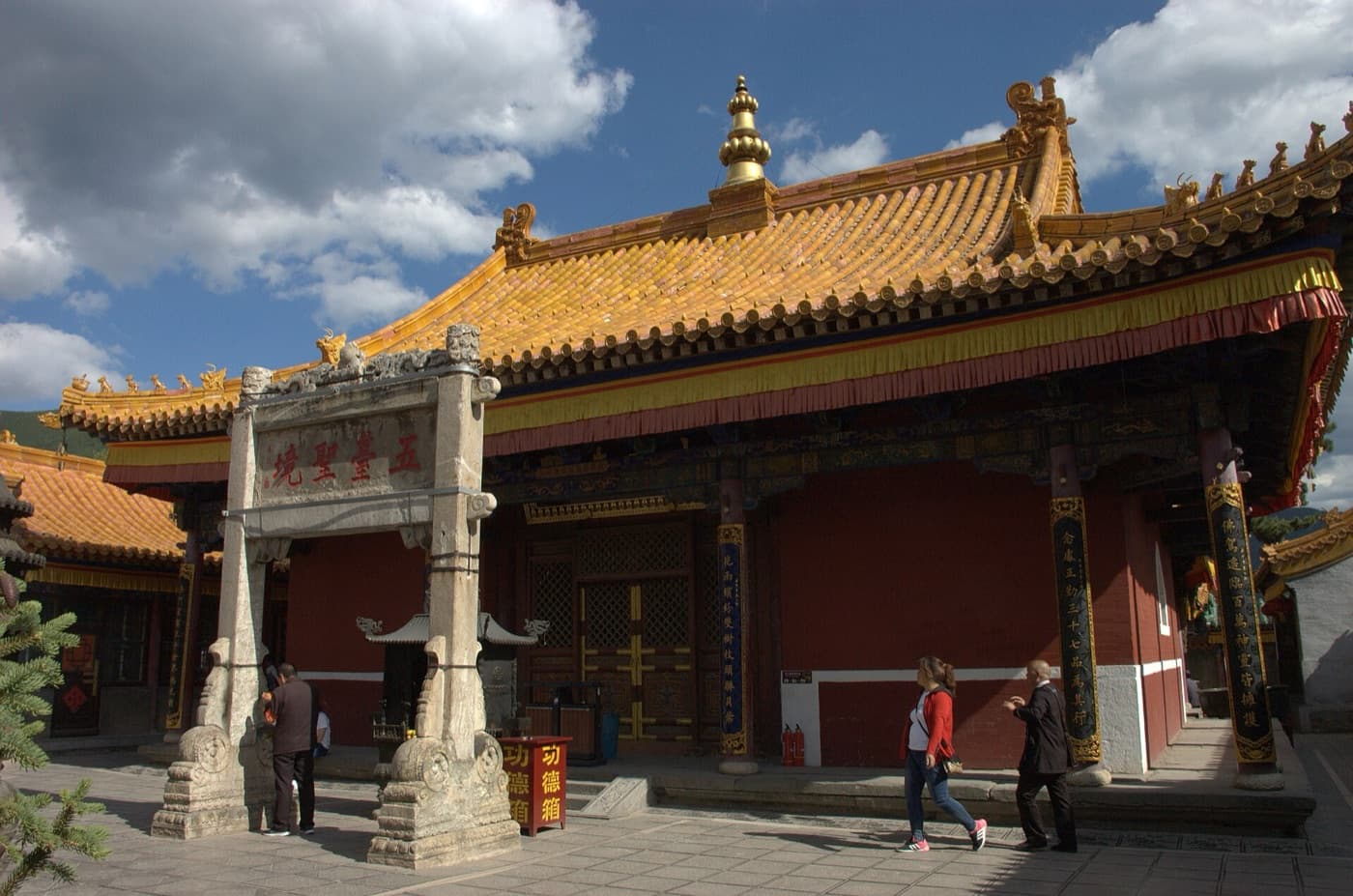
Pusa Ding Temple
Situated on Lingjiu Peak (灵鹫峰) north of Xiantong Temple, Pusading Temple is the largest, most complete and most magnificent Tibetan Buddhist temple on Mount Wutai, and one of the five main Chan sites. "Pusading" is a Manchu term meaning "where Manjushri Bodhisattva dwells on Lingjiu Peak." In the early Qing dynasty, the emperors pursued a conciliatory policy toward ethnic minorities to safeguard national unity. As a result, Pusading Temple, already the foremost Yellow Sect temple on Mount Wutai, rose to become the highest-ranking temple on the mountain. The Kangxi and Qianlong emperors visited Mount Wutai many times and stayed here. In front of the temple, 108 stone steps form a test every pilgrim must pass.
1–3 hours · ¥10
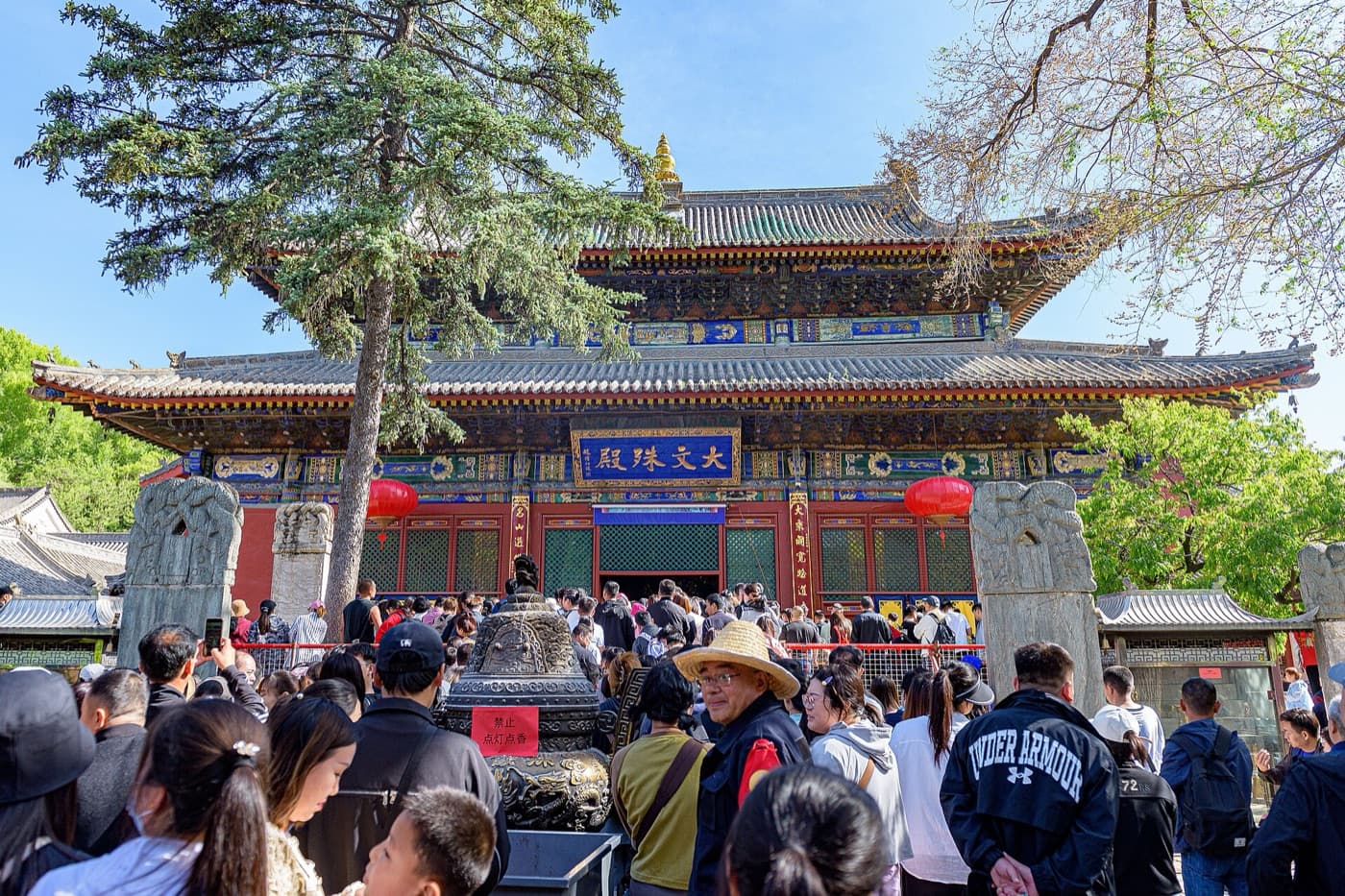
Shuxiang Temple
Facing the mountain gate of Tayuan Temple across the way, Shuxiang Temple is famous for housing the largest statue of Manjushri riding a lion on Mount Wutai. It is one of the best-known “blue temples” (Han Chinese Buddhist monasteries) on the mountain and one of the Five Major Chan Centres. The suspended clay sculpture of the Five Hundred Arhats Crossing the Sea along the side walls dates from the Ming dynasty. Near the temple is Prajna Spring, one of the Five Sacred Sites of Wutai. The “pure water” it provides is reserved for the living Buddhas of the yellow temples, and it still flows without interruption today.
1–3 hours · Free
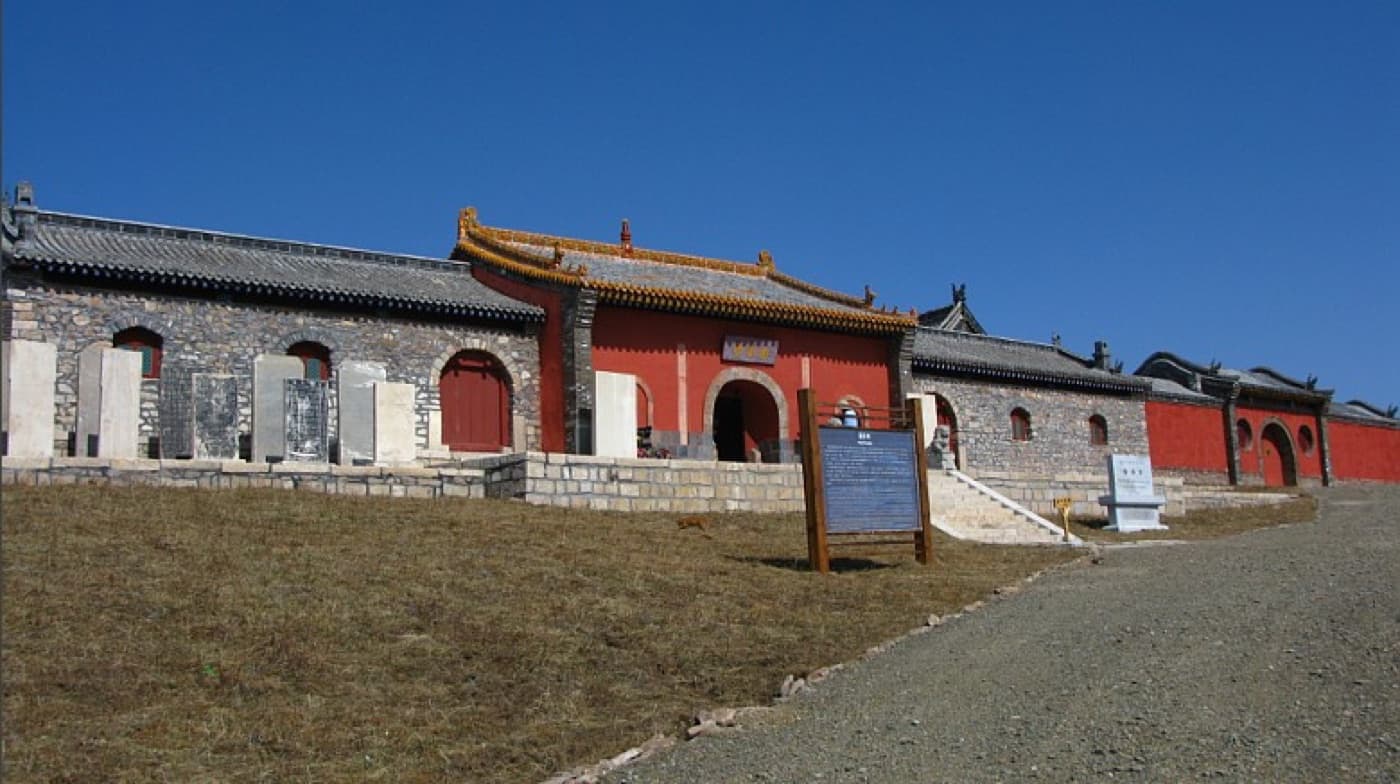
Bishan Temple
Bishan Temple has the largest number of monks of any temple on Mount Wutai. Inside its Vairocana Hall is the only Burmese jade Buddha among the mountain's temples. The only ordination platform on Mount Wutai is also located here, and it dates from the Ming dynasty.
1–2 hours · ¥16
Getting there & around
Getting There and Away
Railways and highways are the main ways to reach Mount Wutai.
In the middle of Mount Wutai lies a small town that seems to be cradled by the five peaks, hence its name Taihuai Town (台怀镇). It is the centre for visiting Mount Wutai's scenic spots and its transport hub. Much of the town is taken up by monasteries, and the rest is mostly residences and shops.
From Beijing to Mount Wutai, take the Jingshi Expressway from Liuli Bridge and exit at Baoding. Follow the provincial road to Fuping, then join the Fuping Expressway directly to Mount Wutai. The whole journey takes about 3 hours.
Railway
You can take a train from Beijing, Taiyuan or Datong to Wutaishan Station or Xinzhou Station, then transfer to a bus to Taihuai Town.
Highway
The long-distance bus station in the centre of Taihuai Town lies between Taihuai Town and Nanshan Temple. It has buses to destinations across the region, and also offers taxis for touring Mount Wutai.
Getting Around Mount Wutai
1. Taiyuan East Bus Station runs 7 buses daily to Mount Wutai. The full fare is ¥82.
2. Long-distance buses from Taiyuan are not punctual. If too few people buy tickets, the bus will be cancelled, which happens especially often in the afternoon. The expressway journey to Mount Wutai takes about 3 hours.
3. In the peak tourist season, the Liuli Bridge Long-Distance Bus Station in Beijing, the Shijiazhuang Long-Distance Bus Station and the Datong Long-Distance Bus Station all run long-distance tourist buses to Mount Wutai.
Main Long-Distance Bus Routes
Taiyuan—Taihuai Town; Xinzhou—Taihuai Town; Datong—Taihuai Town; Shuozhou—Taihuai Town; Dingxiang County—Taihuai Town; Fanshi County—Taihuai Town; Fuping County (Hebei)—Taihuai Town; Liuli Bridge Bus Station (Beijing)—Taihuai Town; Shijiazhuang North Station—Taihuai Town.
Wutai's Miraculous Temple
Wuye Temple is located inside the Wanfo Pavilion. It is small in size but famous far and wide, and is said to be very efficacious.
Transport to the Scenic Area
Wutaishan Station is 38 km from the scenic area. Outside the station, there are public shuttle buses, passing coaches and private minibuses to Taihuai Town.
Wutai's Rainbow
The most wondrous natural sight on Mount Wutai is the 'halo' that casts the shadows of visitors. Ordinary rainbows usually appear after rain in the form of an arc. On Mount Wutai, however, rainbows appear even without rain, in the shape of a circular ring, and sometimes with two concentric rings. Even more remarkably, within the multicoloured ring, scenes may appear: birds, beasts, halls, Buddha statues, and even the observer. This magnificent and mysterious natural phenomenon, formed by a combination of physical, geographical, meteorological and other conditions, has long been regarded by the religious community as the 'treasure that guards the mountain.'
Friendly Reminders
1. On the way to Mount Wutai, avoid giving rides to strangers. If you must give someone a lift, check their ID carefully, or your kindness may become a tool for them to scam you.
2. Enter the scenic area before visiting temples. Do not stop at temples along the way.
3. If you are cheated, do not be too upset. If the amount is large, report it to the police promptly.
Mount Wutai Culture and Tourism Bureau Complaint Hotline
Friendly Reminders- Phone:
- 0350-6543133/4000350226
Comprehensive Inspection Brigade
Friendly Reminders- Phone:
- 0350-6542957
Scenic Area Government Office Phone
Friendly Reminders- Phone:
- 0350-6543133
Eat & drink
Taihuai Town has many restaurants, and guests staying at family guesthouses can dine on Yanglin Street, which is very convenient.
Food in Taihuai Town
Once you reach Taihuai Town, the heart of Mount Wutai, you can savour local flavours in the town’s restaurants. You can also visit family guesthouses to taste the home-cooked local dishes prepared by your hosts.
Well-known snacks in the Mount Wutai scenic area include oat noodles and wantuo (savoury bowl-shaped pancakes). However, the vegetarian fare deserves special mention. As you visit this Buddhist holy site, be sure to try the distinctive Buddhist vegetarian dishes.
Mount Wutai Cuisine
If you are not from Shanxi and have not yet tried Shanxi noodle dishes in Taiyuan, try chao balanzi (stir-fried flatbread), griddle pancakes, youmian kaolaolao (oat-flour dumplings), fried glutinous rice cakes, knife-cut noodles and maoerduo (“cat’s ear” pasta). Choose a restaurant with a wide range of seasonings for the noodles. Other local specialties that are also well known include sorghum-flour yuyu noodles, youmian wowo (oat-flour buns), Baode wantuo, Fanshi bingbing (pancakes), Daixian mapian (sesame crisps), Xinzhou wasu (crisp snacks), Wucai pork and vermicelli stew, and Hequ sour porridge.
Where to stay
Taihuai Town is the centre of the Mount Wutai scenic area, so accommodation is convenient. The town has many family guesthouses, typically built as “one hall, two bedrooms”: a central hall flanked by two bedrooms on either side. The rooms are bright, tidy and neat. Many family guesthouses also have heated kang beds, which suit visitors who are frail or sensitive to the cold, and they can provide home-style meals, which makes things very convenient. Further from the main street in Taihuai Town (for example, near Jifu Temple at the northern end), there are also many budget family guesthouses with private bathrooms and TVs, where you can shower and eat. Meals are charged separately, and prices are very reasonable.
Comfortable and Convenient Places to Stay
1. About 2.5 km south of Taihuai Town (in the direction of the mountains) is Nanshan Temple. Nearby is a cluster of hotels. Each one occupies a large site and offers much better facilities than those in town, and prices are naturally high. They are especially expensive during peak season, often higher than comparable hotels in big cities. The best option is Friendship Hotel.
2. Between Taihuai Town and the Nanshan Temple hotel cluster is the long-distance bus station. Almost all long-distance buses stop here on the way down the mountain, so staying here is very convenient for transport.
Shopping
Distinctive Mount Wutai souvenirs include Tai inkstones, Wutai Mountain prayer beads, Xianglong walking sticks and wooden bowls.
Day trips & beyond
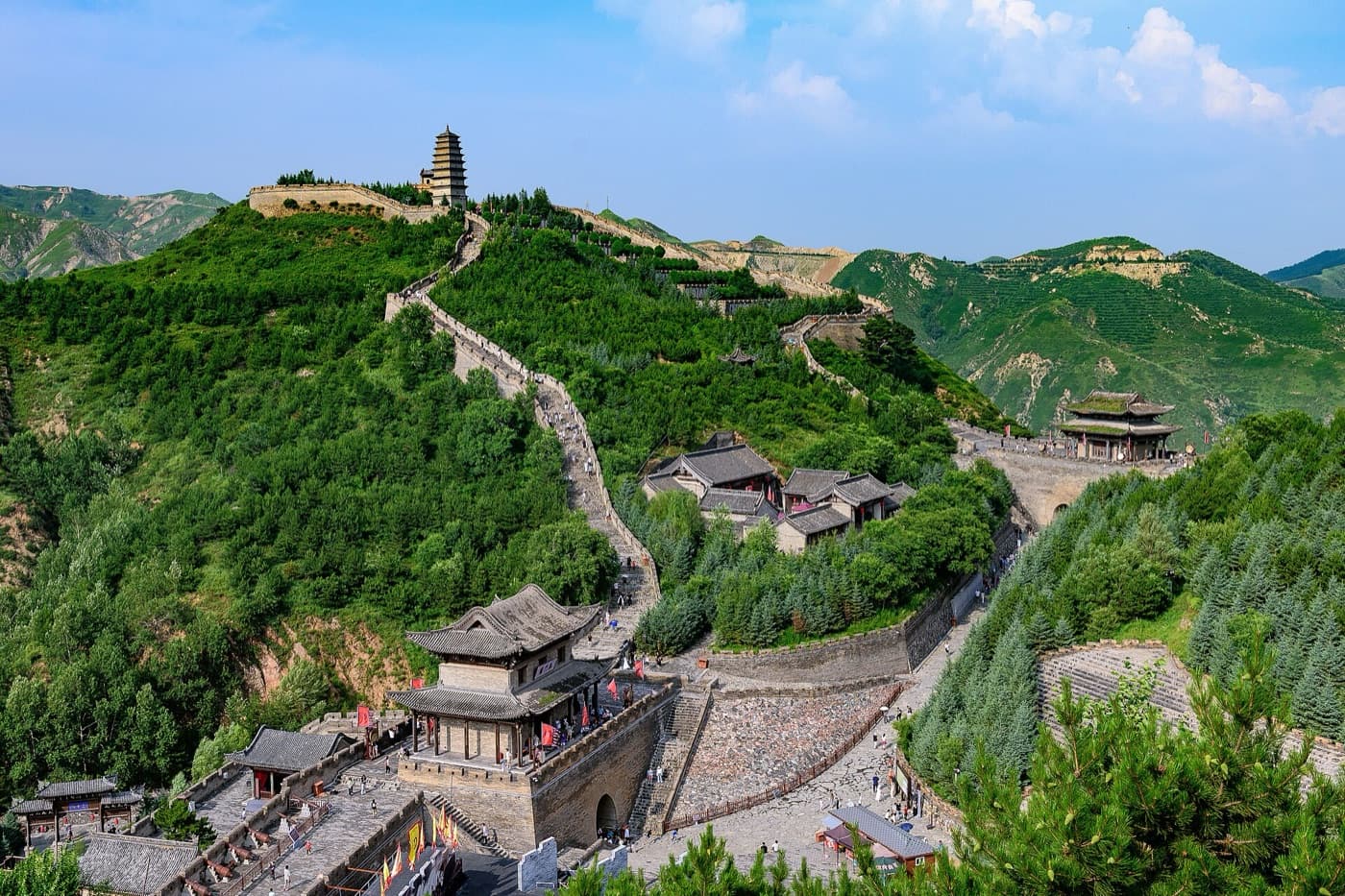
Yanmen Pass
“Of the nine great passes under heaven, Yanmen ranks first.” For over 2,400 years, from ancient times onward, it was a strategic prize contested by military forces across ancient China, witnessing countless battles large and small. The surviving pass was built during the Ming dynasty.
3–4 hours
Zhaogao Temple
A notable sight in Daixian County, formerly known as Tiantai Temple. Tradition holds that Zhaogao, a chancellor of the Spring and Autumn and Warring States periods, once lived in seclusion here. The temple combines Buddhist and Taoist traditions.
1 hour
Source: China Self-Guided Travel 2025 (《中国自助游》, Tianjin Science & Technology Press, Aug 2024), pp. 1824–1840. Translated from the Chinese edition; names and prices follow the guidebook. · Plain text version