Qufu travel guide
曲阜
Gouxin Doujiao was once a very common style of traditional Chinese architecture, but it has almost vanished from modern design. In Qufu, however, apart from the prevailing grey tones,…
7 places · In the guidebook: pages 1355–1370

Qufu, Shandong Province · AI illustration for China Trip
Quick itinerary
Qufu in 2 days
- Day 1
- Confucius Temple→
- Confucius Mansion (you can enjoy the Confucius Family Feast at lunchtime)→
- Confucius Forest→
- Six Arts City of Confucius
- Day 2
- Shouqiu Shaohao Mausoleum→
- Mencius' Hometown
The feel of the place
- Gouxin Doujiao (intricate, interlocking eaves)
- Gouxin Doujiao was once a very common style of traditional Chinese architecture, but it has almost vanished from modern design. In Qufu, however, apart from the prevailing grey tones, nearly all the buildings still follow this ancient style, and you feel as though time has rolled back a thousand years. Beneath the eaves, however, are signs for pool halls, telecom shops and fashion boutiques, and scenes of daily life from several decades ago are still preserved.
- The Legacy of Confucius
- In Qufu, the Confucius Mansion is naturally the centre of attention, and Confucius himself is the centre of that centre. This is not because Confucian sayings appear everywhere or because of the buildings linked to him, but because of the calm that shows in people's bearing and expressions. First, the town is clean, a result of residents consistently looking after it, and both the streets and the free markets are spotless. Second, there is a gentle courtesy between people. You will hardly hear anyone shouting to sell their wares, let alone people arguing in the street. Even affectionate behaviour between young couples is restrained; holding hands or putting an arm around the waist in public is about as far as it goes. To people from large, open cities, this may seem unfashionable, but once you experience it for yourself, you cannot help but be moved by the noble spirit of the gentleman, which is as lofty as the mountains and as enduring as flowing water.
Agree on Prices in Advance
In Qufu, always agree on prices before you use any service. This avoids trouble and spoiled moods later on.
Use Official Guides
Qufu has many unlicensed guides, and their service standards vary widely. For your own protection, it is best to hire a licensed guide from the attraction or from a travel agency.
Stay in Reputable Hotels
Touts with tricycles and taxis wait around Qufu Station. To earn commissions, they will enthusiastically take visitors to private guesthouses. These are not only expensive, but hygiene cannot be guaranteed.
Qufu's Distinctive Shop Signs
Shop signs in Qufu are distinctive, with black or blue backgrounds. This complements the overall atmosphere of Qufu as the home of Confucius.
Pedicabs
Qufu is small and buses run infrequently, so hiring a pedicab to explore the town is the most economical option. Around ¥5 per person is usually enough.
Preparation and Information
Language
Language is not a barrier here, as Mandarin is widely spoken.
Climate and Travel Seasons
Qufu's annual average temperature is 13.6°C. January is the coldest month, with an average monthly temperature of −
1.7°C. July is the hottest month, but its average temperature is only around 26°C. Visitors from southern China should bring warm clothing. The best time to visit is from June to September.
Festivals
Confucius Culture Festival
hours: 26–28 September
During the festival, Confucian ritual dance performances are held in front of the Hall of Great Achievement at Confucius Temple. There are also symposiums and lectures on Confucian thought and exhibitions of art and culture, along with a range of tourist activities centred on the “Six Arts” that Confucius advocated: ritual, music, archery, charioteering, calligraphy and mathematics. If you are visiting Qufu, it is worth taking in the festival.
Things to see
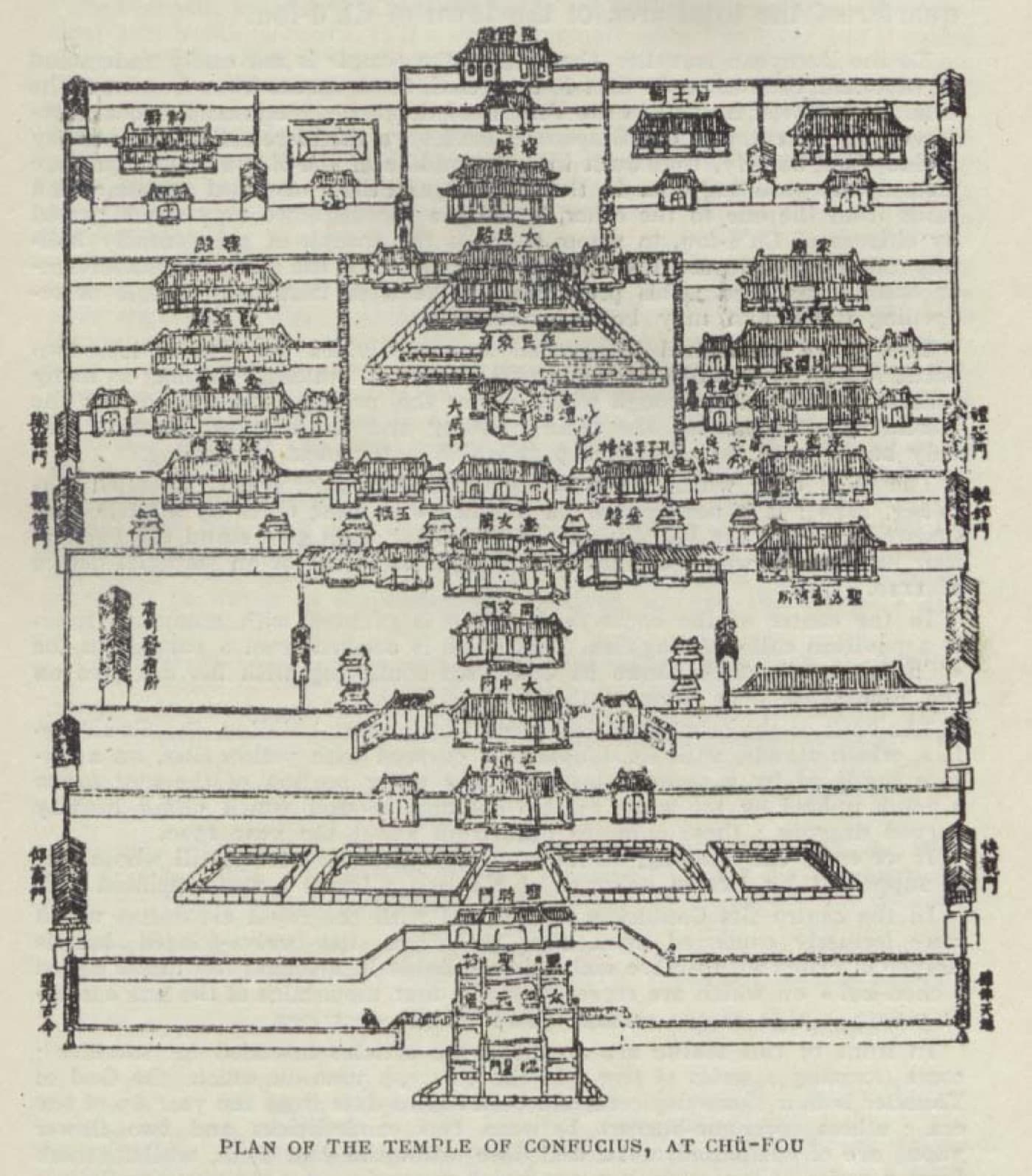
1. Shengji Hall (圣迹殿) houses stone-slab carvings that recount Confucius's life. They are said to be China's first complete narrative series of connected stone-slab carvings.
Confucius Temple
2–3 hours · ¥80; ¥140 for the Three Confucian Sites combined ticket
The curved, towering ancient walls rise high and proud. Step inside the Confucius Temple and your eyes will be filled with things connected to Confucius. The 'Cypress Planted by the Early Master', which Confucius planted himself, the 'Apricot Altar' where Confucius taught, the towering thousand-year-old cypress trees and the white egrets flitting between them, together with Dacheng Hall, showcase the exquisite artistry of ancient Chinese architecture. The dragon pillars in front of the hall, holding pearls in their mouths and treading on clouds and waves, add to the imposing dignity of the building.
Confucius Mansion
1–2 hours · ¥60 in peak season
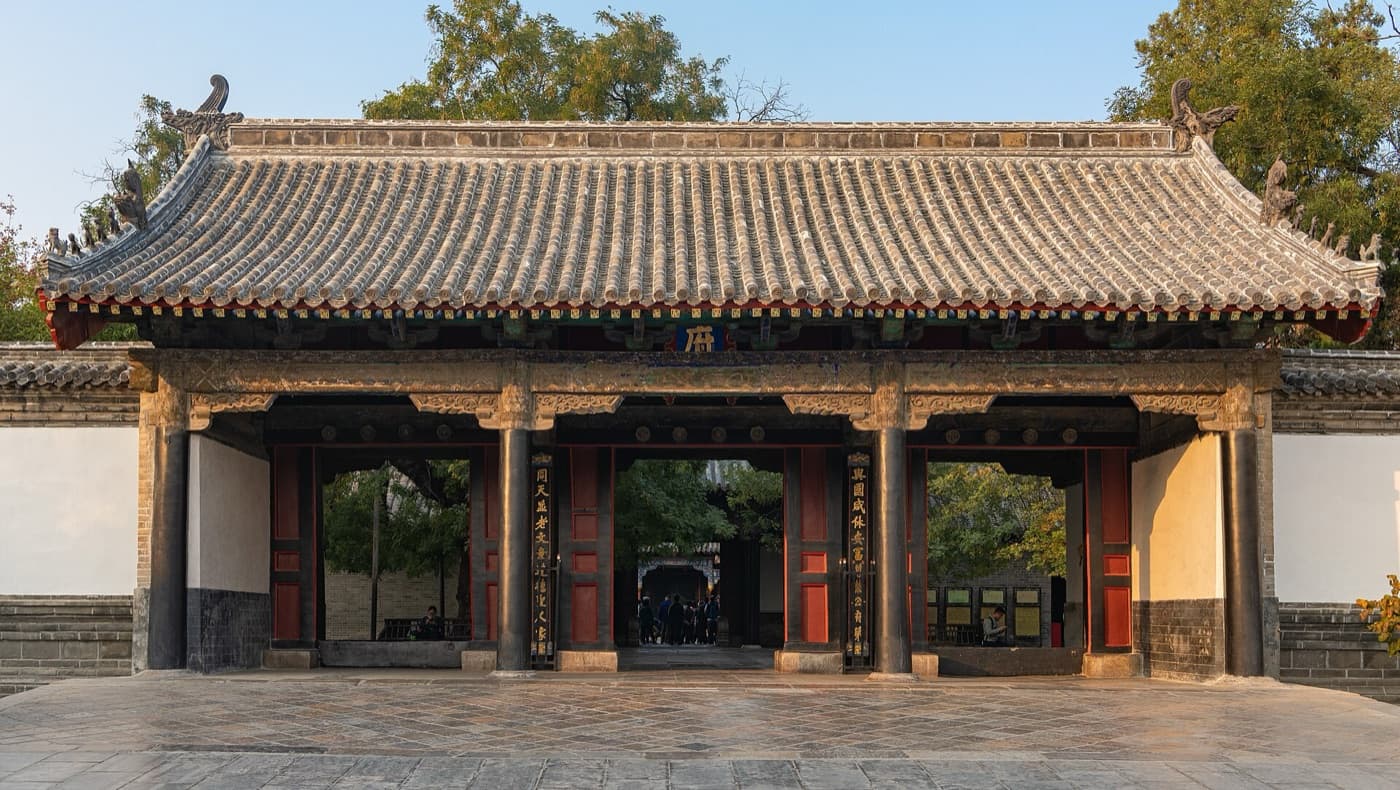
The ancestral residence of the Kong family. Its scale ranks below the imperial residences of the Ming and Qing dynasties, which speaks to the prosperity and flourishing of the Kong household. The 'Ten Vessels of the Shang and Zhou' (also known as the 'Ten Offerings') were originally bronze ritual vessels kept in the imperial court, and they are the most precious items in the Mansion's collection. Cultural relic enthusiasts will find plenty to feast their eyes on here.
Getting there & around
Getting There
By air
Qufu is 180 km from Jinan Airport, 85 km from Jining Airport, and 160 km from Xuzhou Guanyin Airport. Travellers can fly into Jinan, Jining or Xuzhou and then take a bus to Qufu, which is very convenient.
High-Speed Rail
Qufu sits right at the golden midpoint of the Beijing–Shanghai high-speed rail line. Qufu East Station is located in Xizou Town, not far from Confucius's birthplace. High-speed trains run daily to Beijing and Shanghai.
transport: Within the city, take the K01 high-speed rail connector bus, whose terminus is
Road
The Beijing–Fuzhou (Jingfu) and Rizhao–Heze (Riche) main highways intersect in Qufu.
Getting Around
Buses and pedicabs are the main means of transport within Qufu. Buses are limited, and pedicab drivers are usually locals who can sometimes be very good guides.
Sightseeing Shuttles
Qufu's urban area is connected by road to all the main sights, and 12 tourist shuttle routes now run from Qufu to Nishan, Shimen Mountain, Jiuxian Mountain, Jiulong Mountain and the Shaohao Mausoleum.
Taxis
Qufu taxi fares: flag-fall of ¥7 for the first 2 km; ¥1.3 per km for 2–4 km; ¥1.95 per km beyond 4 km.
Qufu Bus Station
Qufu Bus Station- Address:
- Jingyulong Road, Qufu City
- Phone:
- 0537-4412554
Qufu Taxi Complaints
Taxis- Phone:
- 0537-4417924
Eat & drink
A visit to Qufu would not be complete without a Kong Family Feast, alongside the Three Confucian Sites.
Signature Dishes
Signature Dishes of the Kong Family Feast
Kong Family Feast
Signature DishesThis is the high-grade banquet of the Kong family mansion, used to host distinguished guests and for occasions such as inheriting titles, taking office, sacrificial days, birthdays, weddings and funerals. The Analects (Xiangdang chapter) says: 'Rice should not be too refined, and minced meat should not be too finely chopped,' showing how demanding Confucius was about everyday food. Because successive dynasties honoured Confucius, new chefs kept joining the sacrificial ceremonies each year, so the Kong Family Feast gathers the finest of Lu cuisine and embodies the full range of Chinese flavours. Its emphasis on colour, aroma, taste, shape, name, ingredients and every step of preparation is a major feature. Traditional versions even use camel hooves, bear paws, and fish and shrimp from Weishan Lake, which is why it is so remarkable. The Kong Family Feast includes five great banquets: the Longevity Banquet, Flower Banquet, Reception Banquet, Home-Style Banquet and Manchu-Han Full Banquet.
Long Life and Good Fortune
Signature Dishes of the Kong Family FeastThe dish is delicious and auspicious, and it has become a Qufu specialty in its own right and a must-order at birthday banquets. It consists mainly of longevity noodles and a carp in sauce, and visitors can try it at major restaurants throughout Qufu.
First-Grade Longevity Peach
Signature Dishes of the Kong Family FeastInspired by the idea of Magu offering longevity (麻姑献寿), the dish spread among the people and became one of Qufu's local specialty snacks. It is shaped like a large, plump fresh peach covered with a red character for longevity (寿). The dish is beautifully presented, and its sweet, refreshing peach-shaped dessert carries the wish 'may your happiness be as boundless as the East Sea and your life as enduring as the South Mountain.'
Roasted Mandarin Fish with Flower Garnish
Signature Dishes of the Kong Family FeastThe name draws on the wish for 'wealth to spare' (富贵有余), since 'fish' (鱼, yú) sounds like 'surplus' (余, yú). The dish combines the freshness of fish with the tenderness of meat, and places special emphasis on knife work and heat control.
Immortal Duck
Signature Dishes of the Kong Family FeastThe meat is so tender it falls off the bone, the broth is rich and flavourful, and the dish is rich without being greasy. It is a much-loved classic.
- 1. Many local tricycle, horse-cart and taxi drivers will eagerly take tourists to eat the Kong Family Feast, mainly to earn commissions from restaurants. In reality, the Kong Family Feast has nearly been lost. Very few restaurants can make an authentic version, and it is very expensive. Don't expect ten dishes and a soup for ¥100; that price is aimed at tourists. Those who go simply because they have heard of it can still see the elaborate rituals of the Kong Family Feast. 2. Datong Road, Dacheng Road and Kuiquan Road have the most restaurants, and this is where locals go to eat. Prices are fair and the range of flavours is wide, and they are only 500 metres from the Confucius Temple and Kong Family Mansion. After lunch, you can also enjoy the cultural sights along Kuiquan Road and Dacheng Road.
Where to stay
Quli Hotel
Recommended AccommodationThe best four-star hotel in Qufu. The location is excellent: it sits just across a wall from the Confucius Temple and Kong Family Mansion. The lobby and courtyard are very pleasant, service is good, and guests can enjoy traditional song and dance performances. The only drawback is that the facilities are rather old. Still, the hotel's antique architecture complements the Confucius Temple and Kong Family Mansion beautifully, and staying here lets you feel their profound cultural atmosphere.
- Address:
- No. 1 Quli Street, Qufu City
- Phone:
- 0537-4866400
- Friendly Tip If you visit Qufu during public holidays, Golden Week or the Confucius Culture Festival, be sure to book your room well in advance. After all, worry-free food and lodging makes for a happier trip.
Shopping
Recommended Shopping
Recommended Shopping Street
Kai-wood Carving
Recommended ShoppingKai wood is dense yet flexible, and its grain is particularly fine and golden in colour, which makes it ideal for carving walking sticks. Walking sticks and ruyi sceptres are the traditional products of Kai-wood carving.
Stele Rubbings
Recommended ShoppingAlso known as stele rubbings. Qufu has many rubbing techniques, but mainly relies on the dabbing method (扑拓), producing clear, fine and beautiful rubbings.
Nishan Inkstones
Recommended ShoppingThe finest are the Songhua inkstones (松花砚). Each one makes full use of the natural form and veining of the stone. Simple and elegant, a piece on your desk is both practical and beautiful.
Kong Family Liquor
Recommended ShoppingThe Kong Family Liquor Group uses carefully selected sorghum as its main raw material and follows the old five-steamer mixed steaming technique of the Kong family distillery. The liquor is known for its 'three aromas and three correctnesses': a fragrant scent when you smell it, a fragrant taste when you drink it and a fragrant aftertaste, with correct aroma, correct flavour and correct body.
Kong Family Pastries
Recommended ShoppingKong Family pastries have a long history and a self-contained range of varieties. They excel in colour, aroma, taste and shape, and fall into two categories: those for external use and those for internal use. External-use pastries were mainly presented as tribute, gifts and imperial rewards. Internal-use pastries include seasonal pastries, year-round pastries, pastries for visiting guests, and banquet pastries. In recent years, research into Kong Family pastries has received much attention, and local producers have revived most varieties, so visitors from China and abroad can taste them.
Quli Pedestrian Street
Recommended Shopping StreetOn the east side of the Confucius Temple is a tourist shopping street selling Confucius statues, books about Confucius, rubbings, jade, stone carvings, seals, jewellery and other handicrafts. Anyone who wants souvenirs should not miss a great chance to snap up bargains. Even if you buy nothing, strolling here is great fun.
- When buying a seal, vendors often see tourists purchase one and then try to persuade them to have characters carved. Be careful not to fall into the seller's trap. A price of ¥5 per character will make you do a double take when you pay.
Day trips & beyond
Mencius' Hometown
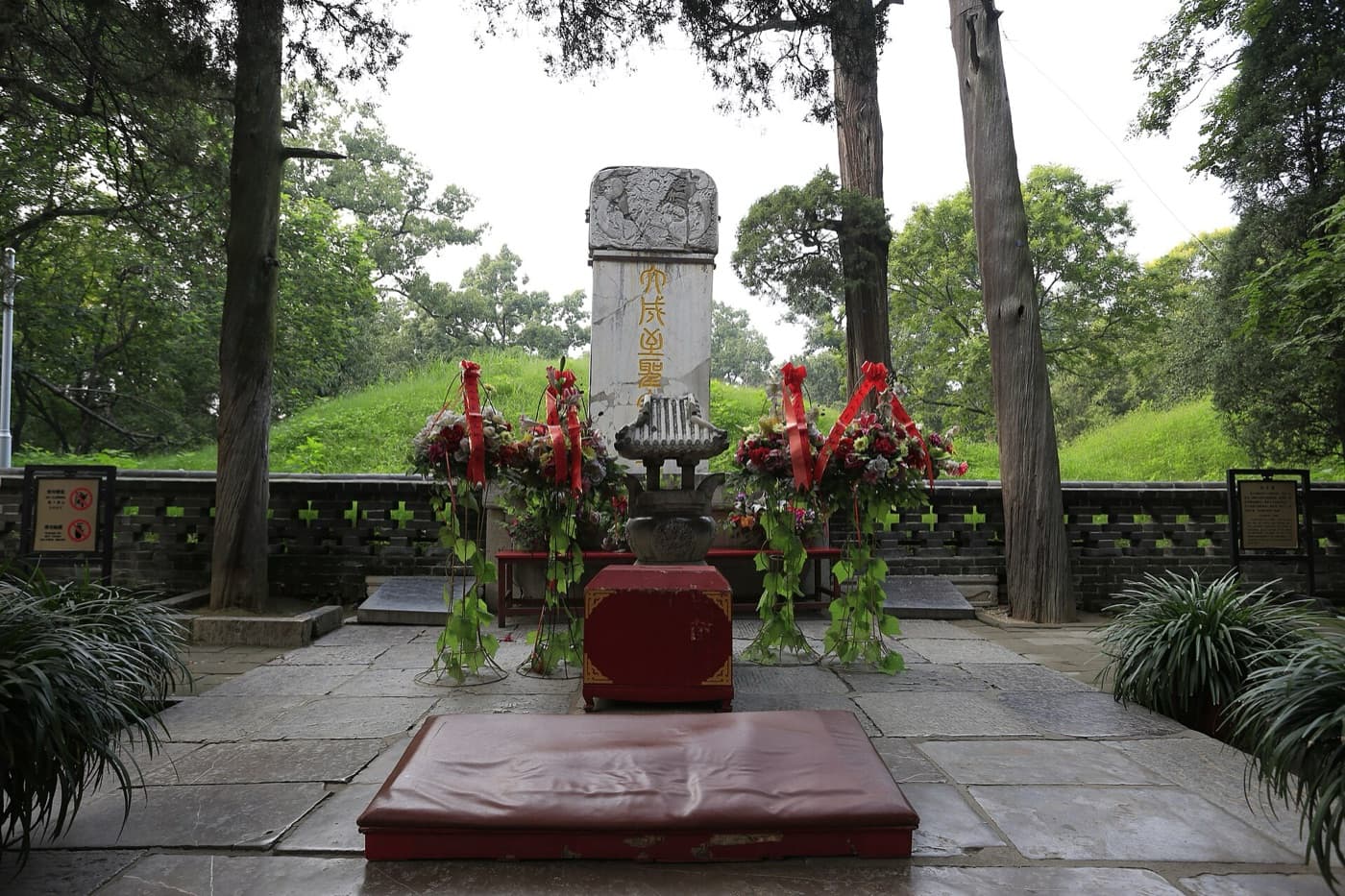
The birthplace of Mencius, the “Second Sage,” in Fu Village, Zoucheng City. The site comprises the “Four Mengs” architectural complex: the Temple of Mencius, the Mansion of Mencius, the Forest of Mencius and the Mengmu Forest. Its natural and cultural landscapes complement each other, and it has a quieter charm than the Three Confucian Sites. Temple of Mencius: Spread across five courtyards from front to back, with more than 60 halls and pavilions. Centred on the main building, the Yasheng Hall, the complex forms a north–south axis. The Yasheng Hall has a double-eaved, nine-ridged roof. Inside, a statue of Mencius sits at the centre, and above the lintel hangs a plaque inscribed by the Yongzheng Emperor reading “Guard the Past, Await the Future.” Mansion of Mencius: The residence of Mencius's descendants and the hereditary Five Classics Doctors of the Hanlin Academy, also called the “Second Sage's Mansion.” Located west of the Temple of Mencius, separated from it by a road, it has seven courtyards front to back. Its overall layout is grand and dignified, with a refined elegance tinged with a certain majesty. Forest of Mencius: Also known as the “Second Sage's Forest,” it is the family cemetery for Mencius and his descendants. Its dense, ancient trees make it one of the largest and oldest family cemeteries still existing in China. Mengmu Forest: The burial ground of Mencius's mother, Lady Zhang, and some members of the Meng clan. Cypress trees cover the hills and slopes, the shade is deep, and burial mounds stretch across the forest. A ceremonial hall stands on the east side.
1–2 hours
Weishan Lake Tourist Area
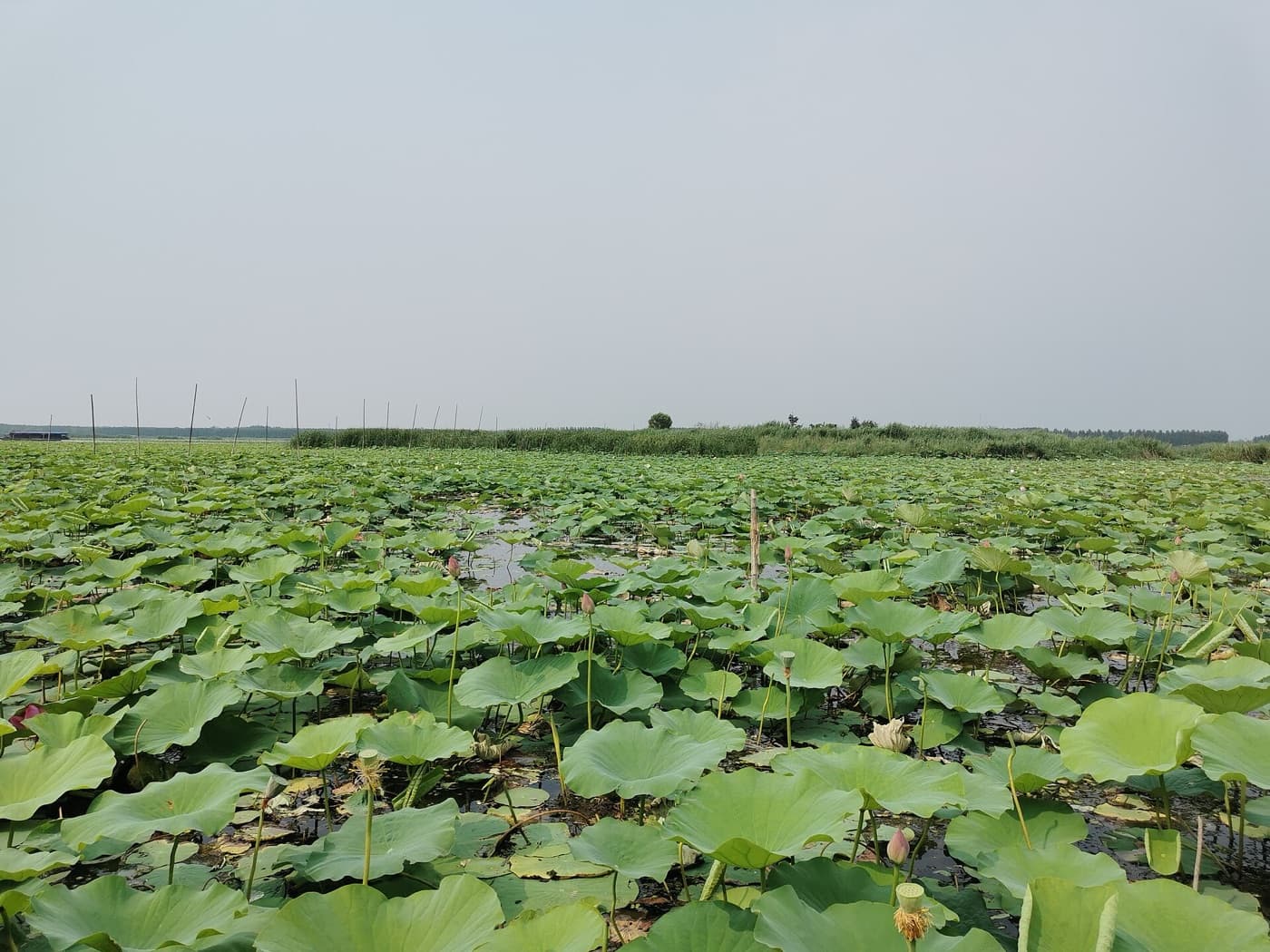
Weishan Lake, famous nationwide thanks to the film *Railway Guerrillas*, is made up of four interconnected lakes: Weishan, Zhaoyang, Dushan and Nanyang. It is the largest freshwater lake in northern China. Weishan Island is the largest island in the lake and is rich in historical sites, including the tomb of Viscount Wei of the Yin and Zhou dynasties, the tomb of Zhang Liang from the early Han dynasty and the tomb of Muyi from the Spring and Autumn period. The Railway Guerrillas Monument is also here for visitors to pay their respects.
1–2 days
Shuibo Liangshan (Liangshan Marsh)
A provincial-level scenic area developed around the cultural heritage of the “Water Margin” (Outlaws of the Marsh), comprising the Liangshan Scenic Area and the Shuibo Scenic Area. Mountains lie to the south and water to the north, creating distinct natural scenery and tourist features. In the Northern Song dynasty, heroes such as Chao Gai and Song Jiang held out at Liangshan, and many historic sites from that time remain.
4–5 hours
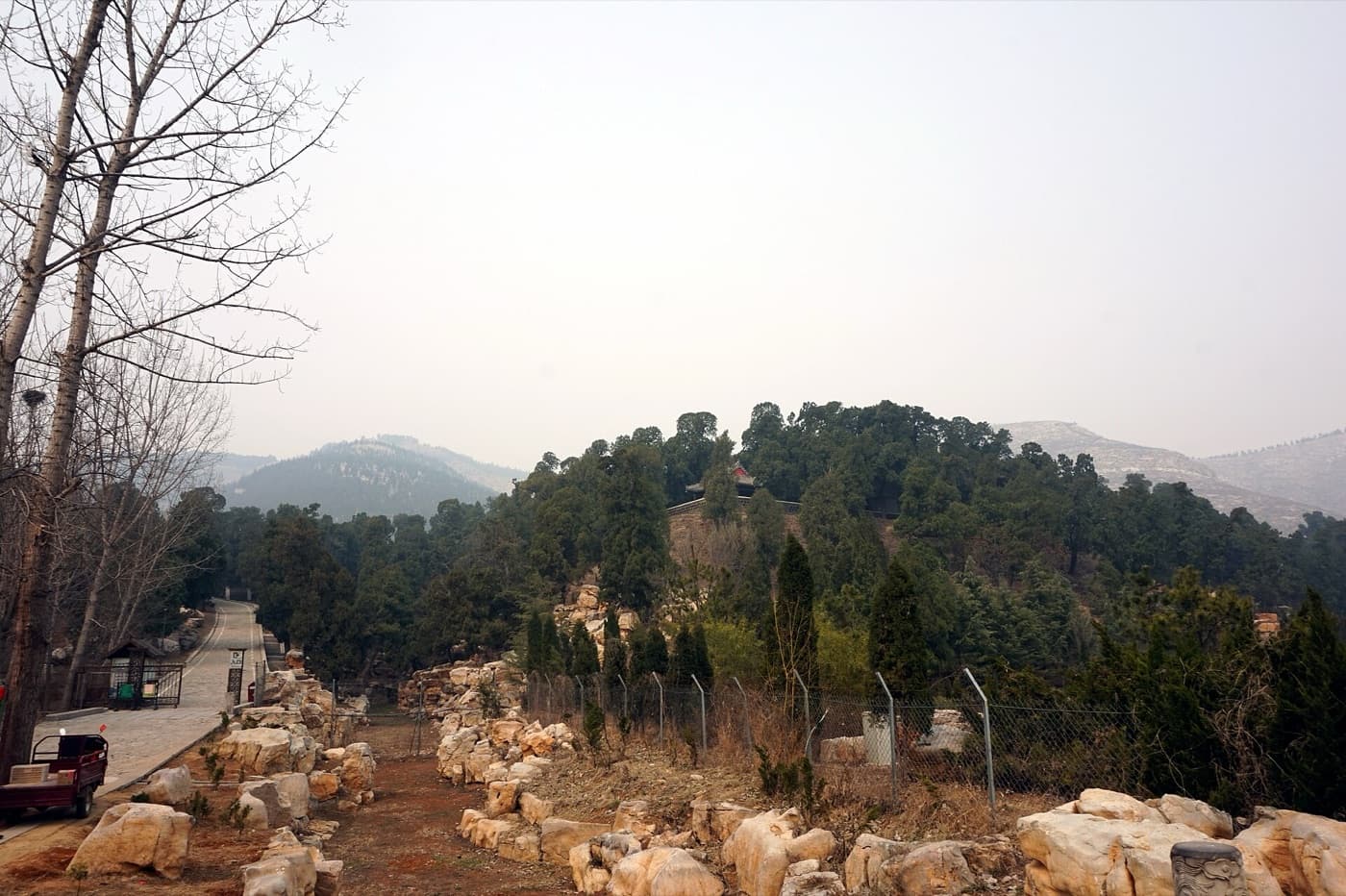
Mount Ni
The birthplace of Confucius. On the mountain are the Temple of Confucius, the Qufu Mount Ni Temple of the Mountain God and the Qufu Mount Ni Academy. The Mount Ni Confucius Temple and Mount Ni Academy were restored by several generations of Confucius's descendants, and they are simpler and more unpretentious than the official temples built by successive dynasties.
0.5–1 day
Source: China Self-Guided Travel 2025 (《中国自助游》, Tianjin Science & Technology Press, Aug 2024), pp. 1355–1370. Translated from the Chinese edition; names and prices follow the guidebook. · Plain text version