Lushan Mountain (Mount Lu) travel guide
庐山
The fog and rain are part of Lushan's scenery, and some people come specifically for the mist. But this also means that, while you may “fail to see Lushan's true face” (不识庐山真面目),…
19 places · In the guidebook: pages 1443–1462

Lushan Mountain (Mount Lu), Jiangxi Province · AI illustration for China Trip
Quick itinerary
Lushan Mountain (Mount Lu) in 3 days
- Day 1
- Flower Path (Hua Jing)→
- Ruqin Lake→
- Jinxiu Valley→
- Xianren Cave (Immortal Cave)→
- Datianchi (Great Heavenly Pool)→
- Longshouya (Dragon Head Cliff)→
- Huanglong Pool→
- Sanbao Trees→
- Lulin Lake→
- Meilu Villa→
- Former Site of the Lushan Conference
- Day 2
- Wangpo Pavilion (sunrise viewing)→
- Wulao Peak→
- Sandie Spring Waterfall
- Day 3
- White Deer Grotto Academy→
- Xiufeng Scenic Area→
- Taiyi Village
The feel of the place
- Dampness
- The fog and rain are part of Lushan's scenery, and some people come specifically for the mist. But this also means that, while you may “fail to see Lushan's true face” (不识庐山真面目), you must endure the dampness on the mountain. It shows up in several ways. The chill is the main one: when the temperature gap between the mountain and the foot of the mountain widens, fog rolls in on Lushan, bringing a damp, cold feeling. At such times, only the lush greenery and the succession of scenic spots can dispel the gloom that the dampness brings.
- Landscape and Culture
- As a famous cultural mountain with a long history, Lushan has for thousands of years drawn countless men of letters, who have left behind an ocean of paintings, calligraphy and beloved poems. Bai Juyi wrote at Huajing: “In April in the mortal world the fragrance has all faded; at the mountain temple, the peach blossoms are only now beginning to bloom.” Li Bai wrote at Xiufeng: “The waterfall plunges three thousand feet, as if the Milky Way were falling from the ninth heaven.” Of Wulao Peak, he wrote: “Wulao Peak in southeast Lushan, carved from the blue sky like a golden lotus.” Su Shi wrote of Lushan's clouds and mist: “I cannot see Lushan's true face, only because I am within the mountain.” Mao Zedong wrote of Immortal Cave: “Nature made one Immortal Cave, and boundless scenery lies on the dangerous peaks.” The landscape culture of Lushan is a brilliant reflection of Chinese mountain-and-water culture. The lyrical, richly coloured writing of literati about Lushan has given the mountain an exceptionally deep cultural heritage.
Lushan's Three Great Natural Mysteries
Why does the Lushan cloud make sounds? Why does Lushan rain fall upward from below? Why do Buddha lights appear near Wenshu Terrace around the 15th day of the lunar month?
Trends in the Scenic Area
Dongling Grand Canyon (Scissors Gorge) has the largest water volume of all Lushan's gorges, and it is the only scenic spot on Lushan where waterfalls can be seen year-round. Self-drive, independent and group tours to Dongling Grand Canyon are popular with city dwellers, and a short, relaxing stay in the scenic area has become the trend.
Preparation and Consultation
Climate and Best Travel Season
Lushan's geography is one of facing a river and bordering a lake, with high peaks and deep valleys, and it has distinct mountain climate features. Fog occurs on 191 days a year. Annual average precipitation is 1,917 mm, and annual average relative humidity is 78%. The average temperature from July to September is 16.9℃, and the summer high is 32℃, cool and pleasant. The summit is generally 7–10℃ cooler than the foot of the mountain. These figures show that Lushan truly deserves its reputation as a summer retreat, and the best season to visit is, of course, summer.
Things to see
The sea of clouds on Mount Lu is ever-changing. At times it stretches to the horizon like a blanket of snow; at other times it surges in like thousands of galloping horses, throwing up waves of white that are truly spectacular. The most magnificent sight is the coloured clouds at dawn and dusk, a scene of unrivalled beauty. The Greater and Lesser Heavenly Pools, Jinxiu Valley, Hanpo Gap and Wulao Peak are the best places to watch the clouds.

Lushan Mountain (Mount Lu)
1–2 days · Off-season ¥135; peak season ¥160
No trip to Jiangxi is complete without visiting Mount Lu. Lushan's natural scenic areas are mostly concentrated on the southern slopes, hence the saying “Lushan's beauty lies in its south.” However, the southern sights are spread out and the routes are challenging. The cultural attractions clustered around Guling Town each have a legend or a piece of history behind them.

Lushan Wonders
Photography · Nature
Shimenjian Scenic Area
The earliest waterfall recorded in Lushan's historical annals is the Shimenjian Waterfall. As early as over 2,000 years ago, Ban Gu's *Treatise on Geography* in the *Book of the Later Han* recorded: “To the southwest of Lushan stand twin gate-towers, sheer cliffs rising more than a thousand *ren* high, and a waterfall flows there.” Shimenjian faces the cliffs across the ravine, forming towering gates and walls. At its narrowest point, the “Little Stone Gate,” only a crack separates the two cliffs, so visitors must turn sideways to pass through the “gate.” In the glen, high cliffs pour out waterfalls, and deep valleys collect water into pools. Submerged jagged rocks and towering boulders standing in the stream are arranged along the gorge to form “stone platforms.” The largest smooth boulder can seat dozens of people, and the characters “Shimenjian” are carved on it. Beyond the big boulder, the gorge grows steeper and narrower, like swords thrust into the sky, each peak vying for beauty. In this great fault, Mast Peak and Tongzi Cliff rise straight from the ravine floor, standing just a short distance apart, surrounded by a cluster of peaks.
2–3 hours · ¥52
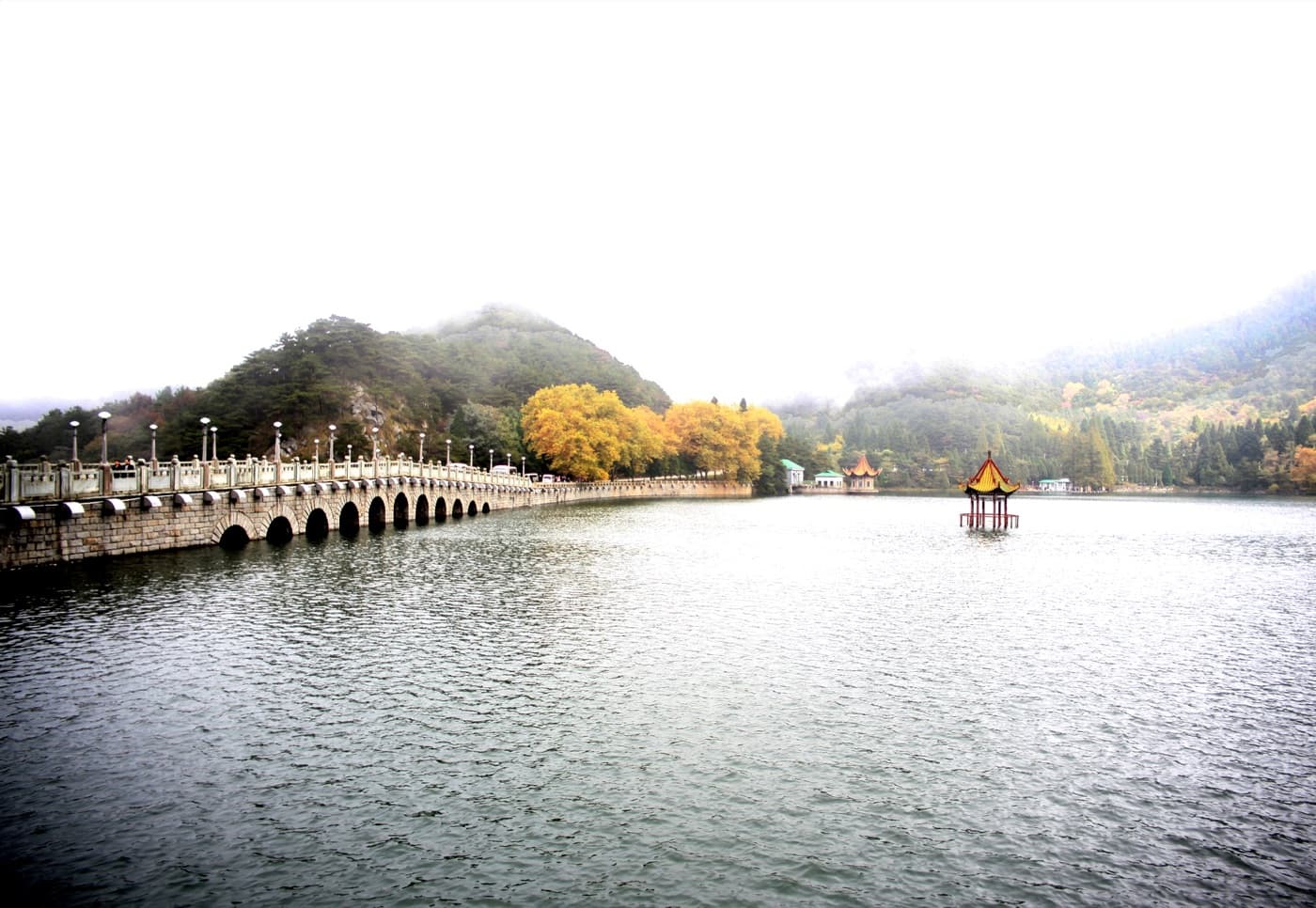
Lulin Lake
Lulin Lake is ringed by mountains draped in lush pines and cypresses. Its water is clear as a mirror, and the reflected peaks blend with drifting clouds and mist, so the lake looks like a divine lake fallen from the sky. Nearby stand palatial buildings such as the Mount Lu Museum, Mount Lu Hotel and People's Theatre.
1–2 hours · Included in the Mount Lu entrance ticket
Xiufeng Scenic Area
As the saying goes: “The beauty of Mount Lu lies in its south, and the beauty of the south lies in Xiufeng.” In Xiufeng Scenic Area, the peaks, emerald ridges and jade-green pools, along with its waterfalls, gorges and temples, all display a distinctive charm, so lovely that one could “eat the scenery.” The Xiufeng Temple, with its inscription by the Kangxi Emperor, bears witness to this.
2–4 hours · ¥63
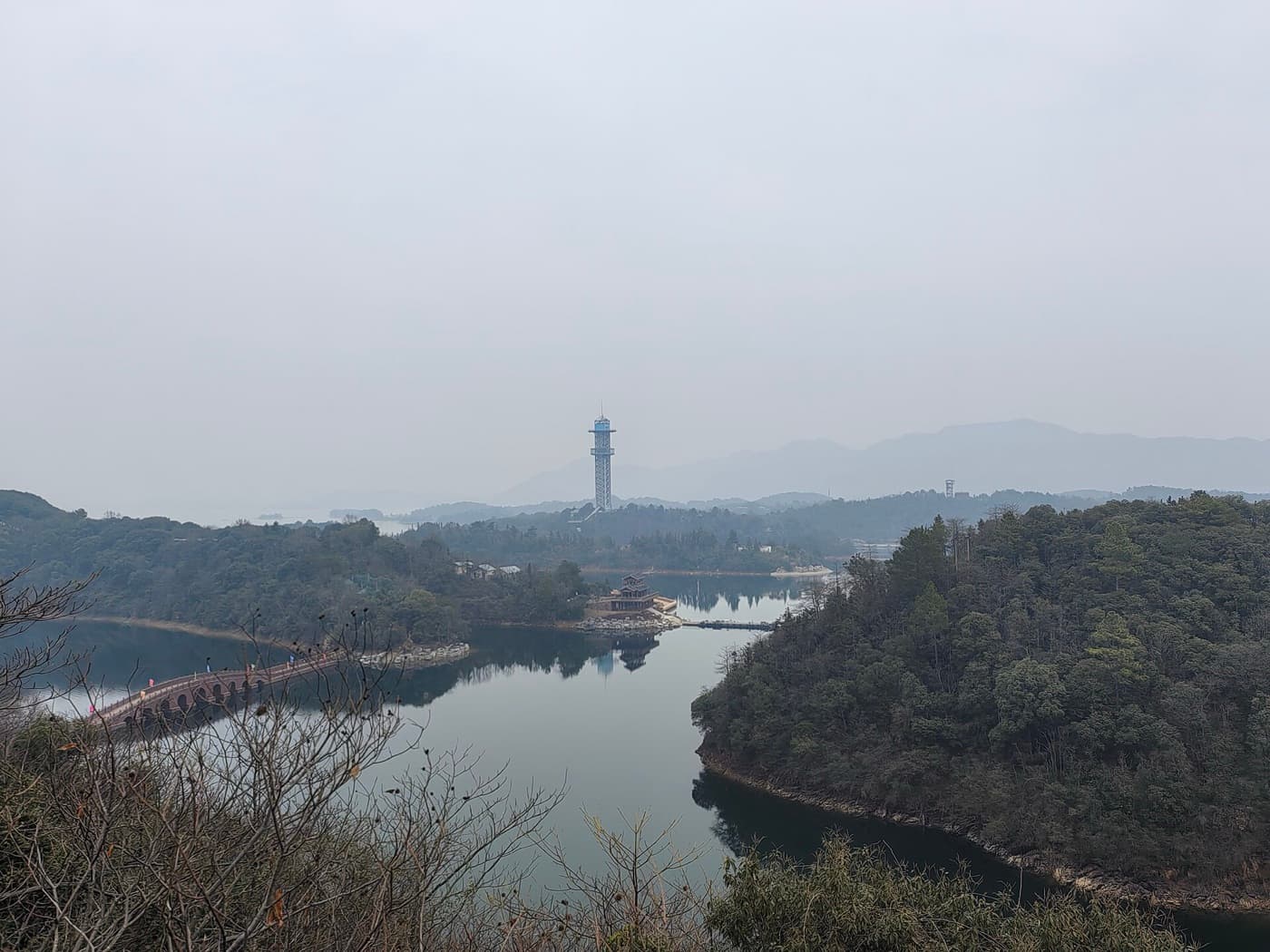
Lushan West Sea
Vast and tranquil lakes, scattered islands, and mountains and water reflecting each other before your eyes, with the air full of moist freshness. This is a very romantic place, ideal for a holiday.
3–5 hours; 2–3 hours · ¥150 per person; Grandma Bridge ¥5 per person; Yunju Mountain ¥20 per person; West Sea Hot Spring ¥198 per person; ¥40; free
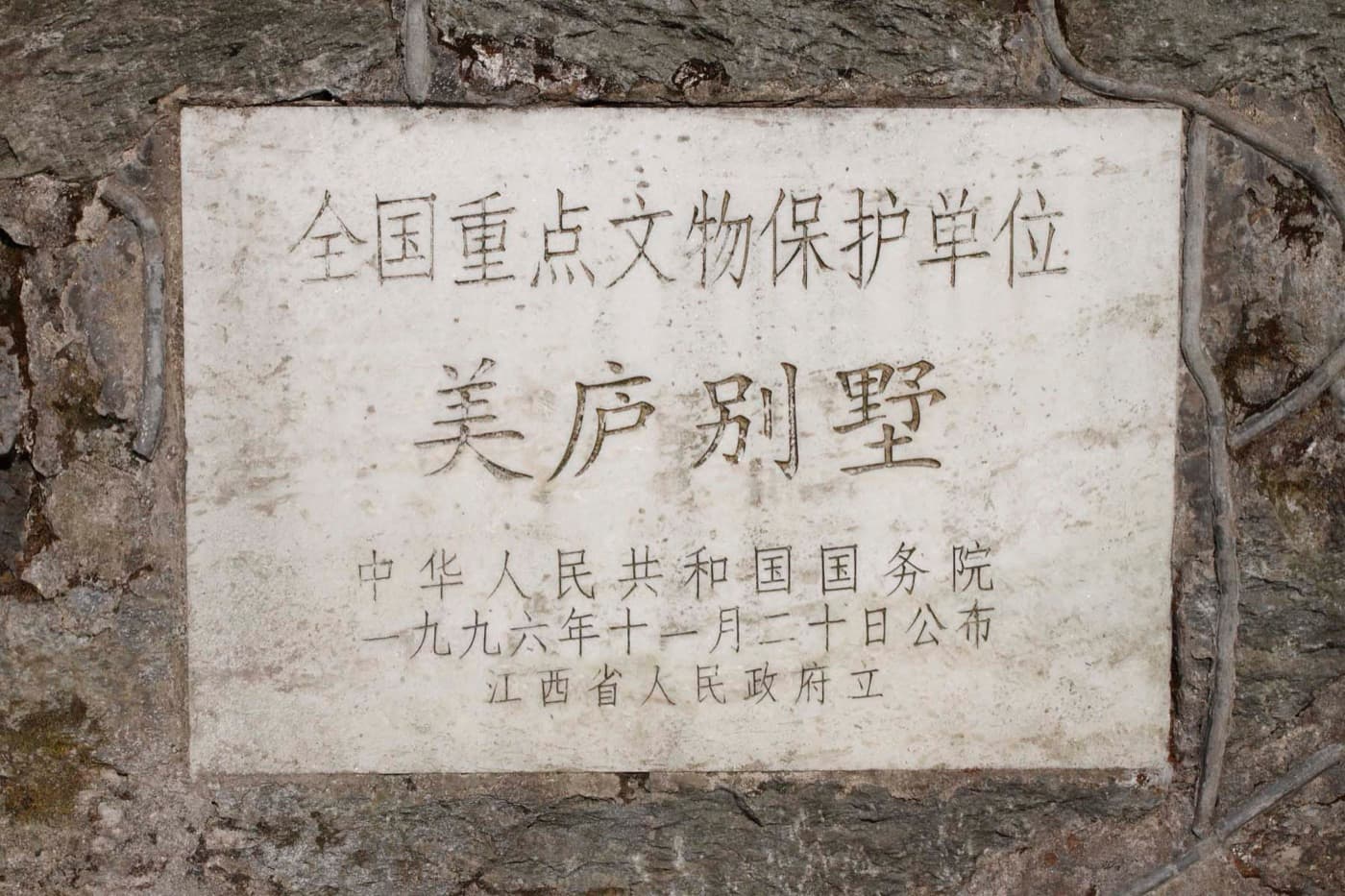
Meilu Villa
This is the only villa in Chinese history to have housed leaders of both the Kuomintang and the Communist Party, which gives it significance in both architecture and politics. Shrouded in Lushan's clouds all year round, Meilu Villa looks very mysterious. As you wander through its labyrinthine rooms, the political upheavals linked to it, along with the small details of daily life once lived here, seem to rise up around you.
1–2 hours · Included in the Lushan entrance ticket
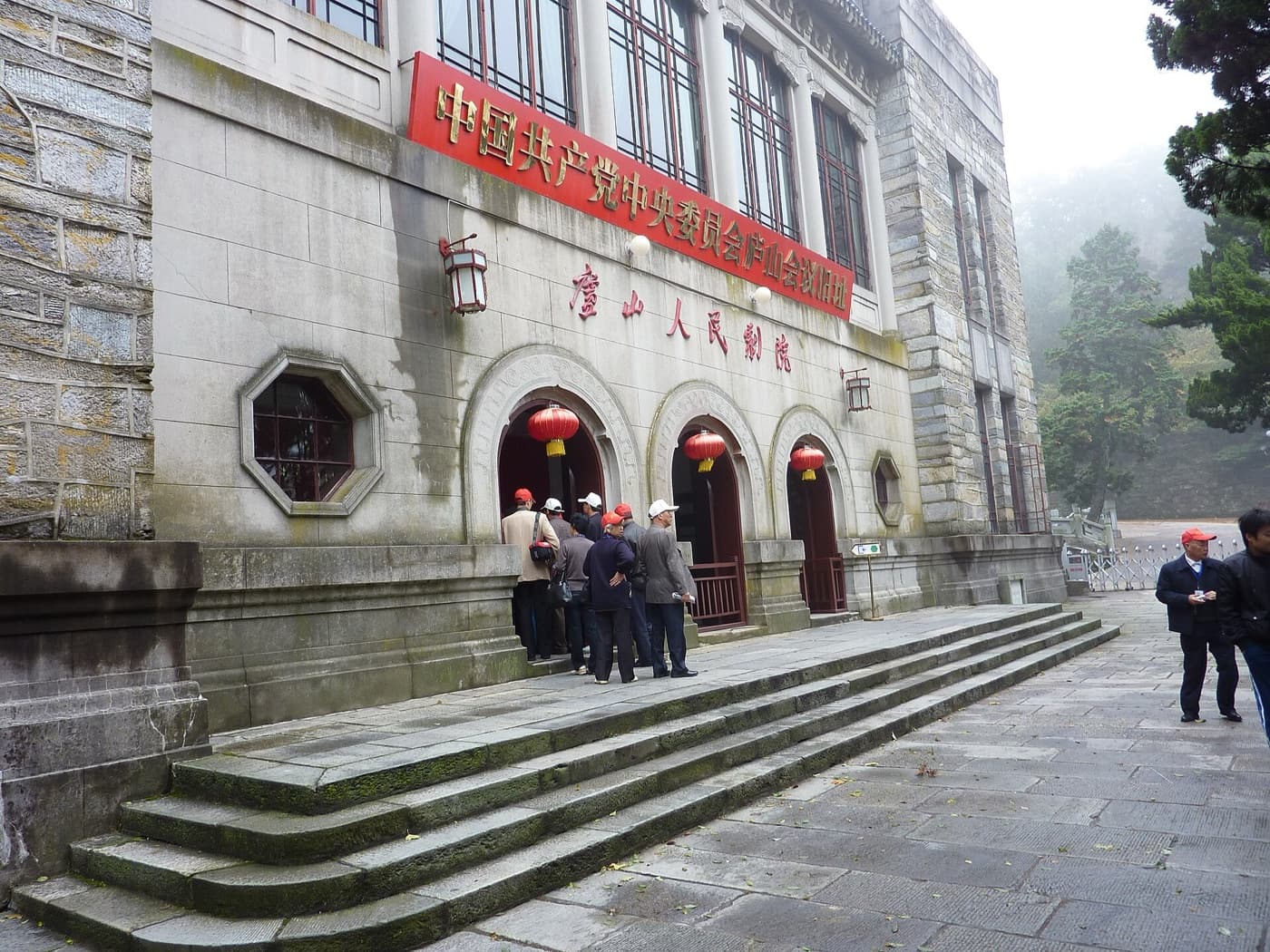
Memorial Hall of the Former Site of the Lushan Conference
This stone-and-timber building, combining Chinese and Western styles, is one of Lushan's “Three Great Buildings.” It was once an important base where Chiang Kai-shek trained Kuomintang cadres, and he gave many lectures here. After the founding of the PRC it became the Lushan People's Theatre, and the Party Central Committee held three important meetings here. Even today, a portrait of Mao Zedong hangs directly above the stage. If you are interested in modern Chinese history, this is a must-visit.
1–2 hours · Included in the Lushan entrance ticket
Jinxiu Valley
Legend and the riot of flowers that bloom through every season gave this valley its glowing name. Before you lies a green valley, with sheer cliffs that look perilous. In truth, it is a fine example of well-preserved natural ecology.
60–90 minutes
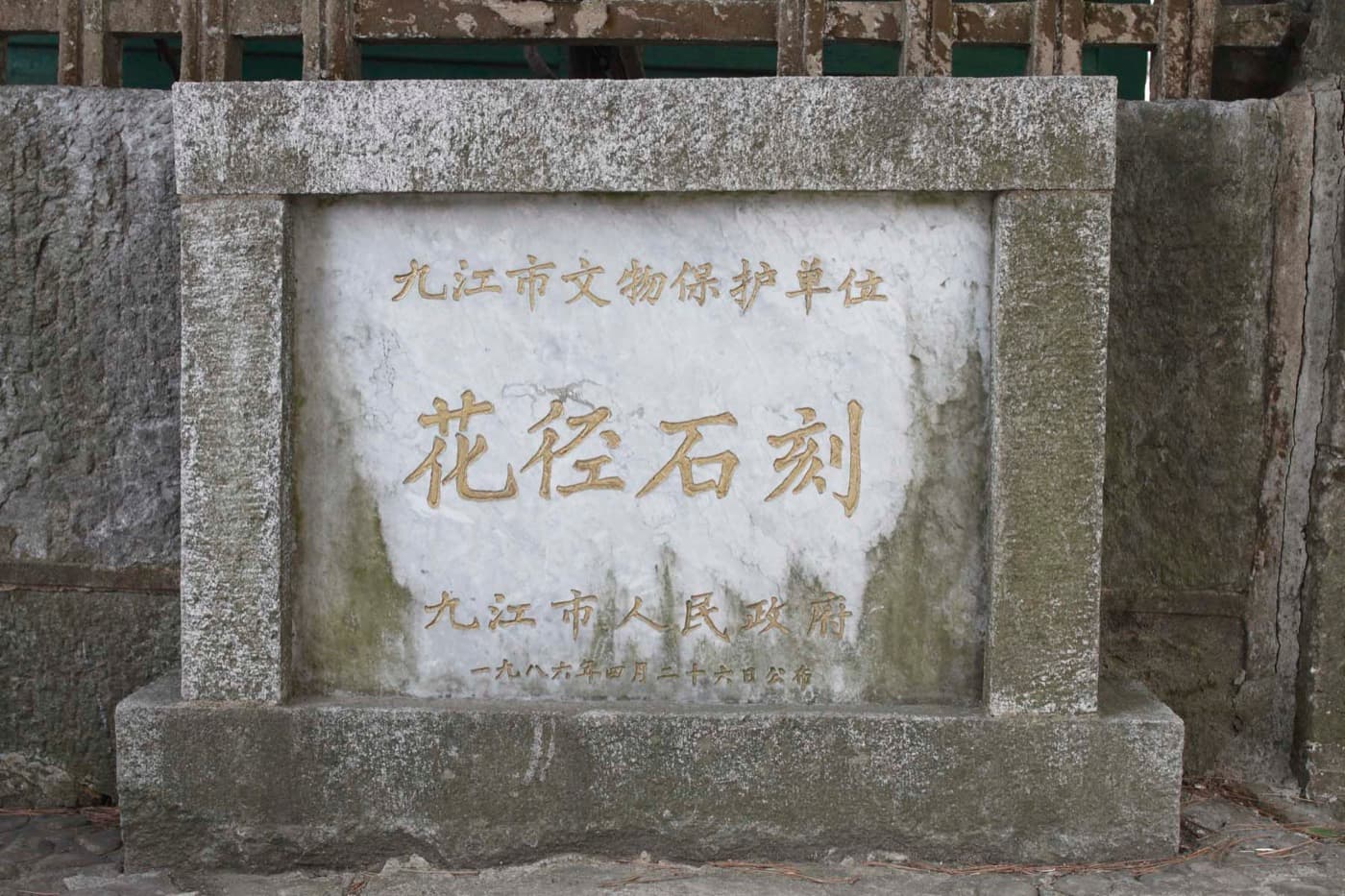
Flower Path (Hua Jing)
Legend says this is where Tang dynasty poet Bai Juyi chanted his poem “Peach Blossoms at Dalin Temple”, and the Bai Juyi Thatched Cottage exhibition hall was built here. The garden’s scenery unfolds like a beautiful scroll, with winding paths leading to secluded spots and blossoms as dense as brocade, dreamlike and enchanting. When the peach trees bloom in April, the beauty is beyond description.
1–2 hours
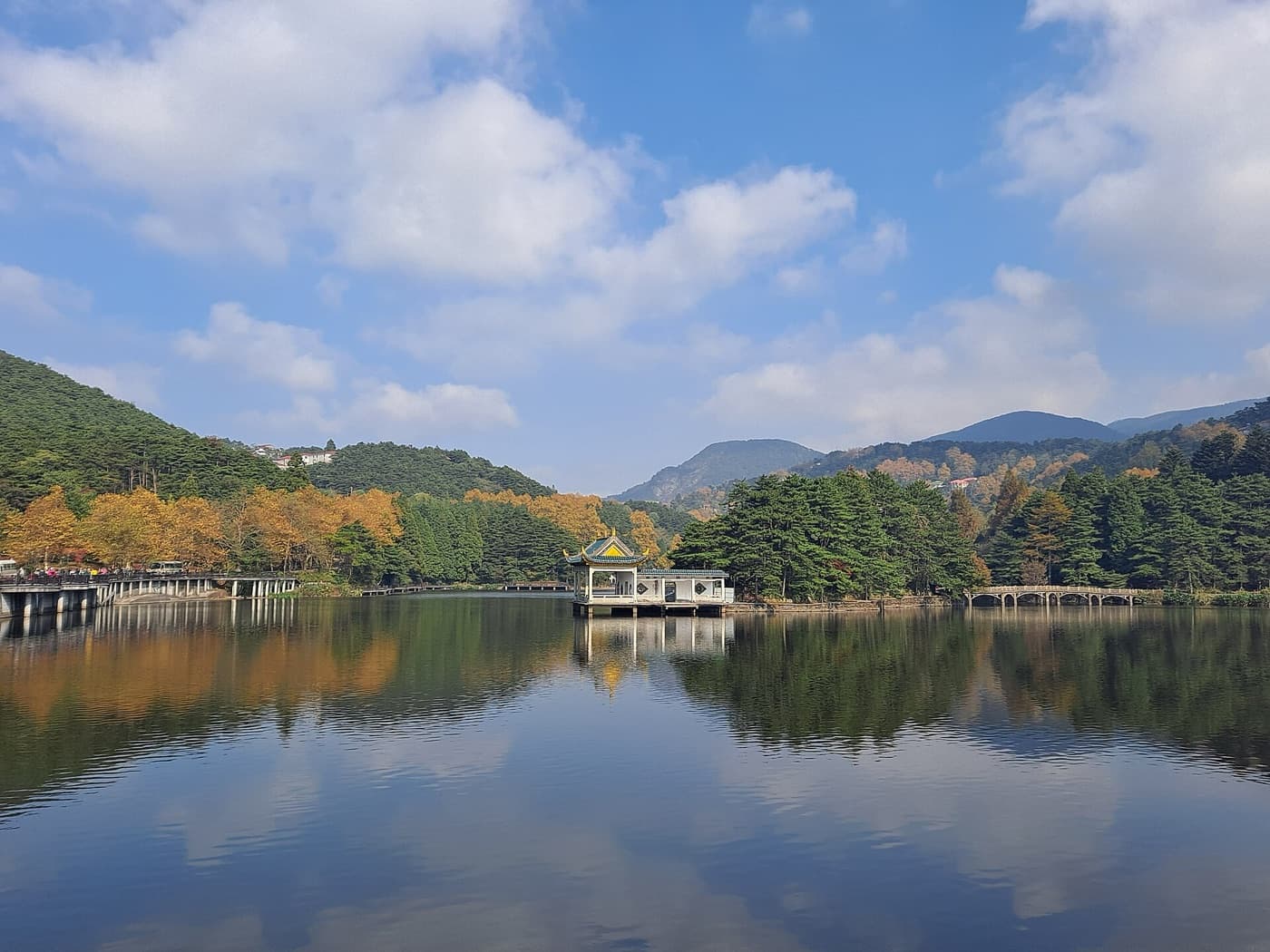
Ruqin Lake
This man-made lake has gracefully curved shores and a shape remarkably like a violin. One side borders Flower Path, which captures the gentle beauty of Mount Lu. A zigzag bridge leads to an island in the middle of the lake, and strolling along it feels like walking inside an ink-wash painting of lake and mountain.
1–2 hours
Great Heavenly Pool and Longshou Cliff
Manjusri Bodhisattva saw that Mount Lu lacked clear water, so he thrust his hands into the rock and created two pools, giving rise to the Heavenly Pool. A solitary cliff hangs suspended without falling. Legend holds that the Heavenly Pool and Longshou Cliff together form a wondrous scene that embodies humanity’s longing for the sublime.
1–2 hours
Wenshu Terrace
A wonderful place to view the Mount Lu sea of clouds, evening glow and the “Buddha Lights”. The Buddha Lights at Wenshu Terrace are a rare natural phenomenon that draws thousands of visitors eager to witness this marvel.
1 hour
Sanbao Trees
Dense shade blankets this place, and waves of green stretch to the horizon. Three towering ancient trees rise into the sky. Two are Japanese cedars, each over 40 meters tall. The third is a ginkgo shaped like a pagoda, about 30 meters high, with a sturdy trunk that several people could not encircle with their arms. According to legend, the Sanbao Trees were brought from the Western Regions by a monk of the Eastern Jin dynasty, making them over 1,500 years old. The stone tablet beneath the trees bears the inscription “Handwritten notes by the monk Tan Xian of Jin”.
1–2 hours
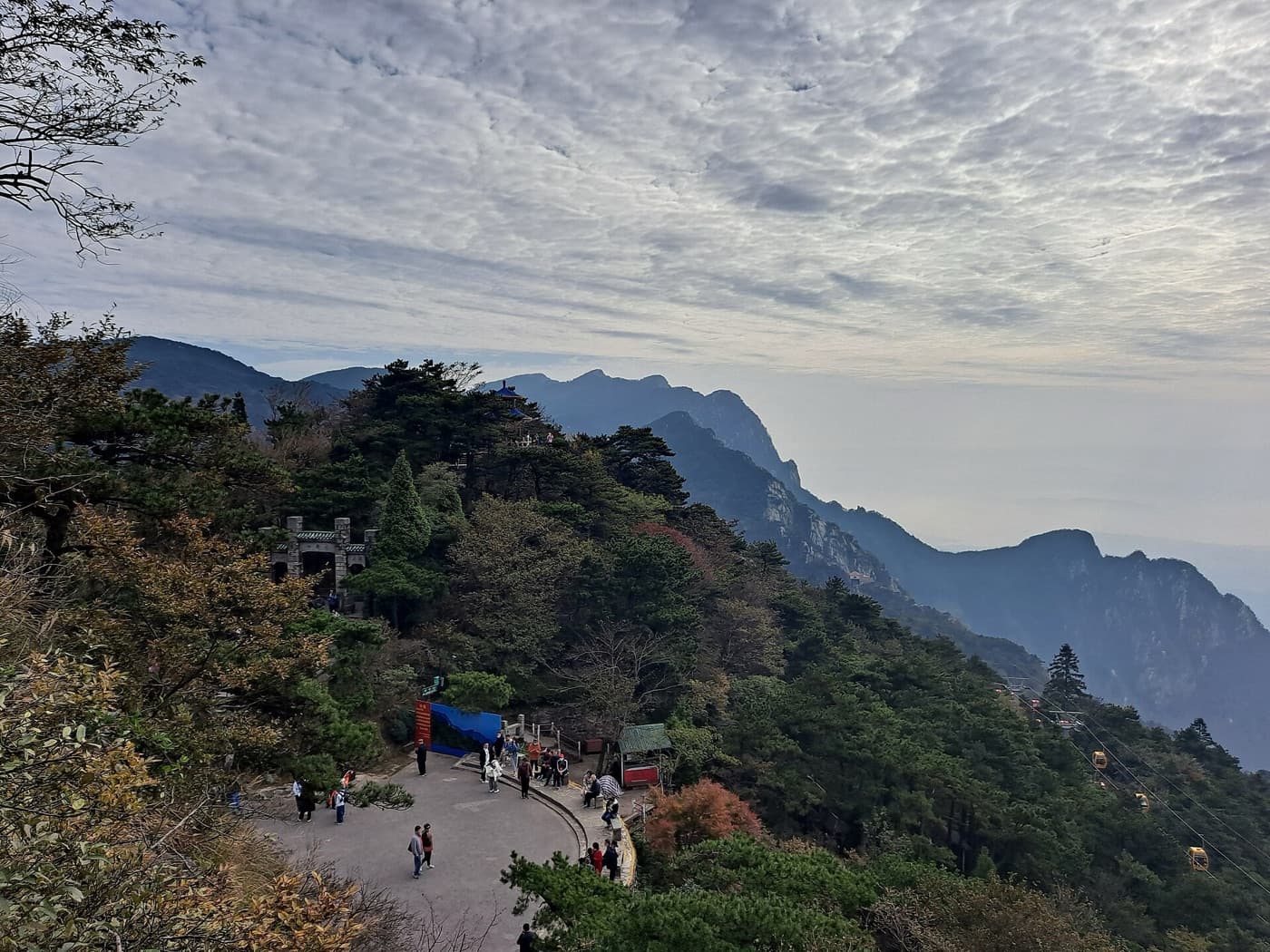
Hanpokou (Hanpo Pass)
Two mountains face each other across a vast gorge, as if they could drain Poyang Lake in one gulp, which makes for an impressive sight. When the sun rises from the lake surface, everything around is bathed in dazzling red light, and no one can fail to be awed by the spectacle.
1–2 hours
Huanglong Temple
Huanglong Temple sits at the foot of Yuping Peak, cradled by myriad mountains and encircled by pines and firs. It was first built during the Wanli era (Ming dynasty) by the monk Shi Chekong. Legend says that when Shi Chekong traveled to the foot of Yuping Peak and saw its lush pine forests, clear pools and cascading waterfalls, with their secluded beauty, he vowed to settle there and spread the Dharma.
1–2 hours
Bilongtan Waterfall
Bilongtan Waterfall lies more than 5,000 meters from Guling on Mount Lu, deep within layered rocks and quiet forest. Water cascades over stacked rock and, as it flows into Bilongtan Pool, splits into three tiers. Each tier divides into two white ribbons of falling water, like twin dragons diving into the pool. The pool is emerald green, with a large boulder in the middle. Standing on the rock and looking east, you can see Poyang Lake.
1–2 hours · ¥30
Sandie Spring Waterfall
Mount Lu’s waterfalls could form a special-interest tour of their own, scattered across its valleys in all sizes. Sandie Spring is the most celebrated, which gave rise to the saying “Those who haven’t seen Sandie Spring haven’t really visited Mount Lu.” For a long time, many assumed that Li Bai’s line “Flying waters plunge three thousand chi, as if the Silver River fell from the Ninth Heaven” described this place. In fact, Sandie Spring was not discovered until the Southern Song dynasty.
1–3 hours · ¥82 (ticket + round-trip sightseeing shuttle); cable car ¥75
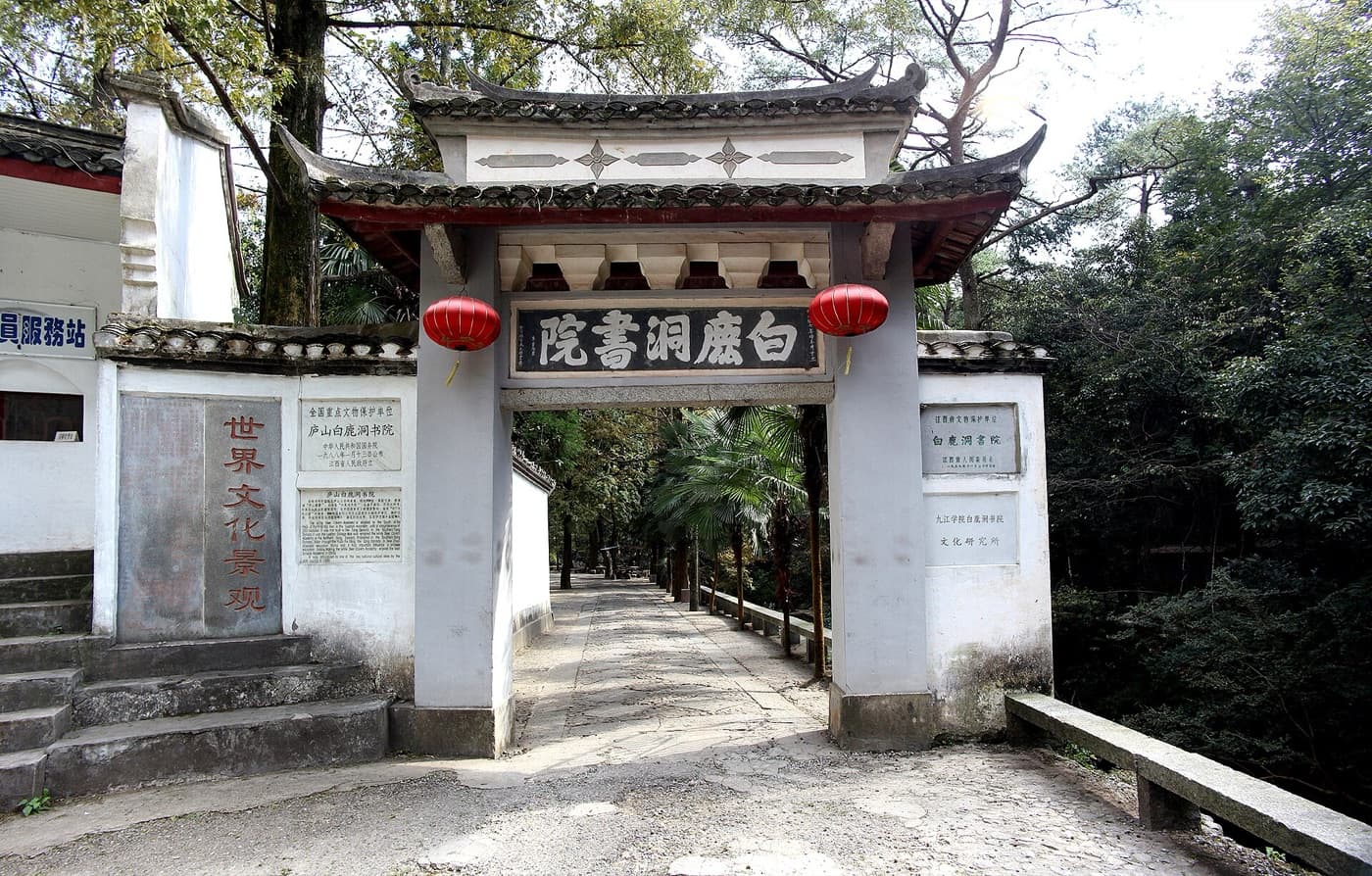
White Deer Grotto Academy
Among Mount Lu’s many attractions, the White Deer Grotto Academy, rebuilt and expanded by the great scholar Zhu Xi, is the easiest to overlook. Yet for any Chinese, the academy is a deeply significant place. It ranks first among China’s Four Great Academies. Apart from the Yuelu Academy in Hunan, it is the only one of these academies to have survived and been well preserved, and it is the White Deer Grotto in Jiangxi.
1–2 hours · ¥40
Getting there & around
Getting There
There are two routes to Lushan. The first is to fly or travel to Nanchang first, then take a bus. As the capital of Jiangxi Province, Nanchang not only has civil aviation links with many cities across the country, but is also an important road and rail hub in East China (see the Nanchang section).
The second route is via Jiujiang. Jiujiang is the only intersection of the Beijing–Kowloon Railway and the Yangtze River, and it sits on the golden waterway of the middle and lower Yangtze, so water and land transport are both very convenient. You can travel by water into Jiangxi, then transfer to a bus from Jiujiang to Lushan.
Taxis Usually Do Not Use Meters
Lushan taxis generally do not run meters. The starting fare is ¥5 for locals and ¥10 for visitors, so learn the approximate distance of your journey in advance to help you bargain. Never take unlicensed taxis up the mountain.
Driving
If you drive up Lushan, you can park at the Yuanmen car park at the north gate (North Mountain Road) or the Lulin car park (South Mountain Road), then transfer to scenic-area sightseeing shuttles. If you drive into the scenic area, you will pay an extra ¥45 parking fee on top of the entrance ticket.
Friendly Tips
1. Most vehicles climb the mountain via the North Mountain (Beishan) road, in the direction of Jiujiang.
2. All vehicles bound for Mount Lu stop at Guling Street (Main Street).
3. The ticket office at the Beishan park gate is 3 km from Guling Street. Buy your ticket and get on the mountain as soon as possible. Vehicles wait briefly on the right side of the road just inside the mountain gate, so board promptly, as the bus will not wait.
4. Fares differ for going up and coming down: ¥10 for the descent and ¥15 for the ascent.
By Air
The nearest airport to Mount Lu is in Chaisang District, about 9.8 km away. It currently has flights to Beijing, Shanghai, Guangzhou, Haikou, Shenzhen, Xiamen and other cities. Airport shuttle buses run to Lushan City. If you miss the shuttle, you can take a bus from Huanglaomen to Shahe (Mount Lu). We recommend flying in and taking a taxi straight up the mountain, which costs ¥120–150. Be sure to negotiate the price in advance.
By Train
Mount Lu Railway Station is really just a station in Chaisang District at the foot of the mountain. It mainly serves through trains and is not very convenient for getting up the mountain. If you travel by train, we recommend getting off at Jiujiang Station, which offers easier access to Mount Lu.
By High-Speed Rail
Mount Lu is an important stop on the Changjiu Intercity High-Speed Railway. Whether you travel from Nanchang to Jiujiang Station or go directly to Mount Lu Station, the journey is very convenient.
By Road
Jiujiang to Mount Lu is 41 km, and the fare ranges from ¥12 to ¥15. The final stop is Guling Town. A minibus from Nanchang to Mount Lu costs ¥36 and runs along National Highway 105, serving Chaisang District, Gongqingcheng, Yongxiu County and the Peach Blossom Spring scenic area in Lushan City. Other counties, districts and townships can be reached via provincial highways.
By Water
Nearly 20 Yangtze River liners stop at Jiujiang Port each day. From the passenger terminal, take a sightseeing minibus to reach Mount Lu.
Getting Around the Mountain
Mount Lu is a widely dispersed scenic area centred on Guling Town, so getting around on the mountain can be a major challenge during your trip. Within Lianxi District, there are fixed-route sightseeing buses, as well as minibuses, taxis and chartered tour vehicles. Because fixed-route sightseeing buses follow set routes and there are relatively few of them, many visitors prefer minibuses or taxis. Minibuses are the cheapest option, while taxis cost considerably more.
Getting Up Mount Lu from Jiujiang City
Option 1: From Jiujiang Railway Station, take bus No. 36 or 66 to the Jiujiang Long-Distance Bus Station, then board a coach there. Coaches run about once every 1.5 hours and cost ¥8–15.
Option 2: Outside Jiujiang Railway Station, take a bus to the foot of the Changhong Interchange. At the entrance of Yangguang No. 1 Leisure Hotel, board a Quanshun minibus, which runs daily from 6:30 to 18:00. The fare is ¥15 and the bus goes directly to Guling.
Option 3: From the Jiujiang Long-Distance Bus Station, you can take a taxi directly to Mount Lu for about ¥80. Agree on the price with the driver in advance.
Option 4: About 50 metres from the exit of Jiujiang Railway Station is the Jiujiang branch of China International Travel Service (CITS). Individual travellers can ride a travel agency vehicle up Mount Lu for ¥15.
It is worth noting that you should avoid unlicensed (black) taxis outside the railway station. Alternatively, walk out of the station and flag down a taxi on the road, asking to be taken directly to Guling Street or to a hotel on the mountain.
Eat & drink
Anyone who has visited Mount Lu will remember not only its stunning scenery but also its delicious food, especially the local specialty known as the “Three Stones and One Tea”: Mount Lu stone chicken, Mount Lu stone fish, Mount Lu stone ear (a type of fungus) and Mount Lu cloud-mist tea.
Local Snacks
Beyond the “Three Stones and One Tea”, be sure to try the Mount Lu snacks, including stir-fried shrimp, braised pork with fermented black beans, stir-fried chilli with fermented black beans, dried shrimp rice cakes, yam stewed with pork, coin-shaped yam cakes and chicken braised with chestnuts.
Local Specialties
Aged sealed-jar rice wine, Jiujiang tea cakes, crispy sugar candy, fresh Mount Lu bamboo shoots, Hukou fermented black beans, Poyang Lake whitebait and cloud-mist tea.
Shiniu Restaurant
Recommended RestaurantsThis is arguably the only restaurant in the Mount Lu Scenic Area that doesn't rip off diners. It built its reputation through word of mouth among backpackers, and its 'Three Stones' (三石) dishes are all delicious.
- Address:
- No. 15-1, Lushan Zhengjie, Guling Town, Mount Lu Scenic Area
- Phone:
- 0792-8288093
Sanshi Restaurant
Recommended RestaurantsMany city folk come here for the famous 'Mount Lu Three Stones' (庐山三石) dish, along with some local wild vegetables. It's no surprise the flavours are authentic. There are often long queues and a long wait for dishes to arrive, but then, there are plenty of people with cravings.
- Address:
- Roadside on National Highway 105, Wenquan Town, Lushan City
- Phone:
- 0792-2601179
Where to stay
As a scenic destination and summer resort, Mount Lu has long had a well-developed hotel industry, and room rates can be steep. Mount Lu Hotel is the finest hotel on the mountain. Student travellers are advised to stay in school guesthouses.
Beware of Hotel Touts
Some taxi drivers take tourists to pricier hotels because they receive kickbacks for doing so. If you'd rather avoid expensive hotels, ask to get out at Jiexin Park (街心公园), where there are private homes, inns and guesthouses.
Mount Lu Hotel
Recommended AccommodationA long-established hotel built decades ago, so its facilities are dated. It has never advertised; a visit by Chairman Mao serves as its living signboard.
- Address:
- No. 70, Hexi Road, Mount Lu
- Phone:
- 0792-8281330
Mount Lu West Lake Hotel
Recommended AccommodationThe only four-star hotel on Mount Lu, with Ruqin Lake (如琴湖) right at its entrance and very beautiful scenery.
- Address:
- No. 113, Dalin Road, Mount Lu
- Phone:
- 0792-8285850
Shopping
Lushan Yunwu tea (庐山云雾茶) is worth bringing home, but you'll need some discernment when buying tea.
Nightlife
Romance on Lushan Mountain Cinema
There's a cinema on Mount Lu that screens just one film each day, *Romance on Lushan Mountain* (《庐山恋》), shown every two hours. Even in the off-season, it puts on two evening screenings. Watching the film that introduced Mount Lu to the whole nation in the evening, then comparing it with the scenery you saw during the day, is a very enjoyable experience.
- Address:
- No. 19, Hexi Road, Mount Lu
- Phone:
- 13133634364
Source: China Self-Guided Travel 2025 (《中国自助游》, Tianjin Science & Technology Press, Aug 2024), pp. 1443–1462. Translated from the Chinese edition; names and prices follow the guidebook. · Plain text version